More like Prosperity
but
- The Collected Science Fiction and Fantasy of Jack London
series6 books1906
completed
similar byscience fiction+1 more
- His Dark Materials Universe
universe13 books1995
Start hereHis Dark Materials · Start here
similar byadventurousfantasy+1 more
In a world like ours and unlike it, every human soul walks outside the body in the shape of an animal — a daemon, who speaks, who cannot be lied to, and who settles into one fixed form only when childhood ends. This is the country of His Dark Materials: a company of parallel worlds across which an invisible dust of consciousness drifts down upon the waking mind; where a Church that calls itself the Magisterium would sooner sever a child's soul than let that Dust be understood; and where a golden instrument, the alethiometer, answers true questions for anyone with the patience to read it. Philip Pullman's design stands in two trilogies and a scatter of shorter tales. His Dark Materials — Northern Lights (published in America as The Golden Compass), The Subtle Knife, and The Amber Spyglass — carries Lyra Belacqua from the rooftops of a shadow Oxford across the borders between worlds. The Book of Dust returns to that same territory: La Belle Sauvage looks back to Lyra as an infant carried through a great flood, while The Secret Commonwealth follows her grown and less certain into adulthood, with a concluding volume closing the arc. Around them sit slim companion books — Lyra's Oxford, Once Upon a Time in the North, Serpentine — and Nicholas Wright's stage adaptation, made with Pullman's blessing. The register is grave and luminous at once, its title lifted from Milton and its quarrel drawn from Blake: a story that takes the side of curiosity, love, and the physical world against any authority that would forbid them. It reads as adventure — armoured bears, aeronauts, knife-cut windows between skies — yet reasons like philosophy. Begin with Northern Lights / The Golden Compass and read the first trilogy through before turning to The Book of Dust, which deepens everything the first has already made you feel.
- Alliance-Union Universe
universe173 books1976
Start hereCompany Wars · The central sequence
similar byscience fiction+2 more
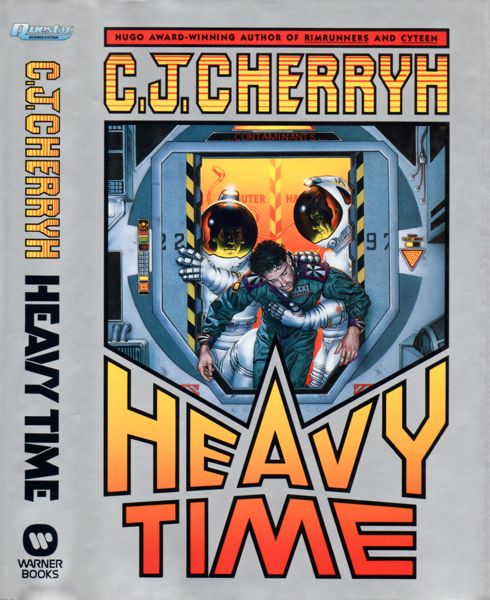
The dark between the stars belongs to no one, and everyone who lives out here knows it: the merchanter Families hauling cargo between stations that cannot feed themselves, the Earth Company clutching at colonies it can no longer supply, the Union breeding its cloned azi to settle worlds faster than birth allows. C. J. Cherryh's Alliance-Union is a future history of humankind's spread across the third and fourth millennia, told from inside the pressure — no clean empires, only stations, ships, treaties, and the people caught in the machinery of who holds the jump-points. The sequence runs from the first laborious pre-FTL stations through the Company Wars, the independence struggle that breaks over Pell in Downbelow Station (Hugo, 1981), to the genetics and cold politics of Union's homeworld in Cyteen (Hugo, 1988) and its sequel Regenesis. Around that spine cluster the merchanter novels of trader Families, the Faded Sun trilogy of human envoys among the martial alien Mri, and the Chanur books, narrated from the hierarchical, whiskered viewpoint of the hani. On the isolated world of Merovin, the Merovingen Nights anthologies open the setting to other hands — Mercedes Lackey, Janet and Chris Morris, Nancy Asire — a shared world braided into the whole. What sets it apart is intimacy at scale. Cherryh drops you without a map into a single skull and lets you assemble the politics from what that person fears and bargains for; the aliens are genuinely alien, loyalty is always provisional, and the real antagonist is usually logistics. Most books stand alone, in her words, "like real history." The surest way in is Downbelow Station — the war seen from one besieged station — then Cyteen, for the mind that shaped the other side.
- Mortal Engines Prequels
series3 books2009
part of Mortal Engines Universe
similar byadventurousscience fictionsteampunk+1 more
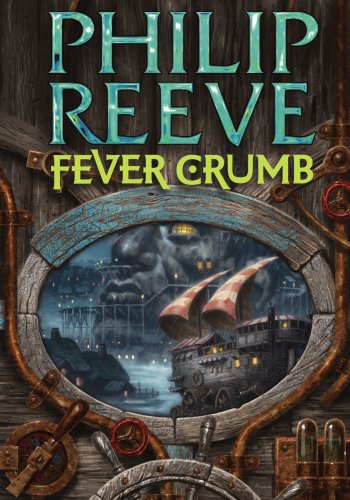
The Fever Crumb series is the title of a series of novels written by British author, Philip Reeve, and is the prequel series to his Mortal Engines Quartet. The series consists of three books: Fever Crumb (2009), A Web of Air (2010), and Scrivener's Moon (2011). The books follow a young woman known as Fever Crumb, and her adventures set around the time of the creation of the first traction cities that become prevalent in the Mortal Engines series. While Reeve stated in 2011 that he had always envisaged a quartet for the series, assuring readers of a fourth installment, by 2020 he said that "too much time has passed", making it difficult to revisit the series, and that he did not intend to finish and publish a fourth book.
- Company Wars
series7 books1981
part of Alliance-Union Universe
similar bypolitical intriguescience fiction
Company Wars gathers the novels C. J. Cherryh set during the breakaway conflict between Earth's colonial Company and the newly independent Union, within her wider Alliance-Union future history. Anchored by the Hugo Award-winning Downbelow Station, the books follow different ships, stations, and crews caught on either side, from merchanter traders to military spacers, rather than a single continuing cast. Read in any order, they build up a picture of the political and economic pressure that reshapes Cherryh's larger Alliance-Union universe.
- The Baroque Cycle
series11 books2003
similar by+1 more
The Baroque Cycle is a series of novels by American writer Neal Stephenson. It was published in three volumes containing eight books in 2003 and 2004. The story follows the adventures of a sizable cast of characters living amidst some of the central events of the late 17th and early 18th centuries in Europe, Africa, Asia, and Central America. Despite featuring a literary treatment consistent with historical fiction, Stephenson has characterized the work as science fiction, because of the presence of some anomalous occurrences and the work's particular emphasis on themes relating to science and technology. The sciences of cryptology and numismatics feature heavily in the series, as they do in some of Stephenson's other works.
- The Black Magician Trilogy
series3 books2001
part of Kyralia series
similar byfantasy+3 more
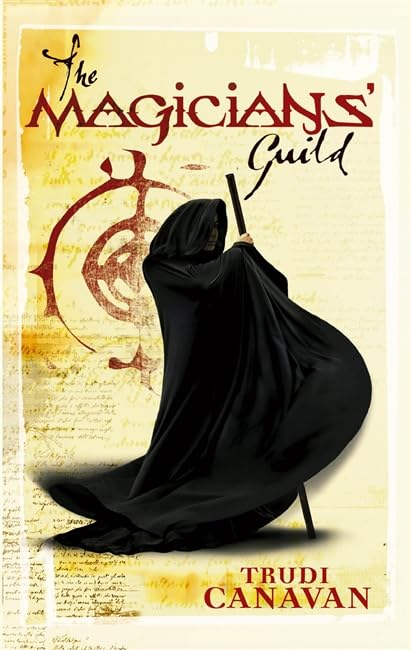
Trudi Canavan's Black Magician Trilogy (The Magicians' Guild, The Novice, The High Lord, 2001-2003) opens in the city of Imardin, where the ruling magicians' guild's annual purge of the slums goes wrong when a street girl named Sonea unknowingly shatters their protective shield with raw, untrained power. The guild must hunt her down and decide whether to control her or train her, and the trilogy follows Sonea's forced initiation into magical society and the guild's internal politics. It's Canavan's best-known trilogy and the founding story of her Kyralia setting.
- Bio of a Space Tyrant
series6 books1983
similar bypolitical intriguescience fiction
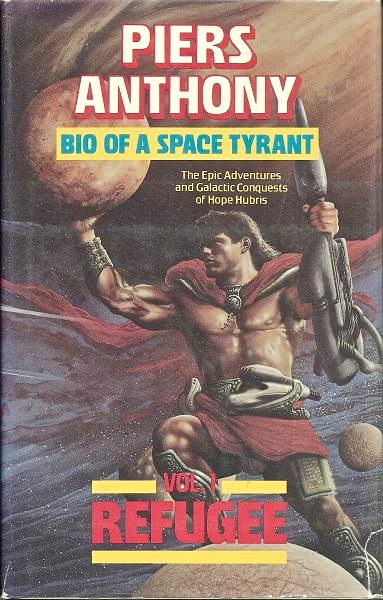
Bio of a Space Tyrant series is a six-book science-fiction series by Piers Anthony based within the Solar System. The series revolves around the character Hope Hubris and his family, and charts Hope's ascent from poor Hispanic refugee to Tyrant of Jupiter, a single person heading the Executive, Judicial and Legislative branches of the government. It is considerably more adult-themed than many of Anthony's earlier works.
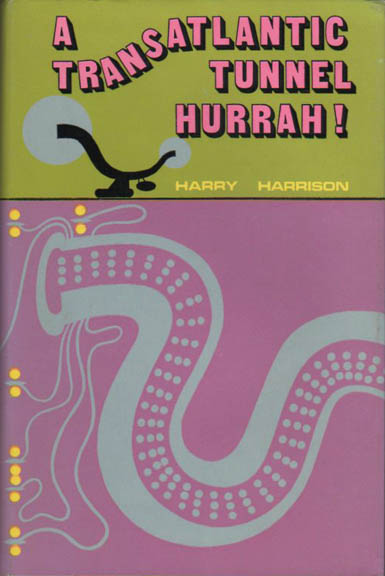
- A Transatlantic Tunnel, Hurrah!
Harry Harrisonstandalone novel1972
similar byadventurouspolitical intriguescience fiction+2 more
Tunnel Through the Deeps is a 1972 alternate history/science fiction novel by American writer Harry Harrison. It was serialized in Analog magazine beginning in the April 1972 issue.
- Hainish
series33 books1964
completed
similar byscience fiction+1 more
The Hainish Cycle consists of a number of science fiction novels and stories by Ursula K. Le Guin. The cycle is set in a future history that features civilizations of human beings on planets orbiting a number of nearby stars, including Terra ("Earth"); these humans are contacting each other for the first time and establishing diplomatic relations, as well as setting up a confederacy under the guidance of the oldest of the human worlds, the peaceful planet Hain. In this history, human beings did not evolve on Earth, but they were instead the result of interstellar colonies planted by Hain in the distant past, after which interstellar travel ceased for an extended period. Some of the human races have new genetic traits, a result of ancient Hainish experiments in genetic engineering; this includes people who can dream while awake, and a world of hermaphroditic people who only enter active sexuality once per month, not knowing which sex will manifest in them. In keeping with Le Guin's narrative approach, she uses varied social and environmental settings to explore the anthropological and sociological outcomes of human evolution in those environments. The author often discounted the characterization of a so-called "Hainish Cycle".
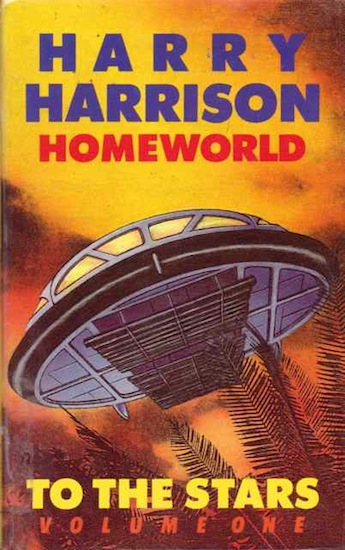
- To the Stars (Harrison)
series3 books1980
completed
similar byscience fiction+3 more
The To the Stars trilogy is a series of science fiction novels by Harry Harrison, first published in 1980 (Homeworld) and 1981. The three books were re-published in an omnibus edition in 1981.
- The Cinder Spires
series3 books2015
similar bysteampunk+4 more
Jim Butcher's Cinder Spires series opens with The Aeronaut's Windlass (2015), a steampunk fantasy set among tower-dwelling city-states where airships duel with etheric weapons and intelligent cats share the world with humans. Continuing with Warriorborn and The Olympian Affair, it marks a departure in setting from Butcher's contemporary-fantasy Dresden Files while keeping his fast-paced adventure style.
- LaNague Federation
series21 books1971
similar byscience fiction
F. Paul Wilson's LaNague Federation books, beginning with Healer and Wheels Within Wheels, are set in a future interstellar civilization shaped heavily by libertarian political ideas about minimal government and individual freedom. An Enemy of the State follows a protagonist raised on Tolive, a colony explicitly built around that philosophy, as its politics collide with the wider Federation. Wilson uses the series' space-opera trappings to argue through, rather than just illustrate, a particular vision of a stateless or near-stateless society.
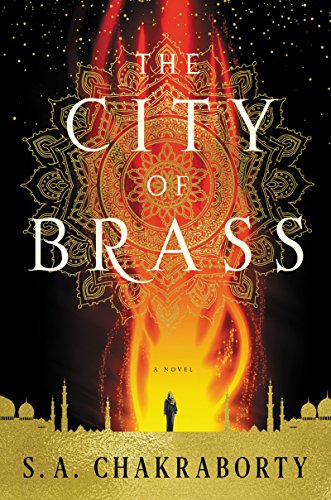
- The Daevabad Trilogy
series5 books2017
similar bypolitical intriguefantasy
Nahri is a con artist and unlicensed healer working the streets of 18th-century Cairo who accidentally summons Dara, a formidable djinn warrior, during a fake exorcism gone wrong. He recognizes her as a lost heir of the Nahids, once-rulers of the djinn, and brings her to Daevabad, the hidden city her ancestors built, where old tribal and political conflicts are waiting to reignite. S. A. Chakraborty's Daevabad Trilogy follows Nahri through The City of Brass, The Kingdom of Copper, and The Empire of Gold as she's pulled into a fight over the city's throne and its buried history.
- The World of Riverside
series72 books1982
similar bypolitical intriguefantasy+1 more
Ellen Kushner's Riverside sequence begins with Swordspoint (1987), a genre-defining 'fantasy of manners' novel about hired swordsmen and aristocratic intrigue in a nameless city, and continues through The Privilege of the Sword and The Fall of the Kings (co-written with Delia Sherman). The wider World of Riverside has since expanded into shared-world short fiction and anthologies, such as Swords of Riverside, contributed to by numerous other writers.
- Laurie Jo Hansen
series10 books1971
completed
part of CoDominium
similar byscience fiction+2 more
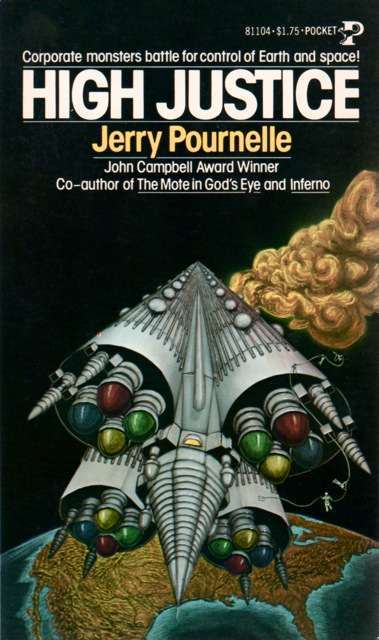
Laurie Jo Hansen groups Jerry Pournelle's early CoDominium-universe stories and the novel Exiles to Glory (1978), part of the same future history that produced his Falkenberg's Legion novels.
- Wolfling
Gordon R. Dicksonstandalone novel1969
similar byadventurouspolitical intrigueclass conflictscience fiction
From the flaps of the Baen/SFBC edition: "Is Earth merely the lost colony of a superior race? - She was well over six feet tall, and beautiful in a sculpted, abstract way. She had skin the color of white onyx, and her eyes... her eyes were large and feline - a startling lemon yellow in color. She was the Princess Afuan, one of the High-born, and she had chosen the Earthman Kim Keil to return to the Throne World with her - for she had decided that his performance in the bull-ring might amuse the Emperor. She didn't know that Jim was a bull-fighter only by virtue of six months' intensive training, nor that the bull was programmed - his behavior following and impressively fierce but unswerving pattern. Jim was just another wolfling to Afuan - a lesser being from a backward colony world. Jim, however, was keenly aware that he was playing a role, one which might prove to be extremely dangerous. Up until 10 years earlier, when their first ship had reached Alpha Centauri, the people of Earth hadn't even known that the vast Empire of human-occupied worlds existed. The discovery had been a profound shock. Had we evolved independently? Or were we merely descendants of the Empire's first space pioneers - a lost colony found at last, perhaps with devastating consequences? That's what Jim Keil had to find out. Chosen from among numerous highly qualified candidates - an anthropologist trained, mentally and physically, beyond the limits of his profession - it was his mission to observe the Throne World and the High-born... to determine whether or not they posed a threat to Earth. One thing was apparent from the start. The High-born were superior beings - physically taller and stronger than other humans, endowed with faster reflexes, superior mental capacity... and extraordinary technological resources. Their contempt for the new wolfling in their midst was open, their intrigues complex. An enormous gulf separated the people of the Throne World from Earthlings. But that gulf was not so wide that Jim couldn't recognize an enemy when he met one. Clearly, if he remained merely a passive observer of the High-born, he'd never survive among them."
- George Dower / Infernal Devices
series3 books1987
similar bysteampunk+3 more
K. W. Jeter's trilogy, whose 1987 original helped coin the term 'steampunk,' follows clockmaker George Dower as he's dragged into escalating Victorian conspiracies involving mechanical devices, secret societies, and inventions that shouldn't work but do. Infernal Devices, Fiendish Schemes, and Grim Expectations mix dark comedy with the gears-and-brass aesthetic the series helped establish before it had a name.
- The Sword of the Spirits
series4 books1970
completed
similar byscience fiction+3 more
John Christopher's Sword of the Spirits trilogy is set in a post-catastrophe England reduced to walled, feuding city-states, where a secretive religious order called the Seers polices and suppresses the recovery of old technology. The trilogy follows Luke, a young man who rises to lead one of these cities, through the tension between ambition, faith, and forbidden knowledge.