More like Proxima
anchored on:science fictionother star systems
but
- H. G. Wells' War of the Worlds
universe65 books1898
Start hereThe War of the Worlds · Start here
similar byscience fiction+2 more
No one would have believed, in the closing years of the nineteenth century, that human affairs were being watched keenly and closely from the timeless worlds of space. And then the cylinders fell. H. G. Wells' War of the Worlds opens in the quiet of the Surrey commons, where a falling star proves to be the first Martian craft — and from the pit rise the towering tripods, the Heat-Ray, the choking Black Smoke and the creeping red weed, wielded by minds that regard mankind much as we regard the creatures we boil for supper. This is invasion rendered as natural disaster: cold, methodical, and vast beyond argument. Wells' 1898 novel is the seed; everything else grows from that Martian soil. The catalogue gathers direct sequels and continuations alongside a wide field of other hands. In War of the Worlds: Global Dispatches the invasion is retold across the whole planet through the eyes of Twain, Verne, Tolstoy, Lowell and Kipling; in the Manly Wade and Wade Wellman crossover, Sherlock Holmes, Watson and Professor Challenger take the field against the machines; and Scott Washburn's Great Martian War stretches the fighting into a decades-long alternate history of steam, artillery and grinding attrition. It is a loose shared world — no single decreed sequence, many voices answering one calamity. What sets this world apart is its refusal of heroics: the invaders fall not to generals but to the smallest things of Earth, humbling and indifferent. Begin, always, with Wells' original novel — it is short, and it is the ground every later book stands upon. From there follow your appetite: Global Dispatches for the panorama, the Holmes campaign for adventure, Washburn for the long war.
- Have Space Suit - Will Travel
Robert A. Heinleinstandalone novel1958
similar byscience fictionnear futureadventuroustensealiensspace explorationsurvivalspace+1 more
From the back cover of the Del Rey 9th printing: "Skyjacked - Everything happened at once. One minute Kip Russell was walking about in his own backyard, testing out an old space suit and dreaming about going to the moon - and the next he was out cold and the captive of an insidious space pirate. The whole thing seemed like a very bad dream until he discovered he wasn't the only prisoner on board. Then the reality of the situation became inescapable. He - along with the daughter of a world-renowned scientist and a beautiful creature from an alien planet - had been skyjacked by a monstrous extraterrestrial and they were on their way to the Moon... a journey toward a fate worse than death!"
- Academy / Priscilla (Hutch) Hutchins
series16 books1983
similar byscience fictionaliensother star systemsspace explorationspace+2 more
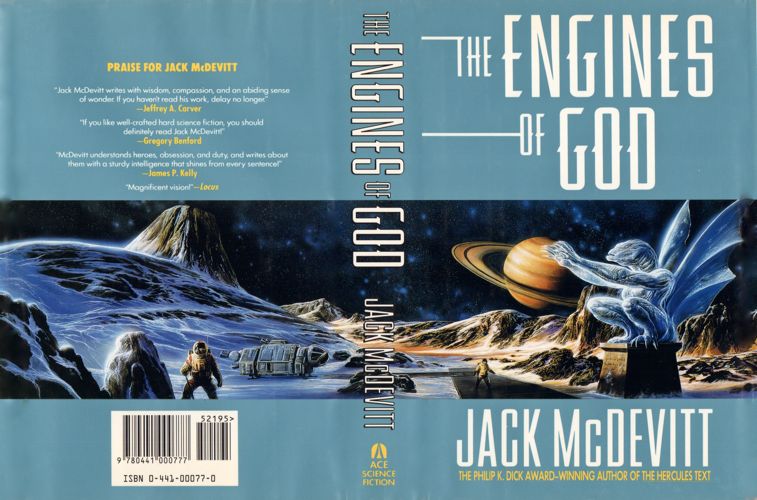
Jack McDevitt's Academy novels follow Priscilla 'Hutch' Hutchins, a starship pilot turned administrator, across a series of archaeological mysteries involving vanished alien civilizations and inexplicable ancient artifacts scattered through human space. Beginning with The Engines of God, the series treats deep time and the near-total absence of intelligent alien life as its central mystery, favoring slow-burn discovery over action. McDevitt returned to Hutch across three decades of publication.
- Thistledown
series5 books1978
completed
similar byscience fictionspace explorationhard science fictionspace+3 more
- Ringworld
series5 books1970
part of Known Space
similar byscience fictionadventurousaliensother star systemsspace explorationspace
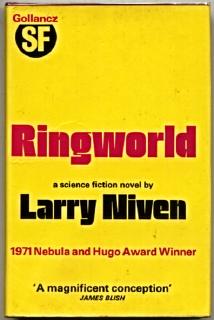
The Ringworld series is a series of science fiction novels written by American author Larry Niven. It is part of his Known Space series of stories. Its backdrop is the Ringworld, a giant artifact 3 million times the surface area of Earth circling a star. The series is composed of four standalone science fiction novels, the original award-winning book and its three sequels:1970: Ringworld 1979: The Ringworld Engineers 1996: The Ringworld Throne 2004: Ringworld's Children
- Tower and the Hive
series7 books1959
completed
part of The Talents
similar byscience fictionother star systemsspace+3 more
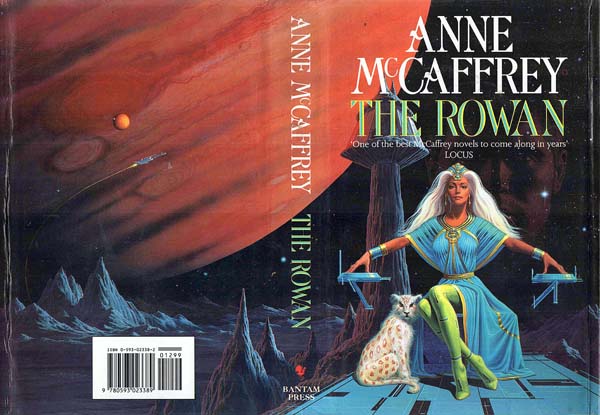
The Tower and the Hive series opens with The Rowan (1990), following an isolated but powerful telepath who is drawn out of her loneliness by a psychic call for help from a distant Talent facing an alien threat. Anne McCaffrey continued the story across four more novels, Damia, Damia's Children, Lyon's Pride, and the concluding The Tower and the Hive (1999), following later generations of a telepathic family staffing the Prime Towers that give a starfaring human civilization instant communication. The series is set later in the same Talents universe as McCaffrey's earlier Pegasus books.
- Uplift Universe
universe13 books1980
Start hereUplift · Start here
similar byscience fictionadventurousaliensother star systemsspace+3 more
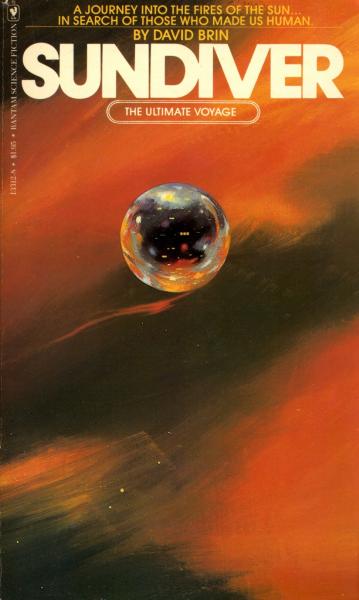
No species, the Galactics insist, ever climbs to sapience alone. For a billion years the elder races have "uplifted" their chosen clients — reshaping some promising animal, gene by patient gene, into a thinking being, then binding it through long ages of indenture. Patron lifts client; client one day becomes patron; and every lineage traces back through the vast Galactic Library to the vanished Progenitors who began it all. Then a ragged band of primates arrives at the stars with no patron to claim them — wolflings, self-made, an affront to a hundred thousand years of law — and worse, these humans have already started uplifting neighbors of their own: the neo-dolphins and neo-chimpanzees of Earthclan. David Brin builds this galaxy across two trilogies. The first — Sundiver, the Hugo- and Nebula-winning Startide Rising, and the Hugo-winning The Uplift War — sends an expedition into the Sun, then follows the dolphin-crewed survey ship Streaker as it flees a discovery that sets fanatical star-clans at war, and a chimp-led resistance on an invaded colony world. The second sequence, Uplift Storm — Brightness Reef, Infinity's Shore, Heaven's Reach — descends to Jijo, a forbidden world where six fallen races hide as illegal settlers, and draws every loose thread toward a reckoning. Short fiction fills the margins. This is space opera with an ecologist's conscience: teeming with invented biologies, wry cross-species banter, and real unease about what we owe the minds we make. Begin with Startide Rising — the saga's beating heart, and readable on its own — or take Sundiver first and read straight through in publication order.
- Tripods
series4 books1967
completed
similar byscience fictionnear futuretensealiens+2 more
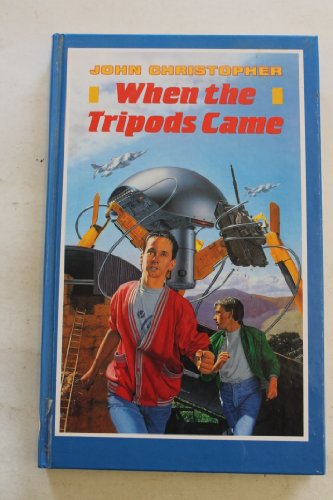
The Tripods is a series of young adult science fiction novels by John Christopher. The series takes place in a post-apocalyptic world where humanity is enslaved by "Tripods"—gigantic three-legged walking machines piloted by an alien race later identified as the "Masters". The first two books were the basis of a science fiction TV series, produced in the United Kingdom in the 1980s.
- Heorot
series4 books1987
similar byscience fictionother star systemsspace colonization+5 more
Larry Niven, Jerry Pournelle and Steven Barnes's The Legacy of Heorot strands human colonists on an idyllic-seeming alien world where they discover apex predators -- grendels -- hidden beneath the surface, forcing them to fight for survival. Beowulf's Children continues the colony a generation later as the children born on the planet clash with their parents over how to live alongside the grendels, and a fourth book, Starborn and Godsons, returns to the settlement decades further on. It's hard-SF creature-horror crossed with generational colony drama.
- Proxima (Stephen Baxter)
series6 books2011
similar byscience fictionother star systems+4 more
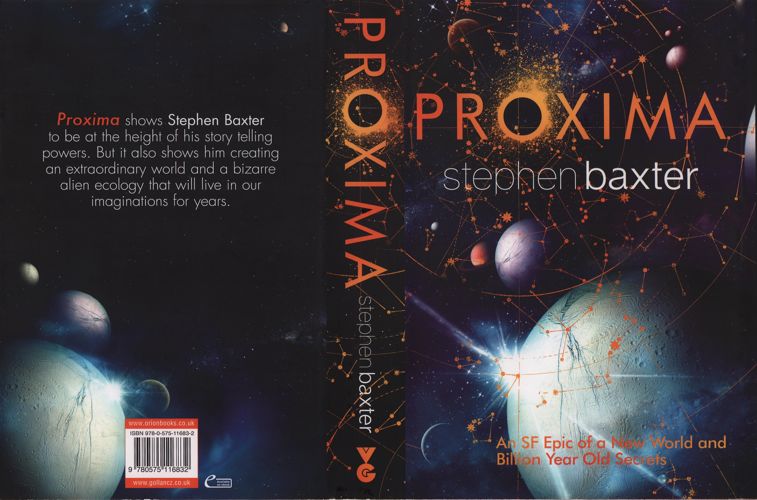
Stephen Baxter's Proxima follows a reluctant human colonist settled on a world orbiting Proxima Centauri as part of a secretive, one-way colonization program, intercut with political maneuvering back in a transformed solar system. Its sequel Ultima follows the discovery of alien technology on that world into a far stranger turn involving alternate versions of history. Both are hard science fiction concerned with the practicalities and politics of colonizing an alien world across interstellar distances.
- Dragon's Egg
series3 books1980
completed
similar byscience fictionaliensother star systemsspace explorationhard science fiction+4 more
Robert L. Forward's Dragon's Egg (1980) follows first contact with the cheela, intelligent beings the size of sesame seeds living on the surface of a neutron star, where crushing gravity and fast-moving physics let them evolve from primitive agriculture to advanced technology in about a month of Earth time while human observers watch from orbit. The sequel Starquake (1985) follows the cheela's own development of space travel and a catastrophic starquake that devastates their neutron-star home, alongside the continuing story of the human crew observing them.
- Bronson Beta
series5 books1933
similar byscience fictionother star systems+6 more
When Worlds Collide (1933) and its sequel After Worlds Collide (1934), written together by Edwin Balmer and Philip Wylie, follow a small group of survivors who escape a doomed Earth as the rogue planet Bronson Alpha destroys it, landing on its companion world Bronson Beta to begin again. The two novels form a self-contained disaster-and-survival duology.
- Adventures of Viktor & Julia
series2 books1999
similar byscience fictionnear futureadventuroustensealiensspace explorationsurvivalhard science fiction+1 more
- Cities in Flight
series10 books1950
completed
similar byscience fictionspace colonizationspace+4 more
Cities in Flight is a four-volume series of science fiction novels and short stories by American writer James Blish, originally published between 1950 and 1962, which were first known collectively as the "Okie" novels. The series features entire cities that are able to fly through space using an anti-gravity device, the spindizzy. The stories cover roughly two thousand years, from the very near future to the end of the universe. One story, "Earthman, Come Home", won a Retro Hugo Award in 2004 for Best Novelette. Since 1970, the primary edition has been the omnibus volume first published in paperback by Avon Books. Over the years James Blish made many changes to these stories in response to points raised in letters from readers.
- Moties
series4 books1974
part of CoDominium
similar byscience fictionaliensother star systemsspace+3 more
Larry Niven and Jerry Pournelle's The Mote in God's Eye (1974) depicts humanity's first contact with an alien species, the Moties, set within the far-future interstellar setting of Pournelle's codominium future history. The Gripping Hand continues that first-contact crisis years later, and Outies, written by J. R. Pournelle, carries the story forward into a new generation. Together the three books trace an escalating encounter between human and Motie civilizations within the codominium universe.
- Pax / Astra
series2 books1954
completed
similar byscience fictionadventuroustensesurvival+4 more
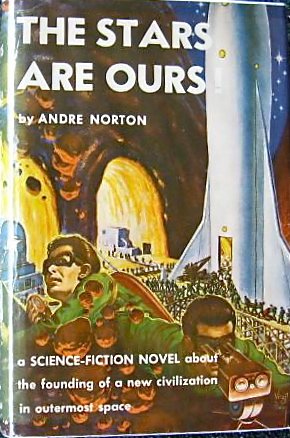
Andre Norton's The Stars Are Ours! (1954) and its sequel Star Born (1957) follow a group of scientists and their families who flee a repressive future Earth to colonize a distant world they name Astra, and then the next generation, who must contend with that world's original inhabitants. Star Flight appears to be a later omnibus or reissue rather than a third original novel.
- Uplift
series5 books1980
part of Uplift Universe
similar byscience fictionadventurousaliensother star systemsspace+3 more
David Brin's Uplift trilogy opens with Sundiver, sending human explorers into the Sun itself, then follows a dolphin-crewed starship on the run from hostile aliens in Startide Rising and a fight over the colony world Garth in The Uplift War. The books sit inside Brin's wider Uplift Universe, built on the idea that spacefaring "patron" species genetically engineer younger "client" species into full sapience, with humanity an anomaly that reached the stars without a patron of its own.
- Forge of God
series2 books1987
completed
similar byscience fictiontensealienssurvival+5 more
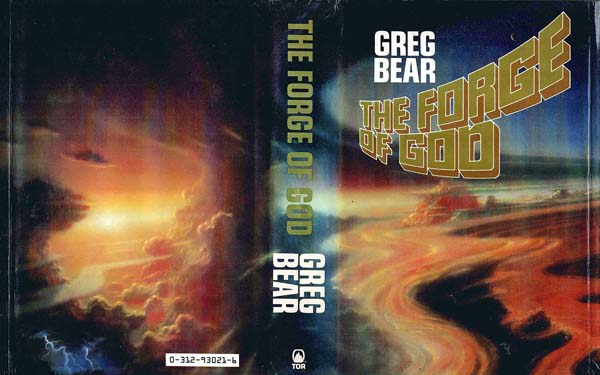
The Forge of God (1987) is Greg Bear's science fiction novel about Earth's discovery that it is the target of an incomprehensible, overwhelming alien attack, following scientists and ordinary people as they try to understand what is destroying the planet. Its 1992 sequel, Anvil of Stars, follows a group of young survivors sent on a mission of interstellar retaliation, continuing directly from the first book's ending.
- Salvation
series3 books2018
similar byscience fictionother star systemsspace+4 more
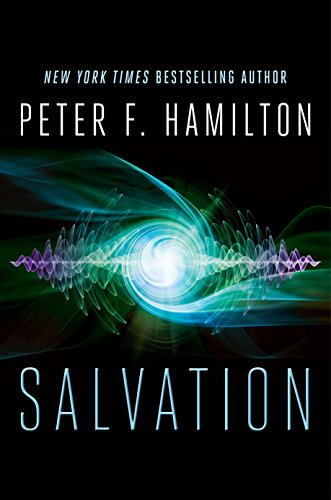
By 2204, instantaneous jump-gate travel has made distance nearly meaningless, connecting Earth to its scattered colonies in a single step -- until a crashed alien ship of unknown origin turns up on a world eighty-nine light years away, carrying something far more dangerous than wreckage. Peter F. Hamilton's Salvation follows the investigation team sent to assess the find, one of whom may not be who they claim, while a second timeline set generations later shows the far-future fallout of what they discover. The trilogy continues through Salvation Lost and The Saints of Salvation.
- A Fall of Moondust
Arthur C. Clarkestandalone novel1961
similar byscience fictionnear futureadventuroustensesurvivalhard science fiction+1 more
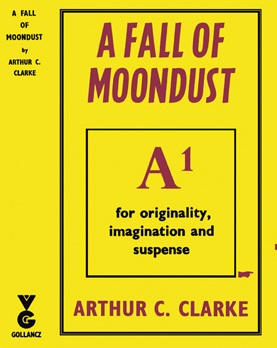
From the back cover of the Harbrace paperback: "The action of A Fall of Moondust takes place almost a century from now when tours on the moon are a common occurrence. One of the high points of each tour is a cruise around the Sea of Thirst, a body of volcanic dust, in a specially designed vessel called the Selene On a perfectly routine voyage one day the Selene suddenly disappears. How do you locate a small tourist "cruiser" buried beneath fifty feet of dust? If you find it, how do you rescue the passengers and crew? If you are on board, how do you feel and what do you do while brave men and expert technicians join forces in a race against time? Sustained excitement, lively humor, and an engaging cast of characters make this one of Arthur C. Clarke's most intriguing novels."
- Of Man and Manta
series3 books1968
similar byscience fictionadventurousaliensother star systems+4 more
Of Man and Manta is a trilogy of science fiction novels written by Piers Anthony. It consists of the three books: Omnivore (1968), Orn (1970), and 0X (1975).
- Into the Looking Glass
series4 books2005
similar byscience fictionadventuroustensealiensother star systemsspace+2 more