Loreful
HomeDiscover
Search series, authors…⌘K
Loreful

Reading orders for SF/F series and shared universes — with your place kept in every one.

Explore

UniversesSeriesWorksAuthorsAtlas

Help

FAQAboutSite map

Account & legal

Sign inCreate accountPrivacyTerms

Data

Built on ISFDB, Wikipedia, Wikidata and Open Library. Curated reading orders carry their reasoning on the page; the rest follow publication order. Data sources & licenses

© Loreful · data: ISFDB · CC BY

More like Quantum Conjurations

anchored on:science fantasy

but

Mood

The mood the book leaves you in.

  • The reading experience is propelled by journeys, exploration, and physical risk; excitement and forward momentum dominate over dread or introspection.
  • Joy and loss are deliberately mixed; the resolution grants characters something real while taking something else away, leaving warmth and sorrow together.
  • The book demands work from the reader — dense prose, difficult structure, unfamiliar ideas, or morally uncomfortable material — as part of its intended effect.
  • Grim events, cruelty, or despair dominate the atmosphere, and the book does not soften them with comfort or comic relief.
  • The atmosphere is quietly unsettling — wrongness, unease, and the uncanny pervade the book without necessarily escalating into overt horror.
  • The book is built to move the reader; character feeling is foregrounded and major scenes aim at a strong emotional response.
  • Humor is a primary aim and the prose plays for laughs — comic situations, wit, or dialogue produce sustained comedy, not occasional levity.
  • The book insists that things can improve; effort and decency are shown to matter, and the arc bends toward better outcomes even through hardship.
  • The book teaches as it goes — real facts, history, science, or craft are conveyed in enough depth that learning is part of the reading experience.
  • The book is designed to uplift and motivate, presenting perseverance or achievement in a way that invites the reader to aspire or act.
  • The overall register is cheerful and easygoing; stakes are kept gentle and the book avoids dwelling on pain or dread.
  • Withheld information drives the experience; the book sustains enigmas and secrets the reader wants resolved, whatever its genre.
  • The book is contemplative and inward-looking, giving more weight to thought, memory, and meaning than to external events.
  • The book works as comfort reading — low tension, a soothing pace, and an atmosphere the reader can unwind in.
  • Grief, loss, or melancholy set the dominant register, and the book lets sorrow stand rather than resolving it into comfort.
  • Sustained suspense is the point; the book keeps the reader braced for what happens next through danger, pressure, or impending revelation.
  • Playful invention and charm define the register — fanciful conceits, light absurdity, and a narration that delights in its own oddity.

About

What the story runs on.

  • Stories in which extraterrestrial beings are central — as characters, cultures, or the object of the plot.
  • Stories structured as a quest — a journey undertaken to find, deliver, or destroy something of great import.
  • Stories in which staying alive against nature, catastrophe, or scarcity is the central problem.
  • Stories of lovers kept apart by law, family, faith, or station, where the obstacle to love is the plot.
  • Stories in which a friendship — its making, testing, or loss — is the emotional center.
  • Stories of growing up — a young protagonist crossing from childhood into adult knowledge and responsibility.
  • Stories about who a character truly is — self-discovery, doubled lives, and the search for a self.
  • Stories about mourning — living through the death of a loved one and what loss does to the survivors.
  • Stories in which a buried family truth — hidden parentage, crimes, or shames — surfaces and reorders the present.
  • Stories driven by maneuvering for power — factions, conspiracies, and statecraft conducted in shadow.
  • Stories in which war itself is the subject — combat, occupation, and what warfare does to soldiers and civilians.
  • Stories organized around investigating a killing — the case, the clues, and the pursuit of the killer, in any genre's clothing.

Shelf

Where it sits in the library.

    • Fiction built on magic or other supernatural elements that have no scientific explanation.
    • Secondary-world fantasy at large scale, where the fate of nations or the world turns on the protagonists' struggle.
    • Fantasy set in a recognizably modern city or contemporary world where the supernatural intrudes on everyday life.
    • Fantasy that blends in horror's atmosphere and imagery, keeping a fantastical frame around grim or frightening material.
    • Action-driven fantasy following warriors or rogues with personal stakes against sorcerous threats, rather than world-spanning conflicts.
    • Fantasy set in a real historical period or a close analogue of one, with magic woven into the era.
    • Fantasy in which protagonists cross from the ordinary world into another world through a portal or similar passage.
    • Fiction that retells or reworks a traditional fairy tale in a new form or setting.
    • Fantasy drawing directly on myths, legends, and folklore, retelling them or building on their figures and logic.
    • Fantasy of ghosts, vampires, shapeshifters, psychics, and similar phenomena, usually set in an otherwise ordinary world.
    • Fiction mixing science-fictional trappings with overtly magical or impossible elements in one setting.
    • Low-stakes fantasy emphasizing comfort, community, and everyday pleasures over conflict and peril.
    • Speculative fiction of pervasive moral ambiguity, violence, and cynicism that rejects heroic conventions — fantasy and SF alike.
      • Fiction that extrapolates from science and technology — future societies, space travel, or speculative inventions — within at least nominally natural laws.
      • Science fiction of interstellar scope — starships, galactic polities, and adventure across star systems.
      • Science fiction committed to scientific rigor, where technical plausibility constrains the story.
      • Science fiction centered on armed forces and warfare, told largely from a military point of view.
      • Science fiction of networked, corporate-dominated near futures, pairing high technology with social decay.
      • Science fiction styled on nineteenth-century steam-powered technology, often in a Victorian or pseudo-Victorian setting.
      • Fiction depicting an oppressive or catastrophic society, presented as a warning.
      • Fiction set after civilization's collapse, following survivors in the ruins of the old world.
      • Fiction in which characters move between past and future, and the mechanics or consequences of that travel drive the plot.
      • Fiction exploring a world where a historical event went differently and history diverged from ours.
      • Science fiction about humanity's first encounter and communication with an alien intelligence.
      • Science fiction in which extraterrestrial forces attack or occupy Earth and humanity resists.
      • Fiction whose primary aim is to frighten or unsettle the reader through dread, menace, or the monstrous.
      • Horror of vast, indifferent, incomprehensible entities before which humanity is insignificant, in the Lovecraft tradition.
      • Horror of decaying houses, buried family secrets, and oppressive atmosphere in the Gothic literary tradition.
      • Horror centered on hauntings and the returning dead.
      • Horror located in the mind — paranoia, obsession, and unreliable perception rather than external monsters.
      • Horror built around the reanimated dead and survival amid their outbreaks.
      • Horror defined by explicit, transgressive gore that refuses to cut away from violence.
      • Speculative fiction of the strange and uncanny that resists both natural explanation and standard genre categories.
      • Fiction organized around solving a crime or puzzle, typically following an investigator toward the identification of a culprit.
      • A puzzle-first mystery that lays out clues so the culprit's identity can be deduced before the reveal.
      • Crime fiction of moral ambiguity, fatalism, and hard-edged style, set among the corrupt and the doomed.
      • A mystery following the realistic routines of police work — forensics, interviews, and case-building.
      • A gentle mystery with an amateur sleuth, a small community, and violence kept off the page.
      • A mystery set in a past era, where the investigation works within that period's methods and society.
      • Fast-paced fiction driven by imminent danger, pursuit, or high-stakes conspiracy, built to sustain tension.
      • A thriller of espionage — agents, tradecraft, and intelligence services in conflict.
      • A thriller centered on lawyers and the courtroom, where litigation carries the suspense.
      • A thriller driven by detailed contemporary or near-future technology, often military or scientific.
      • A thriller whose tension comes from mental states and manipulation between characters rather than external action.
      • Fiction whose central plot is a romantic relationship and its development toward an emotionally satisfying resolution.
      • Romance in which one or both partners are supernatural beings, blending fantasy elements into the love story.
      • A fantasy-romance hybrid in which the romantic arc and the fantasy plot carry equal weight.
      • Romance set in a past era, with courtship shaped by the period's society and manners.
      • Romance set in the present day, without supernatural or historical elements.
      • Fiction set in a real past period, where the historical setting materially shapes characters and events.
        • General and literary fiction emphasizing prose style, character interiority, or formal ambition over genre plot conventions.
        • Fiction in a realistic world where magical events occur and are treated as ordinary, in the tradition of Latin American literature.
        • Fiction that ridicules people, institutions, or society in order to criticize them.
        • Fiction of dreamlike, irrational imagery and logic that breaks from realistic representation.
        • Fiction that plays with narrative convention through metafiction, fragmentation, and self-reference.
        • Fiction propelled by journeys, exploration, and physical peril, where action and survival carry the plot.
        • Adventure fiction of ships and seafaring — naval engagements, voyages, and life at sea.
        • Fiction of the American frontier West — gunmen, ranchers, and lawmen, typically in the late nineteenth century.
        • Fiction centered on soldiers, campaigns, and the experience of warfare, historical or imagined.
          • Fiction written primarily to amuse, using comedic situations, wit, or parody as its organizing principle.
            • Multi-generational fiction following a family or dynasty across decades, with inheritance and kinship as the through-line.
              • Fiction whose world runs on explicit game mechanics — levels, stats, and skills that characters can see and exploit.
                • Fiction about costumed or superpowered heroes and their conflicts with comparable villains.

                Practical

                How long a commitment, whether it stands alone, and whether it has finished.

                Tap a chip to ask for it · tap again to rule it out · once more to clear. Numbers show what would be left.

                • Cover of Rivers of London
                  Rivers of London

                  series · 32 books · 2011

                  similar bymysteriouscontemporary+2 more

                  The Rivers of London series is a series of urban fantasy novels by English author Ben Aaronovitch, and comics/graphic novels by Aaronovitch and Andrew Cartmel, illustrated by Lee Sullivan.

                • Cover of Operation Chaos
                  Operation Chaos

                  series · 7 books · 1956

                  completed

                  similar byscience fantasyour world+3 more

                  Poul Anderson's fix-up novel imagines an alternate United States where magic and technology developed side by side, following a werewolf soldier and his witch wife as they're called on to stop an enemy from unleashing the world's most powerful demon. Assembled from stories written across the 1950s and 60s, Operation Chaos was followed decades later by the direct sequel Operation Luna.

                • Cover of Lewis Barnavelt
                  Lewis Barnavelt

                  series · 12 books · 1973

                  similar bycontemporary+3 more

                  Lewis Barnavelt is a lonely orphan who moves in with his uncle Jonathan, an amateur wizard, in a rambling old house that turns out to hide a doomsday clock built into its walls by a previous, malevolent owner. John Bellairs introduced the character in The House with a Clock in Its Walls (1973), illustrated by Edward Gorey, and after Bellairs's death Brad Strickland continued the series from his notes and outlines for most of its later volumes. It blends gothic horror atmosphere with a gentler, more whimsical strain of children's fantasy.

                • Cover of Mythago Wood
                  Mythago Wood

                  series · 7 books · 1984

                  completed

                  similar bycontemporary+1 more

                  Robert Holdstock's Mythago Wood is set around Ryhope Wood, a small patch of ancient British woodland that is somehow far larger on the inside, generating 'mythagos' -- physical embodiments of myth and legend drawn from visitors' own collective unconscious. The first novel follows Stephen Huxley investigating his family's obsession with the wood after his father's death; Holdstock continued the cycle across further novels and stories exploring different characters and eras. It blends fantasy with psychology and British folklore rather than a conventional quest structure.

                • Cover of Magids
                  Magids

                  series · 2 books · 1997

                  completed

                  similar bywizardsmysteriouscontemporary+1 more

                  Deep Secret follows Rupert Venables, a junior Magid — one of a hidden order of magical agents who quietly steer worlds toward or away from magic — tasked with finding Earth's replacement senior Magid at, of all places, a science-fiction convention, while also trying to restore an assassinated emperor's rightful heir in another world entirely. Diana Wynne Jones's Magids series continues with The Merlin Conspiracy, following a different young magic-user into the same multiverse of worlds under the Magids' watch.

                • Cover of Worldweavers
                  Worldweavers

                  series · 4 books · 2007

                  similar byour worldcontemporary+3 more

                • Cover of Ravirn
                  Ravirn

                  series · 5 books · 2006

                  similar byscience fantasycontemporary+3 more

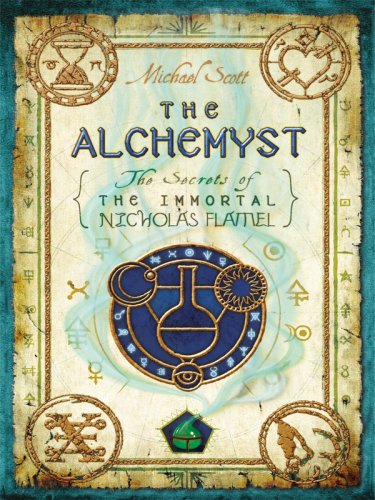
                • Cover of The Secrets of the Immortal Nicholas Flamel
                  The Secrets of the Immortal Nicholas Flamel

                  series · 15 books · 2007

                  similar bywizardsour worldcontemporaryadventurous

                  The Secrets of the Immortal Nicholas Flamel is a series of six fantasy novels written by Irish author Michael Scott, completed in 2012. The first book in the series, The Alchemyst, was released in 2007, and the sequels were released at the rate of one per year, concluding with The Enchantress in 2012. The cover artist for the series is Michael Wagner.

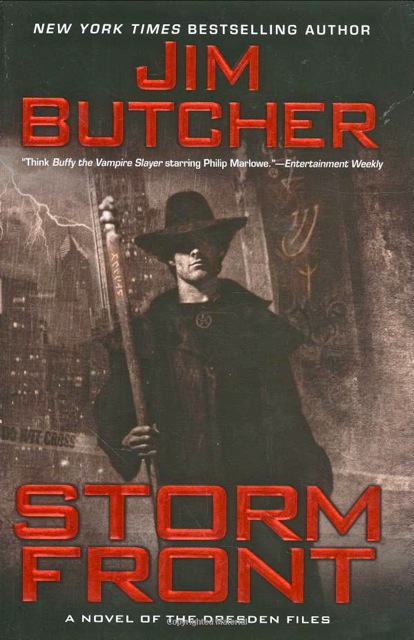
                • Cover of The Dresden Files
                  The Dresden Files

                  series · 56 books · 2000

                  similar bywizardscontemporary+2 more

                  The Dresden Files is an urban fantasy series written by American author Jim Butcher. The novels are narrated from the first-person perspective of Harry Dresden, a private detective and wizard, as he investigates supernatural disturbances in contemporary Chicago. The first entry, Storm Front, was published in 2000 by Roc Books.

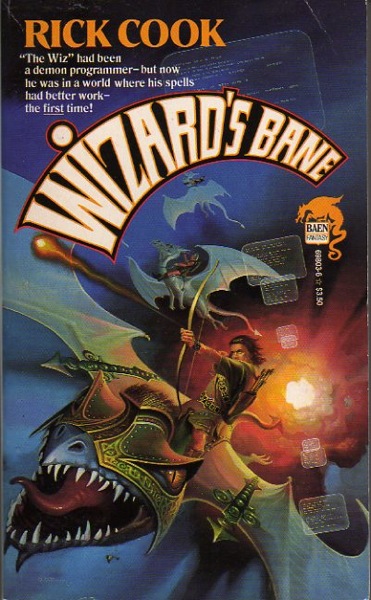
                • Cover of Wizardry
                  Wizardry

                  series · 5 books · 1989

                  completed

                  similar bywizards+2 more

                  Wizardry is Rick Cook's comic fantasy series that begins with Wizard's Bane (1989), continuing through The Wizardry Compiled, The Wizardry Cursed and The Wizardry Consulted to The Wizardry Quested. It follows a computer programmer pulled into a magical world, who discovers that spells behave like code and starts building programming tools to hack the local system of magic. The 'Wiz Biz' omnibus titles collect these same novels rather than adding new story.

                • Cover of Ottawa and the Valley
                  Ottawa and the Valley

                  series · 17 books · 1984

                  similar bycontemporary

                  Charles de Lint set several of his early urban fantasies in and around Ottawa before creating his better-known invented city of Newford. Moonheart (1984) follows antique-store owner Sara Kendell and her uncle after a mysterious ring pulls them into the Otherworld, where they team up with a wizard and a Welsh bard against forces threatening both worlds; its sequel Spiritwalk continues their story, while other novels and story collections gathered under this heading -- including Yarrow and Greenmantle -- share the same Ottawa-area setting and folklore-steeped approach to modern fantasy.

                • Cover of Hexwood
                  Hexwood

                  Diana Wynne Jones · standalone novel · 1993

                  similar byscience fantasymysteriouscontemporary+1 more

                  Hexwood is a 1993 fantasy/science fiction novel for young adults, written by British author Diana Wynne Jones.

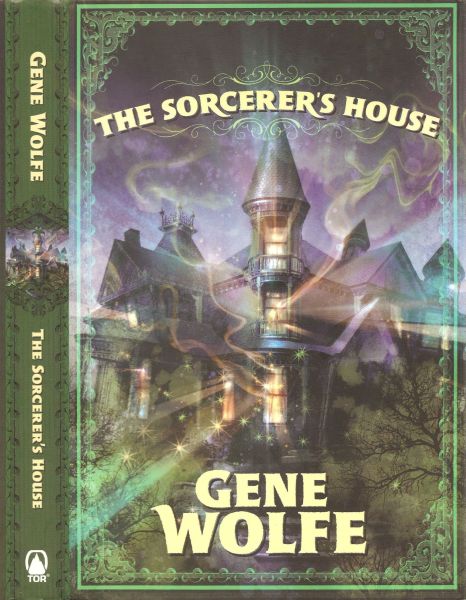
                • Cover of The Sorcerer's House
                  The Sorcerer's House

                  Gene Wolfe · standalone novel · 2010

                  similar bymysteriousour worldcontemporary+1 more

                  The Sorcerer's House is a 2010 epistolary fantasy novel by Gene Wolfe. It was published by Tor Books.

                • Cover of Young Wizards
                  Young Wizards

                  series · 24 books · 1983

                  similar bywizardsour worldcontemporaryadventurous

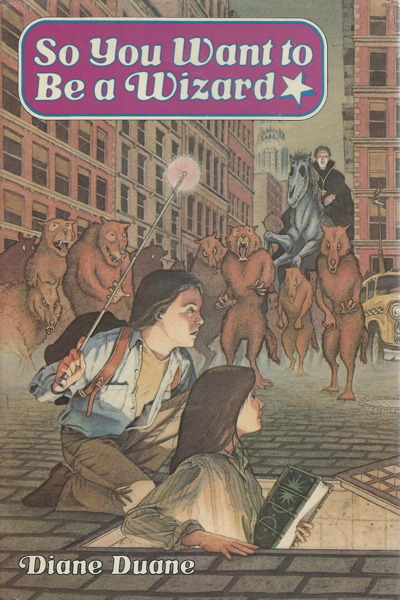
                  Diane Duane's Young Wizards series begins with thirteen-year-old Nita, bullied and friendless, who borrows a library book on wizardry and discovers it's the real thing: an apprenticeship into a covert order that fights entropy, alongside a classmate named Kit. Across fifteen books published between 1983 and 2019, the two age forward in something close to real time as their missions escalate from New York streets to alien worlds and beyond. The series centers on the wizard's Oath and the idea that magic is a responsibility taken on to slow the universe's decay, not a power to be enjoyed for its own sake.

                • Cover of Alex Verus
                  Alex Verus

                  series · 14 books · 2012

                  similar bycontemporary+2 more

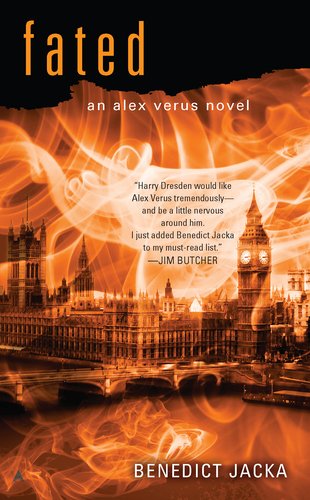
                  Benedict Jacka's urban fantasy series follows Alex Verus, a diviner - a mage who can see probable futures - running a small magic shop in London while trying to stay independent of the Light and Dark mage councils that both distrust him for his past as apprentice to a dark mage. Starting with Fated, the series escalates from small jobs and favors into open conflict with the Council structure and Alex's own former master, as his precognitive gift proves more dangerous to wield than it first appears. It is a long-running, tightly serialized series rather than standalone urban-fantasy cases.

                • Cover of The Night Circus
                  The Night Circus

                  Erin Morgenstern · standalone novel · 2011

                  similar bymysteriousour world+1 more

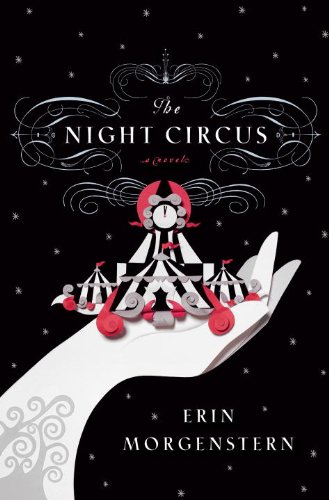
                  The Night Circus is a 2011 speculative fiction novel by Erin Morgenstern. It was originally written for the annual writing competition National Novel Writing Month (NaNoWriMo) over the span of three competitions. The novel has a nonlinear narrative written from multiple viewpoints.

                • Cover of Alchemy
                  Alchemy

                  Margaret Mahy · standalone novel · 2002

                  similar bywizardsmysteriousour worldcontemporary

                  Seventeen-year-old Roland discovers that an unpopular girl in school is studying alchemy and finds that their destiny is linked with that of a power-hungry magician.

                • Cover of The Chaos Chronicles
                  The Chaos Chronicles

                  series · 3 books · 2005

                  similar byscience fantasycontemporary+3 more

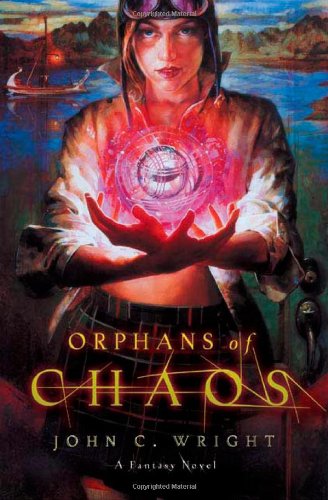
                  John C. Wright is an American writer of science fiction and fantasy novels. He was a Nebula Award finalist for his fantasy novel Orphans of Chaos. Publishers Weekly said he "may be this fledgling century's most important new SF talent" when reviewing his debut novel, The Golden Age.

                • Cover of The Windrose Chronicles
                  The Windrose Chronicles

                  series · 9 books · 1986

                  similar by+3 more

                  The Windrose Chronicles is Barbara Hambly's fantasy quartet, opening with The Silent Tower and continuing through The Silicon Mage and the Locus Award-nominated Dog Wizard (Del Rey, 1993). Hambly, known for setting much of her fantasy and science fiction inside an explicit multiverse rather than one fixed world, extended the series with the later, more loosely connected Stranger at the Wedding. The core trilogy follows the same cast across all three books rather than functioning as standalone entries.

                • Cover of The Accidental Alchemist
                  The Accidental Alchemist

                  series · 11 books · 2015

                  similar bycontemporary+1 more

                • Cover of Jonathan Shade
                  Jonathan Shade

                  series · 19 books · 2011

                  similar byour worldcontemporary

                • CB
                  Charlie Bone Universe

                  series · 14 books · 2002

                  similar bycontemporaryadventurous+1 more

                • Cover of The Seer (Linda Joy Singleton)
                  The Seer (Linda Joy Singleton)

                  series · 6 books · 2004

                  similar byour worldcontemporary+1 more

                • Cover of Johnny Dixon and the Professor
                  Johnny Dixon and the Professor

                  series · 13 books · 1983

                  similar bycontemporary

                  Johnny Dixon is a fictional American boy featured in a series of twelve children's gothic horror novels, 1983 to 1999, written by John Bellairs or his successor Brad Strickland. In each book, 12-year-old Johnny and his group of friends face and overcome evil forces usually bent on ending the world. Alternatively, Johnny Dixon is the book series.