More like Rebels
anchored on:fantasy
but
- Earthsea Cycle
series18 books1964
completed
part of Earthsea
similar byfantasysecondary world
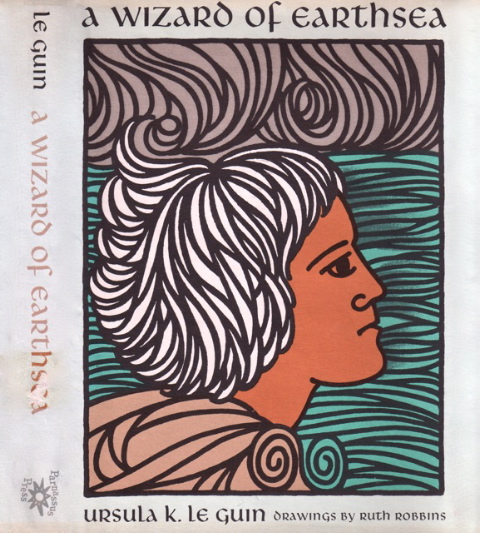
The Earthsea Cycle, also known as Earthsea, is a series of high fantasy books written by American author Ursula K. Le Guin. Beginning with A Wizard of Earthsea (1968), The Tombs of Atuan (1970), and The Farthest Shore (1972), the series was continued in Tehanu (1990), and Tales from Earthsea and The Other Wind. In 2018, all the novels and short stories were published in a single volume, The Books of Earthsea: The Complete Illustrated Edition, with artwork by Charles Vess.
- Cosmere
universe54 books2005
Start hereThe Final Empire · Start here
similar byfantasysecondary world+1 more
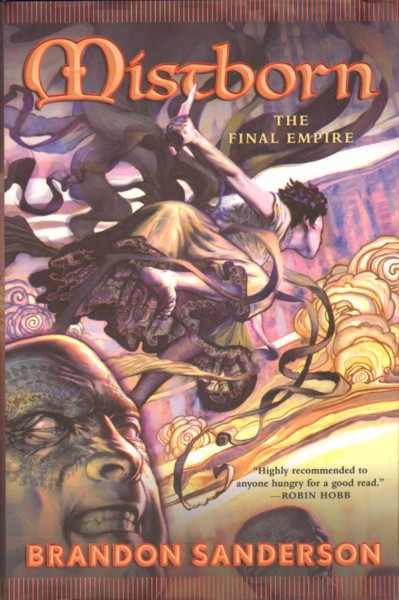
Before the worlds, there was Adonalsium, and then there was not. A god shattered into sixteen Shards of raw creative power, and those who seized them carried their fragments across the void to seed new planets, new peoples, new ways of working the impossible. The Cosmere is the one universe those Shards made: a scattering of worlds that seem, at first, to share nothing but a sky, until you notice the same law running quietly beneath each of them, and the same silent traveler passing through their margins. Every world keeps its own book and its own magic. On Scadrial, the Mistborn cycle burns metals into power: a self-contained trilogy of thieves and tyranny, followed by a second era that drags the same world into gunslinging early industry. On storm-battered Roshar, The Stormlight Archive raises its vast, ongoing epic around knights, spren, and oaths spoken aloud. Elsewhere stand the shorter keystones: Elantris, a city of fallen gods; Warbreaker, a tale of returned dead and living color; White Sand, told in graphic-novel form under the twin suns of Taldain. Threaded between them run the novellas, from Tress of the Emerald Sea and Yumi and the Nightmare Painter to The Sunlit Man and the pieces gathered in Arcanum Unbounded, where the hidden connections surface most plainly. All of it is the design of one hand, Brandon Sanderson, working a single pattern across two decades. What sets this universe apart is its faith in rules: magic here is a system, lawful and learnable, so discovery feels less like wonder handed down than like physics worked out. The cross-connections reward the patient reader, a symbol here, a name there, one immortal wanderer everywhere, but no book demands you have read another first. Newcomers do best entering through Mistborn: The Final Empire, the most self-contained doorway, or the standalone Elantris or Warbreaker; readers who prefer their epics vast can begin with The Way of Kings. The deeper links, and the novellas that expose them, wait for whenever you are ready to look.
- Dalemark
series4 books1975
completed
similar byfantasysecondary world+1 more
Diana Wynne Jones' Dalemark Quartet is set in a divided fantasy land where the harsher North and the aristocratic South carry deep-rooted enmity, spanning stories centuries apart within the same history. Cart and Cwidder follows young Moril, who inherits his murdered musician father's magical instrument, the cwidder, and must decide how to use its power as war between North and South threatens; the linked books move both earlier and later in Dalemark's history rather than following straight chronological order, with the concluding Crown of Dalemark drawing the strands together. Jones wrote the books out of their internal chronological sequence, so publication order and story order diverge across the quartet.
- Shannara
universe50 books1977
Start hereWord and the Void · The very beginning of the timeline
similar bysecondary worldfantasy+1 more
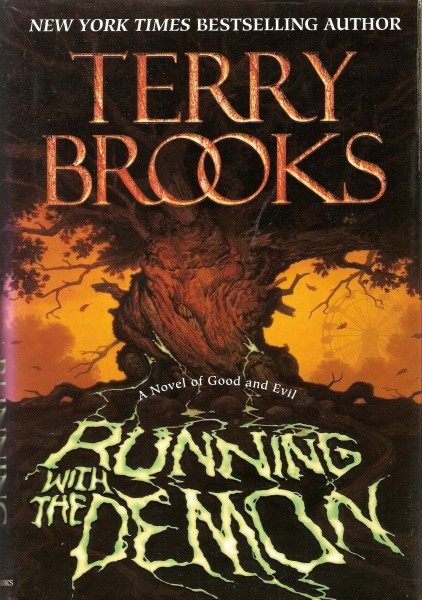
Long after the world we know has burned itself to slag in the Great Wars, the Four Lands rise green over the bones of the old age. Science is a forbidden memory; magic has come back into the world, and with it the old divisions — Men, Elves, Dwarves, Trolls, and Gnomes, each Race a splinter of what humanity became. This is the far-future Earth of Shannara, where the ruins buried beneath the soil are ours, and the only keepers of the vanished knowledge are the Druids of Paranor, who wake once a generation to meet the darkness rising again. Terry Brooks opened the Four Lands in 1977 with The Sword of Shannara and has charted its history for four decades since — a legendarium ordered not by throne but by a single bloodline, the Ohmsfords, each generation inheriting an Elfstone, a blade, or a wishsong when the age demands a hero. The original trilogy gives way to the Heritage of Shannara, the Voyage of the Jerle Shannara, the High Druid, Dark Legacy, Defenders, and the concluding Fall of Shannara; the Genesis of Shannara books reach back to the apocalypse itself, and the Word and the Void trilogy back further still, into a demon-haunted version of our own present that is the root of everything after. In 2025 Brooks passed the histories to Delilah S. Dawson to carry forward. What sets these books apart is their long memory: a world where every triumph is provisional, where the same evil returns wearing a fresh shape each age, and magic always exacts its price. The reading is warm and headlong — questing companies, old talismans, journeys across a mapped and named wilderness — shadowed by the knowledge that all of it stands on the wreckage of a former world. Enter as readers first did: with The Sword of Shannara, then onward in publication order. The chronological path, beginning with Word and the Void, rewards a second journey, once the Four Lands already feel like home.
- Sun Wolf and Starhawk
series7 books1984
similar byfantasyadventuroussecondary world+2 more
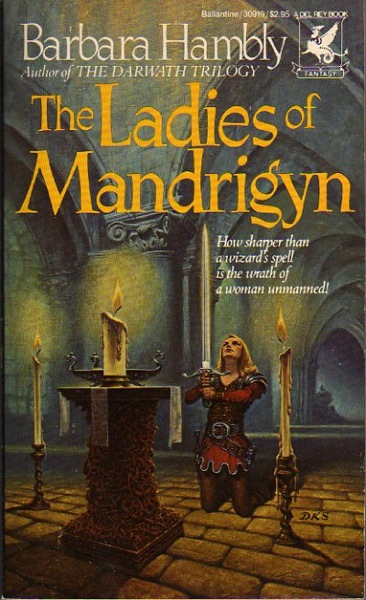
Barbara Hambly's series begins with the city of Mandrigyn conquered and its men enslaved in the mines of the wizard-king Altiokis, forcing surviving noblewoman Sheera Galernas to kidnap the mercenary captain Sun Wolf and press him into training the city's women as fighters. Sun Wolf's partnership with his lieutenant Starhawk carries across The Ladies of Mandrigyn, The Witches of Wenshar, and further volumes as both are drawn deeper into magic neither originally wanted.
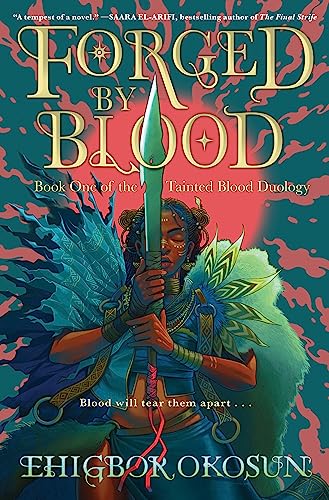
- The Tainted Blood Duology
series2 books2023
similar byfantasyadventurousrebellion and revolutionsecondary world+1 more
- Howl's Castle
series3 books1986
completed
similar byfantasyadventuroussecondary world+1 more
Howl's Moving Castle (1986) follows Sophie Hatter, cursed by the Witch of the Waste into an old woman's body, who takes refuge in the wandering castle of the wizard Howl and strikes an uneasy bargain with his fire demon Calcifer while trying to break the spell. Diana Wynne Jones returned to the same magical kingdom in Castle in the Air (1990), following a new lead character, Abdullah, with Sophie and Howl appearing in supporting roles, and again in House of Many Ways (2008).
- The Hobbit
series2 books1937
completed
part of Tolkien's legendarium
similar byfantasyadventuroussecondary world
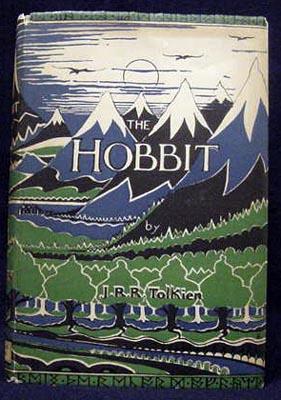
The Hobbit (1937) is J. R. R. Tolkien's children's fantasy novel following the reluctant burglar Bilbo Baggins, who joins a company of dwarves and the wizard Gandalf on a journey to reclaim treasure guarded by the dragon Smaug. It stands as a complete adventure on its own, but shares its setting with the rest of Tolkien's legendarium and leads into the events of The Lord of the Rings.
- Three Hearts and Three Lions
series3 books1961
similar byfantasyadventuroussecondary world+1 more
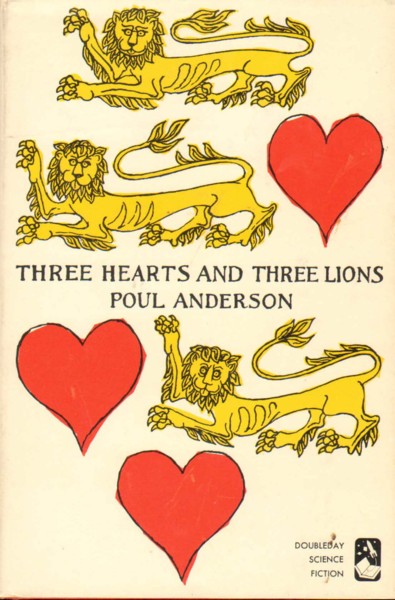
Three Hearts and Three Lions (1961, expanded from a 1953 novella) follows Holger Carlsen, a Danish resistance fighter wounded fighting the Nazis, who wakes in a medieval world of knights, dragons, and sorcery drawn from Carolingian legend. Poul Anderson wrote it as a self-contained portal fantasy; the later story Three Lilies and Three Leopards, by Harry Turtledove and Tad Williams, is a tribute piece published in an anniversary anthology rather than a true narrative sequel.
- The Quest of the Riddle-Master
series3 books1976
completed
similar byfantasyadventuroussecondary world+1 more
Patricia A. McKillip's Riddle-Master trilogy follows Morgon, prince of the small island of Hed, whose discovery of three star-shaped birthmarks on his forehead draws him into a search for his own hidden identity and a confrontation with ancient, shape-shifting powers. Drawing on Celtic myth, the three books are prized for their lyrical prose and riddle-based magic, and are often cited among the best high fantasy of the 1970s.
- Song of the Lioness
series5 books1983
part of Tortall
similar byfantasyadventuroussecondary world
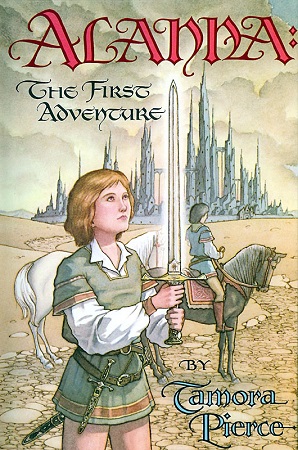
The Song of the Lioness is a young adult series of fantasy novels published in the 1980s by Tamora Pierce. The series consists of four books: Alanna: The First Adventure (1983), In the Hand of the Goddess (1984), The Woman Who Rides Like a Man (1986) and Lioness Rampant (1988).
- Damar
series6 books1982
similar byfantasyadventuroussecondary world
Robin McKinley's Damar novels are set in a desert kingdom threatened by invasion from the north. The Blue Sword follows Harry Crewe, an orphaned outsider drawn into the Hillfolk's magic and their war; The Hero and the Crown, a Newbery Medal-winning prequel, tells how the earlier book's legendary dragon-slayer Aerin earned her place in Damar's history. The two novels can be read in either order and were written eight years apart.
- A Song of Ice and Fire
series14 books1996
part of World of Ice and Fire
similar byfantasysecondary world
A Song of Ice and Fire is a series of high fantasy novels by the American author George R. R. Martin. Martin began writing the first volume, A Game of Thrones, in 1991, and published it in 1996. Martin, who originally envisioned the series as a trilogy, has released five out of seven planned volumes. The most recent entry in the series, A Dance with Dragons, was published in 2011. Since then, Martin has been working on the sixth novel, titled The Winds of Winter. A seventh novel, A Dream of Spring, is planned to follow.
- Legacy of Orisha
series3 books2018
similar byfantasyrebellion and revolutionsecondary world+2 more
Tomi Adeyemi's Legacy of Orïsha trilogy opens with Children of Blood and Bone, following Zélie, a girl from a persecuted caste of former magic-users, on a quest to restore magic to a kingdom that outlawed and hunted her people. Children of Virtue and Vengeance and Children of Anguish and Anarchy continue the fallout of that restoration as new factions fight over who gets to wield the returned power. The series draws on West African mythology and languages for its magic system and setting.
- The Old Kingdom / Abhorsen milieu
series11 books1995
similar byfantasysecondary world
The Old Kingdom, or Abhorsen in North America and the UK, is a fantasy series written by Australian author Garth Nix. It originated in 1995 with the novel Sabriel and has continued in the novels Lirael (2001), Abhorsen (2003), Goldenhand (2016), and Terciel & Elinor (2021), as well as a prequel novel titled Clariel (2014). The Old Kingdom also consists of the novella The Creature in the Case (2005) and various other short fiction.
- The Doomspell Trilogy
series3 books2000
similar byfantasyadventuroussecondary world+2 more
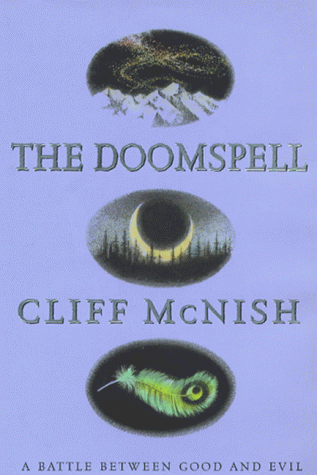
Cliff McNish is an English author of fantasy and supernatural novels for young adults. His best-known works include the 2006 ghost novel Breathe, The Silver Sequence, and The Doomspell Trilogy, which has been translated into 26 languages.
- The Black Magician Trilogy
series3 books2001
part of Kyralia series
similar byfantasymagic schoolssecondary world+1 more
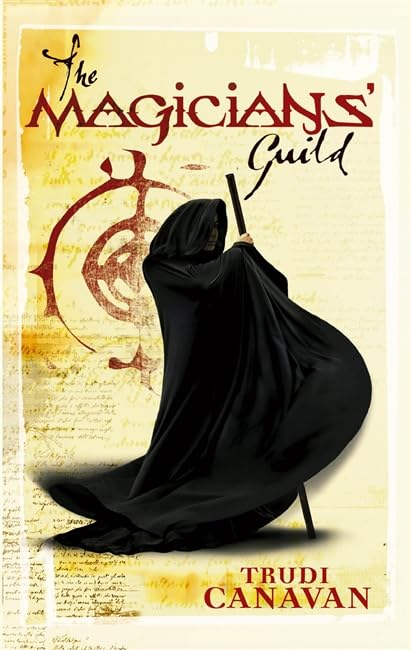
Trudi Canavan's Black Magician Trilogy (The Magicians' Guild, The Novice, The High Lord, 2001-2003) opens in the city of Imardin, where the ruling magicians' guild's annual purge of the slums goes wrong when a street girl named Sonea unknowingly shatters their protective shield with raw, untrained power. The guild must hunt her down and decide whether to control her or train her, and the trilogy follows Sonea's forced initiation into magical society and the guild's internal politics. It's Canavan's best-known trilogy and the founding story of her Kyralia setting.
- Jack of Shadows
series4 books1971
similar byfantasyadventuroussecondary world+1 more
Roger Zelazny's Jack of Shadows (1971) is a single novel set on a tidally locked world split between a permanently lit hemisphere ruled by science and a permanently dark one ruled by magic. Its protagonist, Jack of Shadows, draws his power from shadow itself and is nearly helpless in full light or full darkness but formidable wherever shadows fall; the book follows his quest to recover a lost artifact, the Key called Kolwynia, and the power -- and responsibility -- that comes with finding it.
- Magic Goes Away
series22 books1969
similar byfantasysecondary world+2 more
The Magic Goes Away began as a Larry Niven novella imagining a prehistoric Earth where magic is a finite, minable resource — an explicit response, by Niven's own account, to the 1973 oil shock — in which sorcerers who draw too hard on the world's dwindling mana bring on catastrophe. Niven opened the setting to other writers for follow-up anthologies (The Magic May Return, More Magic) and let Fred Saberhagen write a solo novel in it, The Time of the Warlock, making it a shared-world series about the last age of magic rather than one continuous story.
- Princess Academy
series3 books2005
similar byfantasymagic schoolssecondary world
Shannon Hale's Princess Academy trilogy (Princess Academy, 2005; Palace of Stone, 2009; The Forgotten Sisters, 2015) begins with Miri, a mountain quarry girl sent to a school built to prepare local girls for the chance that the prince will choose one of them as his bride. The sequels follow Miri to the capital, where she navigates court intrigue while studying, and then out to a remote swamp kingdom as tutor to three sisters caught up in a succession crisis.
- Discworld
universe84 books1983
Start hereGuards! Guards! · Start here
similar byfantasysecondary world
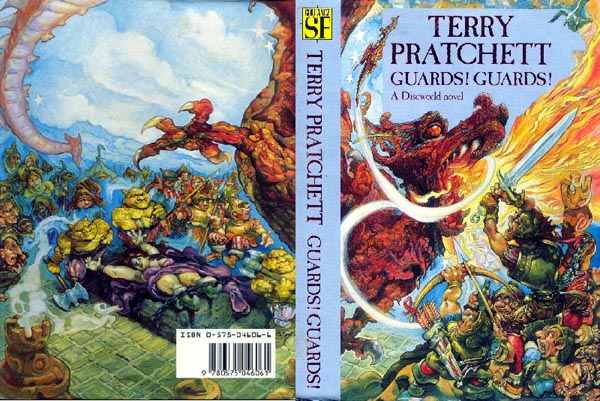
The Disc is flat. It rides on the backs of four elephants, who in turn stand on the shell of Great A'Tuin, a turtle ten thousand miles long, swimming through space toward nowhere in particular. Magic works here, usually badly. Death speaks IN SMALL CAPITALS and rides a horse called Binky. It looks like a fantasy world and behaves like ours with the safety catch off: a mirror held up to bureaucracy, belief, newspapers, money, war, and the ridiculous, stubborn business of being a person. One hand shaped all of it — Terry Pratchett — across forty-one novels and a shelf of companions, maps, and the Science of Discworld books. The world is braided from strands you can pick up on their own. Rincewind, the cowardly wizard, flees across the Disc (The Colour of Magic). The witches of Lancre, led by the formidable Granny Weatherwax, mind everyone's business (Equal Rites, Wyrd Sisters). Death takes on an apprentice (Mort). The City Watch polices grimy Ankh-Morpork under Commander Vimes (Guards! Guards!). A reformed swindler is given honest work at swordpoint (Going Postal), and young Tiffany Aching learns witching alongside the tiny, larcenous Nac Mac Feegle (The Wee Free Men). Standalones like Small Gods sit apart. The trick of it is that the farce turns, mid-joke, into something that catches in the throat, with footnotes that argue back at the page. Newcomers are gently steered away from the beginning: the early Rincewind books spoof a genre you needn't have read. Enter instead by whichever strand calls — Guards! Guards! for the Watch, Mort for Death, Wyrd Sisters for the witches, Small Gods entirely alone, or The Wee Free Men for the sharpest single thread. Open any door and the whole Disc opens with it.