More like Remote Control
anchored on:young adultthriller & suspense
but
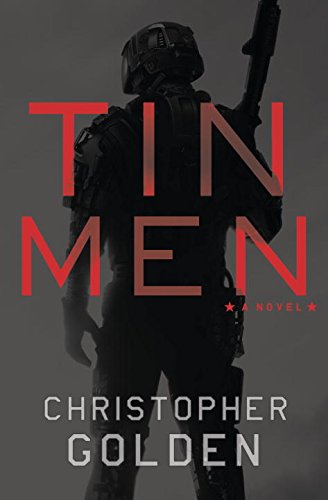
- Tin Men
Christopher Goldenstandalone novel2015
similar byrobotsthriller & suspenseour worldnear futuresurvivaltensescience fiction+1 more
"In the near future, the U.S. has deployed the Remote Infantry Corps: thousands of robots remote-piloted by soldiers whose bodies lie hidden in underground bases. But the worst occurs when anarchists set off a global pulse that shorts out electrical connections. In Damascus, Private Danny Kelso, Corporal Kate Wade, and their platoon realize they are trapped inside the Tin Men--something the government never warned them could happen. In Athens, the G20 Summit comes under fire, and a band of security soldiers and advisors risk everything in an effort to shepherd the President to safety. As chaos descends, and with anarchist Bot Killers on their trail, the Tin Men must survive a gauntlet of violence on the road from Damascus to the heart of Europe, half of them determined to stay true to their mission and save their president, half of them hellbent to save themselves.."--
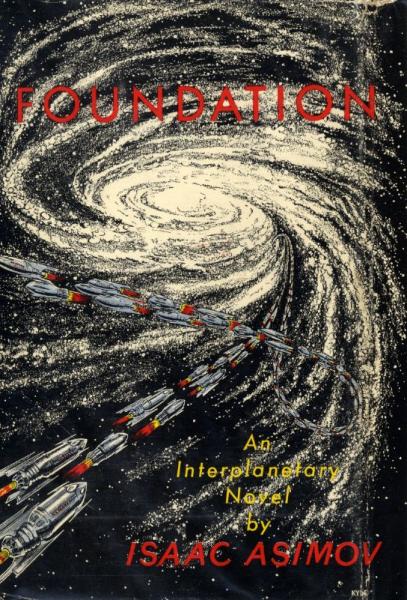
- Foundation Universe
universe123 books1940
Start hereFoundation · Start here
similar byrobotsscience fiction+1 more
There is a science that reads the future of quadrillions the way an astronomer reads the orbits of stars. It is called psychohistory, and its equations foresee something the ruling Galactic Empire cannot admit: the throne is rotting, and thirty thousand years of barbarism are coming. One man, Hari Seldon, cannot stop the fall. He can only shorten it — by seeding a Foundation of scholars at the rim of the galaxy, a fragile institution built to carry knowledge across the dark and cut the interregnum to a single millennium. This is a universe told in the register of history itself: the long view, the calm of deep time, empires measured in centuries and men measured against them. The spine is Asimov's original trilogy — Foundation, Foundation and Empire, Second Foundation — followed decades later by the sequels Foundation's Edge and Foundation and Earth and the prequels Prelude to Foundation and Forward the Foundation. Late in life Asimov braided this in with his other future histories: the Robot novels of detective Elijah Baley and his humaniform partner R. Daneel Olivaw (The Caves of Steel, The Naked Sun, The Robots of Dawn, Robots and Empire) and the early Galactic Empire novels (Pebble in the Sky and its kin), until one continuous chronicle ran from the first thinking robots to the Second Empire. Other hands extend it — the Second Foundation Trilogy by Gregory Benford, Greg Bear, and David Brin, and shared-world spinoffs such as Robot City — so the corpus sprawls beyond a single author's tidy shelf. What distinguishes it is that the drama is intellectual: crises resolved by insight, nerve, and dialogue rather than fleets and blades, each turn hinging on the hidden logic of the Seldon Plan. Begin where readers have always begun — with Foundation, and the original trilogy in publication order. The rest opens outward from there.
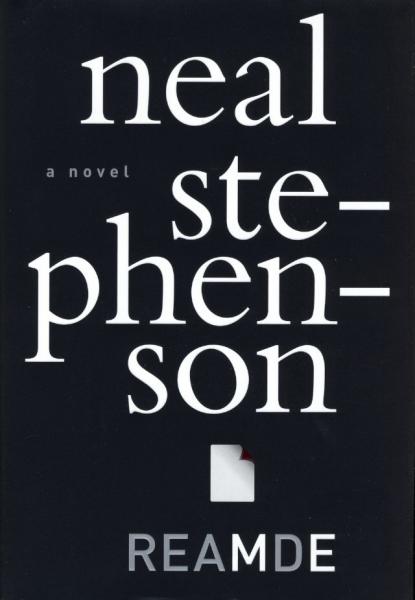
- Richard Forthrast
series2 books2011
similar byour worldscience fiction+4 more
Neal Stephenson's Richard 'Dodge' Forthrast novels open with Reamde, a globe-spanning thriller that starts when ransomware inside an MMORPG economy pulls Richard's extended family into a real-world hostage crisis involving hackers, jihadists and Russian mobsters. The sequel Fall; or, Dodge in Hell shifts registers entirely, following Richard's digitally preserved mind after death into an afterlife simulation built from his scanned brain. The two books share a protagonist and family but differ sharply in genre and scale.
- The Caretaker Trilogy
series3 books2006
similar bythriller & suspenseour worldnear futureyoung adulttensescience fiction+2 more
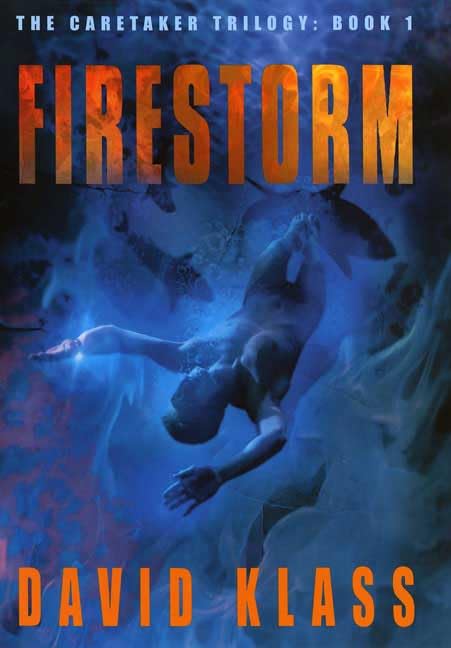
The Caretaker Trilogy is a series of science fiction thrillers with an ecological theme, written for young adults by David Klass. The first book in the series, Firestorm (2006), was the first book ever endorsed by Greenpeace and was praised by critics for its combination of entertainment value and environmental message, garnering an American Library Association (ALA) Best Book citation, a starred review from Publishers Weekly, and a favorable review by the New York Times Book Review. The story focuses on Jack Danielson, a teenager sent back from the future to save the world's oceans. Whirlwind, the second book in the Caretaker Trilogy, tells the story of Jack's efforts to save the Amazon rainforest; published in March 2008 by Farrar, Straus and Giroux. The third book in the trilogy is Timelock, published in 2009.
- Tripods
series4 books1967
completed
similar byour worldnear futureyoung adulttensescience fiction+2 more
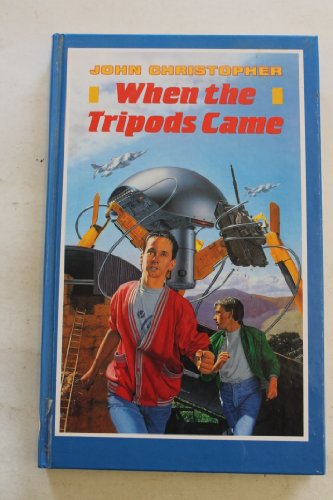
The Tripods is a series of young adult science fiction novels by John Christopher. The series takes place in a post-apocalyptic world where humanity is enslaved by "Tripods"—gigantic three-legged walking machines piloted by an alien race later identified as the "Masters". The first two books were the basis of a science fiction TV series, produced in the United Kingdom in the 1980s.
- Nemesis Saga
series8 books2012
similar bythriller & suspenseour worldsurvivaltensescience fiction+1 more
The Nemesis Saga is a series of six kaiju thriller novels written by American author Jeremy Robinson, featuring the massive Goddess of Vengeance Nemesis. Robinson noted that various classic kaiju films especially those featuring Godzilla and Gamera were big influences on the series.
- Dangerous Reality
Malorie Blackmanstandalone novel1999
similar byrobotsthriller & suspenseour worldnear futureyoung adulttensescience fiction
Dominic is really proud of his Mum, she invented VIMS. She's also about to marry Jack which will give Dominic the best stepdad he could wish for. VIMS can do anything, disarm a landmine, hold a baby. But when VIMS attacks violently without warning, Dominic realizes it is no longer a fantastic game. Suggested level: intermediate, junior secondary.
- H. G. Wells' War of the Worlds
universe65 books1898
Start hereThe War of the Worlds · Start here
similar byscience fiction+2 more
No one would have believed, in the closing years of the nineteenth century, that human affairs were being watched keenly and closely from the timeless worlds of space. And then the cylinders fell. H. G. Wells' War of the Worlds opens in the quiet of the Surrey commons, where a falling star proves to be the first Martian craft — and from the pit rise the towering tripods, the Heat-Ray, the choking Black Smoke and the creeping red weed, wielded by minds that regard mankind much as we regard the creatures we boil for supper. This is invasion rendered as natural disaster: cold, methodical, and vast beyond argument. Wells' 1898 novel is the seed; everything else grows from that Martian soil. The catalogue gathers direct sequels and continuations alongside a wide field of other hands. In War of the Worlds: Global Dispatches the invasion is retold across the whole planet through the eyes of Twain, Verne, Tolstoy, Lowell and Kipling; in the Manly Wade and Wade Wellman crossover, Sherlock Holmes, Watson and Professor Challenger take the field against the machines; and Scott Washburn's Great Martian War stretches the fighting into a decades-long alternate history of steam, artillery and grinding attrition. It is a loose shared world — no single decreed sequence, many voices answering one calamity. What sets this world apart is its refusal of heroics: the invaders fall not to generals but to the smallest things of Earth, humbling and indifferent. Begin, always, with Wells' original novel — it is short, and it is the ground every later book stands upon. From there follow your appetite: Global Dispatches for the panorama, the Holmes campaign for adventure, Washburn for the long war.
- Jumper
series6 books1992
similar byadventuroustensescience fiction+3 more
Jumper follows David Rice, a teenager who discovers he can teleport anywhere he's been and uses the power to escape an abusive home, only to find that ability alone doesn't solve the harder problems of finding his absent mother, building an honest relationship, or staying off the radar of people who'd exploit him. Steven Gould's series continues across Reflex, Impulse, and Exo, later following his and his wife's daughter as a second-generation jumper. A 2008 film loosely adapted the first novel.
- Forge of God
series2 books1987
completed
similar bysurvivaltensescience fiction+3 more
The Forge of God (1987) is Greg Bear's science fiction novel about Earth's discovery that it is the target of an incomprehensible, overwhelming alien attack, following scientists and ordinary people as they try to understand what is destroying the planet. Its 1992 sequel, Anvil of Stars, follows a group of young survivors sent on a mission of interstellar retaliation, continuing directly from the first book's ending.
- H. I. V. E.
series10 books2006
similar bynear futuretensescience fiction+4 more
Mark Walden's series is set at H.I.V.E. (the Higher Institute of Villainous Education), a hidden academy training the next generation of criminal masterminds, following orphan genius Otto and fellow students Wing, Laura, and Shelby as they navigate the school's twisted curriculum while plotting to escape it. The premise plays school-story conventions against a supervillain backdrop across more than a dozen books.
- Quantum Gravity
series6 books2006
similar bynear future+4 more
Justina Robson's Quantum Gravity series opens with Keeping It Real, set six years after a catastrophic 'Quantum Bomb' tore open the boundaries between Earth and other dimensions, leaving humans in uneasy contact with elves, elementals, and demons. The series follows cyborg special agent Lila Black across five novels as magic and technology collide.
- Maximum Ride
series12 books2005
similar byadventurousour worldsurvivalyoung adultscience fiction+2 more
Maximum Ride is a series of young adult science fantasy novels by American author James Patterson. The series centers on the adventures of Maximum "Max" Ride and her family, called the Flock, who are winged human-avian hybrids created at a lab called The School. The series was inspired by Patterson's earlier novels When the Wind Blows and The Lake House, which were intended for older readers.
- Future History
series42 books1939
completed
similar byscience fiction+3 more
The Future History is a series of science fiction stories written by American author Robert A. Heinlein (1907–1988). It describes a projected future of the human race from the middle of the 20th century through the early 23rd century. The term Future History was coined by John W. Campbell Jr. in the February 1941 issue of Astounding Science Fiction. Campbell published an early draft of Heinlein's chart of the series in the May 1941 issue.
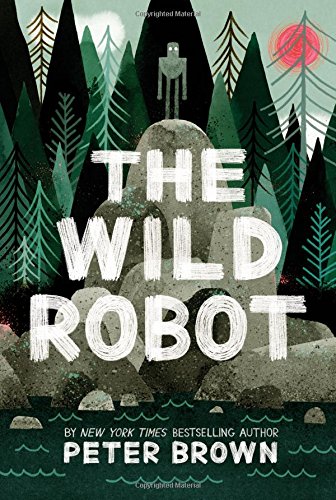
- The Wild Robot
series4 books2016
similar byrobotsnear futurescience fiction+4 more
Peter Brown's 2016 novel follows a robot washed ashore on a remote island who ends up raising an orphaned gosling, adapting to wild island life among animals unused to her presence. It was later adapted into the 2024 animated film of the same name. The Wild Robot Escapes and The Wild Robot Protects continue the same character's story across the rest of the trilogy.
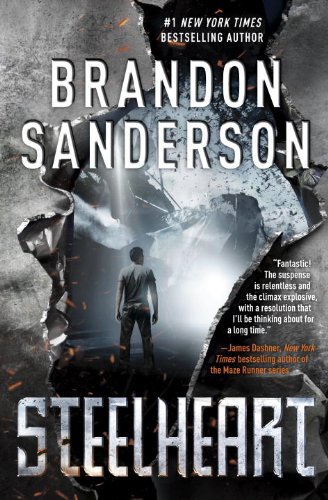
- Reckoners
series6 books2013
similar byadventurousnear futureyoung adulttensescience fiction+2 more
The Reckoners is a series of young adult superhero novels written by American author Brandon Sanderson. The series consists of Steelheart (2013), Firefight (2015), Calamity (2016) and Lux (2021). The series depicts a post-apocalyptic world in which the appearance of an orbiting cosmic phenomenon known as Calamity has given random people superhuman powers in apparent defiance of known physical laws, turning them into "Epics". These Epics prey upon or enslave the rest of humanity, causing the collapse of traditional governments. One young man orphaned by a High Epic joins a group that is killing Epics.
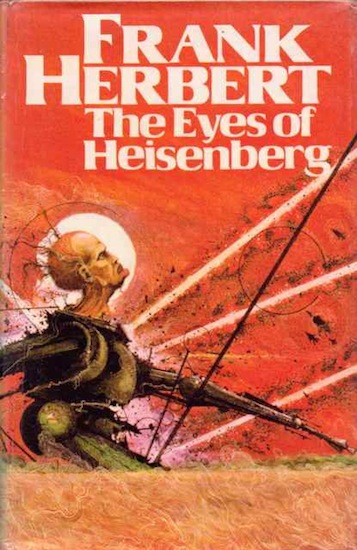
- The Eyes of Heisenberg
Frank Herbertstandalone novel1966
similar bythriller & suspenseour worldtensescience fiction+1 more
Tens of thousands of years in the future, Earth is ruled by the Optimen, a genetically engineered aristocracy that has made itself functionally immortal, while ordinary people, the Folk, live under strict reproductive control. When Harvey and Lizbeth Durant arrive to have their embryo genetically screened, the examining doctor finds something in the child no one has seen in a very long time: real potential for both fertility and life span, traits the Optimen have arrogated to themselves. Rather than destroy the embryo as policy demands, the doctor hesitates, setting off a chain of surveillance, suspicion and resistance. A tightly wound Frank Herbert thriller about genetic caste and rebellion.
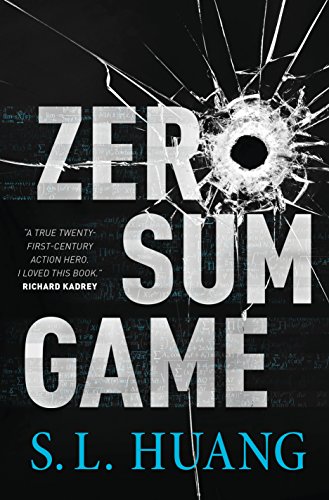
- Cas Russell / Russell's Attic
series5 books2014
similar bythriller & suspenseadventurousour worldnear futuretensescience fiction
- Blade Runner Universe
series6 books1968
similar byrobotsnear futurescience fiction+2 more
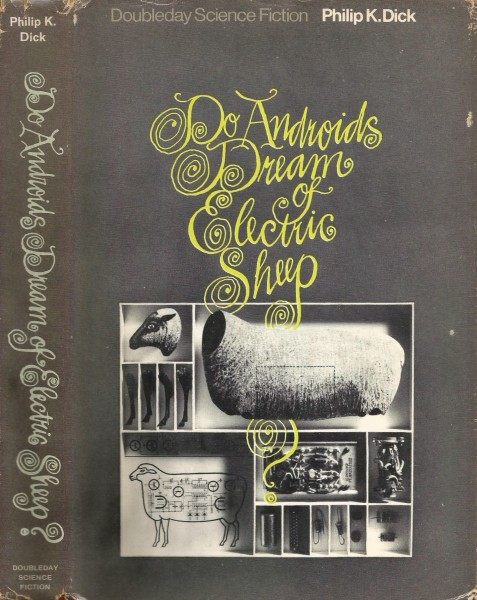
Philip K. Dick's 1968 novel Do Androids Dream of Electric Sheep? follows bounty hunter Rick Deckard as he tracks escaped androids through an irradiated, near-abandoned San Francisco, using the hunt to probe questions of empathy and what separates human from machine. The novel became the basis for Ridley Scott's 1982 film Blade Runner, and Marvel Comics later published an illustrated adaptation of that film. Together the two trace the story's path from prose original to screen and comic-page adaptation.