More like Replicants
anchored on:science fiction
but
- Dune
series20 books1963
part of Dune Universe
similar byscience fictionfar futureother star systemsspace opera+2 more
Frank Herbert's Dune Chronicles opens with 1965's Dune, set on the desert planet Arrakis where House Atreides takes control of the only source of the vital spice melange and young Paul Atreides is pulled into a struggle over its politics and religion. Herbert carried the story forward across five further novels — Dune Messiah, Children of Dune, God Emperor of Dune, Heretics of Dune, and Chapterhouse: Dune — following Paul's line over the following millennia, before Brian Herbert and Kevin J. Anderson later extended the saga. Many other editions of these six novels are omnibus and box-set repackagings rather than separate stories.
- Dune Universe
universe78 books1963
Start hereDune · Start here
similar byscience fictionfar futureother star systemsspace opera+1 more
Arrakis. Dune. The desert planet, where empire runs on a single substance: the spice melange, which folds space, prolongs life, and unlocks prescience, and which exists nowhere else in the known universe. Frank Herbert's saga is a meditation dressed as an adventure — feudal houses and a secret sisterhood, engineered messiahs and the patient ecology of a world without water, all turning on the terrible gravity of who commands the spice. It reads like scripture and schemes like a war room, ten thousand years hence, among people who have outlawed the thinking machine and made instruments of themselves instead. At its heart stand Herbert's original six — Dune, Dune Messiah, Children of Dune, God Emperor of Dune, Heretics of Dune, Chapterhouse: Dune — a single deepening arc across millennia, arguing the whole way between prophecy and free will. Around that spine his son Brian Herbert and Kevin J. Anderson have raised a vast prequel architecture: Prelude to Dune, tracing the great houses a generation before Paul; Legends of Dune, reaching back to the crusade that broke the machines; the Schools of Dune cycle on the founding of Bene Gesserit, Mentat, and Navigator; the Caladan Trilogy and Heroes of Dune filling years the originals left in shadow. Many hands, dozens of volumes, one desert. What sets Dune apart is its refusal of the simple: religion is manufactured, heroes are hazards, and the sand itself — worm, water, ecology — acts as a political power. Begin where the universe did, with Frank Herbert's Dune (1965), and read the original six in order; you need nothing else to feel the full weight. The prequels are a country to explore afterward, taken by era. Beginnings are delicate times.
- Old Man's War
series16 books2005
similar byscience fictionfar futurespaceother star systemsadventurousspace opera+1 more
The Old Man's War series is a series of science fiction novels by John Scalzi. The first book in the series, Old Man's War, was first published in 2005 by Tor Books, and was nominated for the Hugo Award for Best Novel in 2006. In 2026 it was a finalist for the Hugo Award for Best Series.
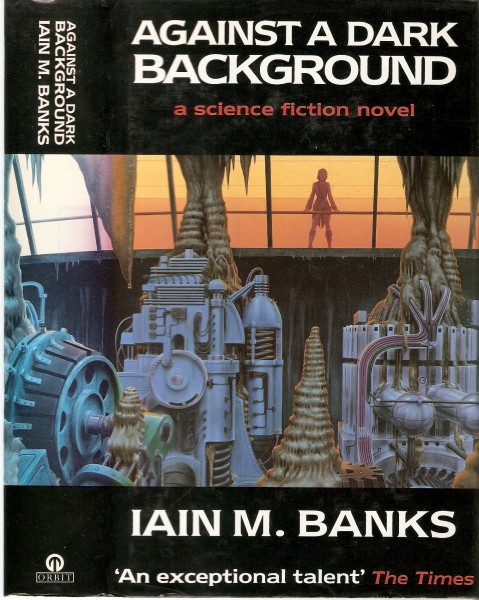
- Against a Dark Background
Iain M. Banksstandalone novel1993
similar byscience fictiontensefar futurespaceother star systemsadventurousspace opera+1 more
The daughter of an impoverished noble house and her squad of soldiers become thieves of antiquities; long after their retirement and separation she must assemble them again in order to find and steal the most powerful weapon ever created, or pay with her life.
- Alliance-Union Universe
universe173 books1976
Start hereCompany Wars · The central sequence
similar byscience fictionfar future+5 more
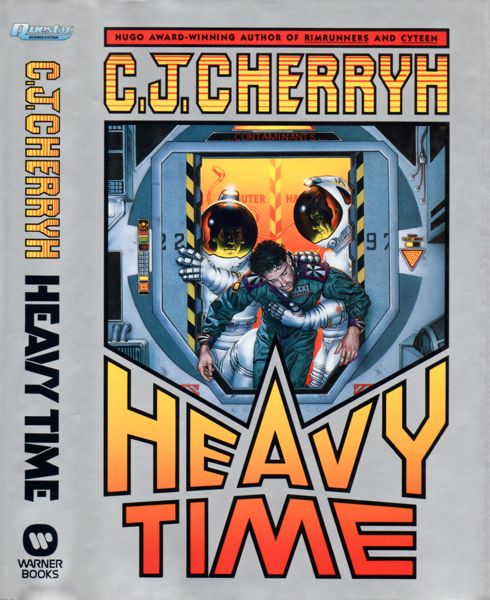
The dark between the stars belongs to no one, and everyone who lives out here knows it: the merchanter Families hauling cargo between stations that cannot feed themselves, the Earth Company clutching at colonies it can no longer supply, the Union breeding its cloned azi to settle worlds faster than birth allows. C. J. Cherryh's Alliance-Union is a future history of humankind's spread across the third and fourth millennia, told from inside the pressure — no clean empires, only stations, ships, treaties, and the people caught in the machinery of who holds the jump-points. The sequence runs from the first laborious pre-FTL stations through the Company Wars, the independence struggle that breaks over Pell in Downbelow Station (Hugo, 1981), to the genetics and cold politics of Union's homeworld in Cyteen (Hugo, 1988) and its sequel Regenesis. Around that spine cluster the merchanter novels of trader Families, the Faded Sun trilogy of human envoys among the martial alien Mri, and the Chanur books, narrated from the hierarchical, whiskered viewpoint of the hani. On the isolated world of Merovin, the Merovingen Nights anthologies open the setting to other hands — Mercedes Lackey, Janet and Chris Morris, Nancy Asire — a shared world braided into the whole. What sets it apart is intimacy at scale. Cherryh drops you without a map into a single skull and lets you assemble the politics from what that person fears and bargains for; the aliens are genuinely alien, loyalty is always provisional, and the real antagonist is usually logistics. Most books stand alone, in her words, "like real history." The surest way in is Downbelow Station — the war seen from one besieged station — then Cyteen, for the mind that shaped the other side.
- Takeshi Kovacs
series3 books2002
similar byscience fictiontensefar futureother star systems+1 more
Takeshi Kovacs is a former elite soldier turned freelance troubleshooter in a future where human consciousness can be digitized and transferred between bodies, or sleeves, making death an inconvenience for those who can afford new ones. Richard Morgan's trilogy - Altered Carbon, Broken Angels, Woken Furies - moves Kovacs through noir-inflected mysteries on different worlds, using the resleeving premise to interrogate class, violence, and what, if anything, survives a person's original body. It became the basis for a Netflix series.
- Mickey7
series2 books2022
similar bycloningscience fictiontensefar futurespaceother star systems+2 more
- Vorkosigan
universe27 books1986
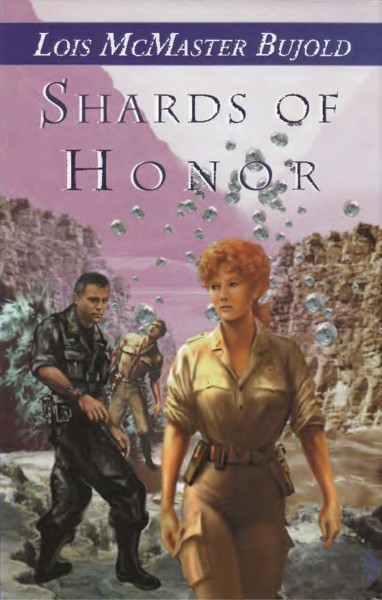
Start hereShards of Honor · Chronological start
similar byscience fictionfar futureother star systemsspace opera+3 more
On Barrayar they will tell you that a man is measured by his forebears and the straightness of his spine — which is a difficulty for Miles Vorkosigan, born brittle-boned and half-height into the highest military caste of a planet that not long ago left such infants on the hillside to die. Beyond his backwater lies the wormhole nexus: a scatter of human worlds strung along unstable jump-routes, where a blood-and-honor warrior aristocracy, a coolly egalitarian utopia, and a hundred lesser polities trade, spy, and go to war. Miles cannot pass the physicals. So he builds himself a fleet, a false name, and a career out of sheer talky brilliance and a constitutional refusal to sit still. Lois McMaster Bujold has spent decades on this future, and it reads as one long life more than a franchise. It opens a generation early with Miles's mother, Cordelia — a level-headed survey captain from Beta Colony who marries into Barrayaran politics — before handing the saga to Miles himself, from teenage con-artist admiral to Imperial troubleshooter, and eventually to the next generation. Around that spine stand companion novels set elsewhere in the nexus: Falling Free, among the engineered zero-gee "quaddies"; Ethan of Athos; and the later books. Many volumes are gathered into omnibuses; several have taken Hugo Awards. The pleasure is voice and heart more than hardware — comedies of intrigue that turn, without warning, into hard questions about disability, ambition, biology as destiny, and what honor costs the people who keep it. Newcomers have two clean doors: Shards of Honor (paired with Barrayar as Cordelia's Honor) for the chronological start, or The Warrior's Apprentice to meet Miles at full velocity.
- Pandora
series4 books1966
similar byscience fictionfar futureother star systems+2 more
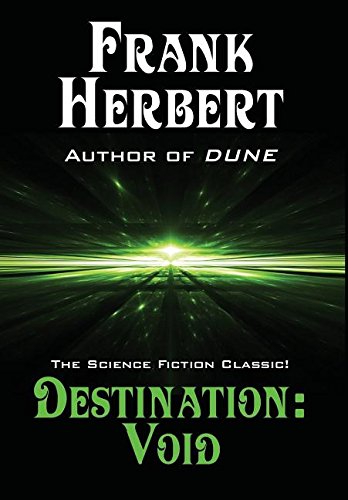
The Pandora Sequence opens with Frank Herbert's solo novel Destination: Void, in which a starship crew must jury-rig a working artificial consciousness after their vessel's control systems fail. Bill Ransom co-writes the three novels that follow, carrying the survivors to the world Pandora, where they must contend with both a manipulative machine intelligence and the planet's own hostile ecology. Across its four books the series moves from a claustrophobic ship-bound crisis to a generations-long struggle over faith, control, and survival on a dangerous new world.
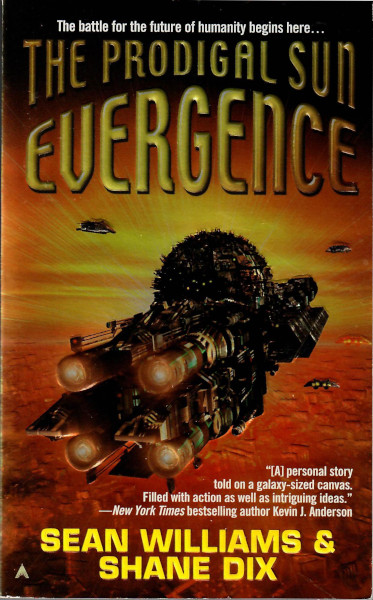
- Evergence
series3 books1999
similar byscience fictionfar futurespaceother star systemsspace opera+3 more
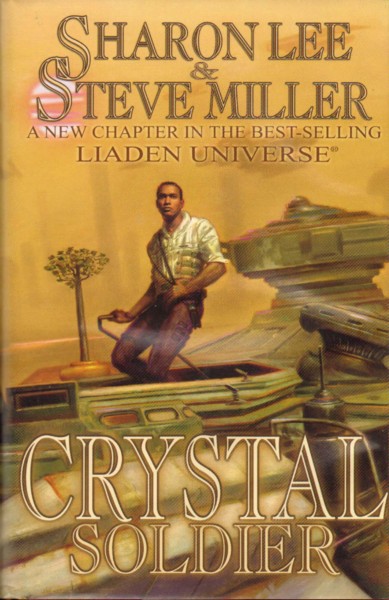
- The Great Migration Duology
series2 books2005
part of Liaden
similar byscience fictiontensefar futureother star systemsadventurousspace opera+1 more
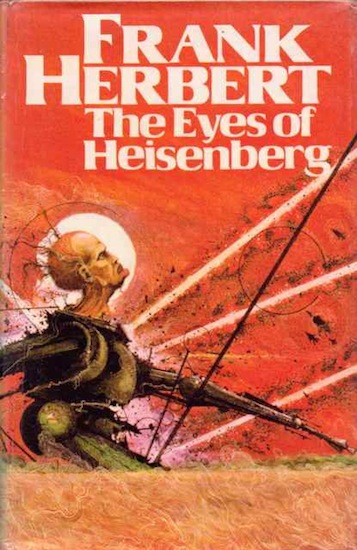
- The Eyes of Heisenberg
Frank Herbertstandalone novel1966
similar byscience fictiontensefar future+2 more
Tens of thousands of years in the future, Earth is ruled by the Optimen, a genetically engineered aristocracy that has made itself functionally immortal, while ordinary people, the Folk, live under strict reproductive control. When Harvey and Lizbeth Durant arrive to have their embryo genetically screened, the examining doctor finds something in the child no one has seen in a very long time: real potential for both fertility and life span, traits the Optimen have arrogated to themselves. Rather than destroy the embryo as policy demands, the doctor hesitates, setting off a chain of surveillance, suspicion and resistance. A tightly wound Frank Herbert thriller about genetic caste and rebellion.
- Moties
series4 books1974
part of CoDominium
similar byscience fictionfar futurespaceother star systemsspace opera+2 more
Larry Niven and Jerry Pournelle's The Mote in God's Eye (1974) depicts humanity's first contact with an alien species, the Moties, set within the far-future interstellar setting of Pournelle's codominium future history. The Gripping Hand continues that first-contact crisis years later, and Outies, written by J. R. Pournelle, carries the story forward into a new generation. Together the three books trace an escalating encounter between human and Motie civilizations within the codominium universe.
- Legion of the Damned
series14 books1993
completed
similar byscience fictionfar futurespaceother star systems+1 more
William C. Dietz's military SF series follows soldiers of the Legion of the Damned, condemned criminals and political prisoners whose brains are transplanted into cyborg fighting bodies for one last chance to serve, thrown at an empire's most desperate campaigns. Beginning with the 1993 opener, the series follows the Legion across a nine-book run through alien threats, internal betrayal, and the empire's own political rot. It leans on the disposable-soldier premise for its stakes rather than individual redemption arcs.
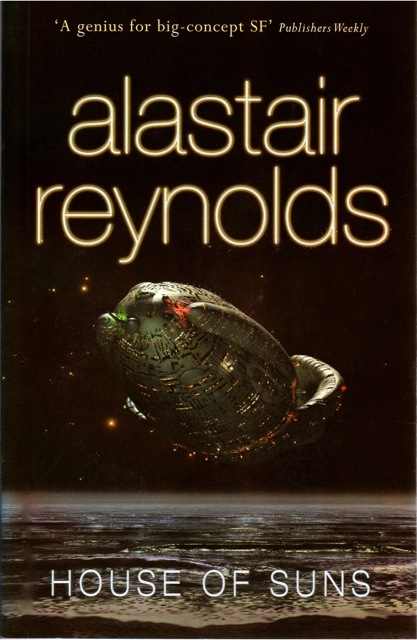
- House of Suns
series3 books2005
similar byscience fictionfar futurespace opera+2 more
House of Suns follows Campion and Purslane, two of a thousand identical clones ("shatterlings") of a single ancient woman who have spent six million years touring the galaxy independently between reunions, when an attack on their latest gathering forces them into a chase spanning tens of thousands of light-years and uncovers a hidden genocide from Earth's deep past. Alastair Reynolds set the novel in the same loose future history as his earlier novella Thousandth Night, reusing some characters without trying to keep the two stories in strict continuity.
- Heaven Chronicles / Zones of Thought
series8 books1976
similar byscience fictionfar futurespacespace opera+2 more
- The Snow Queen Cycle
series4 books1980
similar byscience fictionfar futureother star systems+2 more
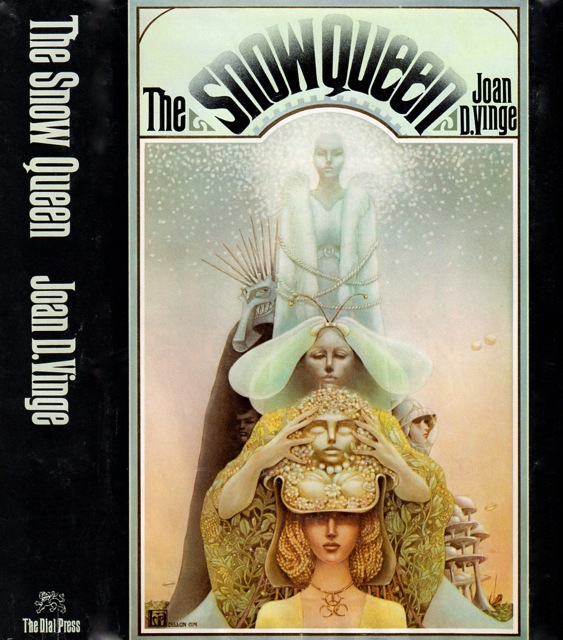
Joan D. Vinge's Snow Queen cycle is set on Tiamat, a planet that cycles between two long eras -- Winter and Summer -- each ruled by a different society and a different queen, loosely reworking Hans Christian Andersen's fairy tale as space opera. The Hugo Award-winning first novel follows a Summer clanswoman entangled with the reigning Winter queen; the sequels continue and revisit the story across the cycle's turning points.
- Widowmaker
series4 books1996
completed
part of Birthright
similar bycloningscience fictiontensefar futurespaceother star systemsspace opera
- Forever War
series10 books1972
similar byscience fictionfar futurespace+3 more
Joe Haldeman's The Forever War (1974) follows a soldier conscripted into a centuries-long interstellar war against the alien Taurans, using relativistic space travel so that months spent in transit correspond to years or decades passing back on Earth. Haldeman later returned to the same conflict in Forever Peace (1997), a thematically connected but separate story, and Forever Free (1999), a direct sequel set years after the original war's end. The first novel won the Hugo, Nebula, and Locus awards and is considered a foundational work of military science fiction.
- Company Wars
series7 books1981
part of Alliance-Union Universe
similar byscience fictiontensefar futurespacespace opera
Company Wars gathers the novels C. J. Cherryh set during the breakaway conflict between Earth's colonial Company and the newly independent Union, within her wider Alliance-Union future history. Anchored by the Hugo Award-winning Downbelow Station, the books follow different ships, stations, and crews caught on either side, from merchanter traders to military spacers, rather than a single continuing cast. Read in any order, they build up a picture of the political and economic pressure that reshapes Cherryh's larger Alliance-Union universe.