More like Requirements
anchored on:litrpg
but
- Stephen King multiverse
universe46 books1967
Start hereThe Gunslinger · Start here
similar by+1 more
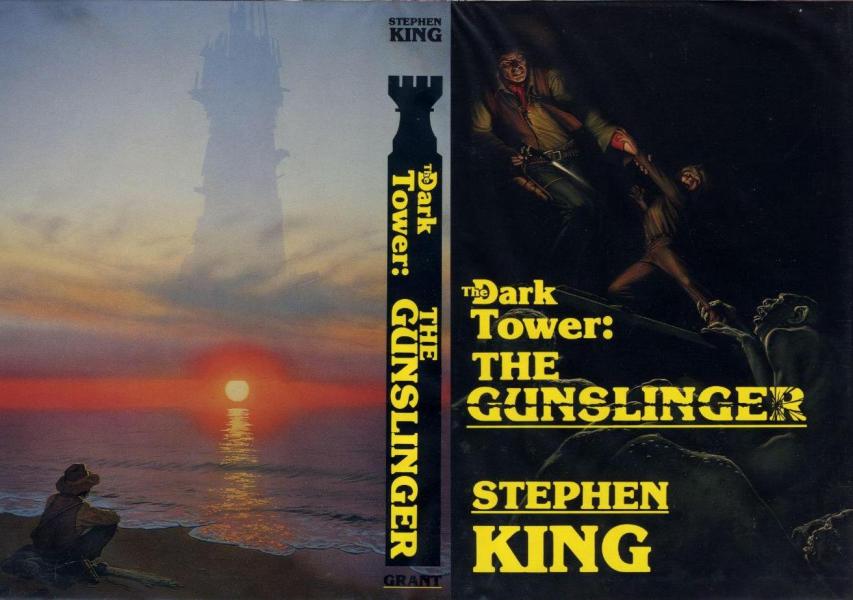
The man in black fled across the desert, and the gunslinger followed. So begins the long walk of Roland Deschain, last of an order of knight-errant pistoleers, across a land that has "moved on" — where the compass points drift, dead machines rot toward sentience, and the weave of what's real wears thin. His quest is the Dark Tower itself: a spire standing at the hub of every world that exists, the linchpin that holds all of them back from ruin. Roland's road runs eight volumes, from The Gunslinger through the closing Dark Tower, with the later, interleaved tale The Wind Through the Keyhole folding a story-within-a-story back into his youth. Along the way he draws a ka-tet — a fellowship bound by fate, not choosing — through doorways between worlds: a heroin-shackled New Yorker, a woman of two minds, a boy who dies twice. The Tower is also the secret axle around which the wider shelf of King's work turns; threads from The Stand, 'Salem's Lot and beyond wind quietly toward it. Expect a mongrel of Western, high fantasy, horror and decayed science fiction, told in a dusty, incantatory dialect all its own — ka, thankee-sai, the world that has moved on. This is King at his most mythic and most personal, a decades-spanning circle that rewards a patient reader. Begin at the beginning: The Gunslinger, then walk forward in publication order. There are other worlds than these — but this door opens first.
- Kairos
series11 books1962
completed
similar byscience fiction+1 more
The Time Quintet is a science fantasy series of five young adult novels written by American author Madeleine L'Engle and made up of A Wrinkle in Time (1962), A Wind in the Door (1973), A Swiftly Tilting Planet (1978), Many Waters (1986), and An Acceptable Time (1989).
- Watership Down
series21 books1972
completed
similar bysurvivaladventurous+1 more
Watership Down is Richard Adams's 1972 novel following a group of rabbits who flee the destruction of their warren and cross the English countryside of Hampshire in search of a new home, developing over the journey a full rabbit culture of language, proverbs, and mythology. Adams returned to the same world in 1996 with Tales from Watership Down, a collection of nineteen short stories mixing rabbit folklore with further adventures of characters from the novel.
- Alliance-Union Universe
universe173 books1976
Start hereCompany Wars · The central sequence
similar byscience fiction+1 more
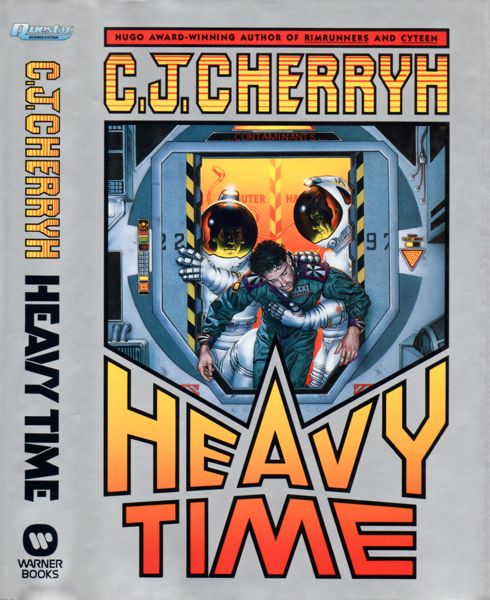
The dark between the stars belongs to no one, and everyone who lives out here knows it: the merchanter Families hauling cargo between stations that cannot feed themselves, the Earth Company clutching at colonies it can no longer supply, the Union breeding its cloned azi to settle worlds faster than birth allows. C. J. Cherryh's Alliance-Union is a future history of humankind's spread across the third and fourth millennia, told from inside the pressure — no clean empires, only stations, ships, treaties, and the people caught in the machinery of who holds the jump-points. The sequence runs from the first laborious pre-FTL stations through the Company Wars, the independence struggle that breaks over Pell in Downbelow Station (Hugo, 1981), to the genetics and cold politics of Union's homeworld in Cyteen (Hugo, 1988) and its sequel Regenesis. Around that spine cluster the merchanter novels of trader Families, the Faded Sun trilogy of human envoys among the martial alien Mri, and the Chanur books, narrated from the hierarchical, whiskered viewpoint of the hani. On the isolated world of Merovin, the Merovingen Nights anthologies open the setting to other hands — Mercedes Lackey, Janet and Chris Morris, Nancy Asire — a shared world braided into the whole. What sets it apart is intimacy at scale. Cherryh drops you without a map into a single skull and lets you assemble the politics from what that person fears and bargains for; the aliens are genuinely alien, loyalty is always provisional, and the real antagonist is usually logistics. Most books stand alone, in her words, "like real history." The surest way in is Downbelow Station — the war seen from one besieged station — then Cyteen, for the mind that shaped the other side.
- Shannara
universe50 books1977
Start hereWord and the Void · The very beginning of the timeline
similar bysecondary world+1 more
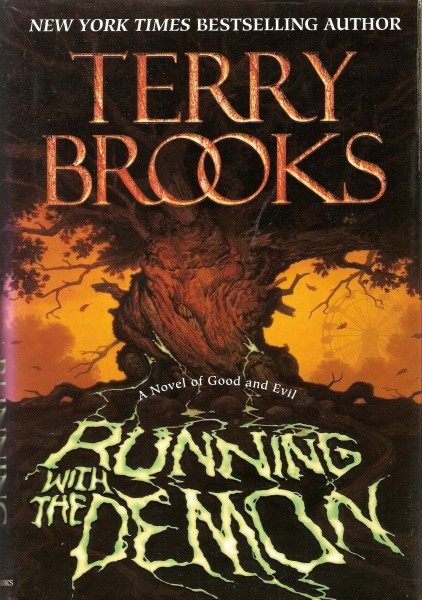
Long after the world we know has burned itself to slag in the Great Wars, the Four Lands rise green over the bones of the old age. Science is a forbidden memory; magic has come back into the world, and with it the old divisions — Men, Elves, Dwarves, Trolls, and Gnomes, each Race a splinter of what humanity became. This is the far-future Earth of Shannara, where the ruins buried beneath the soil are ours, and the only keepers of the vanished knowledge are the Druids of Paranor, who wake once a generation to meet the darkness rising again. Terry Brooks opened the Four Lands in 1977 with The Sword of Shannara and has charted its history for four decades since — a legendarium ordered not by throne but by a single bloodline, the Ohmsfords, each generation inheriting an Elfstone, a blade, or a wishsong when the age demands a hero. The original trilogy gives way to the Heritage of Shannara, the Voyage of the Jerle Shannara, the High Druid, Dark Legacy, Defenders, and the concluding Fall of Shannara; the Genesis of Shannara books reach back to the apocalypse itself, and the Word and the Void trilogy back further still, into a demon-haunted version of our own present that is the root of everything after. In 2025 Brooks passed the histories to Delilah S. Dawson to carry forward. What sets these books apart is their long memory: a world where every triumph is provisional, where the same evil returns wearing a fresh shape each age, and magic always exacts its price. The reading is warm and headlong — questing companies, old talismans, journeys across a mapped and named wilderness — shadowed by the knowledge that all of it stands on the wreckage of a former world. Enter as readers first did: with The Sword of Shannara, then onward in publication order. The chronological path, beginning with Word and the Void, rewards a second journey, once the Four Lands already feel like home.
- Apprentice Adept
series7 books1980
similar byadventurous+2 more
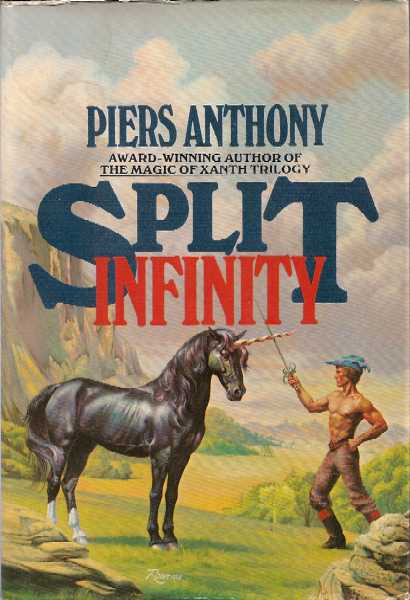
Apprentice Adept is a heptalogy of fantasy and science fiction novels written by English American author Piers Anthony. The series takes place on Phaze and Proton, two worlds occupying the same space in two different dimensional planes. Phaze is a lush planet of magic, where Proton is a barren mining planet of science. As the series opens, each person born on Phaze and Proton has an alternate self living on the other world. But if a person on either world lacks a duplicate, he can cross to the other through an energy "curtain" that circumscribes each frame.
- Windhaven
series4 books1975
similar byscience fiction+2 more
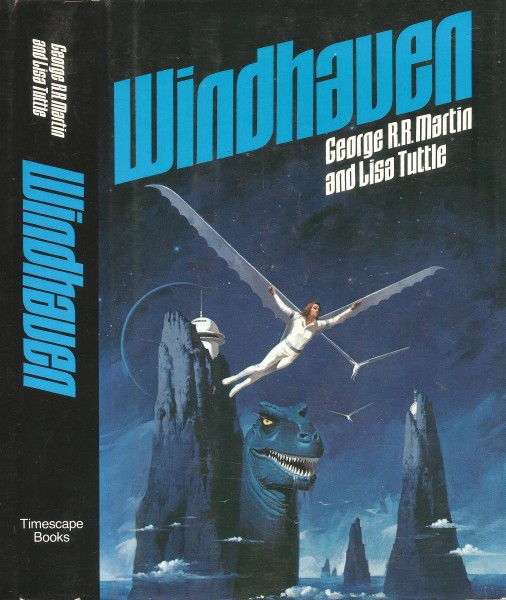
George R.R. Martin and Lisa Tuttle's Windhaven is set on a storm-wracked ocean world settled by shipwrecked colonists, whose descendants have adapted lightweight metal wings salvaged from their crashed ship into gliders used by a hereditary caste of flyers who carry messages and news between isolated island communities. The novel follows a commoner who fights to win a set of wings for herself against a tradition that says they should only pass down through flyer bloodlines. It was assembled as a fix-up from three novellas the authors wrote together across the 1970s.
- His Dark Materials Universe
universe13 books1995
Start hereHis Dark Materials · Start here
similar byadventurous+1 more
In a world like ours and unlike it, every human soul walks outside the body in the shape of an animal — a daemon, who speaks, who cannot be lied to, and who settles into one fixed form only when childhood ends. This is the country of His Dark Materials: a company of parallel worlds across which an invisible dust of consciousness drifts down upon the waking mind; where a Church that calls itself the Magisterium would sooner sever a child's soul than let that Dust be understood; and where a golden instrument, the alethiometer, answers true questions for anyone with the patience to read it. Philip Pullman's design stands in two trilogies and a scatter of shorter tales. His Dark Materials — Northern Lights (published in America as The Golden Compass), The Subtle Knife, and The Amber Spyglass — carries Lyra Belacqua from the rooftops of a shadow Oxford across the borders between worlds. The Book of Dust returns to that same territory: La Belle Sauvage looks back to Lyra as an infant carried through a great flood, while The Secret Commonwealth follows her grown and less certain into adulthood, with a concluding volume closing the arc. Around them sit slim companion books — Lyra's Oxford, Once Upon a Time in the North, Serpentine — and Nicholas Wright's stage adaptation, made with Pullman's blessing. The register is grave and luminous at once, its title lifted from Milton and its quarrel drawn from Blake: a story that takes the side of curiosity, love, and the physical world against any authority that would forbid them. It reads as adventure — armoured bears, aeronauts, knife-cut windows between skies — yet reasons like philosophy. Begin with Northern Lights / The Golden Compass and read the first trilogy through before turning to The Book of Dust, which deepens everything the first has already made you feel.
- Almuric
series1 book1964
similar bysurvivaladventuroussecondary world+1 more
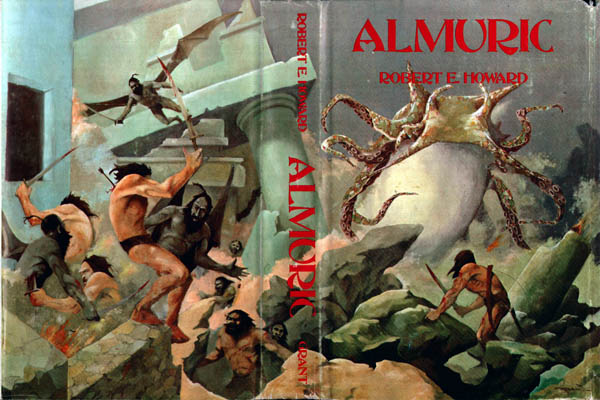
Published posthumously in 1964, Robert E. Howard's Almuric is a single planetary-romance novel rather than an ongoing series: Earthman Esau Cairn is transported to the savage world of Almuric, where he fights beast-men and wins the love of Altha, in a story indebted to Edgar Rice Burroughs' Barsoom books.
- Minecraft
universe207 books2014
Start hereThe Island · Start here
similar by+2 more
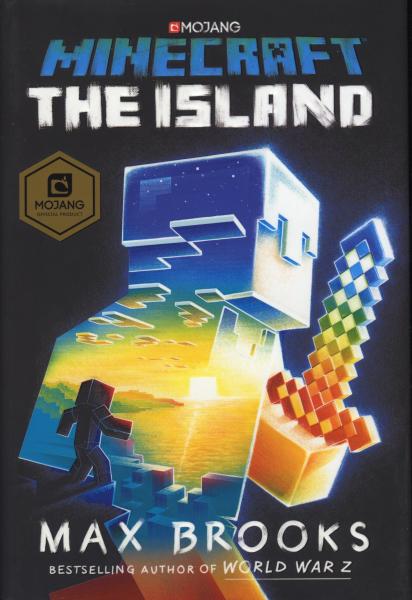
The sun is going down, and you have no walls. Somewhere in the dark a green thing is walking toward you on four stubby legs, and it does not stop and it does not speak, and when it reaches you it will hiss. So you dig. You punch wood from a tree, shape it into planks, stack the planks into a box just big enough to outlast the night — and in the morning the world is yours again, cubic and endless and waiting to be reshaped one block at a time. This is the Overworld: squared-off oceans, blocky hills, deep glittering mines, and beyond them the burning Nether and the floating void of the End, where everything can be broken down and built back into something else. The books that grow from it come in two very different sizes. On one shelf sits Mojang's own line — standalone novels like Max Brooks' tale of a castaway learning the island's rules the hard way, the monster-hunting Mob Squad, the illustrated Woodsword Chronicles, and rack on rack of official handbooks. Against it surges a whole cottage industry of unofficial "Minecrafter" fiction for young readers: the diary-comic misadventures of Diary of a Minecraft Zombie and The Creeper Diaries, Winter Morgan's brisk quest tales, and Mark Cheverton's Gameknight999 saga of a boy trapped inside the game. No single timeline binds them; each series keeps its own. What holds it together is not a plot but a place, and a feeling — the small triumph of surviving one more night, the itch to see past the next ridge, the freedom to build the thing you pictured. Newcomers wanting a story with a spine should start with Max Brooks' The Island, self-contained and quietly clever; younger readers chasing laughs can drop into Diary of a Minecraft Zombie or Woodsword Chronicles at book one. Beyond that, pick a mine and start digging.
- The Change / The Event
series41 books1998
similar byadventurousscience fiction+1 more
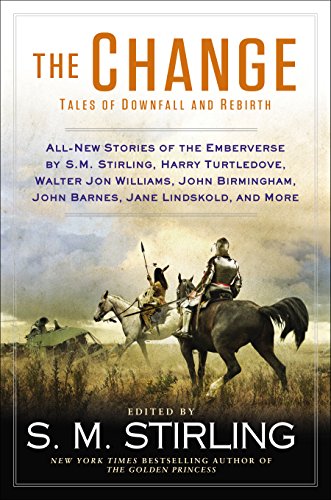
The Change: Tales of Downfall and Rebirth is a shared-world anthology of stories set in the years right after a mysterious global event instantly disables gunpowder, electricity, and combustion engines, the founding premise of S. M. Stirling's Emberverse. Sixteen different authors, coordinated by Stirling, each contribute stories set in various corners of the suddenly de-industrialized world as survivors scramble to rebuild. It's a companion volume to the Change/Emberverse novels rather than a novel itself.
- Gor
series41 books1966
similar bysecondary world+1 more
Gor is the fictional setting for a series of sword and planet novels written by philosophy professor John Lange, writing as John Norman. The setting was first described in the 1966 novel Tarnsman of Gor. The series is inspired by science fantasy pulp fiction works by Edgar Rice Burroughs, such as the Barsoom series. It also includes erotica and philosophical content. The Gor series repeatedly depicts men abducting and physically and sexually brutalizing women, who grow to enjoy their submissive state. According to The Encyclopedia of Science Fiction, Norman's "sexual philosophy" is "widely detested", but the books have inspired a Gorean subculture.
- Magic Goes Away
series22 books1969
similar bysecondary world+1 more
The Magic Goes Away began as a Larry Niven novella imagining a prehistoric Earth where magic is a finite, minable resource — an explicit response, by Niven's own account, to the 1973 oil shock — in which sorcerers who draw too hard on the world's dwindling mana bring on catastrophe. Niven opened the setting to other writers for follow-up anthologies (The Magic May Return, More Magic) and let Fred Saberhagen write a solo novel in it, The Time of the Warlock, making it a shared-world series about the last age of magic rather than one continuous story.
- Railsea
China Miévillestandalone novel2012
similar byadventuroussecondary world+2 more
Railsea is a young adult novel written and illustrated by English writer China Miéville, and published in May 2012. Miéville described the novel as "weird fiction", io9 labelled its mix of fantasy and steampunk elements as "salvagepunk" and the story has been seen as an "affectionate parody" of Herman Melville's classic 1851 novel Moby-Dick, also drawing on Robert Louis Stevenson's adventure novels Treasure Island and Kidnapped.
- Eternal Champion
series6 books1962
part of Moorcock's Multiverse
similar byadventuroussecondary world
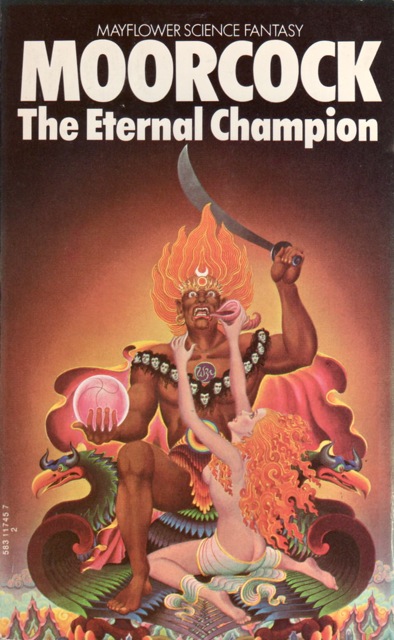
The Eternal Champion introduces Erekosë, a modern man drawn out of his own life to become a warrior fated to fight across many worlds and identities — the seed of Michael Moorcock's whole multiverse concept, in which the same doomed hero recurs under different names. First published as a 1962 novella and expanded to a novel in 1970, it heads a trilogy completed by Phoenix in Obsidian and The Dragon in the Sword; within the wider moorcocks-multiverse this is the sequence that names and anchors the Eternal Champion idea itself.
- Darwath
series7 books1982
similar bysecondary world+1 more
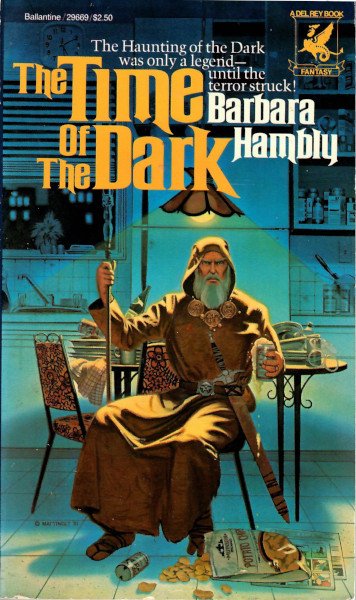
Darwath begins with two modern-day Californians pulled through a portal into a dying medieval world under siege from the Dark, shape-shifting monsters that hunt by night and are driving civilization underground. The Time of the Dark, The Walls of Air, and The Armies of Daylight make up the original trilogy; Barbara Hambly returned to the same characters decades later in Mother of Winter and Icefalcon's Quest. It's portal fantasy built around practical, unglamorous survival rather than chosen-one heroics.