Loreful
HomeDiscover
Search series, authors…⌘K
Loreful

Reading orders for SF/F series and shared universes — with your place kept in every one.

Explore

UniversesSeriesWorksAuthorsAtlas

Help

FAQAboutSite map

Account & legal

Sign inCreate accountPrivacyTerms

Data

Built on ISFDB, Wikipedia, Wikidata and Open Library. Curated reading orders carry their reasoning on the page; the rest follow publication order. Data sources & licenses

© Loreful · data: ISFDB · CC BY

More like Rest Stop

anchored on:contemporaryliterary & generalmadnessnorth americadarktense

but

Mood

The mood the book leaves you in.

  • The reading experience is propelled by journeys, exploration, and physical risk; excitement and forward momentum dominate over dread or introspection.
  • Joy and loss are deliberately mixed; the resolution grants characters something real while taking something else away, leaving warmth and sorrow together.
  • The book demands work from the reader — dense prose, difficult structure, unfamiliar ideas, or morally uncomfortable material — as part of its intended effect.
  • Grim events, cruelty, or despair dominate the atmosphere, and the book does not soften them with comfort or comic relief.
  • The atmosphere is quietly unsettling — wrongness, unease, and the uncanny pervade the book without necessarily escalating into overt horror.
  • The book is built to move the reader; character feeling is foregrounded and major scenes aim at a strong emotional response.
  • Humor is a primary aim and the prose plays for laughs — comic situations, wit, or dialogue produce sustained comedy, not occasional levity.
  • The book insists that things can improve; effort and decency are shown to matter, and the arc bends toward better outcomes even through hardship.
  • The book teaches as it goes — real facts, history, science, or craft are conveyed in enough depth that learning is part of the reading experience.
  • The book is designed to uplift and motivate, presenting perseverance or achievement in a way that invites the reader to aspire or act.
  • The overall register is cheerful and easygoing; stakes are kept gentle and the book avoids dwelling on pain or dread.
  • Withheld information drives the experience; the book sustains enigmas and secrets the reader wants resolved, whatever its genre.
  • The book is contemplative and inward-looking, giving more weight to thought, memory, and meaning than to external events.
  • The book works as comfort reading — low tension, a soothing pace, and an atmosphere the reader can unwind in.
  • Grief, loss, or melancholy set the dominant register, and the book lets sorrow stand rather than resolving it into comfort.
  • Sustained suspense is the point; the book keeps the reader braced for what happens next through danger, pressure, or impending revelation.
  • Playful invention and charm define the register — fanciful conceits, light absurdity, and a narration that delights in its own oddity.

About

What the story runs on.

  • Stories in which extraterrestrial beings are central — as characters, cultures, or the object of the plot.
  • Stories structured as a quest — a journey undertaken to find, deliver, or destroy something of great import.
  • Stories in which staying alive against nature, catastrophe, or scarcity is the central problem.
  • Stories of lovers kept apart by law, family, faith, or station, where the obstacle to love is the plot.
  • Stories in which a friendship — its making, testing, or loss — is the emotional center.
  • Stories of growing up — a young protagonist crossing from childhood into adult knowledge and responsibility.
  • Stories about who a character truly is — self-discovery, doubled lives, and the search for a self.
  • Stories about mourning — living through the death of a loved one and what loss does to the survivors.
  • Stories in which a buried family truth — hidden parentage, crimes, or shames — surfaces and reorders the present.
  • Stories driven by maneuvering for power — factions, conspiracies, and statecraft conducted in shadow.
  • Stories in which war itself is the subject — combat, occupation, and what warfare does to soldiers and civilians.
  • Stories organized around investigating a killing — the case, the clues, and the pursuit of the killer, in any genre's clothing.

Shelf

Where it sits in the library.

    • Fiction built on magic or other supernatural elements that have no scientific explanation.
    • Secondary-world fantasy at large scale, where the fate of nations or the world turns on the protagonists' struggle.
    • Fantasy set in a recognizably modern city or contemporary world where the supernatural intrudes on everyday life.
    • Fantasy that blends in horror's atmosphere and imagery, keeping a fantastical frame around grim or frightening material.
    • Action-driven fantasy following warriors or rogues with personal stakes against sorcerous threats, rather than world-spanning conflicts.
    • Fantasy set in a real historical period or a close analogue of one, with magic woven into the era.
    • Fantasy in which protagonists cross from the ordinary world into another world through a portal or similar passage.
    • Fiction that retells or reworks a traditional fairy tale in a new form or setting.
    • Fantasy drawing directly on myths, legends, and folklore, retelling them or building on their figures and logic.
    • Fantasy of ghosts, vampires, shapeshifters, psychics, and similar phenomena, usually set in an otherwise ordinary world.
    • Fiction mixing science-fictional trappings with overtly magical or impossible elements in one setting.
    • Low-stakes fantasy emphasizing comfort, community, and everyday pleasures over conflict and peril.
    • Speculative fiction of pervasive moral ambiguity, violence, and cynicism that rejects heroic conventions — fantasy and SF alike.
      • Fiction that extrapolates from science and technology — future societies, space travel, or speculative inventions — within at least nominally natural laws.
      • Science fiction of interstellar scope — starships, galactic polities, and adventure across star systems.
      • Science fiction committed to scientific rigor, where technical plausibility constrains the story.
      • Science fiction centered on armed forces and warfare, told largely from a military point of view.
      • Science fiction of networked, corporate-dominated near futures, pairing high technology with social decay.
      • Science fiction styled on nineteenth-century steam-powered technology, often in a Victorian or pseudo-Victorian setting.
      • Fiction depicting an oppressive or catastrophic society, presented as a warning.
      • Fiction set after civilization's collapse, following survivors in the ruins of the old world.
      • Fiction in which characters move between past and future, and the mechanics or consequences of that travel drive the plot.
      • Fiction exploring a world where a historical event went differently and history diverged from ours.
      • Science fiction about humanity's first encounter and communication with an alien intelligence.
      • Science fiction in which extraterrestrial forces attack or occupy Earth and humanity resists.
      • Fiction whose primary aim is to frighten or unsettle the reader through dread, menace, or the monstrous.
      • Horror of vast, indifferent, incomprehensible entities before which humanity is insignificant, in the Lovecraft tradition.
      • Horror of decaying houses, buried family secrets, and oppressive atmosphere in the Gothic literary tradition.
      • Horror centered on hauntings and the returning dead.
      • Horror located in the mind — paranoia, obsession, and unreliable perception rather than external monsters.
      • Horror built around the reanimated dead and survival amid their outbreaks.
      • Horror defined by explicit, transgressive gore that refuses to cut away from violence.
      • Speculative fiction of the strange and uncanny that resists both natural explanation and standard genre categories.
      • Fiction organized around solving a crime or puzzle, typically following an investigator toward the identification of a culprit.
      • A puzzle-first mystery that lays out clues so the culprit's identity can be deduced before the reveal.
      • Crime fiction of moral ambiguity, fatalism, and hard-edged style, set among the corrupt and the doomed.
      • A mystery following the realistic routines of police work — forensics, interviews, and case-building.
      • A gentle mystery with an amateur sleuth, a small community, and violence kept off the page.
      • A mystery set in a past era, where the investigation works within that period's methods and society.
      • Fast-paced fiction driven by imminent danger, pursuit, or high-stakes conspiracy, built to sustain tension.
      • A thriller of espionage — agents, tradecraft, and intelligence services in conflict.
      • A thriller centered on lawyers and the courtroom, where litigation carries the suspense.
      • A thriller driven by detailed contemporary or near-future technology, often military or scientific.
      • A thriller whose tension comes from mental states and manipulation between characters rather than external action.
      • Fiction whose central plot is a romantic relationship and its development toward an emotionally satisfying resolution.
      • Romance in which one or both partners are supernatural beings, blending fantasy elements into the love story.
      • A fantasy-romance hybrid in which the romantic arc and the fantasy plot carry equal weight.
      • Romance set in a past era, with courtship shaped by the period's society and manners.
      • Romance set in the present day, without supernatural or historical elements.
      • Fiction set in a real past period, where the historical setting materially shapes characters and events.
        • General and literary fiction emphasizing prose style, character interiority, or formal ambition over genre plot conventions.
        • Fiction in a realistic world where magical events occur and are treated as ordinary, in the tradition of Latin American literature.
        • Fiction that ridicules people, institutions, or society in order to criticize them.
        • Fiction of dreamlike, irrational imagery and logic that breaks from realistic representation.
        • Fiction that plays with narrative convention through metafiction, fragmentation, and self-reference.
        • Fiction propelled by journeys, exploration, and physical peril, where action and survival carry the plot.
        • Adventure fiction of ships and seafaring — naval engagements, voyages, and life at sea.
        • Fiction of the American frontier West — gunmen, ranchers, and lawmen, typically in the late nineteenth century.
        • Fiction centered on soldiers, campaigns, and the experience of warfare, historical or imagined.
          • Fiction written primarily to amuse, using comedic situations, wit, or parody as its organizing principle.
            • Multi-generational fiction following a family or dynasty across decades, with inheritance and kinship as the through-line.
              • Fiction whose world runs on explicit game mechanics — levels, stats, and skills that characters can see and exploit.
                • Fiction about costumed or superpowered heroes and their conflicts with comparable villains.

                Practical

                How long a commitment, whether it stands alone, and whether it has finished.

                Tap a chip to ask for it · tap again to rule it out · once more to clear. Numbers show what would be left.

                • Cover of Dhalgren
                  Dhalgren

                  Samuel R. Delany · standalone novel · 1975

                  similar bymadnessliterary & generalcontemporarynorth america

                  Dhalgren is a 1975 science fiction novel by American writer Samuel R. Delany. It features an extended trip to and through Bellona, a fictional city in the American Midwest cut off from the rest of the world by an unknown catastrophe. It is number 33 on the 20th Century's Greatest Hits: 100 English-Language Books of Fiction list.

                • Cover of The Terminal Man
                  The Terminal Man

                  Michael Crichton · standalone novel · 1972

                  similar bymadnesscontemporarynorth americadarktense

                  The Terminal Man is a novel by American writer Michael Crichton. It is his second novel under his own name, his 12th overall, and is about the dangers of mind control. It was published in April 1972 and also serialized in Playboy in March, April, and May 1972. In 1974, it was made into a film of the same name.

                • Cover of Crash
                  Crash

                  J. G. Ballard · standalone novel · 1973

                  similar bymadnessliterary & generalcontemporarydark

                  Crash is a novel by J. G. Ballard, first published in 1973 with a cover designed by Bill Botten. It follows a group of car-crash fetishists who, inspired by the famous crashes of celebrities, become sexually aroused by staging and participating in car accidents.

                • Cover of The Shining
                  The Shining

                  series · 5 books · 1977

                  similar bynorth americacontemporarydarktense+1 more

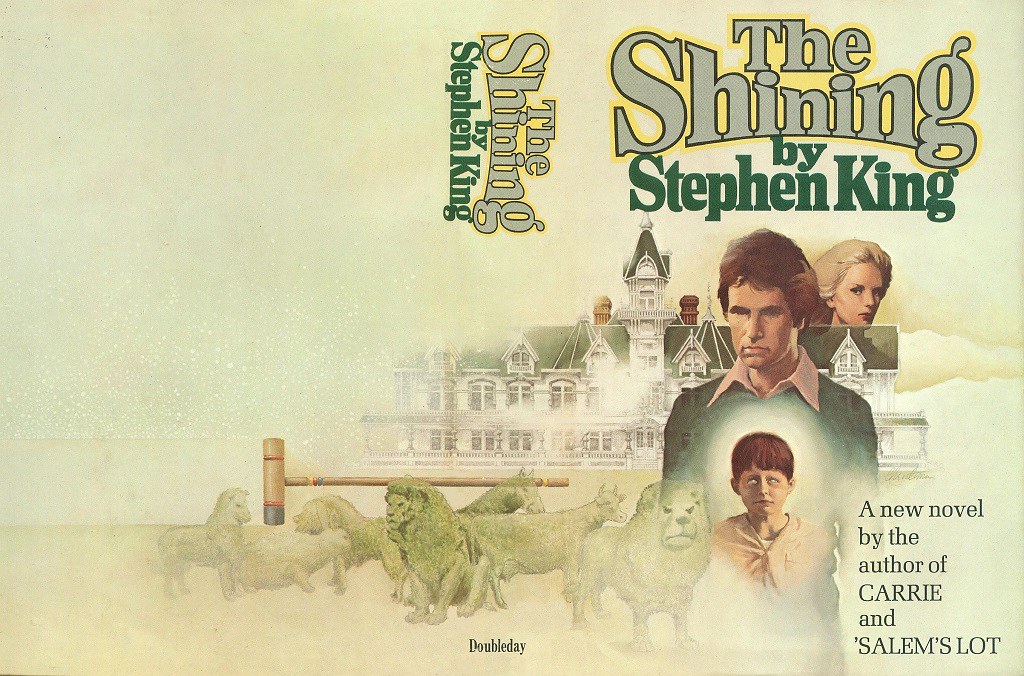
                  Stephen King's 1977 novel The Shining follows the Torrance family as winter caretakers of the isolated, malevolent Overlook Hotel, where father Jack is gradually consumed by the hotel's influence while his young son Danny's psychic "shining" draws its attention. Doctor Sleep (2013) picks up the story decades later, following Danny as an adult still marked by that childhood ordeal. Together the two form a horror duology spanning nearly forty years of real-world publication.

                • Cover of Breakfast of Champions
                  Breakfast of Champions

                  Kurt Vonnegut & Jr. · standalone novel · 1973

                  similar bymadnessliterary & generalcontemporarynorth america

                  The author decides to liberate the characters he created, including an author who decides to try to help a mentally ill reader who was driven over the edge by the book's assertion that he was the only creature with free will in a universe of preprogrammed automatons.

                • Cover of Hell House
                  Hell House

                  Richard Matheson · standalone novel · 1971

                  similar bymadnesscontemporarynorth americadarktense

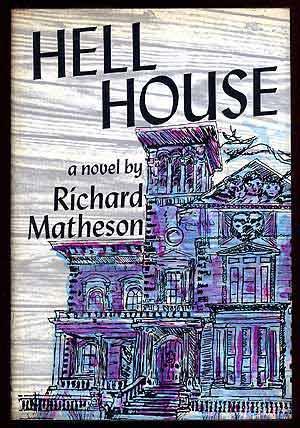
                  A dying millionaire wants proof, once and for all, of what happens after death, and hires physicist-turned-parapsychologist Dr. Lionel Barrett to spend a week investigating the Belasco House in Maine -- a mansion so thoroughly associated with atrocity that it's known simply as Hell House, where every previous investigation has ended in death or madness. Barrett brings his wife Edith along with two mediums, the spiritualist Florence Tanner and Benjamin Franklin Fischer, survivor of an earlier disastrous visit, whose scientific skepticism and spiritualist convictions clash from the first night inside. Richard Matheson's haunted-house novel, later filmed as The Legend of Hell House.

                • Cover of The Drowning Girl
                  The Drowning Girl

                  Caitlín R. Kiernan · standalone novel · 2012

                  similar bymadnessliterary & generalcontemporarynorth americadark

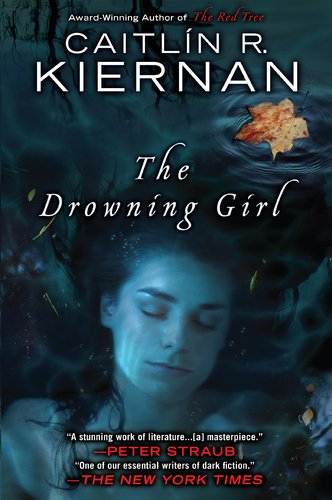
                  The Drowning Girl: A Memoir is a 2012 dark fantasy novel by American writer Caitlín R. Kiernan, set in Providence, Rhode Island. The story's protagonist and unreliable narrator, India Morgan Phelps, has schizophrenia.

                • Cover of Carrie
                  Carrie

                  Stephen King · standalone novel · 1974

                  similar bycontemporarynorth americatensedark+1 more

                  In one way or another, everybody abused Carrie. This sixteen-year-old misfit was forbidden everything that was young and fun by her fanatical mother. She was teased and taunted by her classmates, misunderstood by her teachers, and given up as hopeless by almost everyone. But Carrie had a secret: She possessed terrifying telekinetic powers that could make inanimate objects move, a lighted candle fall, or a door lock. Carrie could make all kinds of startling bizarre, and malevolent things happen. (WorldCat)

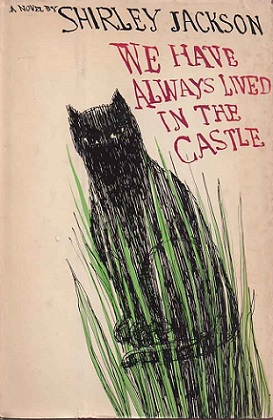
                • Cover of We Have Always Lived in the Castle
                  We Have Always Lived in the Castle

                  Shirley Jackson · standalone novel · 1962

                  similar bymadnessliterary & generalnorth america+1 more

                  A young woman lives with her older sister and sickly uncle in their old family house, after a mysterious tragedy turns the townsfolk against them.

                • Cover of Lunar Park
                  Lunar Park

                  Bret Easton Ellis · standalone novel · 2005

                  similar bymadnessliterary & generalcontemporarynorth americadark

                  Lunar Park is a metafictional novel by American writer Bret Easton Ellis, presented as a mock memoir. It was released by Knopf in 2005. It was the first book written by Ellis to use past tense narrative.

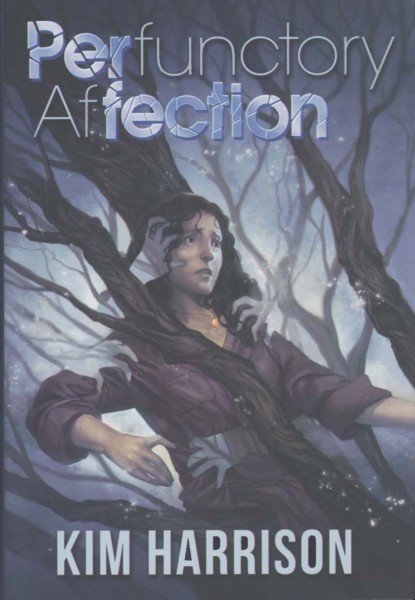
                • Cover of Perfunctory Affection
                  Perfunctory Affection

                  Kim Harrison · standalone novel · 2019

                  similar bymadnessliterary & generalcontemporarydarktense

                  Is it better to live a lie of perfection when the truth is too ugly to survive? Meg wants a normal life. Her new artistic style, born in the depression of her mother’s death, is poised to take the art world by storm, if she could just overcome the debilitating anxiety caused by the car accident that scarred her boyfriend, Austin. Encouraged by her therapist, Meg pushes outside her comfort zone to befriend Haley, a guest instructor at the university where Meg teaches. Haley is everything Meg wants to be: charismatic, confident, and perfect, but when Austin expresses his worry that Haley is changing Meg too fast and leads her to realize that Austin is trying to keep her afraid and needing him, Meg kicks him out of her life. Or at least, she tries. Kim Harrison, author of the number one bestselling Urban Fantasy Hollows series, brings to life a world terrifyingly near to our own, where what’s real and what shouldn’t exist twine together in the madness of a troubled mind desperate for a way out. But when the truth is revealed, the question remains, is it better to live a lie of perfection, or cleave to an ugly reality that will destroy you?

                • Cover of Whispers
                  Whispers

                  Dean R. Koontz · standalone novel · 1980

                  similar bymadnesscontemporarynorth americadarktense

                  WorldCat: Hilary, a beautiful, successful Hollywood writer, lives alone and is being stalked. She has killed him once, but he keeps coming back.

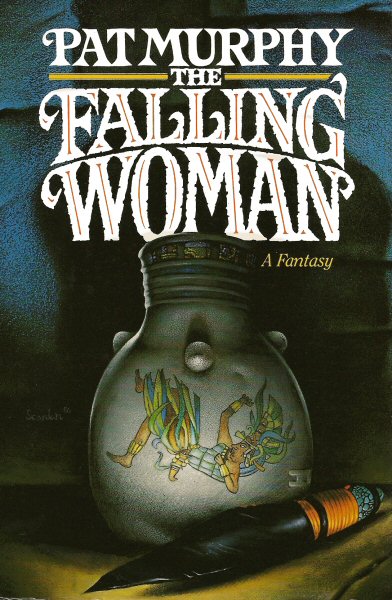
                • Cover of The Falling Woman
                  The Falling Woman

                  Pat Murphy · standalone novel · 1986

                  similar bymadnessliterary & generalcontemporarynorth america

                  The Falling Woman is a 1986 contemporary psychological fantasy novel by Pat Murphy. The book won the Nebula Award for Best Novel in 1987.

                • Cover of House of Leaves
                  House of Leaves

                  series · 2 books · 2000

                  similar bymadnessliterary & generalnorth americacontemporary+1 more

                  House of Leaves is the debut novel by American author Mark Z. Danielewski, published in March 2000 by Pantheon Books. A bestseller, it has been translated into a number of languages, and is followed by a companion piece, The Whalestoe Letters.

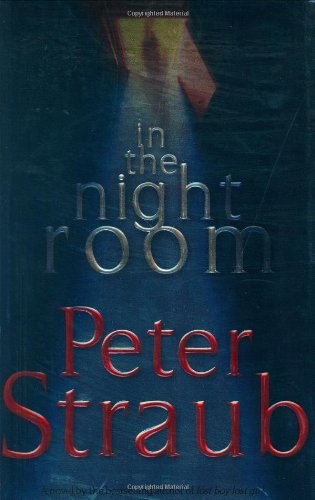
                • Cover of In the Night Room
                  In the Night Room

                  Peter Straub · standalone novel · 2004

                  similar bymadnesscontemporarynorth americadarktense

                  In the Night Room is a 2004 horror-thriller novel by American author Peter Straub, a sequel to his 2003 book Lost Boy, Lost Girl. The work was first published in hardback on October 26, 2004, through Random House and it won the 2004 Bram Stoker Award for Novel. Straub encountered some difficulties while writing In the Night Room and had written several different passages for the work before growing bored with each version before writing it using the same technique he used for its predecessor in which he "reached down inside the book and turned it inside out."

                • Cover of Robert Bloch's Psycho Universe
                  Robert Bloch's Psycho Universe

                  series · 5 books · 1959

                  similar bymadnessnorth americadarktense+1 more

                • Cover of High-Rise
                  High-Rise

                  J. G. Ballard · standalone novel · 1975

                  similar bymadnessliterary & generaldarktense

                  High-Rise is a 1975 novel by British writer J. G. Ballard. The story describes the disintegration of a luxury high-rise building as its affluent residents gradually descend into violent chaos. As with Ballard's previous novels Crash (1973) and Concrete Island (1974), High-Rise inquires into the ways in which modern social and technological landscapes could alter the human psyche in provocative and hitherto unexplored ways. It was adapted into a film of the same name, in 2015, by director Ben Wheatley.

                • Cover of Desperation/Regulators
                  Desperation/Regulators

                  series · 2 books · 1996

                  similar bymadnesscontemporarynorth americadarktense

                  Stephen King published Desperation and The Regulators simultaneously in 1996, the first under his own name and the second under his Richard Bachman pseudonym. The two novels are mirror-universe companions: largely the same cast of characters appears in both, recast into different roles and circumstances, with each book's story driven by the same malevolent supernatural entity, Tak.

                • Cover of Sweet Lamb of Heaven
                  Sweet Lamb of Heaven

                  Lydia Millet · standalone novel · 2016

                  similar bymadnessliterary & generalcontemporarynorth americatense

                  Lydia Millet's chilling new novel is the first-person account of a young mother, Anna, escaping her cold and unfaithful husband, a businessman who's just launched his first campaign for political office. When Ned chases Anna and their six-year-old daughter from Alaska to Maine, the two go into hiding in a run-down motel on the coast. But the longer they stay, the less the guests in the dingy motel look like typical tourists-- and the less Ned resembles a typical candidate. As his pursuit of Anna and their child moves from threatening to criminal, Ned begins to alter his wife's world in ways she never could have imagined. A double-edged and satisfying story with a strong female protagonist, a thrilling plot, and a creeping sense of the apocalyptic, Sweet Lamb of Heaven builds to a shattering ending with profound implications for its characters-- and for all of us.

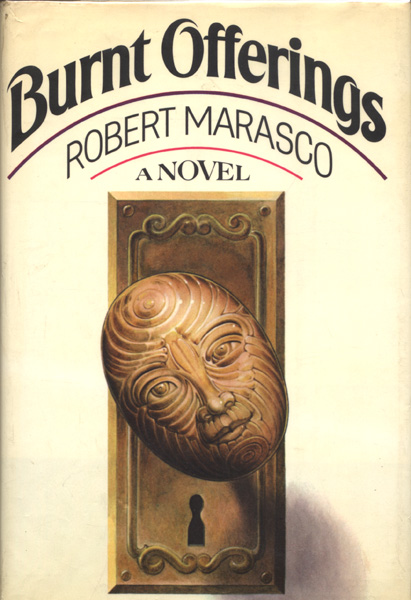
                • Cover of Burnt Offerings
                  Burnt Offerings

                  Robert Marasco · standalone novel · 1973

                  similar bymadnesscontemporarynorth americadarktense

                  Burnt Offerings is a 1973 American horror novel by Robert Marasco. Its plot follows a family who move into a summer home where each member is plagued by unusual experiences and personality changes. Published by Delacorte Press, the novel had originally been conceived as a screenplay before Marasco rewrote it into a novel. It was adapted into a film of the same name in 1976. The novel was reprinted in 2015 by Valancourt Press.

                • Cover of Mazes and Monsters
                  Mazes and Monsters

                  Rona Jaffe · standalone novel · 1981

                  similar bymadnessliterary & generalnorth americadarktense

                  Mazes and Monsters is a 1981 novel by Rona Jaffe. The novel is a cautionary tale regarding the then-new hobby of fantasy role-playing games. The book was adapted into a made-for-television movie by the same name in 1982 starring Tom Hanks.

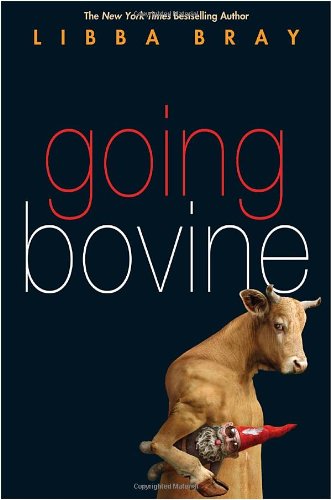
                • Cover of Going Bovine
                  Going Bovine

                  Libba Bray · standalone novel · 2009

                  similar bymadnessliterary & generalcontemporarynorth america+1 more

                  A modern teenager is diagnosed with the mad cow disease and has fantastic adventures, which may or may not be hallucinations.

                • Cover of American Psycho
                  American Psycho

                  Bret Easton Ellis · standalone novel · 1991

                  similar bymadnessliterary & generalnorth americadark

                  American Psycho is a horror novel by American writer Bret Easton Ellis, published in 1991. The story is told in the first-person by Patrick Bateman, a wealthy, narcissistic, and vain Manhattan investment banker who lives a double life as a serial killer. Alison Kelly of The Observer notes that while "Some countries [deem it] so potentially controversial that it only to be sold as shrink-wrapped", "critics rave about it" and "academics revel in its transgressive and postmodern qualities".

                • Cover of God Bless You, Mr. Rosewater or Pearls Before Swine
                  God Bless You, Mr. Rosewater or Pearls Before Swine

                  Kurt Vonnegut & Jr. · standalone novel · 1965

                  similar byliterary & generalcontemporarynorth america+1 more

                  The Rosewater Foundation was built to shield the family fortune from taxes, but its current steward, war veteran and committed alcoholic Eliot Rosewater, has other ideas: he moves the foundation's offices to rural Rosewater County, Indiana, and starts handing out 'unlimited amounts of love and limited sums of money' to anyone who asks. His disgusted father, Senator Lister Rosewater, watches the family name become a punchline. Meanwhile a distant, downtrodden cousin, Fred Rosewater, is approached by an ambitious young lawyer with a scheme to have Eliot declared insane and the fortune redirected. A satire of American philanthropy, class and sanity from Kurt Vonnegut.