More like Robots & Magic
anchored on:science fictionrobotsfantasyreflectiveshort story cycle
but
- 2312
Kim Stanley Robinsonstandalone novel2012
similar byreflectivespacescience fiction+2 more
In the eponymous year, when Earth's ecology is degraded and humanity has settled throughout the solar system by terraforming and genetic engineering, mysterious disasters strike some human communities and an assortment of human types from throughout the system seek to find and eliminate the cause.
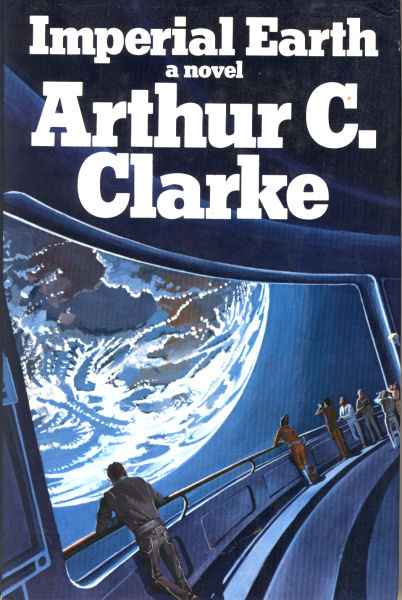
- Imperial Earth
Arthur C. Clarkestandalone novel1975
similar byreflectivespacescience fiction
Imperial Earth is a science fiction novel by British writer Sir Arthur C. Clarke, published in 1975 by Gollancz Books. The plot follows the protagonist, Duncan Makenzie, on a trip to Earth from his home on Titan, in large part as a diplomatic visit to the U.S. for its quincentennial in 2276, but also to have a clone of himself produced. The book was published in time for the U.S. bicentennial in 1976.
- Manseed
Jack Williamsonstandalone novel1982
similar byreflectivespacescience fictionrobots
In the decades since i've read this novel somehow i forgot almost everything about it, except the powerful force it had on me. However, the the following description from http://www.fictiondb.com/author/jack-williamson~manseed~117359~b.htm seems to match my long ago reading experience: Egan Drake was a wealthy but unhappy visionary who died early and left behind only a powerful dream. He proposed to spread Mankind among the stars. Then there was Megan Drake. She took her brother's vision and made it real. At the Raven Foundation's New Mexico headquarters, she gathered around her experts in astronautics, biology, computer science, defense, and fusion propulsion. The project was simple in design yet grandiose in its aim: a thousand tiny ships would crawl to the stars; each that landed on an Earth-type planet would produce several dozen colonists; each colonist would be a product of the genes derived from Megan and her experts. Every ship would manufacture cyborgs for repairs and self-protection. But much of the technology was new and untried; no one could predict what might really occur at a millennia-long journey's end if, say, a cyborg fell in love or aliens were met or...
- Spaceship Initiative / Arctic Fox Android
series3 books2025
part of Tri-Galactic Trek
similar byreflectivespacescience fictionrobotsshort story cycle
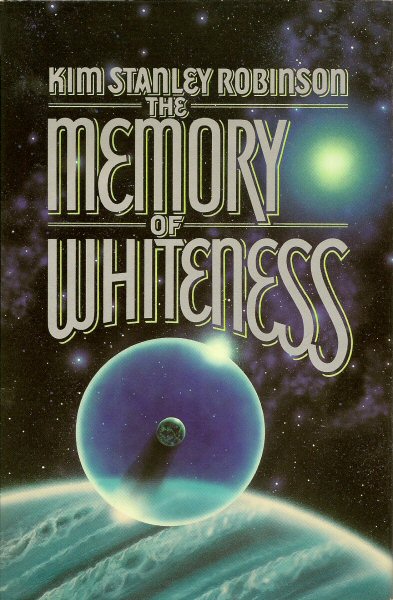
- The Memory of Whiteness
Kim Stanley Robinsonstandalone novel1985
similar byreflectivespacescience fiction+1 more
The Memory of Whiteness is a science fiction novel by Kim Stanley Robinson, published in September 1985.
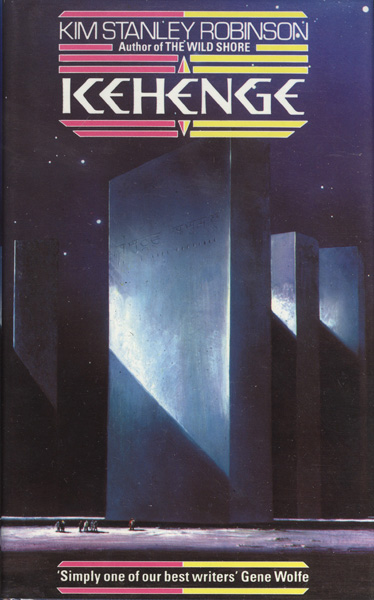
- Icehenge
Kim Stanley Robinsonstandalone novel1984
similar byreflectivescience fiction+1 more
Icehenge unfolds in three parts, narrated years or centuries apart by different investigators piecing together the same facts. The first is the diary of Emma Weil, an engineer swept into a Martian revolution in 2248, conscripted onto a rebel starship fitted for a voyage beyond the solar system, and forced to decide how far her sympathy for the uprising extends. Generations later, other narrators pick up the thread of what became of her and the ship, drawn toward a stone monument on a moon of Pluto that should not exist. An early standalone novel by Kim Stanley Robinson, revisiting the Martian-revolution material he later expanded into the Mars trilogy.
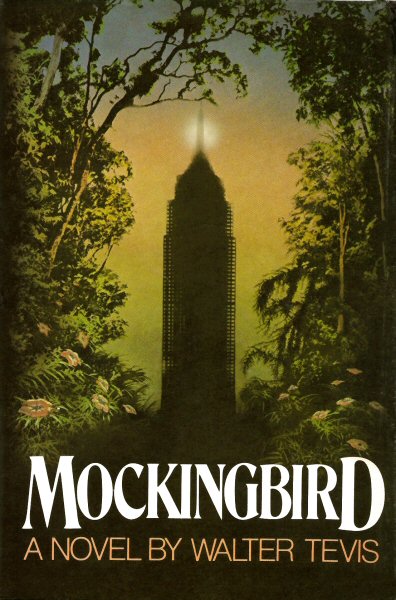
- Mockingbird
Walter Tevisstandalone novel1980
similar byreflectivescience fictionrobotsartificial intelligence
WorldCat: In a future world where mankind is dying, humans wander through life in a drugged electronic bliss. Quick sex is the norm, and some people would rather commit suicide than live in hopelessness. Humanity's salvation rests with an android who has no desire to live, and a man and a woman who must discover love, hope, and dreams of a world reborn.
- The City and the Stars
Arthur C. Clarkestandalone novel1956
similar byreflectivescience fiction+2 more
The City and the Stars is a science fiction novel by British writer Arthur C. Clarke, published in 1956. This novel is a complete rewrite of Clarke's earlier Against the Fall of Night, his first novel, which had been published in Startling Stories magazine in 1948 after being rejected by the editor of Astounding Science-Fiction, according to the author.
- Imperial Radch
series7 books2012
part of Radchaai Universe
similar byspacescience fictionartificial intelligence+1 more
Ann Leckie's Imperial Radch trilogy (Ancillary Justice, Ancillary Sword, Ancillary Mercy, 2013-2015) follows Breq, the sole surviving fragment of an AI that once inhabited both a troop-transport starship and dozens of soldier bodies, now alone and hunting for revenge inside the vast, expansionist Radch empire. Breq's quest widens across the trilogy into a conflict with the empire's own fractured ruler, and the books use her alien difficulty perceiving gender to unsettle the space-opera conventions around her.
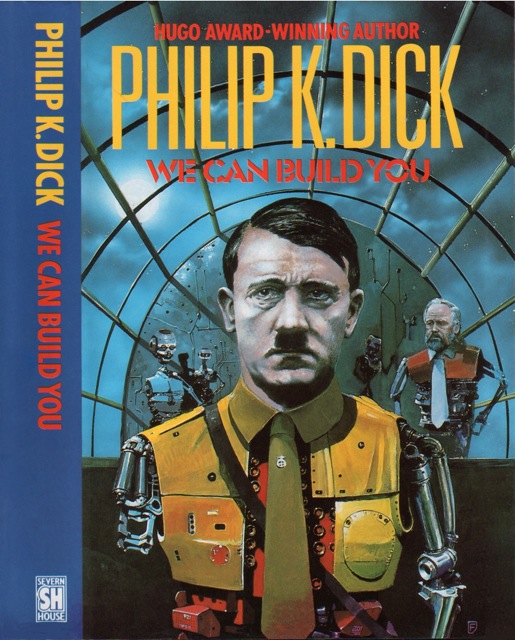
- We Can Build You
Philip K. Dickstandalone novel1972
similar byreflectivescience fictionrobots
We Can Build You is a 1972 science fiction novel by American writer Philip K. Dick. Written in 1962 as The First in Our Family, it remained unpublished until appearing in serial form as A. Lincoln, Simulacrum in the November 1969 and January 1970 issues of Amazing Stories magazine, re-titled by editor Ted White. The novel was issued as a mass market paperback original by DAW Books in 1972, its final title provided by publisher Donald A. Wollheim. Its first hardcover edition was published in Italy in 1976, and Vintage issued a trade paperback in 1994.
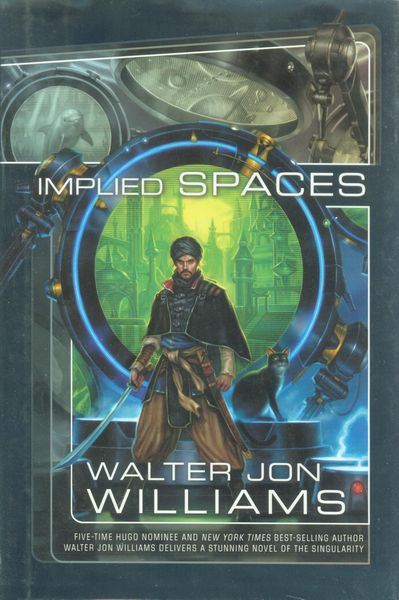
- Implied Spaces
Walter Jon Williamsstandalone novel2008
similar byreflectivespacescience fictionartificial intelligence
Implied Spaces is a 2008 space opera novel by American author Walter Jon Williams. It explores themes of transhumanism, artificial intelligence and ontology.
- City
series19 books1944
completed
similar byreflectivescience fiction+1 more
City is Clifford D. Simak's fix-up novel, assembling eight linked stories originally published in Astounding Science Fiction during the 1940s and framed as legends dogs tell about a half-mythical creature called Man. It follows humanity's gradual abandonment of its cities and eventual departure from Earth, while the dogs left behind are surgically uplifted into a peaceable, speaking civilization of their own. The book won the International Fantasy Award in 1952.
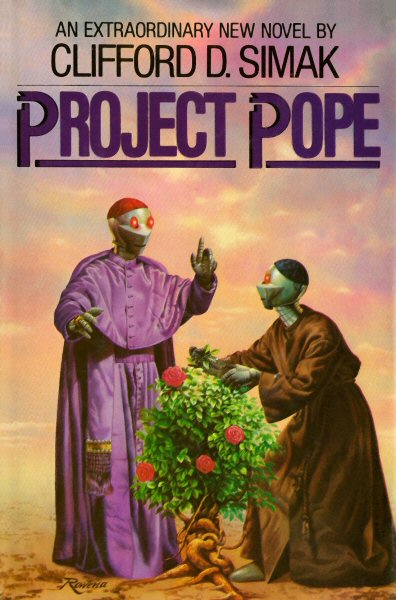
- Project Pope
Clifford D. Simakstandalone novel1981
similar byreflectivescience fictionrobotsartificial intelligence
Project Pope is a science fiction novel by the American author Clifford Simak, published in 1981 by Ballantine Books. The novel is about a group of robots and humans living on a planet called the End of Nothing. Their mission is to search the universe and other dimensions to seek out true religion and knowledge. They add the information they gather to their Pope, a robotic supercomputer, in order to make an infallible authority of all knowledge and religion. The novel was nominated for both a Hugo Award for Best Novel and a Locus Award for Best SF novel in 1982.
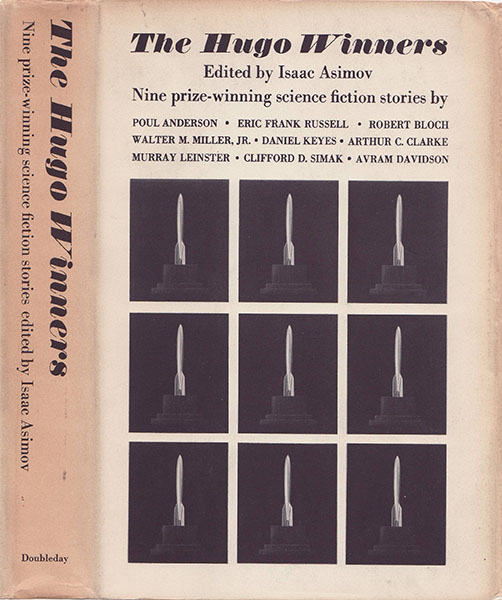
- The Hugo Winners
series15 books1962
similar byscience fictionshort story cycle+2 more
The Hugo Winners was a series of books which collected science fiction and fantasy stories that won a Hugo Award for Short Story, Novelette or Novella at the World Science Fiction Convention between 1955 and 1982. Each volume was edited by American writer Isaac Asimov, who wrote the introduction and a short essay about each author featured in the book. Through these essays, Asimov shared personal anecdotes, revealing the authors he was jealous of, and how other writers winning awards ahead of him made him angry. Additionally, he discussed his political beliefs, friendships, and his affinity for writers of "hard science fiction". The first two volumes were collected by Doubleday into a single book, which lacks a publishing date and ISBN.
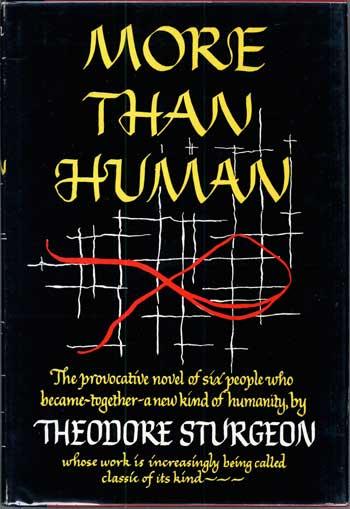
- More Than Human
Theodore Sturgeonstandalone novel1953
similar byreflectivescience fictionshort story cycle
More Than Human is a 1953 science fiction fix-up novel by American writer Theodore Sturgeon. It is a revision and expansion of his 1952 novella Baby Is Three, which is bracketed by two additional parts written for the novel, "The Fabulous Idiot" and "Morality". It won the 1954 International Fantasy Award, which was also given to works in science fiction. It was additionally nominated in 2004 for a "Retro Hugo" award for the year 1954. Science fiction critic and editor David Pringle included it in his book Science Fiction: The 100 Best Novels.
- A Meeting with Medusa
series2 books1971
similar byreflectivespacescience fiction+2 more
Arthur C. Clarke's A Meeting with Medusa follows an astronaut, badly injured in an earlier disaster, on a solo balloon expedition into Jupiter's atmosphere, where he encounters vast floating lifeforms unlike anything previously catalogued. Decades later, Stephen Baxter and Alastair Reynolds continued the story in The Medusa Chronicles, following the same protagonist across a much longer span of future history. The original novella won the 1972 Nebula Award.
- F & SF Anniversary Anthologies
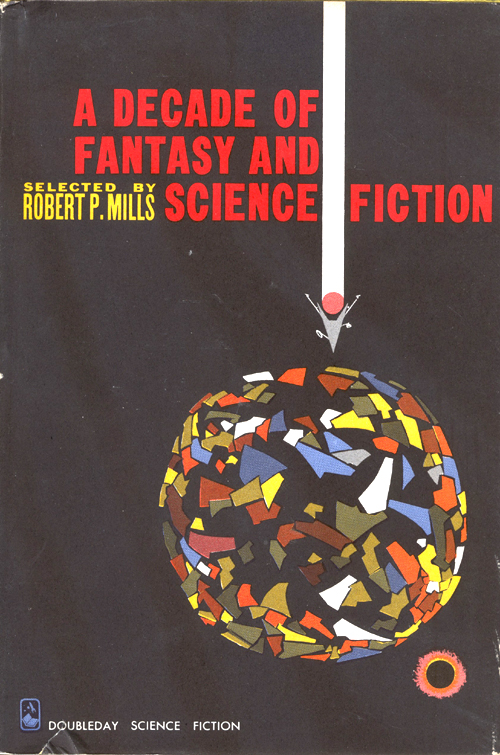
series8 books1960
similar byscience fictionfantasyshort story cycle+3 more
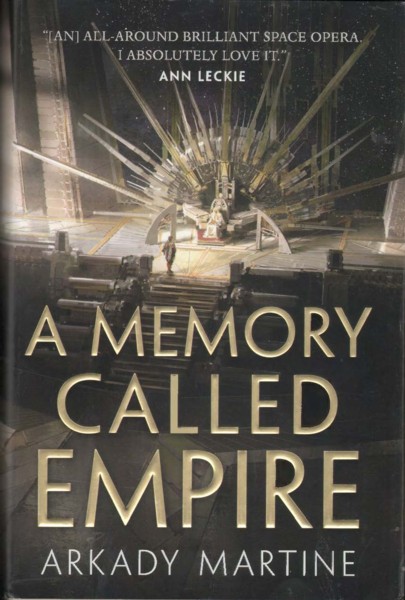
- Teixcalaan
series2 books2019
similar byreflectivescience fiction+1 more
Arkady Martine's space opera duology follows Mahit Dzmare, ambassador from the small, independent Lsel Station, as she arrives in the vast Teixcalaanli Empire to investigate her predecessor's death and finds herself caught up in the empire's own succession crisis. A Memory Called Empire and A Desolation Called Peace pair court intrigue with Mahit's conflicted, outsider fascination with an empire she can't help admiring.
- A Different Light
Elizabeth A. Lynnstandalone novel1978
similar byreflectivespacescience fiction
Jimson had twenty years to live. Or one. Twenty if he stayed in space-normal, where his disease could be treated. One year if he followed the Starcaptain into the Hype - the "not-space" that trip was the only way to the stars, where jeweled voyagers sailed the light-centuries in color-shifting ships; humankind's outriders, star-burned lovers to a Universe heavy with stars... This is the story of that year. (from the back cover of the first edition)
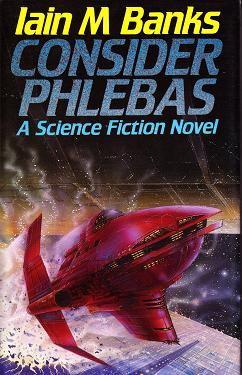
- Culture
series15 books1987
completed
part of The Culture
similar byscience fictionartificial intelligence+2 more
The Culture series is a science fiction series written by Scottish author Iain M. Banks and released from 1987 until 2012. The stories centre on The Culture, a utopian, post-scarcity space society of humanoid aliens and advanced superintelligent artificial intelligences living in artificial habitats spread across the Milky Way galaxy. The main themes of the series are the dilemmas that an idealistic, more-advanced civilization faces in dealing with smaller, less-advanced civilizations that do not share its ideals, and whose behaviour it sometimes finds barbaric. In some of the stories, action takes place mainly in non-Culture environments, and the leading characters are often on the fringes of the Culture, sometimes acting as agents of the Culture in its plans to civilize the galaxy. Each novel is a self-contained story with new characters, although reference is occasionally made to the events of previous novels.
- Replay
Ken Grimwoodstandalone novel1987
similar byreflectivefantasyscience fiction+1 more
Replay is a fantasy novel by American writer Ken Grimwood, first published by Arbor House in 1987. It won the 1988 World Fantasy Award for Best Novel.