More like Saving Solace
anchored on:secondary worldepic fantasy
but
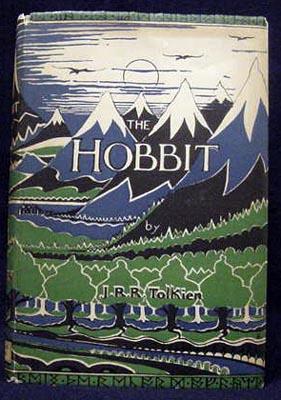
- The Hobbit
series2 books1937
completed
part of Tolkien's legendarium
similar byadventurousepic fantasysecondary worlddragonsquestsfantasy
The Hobbit (1937) is J. R. R. Tolkien's children's fantasy novel following the reluctant burglar Bilbo Baggins, who joins a company of dwarves and the wizard Gandalf on a journey to reclaim treasure guarded by the dragon Smaug. It stands as a complete adventure on its own, but shares its setting with the rest of Tolkien's legendarium and leads into the events of The Lord of the Rings.
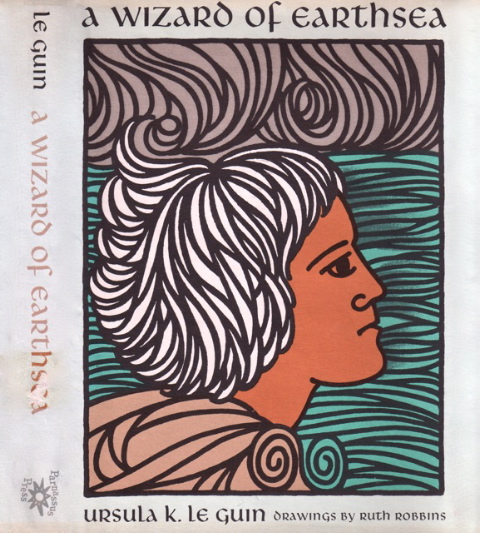
- Earthsea Cycle
series18 books1964
completed
part of Earthsea
similar byepic fantasysecondary worldfantasy+1 more
The Earthsea Cycle, also known as Earthsea, is a series of high fantasy books written by American author Ursula K. Le Guin. Beginning with A Wizard of Earthsea (1968), The Tombs of Atuan (1970), and The Farthest Shore (1972), the series was continued in Tehanu (1990), and Tales from Earthsea and The Other Wind. In 2018, all the novels and short stories were published in a single volume, The Books of Earthsea: The Complete Illustrated Edition, with artwork by Charles Vess.
- The Lord of the Rings
series13 books1954
part of Tolkien's legendarium
similar byepic fantasysecondary world+3 more
The Lord of the Rings is an epic high fantasy novel written by the English author and scholar J. R. R. Tolkien. Set in Middle-earth, the story began as a sequel to Tolkien's 1937 children's book The Hobbit but eventually developed into a much larger work. Written in stages between 1937 and 1949, The Lord of the Rings is one of the best-selling books ever written, with over 150 million copies sold.
- Dragonlance
universe436 books1984
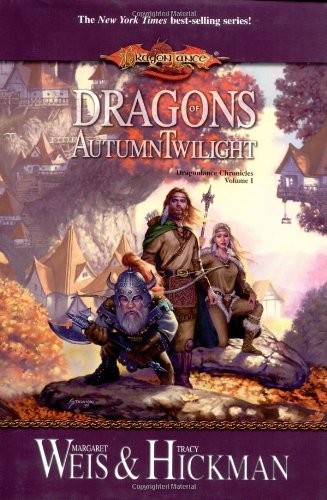
Start hereDragons of Autumn Twilight · Start here
similar byepic fantasysecondary worldfantasy+2 more
The gods have kept their silence over Krynn for three hundred years, and the world has learned to make do without them: the dragons are a nursery tale, the old clerics gone, faith worn down to superstition. Then strangers bearing a blue crystal staff cross an autumn road, and shadows with wings blot out the three moons. This is a world where magic answers to those moons—white, red, and black—where a lance is the only weapon a dragon fears, and where the fate of nations turns on a handful of friends who meet again at a tavern table and find the age of legend has come for them. At its heart stand Margaret Weis and Tracy Hickman's twin trilogies. Chronicles—Dragons of Autumn Twilight, Winter Night, and Spring Dawning—follows the Heroes of the Lance through the War of the Lance; Legends turns inward to the twins, the frail mage Raistlin and his warrior brother Caramon, and the bargain a man will strike for power. Around this core Krynn sprawls across five ages and hundreds of volumes by many hands: The Raistlin Chronicles, The War of Souls, the Preludes and Meetings cycles, the Tales anthologies, with Richard A. Knaak, Douglas Niles, Jean Rabe, and Chris Pierson each adding elf-kingdoms, dragon-overlords, and long-buried history. It is a shared world—vast, uneven, honestly enormous. What sets Dragonlance apart is its warmth. This is heroic fantasy of fellowship and hard choices rather than grimness—the companionship of the road, courage measured against temptation, gods who watch to see whether mortals deserve them back. Begin with Chronicles, then read Legends; that pairing is the doorway every reader and both creators point newcomers through.
- A Song of Ice and Fire
series14 books1996
part of World of Ice and Fire
similar byepic fantasysecondary worldfantasy+1 more
A Song of Ice and Fire is a series of high fantasy novels by the American author George R. R. Martin. Martin began writing the first volume, A Game of Thrones, in 1991, and published it in 1996. Martin, who originally envisioned the series as a trilogy, has released five out of seven planned volumes. The most recent entry in the series, A Dance with Dragons, was published in 2011. Since then, Martin has been working on the sixth novel, titled The Winds of Winter. A seventh novel, A Dream of Spring, is planned to follow.
- Zimiamvian Trilogy
series4 books1922
completed
similar byepic fantasysecondary worldfantasy
The Zimiamvian Trilogy is a series of fantasy novels by English author E. R. Eddison.Mistress of Mistresses (1935) A Fish Dinner in Memison (1941) The Mezentian Gate (1958)
- Dragon Age (Bioware RPG tie-in)
series21 books2009
similar byepic fantasysecondary worldfantasy+1 more
These tie-in novels expand BioWare's Dragon Age video game series into prose, mostly written by the games' own lead writers, and are set in the same dark-fantasy world of Thedas. The Stolen Throne and The Calling serve as prequels filling in the backstory of characters central to the first game, while later books such as Asunder and The Masked Empire tie more directly into the plots and politics of the sequels. They are written for players wanting deeper lore rather than as standalone entry points to the setting.
- Age of Legends
series4 books2014
similar byadventurousepic fantasysecondary world+3 more
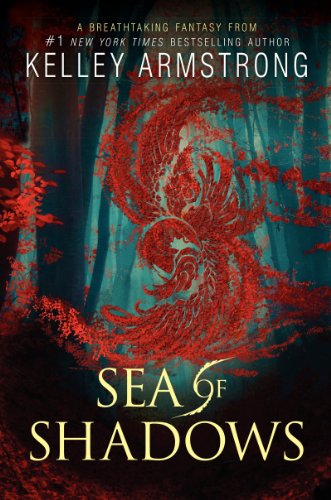
Age of Legends is a fantasy trilogy by Kelley Armstrong, comprising Sea of Shadows, Empire of Night, and Forest of Ruin (2014–2016), distinct from her contemporary paranormal Darkest Powers books.
- Spearwielder's Tales
series3 books1993
similar byadventurousepic fantasysecondary worlddragonsquestsfantasy
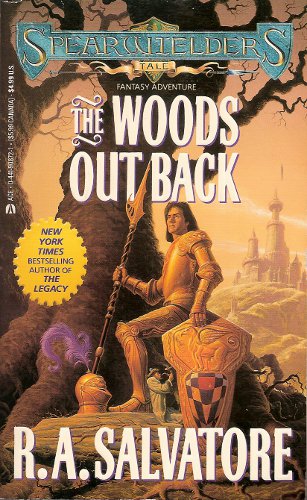
R. A. Salvatore's trilogy follows Gary Leger, bored with life after college, who wanders into the woods behind his house and stumbles into a fantasy world populated by elves, dwarves, witches, and dragons, and finds himself mistaken for the realm's long-lost hero. The Woods Out Back, The Dragon's Dagger, and Dragonslayer's Return follow Gary as he's pulled back into that world again and again, growing into the role thrust on him.
- Bronze Canticles
series3 books2004
similar byepic fantasysecondary world+1 more
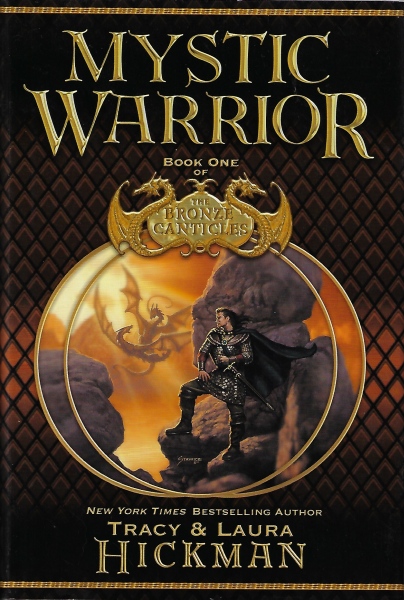
Laura and Tracy Hickman's Bronze Canticles trilogy follows Bronwyn, a young woman who discovers she's half-dragon, coming into an inheritance of both draconic and human power amid a war between the two peoples. Mystic Quest and Mystic Empire continue the conflict as she's forced to reconcile which side she truly belongs to. The trilogy reworks the Hickmans' long collaboration on dragon-centric fantasy outside the Dragonlance setting they're best known for.
- Dragonlance: Legends Trilogy
series3 books1986
part of Dragonlance
similar byepic fantasysecondary worldfantasy+2 more
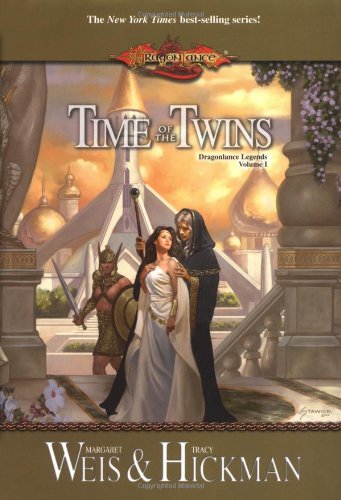
Dragonlance Legends is a trilogy of fantasy novels written by Margaret Weis and Tracy Hickman, which take place in the Dragonlance setting. This series is the sequel to the Dragonlance Chronicles, and focus on Raistlin and Caramon. The three books in the series are Time of the Twins, War of the Twins and Test of the Twins.
- Tairen Soul
series6 books2007
similar byepic fantasysecondary world+2 more
C. L. Wilson's Tairen Soul opens with Lord of the Fading Lands, a fairy-tale-inflected romantic fantasy in which a woodcarver's daughter is claimed as the truemate of a powerful fey lord and discovers that passion and magic can be dangerous together. The series continues across five novels, including King of Sword and Sky and Queen of Song and Souls.
- Alban Saga
series4 books1983
completed
similar byadventurousepic fantasysecondary worldquests+2 more
The Alban Saga is Peter Morwood's Horse Lords trilogy, the fantasy series he is best known for alongside his separate Tales of Old Russia books. It comprises The Horse Lord, The Demon Lord, and The Dragon Lord, published across the 1980s, with two further Book of Years volumes rounding out the same fictional history. Morwood, an Irish novelist married to fellow writer Diane Duane, built much of his reputation on this series.
- The Wizard Knight
series2 books2004
completed
similar byadventurousepic fantasysecondary worldfantasy+1 more
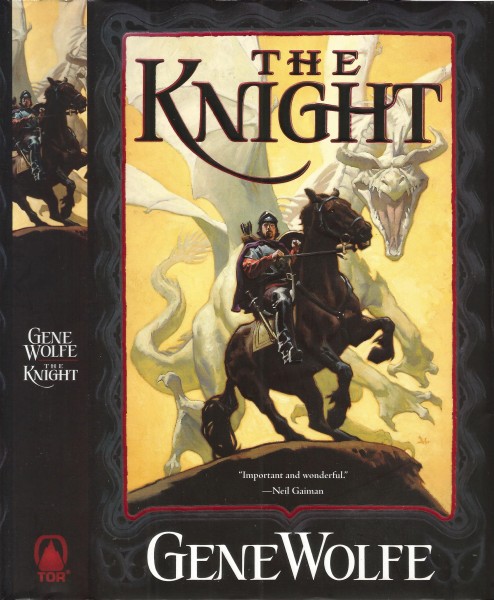
The Wizard Knight is a series of epistolary novels written by fantasy and science fiction author Gene Wolfe. It chronicles the journey of Able of the High Heart, an American boy transported to a magical world and supernaturally aged to adulthood. Able becomes a knight, and because of his connection with the magical and spiritual elements of the world around him is soon also dubbed a wizard.
- The Faerie Queene
Edmund Spenserstandalone novel1590
similar byadventurousepic fantasysecondary worldquestsfantasy+1 more
This extended epic poem deals with the adventures of knights, dragons, ladies in distress, etc. yet it is also an extended allegory about the moral life and what makes for a life of virtue.
- Ruin Mist
universe23 books2001
Start hereKeeper Martin's Tale · Start here
similar byepic fantasysecondary world+1 more
Where the old roads give out, a grey mist gathers over fallen towers, and the keepers of the tale hold to what the kingdoms have chosen to forget. Ruin Mist is a secondary fantasy world of mortal realms and the long-lived Elves of the Reaches, its lands still haunted by an elder age. Into its quarrels come a boy burdened with a magic he is forbidden to wield and a princess pressed toward a fate larger than her house — threads that draw the world toward a reckoning older than any living throne. The world is the work of a single hand, Robert Stanek, told across linked cycles rather than one unbroken line. Keeper Martin's Tales opens the door, beginning with The Kingdoms and the Elves of the Reaches, and In the Service of Dragons carries the story onward; around them gather the Ruin Mist Chronicles and Ruin Mist Tales, with later cycles — Ruin Mist Heroes, Ruin Mist Dark Path, Dawn of the Ages — returning to the same realms and bloodlines. The point of view leans young, often falling to characters coming of age at the ragged edge of great events. The register is traditional high fantasy: quests and councils of kings, a dwindling elven remnant, and forbidden power that pulls its bearer toward peril. It aims for the old, earnest key of the genre rather than irony. A newcomer should enter at the beginning of Keeper Martin's Tales — The Kingdoms and the Elves of the Reaches — and read outward through the cycles from there.
- Shannara
universe50 books1977
Start hereWord and the Void · The very beginning of the timeline
similar byepic fantasysecondary worldfantasy+2 more
Long after the world we know has burned itself to slag in the Great Wars, the Four Lands rise green over the bones of the old age. Science is a forbidden memory; magic has come back into the world, and with it the old divisions — Men, Elves, Dwarves, Trolls, and Gnomes, each Race a splinter of what humanity became. This is the far-future Earth of Shannara, where the ruins buried beneath the soil are ours, and the only keepers of the vanished knowledge are the Druids of Paranor, who wake once a generation to meet the darkness rising again. Terry Brooks opened the Four Lands in 1977 with The Sword of Shannara and has charted its history for four decades since — a legendarium ordered not by throne but by a single bloodline, the Ohmsfords, each generation inheriting an Elfstone, a blade, or a wishsong when the age demands a hero. The original trilogy gives way to the Heritage of Shannara, the Voyage of the Jerle Shannara, the High Druid, Dark Legacy, Defenders, and the concluding Fall of Shannara; the Genesis of Shannara books reach back to the apocalypse itself, and the Word and the Void trilogy back further still, into a demon-haunted version of our own present that is the root of everything after. In 2025 Brooks passed the histories to Delilah S. Dawson to carry forward. What sets these books apart is their long memory: a world where every triumph is provisional, where the same evil returns wearing a fresh shape each age, and magic always exacts its price. The reading is warm and headlong — questing companies, old talismans, journeys across a mapped and named wilderness — shadowed by the knowledge that all of it stands on the wreckage of a former world. Enter as readers first did: with The Sword of Shannara, then onward in publication order. The chronological path, beginning with Word and the Void, rewards a second journey, once the Four Lands already feel like home.
- Riftwar Saga
series7 books1982
part of The Riftwar Universe
similar byadventurousepic fantasysecondary worldfantasy
The Riftwar Saga is Raymond E. Feist's debut fantasy trilogy, opening with Magician, in which an orphaned apprentice named Pug is swept up when otherworldly invaders emerge through a dimensional rift into the frontier kingdom of Midkemia. Silverthorn and A Darkness at Sethanon carry the resulting war to its close, and the trilogy became the founding entry of Feist's much larger Riftwar Cycle.
- The Riftwar Universe
universe44 books1982
Start hereRiftwar Saga · Start here
similar byepic fantasysecondary worldfantasy+1 more
On the world of Midkemia a tear opens in the air itself, a rift hung between stars, and through it march the armies of an empire from another world entirely. So begins the chronicle Raymond E. Feist has kept for three decades: the tale of Pug, a castle kitchen boy apprenticed to a magician on the very day the invasion lands, and of Tomas, his friend, who inherits the armor and the ancient fury of a dead dragon-lord. Around these two the Riftwar Cycle turns, widening book by book from one besieged frontier keep into the whole history of a world of kingdoms, guilds, thieves' dens and mage-towers. The cycle runs to roughly thirty novels, gathered into arcs a newcomer can enter and finish on their own. The founding Riftwar Saga (Magician, Silverthorn, A Darkness at Sethanon) sets the board; the Serpentwar Saga, Krondor's Sons and the Conclave of Shadows carry the story down the generations; the Darkwar, Demonwar and Chaoswar sagas bring it toward its close. Crossing the rift to the rival world of Kelewan, Feist and Janny Wurts wrote the Empire trilogy, opening with Daughter of the Empire, a court intrigue told wholly from the invaders' side and for many the finest thing here. Shorter Legends of the Riftwar and the game-born Riftwar Legacy fill the corners; later still, Feist opens an altogether new world in the Firemane books. Feist writes fantasy in its most companionable key: apprentices who grow into archmages, tavern boys who become spies and dukes, a world you return to the way you return to an old inn. The mood is adventure before dread, friendship and rank and hard-won craft, wars that cost something, all of it rendered plainly and at a gallop. Begin where it began, with Magician, then follow the arcs in the order they were written, and the rift will carry you the rest of the way.
- Winterlands
series7 books1986
similar bysecondary worlddragonsfantasy+2 more
Winterlands follows John Aversin, a practical, unglamorous dragon-slayer, and Jenny Waynest, the self-taught village witch he loves, as their small corner of a forgotten kingdom keeps getting dragged into magic far bigger than either of them wanted. Barbara Hambly's series opens with Dragonsbane (1985), which deliberately undercuts the 'brave knight slays dragon' story it seems to promise, and continues across Dragonshadow, Knight of the Demon Queen, and Dragonstar as Jenny pursues real magical training. It favors domestic detail and moral complexity over conventional high-fantasy grandeur.
- Sparhawk
universe6 books1989
Start hereElenium · Start here
similar byadventurousepic fantasysecondary worldquestsfantasy
Sir Sparhawk is not a young man, and he has little patience for the pageantry his order pretends to. A Pandion Knight of the militant Elene Church, he rides home from a long exile to find his kingdom rotten with intrigue and his young queen, Ehlana, poisoned — kept alive only inside a shell of living crystal. To wake her he must find Bhelliom, a jewel with the power to remake the world or unmake it. So begins a long ride across the continent of Eosia. This is warm, character-first epic fantasy from David Eddings, told across two trilogies. The Elenium — The Diamond Throne, The Ruby Knight, The Sapphire Rose — pits Sparhawk against a corrupt church and a hungry elder god. The Tamuli — Domes of Fire, The Shining Ones, The Hidden City — carries him east into the vast Tamul Empire, where older enemies stir. Around him gathers a quarrelsome company: the Styric sorceress Sephrenia, the thief-boy Talen, the plain-spoken squire Kurik, and a small, imperious goddess who plays a set of pipes and always, somehow, gets her way. The pleasure here is the talk — grizzled knights trading dry insults between miracles and murders, a hero who solves as many problems with patience as with a sword. It never reaches for grimness or grand obscurity; it wants your good company for a long journey. Newcomers begin with The Diamond Throne and read the six in order: the Elenium stands whole on its own before the Tamuli widens the map.
- The Well at the World's End
William Morrisstandalone novel1896
similar byadventurousepic fantasysecondary worldquestsfantasy
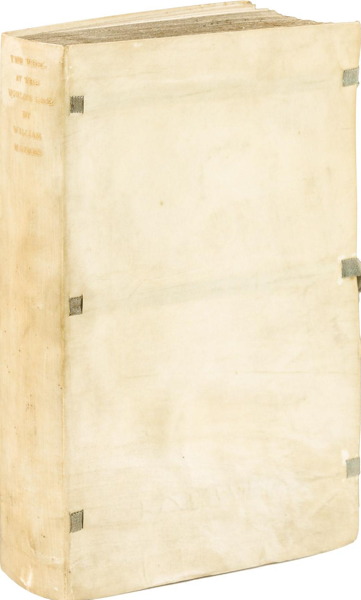
The Well at the World's End is a high fantasy novel by the British textile designer, poet, and author William Morris. It was first published in 1896 and has been reprinted repeatedly since, most notably in two parts as the 20th and 21st volumes of the Ballantine Adult Fantasy series, in August and September 1970.
- Mithgar
series29 books1984
similar byepic fantasysecondary world+3 more
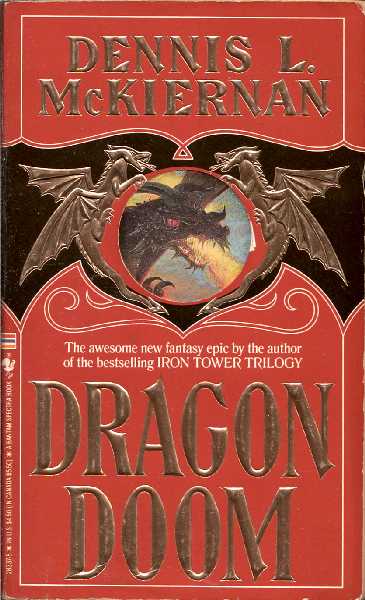
Dennis L. McKiernan's Mithgar novels are set in a Tolkien-indebted high-fantasy world of Elves, Dwarves, Warrows, and ancient evils, told across a loose sequence of trilogies, standalone novels, and story collections rather than one continuous arc. Dragondoom, one of the series' entries, follows a dwarven expedition seeking vengeance against a dragon responsible for an old massacre. The books span roughly three decades of publication, sharing setting and history more than a single throughline plot.