Loreful
HomeDiscover
Search series, authors…⌘K
Loreful

Reading orders for SF/F series and shared universes — with your place kept in every one.

Explore

UniversesSeriesWorksAuthorsAtlas

Help

FAQAboutSite map

Account & legal

Sign inCreate accountPrivacyTerms

Data

Built on ISFDB, Wikipedia, Wikidata and Open Library. Curated reading orders carry their reasoning on the page; the rest follow publication order. Data sources & licenses

© Loreful · data: ISFDB · CC BY

More like Second Helpings

anchored on:science fictionfar futureecological collapsespacefunnyshort story cycle

but

Mood

The mood the book leaves you in.

  • The reading experience is propelled by journeys, exploration, and physical risk; excitement and forward momentum dominate over dread or introspection.
  • Joy and loss are deliberately mixed; the resolution grants characters something real while taking something else away, leaving warmth and sorrow together.
  • The book demands work from the reader — dense prose, difficult structure, unfamiliar ideas, or morally uncomfortable material — as part of its intended effect.
  • Grim events, cruelty, or despair dominate the atmosphere, and the book does not soften them with comfort or comic relief.
  • The atmosphere is quietly unsettling — wrongness, unease, and the uncanny pervade the book without necessarily escalating into overt horror.
  • The book is built to move the reader; character feeling is foregrounded and major scenes aim at a strong emotional response.
  • Humor is a primary aim and the prose plays for laughs — comic situations, wit, or dialogue produce sustained comedy, not occasional levity.
  • The book insists that things can improve; effort and decency are shown to matter, and the arc bends toward better outcomes even through hardship.
  • The book teaches as it goes — real facts, history, science, or craft are conveyed in enough depth that learning is part of the reading experience.
  • The book is designed to uplift and motivate, presenting perseverance or achievement in a way that invites the reader to aspire or act.
  • The overall register is cheerful and easygoing; stakes are kept gentle and the book avoids dwelling on pain or dread.
  • Withheld information drives the experience; the book sustains enigmas and secrets the reader wants resolved, whatever its genre.
  • The book is contemplative and inward-looking, giving more weight to thought, memory, and meaning than to external events.
  • The book works as comfort reading — low tension, a soothing pace, and an atmosphere the reader can unwind in.
  • Grief, loss, or melancholy set the dominant register, and the book lets sorrow stand rather than resolving it into comfort.
  • Sustained suspense is the point; the book keeps the reader braced for what happens next through danger, pressure, or impending revelation.
  • Playful invention and charm define the register — fanciful conceits, light absurdity, and a narration that delights in its own oddity.

About

What the story runs on.

  • Stories in which extraterrestrial beings are central — as characters, cultures, or the object of the plot.
  • Stories about venturing into space to explore — survey missions, astronauts, and the frontier of the unknown beyond Earth.
  • Stories structured as a quest — a journey undertaken to find, deliver, or destroy something of great import.
  • Stories in which staying alive against nature, catastrophe, or scarcity is the central problem.
  • Stories of growing up — a young protagonist crossing from childhood into adult knowledge and responsibility.
  • Stories about who a character truly is — self-discovery, doubled lives, and the search for a self.
  • Stories about mental unraveling — descent into madness, delusion, and minds at war with themselves.
  • Stories in which a buried family truth — hidden parentage, crimes, or shames — surfaces and reorders the present.
  • Stories driven by maneuvering for power — factions, conspiracies, and statecraft conducted in shadow.
  • Stories about rising against rulers — uprisings, resistance movements, and revolutions and their aftermaths.
  • Stories in which war itself is the subject — combat, occupation, and what warfare does to soldiers and civilians.
  • Stories organized around investigating a killing — the case, the clues, and the pursuit of the killer, in any genre's clothing.

Shelf

Where it sits in the library.

    • Fiction built on magic or other supernatural elements that have no scientific explanation.
    • Secondary-world fantasy at large scale, where the fate of nations or the world turns on the protagonists' struggle.
    • Fantasy set in a recognizably modern city or contemporary world where the supernatural intrudes on everyday life.
    • Fantasy that blends in horror's atmosphere and imagery, keeping a fantastical frame around grim or frightening material.
    • Action-driven fantasy following warriors or rogues with personal stakes against sorcerous threats, rather than world-spanning conflicts.
    • Fantasy set in a real historical period or a close analogue of one, with magic woven into the era.
    • Fantasy in which protagonists cross from the ordinary world into another world through a portal or similar passage.
    • Fiction that retells or reworks a traditional fairy tale in a new form or setting.
    • Fantasy drawing directly on myths, legends, and folklore, retelling them or building on their figures and logic.
    • Fantasy of ghosts, vampires, shapeshifters, psychics, and similar phenomena, usually set in an otherwise ordinary world.
    • Fiction mixing science-fictional trappings with overtly magical or impossible elements in one setting.
    • Low-stakes fantasy emphasizing comfort, community, and everyday pleasures over conflict and peril.
    • Speculative fiction of pervasive moral ambiguity, violence, and cynicism that rejects heroic conventions — fantasy and SF alike.
      • Fiction that extrapolates from science and technology — future societies, space travel, or speculative inventions — within at least nominally natural laws.
      • Science fiction of interstellar scope — starships, galactic polities, and adventure across star systems.
      • Science fiction committed to scientific rigor, where technical plausibility constrains the story.
      • Science fiction centered on armed forces and warfare, told largely from a military point of view.
      • Science fiction of networked, corporate-dominated near futures, pairing high technology with social decay.
      • Science fiction styled on nineteenth-century steam-powered technology, often in a Victorian or pseudo-Victorian setting.
      • Fiction depicting an oppressive or catastrophic society, presented as a warning.
      • Fiction set after civilization's collapse, following survivors in the ruins of the old world.
      • Fiction in which characters move between past and future, and the mechanics or consequences of that travel drive the plot.
      • Fiction exploring a world where a historical event went differently and history diverged from ours.
      • Science fiction about humanity's first encounter and communication with an alien intelligence.
      • Science fiction in which extraterrestrial forces attack or occupy Earth and humanity resists.
      • Fiction whose primary aim is to frighten or unsettle the reader through dread, menace, or the monstrous.
      • Horror of vast, indifferent, incomprehensible entities before which humanity is insignificant, in the Lovecraft tradition.
      • Horror of decaying houses, buried family secrets, and oppressive atmosphere in the Gothic literary tradition.
      • Horror centered on hauntings and the returning dead.
      • Horror located in the mind — paranoia, obsession, and unreliable perception rather than external monsters.
      • Horror built around the reanimated dead and survival amid their outbreaks.
      • Horror defined by explicit, transgressive gore that refuses to cut away from violence.
      • Speculative fiction of the strange and uncanny that resists both natural explanation and standard genre categories.
      • Fiction organized around solving a crime or puzzle, typically following an investigator toward the identification of a culprit.
      • A puzzle-first mystery that lays out clues so the culprit's identity can be deduced before the reveal.
      • Crime fiction of moral ambiguity, fatalism, and hard-edged style, set among the corrupt and the doomed.
      • A mystery following the realistic routines of police work — forensics, interviews, and case-building.
      • A gentle mystery with an amateur sleuth, a small community, and violence kept off the page.
      • A mystery set in a past era, where the investigation works within that period's methods and society.
      • Fast-paced fiction driven by imminent danger, pursuit, or high-stakes conspiracy, built to sustain tension.
      • A thriller of espionage — agents, tradecraft, and intelligence services in conflict.
      • A thriller centered on lawyers and the courtroom, where litigation carries the suspense.
      • A thriller driven by detailed contemporary or near-future technology, often military or scientific.
      • A thriller whose tension comes from mental states and manipulation between characters rather than external action.
      • Fiction whose central plot is a romantic relationship and its development toward an emotionally satisfying resolution.
      • Romance in which one or both partners are supernatural beings, blending fantasy elements into the love story.
      • A fantasy-romance hybrid in which the romantic arc and the fantasy plot carry equal weight.
      • Romance set in a past era, with courtship shaped by the period's society and manners.
      • Romance set in the present day, without supernatural or historical elements.
      • Fiction set in a real past period, where the historical setting materially shapes characters and events.
        • General and literary fiction emphasizing prose style, character interiority, or formal ambition over genre plot conventions.
        • Fiction in a realistic world where magical events occur and are treated as ordinary, in the tradition of Latin American literature.
        • Fiction that ridicules people, institutions, or society in order to criticize them.
        • Fiction of dreamlike, irrational imagery and logic that breaks from realistic representation.
        • Fiction that plays with narrative convention through metafiction, fragmentation, and self-reference.
        • Fiction propelled by journeys, exploration, and physical peril, where action and survival carry the plot.
        • Adventure fiction of ships and seafaring — naval engagements, voyages, and life at sea.
        • Fiction of the American frontier West — gunmen, ranchers, and lawmen, typically in the late nineteenth century.
        • Fiction centered on soldiers, campaigns, and the experience of warfare, historical or imagined.
          • Fiction written primarily to amuse, using comedic situations, wit, or parody as its organizing principle.
            • Multi-generational fiction following a family or dynasty across decades, with inheritance and kinship as the through-line.
              • Fiction whose world runs on explicit game mechanics — levels, stats, and skills that characters can see and exploit.
                • Fiction about costumed or superpowered heroes and their conflicts with comparable villains.

                Practical

                How long a commitment, whether it stands alone, and whether it has finished.

                Tap a chip to ask for it · tap again to rule it out · once more to clear. Numbers show what would be left.

                • Cover of 2312
                  2312

                  Kim Stanley Robinson · standalone novel · 2012

                  similar byscience fictionecological collapsespacefar futuregenetic engineering

                  In the eponymous year, when Earth's ecology is degraded and humanity has settled throughout the solar system by terraforming and genetic engineering, mysterious disasters strike some human communities and an assortment of human types from throughout the system seek to find and eliminate the cause.

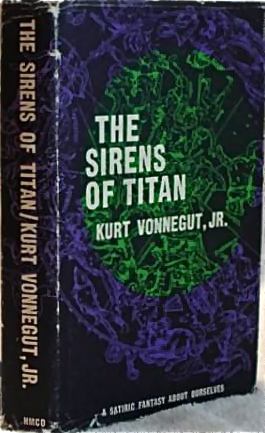
                • Cover of The Sirens of Titan
                  The Sirens of Titan

                  Kurt Vonnegut & Jr. · standalone novel · 1959

                  similar byscience fictionfunnyspacefar future

                  The Sirens of Titan is a comic science fiction novel by Kurt Vonnegut Jr., first published in 1959. His second novel, it involves issues of free will, omniscience, and the overall purpose of human history, with much of the story revolving around a Martian invasion of Earth.

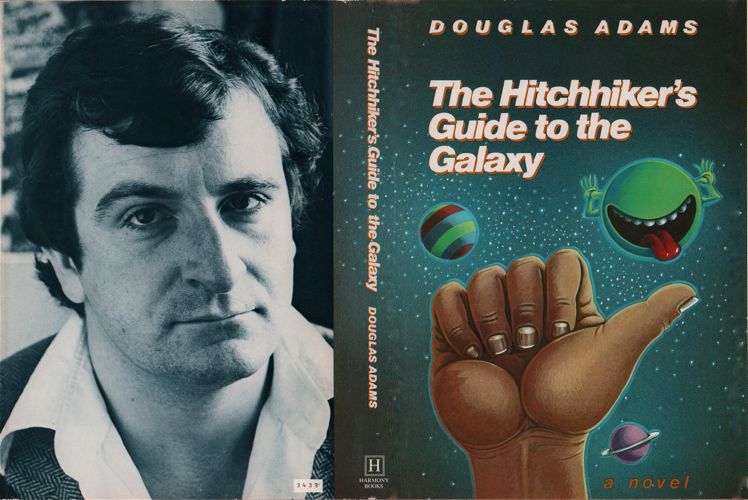
                • Cover of Hitchhiker's Guide to the Galaxy
                  Hitchhiker's Guide to the Galaxy

                  series · 16 books · 1979

                  part of The Hitchhiker's Guide to the Galaxy Universe

                  similar byscience fictionspacefunnyfar future

                  The Hitchhiker's Guide to the Galaxy is a comedy science fiction franchise created by Douglas Adams. Originally a radio sitcom broadcast over two series on BBC Radio 4 between 1978 and 1980, it was soon adapted to other formats, including both novels and comic books, a 1981 BBC television series, a 1984 text adventure game, stage shows and a 2005 feature film.

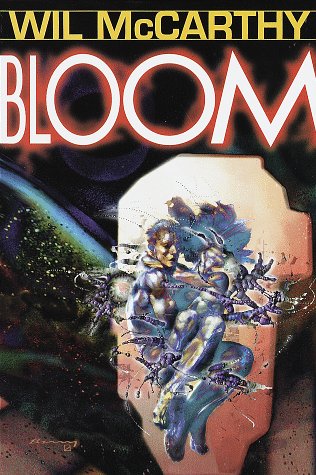
                • Cover of Bloom
                  Bloom

                  Wil McCarthy · standalone novel · 1998

                  similar byscience fictionecological collapsespacefar future+1 more

                  Bloom, written in 1998, is the fifth science fiction novel written by Wil McCarthy. It was first released as a hardcover in September 1998. Almost a year later, in August 1999, its first mass market edition was published. An ebook reprint was published in 2011.

                • Cover of The Stainless Steel Rat
                  The Stainless Steel Rat

                  series · 21 books · 1957

                  completed

                  similar byscience fictionfunnyfar futurespace

                  James Bolivar diGriz, alias "Slippery Jim" and "The Stainless Steel Rat", is a fictional character and a series of comic science fiction novels written by Harry Harrison.

                • Cover of Search the Sky
                  Search the Sky

                  C. M. Kornbluth & Frederik Pohl · standalone novel · 1954

                  similar byscience fictionfunnyspacefar future

                  Search the Sky is a satirical science fiction novel by American writers Frederik Pohl and Cyril M. Kornbluth, first published in 1954 by Ballantine Books.

                • Cover of Dune
                  Dune

                  series · 20 books · 1963

                  part of Dune Universe

                  similar byscience fictionfar future+1 more

                  Frank Herbert's Dune Chronicles opens with 1965's Dune, set on the desert planet Arrakis where House Atreides takes control of the only source of the vital spice melange and young Paul Atreides is pulled into a struggle over its politics and religion. Herbert carried the story forward across five further novels — Dune Messiah, Children of Dune, God Emperor of Dune, Heretics of Dune, and Chapterhouse: Dune — following Paul's line over the following millennia, before Brian Herbert and Kevin J. Anderson later extended the saga. Many other editions of these six novels are omnibus and box-set repackagings rather than separate stories.

                • Cover of Evolution
                  Evolution

                  Stephen Baxter · standalone novel · 2002

                  similar byscience fictionecological collapsefar futuregenetic engineeringshort story cycle

                  Evolution is a collection of short stories that work together to form an episodic science fiction novel by author Stephen Baxter. It follows 565 million years of human evolution, from shrewlike mammals 65 million years in the past to the ultimate fate of humanity and its descendants, both biological and non-biological, 500 million years in the future.

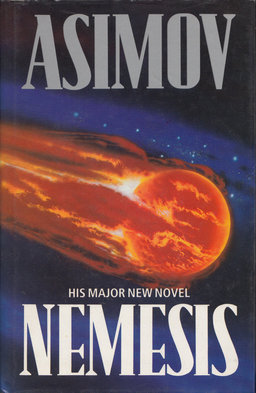
                • Cover of Nemesis
                  Nemesis

                  Isaac Asimov · standalone novel · 1989

                  similar byscience fictionecological collapsespacefar future

                  The expanding population and ensuing ecological degradation of Earth leads to the establishment of orbital habitats which continue to compete with each other as well as with Earth, leading one of them to abandon the Solar System entirely, to establish itself around a neighboring star.

                • Cover of The Margarets
                  The Margarets

                  Sheri S. Tepper · standalone novel · 2007

                  similar byscience fictionecological collapsespacefar futuredark

                  The Margarets marks the long-awaited return of one of the most respected authors in the sf community; a writer who has earned accolades and the admiration of every true aficionado of bold, brilliant, risk-taking speculative fiction. Sheri S. Tepper dazzles yet again with a powerful tale of ingenious survival and strange destiny.The only human child living in a human work colony on the Martian satellite Phobos, little Margaret Bain has devised a system for keeping the suffocating demons of boredom and loneliness at bay: She invents six imaginary companions, each an extension of her own personality, to play with. When the unproductive Phobos project is shut down, and after Margaret is forced to return to Earth with her parents, the child's other selves are lost to her. But they are not gone. Left behind, each one flourishes—refining its own persona, acquiring its own history—before ultimately dispersing to far-flung destinations throughout the universe.On a near-barren homeworld denuded by thoughtless-ness and chemistry, Margaret grows to adulthood and marries, despite the seemingly utter hopelessness of humanity's future. The Earth is so impoverished that its inhabitants must import water and other basic necessities of life—trading the only viable product the planet has left to offer . . . slaves. The time will come when Margaret must leave this world as well, expelled as part of a desperate survival plan millennia in the making—an astonishing scheme that will require her to gather together the many Margarets who are now scattered throughout the galaxy. The creator of the Margarets must now bring all her selves home . . . or watch her race perish.

                • Cover of Schild's Ladder
                  Schild's Ladder

                  Greg Egan · standalone novel · 2002

                  similar byscience fictionecological collapsespacefar future

                  Schild's Ladder is a 2002 science fiction novel by Australian author Greg Egan. The book derives its name from Schild's ladder, a construction in differential geometry, devised by the mathematician and physicist Alfred Schild.

                • Cover of Redshirts
                  Redshirts

                  John Scalzi · standalone novel · 2012

                  similar byscience fictionfunnyspacefar future

                  Redshirts is a postmodernist science fiction novel by John Scalzi that satirizes the tropes and narrative elements of Star Trek from the perspectives of several characters in a fictional TV show about the adventures of a starship and its crew who gradually become aware of their true nature.

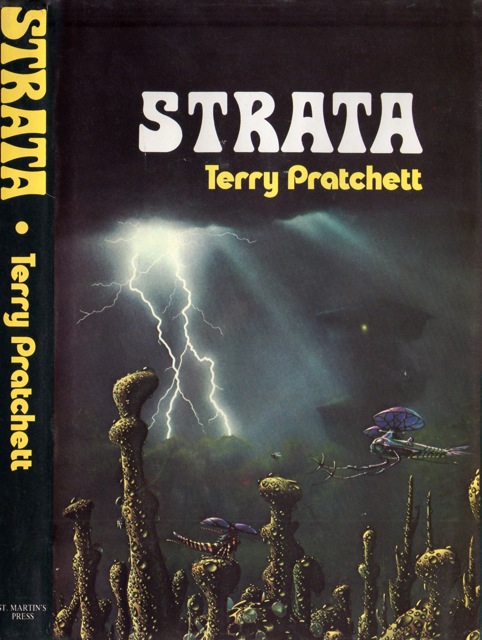
                • Cover of Strata
                  Strata

                  Terry Pratchett · standalone novel · 1981

                  similar byscience fictionfunnyspacefar future

                  Strata is a 1981 science fiction comedy novel by English writer Terry Pratchett. It is one of Pratchett's first novels and among the few science fiction novels he wrote, along with The Dark Side of the Sun, Only You Can Save Mankind, The Nome Trilogy and the co-authored The Long Earth.

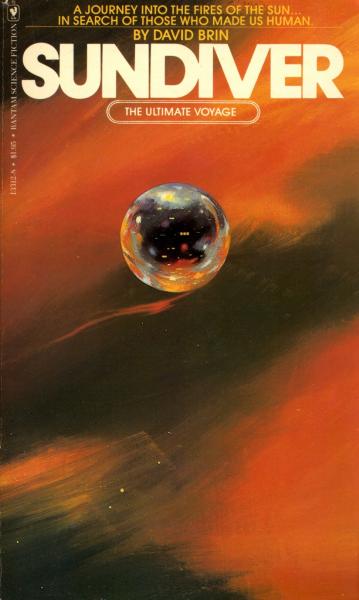
                • Cover of Uplift
                  Uplift

                  series · 5 books · 1980

                  part of Uplift Universe

                  similar byscience fictionfar futurespace+1 more

                  David Brin's Uplift trilogy opens with Sundiver, sending human explorers into the Sun itself, then follows a dolphin-crewed starship on the run from hostile aliens in Startide Rising and a fight over the colony world Garth in The Uplift War. The books sit inside Brin's wider Uplift Universe, built on the idea that spacefaring "patron" species genetically engineer younger "client" species into full sapience, with humanity an anomaly that reached the stars without a patron of its own.

                • Cover of Mindswap
                  Mindswap

                  Robert Sheckley · standalone novel · 1966

                  similar byscience fictionfunnyspacefar future

                  "In the future, interstellar travel to alien worlds will be too expensive for most ordinary people. It certainly is for Marvin, a college student who wants to take a really good vacation. And so he signs up for what he can afford, a mindswap, in which a persons consciousness is swapped into the body of an alien lifeform. But Marvin is unlucky, and finds himself in the body of an interstellar criminal, a body that he has to vacate fast. But that criminal consciousness has stolen Marvins earthly body, and Marvin has to find a body on the black market. Travel from world to world with Marvin, each one crazier than the last, as he keeps finding far-from-ideal bodies in awful situations, just to stay alive"--Cover p. [4].

                • Cover of Venomous Lumpsucker
                  Venomous Lumpsucker

                  Ned Beauman · standalone novel · 2022

                  similar byscience fictionecological collapsefunny+2 more

                  She is studying the venomous lumpsucker. It might be intelligent. It might also be threatened by extinction. He has invested in extinction credits. It would cost money if an intelligent species went extinct because of him and his company.

                • Cover of The Stars My Destination
                  The Stars My Destination

                  Alfred Bester · standalone novel · 1956

                  similar byscience fictionspacefar futuredark

                  When a passing spaceship refuses to rescue the lone survivor from the drifting wreck of another ship, he dedicates his life to discovering who made that decision and exacting his revenge, in the process altering human history and his own character.

                • Cover of Uplift Universe
                  Uplift Universe

                  universe · 13 books · 1980

                  Start hereUplift · Start here

                  similar byscience fictionspacefar future+1 more

                  No species, the Galactics insist, ever climbs to sapience alone. For a billion years the elder races have "uplifted" their chosen clients — reshaping some promising animal, gene by patient gene, into a thinking being, then binding it through long ages of indenture. Patron lifts client; client one day becomes patron; and every lineage traces back through the vast Galactic Library to the vanished Progenitors who began it all. Then a ragged band of primates arrives at the stars with no patron to claim them — wolflings, self-made, an affront to a hundred thousand years of law — and worse, these humans have already started uplifting neighbors of their own: the neo-dolphins and neo-chimpanzees of Earthclan. David Brin builds this galaxy across two trilogies. The first — Sundiver, the Hugo- and Nebula-winning Startide Rising, and the Hugo-winning The Uplift War — sends an expedition into the Sun, then follows the dolphin-crewed survey ship Streaker as it flees a discovery that sets fanatical star-clans at war, and a chimp-led resistance on an invaded colony world. The second sequence, Uplift Storm — Brightness Reef, Infinity's Shore, Heaven's Reach — descends to Jijo, a forbidden world where six fallen races hide as illegal settlers, and draws every loose thread toward a reckoning. Short fiction fills the margins. This is space opera with an ecologist's conscience: teeming with invented biologies, wry cross-species banter, and real unease about what we owe the minds we make. Begin with Startide Rising — the saga's beating heart, and readable on its own — or take Sundiver first and read straight through in publication order.

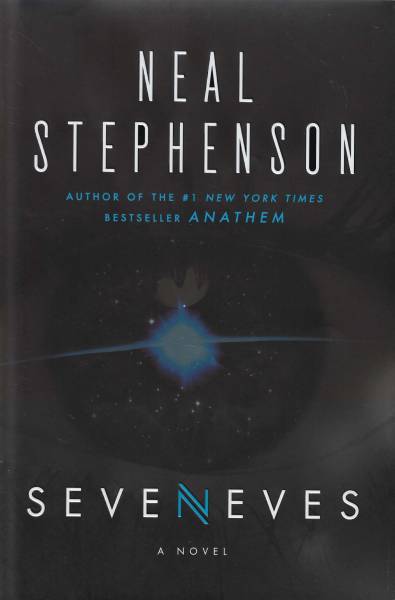
                • Cover of Seveneves
                  Seveneves

                  Neal Stephenson · standalone novel · 2015

                  similar byscience fictionecological collapsespacegenetic engineering

                  Seveneves is a science fiction novel by Neal Stephenson published in 2015. The story tells of the desperate efforts to preserve Homo sapiens in the wake of apocalyptic events on Earth after the unexplained disintegration of the Moon and the remaking of human society as a space-based civilization after a severe genetic bottleneck.

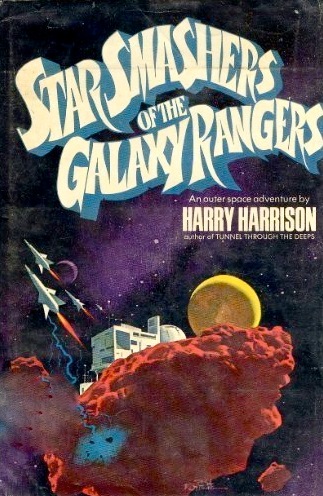
                • Cover of Star Smashers of the Galaxy Rangers
                  Star Smashers of the Galaxy Rangers

                  Harry Harrison · standalone novel · 1973

                  similar byscience fictionfunnyspacefar future

                  Star Smashers of the Galaxy Rangers is a 1973 comic science fiction novel by American writer Harry Harrison. It is a parody of the space opera genre and in particular, the Lensman and Skylark series of E. E. "Doc" Smith. The main characters are homages to Tom Swift Jr. and his buddy, Bud Barclay. It also includes a homage to Larry Niven's Ringworld (1970).

                • Cover of Moties
                  Moties

                  series · 4 books · 1974

                  part of CoDominium

                  similar byscience fictionspacefar future

                  Larry Niven and Jerry Pournelle's The Mote in God's Eye (1974) depicts humanity's first contact with an alien species, the Moties, set within the far-future interstellar setting of Pournelle's codominium future history. The Gripping Hand continues that first-contact crisis years later, and Outies, written by J. R. Pournelle, carries the story forward into a new generation. Together the three books trace an escalating encounter between human and Motie civilizations within the codominium universe.

                • Cover of Floating Worlds
                  Floating Worlds

                  Cecelia Holland · standalone novel · 1976

                  similar byscience fictionecological collapsefar future+1 more

                  2000 years in the future, runaway pollution has made the Earth uninhabitable except in giant biodomes. The society is an anarchy, with disputes mediated through the Machiavellian Committee for the Revolution. Mars, Venus and the Moon support flourishing colonies of various political stripes. On the fringes of the solar system, in the Gas Planets, a strange, new, violent kind of human has evolved.In this unstable system the anarchist Paula Mendoza, an agent of the Committee, works to make peace, and ultimately protect her people, in a catastrophic clash of worlds that destroys the order she knows.

                • Cover of Phule's Company
                  Phule's Company

                  series · 6 books · 1990

                  similar byscience fictionfunnyfar futurespace

                  Phule's Company is a series of comic military science fiction novels by Robert Asprin, beginning with Phule's Company and ending with Phule's Errand.

                • Cover of Forever War
                  Forever War

                  series · 10 books · 1972

                  similar byscience fictionspacefar future+1 more

                  Joe Haldeman's The Forever War (1974) follows a soldier conscripted into a centuries-long interstellar war against the alien Taurans, using relativistic space travel so that months spent in transit correspond to years or decades passing back on Earth. Haldeman later returned to the same conflict in Forever Peace (1997), a thematically connected but separate story, and Forever Free (1999), a direct sequel set years after the original war's end. The first novel won the Hugo, Nebula, and Locus awards and is considered a foundational work of military science fiction.