More like Second Lives
anchored on:science fictioncontemporary
but
- The Andromeda Strain
series2 books1969
similar bytensescience fictioncontemporary+1 more
Michael Crichton's 1969 novel The Andromeda Strain follows a team of scientists racing to contain a lethal extraterrestrial microorganism that crash-lands in Arizona, told in the clinical, document-driven style that helped establish the techno-thriller genre. Daniel H. Wilson's authorized 2019 sequel The Andromeda Evolution revisits the same threat five decades later. Together the two books form a two-part outbreak story separated by a fifty-year gap in publication.
- The Wanderer
Fritz Leiberstandalone novel1964
similar bytensescience fictionour worldcontemporary
The Wanderer is a science fiction novel by American writer Fritz Leiber, published as a paperback original by Ballantine Books in 1964. It won the 1965 Hugo Award for Best Novel.
- Jumper
series6 books1992
similar bytensescience fictioncontemporary+2 more
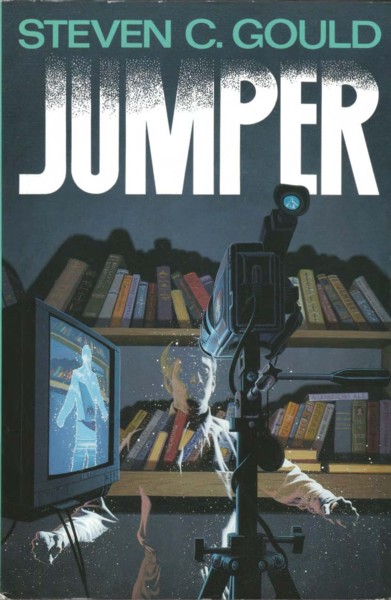
Jumper follows David Rice, a teenager who discovers he can teleport anywhere he's been and uses the power to escape an abusive home, only to find that ability alone doesn't solve the harder problems of finding his absent mother, building an honest relationship, or staying off the radar of people who'd exploit him. Steven Gould's series continues across Reflex, Impulse, and Exo, later following his and his wife's daughter as a second-generation jumper. A 2008 film loosely adapted the first novel.
- Footfall
Larry Niven & Jerry Pournellestandalone novel1985
similar bytensescience fictionour worldcontemporary
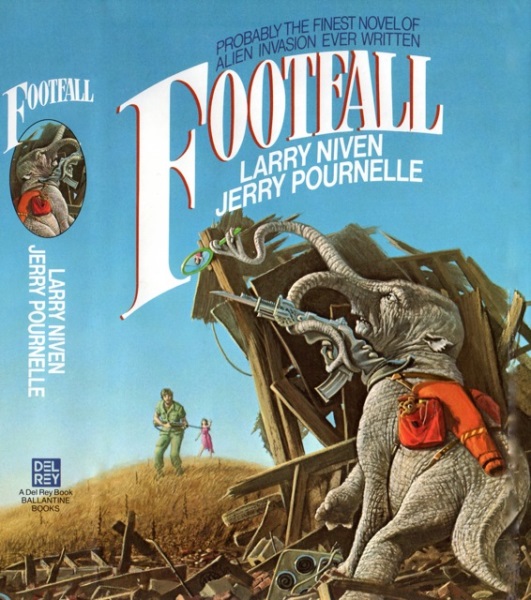
When aliens travel to Earth from Alpha Centauri, differences between alien and human psychology result in an unprovoked invasion, and the resulting resistance results in the aliens' use of a devastating weapon.
- The Silver Crown
Robert C. O'Brienstandalone novel1968
similar bytensescience fictionour worldcontemporary+1 more
The Silver Crown is a children's science-fiction book by Robert C. O'Brien. Published in 1968, it was his first novel.
- H. G. Wells' War of the Worlds
universe65 books1898
Start hereThe War of the Worlds · Start here
similar byscience fiction+2 more
No one would have believed, in the closing years of the nineteenth century, that human affairs were being watched keenly and closely from the timeless worlds of space. And then the cylinders fell. H. G. Wells' War of the Worlds opens in the quiet of the Surrey commons, where a falling star proves to be the first Martian craft — and from the pit rise the towering tripods, the Heat-Ray, the choking Black Smoke and the creeping red weed, wielded by minds that regard mankind much as we regard the creatures we boil for supper. This is invasion rendered as natural disaster: cold, methodical, and vast beyond argument. Wells' 1898 novel is the seed; everything else grows from that Martian soil. The catalogue gathers direct sequels and continuations alongside a wide field of other hands. In War of the Worlds: Global Dispatches the invasion is retold across the whole planet through the eyes of Twain, Verne, Tolstoy, Lowell and Kipling; in the Manly Wade and Wade Wellman crossover, Sherlock Holmes, Watson and Professor Challenger take the field against the machines; and Scott Washburn's Great Martian War stretches the fighting into a decades-long alternate history of steam, artillery and grinding attrition. It is a loose shared world — no single decreed sequence, many voices answering one calamity. What sets this world apart is its refusal of heroics: the invaders fall not to generals but to the smallest things of Earth, humbling and indifferent. Begin, always, with Wells' original novel — it is short, and it is the ground every later book stands upon. From there follow your appetite: Global Dispatches for the panorama, the Holmes campaign for adventure, Washburn for the long war.
- WWW Trilogy
series3 books2009
similar byscience fictionour worldcontemporary+1 more
The WWW Trilogy is a trilogy of science-fiction novels by Canadian science fiction author Robert J. Sawyer. The first book, Wake, was originally serialized in four parts in Analog Science Fiction and Fact from November 2008 to March 2009, published in book form through Ace on April 7, 2009, and was followed by the second book, Watch, on April 6, 2010. Wonder was published in 2011.
- Tempest (Julie Cross)
series4 books2011
similar bytensescience fictionour worldcontemporaryyoung adulttime travel
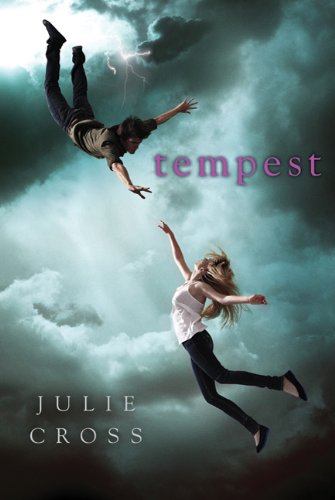
Julie Cross' Tempest trilogy opens with Tempest (2012), a young-adult science-fiction novel published by St. Martin's Press that was nominated for a 2012 RT Book Reviews award and received a starred Kirkus review. It continues across Vortex and Timestorm, published through 2014.
- Space Demons
series4 books1986
similar byscience fictionour worldcontemporaryyoung adult+1 more
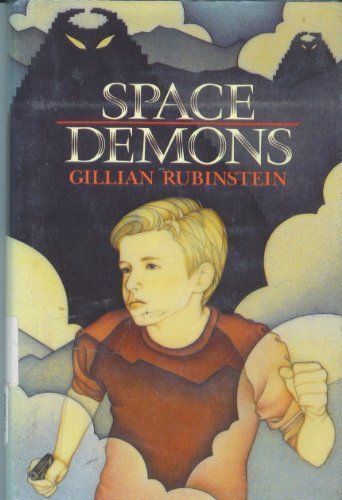
Gillian Rubinstein's Space Demons follows a group of Australian schoolkids drawn into a mysterious video game that starts pulling them physically into its world, with consequences that follow them home. The story continues across two more novels, Skymaze and Shinkei, following the same characters into further games.
- Foundation Universe
universe123 books1940
Start hereFoundation · Start here
similar byscience fiction+1 more
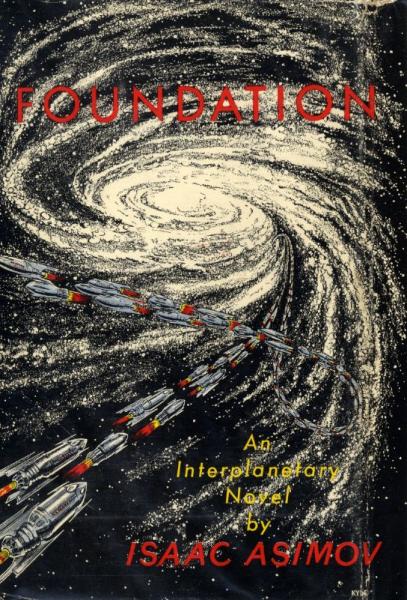
There is a science that reads the future of quadrillions the way an astronomer reads the orbits of stars. It is called psychohistory, and its equations foresee something the ruling Galactic Empire cannot admit: the throne is rotting, and thirty thousand years of barbarism are coming. One man, Hari Seldon, cannot stop the fall. He can only shorten it — by seeding a Foundation of scholars at the rim of the galaxy, a fragile institution built to carry knowledge across the dark and cut the interregnum to a single millennium. This is a universe told in the register of history itself: the long view, the calm of deep time, empires measured in centuries and men measured against them. The spine is Asimov's original trilogy — Foundation, Foundation and Empire, Second Foundation — followed decades later by the sequels Foundation's Edge and Foundation and Earth and the prequels Prelude to Foundation and Forward the Foundation. Late in life Asimov braided this in with his other future histories: the Robot novels of detective Elijah Baley and his humaniform partner R. Daneel Olivaw (The Caves of Steel, The Naked Sun, The Robots of Dawn, Robots and Empire) and the early Galactic Empire novels (Pebble in the Sky and its kin), until one continuous chronicle ran from the first thinking robots to the Second Empire. Other hands extend it — the Second Foundation Trilogy by Gregory Benford, Greg Bear, and David Brin, and shared-world spinoffs such as Robot City — so the corpus sprawls beyond a single author's tidy shelf. What distinguishes it is that the drama is intellectual: crises resolved by insight, nerve, and dialogue rather than fleets and blades, each turn hinging on the hidden logic of the Seldon Plan. Begin where readers have always begun — with Foundation, and the original trilogy in publication order. The rest opens outward from there.
- Dark Matter
Blake Crouchstandalone novel2016
similar bytensescience fictionour worldcontemporary
Jason Dessen, college physics professor, husband and father, is kidnapped and taken to a parallel universe where his counterpart had dedicated his life to inventing a method of traveling between an infinity of parallel universes.
- Ready Player One
series3 books2011
similar byscience fiction+3 more
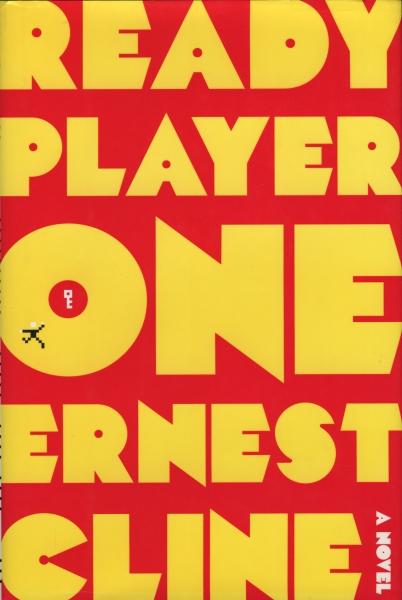
Ernest Cline's Ready Player One (2011) is set in a near-future dystopia where much of humanity escapes into the OASIS, a vast virtual-reality universe, and follows teenager Wade Watts as he chases an Easter egg hidden by the OASIS's late creator in a puzzle-based hunt worth a fortune. The 2020 sequel, Ready Player Two, picks up after Wade has gained control of the OASIS and follows him and his friends into a new quest built around a brain-computer interface the creator left behind.
- The Resurrection Wager
Christopher Coatesstandalone novel2018
similar bytensescience fictionour worldcontemporarytime travel
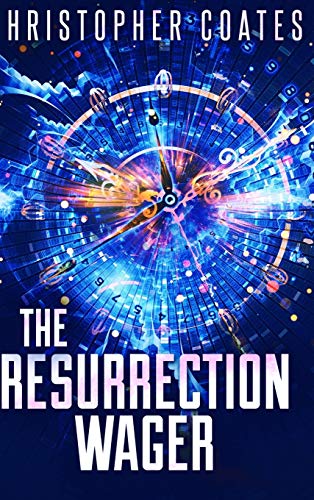
• "When a man of science and a man of faith develop the ability to go back in time, there is only one place for them to go to demonstrate their new technology. After they make a wager about whether or not the resurrection of Jesus really happened, the two set out to prove it one way or the other. Along the way, they face obstacles and challenges from those who want to use their technology for personal gain." ― quoted from this book's product page on Goodreads.com as of 2020-05-28.
- Running Out of Time
series2 books1995
similar bytensescience fictioncontemporary+2 more
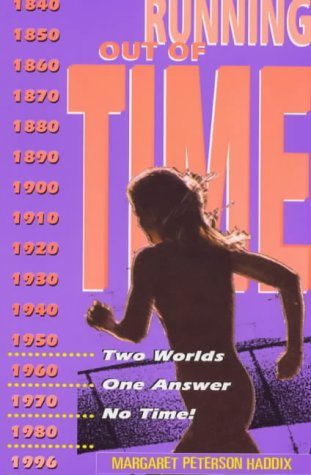
Margaret Peterson Haddix's Running Out of Time follows Jessie, who believes she lives in the frontier village of Clifton, Indiana, in 1840 — until a diphtheria outbreak kills several children and her mother reveals the truth: it is actually 1996, and Clifton is a reconstructed historical tourist village cut off from the outside world. Sent by her mother on a desperate mission for real medicine, Jessie discovers a modern world stranger and more threatening than she imagined, with her own life on the line. Falling Out of Time continues her story.
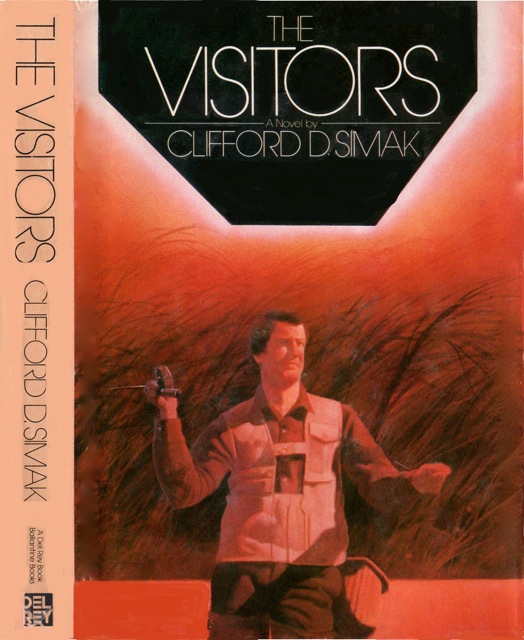
- The Visitors
Clifford D. Simakstandalone novel1980
similar bytensescience fictionour worldcontemporary
WorldCat: Intelligent, alien creatures arrive on Earth from outer space, threatening world stability and presaging the destruction of civilization.
- Kairos
series11 books1962
completed
similar byscience fictionyoung adult+3 more
The Time Quintet is a science fantasy series of five young adult novels written by American author Madeleine L'Engle and made up of A Wrinkle in Time (1962), A Wind in the Door (1973), A Swiftly Tilting Planet (1978), Many Waters (1986), and An Acceptable Time (1989).
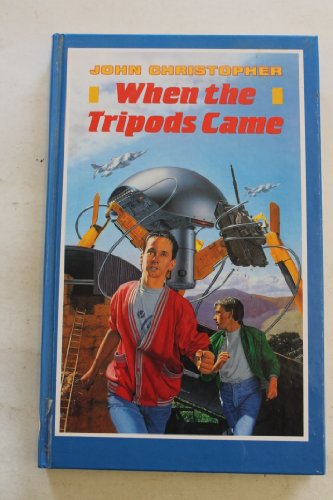
- Tripods
series4 books1967
completed
similar bytensescience fictionour worldyoung adult
The Tripods is a series of young adult science fiction novels by John Christopher. The series takes place in a post-apocalyptic world where humanity is enslaved by "Tripods"—gigantic three-legged walking machines piloted by an alien race later identified as the "Masters". The first two books were the basis of a science fiction TV series, produced in the United Kingdom in the 1980s.
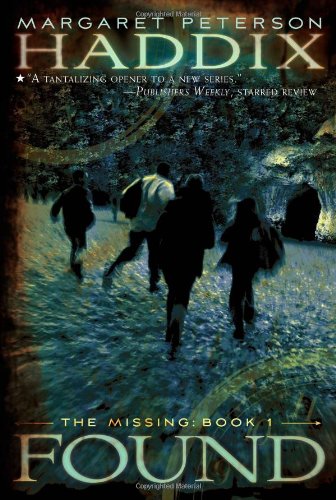
- The Missing
series10 books2008
similar byscience fictioncontemporaryyoung adulttime travel+2 more
The Missing is a series of young adult novels written by Margaret Peterson Haddix. It tells the story of famous children from history stolen from their place in time by futuristic time travelers and accidentally sent to the 21st century as babies. Jonah Skidmore is one of the stolen children, and he, along with his non-adopted sister Katherine, must help return the missing kids to their rightful places in history and fix time before it is destroyed. The first book in the series, Found, was published on April 22, 2008. The series continued with book titles Sent, Sabotaged, Torn, Caught, Risked, and Revealed. The eighth and final book, Redeemed, was released on September 8, 2015. There are also two ebook short stories, Sought and Rescued . Haddix originally intended the series to consist of only seven books. However, she stated that she had trouble closing out the series in seven books; leading to her decision to write Redeemed.
- Our Children's Children
Clifford D. Simakstandalone novel1974
similar bytensescience fictionour worldcontemporarytime travel
From the back cover of the first DAW printing: "They were our children's children, and they came one day from nowhere - walking through holes in the air into our world. By means of one-way time tunnels, they fled the ravening beasts with teeth, claws and tentacles, that reproduced like bacteria and were intelligent. They fled to escape the uncontrolled horror of their own far future, and we, their distant ancestors, housed and fed and comforted them, content in their assurance that the tunnel was securely guarded from the beasts, whatever or whoever they were. But then somebody up there slipped and the beasts were abroad..."
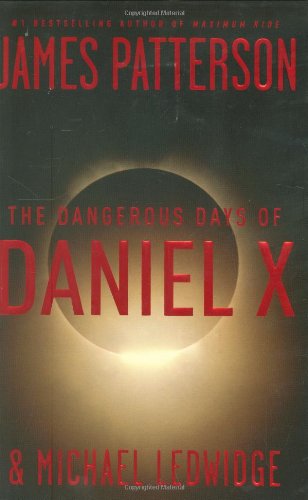
- Daniel X
series6 books2008
similar byscience fictionour worldcontemporaryyoung adult+1 more
The Dangerous Days of Daniel X opens James Patterson's science-fiction series, co-written with Michael Ledwidge, marking Patterson's return to genre science fiction in a similar vein to his Maximum Ride series. Released in 2008, it became the first of six books following the same teenage protagonist. Patterson's later collaborators on the sequels include Chris Grabenstein, Ned Rust, and Adam Sadler.
- Escape from Memory
Margaret Peterson Haddixstandalone novel2003
similar byscience fictionour worldcontemporaryyoung adult+1 more
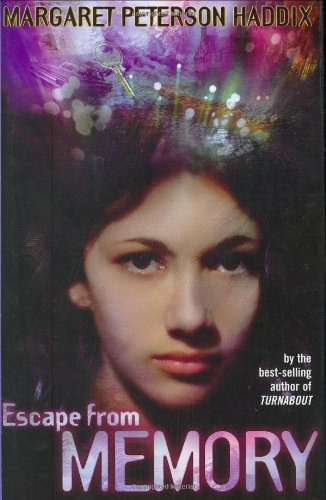
Escape from Memory is a young adult novel by Margaret Peterson Haddix. It was published in 2003 by Simon & Schuster.
- Southern Reach Trilogy
series4 books2014
similar byscience fictionour worldcontemporary+1 more
The Southern Reach Series is a series of novels by the American author Jeff VanderMeer first published in 2014—Annihilation, Authority, Acceptance, and Absolution. The series takes its name from the secret agency that is central to the plot. In 2013, Paramount Pictures bought the movie rights for the series, and a film adaptation of Annihilation was made with Alex Garland as writer-director. The film was released in 2018. The most recent book in the series, Absolution, was released on 22 October 2024.
- Little Brother
series7 books2008
similar bytensescience fictioncontemporary+2 more
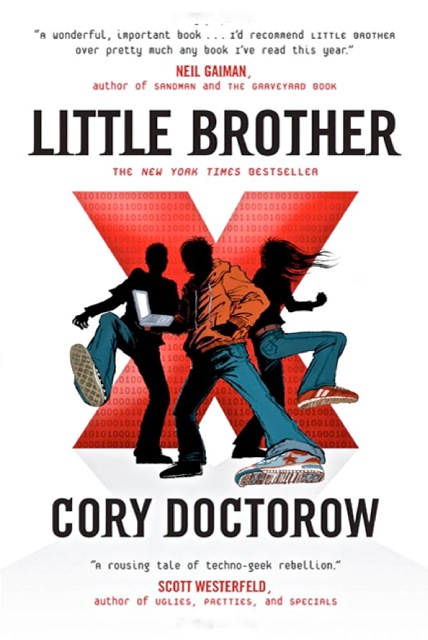
Cory Doctorow's Little Brother follows Marcus, a San Francisco teenager who builds a covert mesh network, the Xnet, to organize resistance after the Department of Homeland Security uses a terrorist attack as pretext for mass surveillance and civil-rights violations. Homeland continues Marcus's fight years later, and Attack Surface completes the trilogy; a companion story, 'Lawful Interception,' and other short pieces extend the same near-future world. Throughout, the series doubles as a working explanation of the surveillance and cryptography tools its characters use.