More like Second Son
but
- A Song of Ice and Fire
series14 books1996
part of World of Ice and Fire
similar byfantasysecondary worldpolitical intrigue+2 more
A Song of Ice and Fire is a series of high fantasy novels by the American author George R. R. Martin. Martin began writing the first volume, A Game of Thrones, in 1991, and published it in 1996. Martin, who originally envisioned the series as a trilogy, has released five out of seven planned volumes. The most recent entry in the series, A Dance with Dragons, was published in 2011. Since then, Martin has been working on the sixth novel, titled The Winds of Winter. A seventh novel, A Dream of Spring, is planned to follow.
- Kairos
series11 books1962
completed
similar by+2 more
The Time Quintet is a science fantasy series of five young adult novels written by American author Madeleine L'Engle and made up of A Wrinkle in Time (1962), A Wind in the Door (1973), A Swiftly Tilting Planet (1978), Many Waters (1986), and An Acceptable Time (1989).
- Targaryen History
series4 books2013
part of World of Ice and Fire
similar byfantasysecondary worldpolitical intriguecourt intrigue+2 more
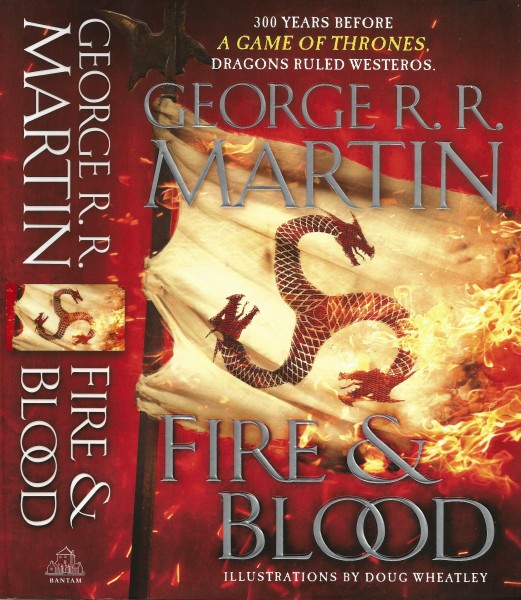
Set centuries before A Game of Thrones in George R. R. Martin's A Song of Ice and Fire universe, this history of House Targaryen traces the dynasty's founding, its wars, and its relationship with dragons through the voice of an in-world maester chronicler. Fire & Blood is the first of a planned two-part history, with the earlier novella The Princess and the Queen covering the dynastic civil war known as the Dance of the Dragons.
- The Lord of the Rings
series13 books1954
part of Tolkien's legendarium
similar bysecondary world+1 more
The Lord of the Rings is an epic high fantasy novel written by the English author and scholar J. R. R. Tolkien. Set in Middle-earth, the story began as a sequel to Tolkien's 1937 children's book The Hobbit but eventually developed into a much larger work. Written in stages between 1937 and 1949, The Lord of the Rings is one of the best-selling books ever written, with over 150 million copies sold.
- The Old Kingdom / Abhorsen milieu
series11 books1995
similar byfantasysecondary world+1 more
The Old Kingdom, or Abhorsen in North America and the UK, is a fantasy series written by Australian author Garth Nix. It originated in 1995 with the novel Sabriel and has continued in the novels Lirael (2001), Abhorsen (2003), Goldenhand (2016), and Terciel & Elinor (2021), as well as a prequel novel titled Clariel (2014). The Old Kingdom also consists of the novella The Creature in the Case (2005) and various other short fiction.
- The Green Bone Saga
series5 books2017
similar byfantasytensefamily secretssecondary worldpolitical intrigue
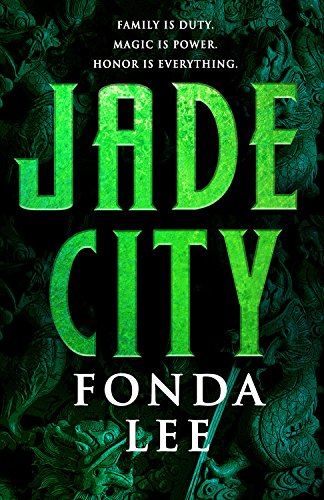
Jade City opens Fonda Lee's Green Bone Saga, following the Kaul family, leaders of one of two rival jade-dealing crime clans on the island nation of Kekon, where magic jade grants enhanced abilities to trained warriors and its trade underpins the whole social order. The series follows the Kaul siblings across decades as their clan's power is challenged from within and without, blending gangster-family drama with epic fantasy. It runs across three novels plus shorter companion works.
- Exiles (Melanie Rawn)
series3 books1994
similar bysecondary worldpolitical intrigue+3 more
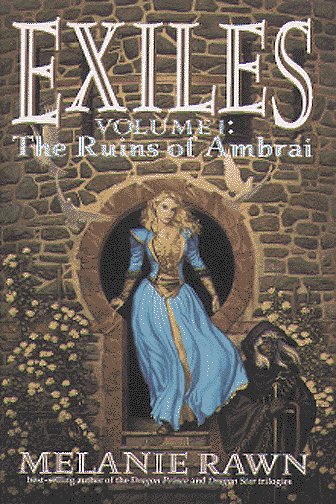
Melanie Rawn is an American author of fantasy literature. She received a BA in history from Scripps College and worked as a teacher and editor before becoming a writer.
- His Dark Materials Universe
universe13 books1995
Start hereHis Dark Materials · Start here
similar byfantasy+2 more
In a world like ours and unlike it, every human soul walks outside the body in the shape of an animal — a daemon, who speaks, who cannot be lied to, and who settles into one fixed form only when childhood ends. This is the country of His Dark Materials: a company of parallel worlds across which an invisible dust of consciousness drifts down upon the waking mind; where a Church that calls itself the Magisterium would sooner sever a child's soul than let that Dust be understood; and where a golden instrument, the alethiometer, answers true questions for anyone with the patience to read it. Philip Pullman's design stands in two trilogies and a scatter of shorter tales. His Dark Materials — Northern Lights (published in America as The Golden Compass), The Subtle Knife, and The Amber Spyglass — carries Lyra Belacqua from the rooftops of a shadow Oxford across the borders between worlds. The Book of Dust returns to that same territory: La Belle Sauvage looks back to Lyra as an infant carried through a great flood, while The Secret Commonwealth follows her grown and less certain into adulthood, with a concluding volume closing the arc. Around them sit slim companion books — Lyra's Oxford, Once Upon a Time in the North, Serpentine — and Nicholas Wright's stage adaptation, made with Pullman's blessing. The register is grave and luminous at once, its title lifted from Milton and its quarrel drawn from Blake: a story that takes the side of curiosity, love, and the physical world against any authority that would forbid them. It reads as adventure — armoured bears, aeronauts, knife-cut windows between skies — yet reasons like philosophy. Begin with Northern Lights / The Golden Compass and read the first trilogy through before turning to The Book of Dust, which deepens everything the first has already made you feel.
- The Riftwar Universe
universe44 books1982
Start hereRiftwar Saga · Start here
similar byfantasysecondary world+2 more
On the world of Midkemia a tear opens in the air itself, a rift hung between stars, and through it march the armies of an empire from another world entirely. So begins the chronicle Raymond E. Feist has kept for three decades: the tale of Pug, a castle kitchen boy apprenticed to a magician on the very day the invasion lands, and of Tomas, his friend, who inherits the armor and the ancient fury of a dead dragon-lord. Around these two the Riftwar Cycle turns, widening book by book from one besieged frontier keep into the whole history of a world of kingdoms, guilds, thieves' dens and mage-towers. The cycle runs to roughly thirty novels, gathered into arcs a newcomer can enter and finish on their own. The founding Riftwar Saga (Magician, Silverthorn, A Darkness at Sethanon) sets the board; the Serpentwar Saga, Krondor's Sons and the Conclave of Shadows carry the story down the generations; the Darkwar, Demonwar and Chaoswar sagas bring it toward its close. Crossing the rift to the rival world of Kelewan, Feist and Janny Wurts wrote the Empire trilogy, opening with Daughter of the Empire, a court intrigue told wholly from the invaders' side and for many the finest thing here. Shorter Legends of the Riftwar and the game-born Riftwar Legacy fill the corners; later still, Feist opens an altogether new world in the Firemane books. Feist writes fantasy in its most companionable key: apprentices who grow into archmages, tavern boys who become spies and dukes, a world you return to the way you return to an old inn. The mood is adventure before dread, friendship and rank and hard-won craft, wars that cost something, all of it rendered plainly and at a gallop. Begin where it began, with Magician, then follow the arcs in the order they were written, and the rift will carry you the rest of the way.
- Nazhuret of Sordaling / Lens of the World
series3 books1990
similar byfantasysecondary world+3 more
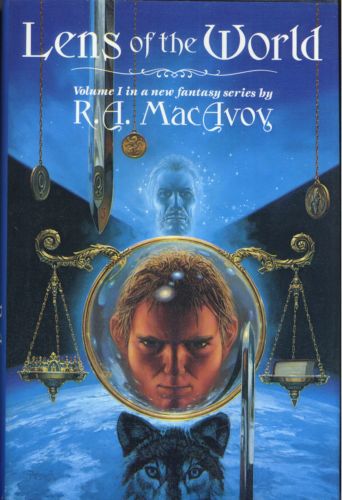
Lens of the World is narrated by Nazhuret, an orphan and outcast who rises from the bottom of the Sordaling military school to become a formidable warrior, philosopher, and eventually confidant to the king of Bestinglon, telling his own unlikely rise in his own words. R. A. MacAvoy's trilogy continues through King of the Dead and Winter of the Wolf, following Nazhuret further into the politics of a court he was never meant to be part of.
- The Palace Chronicles
series3 books1999
similar byfantasysecondary world+4 more
Margaret Peterson Haddix's Palace Chronicles opens with Just Ella (1999), a feminist retelling of Cinderella that follows Ella after her fairy-tale wedding, questioning what 'happily ever after' really means. The companion novel Palace of Mirrors shifts to a new heroine, Cecilia, a peasant girl secretly raised as the true princess who must reclaim her throne from an impostor, and Palace of Lies continues the loosely linked series.
- The Daevabad Trilogy
series5 books2017
similar byfantasysecondary worldpolitical intrigue+1 more
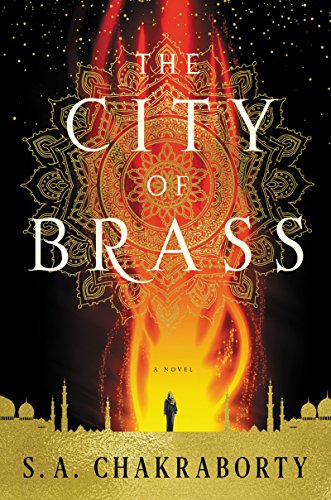
Nahri is a con artist and unlicensed healer working the streets of 18th-century Cairo who accidentally summons Dara, a formidable djinn warrior, during a fake exorcism gone wrong. He recognizes her as a lost heir of the Nahids, once-rulers of the djinn, and brings her to Daevabad, the hidden city her ancestors built, where old tribal and political conflicts are waiting to reignite. S. A. Chakraborty's Daevabad Trilogy follows Nahri through The City of Brass, The Kingdom of Copper, and The Empire of Gold as she's pulled into a fight over the city's throne and its buried history.
- The Prison Healer
series3 books2021
similar byfantasytensesecondary world+2 more
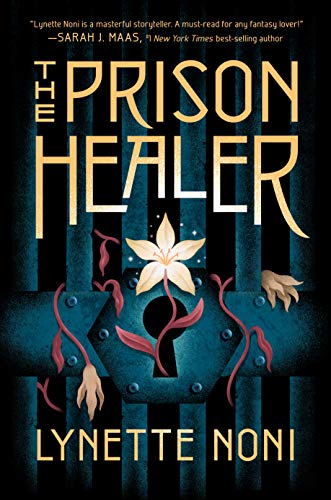
Lynette Noni's YA trilogy follows Kiva Meridan, a teenage healer imprisoned in the brutal death camp of Zalindov, who is forced to stand trial by combat in another prisoner's place when a mysterious rebel movement upends the prison's order. The Prison Healer, The Gilded Cage, and The Blood Traitor follow Kiva out of the prison and into a wider conflict over the kingdom's throne, testing where her loyalties actually lie. It sits in the current wave of grim, trial-driven YA fantasy.
- Majipoor
series29 books1980
similar by+2 more
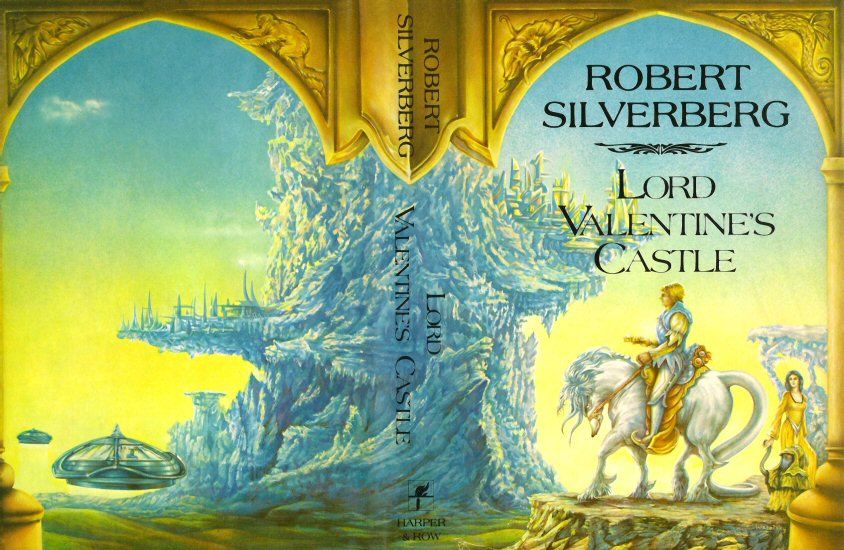
The Majipoor series is a series of novels and shorter works by American writer Robert Silverberg, set on the planet Majipoor. The setting is a mixture of science fiction and fantasy elements.
- Cosmere
universe54 books2005
Start hereThe Final Empire · Start here
similar byfantasysecondary world+2 more
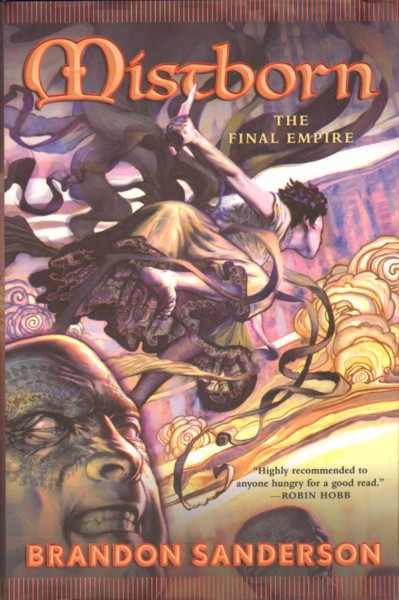
Before the worlds, there was Adonalsium, and then there was not. A god shattered into sixteen Shards of raw creative power, and those who seized them carried their fragments across the void to seed new planets, new peoples, new ways of working the impossible. The Cosmere is the one universe those Shards made: a scattering of worlds that seem, at first, to share nothing but a sky, until you notice the same law running quietly beneath each of them, and the same silent traveler passing through their margins. Every world keeps its own book and its own magic. On Scadrial, the Mistborn cycle burns metals into power: a self-contained trilogy of thieves and tyranny, followed by a second era that drags the same world into gunslinging early industry. On storm-battered Roshar, The Stormlight Archive raises its vast, ongoing epic around knights, spren, and oaths spoken aloud. Elsewhere stand the shorter keystones: Elantris, a city of fallen gods; Warbreaker, a tale of returned dead and living color; White Sand, told in graphic-novel form under the twin suns of Taldain. Threaded between them run the novellas, from Tress of the Emerald Sea and Yumi and the Nightmare Painter to The Sunlit Man and the pieces gathered in Arcanum Unbounded, where the hidden connections surface most plainly. All of it is the design of one hand, Brandon Sanderson, working a single pattern across two decades. What sets this universe apart is its faith in rules: magic here is a system, lawful and learnable, so discovery feels less like wonder handed down than like physics worked out. The cross-connections reward the patient reader, a symbol here, a name there, one immortal wanderer everywhere, but no book demands you have read another first. Newcomers do best entering through Mistborn: The Final Empire, the most self-contained doorway, or the standalone Elantris or Warbreaker; readers who prefer their epics vast can begin with The Way of Kings. The deeper links, and the novellas that expose them, wait for whenever you are ready to look.
- Alliance-Union Universe
universe173 books1976
Start hereCompany Wars · The central sequence
similar by+2 more
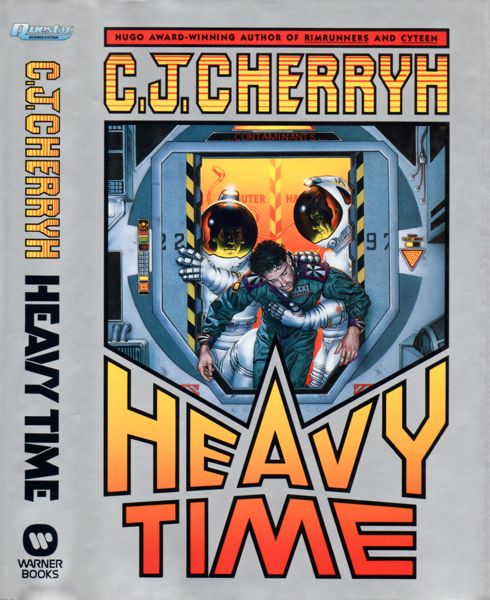
The dark between the stars belongs to no one, and everyone who lives out here knows it: the merchanter Families hauling cargo between stations that cannot feed themselves, the Earth Company clutching at colonies it can no longer supply, the Union breeding its cloned azi to settle worlds faster than birth allows. C. J. Cherryh's Alliance-Union is a future history of humankind's spread across the third and fourth millennia, told from inside the pressure — no clean empires, only stations, ships, treaties, and the people caught in the machinery of who holds the jump-points. The sequence runs from the first laborious pre-FTL stations through the Company Wars, the independence struggle that breaks over Pell in Downbelow Station (Hugo, 1981), to the genetics and cold politics of Union's homeworld in Cyteen (Hugo, 1988) and its sequel Regenesis. Around that spine cluster the merchanter novels of trader Families, the Faded Sun trilogy of human envoys among the martial alien Mri, and the Chanur books, narrated from the hierarchical, whiskered viewpoint of the hani. On the isolated world of Merovin, the Merovingen Nights anthologies open the setting to other hands — Mercedes Lackey, Janet and Chris Morris, Nancy Asire — a shared world braided into the whole. What sets it apart is intimacy at scale. Cherryh drops you without a map into a single skull and lets you assemble the politics from what that person fears and bargains for; the aliens are genuinely alien, loyalty is always provisional, and the real antagonist is usually logistics. Most books stand alone, in her words, "like real history." The surest way in is Downbelow Station — the war seen from one besieged station — then Cyteen, for the mind that shaped the other side.
- Malazan
universe36 books1999
Start hereMalazan Book of the Fallen · Start here
similar bysecondary world+3 more
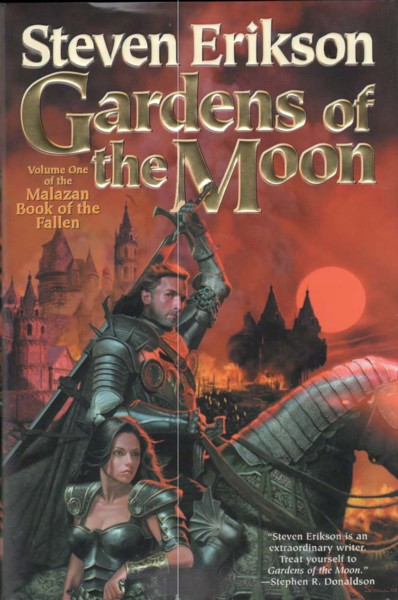
Pity the historian who tries to map this world; pity more the god who thinks he rules it. The Malazan Empire marches across continents on the boots of its common soldiers, and above them move Ascendants — mortals grown into something like gods, and gods worn thin as old coin. Magic is drawn from Warrens, roads of power threaded through reality; the dead keep their grudges; and every empire, however vast, is a wager against time. This is epic fantasy told from the mud, where a sapper cracking a joke weighs as much as an immortal settling a feud older than the human race. The world began as a tabletop campaign two friends built in the 1980s, and it still moves by two hands. Steven Erikson's ten-volume Malazan Book of the Fallen is the spine — Gardens of the Moon, Deadhouse Gates, Memories of Ice, on through The Crippled God — each book a near-standalone campaign that only later reveals how it locks together. Ian C. Esslemont walks the same years from a different vantage in his Novels of the Malazan Empire (Night of Knives, Return of the Crimson Guard onward). Around them stand the prequels: Erikson's Kharkanas Trilogy, archaic and elegiac, chronicling a doomed elder people, and Esslemont's brisker Path to Ascendancy, following two adventurers before they became legends. Erikson's Witness sequence carries the tale forward, and novellas of the genial necromancers Bauchelain and Korbal Broach supply the gallows comedy. Nothing is explained to you; comprehension is earned, and that is the pleasure. The themes run deep — compassion set against cruelty, the toll empires charge, civilizations that fall and are mourned. Begin where the saga does, with Erikson's Gardens of the Moon, and read the ten in publication order; the prequels are for the already-initiated. Trust that confusion is the price of entry.
- Dragon Trilogies
series6 books1988
similar byfantasytensesecondary worldpolitical intrigue+1 more
The Dragon Prince and Dragon Star trilogies comprise six connected fantasy novels written by Melanie Rawn. The Dragon Prince trilogy focuses on Prince Rohan of the Desert and his Sunrunner wife, Sioned, while the Dragon Star trilogy focuses on their son, Pol. The Dragon Prince trilogy consists of novels Dragon Prince, The Star Scroll, and Sunrunner's Fire. The books in the Dragon Star trilogy are Stronghold, The Dragon Token, and Skybowl.
- Chronicles of the Deryni
series4 books1970
part of Deryni
similar byfantasytensesecondary worldpolitical intriguecourt intrigue
Katherine Kurtz's Chronicles of the Deryni trilogy (Deryni Rising, Deryni Checkmate, High Deryni, 1970-1973) follows the young King Kelson Haldane defending his throne in Gwynedd, a kingdom modeled on 10th-to-12th-century Britain, against ecclesiastical opposition and foreign invasion. Central to the conflict is the Deryni, a persecuted human-like people with inherited psychic and magical powers, whose presence in and around the crown makes Kelson's reign a lightning rod for religious and political tension.
- Shannara
universe50 books1977
Start hereWord and the Void · The very beginning of the timeline
similar byfantasysecondary world+1 more
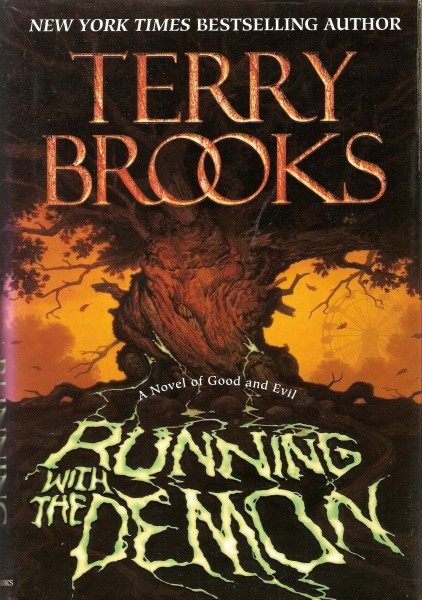
Long after the world we know has burned itself to slag in the Great Wars, the Four Lands rise green over the bones of the old age. Science is a forbidden memory; magic has come back into the world, and with it the old divisions — Men, Elves, Dwarves, Trolls, and Gnomes, each Race a splinter of what humanity became. This is the far-future Earth of Shannara, where the ruins buried beneath the soil are ours, and the only keepers of the vanished knowledge are the Druids of Paranor, who wake once a generation to meet the darkness rising again. Terry Brooks opened the Four Lands in 1977 with The Sword of Shannara and has charted its history for four decades since — a legendarium ordered not by throne but by a single bloodline, the Ohmsfords, each generation inheriting an Elfstone, a blade, or a wishsong when the age demands a hero. The original trilogy gives way to the Heritage of Shannara, the Voyage of the Jerle Shannara, the High Druid, Dark Legacy, Defenders, and the concluding Fall of Shannara; the Genesis of Shannara books reach back to the apocalypse itself, and the Word and the Void trilogy back further still, into a demon-haunted version of our own present that is the root of everything after. In 2025 Brooks passed the histories to Delilah S. Dawson to carry forward. What sets these books apart is their long memory: a world where every triumph is provisional, where the same evil returns wearing a fresh shape each age, and magic always exacts its price. The reading is warm and headlong — questing companies, old talismans, journeys across a mapped and named wilderness — shadowed by the knowledge that all of it stands on the wreckage of a former world. Enter as readers first did: with The Sword of Shannara, then onward in publication order. The chronological path, beginning with Word and the Void, rewards a second journey, once the Four Lands already feel like home.
- Shadowmarch
series5 books2001
similar bysecondary world+3 more
Twins Barrick and Briony Eddon are next in line to rule Southmarch when their father the king is taken captive in war, leaving them to hold a fracturing kingdom together against scheming nobles and a slowly advancing invasion by the Qar, an ancient and inhuman people from beyond the mysterious Shadowline. Tad Williams's Shadowmarch series follows the twins as they're pulled toward secrets buried beneath their own castle, including gods older than the kingdom itself. The story runs across Shadowmarch, Shadowplay, Shadowrise, and Shadowheart.
- Malazan Book of the Fallen
series20 books1999
part of Malazan
similar byfantasysecondary world+2 more
The Malazan Book of the Fallen is a series of epic fantasy novels written by the Canadian author Steven Erikson. The series, published by Bantam Books in the U.K. and Tor Books in the U.S., consists of ten volumes, beginning with Gardens of the Moon (1999) and concluding with The Crippled God (2011). Erikson's series presents the narratives of a large cast of characters spanning thousands of years across multiple continents.