More like Secrets
anchored on:science fiction
but
- Foundation Universe
universe123 books1940
Start hereFoundation · Start here
similar byrobotsscience fiction+1 more
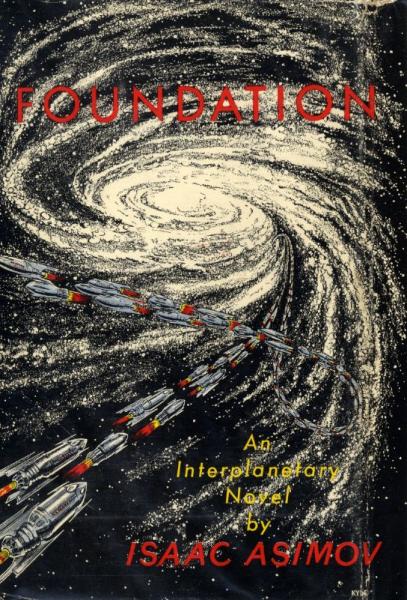
There is a science that reads the future of quadrillions the way an astronomer reads the orbits of stars. It is called psychohistory, and its equations foresee something the ruling Galactic Empire cannot admit: the throne is rotting, and thirty thousand years of barbarism are coming. One man, Hari Seldon, cannot stop the fall. He can only shorten it — by seeding a Foundation of scholars at the rim of the galaxy, a fragile institution built to carry knowledge across the dark and cut the interregnum to a single millennium. This is a universe told in the register of history itself: the long view, the calm of deep time, empires measured in centuries and men measured against them. The spine is Asimov's original trilogy — Foundation, Foundation and Empire, Second Foundation — followed decades later by the sequels Foundation's Edge and Foundation and Earth and the prequels Prelude to Foundation and Forward the Foundation. Late in life Asimov braided this in with his other future histories: the Robot novels of detective Elijah Baley and his humaniform partner R. Daneel Olivaw (The Caves of Steel, The Naked Sun, The Robots of Dawn, Robots and Empire) and the early Galactic Empire novels (Pebble in the Sky and its kin), until one continuous chronicle ran from the first thinking robots to the Second Empire. Other hands extend it — the Second Foundation Trilogy by Gregory Benford, Greg Bear, and David Brin, and shared-world spinoffs such as Robot City — so the corpus sprawls beyond a single author's tidy shelf. What distinguishes it is that the drama is intellectual: crises resolved by insight, nerve, and dialogue rather than fleets and blades, each turn hinging on the hidden logic of the Seldon Plan. Begin where readers have always begun — with Foundation, and the original trilogy in publication order. The rest opens outward from there.
- Hitchhiker's Guide to the Galaxy
series16 books1979
part of The Hitchhiker's Guide to the Galaxy Universe
similar byscience fiction+1 more
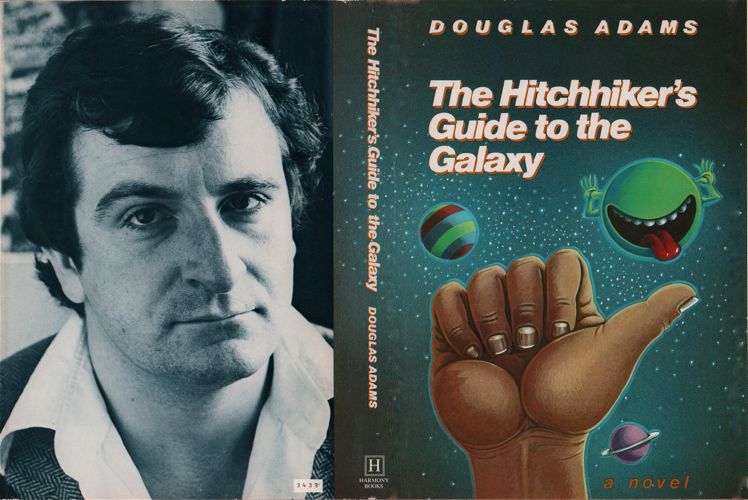
The Hitchhiker's Guide to the Galaxy is a comedy science fiction franchise created by Douglas Adams. Originally a radio sitcom broadcast over two series on BBC Radio 4 between 1978 and 1980, it was soon adapted to other formats, including both novels and comic books, a 1981 BBC television series, a 1984 text adventure game, stage shows and a 2005 feature film.
- The City and the Stars
Arthur C. Clarkestandalone novel1956
similar byscience fiction+2 more
The City and the Stars is a science fiction novel by British writer Arthur C. Clarke, published in 1956. This novel is a complete rewrite of Clarke's earlier Against the Fall of Night, his first novel, which had been published in Startling Stories magazine in 1948 after being rejected by the editor of Astounding Science-Fiction, according to the author.
- Blade Runner Universe
series6 books1968
similar byrobotsscience fiction+1 more
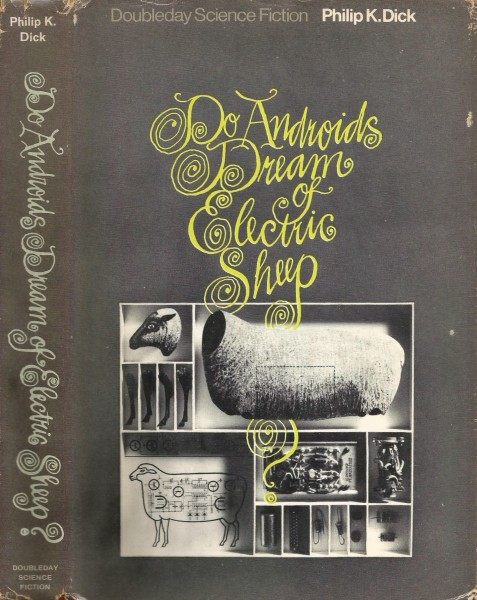
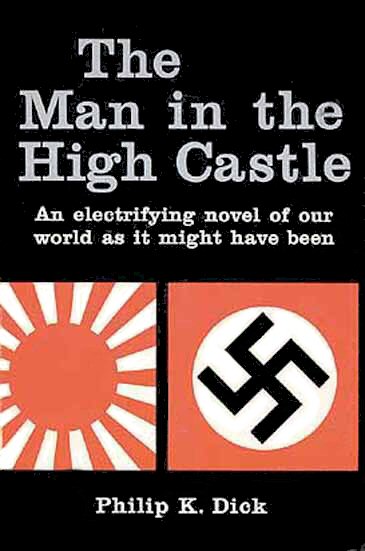
Philip K. Dick's 1968 novel Do Androids Dream of Electric Sheep? follows bounty hunter Rick Deckard as he tracks escaped androids through an irradiated, near-abandoned San Francisco, using the hunt to probe questions of empathy and what separates human from machine. The novel became the basis for Ridley Scott's 1982 film Blade Runner, and Marvel Comics later published an illustrated adaptation of that film. Together the two trace the story's path from prose original to screen and comic-page adaptation.
- The Themis Files
series3 books2015
similar byrobotsscience fictionour worldcontemporary
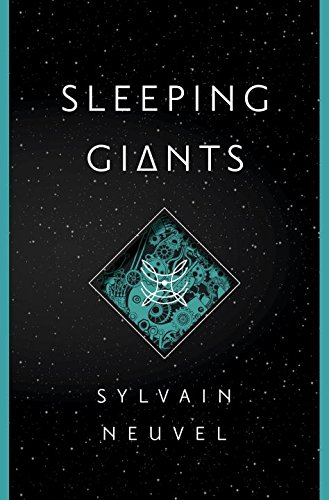
Sylvain Neuvel's Themis Files opens when a girl falls into a hole in South Dakota and lands on the palm of a giant metal hand buried underground; the trilogy picks up years later as she leads the team trying to determine what the hand is part of and why it's there. Sleeping Giants and its sequels are told almost entirely through interview transcripts conducted by an unnamed, evasive interrogator, giving the series a documentary, oral-history feel unusual for first-contact SF. The mystery escalates from an archaeological puzzle into a question of who else is looking for the same answer.
- The Door Into Summer
Robert A. Heinleinstandalone novel1957
similar byrobotsscience fiction+1 more
From the first page of the Signet 6th printing: "An electronics engineer invents a wizard robot... only to find himself shanghaied by his ruthless partner and his gold-digging fiancee. The crafty pair forces him to submit to the "long sleep" - suspended animation for thirty years. But when he wakes up in the year 2000 A.D. the inventor makes a startling discovery. He learns that it is possible now to twist time forwards or backwards. And so he returns to the past bent on a mission... of revenge."
- Nova
Samuel R. Delanystandalone novel1968
similar byscience fiction+2 more
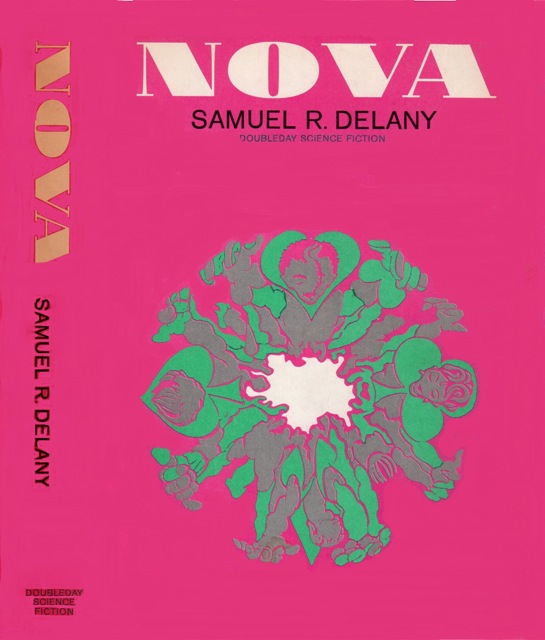
Nоva is a science fiction novel by American writer Samuel R. Delany published in 1968. The plot concerns the spaceship captain Lorq Von Ray's search for a nova, which will produce the essential power source Illyrion, and his vendetta with the Red family, who seek to kill him. Nominally space opera, it explores the politics and culture of a future where cyborg technology is universal, yet making major decisions can involve using tarot cards. It has strong mythological overtones, relating to both the Grail Quest and Jason's quest for the Golden Fleece.
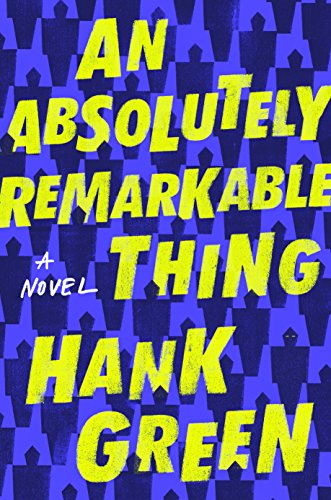
- An Absolutely Remarkable Thing / The Carls
series2 books2018
similar byscience fictionour worldcontemporary
- City
series19 books1944
completed
similar byscience fictionour world+1 more
City is Clifford D. Simak's fix-up novel, assembling eight linked stories originally published in Astounding Science Fiction during the 1940s and framed as legends dogs tell about a half-mythical creature called Man. It follows humanity's gradual abandonment of its cities and eventual departure from Earth, while the dogs left behind are surgically uplifted into a peaceable, speaking civilization of their own. The book won the International Fantasy Award in 1952.
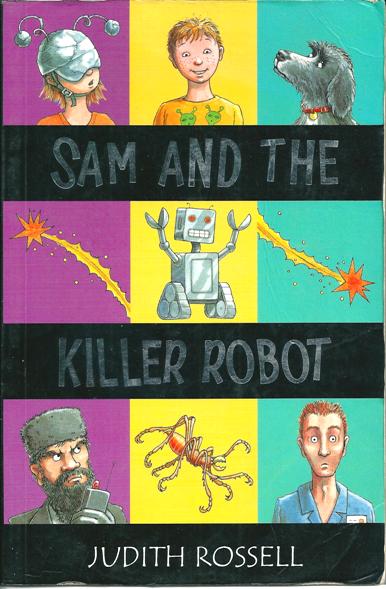
- Sam and the Killer Robot
Judith Rossellstandalone novel2007
similar byscience fictioncontemporary+1 more
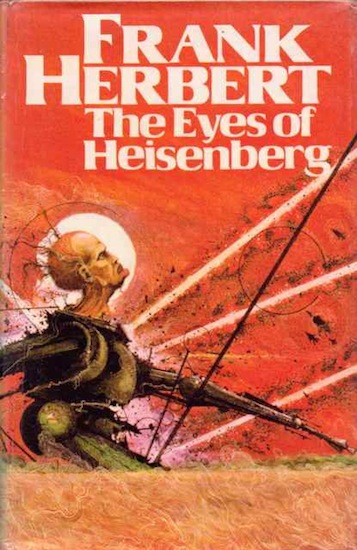
- The Eyes of Heisenberg
Frank Herbertstandalone novel1966
similar byscience fictionour world+1 more
Tens of thousands of years in the future, Earth is ruled by the Optimen, a genetically engineered aristocracy that has made itself functionally immortal, while ordinary people, the Folk, live under strict reproductive control. When Harvey and Lizbeth Durant arrive to have their embryo genetically screened, the examining doctor finds something in the child no one has seen in a very long time: real potential for both fertility and life span, traits the Optimen have arrogated to themselves. Rather than destroy the embryo as policy demands, the doctor hesitates, setting off a chain of surveillance, suspicion and resistance. A tightly wound Frank Herbert thriller about genetic caste and rebellion.
- Frankenstein
universe128 books1818
Start hereFrankenstein, or, The Modern Prometheus · Start here
similar by+1 more
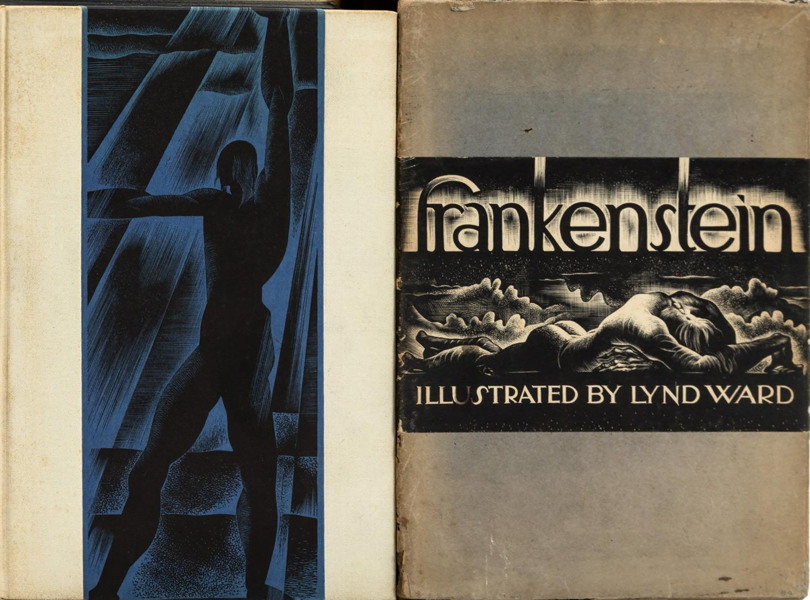
Light a candle against the November dark and consider what a single spark, rightly applied to dead matter, might wake. In a laboratory at Ingolstadt a student named Victor Frankenstein learns the secret of animating lifeless flesh, assembles a being from the harvest of charnel houses and graves, and, at the moment it draws breath, flees the thing he has made. What he abandons does not stay abandoned. This is the world Mary Shelley opened in 1818 with Frankenstein; or, The Modern Prometheus: the story of a maker and his unmothered creation, and the long ruin each works upon the other. Shelley's novel arrives as a nest of confessions, an explorer's letters from the frozen north enclosing Victor's account, which in turn encloses the Creature's own, an articulate and wounded voice that has read Milton and wants only not to be alone. From that single volume two centuries of other hands have built outward, not as one continuity but as a gathering of independent returns to the same fire. Dean Koontz transplants the myth to modern New Orleans across a five-book cycle, Prodigal Son through The Dead Town, where the original Creature, now called Deucalion, hunts a Victor who never died. Donald F. Glut's New Adventures and Frank Schildiner's Quest of Frankenstein run the monster through pulp adventure; the mid-century French novels published as Benoit Becker chase him across a ruined Europe; Scott Sonneborn's Frankenstein Journals and the comic Frankenstein's Aunt turn the legend toward younger and lighter readers. What binds them is the question the book asks and never settles: which is the monster, the forsaken creature who kills, or the man whose ambition and cowardice made and abandoned him? Expect little comfort and few clean villains; the abiding note is grief, sublime and articulate, set against Alpine ice and candlelit hubris. Begin where it began, with Shelley's own novel; the later cycles reward you only once you have heard the Creature speak for himself.
- Forge of God
series2 books1987
completed
similar byscience fiction+2 more
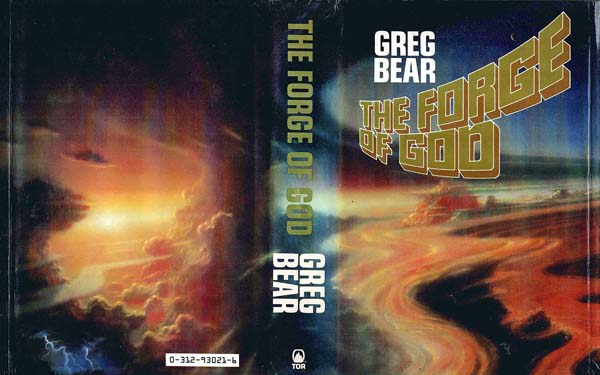
The Forge of God (1987) is Greg Bear's science fiction novel about Earth's discovery that it is the target of an incomprehensible, overwhelming alien attack, following scientists and ordinary people as they try to understand what is destroying the planet. Its 1992 sequel, Anvil of Stars, follows a group of young survivors sent on a mission of interstellar retaliation, continuing directly from the first book's ending.
- Ricky Ricotta's Mighty Robot
series9 books2000
similar byrobotsscience fiction+1 more
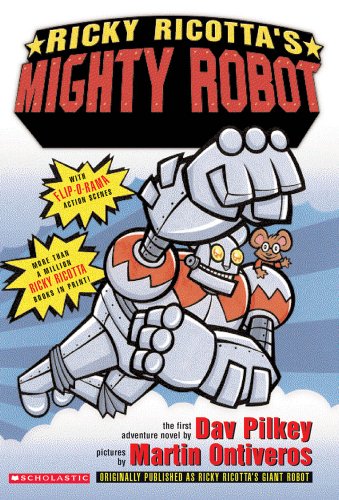
Dav Pilkey's Ricky Ricotta's Mighty Robot books follow a small mouse named Ricky and his giant robot friend as they defend their city from a rotating cast of alien and mutant villains, told in short illustrated chapters aimed at early readers. Each volume is a self-contained adventure following the same comic formula, with villains like the Voodoo Vultures from Venus or the Mutant Mosquitoes from Mercury. The series ran from 2000 through the mid-2010s.
- The Killer Thing
Kate Wilhelmstandalone novel1967
similar byrobotsscience fictionour worldcontemporary
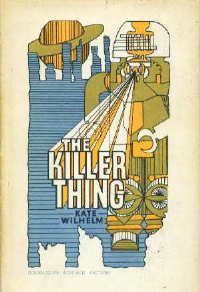
A robot destroys its inventor and programs itself to kill all life. How much must be sacrificed to stop it?
- Dangerous Visions
series7 books1967
completed
similar byscience fiction
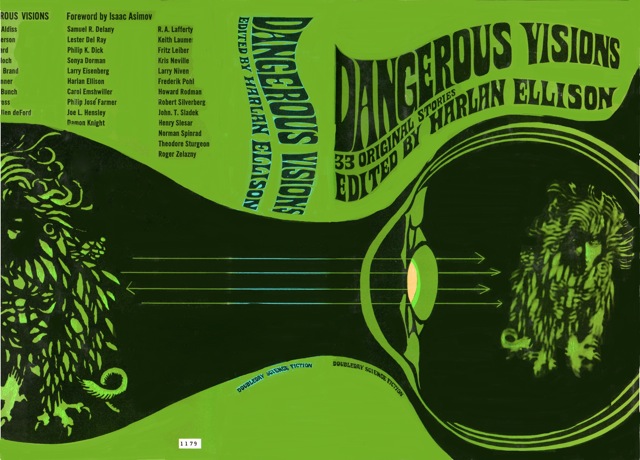
Dangerous Visions (1967), Again, Dangerous Visions (1972), and the posthumously finished The Last Dangerous Visions (2024) are Harlan Ellison's landmark science fiction anthologies of original, previously unpublished stories, each conceived to push past the genre's conventional boundaries of its time. Ellison edited and introduced all three, though his death in 2018 left the final volume to be completed and published by others years later. The three books form a loosely connected set of era-defining anthologies spanning nearly six decades rather than a continuous story.
- 2312
Kim Stanley Robinsonstandalone novel2012
similar byscience fiction+2 more
In the eponymous year, when Earth's ecology is degraded and humanity has settled throughout the solar system by terraforming and genetic engineering, mysterious disasters strike some human communities and an assortment of human types from throughout the system seek to find and eliminate the cause.
- Franny K. Stein, Mad Scientist
series10 books2004
similar byscience fictionour worldcontemporary+1 more