More like Serial Killer
anchored on:science fiction
but
- Blade Runner Universe
series6 books1968
similar byscience fictionnear future+3 more
Philip K. Dick's 1968 novel Do Androids Dream of Electric Sheep? follows bounty hunter Rick Deckard as he tracks escaped androids through an irradiated, near-abandoned San Francisco, using the hunt to probe questions of empathy and what separates human from machine. The novel became the basis for Ridley Scott's 1982 film Blade Runner, and Marvel Comics later published an illustrated adaptation of that film. Together the two trace the story's path from prose original to screen and comic-page adaptation.
- Foundation Universe
universe123 books1940
Start hereFoundation · Start here
similar byscience fiction+2 more
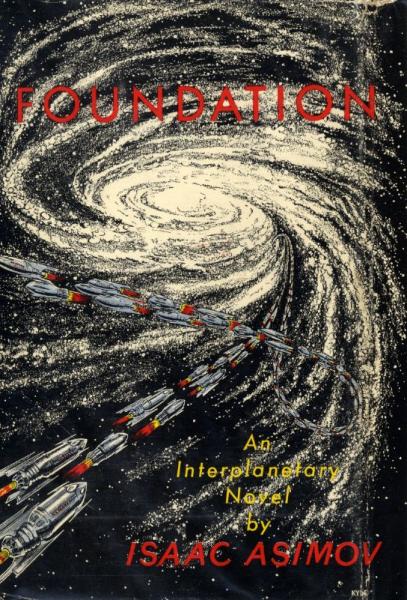
There is a science that reads the future of quadrillions the way an astronomer reads the orbits of stars. It is called psychohistory, and its equations foresee something the ruling Galactic Empire cannot admit: the throne is rotting, and thirty thousand years of barbarism are coming. One man, Hari Seldon, cannot stop the fall. He can only shorten it — by seeding a Foundation of scholars at the rim of the galaxy, a fragile institution built to carry knowledge across the dark and cut the interregnum to a single millennium. This is a universe told in the register of history itself: the long view, the calm of deep time, empires measured in centuries and men measured against them. The spine is Asimov's original trilogy — Foundation, Foundation and Empire, Second Foundation — followed decades later by the sequels Foundation's Edge and Foundation and Earth and the prequels Prelude to Foundation and Forward the Foundation. Late in life Asimov braided this in with his other future histories: the Robot novels of detective Elijah Baley and his humaniform partner R. Daneel Olivaw (The Caves of Steel, The Naked Sun, The Robots of Dawn, Robots and Empire) and the early Galactic Empire novels (Pebble in the Sky and its kin), until one continuous chronicle ran from the first thinking robots to the Second Empire. Other hands extend it — the Second Foundation Trilogy by Gregory Benford, Greg Bear, and David Brin, and shared-world spinoffs such as Robot City — so the corpus sprawls beyond a single author's tidy shelf. What distinguishes it is that the drama is intellectual: crises resolved by insight, nerve, and dialogue rather than fleets and blades, each turn hinging on the hidden logic of the Seldon Plan. Begin where readers have always begun — with Foundation, and the original trilogy in publication order. The rest opens outward from there.
- Space Merchants
series2 books1953
completed
similar byscience fictionnear future+2 more
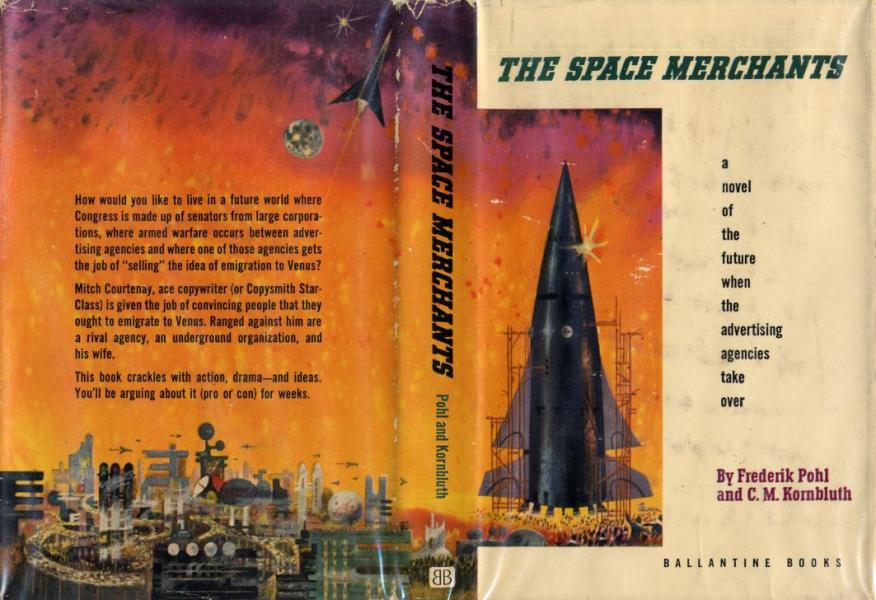
The Space Merchants (1953) is a satirical science fiction novel by Frederik Pohl and C. M. Kornbluth that follows an advertising executive navigating a future where aggressive consumer capitalism has swallowed politics and daily life. The authors reunited three decades later for a direct sequel, The Merchants' War (1984), returning to the same satirical world. Together the two books form a compact bookend pair rather than an ongoing series.
- The World Jones Made
Philip K. Dickstandalone novel1956
similar bytensepolitical intriguescience fictionnear future+2 more
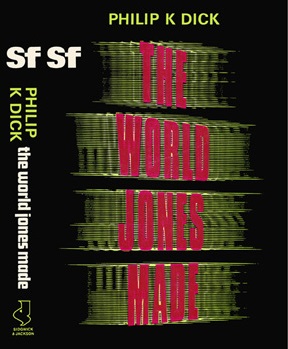
The World Jones Made is a 1956 science fiction novel by American writer Philip K. Dick, examining notions of precognition, humanity, and politics. It was first published by Ace Books as one half of Ace Double D-150, bound dos-à-dos with Agent of the Unknown by Margaret St. Clair.The story takes place after a nuclear war in which society is dominated by relativism, which rejects absolute truths and preaches tolerance as the highest principle. The mutant Floyd Jones, who can see into the future, plans to overthrow the system and colonise space. The story ends with the defeat of Jones, whose plans fail despite his ability to see the future due to the immutability of fate.
- H. G. Wells' War of the Worlds
universe65 books1898
Start hereThe War of the Worlds · Start here
similar byscience fiction+2 more
No one would have believed, in the closing years of the nineteenth century, that human affairs were being watched keenly and closely from the timeless worlds of space. And then the cylinders fell. H. G. Wells' War of the Worlds opens in the quiet of the Surrey commons, where a falling star proves to be the first Martian craft — and from the pit rise the towering tripods, the Heat-Ray, the choking Black Smoke and the creeping red weed, wielded by minds that regard mankind much as we regard the creatures we boil for supper. This is invasion rendered as natural disaster: cold, methodical, and vast beyond argument. Wells' 1898 novel is the seed; everything else grows from that Martian soil. The catalogue gathers direct sequels and continuations alongside a wide field of other hands. In War of the Worlds: Global Dispatches the invasion is retold across the whole planet through the eyes of Twain, Verne, Tolstoy, Lowell and Kipling; in the Manly Wade and Wade Wellman crossover, Sherlock Holmes, Watson and Professor Challenger take the field against the machines; and Scott Washburn's Great Martian War stretches the fighting into a decades-long alternate history of steam, artillery and grinding attrition. It is a loose shared world — no single decreed sequence, many voices answering one calamity. What sets this world apart is its refusal of heroics: the invaders fall not to generals but to the smallest things of Earth, humbling and indifferent. Begin, always, with Wells' original novel — it is short, and it is the ground every later book stands upon. From there follow your appetite: Global Dispatches for the panorama, the Holmes campaign for adventure, Washburn for the long war.
- Library of America P. K. Dick Collection
series9 books1962
completed
similar byscience fictionnear future+1 more
- H. I. V. E.
series10 books2006
similar bytensescience fictionnear future+3 more
Mark Walden's series is set at H.I.V.E. (the Higher Institute of Villainous Education), a hidden academy training the next generation of criminal masterminds, following orphan genius Otto and fellow students Wing, Laura, and Shelby as they navigate the school's twisted curriculum while plotting to escape it. The premise plays school-story conventions against a supervillain backdrop across more than a dozen books.
- Galactic Milieu
series10 books1981
completed
similar bytensescience fiction+2 more
Galactic Milieu is a series of science fiction novels by Julian May. It is linked to her previously published series, the Saga of Pliocene Exile; and through the fantastical device of time-travel, acts as both a prequel and a sequel to this earlier series. The "Galactic Milieu" of the title is an interplanetary federation, and Earth's membership of it is a central plot concern.
- Ender's Shadow
series5 books1999
part of Ender's Game Universe
similar bytensepolitical intriguescience fiction
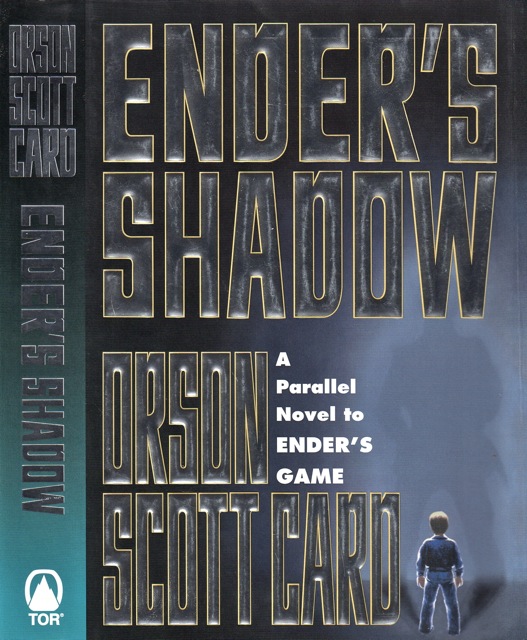
Orson Scott Card's Ender's Shadow retells the events of Ender's Game from the perspective of Bean, a physically stunted but ferociously intelligent street child recruited into the same Battle School program as Ender Wiggin. It launches the Shadow series, which follows Bean and other secondary Battle School characters into the political aftermath of the Formic Wars back on Earth, running parallel to and eventually past the timeline of Card's main Ender Quintet.
- Shadrach in the Furnace
Robert Silverbergstandalone novel1976
similar byscience fictionour worldnear future+2 more
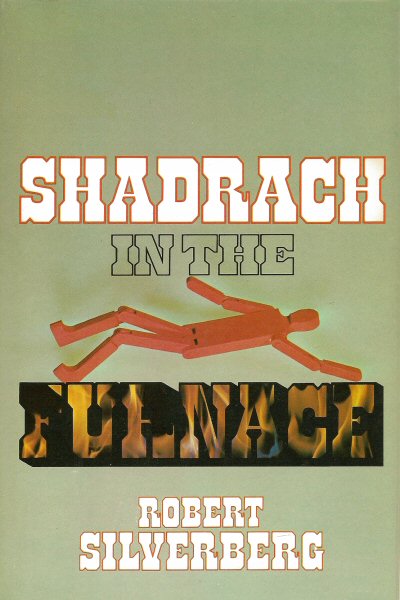
Shadrach in the Furnace is a science fiction novel by American writer Robert Silverberg, first published as a serial in Analog Science Fiction and Fact magazine in the August, September, and October 1976 issues. It was subsequently published by Bobbs Merrill in 1976. The novel was nominated in 1976 for the Nebula Award, and in 1977 for the Hugo Award.
- The Zap Gun
Philip K. Dickstandalone novel1967
similar byscience fictionour worldnear future+2 more
The Zap Gun is a 1967 science fiction novel by American writer Philip K. Dick. It was first published as the two-part serial Project Plowshare in Worlds of Tomorrow in 1965 and 1966, before Pyramid Books issued it in paperback under its present title. The novel originated in a title-first commission devised by Pyramid editor Don Bensen and was written in 1964 during a period of rapid production in Dick's career.
- Colony
Ben Bovastandalone novel1978
similar bytensepolitical intriguescience fictionnear future+1 more
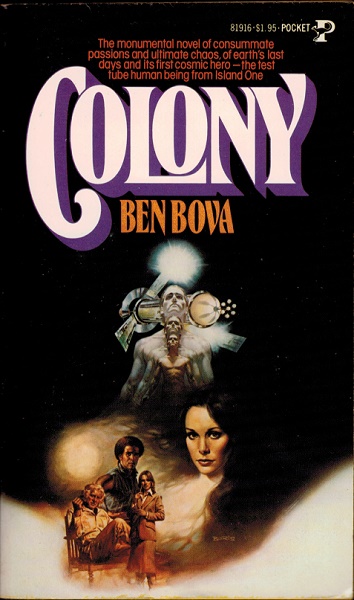
Colony continues the story Ben Bova began in Millennium, following astronaut-turned-administrator Chet Kinsman years later as the head of an orbiting space habitat that has become Earth's only real refuge from a planet buckling under overpopulation, food shortages and unrest. Getting a place in the habitat is a matter of life and death for millions who will never be chosen, and as Earth's governments grow more desperate to control or dismantle the colony outright, Kinsman has to decide how far he'll go to protect the world he's built off-world. Bova later folded both novels together into the omnibus The Kinsman Saga. Part of Ben Bova's Chet Kinsman series.
- The Children of Men
P. D. Jamesstandalone novel1992
similar bytensepolitical intriguescience fictionour worldnear future
"The human race has become infertile, and under the despotic rule of Xan Lyppiatt, the Warden of England the old are despairing and the young cruel. Theo Faren, a cousin of the Warden, lives a solitary life in this ominous atmosphere. That is, until a chance encounter with a young woman leads him into contact with a group of dissenters. Suddenly his life is changed irrevocably, as he faces agonising choices which could affect the future of mankind." (pdjames.co.uk)
- Arc of a Scythe
series17 books2016
similar byscience fictionour world+3 more
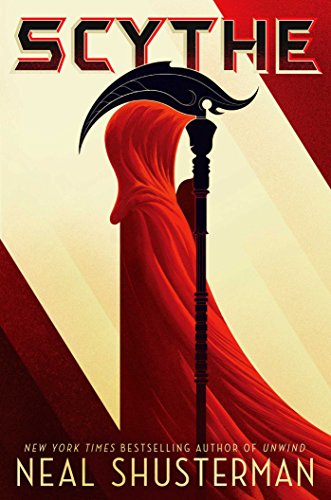
Neal Shusterman's Arc of a Scythe opens with Scythe (2016), set in a future where the AI Thunderhead has ended death and disease — except for a designated order of Scythes tasked with killing to control population. Thunderhead and The Toll continue the trilogy, joined by companion material collected as Gleanings.
- Science in the Capital
series5 books2004
similar bypolitical intriguescience fictionnear future+2 more
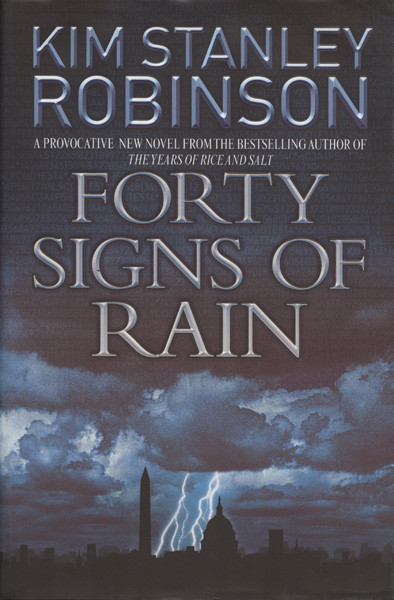
Kim Stanley Robinson's Science in the Capital trilogy follows scientists and staff at the National Science Foundation in Washington, D.C. as they try to get a paralyzed government to act on accelerating climate change, while catastrophic storms on both American coasts turn the crisis undeniable. Forty Signs of Rain introduces biomathematician Frank Vanderwal, the Quibler family, and a delegation of Buddhist monks from a low-lying island nation threatened by rising seas; Fifty Degrees Below and Sixty Days and Counting follow the same characters through worsening disaster and the slow mechanics of policy change. Robinson later revised the trilogy into a single volume, Green Earth.
- Islands in the Net
Bruce Sterlingstandalone novel1988
similar bytensepolitical intriguescience fictionour worldnear future
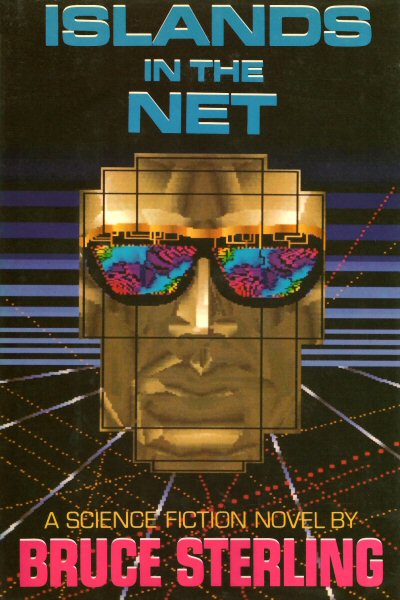
Islands in the Net is a 1988 science fiction novel by American writer Bruce Sterling. It won the John W. Campbell Memorial Award for Best Science Fiction Novel in 1989, and was nominated for both the Hugo and Locus Awards that same year. It offers a view of an early 21st century world, apparently peaceful, with delocalised, networking corporations. The protagonist, swept up in events beyond her control, finds herself in places that are off the net, from a datahaven in Grenada, to a Singapore under terrorist attack, to the poorest and most disaster-struck parts of Africa.
- Termination Shock
Neal Stephensonstandalone novel2021
similar bytensepolitical intriguescience fictionour worldnear future
Termination Shock is a science fiction novel by American writer Neal Stephenson, published in 2021. The book is set in a near-future when climate change has significantly altered human society and follows the attempts of a solar geoengineering scheme. The novel focuses on the geopolitical and social consequences of the rogue fix for climate change, themes common in the growing climate fiction genre.
- Childe Cycle
series19 books1957
similar byscience fiction+2 more
The Childe Cycle is an unfinished series of science fiction novels by American writer Gordon R. Dickson. The name Childe Cycle is an allusion to "Childe Roland to the Dark Tower Came", a poem by Robert Browning, which provided inspiration for elements in the work. The series is sometimes referred to as the Dorsai series, after the Dorsai people who are central to it. The related short stories and novellas all center on the Dorsai, primarily members of the Graeme and Morgan families.
- Great North Road
Peter F. Hamiltonstandalone novel2012
similar bytensescience fictionour worldnear future+1 more
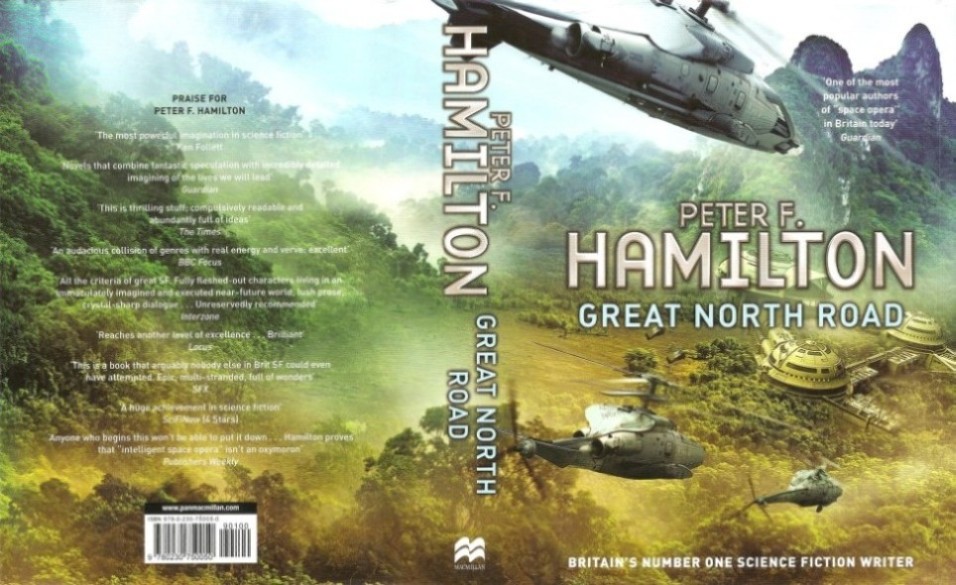
Great North Road is a science fiction novel by Peter F. Hamilton. It was first published in 2012 by Macmillan. Jonathan Wright of SFX magazine said, "Peter F Hamilton’s latest novel may be a standalone tale, but it’s a thuddingly imposing 1,100 pages in length. Not that it seems that way when you’re reading it. Balancing a multi-stranded plot, different exotic locales and a huge cast of characters, Hamilton plunges us straight into a murder mystery set in a near-future Newcastle, a city now adjacent to a portal to another world, the tropical St Libra."
- Renegades (Marissa Meyer)
series3 books2017
similar bytensescience fictionour worldnear future+1 more
Renegades is set in Gatlon City after a civil war between the superheroic Renegades and the villainous Anarchists, and follows Nova, a young woman with the power to put people to sleep by touch, as she infiltrates the Renegades as a spy for her uncle's Anarchists and falls for Adrian, the adopted son of the Renegades' leaders. Marissa Meyer's trilogy, continuing through Archenemies and Supernova, plays the two factions' history against the leads' divided loyalties; Meyer has said she doesn't plan to extend the series further.
- The Fall Revolution
series4 books1995
similar byscience fiction+4 more
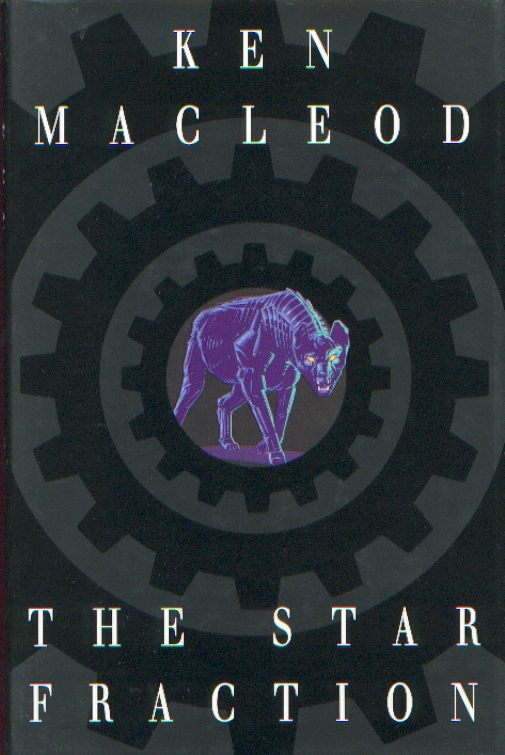
Ken MacLeod's Fall Revolution sequence opens with The Star Fraction (1995), his Arthur C. Clarke Award-nominated debut set in a fractured near-future Britain where a functioning anarchist microstate and rival revolutionary factions vie for power. The four connected novels — continuing through The Stone Canal, The Cassini Division, and The Sky Road — each stand largely alone while tracing overlapping characters and politics across a shared future history, later collected in the omnibus volumes Fractions and Divisions.
- Mother of Storms
John Barnesstandalone novel1994
similar bytensepolitical intriguescience fictionour worldnear future
From the flaps of the Tor first edition: "It is 2028. A strike to destroy an illegal Arctic weapons cache has a catastrophic side effect. Massive amounts of energy are liberated from the polar ice, suddenly warming the Earth's climate. In the middle of the Pacific, a gigantic hurricane thousands of miles across is forming, larger than any in human history. A storm with winds of supersonic speed. A storm that changes direction at whim. A storm that refuses to die. A storm so vast it spawns dozens more in its wake... Blinded by intrigue, expedience, and greed, the world's politicians and power brokers have ignored the killer storms threat until it is too late. Already the death toll is in the tens of millions, as it savages the Pacific coast, while its devil's brood of smaller storms are wreaking havoc across the face of the planet. While the survivors scramble for advantage, a handful of courageous men and women undertake a daring, desperate plan to save humanity from total destruction - a plan so visionary it may alter forever the future of the human race."
- The Crack in Space
Philip K. Dickstandalone novel1966
similar bytensescience fictionnear future+2 more
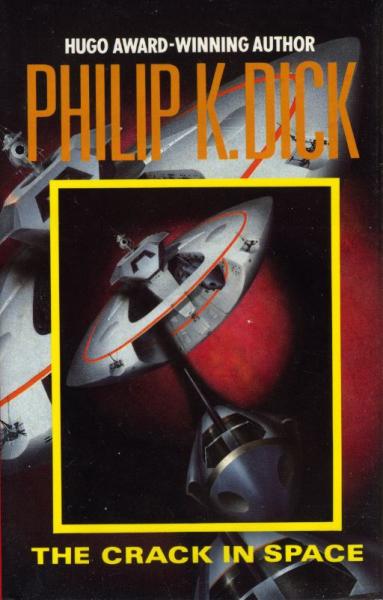
The Crack in Space is a 1966 science fiction novel by American writer Philip K. Dick. In the United Kingdom, it has been published under the title of the original novella, Cantata 140, published in the July 1964 issue of The Magazine of Fantasy & Science Fiction. This original title refers to the short title in English, Sleepers Awake, of J.S. Bach's Cantata BWV 140 and the novel's 'bibs', the millions sleeping in suspended animation. Both are based on the short story Prominent Author. The common elements are the Jiffi-scuttler transport device, the company, Terran Development, that manufactures it, and a summary of Prominent Author as an event of the past in chapter 2. The "crack in space" is a defect in Jiffi-scuttler operation that allows access to the Earth and to parallel Earths at various times and locations, beyond its intended use of providing near-instant transport between specific locations on the Earth in the present.