Loreful
HomeDiscover
Search series, authors…⌘K
Loreful

Reading orders for SF/F series and shared universes — with your place kept in every one.

Explore

UniversesSeriesWorksAuthorsAtlas

Help

FAQAboutSite map

Account & legal

Sign inCreate accountPrivacyTerms

Data

Built on ISFDB, Wikipedia, Wikidata and Open Library. Curated reading orders carry their reasoning on the page; the rest follow publication order. Data sources & licenses

© Loreful · data: ISFDB · CC BY

More like Shadow Cry

anchored on:secondary world

but

Mood

The mood the book leaves you in.

  • The reading experience is propelled by journeys, exploration, and physical risk; excitement and forward momentum dominate over dread or introspection.
  • Joy and loss are deliberately mixed; the resolution grants characters something real while taking something else away, leaving warmth and sorrow together.
  • The book demands work from the reader — dense prose, difficult structure, unfamiliar ideas, or morally uncomfortable material — as part of its intended effect.
  • Grim events, cruelty, or despair dominate the atmosphere, and the book does not soften them with comfort or comic relief.
  • The atmosphere is quietly unsettling — wrongness, unease, and the uncanny pervade the book without necessarily escalating into overt horror.
  • The book is built to move the reader; character feeling is foregrounded and major scenes aim at a strong emotional response.
  • Humor is a primary aim and the prose plays for laughs — comic situations, wit, or dialogue produce sustained comedy, not occasional levity.
  • The book insists that things can improve; effort and decency are shown to matter, and the arc bends toward better outcomes even through hardship.
  • The book teaches as it goes — real facts, history, science, or craft are conveyed in enough depth that learning is part of the reading experience.
  • The book is designed to uplift and motivate, presenting perseverance or achievement in a way that invites the reader to aspire or act.
  • The overall register is cheerful and easygoing; stakes are kept gentle and the book avoids dwelling on pain or dread.
  • Withheld information drives the experience; the book sustains enigmas and secrets the reader wants resolved, whatever its genre.
  • The book is contemplative and inward-looking, giving more weight to thought, memory, and meaning than to external events.
  • The book works as comfort reading — low tension, a soothing pace, and an atmosphere the reader can unwind in.
  • Grief, loss, or melancholy set the dominant register, and the book lets sorrow stand rather than resolving it into comfort.
  • Sustained suspense is the point; the book keeps the reader braced for what happens next through danger, pressure, or impending revelation.
  • Playful invention and charm define the register — fanciful conceits, light absurdity, and a narration that delights in its own oddity.

About

What the story runs on.

  • Stories in which extraterrestrial beings are central — as characters, cultures, or the object of the plot.
  • Stories about venturing into space to explore — survey missions, astronauts, and the frontier of the unknown beyond Earth.
  • Stories structured as a quest — a journey undertaken to find, deliver, or destroy something of great import.
  • Stories in which staying alive against nature, catastrophe, or scarcity is the central problem.
  • Stories in which a friendship — its making, testing, or loss — is the emotional center.
  • Stories of growing up — a young protagonist crossing from childhood into adult knowledge and responsibility.
  • Stories about who a character truly is — self-discovery, doubled lives, and the search for a self.
  • Stories in which a buried family truth — hidden parentage, crimes, or shames — surfaces and reorders the present.
  • Stories driven by maneuvering for power — factions, conspiracies, and statecraft conducted in shadow.
  • Stories about rising against rulers — uprisings, resistance movements, and revolutions and their aftermaths.
  • Stories in which war itself is the subject — combat, occupation, and what warfare does to soldiers and civilians.
  • Stories organized around investigating a killing — the case, the clues, and the pursuit of the killer, in any genre's clothing.

Shelf

Where it sits in the library.

    • Fiction built on magic or other supernatural elements that have no scientific explanation.
    • Secondary-world fantasy at large scale, where the fate of nations or the world turns on the protagonists' struggle.
    • Fantasy set in a recognizably modern city or contemporary world where the supernatural intrudes on everyday life.
    • Fantasy that blends in horror's atmosphere and imagery, keeping a fantastical frame around grim or frightening material.
    • Action-driven fantasy following warriors or rogues with personal stakes against sorcerous threats, rather than world-spanning conflicts.
    • Fantasy set in a real historical period or a close analogue of one, with magic woven into the era.
    • Fantasy in which protagonists cross from the ordinary world into another world through a portal or similar passage.
    • Fiction that retells or reworks a traditional fairy tale in a new form or setting.
    • Fantasy drawing directly on myths, legends, and folklore, retelling them or building on their figures and logic.
    • Fantasy of ghosts, vampires, shapeshifters, psychics, and similar phenomena, usually set in an otherwise ordinary world.
    • Fiction mixing science-fictional trappings with overtly magical or impossible elements in one setting.
    • Low-stakes fantasy emphasizing comfort, community, and everyday pleasures over conflict and peril.
    • Speculative fiction of pervasive moral ambiguity, violence, and cynicism that rejects heroic conventions — fantasy and SF alike.
      • Fiction that extrapolates from science and technology — future societies, space travel, or speculative inventions — within at least nominally natural laws.
      • Science fiction of interstellar scope — starships, galactic polities, and adventure across star systems.
      • Science fiction committed to scientific rigor, where technical plausibility constrains the story.
      • Science fiction centered on armed forces and warfare, told largely from a military point of view.
      • Science fiction of networked, corporate-dominated near futures, pairing high technology with social decay.
      • Science fiction styled on nineteenth-century steam-powered technology, often in a Victorian or pseudo-Victorian setting.
      • Fiction depicting an oppressive or catastrophic society, presented as a warning.
      • Fiction set after civilization's collapse, following survivors in the ruins of the old world.
      • Fiction in which characters move between past and future, and the mechanics or consequences of that travel drive the plot.
      • Fiction exploring a world where a historical event went differently and history diverged from ours.
      • Science fiction about humanity's first encounter and communication with an alien intelligence.
      • Science fiction in which extraterrestrial forces attack or occupy Earth and humanity resists.
      • Fiction whose primary aim is to frighten or unsettle the reader through dread, menace, or the monstrous.
      • Horror of vast, indifferent, incomprehensible entities before which humanity is insignificant, in the Lovecraft tradition.
      • Horror of decaying houses, buried family secrets, and oppressive atmosphere in the Gothic literary tradition.
      • Horror centered on hauntings and the returning dead.
      • Horror located in the mind — paranoia, obsession, and unreliable perception rather than external monsters.
      • Horror built around the reanimated dead and survival amid their outbreaks.
      • Horror defined by explicit, transgressive gore that refuses to cut away from violence.
      • Speculative fiction of the strange and uncanny that resists both natural explanation and standard genre categories.
      • Fiction organized around solving a crime or puzzle, typically following an investigator toward the identification of a culprit.
      • A puzzle-first mystery that lays out clues so the culprit's identity can be deduced before the reveal.
      • Crime fiction of moral ambiguity, fatalism, and hard-edged style, set among the corrupt and the doomed.
      • A mystery following the realistic routines of police work — forensics, interviews, and case-building.
      • A gentle mystery with an amateur sleuth, a small community, and violence kept off the page.
      • A mystery set in a past era, where the investigation works within that period's methods and society.
      • Fast-paced fiction driven by imminent danger, pursuit, or high-stakes conspiracy, built to sustain tension.
      • A thriller of espionage — agents, tradecraft, and intelligence services in conflict.
      • A thriller centered on lawyers and the courtroom, where litigation carries the suspense.
      • A thriller driven by detailed contemporary or near-future technology, often military or scientific.
      • A thriller whose tension comes from mental states and manipulation between characters rather than external action.
      • Fiction whose central plot is a romantic relationship and its development toward an emotionally satisfying resolution.
      • Romance in which one or both partners are supernatural beings, blending fantasy elements into the love story.
      • A fantasy-romance hybrid in which the romantic arc and the fantasy plot carry equal weight.
      • Romance set in a past era, with courtship shaped by the period's society and manners.
      • Romance set in the present day, without supernatural or historical elements.
      • Fiction set in a real past period, where the historical setting materially shapes characters and events.
        • General and literary fiction emphasizing prose style, character interiority, or formal ambition over genre plot conventions.
        • Fiction in a realistic world where magical events occur and are treated as ordinary, in the tradition of Latin American literature.
        • Fiction that ridicules people, institutions, or society in order to criticize them.
        • Fiction of dreamlike, irrational imagery and logic that breaks from realistic representation.
        • Fiction that plays with narrative convention through metafiction, fragmentation, and self-reference.
        • Fiction propelled by journeys, exploration, and physical peril, where action and survival carry the plot.
        • Adventure fiction of ships and seafaring — naval engagements, voyages, and life at sea.
        • Fiction of the American frontier West — gunmen, ranchers, and lawmen, typically in the late nineteenth century.
        • Fiction centered on soldiers, campaigns, and the experience of warfare, historical or imagined.
          • Fiction written primarily to amuse, using comedic situations, wit, or parody as its organizing principle.
            • Multi-generational fiction following a family or dynasty across decades, with inheritance and kinship as the through-line.
              • Fiction whose world runs on explicit game mechanics — levels, stats, and skills that characters can see and exploit.
                • Fiction about costumed or superpowered heroes and their conflicts with comparable villains.

                Practical

                How long a commitment, whether it stands alone, and whether it has finished.

                Tap a chip to ask for it · tap again to rule it out · once more to clear. Numbers show what would be left.

                • Cover of A Red Sun Also Rises
                  A Red Sun Also Rises

                  Mark Hodder · standalone novel · 2012

                  similar bymysterioussecondary worldscience fiction+1 more

                  "Reclusive Anglican priest Aiden Fleisher and brilliant hunchback Clarissa Stark travel as missionaries to the distant South Pacific island of Koluwai, where they encounter hostile natives--and a gateway to another world lit by two suns. Fleisher and Stark meet the native Yatsill, consummate mimics who construct an elaborate society based on Victorian London, using details mined from the thoughts of their new visitors. As Aiden and Clarissa strive to make sense of this strange new world, they become aware of an approaching menace: the arrival of a third sun that will bring the Blood Gods to ravage the world."--Library Journal.

                • Cover of His Dark Materials Universe
                  His Dark Materials Universe

                  universe · 13 books · 1995

                  Start hereHis Dark Materials · Start here

                  similar by+1 more

                  In a world like ours and unlike it, every human soul walks outside the body in the shape of an animal — a daemon, who speaks, who cannot be lied to, and who settles into one fixed form only when childhood ends. This is the country of His Dark Materials: a company of parallel worlds across which an invisible dust of consciousness drifts down upon the waking mind; where a Church that calls itself the Magisterium would sooner sever a child's soul than let that Dust be understood; and where a golden instrument, the alethiometer, answers true questions for anyone with the patience to read it. Philip Pullman's design stands in two trilogies and a scatter of shorter tales. His Dark Materials — Northern Lights (published in America as The Golden Compass), The Subtle Knife, and The Amber Spyglass — carries Lyra Belacqua from the rooftops of a shadow Oxford across the borders between worlds. The Book of Dust returns to that same territory: La Belle Sauvage looks back to Lyra as an infant carried through a great flood, while The Secret Commonwealth follows her grown and less certain into adulthood, with a concluding volume closing the arc. Around them sit slim companion books — Lyra's Oxford, Once Upon a Time in the North, Serpentine — and Nicholas Wright's stage adaptation, made with Pullman's blessing. The register is grave and luminous at once, its title lifted from Milton and its quarrel drawn from Blake: a story that takes the side of curiosity, love, and the physical world against any authority that would forbid them. It reads as adventure — armoured bears, aeronauts, knife-cut windows between skies — yet reasons like philosophy. Begin with Northern Lights / The Golden Compass and read the first trilogy through before turning to The Book of Dust, which deepens everything the first has already made you feel.

                • Cover of Inverted World
                  Inverted World

                  Christopher Priest · standalone novel · 1974

                  similar bymysterioussecondary worldscience fiction

                  A city travels slowly along tracks laid by the residents ahead of the city and pulled up from behind the city, through territory where other people live.

                • Cover of Estcarp
                  Estcarp

                  series · 8 books · 1963

                  completed

                  part of Witch World

                  similar bysecondary world

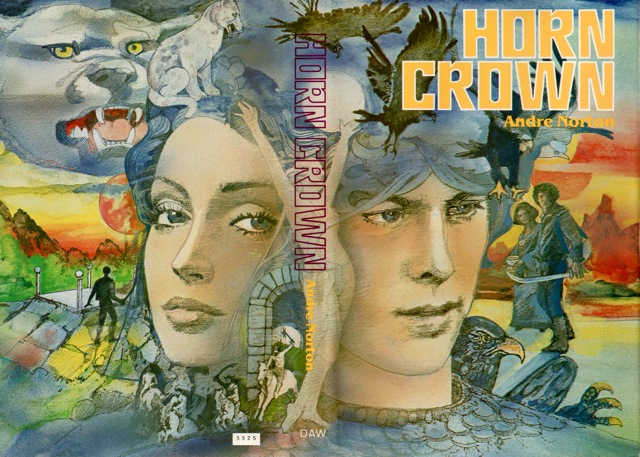
                  Estcarp is the founding cycle of Andre Norton's Witch World series, beginning with Witch World (1963) and continuing through books such as Web of the Witch World, Three Against the Witch World, and Sorceress of the Witch World. It is set on a world where magic long ago displaced science and, for centuries, was wielded almost exclusively by women, following outsiders and native witches who defend the ancient realm of Estcarp against rival powers from beyond its borders. Norton wrote most of the cycle alone before bringing in collaborators later in her career, as part of the wider Witch World universe.

                • Cover of Brightstorm
                  Brightstorm

                  series · 3 books · 2018

                  similar bysecondary world

                • Cover of Magic by the Numbers
                  Magic by the Numbers

                  series · 10 books · 1980

                  similar bysecondary world

                  Master of the Five Magics follows Alodar, a young man from a fallen noble house trying to win the hand of a queen by proving himself in a hard-magic system built from five distinct, strictly rule-bound disciplines — thaumaturgy, alchemy, magic, sorcery, and wizardry — each with its own price and its own limits. Lyndon Hardy's original trilogy, continuing through Secret of the Sixth Magic and Riddle of the Seven Realms, has Alodar master each discipline in turn, before a later book, decades on, adds a fourth-generation story (The Archimage's Fourth Daughter) to the same magic-numbers conceit.

                • Cover of Night's Daughter
                  Night's Daughter

                  Marion Zimmer Bradley · standalone novel · 1985

                  similar bysecondary world+2 more

                  Since time immemorial, when the Serpent-lord coupled in the Great Rite with the Priestess of the Night, the Kingdoms of Light and Dark, of Sun and of Moon have been at war. Now Pamina, daughter of the Starqueen, supreme symbol of the Night, and of Sarastro, King of the Royal House of the Sun, has to choose which of her parents she will follow, in custom and in principle. And together with her lover, the princely Tamino, she must face her Ordeal at the Court of Wisdom, Ordeals of Earth and Air, of Fire and Water, from which none can flinch and none can escape.

                • TO
                  The Old Kingdom / Abhorsen milieu

                  series · 11 books · 1995

                  similar bysecondary world

                  The Old Kingdom, or Abhorsen in North America and the UK, is a fantasy series written by Australian author Garth Nix. It originated in 1995 with the novel Sabriel and has continued in the novels Lirael (2001), Abhorsen (2003), Goldenhand (2016), and Terciel & Elinor (2021), as well as a prequel novel titled Clariel (2014). The Old Kingdom also consists of the novella The Creature in the Case (2005) and various other short fiction.

                • Cover of New Crobuzon
                  New Crobuzon

                  series · 4 books · 2000

                  similar bysecondary world+2 more

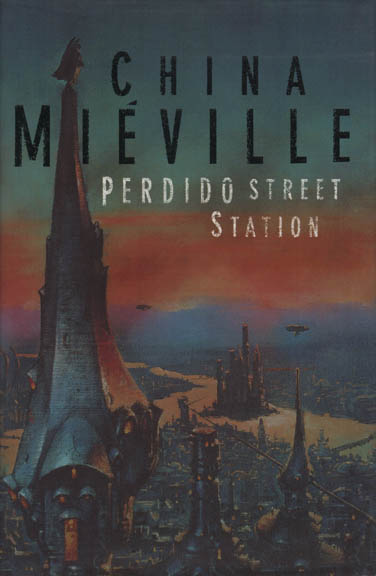
                  The New Crobuzon books are three standalone novels by China Miéville set in and around New Crobuzon, a vast, corrupt industrial city in his invented world of Bas-Lag where magic, biopunk technology, and several sentient species coexist. Perdido Street Station follows a renegade scientist and his lover after an experiment unleashes something monstrous on the city, while The Scar and Iron Council return to the same setting with different casts and only loose continuity between books.

                • Cover of Green Sky
                  Green Sky

                  series · 3 books · 1975

                  completed

                  similar bysecondary worldscience fiction

                • Cover of Traveller in Black
                  Traveller in Black

                  series · 7 books · 1960

                  completed

                  similar bysecondary world+2 more

                • Cover of The Quest of the Riddle-Master
                  The Quest of the Riddle-Master

                  series · 3 books · 1976

                  completed

                  similar bysecondary world+1 more

                  Patricia A. McKillip's Riddle-Master trilogy follows Morgon, prince of the small island of Hed, whose discovery of three star-shaped birthmarks on his forehead draws him into a search for his own hidden identity and a confrontation with ancient, shape-shifting powers. Drawing on Celtic myth, the three books are prized for their lyrical prose and riddle-based magic, and are often cited among the best high fantasy of the 1970s.

                • Cover of Lud-in-the-Mist
                  Lud-in-the-Mist

                  Hope Mirrlees · standalone novel · 1926

                  similar bysecondary world+1 more

                  Lud-in-the-Mist (1926) is the third and final novel by the British writer Hope Mirrlees. It continues the author's exploration of the themes of Life and Art, by a method already described in the preface of her first novel, Madeleine: One of Love's Jansenists (1919): "to turn from time to time upon the action the fantastic limelight of eternity, with a sudden effect of unreality and the hint of a world within a world".

                • Cover of The Black Magician Trilogy
                  The Black Magician Trilogy

                  series · 3 books · 2001

                  part of Kyralia series

                  similar bysecondary world

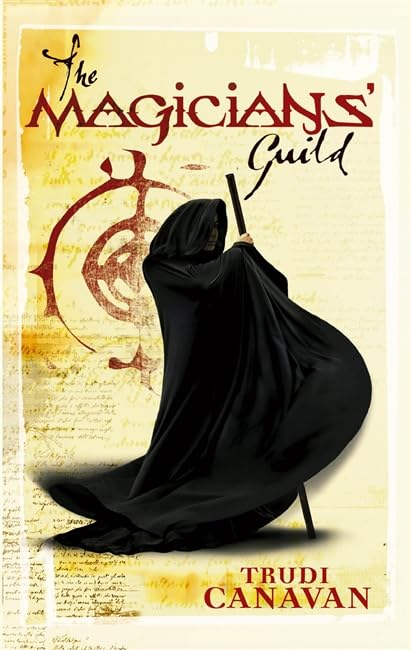
                  Trudi Canavan's Black Magician Trilogy (The Magicians' Guild, The Novice, The High Lord, 2001-2003) opens in the city of Imardin, where the ruling magicians' guild's annual purge of the slums goes wrong when a street girl named Sonea unknowingly shatters their protective shield with raw, untrained power. The guild must hunt her down and decide whether to control her or train her, and the trilogy follows Sonea's forced initiation into magical society and the guild's internal politics. It's Canavan's best-known trilogy and the founding story of her Kyralia setting.

                • Cover of High Hallack
                  High Hallack

                  series · 11 books · 1965

                  completed

                  part of Witch World

                  similar bysecondary world

                  Andre Norton's High Hallack cycle is set within her larger Witch World, a parallel planet where ancient magic supplanted technology and was long practiced only by women. The High Hallack novels follow various protagonists -- outcasts, shape-changers, refugees -- navigating the region's witches, invaders and old magic, mostly independent of each other beyond the shared setting. A. C. Crispin later collaborated with Norton on further entries in the cycle.

                • Cover of The Kingkiller Chronicle
                  The Kingkiller Chronicle

                  series · 8 books · 2002

                  similar bysecondary world

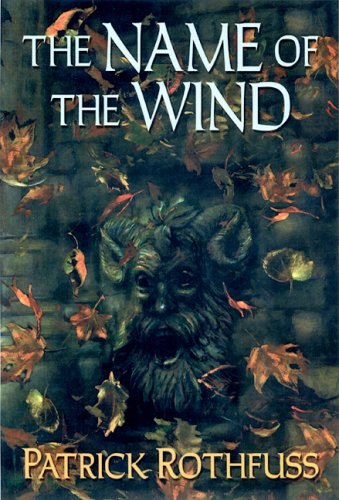
                  The Kingkiller Chronicle is a planned fantasy trilogy by the American writer Patrick Rothfuss. The first two books, The Name of the Wind and The Wise Man's Fear, were released in 2007 and 2011. The books released in the series have sold over 10 million copies.

                • Cover of Cosmere
                  Cosmere

                  universe · 54 books · 2005

                  Start hereThe Final Empire · Start here

                  similar bysecondary world

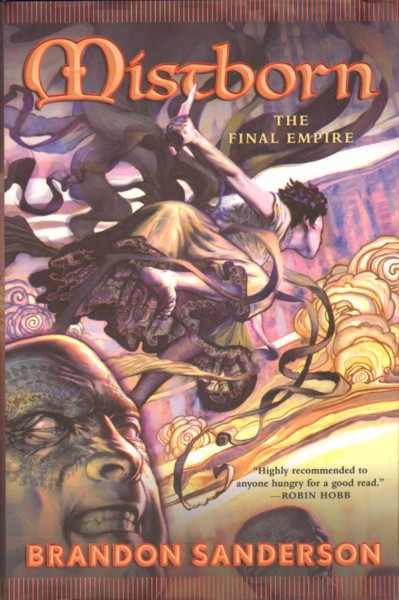
                  Before the worlds, there was Adonalsium, and then there was not. A god shattered into sixteen Shards of raw creative power, and those who seized them carried their fragments across the void to seed new planets, new peoples, new ways of working the impossible. The Cosmere is the one universe those Shards made: a scattering of worlds that seem, at first, to share nothing but a sky, until you notice the same law running quietly beneath each of them, and the same silent traveler passing through their margins. Every world keeps its own book and its own magic. On Scadrial, the Mistborn cycle burns metals into power: a self-contained trilogy of thieves and tyranny, followed by a second era that drags the same world into gunslinging early industry. On storm-battered Roshar, The Stormlight Archive raises its vast, ongoing epic around knights, spren, and oaths spoken aloud. Elsewhere stand the shorter keystones: Elantris, a city of fallen gods; Warbreaker, a tale of returned dead and living color; White Sand, told in graphic-novel form under the twin suns of Taldain. Threaded between them run the novellas, from Tress of the Emerald Sea and Yumi and the Nightmare Painter to The Sunlit Man and the pieces gathered in Arcanum Unbounded, where the hidden connections surface most plainly. All of it is the design of one hand, Brandon Sanderson, working a single pattern across two decades. What sets this universe apart is its faith in rules: magic here is a system, lawful and learnable, so discovery feels less like wonder handed down than like physics worked out. The cross-connections reward the patient reader, a symbol here, a name there, one immortal wanderer everywhere, but no book demands you have read another first. Newcomers do best entering through Mistborn: The Final Empire, the most self-contained doorway, or the standalone Elantris or Warbreaker; readers who prefer their epics vast can begin with The Way of Kings. The deeper links, and the novellas that expose them, wait for whenever you are ready to look.

                • Cover of Steerswoman
                  Steerswoman

                  series · 4 books · 1989

                  similar bysecondary world+2 more

                • Cover of Queen's Thief
                  Queen's Thief

                  series · 41 books · 1996

                  similar bysecondary world+1 more

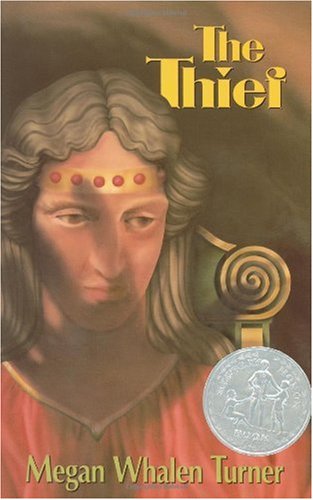
                  Queen's Thief begins with The Thief, in which a boastful, underestimated young thief is pulled from prison to steal a legendary stone for the king's scholar, only for the story to reveal by its end that its narrator has been playing a much longer game than the reader realized. Megan Whalen Turner's series expands from that single heist into court intrigue and small-scale warfare among a set of Mediterranean-flavored kingdoms, with later books often shifting whose perspective the reader trusts. It's known for close, deliberately withheld narration as much as its plotting.

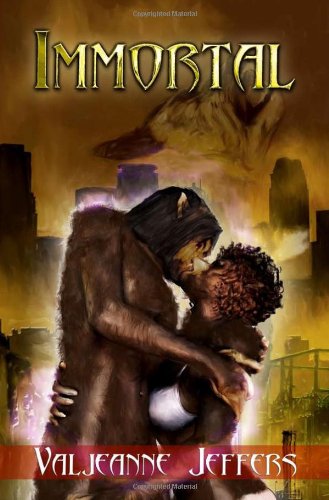
                • Cover of Immortal
                  Immortal

                  series · 4 books · 2007

                  completed

                  similar bysecondary world

                • Cover of Seven Kingdoms / Graceling Realm
                  Seven Kingdoms / Graceling Realm

                  series · 6 books · 2008

                  similar bysecondary world

                  Graceling introduces the Seven Kingdoms, where some people are born with a Grace, an extreme and often dangerous specialized talent, and follows Katsa, whose Grace for killing has made her a weapon for a manipulative king, as she learns to use it on her own terms instead. Kristin Cashore continued the world with the prequel-adjacent Fire, set in a neighboring land, and the sequel Bitterblue, then extended it further north with Winterkeep and Seasparrow. Each later book largely follows a new protagonist rather than continuing straight through Katsa's story.

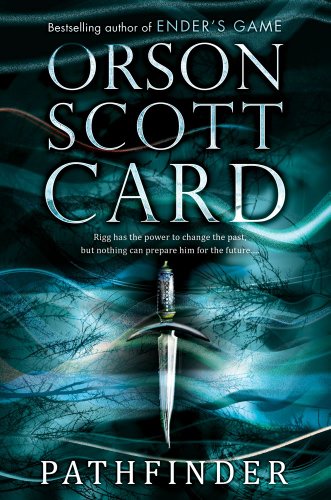
                • Cover of Pathfinder Trilogy
                  Pathfinder Trilogy

                  series · 3 books · 2010

                  similar bysecondary worldscience fiction+1 more

                  The Pathfinder series is a completed series of novels by Orson Scott Card that is notable for its unusual fusion of the themes of science fiction and fantasy, with some elements of historical fiction. One significant aspect of the Pathfinder series is its uniquely complex but well documented set of time travel rules.

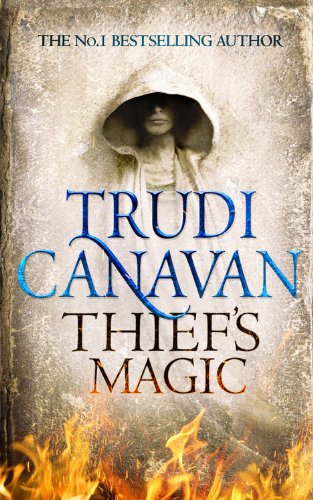
                • Cover of Millennium's Rule
                  Millennium's Rule

                  series · 4 books · 2014

                  similar bysecondary world

                  Millennium's Rule is set across multiple worlds that only certain travelers can cross between, opening with Tyen, an archaeology student who unearths a sentient, centuries-old book named Vella, and Rielle, a dyer's daughter hiding forbidden magical talent in a society ruled by priests who forbid it. Trudi Canavan follows both of them as their discoveries chip away at what their worlds have taught them about magic, history, and who holds power. The series runs Thief's Magic, Angel of Storms, and Successor's Promise.

                • Cover of Shadowmarch
                  Shadowmarch

                  series · 5 books · 2001

                  similar bysecondary world

                  Twins Barrick and Briony Eddon are next in line to rule Southmarch when their father the king is taken captive in war, leaving them to hold a fracturing kingdom together against scheming nobles and a slowly advancing invasion by the Qar, an ancient and inhuman people from beyond the mysterious Shadowline. Tad Williams's Shadowmarch series follows the twins as they're pulled toward secrets buried beneath their own castle, including gods older than the kingdom itself. The story runs across Shadowmarch, Shadowplay, Shadowrise, and Shadowheart.