More like Shadowfane
anchored on:secondary worldepic fantasy
but
- The Lord of the Rings
series13 books1954
part of Tolkien's legendarium
similar byepic fantasysecondary world+4 more
The Lord of the Rings is an epic high fantasy novel written by the English author and scholar J. R. R. Tolkien. Set in Middle-earth, the story began as a sequel to Tolkien's 1937 children's book The Hobbit but eventually developed into a much larger work. Written in stages between 1937 and 1949, The Lord of the Rings is one of the best-selling books ever written, with over 150 million copies sold.
- Thomas Covenant the Unbeliever
series11 books1977
similar byepic fantasysecondary worlddarkfantasyquests+1 more
The Chronicles of Thomas Covenant is a series of ten high fantasy novels written by American author Stephen R. Donaldson. The series began as a trilogy, The Chronicles of Thomas Covenant the Unbeliever. This was followed by another trilogy, The Second Chronicles of Thomas Covenant, and finally a tetralogy, The Last Chronicles of Thomas Covenant.
- Chronicles of Ynis Aielle
series3 books1990
similar byepic fantasysecondary worldadventurous+5 more
Chronicles of Ynis Aielle is a fantasy trilogy by American author R. A. Salvatore, published between 1990 and 2000. It comprises Echoes of the Fourth Magic (1990), The Witch's Daughter (1991), and Bastion of Darkness (2000).
- Riftwar Saga
series7 books1982
part of The Riftwar Universe
similar byepic fantasysecondary worldadventurousfantasy+1 more
The Riftwar Saga is Raymond E. Feist's debut fantasy trilogy, opening with Magician, in which an orphaned apprentice named Pug is swept up when otherworldly invaders emerge through a dimensional rift into the frontier kingdom of Midkemia. Silverthorn and A Darkness at Sethanon carry the resulting war to its close, and the trilogy became the founding entry of Feist's much larger Riftwar Cycle.
- Hawkmoon
series7 books1967
part of Moorcock's Multiverse
similar bysecondary worldepic fantasy+5 more
The History of the Runestaff is an omnibus collection of four fantasy novels by British writer Michael Moorcock, consisting of The Jewel in the Skull, The Mad God's Amulet, The Sword of the Dawn, and The Runestaff. Charting the adventures of Dorian Hawkmoon, a version of the Eternal Champion, it takes place in a far-future version of Europe in which the insane rulers of the Dark Empire of Granbretan are engaged in conquering the continent. Written between 1967 and 1969, it is considered a classic of the genre, and has proven highly influential in shaping subsequent authors' works.
- Shannara
universe50 books1977
Start hereWord and the Void · The very beginning of the timeline
similar byepic fantasysecondary worldfantasy+2 more
Long after the world we know has burned itself to slag in the Great Wars, the Four Lands rise green over the bones of the old age. Science is a forbidden memory; magic has come back into the world, and with it the old divisions — Men, Elves, Dwarves, Trolls, and Gnomes, each Race a splinter of what humanity became. This is the far-future Earth of Shannara, where the ruins buried beneath the soil are ours, and the only keepers of the vanished knowledge are the Druids of Paranor, who wake once a generation to meet the darkness rising again. Terry Brooks opened the Four Lands in 1977 with The Sword of Shannara and has charted its history for four decades since — a legendarium ordered not by throne but by a single bloodline, the Ohmsfords, each generation inheriting an Elfstone, a blade, or a wishsong when the age demands a hero. The original trilogy gives way to the Heritage of Shannara, the Voyage of the Jerle Shannara, the High Druid, Dark Legacy, Defenders, and the concluding Fall of Shannara; the Genesis of Shannara books reach back to the apocalypse itself, and the Word and the Void trilogy back further still, into a demon-haunted version of our own present that is the root of everything after. In 2025 Brooks passed the histories to Delilah S. Dawson to carry forward. What sets these books apart is their long memory: a world where every triumph is provisional, where the same evil returns wearing a fresh shape each age, and magic always exacts its price. The reading is warm and headlong — questing companies, old talismans, journeys across a mapped and named wilderness — shadowed by the knowledge that all of it stands on the wreckage of a former world. Enter as readers first did: with The Sword of Shannara, then onward in publication order. The chronological path, beginning with Word and the Void, rewards a second journey, once the Four Lands already feel like home.
- The Riftwar Universe
universe44 books1982
Start hereRiftwar Saga · Start here
similar byepic fantasysecondary worldfantasy+1 more
On the world of Midkemia a tear opens in the air itself, a rift hung between stars, and through it march the armies of an empire from another world entirely. So begins the chronicle Raymond E. Feist has kept for three decades: the tale of Pug, a castle kitchen boy apprenticed to a magician on the very day the invasion lands, and of Tomas, his friend, who inherits the armor and the ancient fury of a dead dragon-lord. Around these two the Riftwar Cycle turns, widening book by book from one besieged frontier keep into the whole history of a world of kingdoms, guilds, thieves' dens and mage-towers. The cycle runs to roughly thirty novels, gathered into arcs a newcomer can enter and finish on their own. The founding Riftwar Saga (Magician, Silverthorn, A Darkness at Sethanon) sets the board; the Serpentwar Saga, Krondor's Sons and the Conclave of Shadows carry the story down the generations; the Darkwar, Demonwar and Chaoswar sagas bring it toward its close. Crossing the rift to the rival world of Kelewan, Feist and Janny Wurts wrote the Empire trilogy, opening with Daughter of the Empire, a court intrigue told wholly from the invaders' side and for many the finest thing here. Shorter Legends of the Riftwar and the game-born Riftwar Legacy fill the corners; later still, Feist opens an altogether new world in the Firemane books. Feist writes fantasy in its most companionable key: apprentices who grow into archmages, tavern boys who become spies and dukes, a world you return to the way you return to an old inn. The mood is adventure before dread, friendship and rank and hard-won craft, wars that cost something, all of it rendered plainly and at a gallop. Begin where it began, with Magician, then follow the arcs in the order they were written, and the rift will carry you the rest of the way.
- Earthsea Cycle
series18 books1964
completed
part of Earthsea
similar bysecondary worldepic fantasyfantasy
The Earthsea Cycle, also known as Earthsea, is a series of high fantasy books written by American author Ursula K. Le Guin. Beginning with A Wizard of Earthsea (1968), The Tombs of Atuan (1970), and The Farthest Shore (1972), the series was continued in Tehanu (1990), and Tales from Earthsea and The Other Wind. In 2018, all the novels and short stories were published in a single volume, The Books of Earthsea: The Complete Illustrated Edition, with artwork by Charles Vess.
- Richard and Kahlan
series9 books2011
completed
part of Sword of Truth
similar byepic fantasysecondary world+4 more
Terry Goodkind's Richard and Kahlan novels pick up the Sword of Truth's central couple after the conclusion of that eleven-book series, opening with The Omen Machine as a mysterious device begins issuing dire, unexplained prophecies that threaten to unravel the peace they fought for. The quartet continues their rule and their marriage under new, more localized threats.
- Sovereign Stone
series4 books1999
similar byepic fantasysecondary worldadventurousfantasyquests+2 more
The Sovereign Stone series is a trilogy of fantasy novels: Well of Darkness (2000), Guardians of the Lost (2001), and Journey into the Void (2003), set in the same universe of the Sovereign Stone role-playing game. Both the books and the game were primarily written by Margaret Weis and Tracy Hickman.
- A Song of Ice and Fire
series14 books1996
part of World of Ice and Fire
similar byepic fantasysecondary worlddarkfantasy
A Song of Ice and Fire is a series of high fantasy novels by the American author George R. R. Martin. Martin began writing the first volume, A Game of Thrones, in 1991, and published it in 1996. Martin, who originally envisioned the series as a trilogy, has released five out of seven planned volumes. The most recent entry in the series, A Dance with Dragons, was published in 2011. Since then, Martin has been working on the sixth novel, titled The Winds of Winter. A seventh novel, A Dream of Spring, is planned to follow.
- Demon Wars
series4 books1997
part of Corona
similar byepic fantasysecondary worlddarkfantasy+2 more
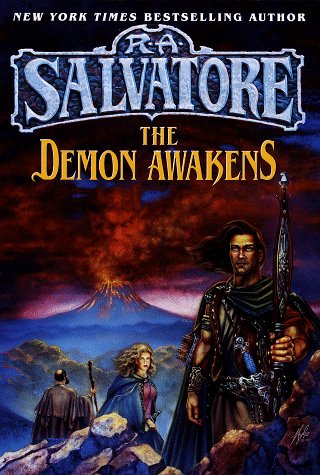
The DemonWars Saga is a series of high fantasy novels by R. A. Salvatore. It is set in the world of Corona, primarily in the kingdoms of Honce-the-Bear and Behren, and amongst the nomadic To-gai-ru. The series is separated into two trilogies connected by a single book, Mortalis. The saga has an accompanying roleplaying game entitled Demon Wars.
- Lord of the Isles
series10 books1997
completed
similar byepic fantasysecondary worldadventurousquests+1 more
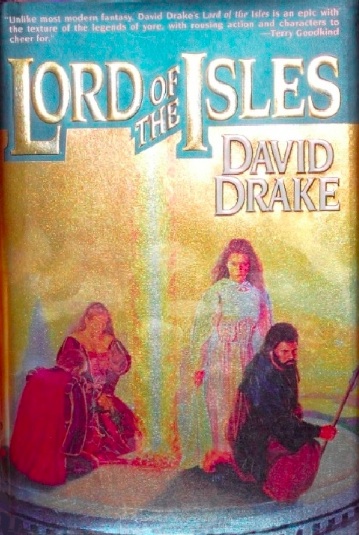
Lord of the Isles is a series of books by author David Drake. In 1997, Drake began his largest fantasy series, Lord of the Isles, using elements of Sumerian religion and medieval-era technology. The series consists of nine books broken into two distinct parts, the Lord of the Isles consisting of the first six books, and a final trilogy dubbed the Crown of the Isles.
- Pellinor
series5 books2002
similar byepic fantasysecondary worldadventurousfantasyquests+1 more
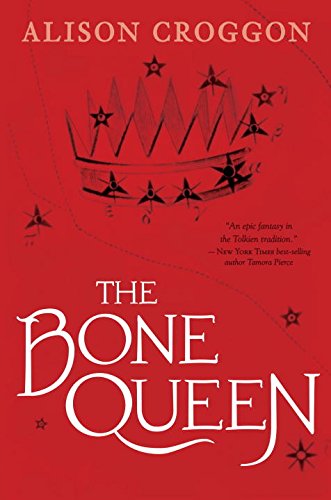
Maerad has spent most of her life enslaved on a remote farm, until the wandering Bard Cadvan recognizes in her the Gift -- a rare and powerful magical ability -- and takes her from captivity into training. Alison Croggon's Books of Pellinor follow Maerad across the world of Edil-Amarandh as she's drawn into a prophecy naming her the only one who might stop the Nameless One, an ancient and corrupting sorcerer, while she also searches for her lost family. The series runs through The Gift, The Riddle, The Crow, The Singing, and the later prequel The Bone Queen.
- Fionavar Universe
series5 books1984
similar byepic fantasysecondary worldfantasy+3 more
Ysabel is a 2007 standalone contemporary fantasy novel by Guy Gavriel Kay, following teenager Ned Marriner as he stumbles into a centuries-old rivalry playing out around the cathedral of Aix-en-Provence. It marked Kay's turn toward urban fantasy and briefly brings back two adult characters from his earlier Fionavar Tapestry trilogy, though it is not itself part of that trilogy and can be read on its own.
- The Nicci Chronicles
series4 books2017
completed
part of Sword of Truth
similar byepic fantasysecondary worldfantasy+3 more
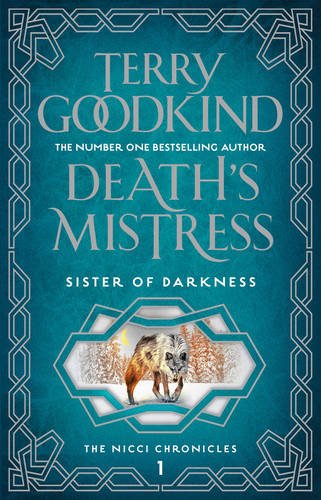
The Nicci Chronicles follows Nicci, a reformed sorceress and former antagonist from Terry Goodkind's Sword of Truth series, as she travels with the wizard Nathan Rahl through war-torn lands beyond the Old World, confronting new threats to the D'Haran Empire. The quartet, beginning with Death's Mistress, continues the larger Sword of Truth universe from Nicci's perspective.
- The Hobbit
series2 books1937
completed
part of Tolkien's legendarium
similar byepic fantasysecondary worldadventurousfantasyquests
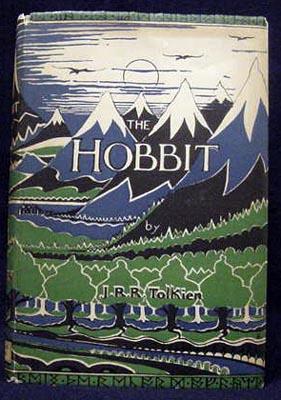
The Hobbit (1937) is J. R. R. Tolkien's children's fantasy novel following the reluctant burglar Bilbo Baggins, who joins a company of dwarves and the wizard Gandalf on a journey to reclaim treasure guarded by the dragon Smaug. It stands as a complete adventure on its own, but shares its setting with the rest of Tolkien's legendarium and leads into the events of The Lord of the Rings.
- Spiderlight
Adrian Tchaikovskystandalone novel2016
similar byepic fantasysecondary worlddark lordadventurousdarkfantasyquests
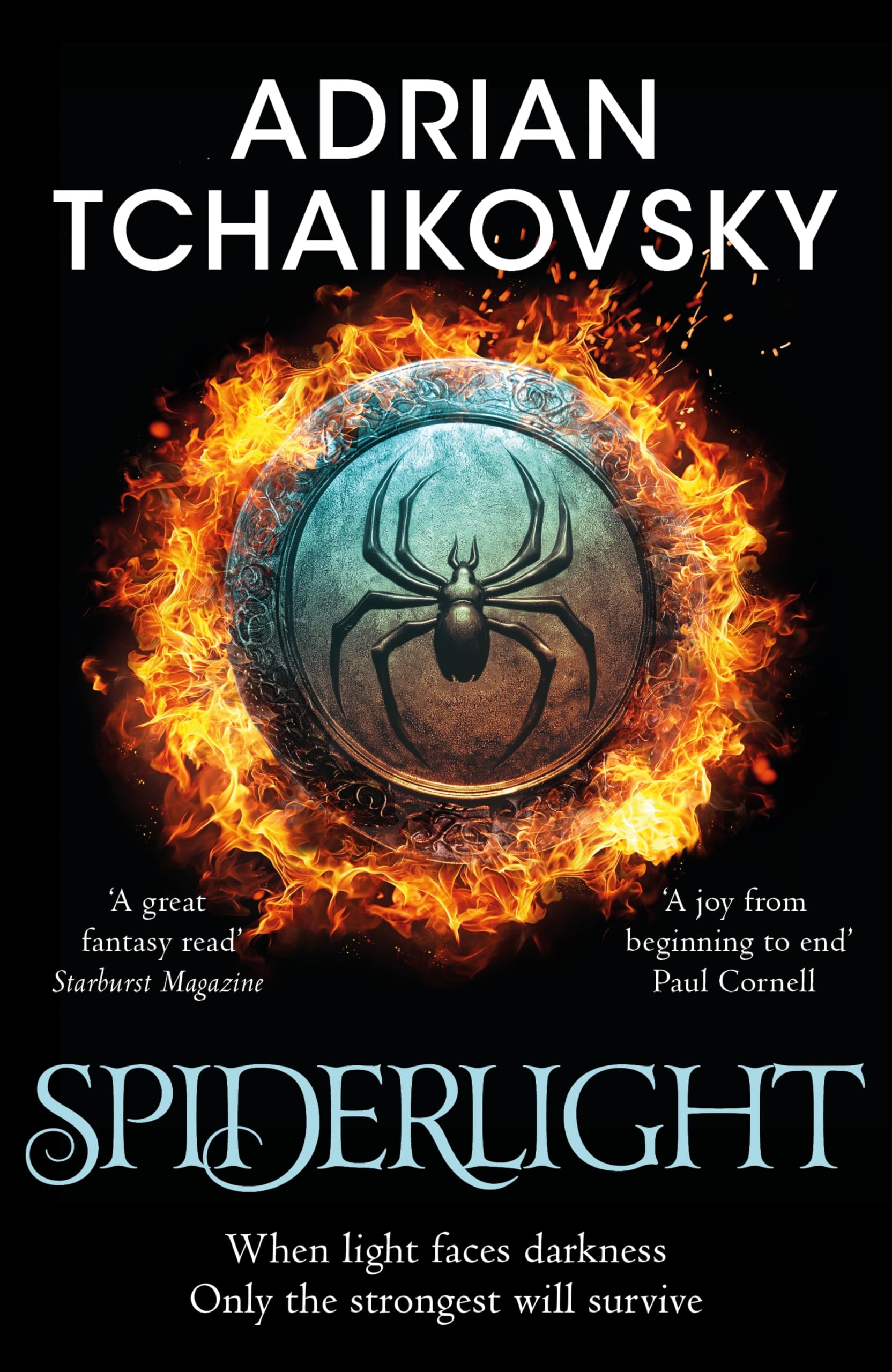
Spiderlight is a 2013 fantasy novel by Adrian Tchaikovsky. The novel tells the story of a group of humans and a giant spider who follow a prophecy to defeat the Dark Lord. The novel received critical praise for its exploration of the meaning of good and evil through the use of common fantasy tropes.
- The Licanius Trilogy
series3 books2014
similar byepic fantasysecondary world+3 more
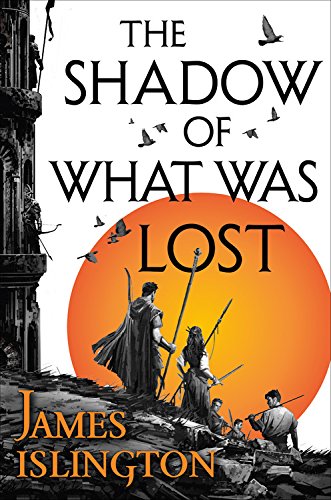
Twenty years after a war that toppled the god-like Augurs and stripped magic from the world, James Islington's Licanius Trilogy follows Davian, a young man bound by laws written to suppress the powers the Augurs once had, who discovers he can still reach forbidden abilities. His awakening coincides with the stirring of an ancient enemy and the appearance of an amnesiac stranger whose fate is bound to his. The three books trace how the old war's cover-up starts to unravel.
- Dragonlance
universe436 books1984
Start hereDragons of Autumn Twilight · Start here
similar byepic fantasysecondary worldfantasy+1 more
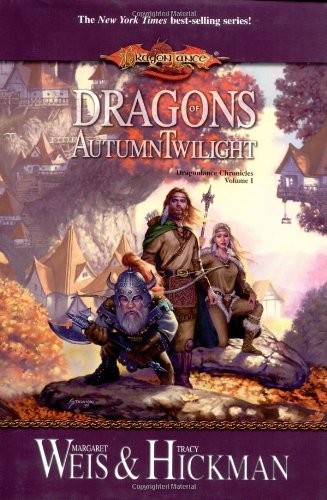
The gods have kept their silence over Krynn for three hundred years, and the world has learned to make do without them: the dragons are a nursery tale, the old clerics gone, faith worn down to superstition. Then strangers bearing a blue crystal staff cross an autumn road, and shadows with wings blot out the three moons. This is a world where magic answers to those moons—white, red, and black—where a lance is the only weapon a dragon fears, and where the fate of nations turns on a handful of friends who meet again at a tavern table and find the age of legend has come for them. At its heart stand Margaret Weis and Tracy Hickman's twin trilogies. Chronicles—Dragons of Autumn Twilight, Winter Night, and Spring Dawning—follows the Heroes of the Lance through the War of the Lance; Legends turns inward to the twins, the frail mage Raistlin and his warrior brother Caramon, and the bargain a man will strike for power. Around this core Krynn sprawls across five ages and hundreds of volumes by many hands: The Raistlin Chronicles, The War of Souls, the Preludes and Meetings cycles, the Tales anthologies, with Richard A. Knaak, Douglas Niles, Jean Rabe, and Chris Pierson each adding elf-kingdoms, dragon-overlords, and long-buried history. It is a shared world—vast, uneven, honestly enormous. What sets Dragonlance apart is its warmth. This is heroic fantasy of fellowship and hard choices rather than grimness—the companionship of the road, courage measured against temptation, gods who watch to see whether mortals deserve them back. Begin with Chronicles, then read Legends; that pairing is the doorway every reader and both creators point newcomers through.
- Age of Legends
series4 books2014
similar byepic fantasysecondary worldadventurous+4 more
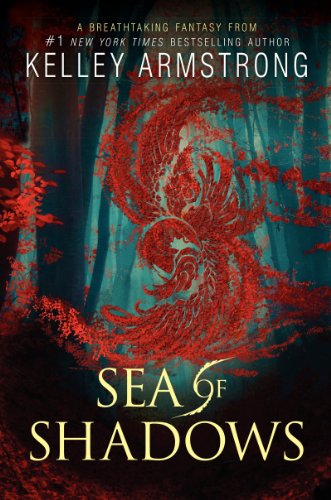
Age of Legends is a fantasy trilogy by Kelley Armstrong, comprising Sea of Shadows, Empire of Night, and Forest of Ruin (2014–2016), distinct from her contemporary paranormal Darkest Powers books.
- Cosmere
universe54 books2005
Start hereThe Final Empire · Start here
similar byepic fantasysecondary worldfantasy+1 more
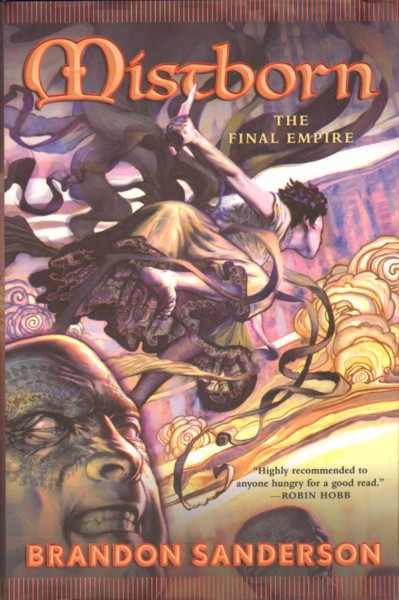
Before the worlds, there was Adonalsium, and then there was not. A god shattered into sixteen Shards of raw creative power, and those who seized them carried their fragments across the void to seed new planets, new peoples, new ways of working the impossible. The Cosmere is the one universe those Shards made: a scattering of worlds that seem, at first, to share nothing but a sky, until you notice the same law running quietly beneath each of them, and the same silent traveler passing through their margins. Every world keeps its own book and its own magic. On Scadrial, the Mistborn cycle burns metals into power: a self-contained trilogy of thieves and tyranny, followed by a second era that drags the same world into gunslinging early industry. On storm-battered Roshar, The Stormlight Archive raises its vast, ongoing epic around knights, spren, and oaths spoken aloud. Elsewhere stand the shorter keystones: Elantris, a city of fallen gods; Warbreaker, a tale of returned dead and living color; White Sand, told in graphic-novel form under the twin suns of Taldain. Threaded between them run the novellas, from Tress of the Emerald Sea and Yumi and the Nightmare Painter to The Sunlit Man and the pieces gathered in Arcanum Unbounded, where the hidden connections surface most plainly. All of it is the design of one hand, Brandon Sanderson, working a single pattern across two decades. What sets this universe apart is its faith in rules: magic here is a system, lawful and learnable, so discovery feels less like wonder handed down than like physics worked out. The cross-connections reward the patient reader, a symbol here, a name there, one immortal wanderer everywhere, but no book demands you have read another first. Newcomers do best entering through Mistborn: The Final Empire, the most self-contained doorway, or the standalone Elantris or Warbreaker; readers who prefer their epics vast can begin with The Way of Kings. The deeper links, and the novellas that expose them, wait for whenever you are ready to look.
- Lightbringer
series5 books2010
similar byepic fantasysecondary world+3 more
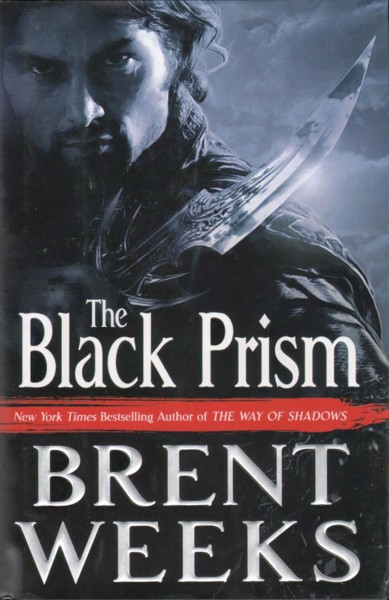
The Black Prism introduces Gavin Guile, the Prism — supreme religious and political authority over the Seven Satrapies, and the only person able to draft every color of magical light into solid, structural "luxin" — as an uprising and a hidden family secret both threaten to unravel the fragile peace he's built. Brent Weeks's five-book Lightbringer series pushes its chromaturgy magic system toward its physical and moral limits: drafters who overuse their color eventually "break the halo" and turn into monsters called wights.
- The Ancestor
series4 books2017
similar byepic fantasysecondary worldmagic schoolsdarkfantasy+1 more
The Book of the Ancestor trilogy is a series of three fantasy novels by Mark Lawrence. It comprises Red Sister (2017), Grey Sister (2018), and Holy Sister (2019). The three novels tell the story of Nona Grey, a peasant girl with mystical abilities. Red Sister was nominated for the 2018 David Gemmell Awards for Fantasy.