Loreful
HomeDiscover
Search series, authors…⌘K
Loreful

Reading orders for SF/F series and shared universes — with your place kept in every one.

Explore

UniversesSeriesWorksAuthorsAtlas

Help

FAQAboutSite map

Account & legal

Sign inCreate accountPrivacyTerms

Data

Built on ISFDB, Wikipedia, Wikidata and Open Library. Curated reading orders carry their reasoning on the page; the rest follow publication order. Data sources & licenses

© Loreful · data: ISFDB · CC BY

More like Shadowmind

anchored on:science fictionfar futurepsychic powersspace

but

Mood

The mood the book leaves you in.

  • The reading experience is propelled by journeys, exploration, and physical risk; excitement and forward momentum dominate over dread or introspection.
  • Joy and loss are deliberately mixed; the resolution grants characters something real while taking something else away, leaving warmth and sorrow together.
  • The book demands work from the reader — dense prose, difficult structure, unfamiliar ideas, or morally uncomfortable material — as part of its intended effect.
  • Grim events, cruelty, or despair dominate the atmosphere, and the book does not soften them with comfort or comic relief.
  • The atmosphere is quietly unsettling — wrongness, unease, and the uncanny pervade the book without necessarily escalating into overt horror.
  • The book is built to move the reader; character feeling is foregrounded and major scenes aim at a strong emotional response.
  • Humor is a primary aim and the prose plays for laughs — comic situations, wit, or dialogue produce sustained comedy, not occasional levity.
  • The book insists that things can improve; effort and decency are shown to matter, and the arc bends toward better outcomes even through hardship.
  • The book teaches as it goes — real facts, history, science, or craft are conveyed in enough depth that learning is part of the reading experience.
  • The book is designed to uplift and motivate, presenting perseverance or achievement in a way that invites the reader to aspire or act.
  • The overall register is cheerful and easygoing; stakes are kept gentle and the book avoids dwelling on pain or dread.
  • Withheld information drives the experience; the book sustains enigmas and secrets the reader wants resolved, whatever its genre.
  • The book is contemplative and inward-looking, giving more weight to thought, memory, and meaning than to external events.
  • The book works as comfort reading — low tension, a soothing pace, and an atmosphere the reader can unwind in.
  • Grief, loss, or melancholy set the dominant register, and the book lets sorrow stand rather than resolving it into comfort.
  • Sustained suspense is the point; the book keeps the reader braced for what happens next through danger, pressure, or impending revelation.
  • Playful invention and charm define the register — fanciful conceits, light absurdity, and a narration that delights in its own oddity.

About

What the story runs on.

  • Stories in which extraterrestrial beings are central — as characters, cultures, or the object of the plot.
  • Stories about venturing into space to explore — survey missions, astronauts, and the frontier of the unknown beyond Earth.
  • Stories about minds with paranormal abilities — telepathy, telekinesis, precognition, empathy — and how societies handle those who have them.
  • Stories structured as a quest — a journey undertaken to find, deliver, or destroy something of great import.
  • Stories in which staying alive against nature, catastrophe, or scarcity is the central problem.
  • Stories of growing up — a young protagonist crossing from childhood into adult knowledge and responsibility.
  • Stories about who a character truly is — self-discovery, doubled lives, and the search for a self.
  • Stories in which a buried family truth — hidden parentage, crimes, or shames — surfaces and reorders the present.
  • Stories driven by maneuvering for power — factions, conspiracies, and statecraft conducted in shadow.
  • Stories about rising against rulers — uprisings, resistance movements, and revolutions and their aftermaths.
  • Stories in which war itself is the subject — combat, occupation, and what warfare does to soldiers and civilians.
  • Stories organized around investigating a killing — the case, the clues, and the pursuit of the killer, in any genre's clothing.

Shelf

Where it sits in the library.

    • Fiction built on magic or other supernatural elements that have no scientific explanation.
    • Secondary-world fantasy at large scale, where the fate of nations or the world turns on the protagonists' struggle.
    • Fantasy set in a recognizably modern city or contemporary world where the supernatural intrudes on everyday life.
    • Fantasy that blends in horror's atmosphere and imagery, keeping a fantastical frame around grim or frightening material.
    • Action-driven fantasy following warriors or rogues with personal stakes against sorcerous threats, rather than world-spanning conflicts.
    • Fantasy set in a real historical period or a close analogue of one, with magic woven into the era.
    • Fantasy in which protagonists cross from the ordinary world into another world through a portal or similar passage.
    • Fiction that retells or reworks a traditional fairy tale in a new form or setting.
    • Fantasy drawing directly on myths, legends, and folklore, retelling them or building on their figures and logic.
    • Fantasy of ghosts, vampires, shapeshifters, psychics, and similar phenomena, usually set in an otherwise ordinary world.
    • Fiction mixing science-fictional trappings with overtly magical or impossible elements in one setting.
    • Low-stakes fantasy emphasizing comfort, community, and everyday pleasures over conflict and peril.
    • Speculative fiction of pervasive moral ambiguity, violence, and cynicism that rejects heroic conventions — fantasy and SF alike.
      • Fiction that extrapolates from science and technology — future societies, space travel, or speculative inventions — within at least nominally natural laws.
      • Science fiction of interstellar scope — starships, galactic polities, and adventure across star systems.
      • Science fiction committed to scientific rigor, where technical plausibility constrains the story.
      • Science fiction centered on armed forces and warfare, told largely from a military point of view.
      • Science fiction of networked, corporate-dominated near futures, pairing high technology with social decay.
      • Science fiction styled on nineteenth-century steam-powered technology, often in a Victorian or pseudo-Victorian setting.
      • Fiction depicting an oppressive or catastrophic society, presented as a warning.
      • Fiction set after civilization's collapse, following survivors in the ruins of the old world.
      • Fiction in which characters move between past and future, and the mechanics or consequences of that travel drive the plot.
      • Fiction exploring a world where a historical event went differently and history diverged from ours.
      • Science fiction about humanity's first encounter and communication with an alien intelligence.
      • Science fiction in which extraterrestrial forces attack or occupy Earth and humanity resists.
      • Fiction whose primary aim is to frighten or unsettle the reader through dread, menace, or the monstrous.
      • Horror of vast, indifferent, incomprehensible entities before which humanity is insignificant, in the Lovecraft tradition.
      • Horror of decaying houses, buried family secrets, and oppressive atmosphere in the Gothic literary tradition.
      • Horror centered on hauntings and the returning dead.
      • Horror located in the mind — paranoia, obsession, and unreliable perception rather than external monsters.
      • Horror built around the reanimated dead and survival amid their outbreaks.
      • Horror defined by explicit, transgressive gore that refuses to cut away from violence.
      • Speculative fiction of the strange and uncanny that resists both natural explanation and standard genre categories.
      • Fiction organized around solving a crime or puzzle, typically following an investigator toward the identification of a culprit.
      • A puzzle-first mystery that lays out clues so the culprit's identity can be deduced before the reveal.
      • Crime fiction of moral ambiguity, fatalism, and hard-edged style, set among the corrupt and the doomed.
      • A mystery following the realistic routines of police work — forensics, interviews, and case-building.
      • A gentle mystery with an amateur sleuth, a small community, and violence kept off the page.
      • A mystery set in a past era, where the investigation works within that period's methods and society.
      • Fast-paced fiction driven by imminent danger, pursuit, or high-stakes conspiracy, built to sustain tension.
      • A thriller of espionage — agents, tradecraft, and intelligence services in conflict.
      • A thriller centered on lawyers and the courtroom, where litigation carries the suspense.
      • A thriller driven by detailed contemporary or near-future technology, often military or scientific.
      • A thriller whose tension comes from mental states and manipulation between characters rather than external action.
      • Fiction whose central plot is a romantic relationship and its development toward an emotionally satisfying resolution.
      • Romance in which one or both partners are supernatural beings, blending fantasy elements into the love story.
      • A fantasy-romance hybrid in which the romantic arc and the fantasy plot carry equal weight.
      • Romance set in a past era, with courtship shaped by the period's society and manners.
      • Romance set in the present day, without supernatural or historical elements.
      • Fiction set in a real past period, where the historical setting materially shapes characters and events.
        • General and literary fiction emphasizing prose style, character interiority, or formal ambition over genre plot conventions.
        • Fiction in a realistic world where magical events occur and are treated as ordinary, in the tradition of Latin American literature.
        • Fiction that ridicules people, institutions, or society in order to criticize them.
        • Fiction of dreamlike, irrational imagery and logic that breaks from realistic representation.
        • Fiction that plays with narrative convention through metafiction, fragmentation, and self-reference.
        • Fiction propelled by journeys, exploration, and physical peril, where action and survival carry the plot.
        • Adventure fiction of ships and seafaring — naval engagements, voyages, and life at sea.
        • Fiction of the American frontier West — gunmen, ranchers, and lawmen, typically in the late nineteenth century.
        • Fiction centered on soldiers, campaigns, and the experience of warfare, historical or imagined.
          • Fiction written primarily to amuse, using comedic situations, wit, or parody as its organizing principle.
            • Multi-generational fiction following a family or dynasty across decades, with inheritance and kinship as the through-line.
              • Fiction whose world runs on explicit game mechanics — levels, stats, and skills that characters can see and exploit.
                • Fiction about costumed or superpowered heroes and their conflicts with comparable villains.

                Practical

                How long a commitment, whether it stands alone, and whether it has finished.

                Tap a chip to ask for it · tap again to rule it out · once more to clear. Numbers show what would be left.

                • Cover of Heechee
                  Heechee

                  series · 19 books · 1972

                  completed

                  similar byscience fictionfar futurespacealiens+1 more

                  The Heechee Saga, also known as the Gateway series, is a series of science fiction novels and short stories by Frederik Pohl. The Heechee are an advanced alien race that visited the Solar System hundreds of millennia ago and then mysteriously disappeared. They left behind bases containing artifacts, including working starships, which are discovered and exploited by humanity.

                • Cover of Alien Embassy
                  Alien Embassy

                  Ian Watson · standalone novel · 1977

                  similar byscience fictionmysteriouspsychic powersfar futurespacealiens

                  From the back cover of the Ace first printing: ""I am a womb-man, and my womb is space!" Lila was one of those who could, by diving deep, deep within herself, emerge in outer space. The few who could make that journey were honored above all other mortals; already the secrets brought back by the mind-travelers hand transformed Earth from the pig-sty of the 21st century to the paradise of the 22nd. But Lila was to learn something besides which the secrets brought back by previous psychic astronauts would pale to insignifance - she was to learn the Truth... and it would not make men free."

                • Cover of Ringworld
                  Ringworld

                  series · 5 books · 1970

                  part of Known Space

                  similar byscience fictionspacefar futurealiens+1 more

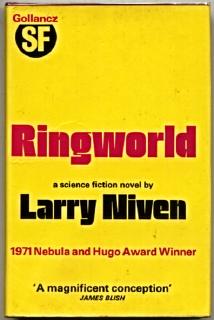
                  The Ringworld series is a series of science fiction novels written by American author Larry Niven. It is part of his Known Space series of stories. Its backdrop is the Ringworld, a giant artifact 3 million times the surface area of Earth circling a star. The series is composed of four standalone science fiction novels, the original award-winning book and its three sequels:1970: Ringworld 1979: The Ringworld Engineers 1996: The Ringworld Throne 2004: Ringworld's Children

                • Cover of The Colors of Space
                  The Colors of Space

                  Marion Zimmer Bradley · standalone novel · 1963

                  similar byscience fictionmysteriousfar futurespacealiens

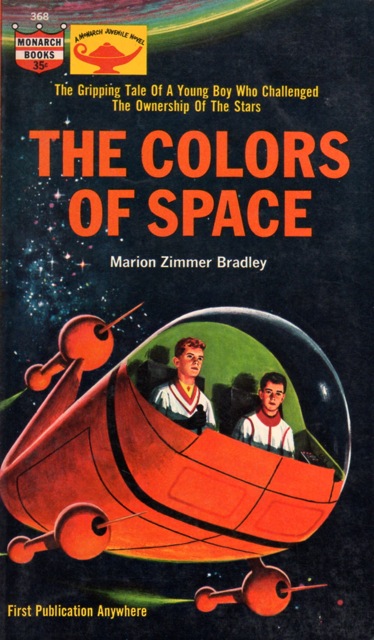
                  The Lhari seem peaceful and friendly, but they go to some lengths to protect their monopoly on faster-than-light travel. One young man is sent to discover their secrets.

                • Cover of Quadrail
                  Quadrail

                  series · 5 books · 2005

                  similar byscience fictionmysteriousfar futurespacealiens

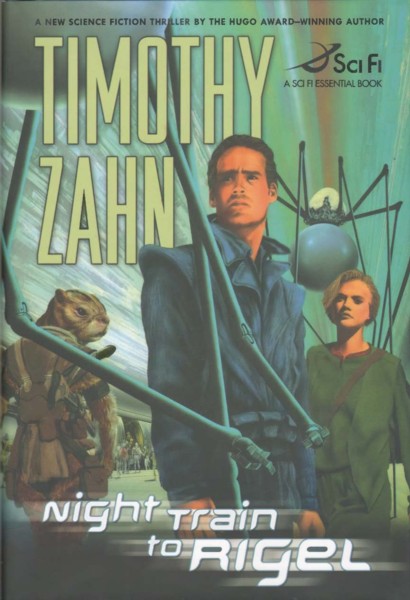
                  Timothy Zahn's Quadrail series follows ex-intelligence operative Frank Compton, recruited by the enigmatic Spider caretakers of the Quadrail, an interstellar train network that lets a dozen alien empires travel between worlds at a light-year a minute. Paired with the telepathically gifted Bayta, Compton investigates and fights the Modhri, a parasitic group-mind quietly seizing control of galactic leaders from within. The five novels, published 2005-2012, follow one continuous investigation from first contact with the threat to its final confrontation.

                • Cover of Tower and the Hive
                  Tower and the Hive

                  series · 7 books · 1959

                  completed

                  part of The Talents

                  similar byscience fictionpsychic powersspacefar future+1 more

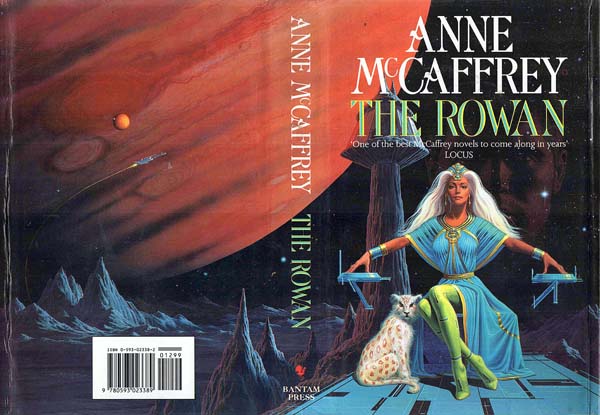
                  The Tower and the Hive series opens with The Rowan (1990), following an isolated but powerful telepath who is drawn out of her loneliness by a psychic call for help from a distant Talent facing an alien threat. Anne McCaffrey continued the story across four more novels, Damia, Damia's Children, Lyon's Pride, and the concluding The Tower and the Hive (1999), following later generations of a telepathic family staffing the Prime Towers that give a starfaring human civilization instant communication. The series is set later in the same Talents universe as McCaffrey's earlier Pegasus books.

                • Cover of Academy / Priscilla (Hutch) Hutchins
                  Academy / Priscilla (Hutch) Hutchins

                  series · 16 books · 1983

                  similar byscience fictionspacefar futurealiens+1 more

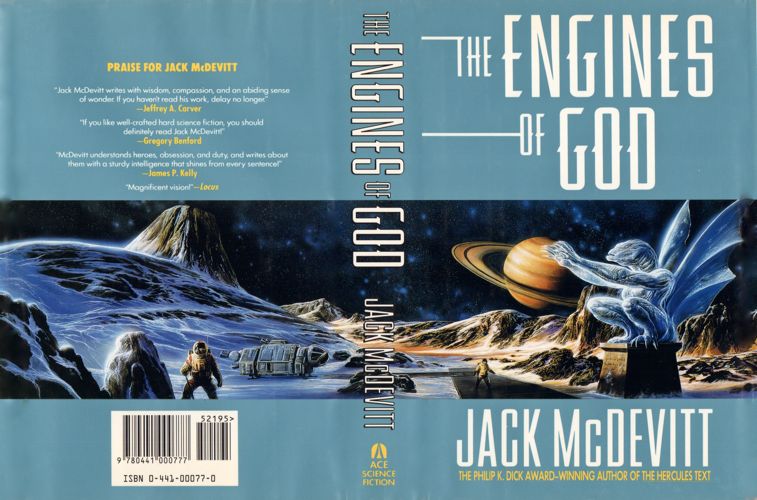
                  Jack McDevitt's Academy novels follow Priscilla 'Hutch' Hutchins, a starship pilot turned administrator, across a series of archaeological mysteries involving vanished alien civilizations and inexplicable ancient artifacts scattered through human space. Beginning with The Engines of God, the series treats deep time and the near-total absence of intelligent alien life as its central mystery, favoring slow-burn discovery over action. McDevitt returned to Hutch across three decades of publication.

                • Cover of The Avatar
                  The Avatar

                  Poul Anderson · standalone novel · 1978

                  similar byscience fictionmysteriousfar futurespacealiens

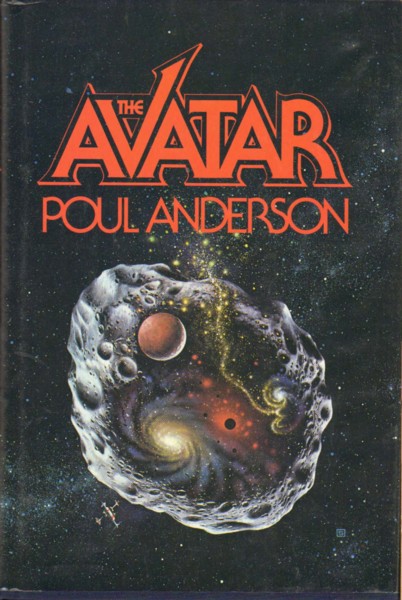
                  After humanity discovers portals that transport a space vessel through time and space, a crew which has visited the planet of another species returns to Earth, only to find a political faction in power which seeks to conceal this knowledge in the name of social stability. With the aid of the political opposition, they escape and journey through the portal in search of knowledge, and perhaps even to meet those who created the portal system.

                • Cover of Starstream
                  Starstream

                  series · 2 books · 1989

                  completed

                  similar byscience fictionfar futurespace+2 more

                  Starstream groups Jeffrey A. Carver's two linked science-fiction novels, From a Changeling Star (1989) and its direct sequel Down the Stream of Stars (1990). The two were published within a year of each other under the same author.

                • Cover of Alex Benedict
                  Alex Benedict

                  series · 13 books · 1987

                  similar byscience fictionmysteriousfar futurespace

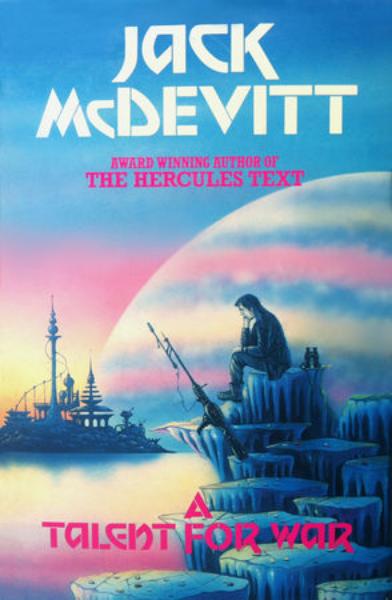
                  Alex Benedict is an antiques dealer and part-time interstellar investigator, generations removed from Earth's first starfaring age, who keeps stumbling into forgotten history through the objects and ruins he trades in. A Talent for War opens the series with his search for what his vanished uncle was really investigating before a doomed voyage, uncovering a buried chapter of an old human-alien war. Jack McDevitt built a long-running series, narrated by Benedict's pilot and partner Chase Kolpath, around this mix of archaeology, mystery, and deep time.

                • Cover of Embassytown
                  Embassytown

                  China Miéville · standalone novel · 2011

                  similar byscience fictionmysteriousfar futurespacealiens

                  In the far future, humans have colonized a distant planet, home to the enigmatic Ariekei, sentient beings famed for a language unique in the universe, one that only a few altered human ambassadors can speak. Avice Benner Cho, a human colonist, has returned to Embassytown after years of deep-space adventure. She cannot speak the Ariekei tongue, but she is an indelible part of it, having long ago been made a figure of speech, a living simile in their language. When distant political machinations deliver a new ambassador to Arieka, the fragile equilibrium between humans and aliens is violently upset. Catastrophe looms, and Avice is torn between competing loyalties—to a husband she no longer loves, to a system she no longer trusts, and to her place in a language she cannot speak yet speaks through her.

                • Cover of As on a Darkling Plain
                  As on a Darkling Plain

                  Ben Bova · standalone novel · 1972

                  similar byscience fictionmysteriousfar futurespacealiens

                  Humanity has explored the solar system and is in the beginnings of interstellar exploration. However, as the explorations proceed it becomes more and more apparent that people from Earth have already been there before. Was the Earth a spacefaring planet in prehistory and had that civilization been wiped out by aliens from elsewhere so that the people of Earth had to start all over again. The discovery of the remnants of an Earth colony in orbit around Sirius seems to confirm that supposition. There is alsoa large machine that is still functioning in the solar system.

                • Cover of The Dark Side of the Sun
                  The Dark Side of the Sun

                  Terry Pratchett · standalone novel · 1976

                  similar byscience fictionfar futurespacealiens+1 more

                  The Dark Side of the Sun is a science fiction novel by Terry Pratchett, first published in 1976.

                • Cover of Well World
                  Well World

                  series · 11 books · 1977

                  similar byscience fictionfar futurespace+2 more

                • Cover of Web of Angels
                  Web of Angels

                  John M. Ford · standalone novel · 1980

                  similar byscience fictionpsychic powersfar futurespace+1 more

                  Amazon: Condemned to death at the age of nine for his ability to manipulate the Web, which links the many worlds of humanity, Grailer must go underground, hiding his skills and testing his powers

                • Cover of Dipple
                  Dipple

                  series · 2 books · 1961

                  completed

                  similar byscience fictionfar future+2 more

                  Andre Norton's Dipple books are linked by a shared setting rather than a continuing plot: the Dipple, a squalid refugee slum for displaced aliens and humans on a distant colony world, first introduced in Catseye (1961). Night of Masks (1964), grouped here alongside it, follows a different, disfigured young protagonist drawn into his own separate adventure that also touches the Dipple, rather than continuing Catseye's story. Each book stands alone, connected mainly by Norton's recurring interest in outcasts finding purpose off-world.

                • Cover of Orbitsville
                  Orbitsville

                  series · 3 books · 1975

                  completed

                  similar byscience fictionfar futurespace+2 more

                  Bob Shaw's trilogy opens with the discovery of Orbitsville, a Dyson-sphere-like megastructure enclosing a star and offering more habitable inner surface than all of Earth's history could use, prompting a slow-motion exodus from a crowded, exhausted homeworld. Orbitsville Departure and Orbitsville Judgement widen into the political fallout and the deeper mystery of who built the sphere and why. It is hard SF organized around the sheer, incomprehensible scale of its central artifact rather than character-driven drama.

                • Cover of The Companions
                  The Companions

                  Sheri S. Tepper · standalone novel · 2003

                  similar byscience fictionmysteriousfar futurespacealiens

                  Three planets in deep space were named by their human discoverers to reflect their environments: lush and foreboding Jungle, which swallowed up an exploratory team; Stone, phenomenally rich in rare ore; and Moss, the most enigmatic -- and dangerous -- of the trio.Joining her half-brother Paul, the famed linguist, on a two-person scientific expedition, Jewel Delis has come to Moss to observe the phenomenon of dancing light and to help decipher the strange musical "language" that accompanies it. But there are other mysteries alive on this exotic world covered in ever-shifting vegetation -- and something more than illuminations has enticed her away from a disastrously overpopulated homeworld to seek answers at the universe's unexplored edge. For Jewel herself is a question mark with a radical agenda that will put her at perilous odds with her planet's ruling powers -- and with the inscrutable alien races she encounters -- as she risks all for justice for the endangered beasts of the Earth.

                • Cover of Minervan Experiment / Giants
                  Minervan Experiment / Giants

                  series · 5 books · 1977

                  completed

                  similar byscience fictionmysteriousaliensfar future+1 more

                  The Giants series is a quintet of science fiction novels by James P. Hogan, published between 1977 and 2005. The series began with Inherit the Stars, published by Del Rey Books in May 1977.

                • HC
                  Heaven Chronicles / Zones of Thought

                  series · 8 books · 1976

                  similar byscience fictionfar futurespace+1 more

                • Cover of Zero Stone / Murdoc Jern
                  Zero Stone / Murdoc Jern

                  series · 2 books · 1968

                  completed

                  similar byfar futurespacescience fiction+2 more

                  Andre Norton's Zero Stone duology follows young gem trader Murdoc Jern after he inherits a mysterious, powerful alien artifact from his murdered guardian, forcing him into a dangerous search across the stars for its origin in The Zero Stone and its sequel Uncharted Stars. It is a self-contained space-adventure story rather than part of Norton's larger continuities.

                • Cover of Gaean
                  Gaean

                  series · 3 books · 1979

                  completed

                  similar byscience fictionspacealiensfar future+1 more

                  The Gaea Trilogy consists of three science fiction novels by John Varley. The stories tell of humanity's encounter with a living being in the shape of a 1,300 km diameter Stanford torus, inhabited by many different species, most notably the centaur-like Titanides, in orbit around the planet Saturn.

                • Cover of Supermind
                  Supermind

                  A. E. van Vogt · standalone novel · 1977

                  similar byscience fictionmysteriousfar futurespacealiens

                  From the back cover of the DAW first edition: "Research Alpha sought the answer to the ultimate intelligence - and also to certain problems of other intelligent beings sharing our galaxy. Research Alpha sought the reason for humanity's very existence in a vast and apparently hostile cosmos. Research Alpha found answers they never expected. What they found would ultimately lead to... Point Omega - when man becomes one with totality!"

                • Cover of Teixcalaan
                  Teixcalaan

                  series · 2 books · 2019

                  similar byscience fictionfar future+3 more

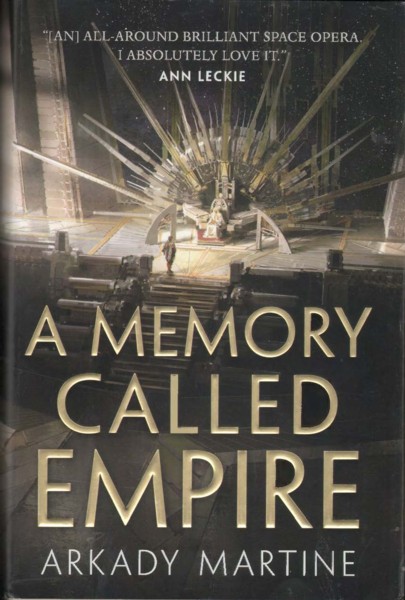
                  Arkady Martine's space opera duology follows Mahit Dzmare, ambassador from the small, independent Lsel Station, as she arrives in the vast Teixcalaanli Empire to investigate her predecessor's death and finds herself caught up in the empire's own succession crisis. A Memory Called Empire and A Desolation Called Peace pair court intrigue with Mahit's conflicted, outsider fascination with an empire she can't help admiring.