More like Singularities
anchored on:science fictionfar futurecyberpunksurvivalother star systemstense
but
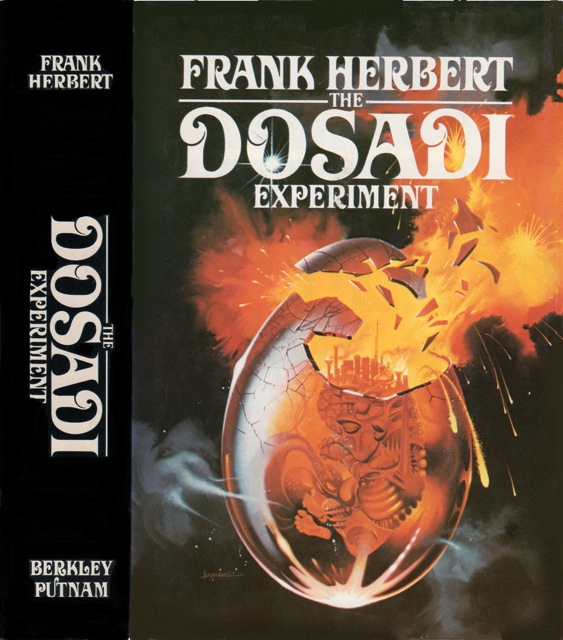
- The Dosadi Experiment
Frank Herbertstandalone novel1977
similar bysurvivaltensefar futurescience fictionother star systemspolitical intrigue+1 more
From the flaps of the Berkley Putnam first edition: "In his first new work of science fiction since the best-selling Children of Dune, Frank Herbert returns to his world of Whipping Star, and involves Jorj X. McKie, Saboteur Extraordinary, in a new intrigue. In Whipping Star, McKie discovered that some of the stars in the universe are actually intelligent, super-powerful beings, and was able to befriend one of them, the star Alcyone - affectionately known as Fannie Mae. As The Dosadi Experiment opens, McKie is assigned to investigate the planet Dosadi, which is isolated from the rest of the galaxy by a "god-wall," a barrier set up by one of the intelligent stars. Dosadi is rumored to be an experimental planet, and the experimenters are the froglike Gowachin, whose culture is founded upon a strange legal system in which McKie is the only human ever trained. He learns that humans and Gowachin have been placed on Dosadi, without their consent, for an experiment that could last centuries: an experiment in extreme overcrowding. But this monstrous plot is apparently out of control, and it seems the Gowachin may be prepared to destroy Dosadi rather than expose its secret, thus breaking the peace among the races, and starting the first interstellar war. But this is just the beginning. When McKie finally reaches Dosadi he discovers that the Dosadis have taken control of their own evolution and produced a competitive, highly evolved elite, of both humans and Gowachin, who have been able to extrapolate the existence of a universe beyond the god-wall and hate whoever has imprisoned them like this. They plan to break out and avenge themselves on the galaxy."
- Dune
series20 books1963
part of Dune Universe
similar byfar futurescience fictionother star systemspolitical intrigue+2 more
Frank Herbert's Dune Chronicles opens with 1965's Dune, set on the desert planet Arrakis where House Atreides takes control of the only source of the vital spice melange and young Paul Atreides is pulled into a struggle over its politics and religion. Herbert carried the story forward across five further novels — Dune Messiah, Children of Dune, God Emperor of Dune, Heretics of Dune, and Chapterhouse: Dune — following Paul's line over the following millennia, before Brian Herbert and Kevin J. Anderson later extended the saga. Many other editions of these six novels are omnibus and box-set repackagings rather than separate stories.
- Dune Universe
universe78 books1963
Start hereDune · Start here
similar byfar futurescience fictionother star systemspolitical intrigue+2 more
Arrakis. Dune. The desert planet, where empire runs on a single substance: the spice melange, which folds space, prolongs life, and unlocks prescience, and which exists nowhere else in the known universe. Frank Herbert's saga is a meditation dressed as an adventure — feudal houses and a secret sisterhood, engineered messiahs and the patient ecology of a world without water, all turning on the terrible gravity of who commands the spice. It reads like scripture and schemes like a war room, ten thousand years hence, among people who have outlawed the thinking machine and made instruments of themselves instead. At its heart stand Herbert's original six — Dune, Dune Messiah, Children of Dune, God Emperor of Dune, Heretics of Dune, Chapterhouse: Dune — a single deepening arc across millennia, arguing the whole way between prophecy and free will. Around that spine his son Brian Herbert and Kevin J. Anderson have raised a vast prequel architecture: Prelude to Dune, tracing the great houses a generation before Paul; Legends of Dune, reaching back to the crusade that broke the machines; the Schools of Dune cycle on the founding of Bene Gesserit, Mentat, and Navigator; the Caladan Trilogy and Heroes of Dune filling years the originals left in shadow. Many hands, dozens of volumes, one desert. What sets Dune apart is its refusal of the simple: religion is manufactured, heroes are hazards, and the sand itself — worm, water, ecology — acts as a political power. Begin where the universe did, with Frank Herbert's Dune (1965), and read the original six in order; you need nothing else to feel the full weight. The prequels are a country to explore afterward, taken by era. Beginnings are delicate times.
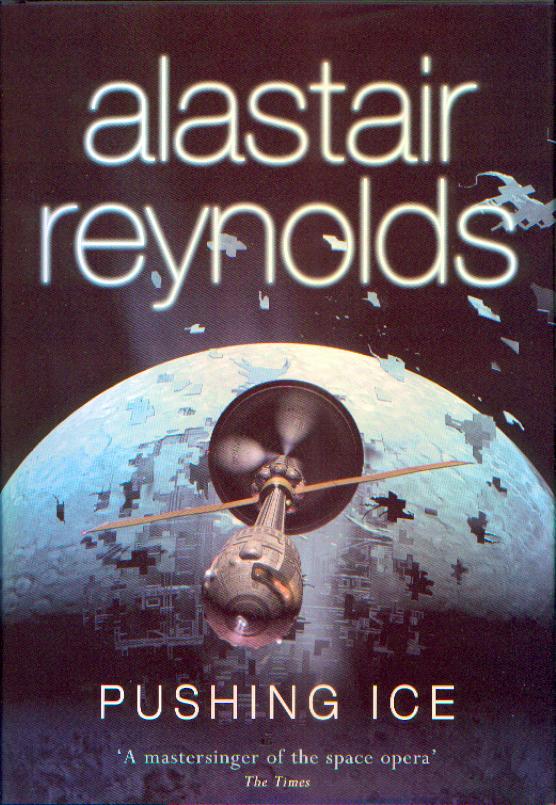
- Pushing Ice
Alastair Reynoldsstandalone novel2005
similar bysurvivaltensefar futurescience fictionother star systemsspace+1 more
When Saturn's moon Janus suddenly takes off into interstellar space, an ice mining spaceship sent to investigate finds itself swept along into distant space until it ends up trapped in a gigantic alien structure, wherein the crew must prepare to reside for the foreseeable future.
- The Hunger Games Universe
universe5 books2008
Start hereThe Hunger Games · Start here
similar bytensesurvivalfar futurescience fictiondark+1 more
Panem, they call it now — a nation raised on the drowned bones of North America, a glittering Capitol ringed by twelve districts it once starved into obedience. Every year the Capitol collects its debt in children: two tributes from each district, drawn by lottery, dropped into an engineered arena, and made to kill one another on live television while the whole country is required to watch. This is the Hunger Games — entertainment, punishment, and government at once. Suzanne Collins tells it in a compact, unified body of work. The founding trilogy — The Hunger Games, Catching Fire, and Mockingjay — follows Katniss Everdeen, a girl from the coal-mining District 12 who volunteers in her sister's place and becomes something the Capitol never scripted. Two prequels reach back into the same machinery: The Ballad of Songbirds and Snakes traces a young Coriolanus Snow long before he is President, and Sunrise on the Reaping returns to District 12 a generation ahead of Katniss. Begin with the trilogy, in order — it is Katniss's voice, close and present-tense, that makes Panem breathe, and the prequels land hardest once you know how her story ends. Beneath the spectacle sits one steady, uncomfortable question: who profits when we agree to look away.
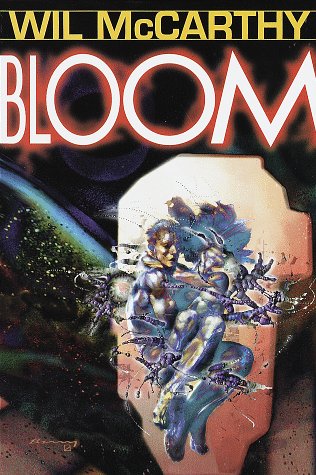
- Bloom
Wil McCarthystandalone novel1998
similar bysurvivaltensefar futurescience fictionother star systemsnanotechnologyspace+1 more
Bloom, written in 1998, is the fifth science fiction novel written by Wil McCarthy. It was first released as a hardcover in September 1998. Almost a year later, in August 1999, its first mass market edition was published. An ebook reprint was published in 2011.
- Forge of God
series2 books1987
completed
similar bysurvivaltensescience fictiondark+4 more
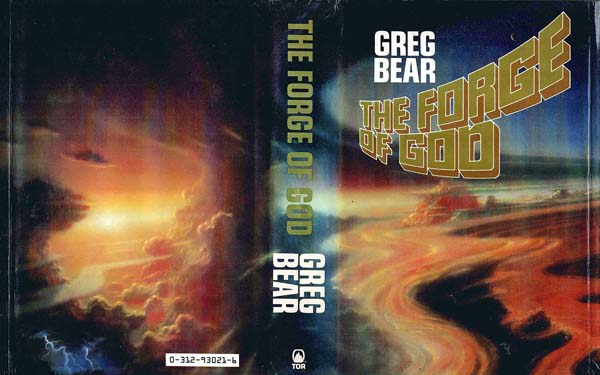
The Forge of God (1987) is Greg Bear's science fiction novel about Earth's discovery that it is the target of an incomprehensible, overwhelming alien attack, following scientists and ordinary people as they try to understand what is destroying the planet. Its 1992 sequel, Anvil of Stars, follows a group of young survivors sent on a mission of interstellar retaliation, continuing directly from the first book's ending.
- Takeshi Kovacs
series3 books2002
similar bytensefar futurescience fictioncyberpunkother star systemsdark+1 more
Takeshi Kovacs is a former elite soldier turned freelance troubleshooter in a future where human consciousness can be digitized and transferred between bodies, or sleeves, making death an inconvenience for those who can afford new ones. Richard Morgan's trilogy - Altered Carbon, Broken Angels, Woken Furies - moves Kovacs through noir-inflected mysteries on different worlds, using the resleeving premise to interrogate class, violence, and what, if anything, survives a person's original body. It became the basis for a Netflix series.
- The City in the Middle of the Night
Charlie Jane Andersstandalone novel2019
similar bysurvivaltensefar futurescience fictionother star systemsdark+1 more
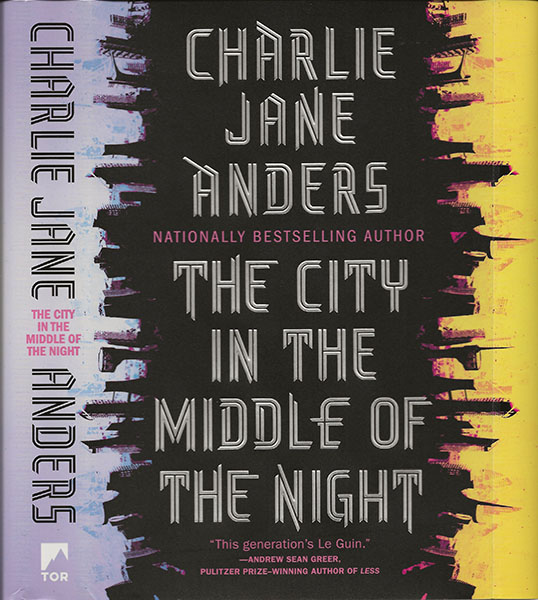
The City In the Middle of the Night is a 2019 climate-fiction novel by Charlie Jane Anders. It is set on a tidally locked planet, where human life, surrounded by hostile alien life, is mostly divided between two archetypically different urban sites. The main story focuses on two characters whose actions take them outside of the cities.
- Tunnel in the Sky
Robert A. Heinleinstandalone novel1955
similar bysurvivaltensefar futurescience fictionother star systems+1 more
As the final test of a survivalist/explorer class, teenagers are dumped on an alien planet to use their skills while awaiting pickup. But something has gone wrong, and they find they are on their own.
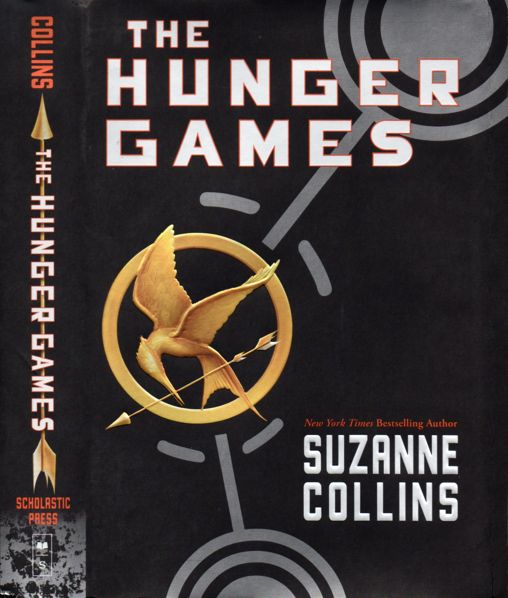
- The Hunger Games
series3 books2008
part of The Hunger Games Universe
similar bytensesurvivalfar futurescience fictiondark
The Hunger Games is a series of young adult dystopian novels written by American author Suzanne Collins. The series consists of a trilogy that follows teenage protagonist Katniss Everdeen, as well as two prequels. The Hunger Games universe is a dystopia set in Panem, a post-apocalyptic North American country consisting of the wealthy Capitol and 12 districts in varying states of poverty. As punishment for rebellion, the Capitol hosts an annual battle royale competition called The Hunger Games. Each of the 12 districts must send two children between the ages of 12 and 18 to participate, and the last surviving child is dubbed the victor.
- The Status Civilization
Robert Sheckleystandalone novel1960
similar bysurvivaltensefar futurescience fictionother star systemsdark
"Will Barrent had no memory of his crime ... but he found himself shipped across space to a brutal prison-planet. On Omega, his only chance to advance himself -- and stay alive -- is to commit an endless series of violent crimes. The average inmate's life expectancy from time of arrival is three years. Can Barrett survive, escape, and return to Earth to clear his name?" - From the cover of the 2007 Wildside paperback edition.
- Pandora
series4 books1966
similar byfar futurescience fictionsurvivalother star systems+2 more
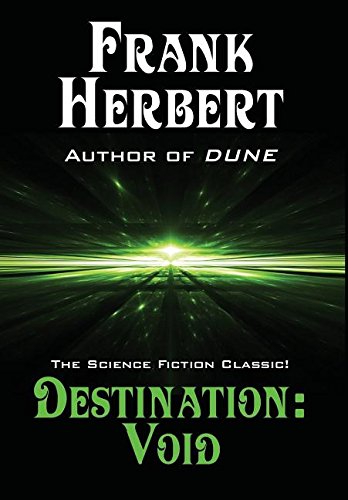
The Pandora Sequence opens with Frank Herbert's solo novel Destination: Void, in which a starship crew must jury-rig a working artificial consciousness after their vessel's control systems fail. Bill Ransom co-writes the three novels that follow, carrying the survivors to the world Pandora, where they must contend with both a manipulative machine intelligence and the planet's own hostile ecology. Across its four books the series moves from a claustrophobic ship-bound crisis to a generations-long struggle over faith, control, and survival on a dangerous new world.
- Company Wars
series7 books1981
part of Alliance-Union Universe
similar bytensefar futurescience fictionpolitical intriguespace+1 more
Company Wars gathers the novels C. J. Cherryh set during the breakaway conflict between Earth's colonial Company and the newly independent Union, within her wider Alliance-Union future history. Anchored by the Hugo Award-winning Downbelow Station, the books follow different ships, stations, and crews caught on either side, from merchanter traders to military spacers, rather than a single continuing cast. Read in any order, they build up a picture of the political and economic pressure that reshapes Cherryh's larger Alliance-Union universe.
- Berserker (Fred Saberhagen)
series59 books1963
similar bytensefar futurescience fictionother star systemsspace+2 more
The Berserker series is a series of space opera science fiction short stories and novels by Fred Saberhagen, in which robotic self-replicating machines strive to destroy all life.
- Space Winners
Gordon R. Dicksonstandalone novel1965
similar bysurvivaltensefar futurescience fictionother star systemsspace+1 more
They were humanity's hope - the first young people selected to leave Earth for study in the Galactic Federation. But something went wrong in deep space. Terribly wrong. Suddenly Jim Rawlins, Ellen Bouvier, Curt Harrington, and the squirrel-like Alien philosopher Peep were castaways, stranded on the Quarantined World of Quebahr - with no training, and little hope of rescue. Between them and the Federation's emergency beacon were primitive Mauregs, aggressive Walats, lizard-like Noifs - plus danger, conspiracy, and the mystery of an impending high-tech war on a backward, peaceful planet. Without warning, the future of two worlds - Earth and Quebahr - depended on three young humans' ability to adopt and survive.
- Falcon
Emma Bullstandalone novel1989
similar bysurvivaltensefar futurescience fictionother star systemsdarkspace+1 more
FOR NIKI FALCON, LIFE IS A RACE AGAINST TIME. AND TIME IS WINNING His planet was stolen, besieged by agents of the Central Worlds Concorde. His family was destroyed, and his world shattered before his eyes... Now Niki Falcon must fight his way to glory living on the cutting edge of danger to become one of the great star-pilots. And he's the last. For behind the young pilot's fighting power lies a deadly drug that systematically destroys his body's defenses. That gives him the strength to defend a planet—and renders him helpless to save himself.
- The Stars My Destination
Alfred Besterstandalone novel1956
similar bysurvivalfar futurescience fictionother star systemsdarkspace
When a passing spaceship refuses to rescue the lone survivor from the drifting wreck of another ship, he dedicates his life to discovering who made that decision and exacting his revenge, in the process altering human history and his own character.
- The Exile Waiting
Vonda N. McIntyrestandalone novel1975
similar bysurvivaltensefar futurescience fictionother star systemsdark
From the front flap of the Gollancz first printing: The time is the distant future and Earth has been rendered uninhabitable for much of the year by terrible storms during which its only city, Center, constructed around a natural cave system, is closed off from the outside. Mischa, a young thief whose capabilities are enhanced by hereditary mutation, is trying to escape with her drug-addicted brother from the dominance of her uncle. So when a starship arrives commanded by the twin alien pseudosibs, Subone and Subtwo, Mischa seizes her chance. She is soon assigned for training to Jan Hikaru, who quickly realises that Mischa has immense abilities. All goes well until Subone, in a moment of cruelty, lures Mischa's brother into a fight and then kills him. Mischa attacks Subone and both she and Jan have to flee the wrath of the brothers and take refuge n the deep cave system underneath the city.
- Vatta's War
series6 books2003
part of Vatta
similar bytensefar futurescience fictionother star systemspolitical intriguespace
Vatta's War is a science fiction series by American writer Elizabeth Moon, comprising five books: Trading in Danger (2003), Marque and Reprisal, Engaging the Enemy (2006), Command Decision (2007), and Victory Conditions (2008). They have been characterized as military science fiction similar in style to the works of Lois McMaster Bujold, David Weber and Walter Jon Williams.
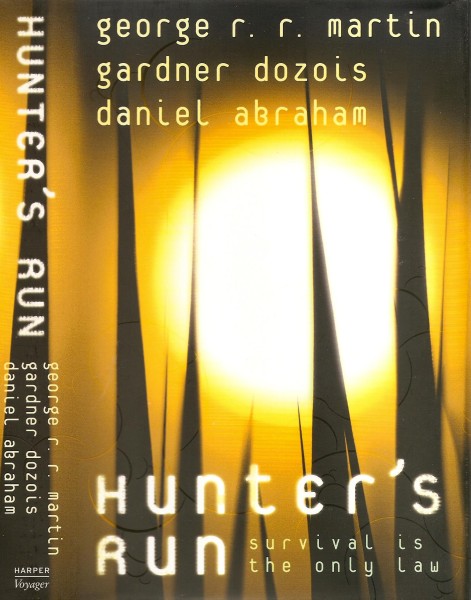
- Hunter's Run
Gardner Dozois, George R. R. Martin & Daniel Abrahamstandalone novel2007
similar bysurvivaltensefar futurescience fictionother star systems+1 more
Hunter's Run is a 2007 science fiction novel written by Daniel Abraham, Gardner Dozois and George R. R. Martin. It is a heavily rewritten and expanded version of an earlier novella called Shadow Twin.
- Moties
series4 books1974
part of CoDominium
similar byfar futurescience fictionother star systemspolitical intriguespace+1 more
Larry Niven and Jerry Pournelle's The Mote in God's Eye (1974) depicts humanity's first contact with an alien species, the Moties, set within the far-future interstellar setting of Pournelle's codominium future history. The Gripping Hand continues that first-contact crisis years later, and Outies, written by J. R. Pournelle, carries the story forward into a new generation. Together the three books trace an escalating encounter between human and Motie civilizations within the codominium universe.
- Wolfling
Gordon R. Dicksonstandalone novel1969
similar bytensefar futurescience fictionother star systemspolitical intriguespace+1 more
From the flaps of the Baen/SFBC edition: "Is Earth merely the lost colony of a superior race? - She was well over six feet tall, and beautiful in a sculpted, abstract way. She had skin the color of white onyx, and her eyes... her eyes were large and feline - a startling lemon yellow in color. She was the Princess Afuan, one of the High-born, and she had chosen the Earthman Kim Keil to return to the Throne World with her - for she had decided that his performance in the bull-ring might amuse the Emperor. She didn't know that Jim was a bull-fighter only by virtue of six months' intensive training, nor that the bull was programmed - his behavior following and impressively fierce but unswerving pattern. Jim was just another wolfling to Afuan - a lesser being from a backward colony world. Jim, however, was keenly aware that he was playing a role, one which might prove to be extremely dangerous. Up until 10 years earlier, when their first ship had reached Alpha Centauri, the people of Earth hadn't even known that the vast Empire of human-occupied worlds existed. The discovery had been a profound shock. Had we evolved independently? Or were we merely descendants of the Empire's first space pioneers - a lost colony found at last, perhaps with devastating consequences? That's what Jim Keil had to find out. Chosen from among numerous highly qualified candidates - an anthropologist trained, mentally and physically, beyond the limits of his profession - it was his mission to observe the Throne World and the High-born... to determine whether or not they posed a threat to Earth. One thing was apparent from the start. The High-born were superior beings - physically taller and stronger than other humans, endowed with faster reflexes, superior mental capacity... and extraordinary technological resources. Their contempt for the new wolfling in their midst was open, their intrigues complex. An enormous gulf separated the people of the Throne World from Earthlings. But that gulf was not so wide that Jim couldn't recognize an enemy when he met one. Clearly, if he remained merely a passive observer of the High-born, he'd never survive among them."
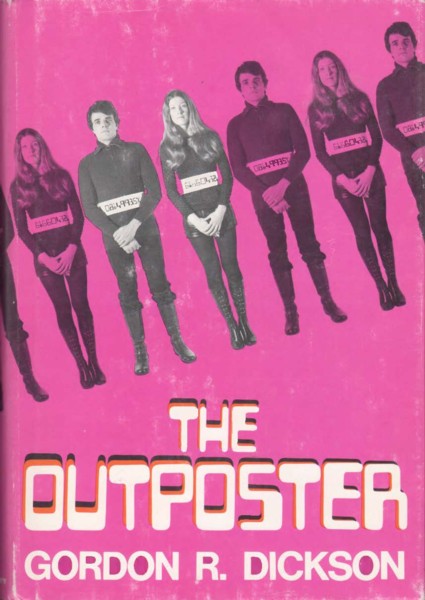
- The Outposter
Gordon R. Dicksonstandalone novel1972
similar bysurvivaltensefar futurescience fictionother star systemsspace
From the flap of the Lippincott first edition: "Rich man, poor man, beggarman, thief - the lottery played no favorites. If your number came up, you joined the rest of the losers marked for exile from overcrowded Earth. Shipped to a raw new outpost in space, you were officially called a colonist. But your whispered name was "garbage," your destination was oblivion, and you had few illusions about your chances of survival. The Outposters - a token band of specially trained personnel - were given the impossible task of guiding and protecting these outcasts in their harsh new environment. Will indifferent support from Earth, supply lines ran thin and raids by hostile aliens were increasing unchecked. Only one young Outposter, Mark Ten Roos, dared to challenge the system and change the odds. To help him, Mark hand-picked a strange assortment of allies from the new shipment of colonists: a brash opportunist, every instinct honed for personal survival; a midget woman with a professorship in philosophy; a widowed mathematician, expert in position astrophysics; an ex-marine with a dishonorable discharge. And help came to Mark from a source he had not expected - the daughter of the Outer Navy's ranking officer. When Mark Ten Roo put his plan into action, he knew he was also putting his life on the line."