More like Singularity
anchored on:science fiction
but
- Library of America P. K. Dick Collection
series9 books1962
completed
similar byscience fictionnear future+8 more
- Dune
series20 books1963
part of Dune Universe
similar byscience fictionfar future+6 more
Frank Herbert's Dune Chronicles opens with 1965's Dune, set on the desert planet Arrakis where House Atreides takes control of the only source of the vital spice melange and young Paul Atreides is pulled into a struggle over its politics and religion. Herbert carried the story forward across five further novels — Dune Messiah, Children of Dune, God Emperor of Dune, Heretics of Dune, and Chapterhouse: Dune — following Paul's line over the following millennia, before Brian Herbert and Kevin J. Anderson later extended the saga. Many other editions of these six novels are omnibus and box-set repackagings rather than separate stories.
- Uglies Universe
series9 books2005
similar byscience fictionnear futureyoung adultdystopia+6 more
Scott Westerfeld's Uglies series is set roughly three centuries in the future, after industrial collapse, in a society that classifies everyone by mandatory cosmetic-surgery life stages - Uglies, Pretties, Middle Pretties, and Crumblies - policed by the surveillance division Special Circumstances. Tally Youngblood, the original tetralogy's protagonist, initially awaits her own operation before learning it also surgically dulls independent thought, driving her toward the hidden resistance community called the Smoke. Beyond the four core novels (Uglies, Pretties, Specials, Extras), the franchise extends into other formats, including the manga-influenced graphic novel Shay's Story, co-written with Devin Grayson, and a later Impostors spin-off series.
- The Obernewtyn Chronicles
series9 books1987
similar byscience fictionsecondary worldyoung adultfar futurepsychic powers+3 more
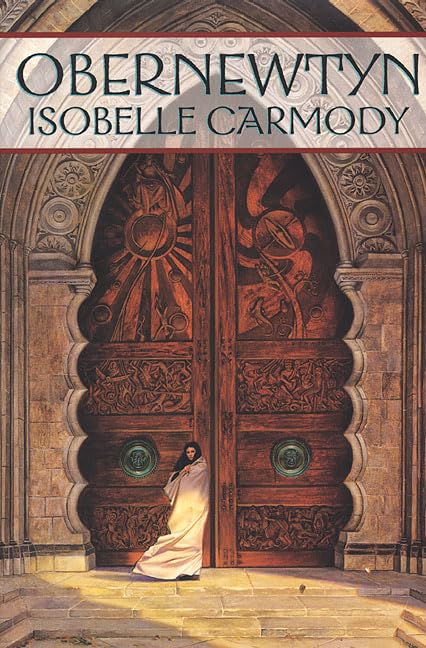
The Obernewtyn Chronicles is a series of science fiction and fantasy novels by Australian author Isobelle Carmody. The series has a post apocalyptic setting and depicts a world long after its destruction by a global nuclear holocaust.
- Maze Runner
series11 books2009
similar byscience fictiontensenear futureyoung adultdystopia+4 more
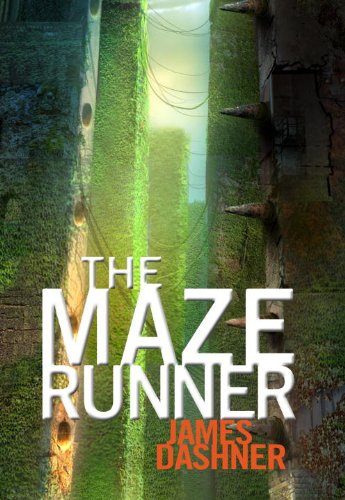
The Maze Runner is a series of young adult dystopian science fiction novels written by American author James Dashner. The series consists of the trilogy The Maze Runner (2009), The Scorch Trials (2010) and The Death Cure (2011), as well as two prequel novels, The Kill Order (2012) and The Fever Code (2016). A novella titled Crank Palace (2020) and a companion book titled The Maze Runner Files (2013) have also been released. A sequel trilogy in the series titled The Maze Cutter takes place 73 years following the events of The Death Cure and consists of the novels The Maze Cutter (2022), The Godhead Complex (2023), and The Infinite Glade (2025).
- The Testing Trilogy
series4 books2013
similar byscience fictiontensenear futureyoung adultdarkdystopia+4 more
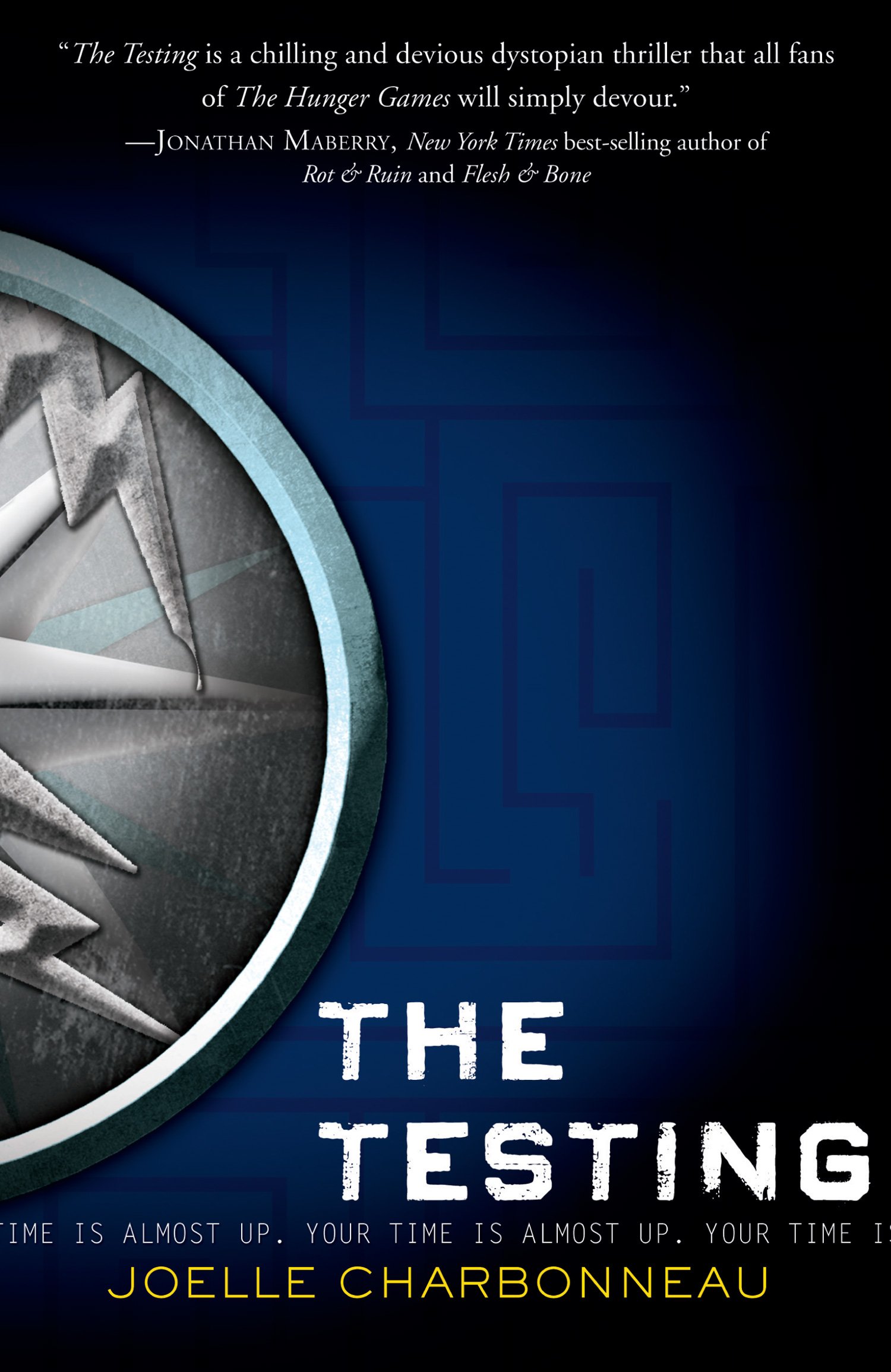
Joelle Charbonneau's Testing trilogy is set generations after a war has wrecked the world's governments and resources, when a rebuilt society selects its most promising graduates for the Testing, a competition meant to find future leaders. Cia Vale, the trilogy's narrator, discovers the Testing hides far darker stakes than she was told, and the following two books follow what she does with that knowledge.
- Ship Breaker
series3 books2010
similar byscience fictiontensenear futureyoung adultdarknorth america+5 more
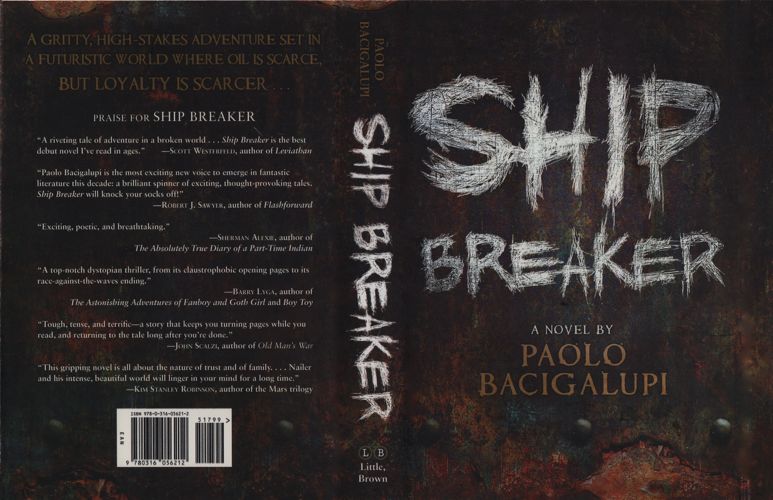
Nailer works a light-crew scavenging copper wire and scrap from beached oil tankers on a Gulf Coast reshaped by rising seas and vanished order, until a wrecked clipper ship washes ashore carrying a half-drowned girl from the wealthy world he'll never belong to. Paolo Bacigalupi's Ship Breaker follows Nailer as helping her pulls him out of his abusive father's orbit and into a much larger, more dangerous game involving her family's fortune. The sequels The Drowned Cities and Tool of War widen the same flooded, resource-scavenging future to new characters and coastlines.
- Dune Universe
universe78 books1963
Start hereDune · Start here
similar byscience fictionfar future+2 more
Arrakis. Dune. The desert planet, where empire runs on a single substance: the spice melange, which folds space, prolongs life, and unlocks prescience, and which exists nowhere else in the known universe. Frank Herbert's saga is a meditation dressed as an adventure — feudal houses and a secret sisterhood, engineered messiahs and the patient ecology of a world without water, all turning on the terrible gravity of who commands the spice. It reads like scripture and schemes like a war room, ten thousand years hence, among people who have outlawed the thinking machine and made instruments of themselves instead. At its heart stand Herbert's original six — Dune, Dune Messiah, Children of Dune, God Emperor of Dune, Heretics of Dune, Chapterhouse: Dune — a single deepening arc across millennia, arguing the whole way between prophecy and free will. Around that spine his son Brian Herbert and Kevin J. Anderson have raised a vast prequel architecture: Prelude to Dune, tracing the great houses a generation before Paul; Legends of Dune, reaching back to the crusade that broke the machines; the Schools of Dune cycle on the founding of Bene Gesserit, Mentat, and Navigator; the Caladan Trilogy and Heroes of Dune filling years the originals left in shadow. Many hands, dozens of volumes, one desert. What sets Dune apart is its refusal of the simple: religion is manufactured, heroes are hazards, and the sand itself — worm, water, ecology — acts as a political power. Begin where the universe did, with Frank Herbert's Dune (1965), and read the original six in order; you need nothing else to feel the full weight. The prequels are a country to explore afterward, taken by era. Beginnings are delicate times.
- Juliette / Shatter Me
series16 books2011
similar byscience fictionnear futureyoung adultdystopia+4 more
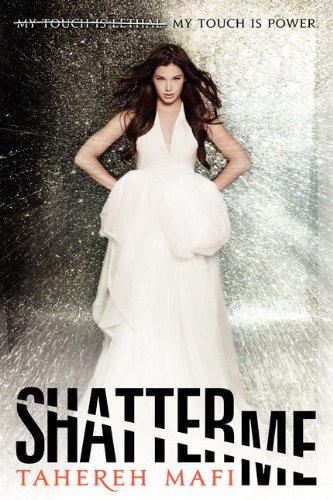
Tahereh Mafi's Shatter Me series follows Juliette, a teenager whose touch is lethally dangerous, in a dystopian future. The debut novel, Shatter Me (2011), is written in a fragmented, diary-like style with crossed-out lines reflecting its narrator's state of mind; the series has since grown to seven novels plus five companion novellas.
- The Fire Sermon
series3 books2015
similar byscience fictiontensefar futurepsychic powersdarkour worlddystopia+2 more
- Tripods
series4 books1967
completed
similar byscience fictiontensenear futureyoung adultour worldrebellion and revolution+1 more
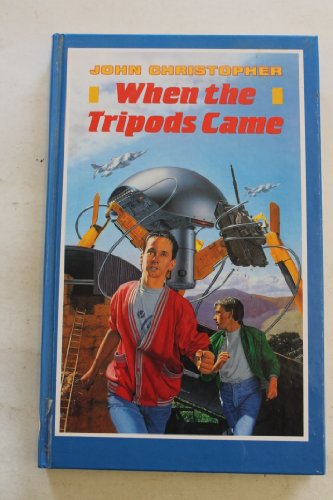
The Tripods is a series of young adult science fiction novels by John Christopher. The series takes place in a post-apocalyptic world where humanity is enslaved by "Tripods"—gigantic three-legged walking machines piloted by an alien race later identified as the "Masters". The first two books were the basis of a science fiction TV series, produced in the United Kingdom in the 1980s.
- Blade Runner Universe
series6 books1968
similar byscience fictionnear futuredarkidentity+3 more
Philip K. Dick's 1968 novel Do Androids Dream of Electric Sheep? follows bounty hunter Rick Deckard as he tracks escaped androids through an irradiated, near-abandoned San Francisco, using the hunt to probe questions of empathy and what separates human from machine. The novel became the basis for Ridley Scott's 1982 film Blade Runner, and Marvel Comics later published an illustrated adaptation of that film. Together the two trace the story's path from prose original to screen and comic-page adaptation.
- Foundation Universe
universe123 books1940
Start hereFoundation · Start here
similar byscience fictionfar future+3 more
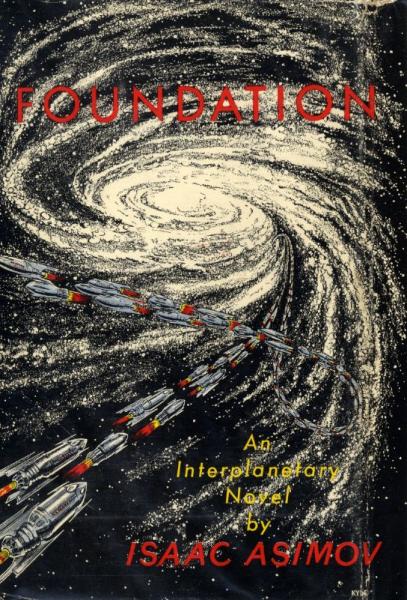
There is a science that reads the future of quadrillions the way an astronomer reads the orbits of stars. It is called psychohistory, and its equations foresee something the ruling Galactic Empire cannot admit: the throne is rotting, and thirty thousand years of barbarism are coming. One man, Hari Seldon, cannot stop the fall. He can only shorten it — by seeding a Foundation of scholars at the rim of the galaxy, a fragile institution built to carry knowledge across the dark and cut the interregnum to a single millennium. This is a universe told in the register of history itself: the long view, the calm of deep time, empires measured in centuries and men measured against them. The spine is Asimov's original trilogy — Foundation, Foundation and Empire, Second Foundation — followed decades later by the sequels Foundation's Edge and Foundation and Earth and the prequels Prelude to Foundation and Forward the Foundation. Late in life Asimov braided this in with his other future histories: the Robot novels of detective Elijah Baley and his humaniform partner R. Daneel Olivaw (The Caves of Steel, The Naked Sun, The Robots of Dawn, Robots and Empire) and the early Galactic Empire novels (Pebble in the Sky and its kin), until one continuous chronicle ran from the first thinking robots to the Second Empire. Other hands extend it — the Second Foundation Trilogy by Gregory Benford, Greg Bear, and David Brin, and shared-world spinoffs such as Robot City — so the corpus sprawls beyond a single author's tidy shelf. What distinguishes it is that the drama is intellectual: crises resolved by insight, nerve, and dialogue rather than fleets and blades, each turn hinging on the hidden logic of the Seldon Plan. Begin where readers have always begun — with Foundation, and the original trilogy in publication order. The rest opens outward from there.
- Patternist
series6 books1976
completed
similar byscience fictiondark+6 more
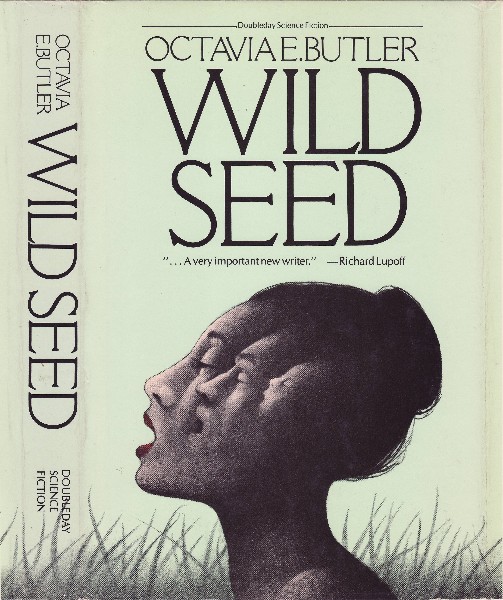
The Patternist series is a group of science fiction novels by Octavia E. Butler that detail a secret history continuing from the Ancient Egyptian period to the far future that involves telepathic mind control and an extraterrestrial plague. A profile of Butler in Black Women in America notes that the themes of the series include "racial and gender-based animosity, the ethical implications of biological engineering, the question of what it means to be human, ethical and unethical uses of power, and how the assumption of power changes people."
- Future History
series42 books1939
completed
similar byscience fiction+3 more
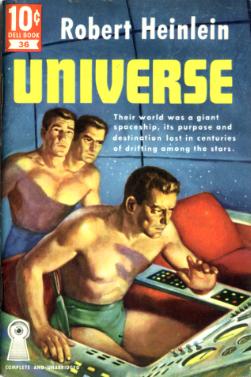
The Future History is a series of science fiction stories written by American author Robert A. Heinlein (1907–1988). It describes a projected future of the human race from the middle of the 20th century through the early 23rd century. The term Future History was coined by John W. Campbell Jr. in the February 1941 issue of Astounding Science Fiction. Campbell published an early draft of Heinlein's chart of the series in the May 1941 issue.
- The Chrysalids
John Wyndhamstandalone novel1955
similar byscience fictiontensesecondary worldfar futurepsychic powersreflective+2 more
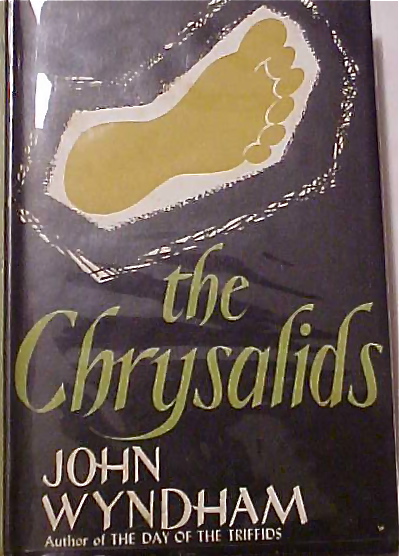
The Chrysalids is a science fiction novel by British writer John Wyndham, first published in 1955 by Michael Joseph. It is the least typical of Wyndham's major novels, but regarded by some as his best. An early manuscript version was entitled Time for a Change.
- Beyond This Horizon
Robert A. Heinleinstandalone novel1948
similar byscience fictionfar futureour worldreflectiverebellion and revolutionnorth americadystopia+3 more
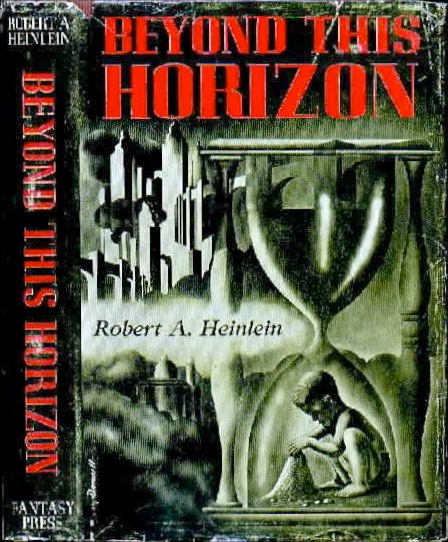
From the front flap of a 2001 Baen reprint: "Utopia has been achieved. For centuries, disease, hunger, poverty, and war have been things found only in the history tapes. And applied genetics has given men and women the bodies of athletes and a lifespan of over a century. They should all have been very happy... But Hamilton Felix is bored. And he is the culmination of a star line, each of his last thirty ancestors chosen for superior genes. Hamilton is, as far as genetics can produce one, the ultimate man. And this ultimate man can see no reason why the human race should survive, and has no intention of continuing the pointless comedy. However, Hamilton's life is about to become less boring. A secret cabal of revolutionaries who find utopia not just boring, but desperately in need of leaders who know just What Needs to be Done, are planning to revolt and put themselves in charge. Knowing of Hamilton's disenchantment with the modern world, they have recruited him to join their Glorious Revolution. Big mistake! The revolutionaries are about to find out that recruiting a superman was definitely not a good idea..."
- Arc of a Scythe
series17 books2016
similar byscience fictionyoung adultfar futureour worlddystopiaartificial intelligence+3 more
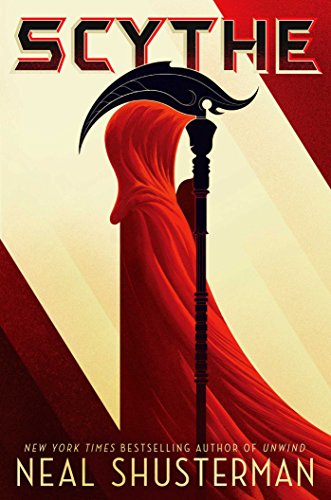
Neal Shusterman's Arc of a Scythe opens with Scythe (2016), set in a future where the AI Thunderhead has ended death and disease — except for a designated order of Scythes tasked with killing to control population. Thunderhead and The Toll continue the trilogy, joined by companion material collected as Gleanings.
- Realtime
series3 books1984
completed
similar byscience fictiontensenear future+6 more
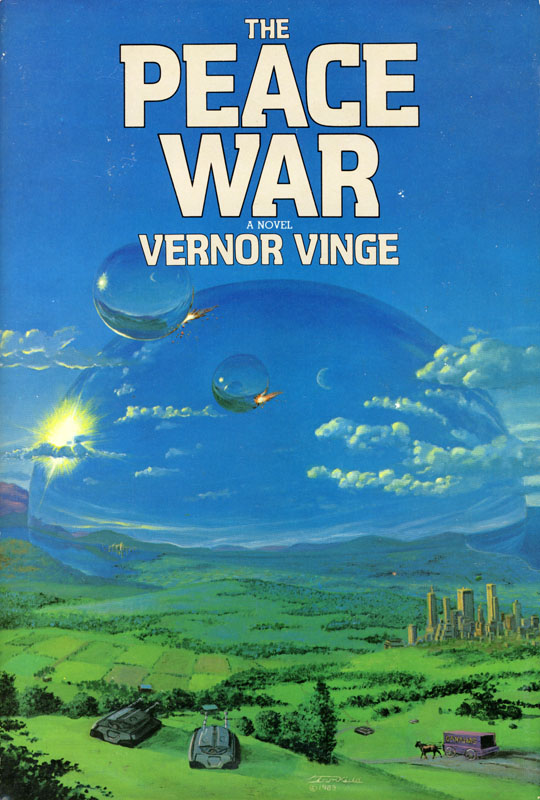
Vernor Vinge's The Peace War introduces Paul Hoehler, inventor of the 'bobble' — an impenetrable force-field technology seized by the authoritarian Peace Authority to enforce global dominance. Decades after being driven into hiding, Hoehler works in secret with fellow scientists, including a talented newcomer, to challenge the Authority's grip on the world. Marooned in Realtime continues the story decades further on; the two novels, along with the novella 'The Ungoverned', are collected together as Across Realtime.
- Gone
series9 books2008
similar byscience fictiontenseyoung adultdark+3 more
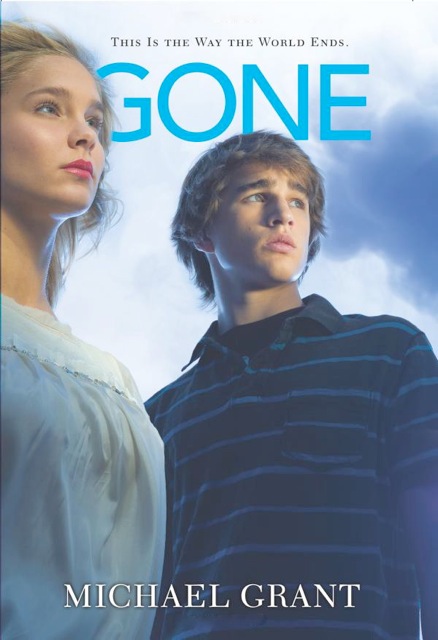
Michael Grant's Gone series begins when everyone aged fifteen and older vanishes without warning from a swath of the California coast, trapping the town of Perdido Beach inside an impenetrable barrier the survivors call the FAYZ. As children develop strange powers and food and order break down, Sam Temple and his rival, his twin brother Caine, become central to the fight for survival against human threats and the monstrous Gaiaphage. Six books (Gone through Light) close the original story; a follow-up Monster trilogy, set years later, follows a new outbreak of mutation-causing powers and a new generation of characters.
- Divergent
series10 books2011
similar byscience fictiontensenear futureyoung adultidentitynorth americadystopia+2 more
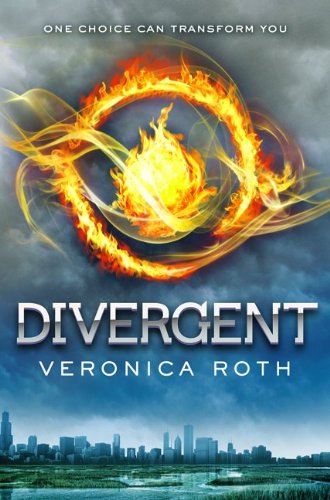
Divergent, also known as The Divergent Series, is a series of young adult dystopian novels by American novelist Veronica Roth set in a post-apocalyptic dystopian Chicago. The trilogy consists of Divergent (2011), Insurgent (2012), and Allegiant (2013). A related book, Four (2014), presents a series of short stories told from the perspective of one of the trilogy's characters, the male love interest Tobias. A later short story, We Can Be Mended (2018), serves as an epilogue five years after the events of the trilogy, again from Tobias/Four's perspective.