Loreful
HomeDiscover
Search series, authors…⌘K
Loreful

Reading orders for SF/F series and shared universes — with your place kept in every one.

Explore

UniversesSeriesWorksAuthorsAtlas

Help

FAQAboutSite map

Account & legal

Sign inCreate accountPrivacyTerms

Data

Built on ISFDB, Wikipedia, Wikidata and Open Library. Curated reading orders carry their reasoning on the page; the rest follow publication order. Data sources & licenses

© Loreful · data: ISFDB · CC BY

More like Skeleton Man

anchored on:horrornorth americacontemporarymiddle gradesurvivalcoming of age+2 more

but

Mood

The mood the book leaves you in.

  • The reading experience is propelled by journeys, exploration, and physical risk; excitement and forward momentum dominate over dread or introspection.
  • Joy and loss are deliberately mixed; the resolution grants characters something real while taking something else away, leaving warmth and sorrow together.
  • The book demands work from the reader — dense prose, difficult structure, unfamiliar ideas, or morally uncomfortable material — as part of its intended effect.
  • Grim events, cruelty, or despair dominate the atmosphere, and the book does not soften them with comfort or comic relief.
  • The atmosphere is quietly unsettling — wrongness, unease, and the uncanny pervade the book without necessarily escalating into overt horror.
  • The book is built to move the reader; character feeling is foregrounded and major scenes aim at a strong emotional response.
  • Humor is a primary aim and the prose plays for laughs — comic situations, wit, or dialogue produce sustained comedy, not occasional levity.
  • The book insists that things can improve; effort and decency are shown to matter, and the arc bends toward better outcomes even through hardship.
  • The book teaches as it goes — real facts, history, science, or craft are conveyed in enough depth that learning is part of the reading experience.
  • The book is designed to uplift and motivate, presenting perseverance or achievement in a way that invites the reader to aspire or act.
  • The overall register is cheerful and easygoing; stakes are kept gentle and the book avoids dwelling on pain or dread.
  • Withheld information drives the experience; the book sustains enigmas and secrets the reader wants resolved, whatever its genre.
  • The book is contemplative and inward-looking, giving more weight to thought, memory, and meaning than to external events.
  • The book works as comfort reading — low tension, a soothing pace, and an atmosphere the reader can unwind in.
  • Grief, loss, or melancholy set the dominant register, and the book lets sorrow stand rather than resolving it into comfort.
  • Sustained suspense is the point; the book keeps the reader braced for what happens next through danger, pressure, or impending revelation.
  • Playful invention and charm define the register — fanciful conceits, light absurdity, and a narration that delights in its own oddity.

About

What the story runs on.

  • Stories in which extraterrestrial beings are central — as characters, cultures, or the object of the plot.
  • Stories structured as a quest — a journey undertaken to find, deliver, or destroy something of great import.
  • Stories in which staying alive against nature, catastrophe, or scarcity is the central problem.
  • Stories of lovers kept apart by law, family, faith, or station, where the obstacle to love is the plot.
  • Stories in which a friendship — its making, testing, or loss — is the emotional center.
  • Stories of growing up — a young protagonist crossing from childhood into adult knowledge and responsibility.
  • Stories about who a character truly is — self-discovery, doubled lives, and the search for a self.
  • Stories about mourning — living through the death of a loved one and what loss does to the survivors.
  • Stories in which a buried family truth — hidden parentage, crimes, or shames — surfaces and reorders the present.
  • Stories driven by maneuvering for power — factions, conspiracies, and statecraft conducted in shadow.
  • Stories in which war itself is the subject — combat, occupation, and what warfare does to soldiers and civilians.
  • Stories organized around investigating a killing — the case, the clues, and the pursuit of the killer, in any genre's clothing.

Shelf

Where it sits in the library.

    • Fiction built on magic or other supernatural elements that have no scientific explanation.
    • Secondary-world fantasy at large scale, where the fate of nations or the world turns on the protagonists' struggle.
    • Fantasy set in a recognizably modern city or contemporary world where the supernatural intrudes on everyday life.
    • Fantasy that blends in horror's atmosphere and imagery, keeping a fantastical frame around grim or frightening material.
    • Action-driven fantasy following warriors or rogues with personal stakes against sorcerous threats, rather than world-spanning conflicts.
    • Fantasy set in a real historical period or a close analogue of one, with magic woven into the era.
    • Fantasy in which protagonists cross from the ordinary world into another world through a portal or similar passage.
    • Fiction that retells or reworks a traditional fairy tale in a new form or setting.
    • Fantasy drawing directly on myths, legends, and folklore, retelling them or building on their figures and logic.
    • Fantasy of ghosts, vampires, shapeshifters, psychics, and similar phenomena, usually set in an otherwise ordinary world.
    • Fiction mixing science-fictional trappings with overtly magical or impossible elements in one setting.
    • Low-stakes fantasy emphasizing comfort, community, and everyday pleasures over conflict and peril.
    • Speculative fiction of pervasive moral ambiguity, violence, and cynicism that rejects heroic conventions — fantasy and SF alike.
      • Fiction that extrapolates from science and technology — future societies, space travel, or speculative inventions — within at least nominally natural laws.
      • Science fiction of interstellar scope — starships, galactic polities, and adventure across star systems.
      • Science fiction committed to scientific rigor, where technical plausibility constrains the story.
      • Science fiction centered on armed forces and warfare, told largely from a military point of view.
      • Science fiction of networked, corporate-dominated near futures, pairing high technology with social decay.
      • Science fiction styled on nineteenth-century steam-powered technology, often in a Victorian or pseudo-Victorian setting.
      • Fiction depicting an oppressive or catastrophic society, presented as a warning.
      • Fiction set after civilization's collapse, following survivors in the ruins of the old world.
      • Fiction in which characters move between past and future, and the mechanics or consequences of that travel drive the plot.
      • Fiction exploring a world where a historical event went differently and history diverged from ours.
      • Science fiction about humanity's first encounter and communication with an alien intelligence.
      • Science fiction in which extraterrestrial forces attack or occupy Earth and humanity resists.
      • Fiction whose primary aim is to frighten or unsettle the reader through dread, menace, or the monstrous.
      • Horror of vast, indifferent, incomprehensible entities before which humanity is insignificant, in the Lovecraft tradition.
      • Horror of decaying houses, buried family secrets, and oppressive atmosphere in the Gothic literary tradition.
      • Horror centered on hauntings and the returning dead.
      • Horror located in the mind — paranoia, obsession, and unreliable perception rather than external monsters.
      • Horror built around the reanimated dead and survival amid their outbreaks.
      • Horror defined by explicit, transgressive gore that refuses to cut away from violence.
      • Speculative fiction of the strange and uncanny that resists both natural explanation and standard genre categories.
      • Fiction organized around solving a crime or puzzle, typically following an investigator toward the identification of a culprit.
      • A puzzle-first mystery that lays out clues so the culprit's identity can be deduced before the reveal.
      • Crime fiction of moral ambiguity, fatalism, and hard-edged style, set among the corrupt and the doomed.
      • A mystery following the realistic routines of police work — forensics, interviews, and case-building.
      • A gentle mystery with an amateur sleuth, a small community, and violence kept off the page.
      • A mystery set in a past era, where the investigation works within that period's methods and society.
      • Fast-paced fiction driven by imminent danger, pursuit, or high-stakes conspiracy, built to sustain tension.
      • A thriller of espionage — agents, tradecraft, and intelligence services in conflict.
      • A thriller centered on lawyers and the courtroom, where litigation carries the suspense.
      • A thriller driven by detailed contemporary or near-future technology, often military or scientific.
      • A thriller whose tension comes from mental states and manipulation between characters rather than external action.
      • Fiction whose central plot is a romantic relationship and its development toward an emotionally satisfying resolution.
      • Romance in which one or both partners are supernatural beings, blending fantasy elements into the love story.
      • A fantasy-romance hybrid in which the romantic arc and the fantasy plot carry equal weight.
      • Romance set in a past era, with courtship shaped by the period's society and manners.
      • Romance set in the present day, without supernatural or historical elements.
      • Fiction set in a real past period, where the historical setting materially shapes characters and events.
        • General and literary fiction emphasizing prose style, character interiority, or formal ambition over genre plot conventions.
        • Fiction in a realistic world where magical events occur and are treated as ordinary, in the tradition of Latin American literature.
        • Fiction that ridicules people, institutions, or society in order to criticize them.
        • Fiction of dreamlike, irrational imagery and logic that breaks from realistic representation.
        • Fiction that plays with narrative convention through metafiction, fragmentation, and self-reference.
        • Fiction propelled by journeys, exploration, and physical peril, where action and survival carry the plot.
        • Adventure fiction of ships and seafaring — naval engagements, voyages, and life at sea.
        • Fiction of the American frontier West — gunmen, ranchers, and lawmen, typically in the late nineteenth century.
        • Fiction centered on soldiers, campaigns, and the experience of warfare, historical or imagined.
          • Fiction written primarily to amuse, using comedic situations, wit, or parody as its organizing principle.
            • Multi-generational fiction following a family or dynasty across decades, with inheritance and kinship as the through-line.
              • Fiction whose world runs on explicit game mechanics — levels, stats, and skills that characters can see and exploit.
                • Fiction about costumed or superpowered heroes and their conflicts with comparable villains.

                Practical

                How long a commitment, whether it stands alone, and whether it has finished.

                Tap a chip to ask for it · tap again to rule it out · once more to clear. Numbers show what would be left.

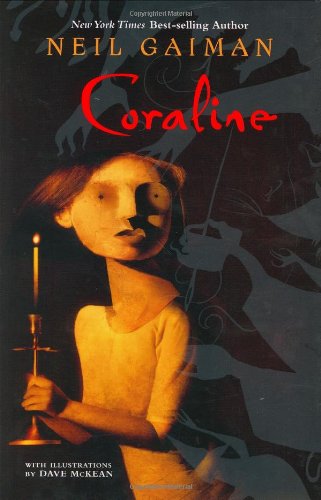
                • Cover of Coraline
                  Coraline

                  series · 2 books · 2002

                  similar byhorrorcontemporaryeerietensecoming of agenorth americamiddle grade+1 more

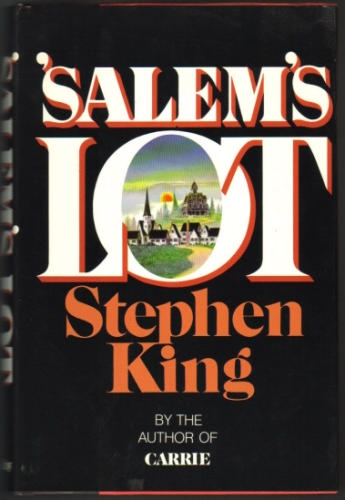
                • Cover of Jerusalem's Lot
                  Jerusalem's Lot

                  series · 3 books · 1975

                  similar byhorrorcontemporarytensenorth americaeerie+1 more

                  Stephen King's 1975 novel 'Salem's Lot follows writer Ben Mears as he returns to his childhood town of Jerusalem's Lot, Maine, only to discover that its residents are being turned into vampires by a newly arrived stranger. It transplants Gothic vampire horror into a small New England community, tracking that community's collapse under a supernatural siege. It is a single, self-contained novel.

                • Cover of Carrie
                  Carrie

                  Stephen King · standalone novel · 1974

                  similar byhorrorcontemporarynorth americatensecoming of age

                  In one way or another, everybody abused Carrie. This sixteen-year-old misfit was forbidden everything that was young and fun by her fanatical mother. She was teased and taunted by her classmates, misunderstood by her teachers, and given up as hopeless by almost everyone. But Carrie had a secret: She possessed terrifying telekinetic powers that could make inanimate objects move, a lighted candle fall, or a door lock. Carrie could make all kinds of startling bizarre, and malevolent things happen. (WorldCat)

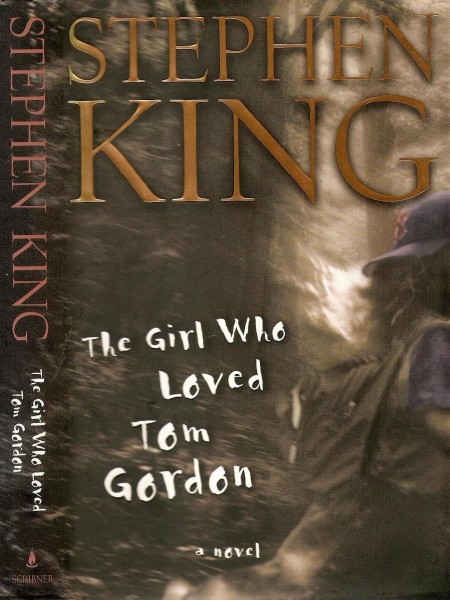
                • Cover of The Girl Who Loved Tom Gordon
                  The Girl Who Loved Tom Gordon

                  Stephen King · standalone novel · 1999

                  similar byhorrornorth americacontemporarytensesurvivalcoming of age

                  A nine year old girl becomes lost in the Maine forest while on a day hike with her family, and finds the strength to survive in her idolizing of the Red Sox closing pitcher.

                • Cover of Skeleton Man
                  Skeleton Man

                  series · 2 books · 2001

                  similar byhorrornorth americacontemporarytensesurvivalmiddle grade+2 more

                • Cover of Later
                  Later

                  Stephen King · standalone novel · 2021

                  similar byhorrornorth americacontemporaryeerietensecoming of age+1 more

                  A young boy, with the power of seeing and talking with the recently deceased, and his single mother try to avoid personal and financial disasters.

                • Cover of Harvest Home
                  Harvest Home

                  Thomas Tryon · standalone novel · 1973

                  similar byhorrornorth americacontemporaryeerietensefamily secrets

                  What is the dark secret the people (especially the women!) of Harvest Home are hiding? A family tries to get out of the City and finds the perfect home for their young daughter complete with folk remedies for her allergies and sensitivities in the local wisewoman. But is there something sinister under the surface of the charming little town?

                • Cover of White Smoke
                  White Smoke

                  Tiffany D. Jackson · standalone novel · 2021

                  similar byhorrornorth americacontemporaryeerietensefamily secrets+1 more

                  Marigold is running from ghosts. The phantoms of her old life keep haunting her, but a move with her newly blended family from their small California beach town to the embattled Midwestern city of Cedarville might be the fresh start she needs. Her mom has accepted a new job with the Sterling Foundation that comes with a free house, one that Mari now has to share with her bratty ten-year-old stepsister, Piper. The renovated picture-perfect home on Maple Street, sitting between dilapidated houses, surrounded by wary neighbors has its... secrets. That’s only half the problem: household items vanish, doors open on their own, lights turn off, shadows walk past rooms, voices can be heard in the walls, and there’s a foul smell seeping through the vents only Mari seems to notice. Worse: Piper keeps talking about a friend who wants Mari gone. But "running from ghosts" is just a metaphor, right? As the house closes in, Mari learns that the danger isn’t limited to Maple Street. Cedarville has its secrets, too. And secrets always find their way through the cracks.

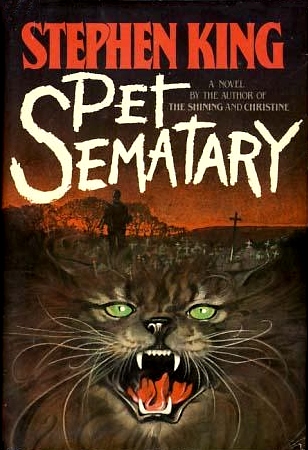
                • Cover of Pet Sematary
                  Pet Sematary

                  Stephen King · standalone novel · 1983

                  similar byhorrornorth americacontemporaryeerie+1 more

                  Pet Sematary is a 1983 horror novel by American writer Stephen King. It tells the story of a family moving to Maine and settling closer to a pet cemetery in the woods, which is home to a terrifying force that brings death and sorrow. The novel was nominated for a World Fantasy Award for Best Novel in 1984, and adapted into two films: one in 1989 and another in 2019 as well as several spinoffs.

                • Cover of Wait Till Helen Comes
                  Wait Till Helen Comes

                  Mary Downing Hahn · standalone novel · 1986

                  similar byhorrornorth americacontemporaryeerietensemiddle grade+1 more

                  "Molly and Michael dislike their spooky new stepsister Heather but realize that they must try to save her when she seems ready to follow a ghost child to her doom." (source: Open Library.

                • Cover of Insomnia
                  Insomnia

                  Stephen King · standalone novel · 1994

                  similar byhorrornorth americacontemporaryeerietense

                  When an elderly widower in Maine finds himself with sleep maintenance insomnia, awakening early every morning, this state of exhaustion allows him to perceive a higher state of reality, where he learns of an impending disaster which will shake not just the Earthly reality. but all the higher realities, and which he has been recruited to prevent.

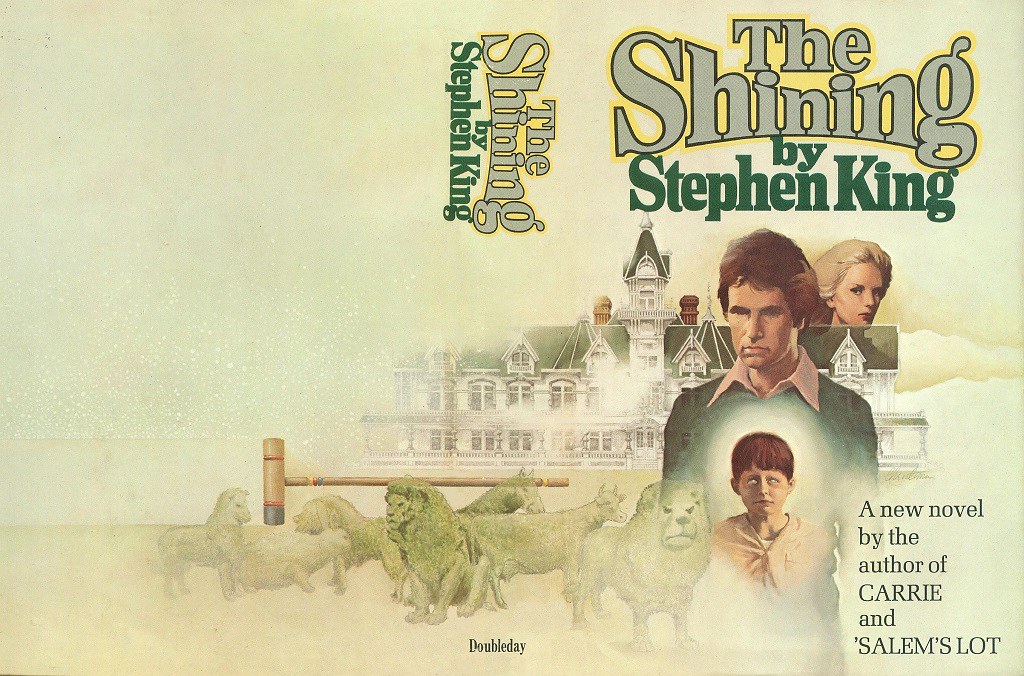
                • Cover of The Shining
                  The Shining

                  series · 5 books · 1977

                  similar byhorrornorth americacontemporarytense+1 more

                  Stephen King's 1977 novel The Shining follows the Torrance family as winter caretakers of the isolated, malevolent Overlook Hotel, where father Jack is gradually consumed by the hotel's influence while his young son Danny's psychic "shining" draws its attention. Doctor Sleep (2013) picks up the story decades later, following Danny as an adult still marked by that childhood ordeal. Together the two form a horror duology spanning nearly forty years of real-world publication.

                • Cover of Desperation/Regulators
                  Desperation/Regulators

                  series · 2 books · 1996

                  similar byhorrornorth americacontemporarytensesurvival

                  Stephen King published Desperation and The Regulators simultaneously in 1996, the first under his own name and the second under his Richard Bachman pseudonym. The two novels are mirror-universe companions: largely the same cast of characters appears in both, recast into different roles and circumstances, with each book's story driven by the same malevolent supernatural entity, Tak.

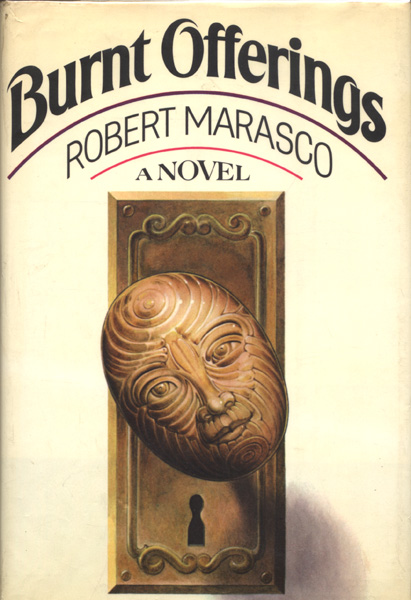
                • Cover of Burnt Offerings
                  Burnt Offerings

                  Robert Marasco · standalone novel · 1973

                  similar byhorrornorth americacontemporaryeerietense+1 more

                  Burnt Offerings is a 1973 American horror novel by Robert Marasco. Its plot follows a family who move into a summer home where each member is plagued by unusual experiences and personality changes. Published by Delacorte Press, the novel had originally been conceived as a screenplay before Marasco rewrote it into a novel. It was adapted into a film of the same name in 1976. The novel was reprinted in 2015 by Valancourt Press.

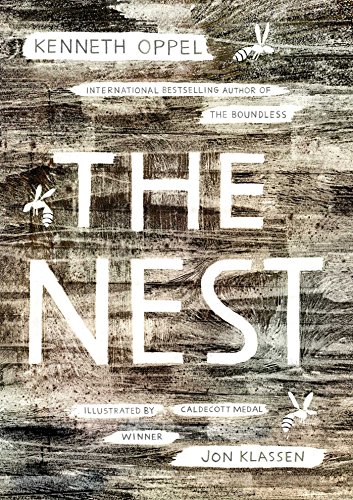
                • Cover of The Nest
                  The Nest

                  Kenneth Oppel · standalone novel · 2015

                  similar byhorrorcontemporaryeerietensenorth americamiddle grade+1 more

                  For some kids summer is a sun-soaked season of fun. But for Steve, it s just another season of worries. Worries about his sick newborn baby brother who is fighting to survive, worries about his parents who are struggling to cope, even worries about the wasp s nest looming ominously from the eaves. So when a mysterious wasp queen invades his dreams, offering to fix the baby, Steve thinks his prayers have been answered. All he has to do is say Yes. But yes is a powerful word. It is also a dangerous one. And once it is uttered, can it be taken back?

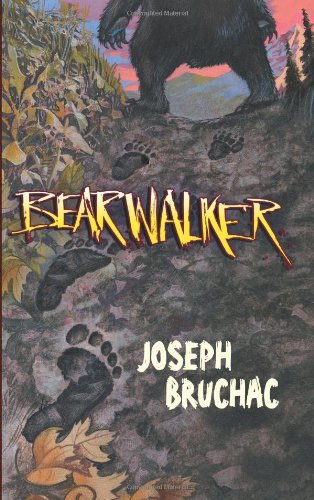
                • Cover of Bearwalker
                  Bearwalker

                  Joseph Bruchac · standalone novel · 2007

                  similar byhorrornorth americacontemporaryeerietensecoming of age+1 more

                  As a member of the Mohawk Bear Clan, Baron has always been fascinated by bears — their gentle strength and untamed power. But the Bearwalker legend, passed down by his ancestors, tells of a different kind of creature — a terrible mix of human and animal that looks like a bear but is really a bloodthirsty monster. The tale never seemed to be more than a scary story. Until now.During a class camping trip deep in the Adirondacks, Baron comes face-to-face with an evil being that is all too real. Although he knows how the story ends in the legend, Baron must overcome this Bearwalker on his own terms.

                • Cover of The Institute
                  The Institute

                  Stephen King · standalone novel · 2019

                  similar byhorrornorth americacontemporarytensesurvivalcoming of age

                  The Institute is a 2019 American science fiction-horror novel by Stephen King, published by Scribner. The book follows twelve-year-old genius Luke Ellis. When his parents are murdered, he is kidnapped by intruders and awakens in the Institute, a facility that houses other abducted children who have telepathy or telekinesis. The Institute was published on September 10, 2019, and met with generally positive reviews.

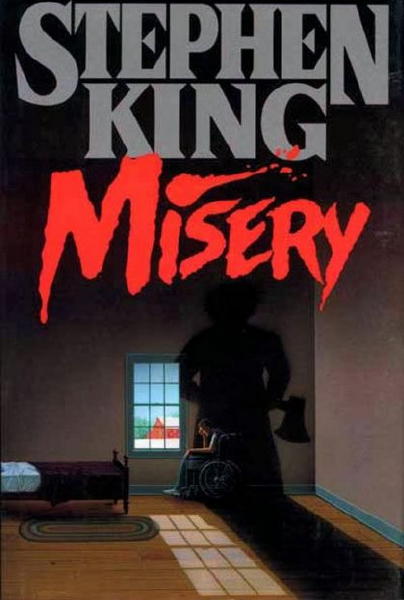
                • Cover of Misery
                  Misery

                  Stephen King · standalone novel · 1987

                  similar byhorrornorth americacontemporarytensesurvival

                  Novelist Paul Sheldon finishes the manuscript that will finally kill off Misery Chastain, the heroine who made his career, when a snowstorm sends his car off a Colorado road. He wakes with both legs shattered, in the care of Annie Wilkes, a former nurse and 'number one fan' with no intention of taking him to a hospital. Annie manages his pain with drugs he comes to depend on, and her moods swing between doting and violent. When she learns Misery doesn't survive his new manuscript, her reaction makes clear Paul isn't just her patient, he's her hostage. A Stephen King novel about a writer at his most devoted fan's mercy.

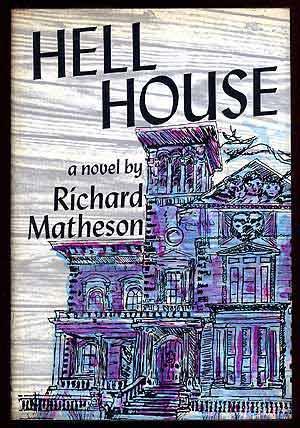
                • Cover of Hell House
                  Hell House

                  Richard Matheson · standalone novel · 1971

                  similar byhorrornorth americacontemporaryeerietense

                  A dying millionaire wants proof, once and for all, of what happens after death, and hires physicist-turned-parapsychologist Dr. Lionel Barrett to spend a week investigating the Belasco House in Maine -- a mansion so thoroughly associated with atrocity that it's known simply as Hell House, where every previous investigation has ended in death or madness. Barrett brings his wife Edith along with two mediums, the spiritualist Florence Tanner and Benjamin Franklin Fischer, survivor of an earlier disastrous visit, whose scientific skepticism and spiritualist convictions clash from the first night inside. Richard Matheson's haunted-house novel, later filmed as The Legend of Hell House.

                • Cover of Near the Bone
                  Near the Bone

                  Christina Henry · standalone novel · 2021

                  similar byhorrornorth americacontemporaryeerietensesurvival

                  Mattie can't remember a time before she and William lived alone on a mountain together. She must never make him upset. But when Mattie discovers the mutilated body of a fox in the woods, she realizes that they’re not alone after all. There's something in the woods that wasn’t there before, something that makes strange cries in the night, something with sharp teeth and claws. When three strangers appear on the mountaintop looking for the creature in the woods, Mattie knows their presence will anger William. Terrible things happen when William is angry.

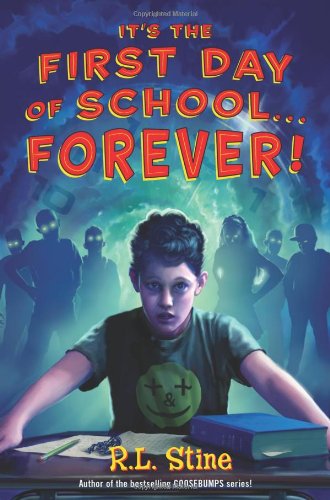
                • Cover of It's the First Day of School ... Forever!
                  It's the First Day of School ... Forever!

                  R. L. Stine · standalone novel · 2011

                  similar byhorrorcontemporaryeerietensesurvivalnorth americamiddle grade+1 more

                  It's the First Day of School...Forever! is a children's horror novel by R. L. Stine. The novel is about a middle school boy who relives a terrifying first day of school over and over again. It was reported in 2011 that the book was in works for a film. An audio book of the novel was released.

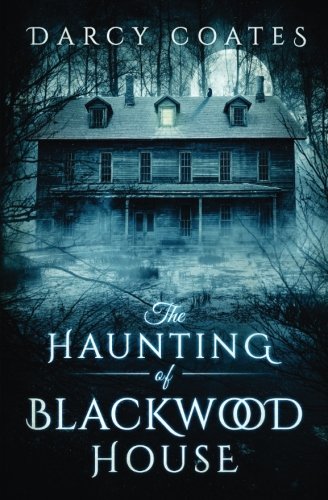
                • Cover of The Haunting of Blackwood House
                  The Haunting of Blackwood House

                  Darcy Coates · standalone novel · 2015

                  similar byhorrorcontemporaryeerietensesurvivalnorth americafamily secrets

                  "Could you survive a week in a haunted house? Mara is the daughter of spiritualists. Her childhood was filled with séances, scam mediums and talk of ghostly presences. When Mara finally left her family's home, she vowed she would never allow superstition or false religion into her life again. Now she's ready to start over with her fiancé, Neil, in a world based on rationality and facts. But her past isn't ready to let her go just yet. Mara and Neil purchase Blackwood House, a derelict property outside of town. They're warned about strange occurrences in the crumbling building. Doors open by themselves, voices whisper in the night, bloody handprints appear on the walls, and cold spots linger in the basement, where the house's original owner was murdered. But Blackwood was dirt-cheap and came with a large plot of overgrown land. Mara loves her new home, and disregards the warnings. Because ghosts aren't real...are they?" – quoted from this book's product page on Amazon.com as of 2018-01-20.

                • Cover of Cell
                  Cell

                  Stephen King · standalone novel · 2006

                  similar byhorrorcontemporarytensesurvivalnorth america

                  In Cell, King taps into readers fears of technological warfare and terrorism. Mobile phones deliver the apocalypse to millions of unsuspecting humans by wiping their brains of any humanity, leaving only aggressive and destructive impulses behind. Those without cell phones, like illustrator Clayton Riddell and his small band of "normies," must fight for survival, and their journey to find Clayton's estranged wife and young son rockets the book toward resolution.

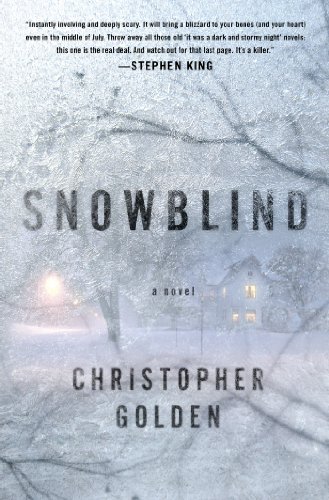
                • Cover of Snowblind
                  Snowblind

                  Christopher Golden · standalone novel · 2014

                  similar byhorrornorth americacontemporaryeeriesurvival+1 more

                  "SNOWBLIND is a thrilling contemporary ghost story with both horror and heart. The small New England town of Coventry is haunted by its memories of a deadly winter... in which loved ones were lost, families torn apart, and a town buried in a terrible blizzard. Now, twelve years later, the people plagued by their memories of that storm are haunted once again as a new storm approaches, promising to wreak new havoc. Old ghosts trickle back, and this storm will prove even more terrifying and deadly than the last. With richly textured characters, scarred and haunted by the ghosts of those they loved most, Snowblind reinvents the ghost story for today's world. Spellbinding in scope and rooted deeply in classic storytelling, Christopher Golden has written a chilling masterpiece that is the best work of his career and a standout supernatural thriller"--