More like Small World
but
- The Fountains of Paradise
Arthur C. Clarkestandalone novel1979
similar byspace station
The Fountains of Paradise is a 1979 science fiction novel by British writer Arthur C. Clarke. Set in the 22nd century, it describes the construction of a space elevator. This "orbital tower" is a giant structure rising from the ground and linking with a satellite in geostationary orbit at the height of approximately 36,000 kilometres. Such a structure would be used to raise payloads to orbit without the expense of using rockets. The novel won both the Hugo and Nebula Awards for Best Novel.
- Islands in the Sky
Arthur C. Clarkestandalone novel1952
similar byspace station
Islands in the Sky is a 1952 science fiction novel by British writer Arthur C. Clarke. It is one of his earliest works. Clarke wrote the story as a travelogue of human settlement of cislunar space in the last half of the twenty-first century.
- Between Planets
Robert A. Heinleinstandalone novel1951
similar by+1 more
A teenager is pulled from his earthside boarding school when tensions rise between Earth and the Venus and Mars colonies. He is charged to bring an artifact to his scientist parents on Mars, but when hostilities break out, flights are cancelled and he is put down on Venus.
- Company Wars
series7 books1981
part of Alliance-Union Universe
similar by+1 more
Company Wars gathers the novels C. J. Cherryh set during the breakaway conflict between Earth's colonial Company and the newly independent Union, within her wider Alliance-Union future history. Anchored by the Hugo Award-winning Downbelow Station, the books follow different ships, stations, and crews caught on either side, from merchanter traders to military spacers, rather than a single continuing cast. Read in any order, they build up a picture of the political and economic pressure that reshapes Cherryh's larger Alliance-Union universe.
- Earth
David Brinstandalone novel1990
similar by+1 more
Earth is a 1990 science fiction novel by American writer David Brin. The book was nominated for the Hugo and Locus Awards in 1991.
- Nemesis
Isaac Asimovstandalone novel1989
similar by+1 more
The expanding population and ensuing ecological degradation of Earth leads to the establishment of orbital habitats which continue to compete with each other as well as with Earth, leading one of them to abandon the Solar System entirely, to establish itself around a neighboring star.
- Venus Equilateral
series15 books1942
completed
similar by+1 more
The Venus Equilateral series is a set of 13 science fiction short stories by American writer George O. Smith, concerning the Venus Equilateral Relay Station, an interplanetary communications hub located at the L4 Lagrangian point of the Sun-Venus system. Most of the stories were first published in Astounding Science Fiction between 1942 and 1945.
- Colony
Ben Bovastandalone novel1978
similar byspace station
Colony continues the story Ben Bova began in Millennium, following astronaut-turned-administrator Chet Kinsman years later as the head of an orbiting space habitat that has become Earth's only real refuge from a planet buckling under overpopulation, food shortages and unrest. Getting a place in the habitat is a matter of life and death for millions who will never be chosen, and as Earth's governments grow more desperate to control or dismantle the colony outright, Kinsman has to decide how far he'll go to protect the world he's built off-world. Bova later folded both novels together into the omnibus The Kinsman Saga. Part of Ben Bova's Chet Kinsman series.
- To the Stars (Leinster)
series3 books1953
completed
similar by+1 more
Murray Leinster's Joe Kenmore trilogy follows a master machinist's son through the Cold War-era race to build and defend America's first space station, then a rescue tug, and finally a lunar outpost, in three techno-thriller adventures blending realistic 1950s spaceflight speculation with sabotage plots. Space Platform (1953) introduces Kenmore amid attempts to sabotage the orbital station project; Space Tug and City on the Moon carry the same hardware-focused approach into orbit and onto the Moon.
- Seveneves
Neal Stephensonstandalone novel2015
similar by+1 more
Seveneves is a science fiction novel by Neal Stephenson published in 2015. The story tells of the desperate efforts to preserve Homo sapiens in the wake of apocalyptic events on Earth after the unexplained disintegration of the Moon and the remaking of human society as a space-based civilization after a severe genetic bottleneck.
- Sector General
series36 books1957
similar byspace station
Sector General is a series of twelve science fiction novels and various short stories (1957–1999) by the Northern Irish author James White. The series derives its name from the setting of the majority of the books, the Sector 12 General Hospital, a large hospital space station located in deep space, designed to treat a wide variety of life forms with a wide range of ailments and life-support requirements, and to house an equally diverse staff. The Hospital was founded to promote peace after humanity's first interstellar war, and in the fourth book the authorities conclude that its emergency services are the most effective way to make peaceful contact with new species.
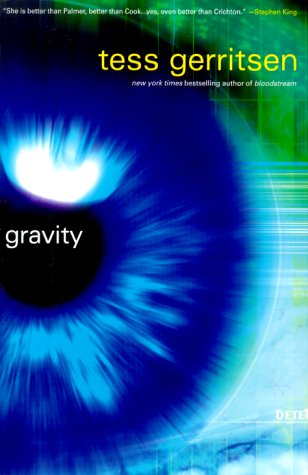
- Gravity
Tess Gerritsenstandalone novel1999
similar byspace station
Medical thriller set aboard the International Space Station where astronauts are dying one by one from a mysterious disease. Dr Emma Watson is a research physician on a mission to study living organisms in space. But the mission aboard the space station turns into a nightmare.
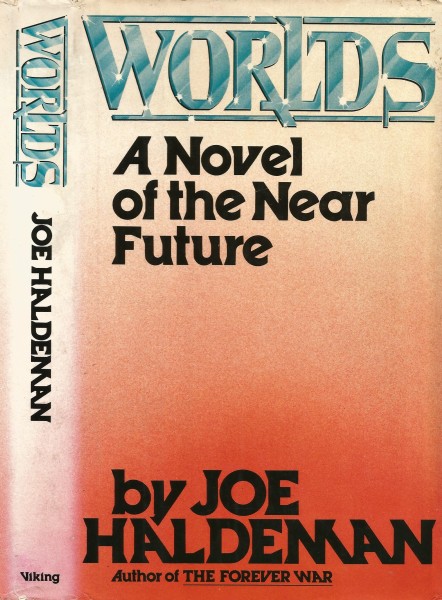
- Worlds (Joe Haldeman)
series3 books1981
similar by+1 more
Joe Haldeman's trilogy is set among the Worlds, a network of orbital satellite colonies whose half-million residents watch Earth tear itself apart in a devastating war. Beginning with Worlds and continuing through Worlds Apart and Worlds Enough and Time, the series follows New New York's Marianne O'Hara as she's forced to choose between staying to help Earth's survivors and leading her people toward a new home among the stars.
- Paratwa Saga
series4 books1987
similar by+1 more
Christopher Hinz's Paratwa Saga is set in orbital colonies built above a devastated, abandoned Earth, opening with Liege-Killer as those colonies confront the return of a genetically engineered assassin race, the Paratwa, thought long eliminated. The trilogy (continued in Ash Ock and The Paratwa) plays out as a blend of post-apocalyptic SF and thriller, with the colonies' survival resting on hunting down a threat their ancestors created and thought they'd destroyed. A later fourth book returned to the setting decades after the original trilogy closed.
- Aftermath (Charles Sheffield)
series2 books1998
completed
similar by+1 more
Charles Sheffield's Aftermath duology opens with a near-future Earth devastated by a nearby supernova's radiation, which knocks out electronics and forces survivors to rebuild without most modern technology. Starfire continues years later as a second, larger stellar threat approaches and humanity must recover enough capability to respond. Sheffield, a physicist by training, grounds both books in hard-science consequences of the disaster rather than treating it as mere backdrop.
- An Accidental Goddess
Linnea Sinclairstandalone novel2002
similar byspace station
From the back cover of the Bantam paperback: "Raheiran Special Forces captain Gillaine Davre has just woken up in some unknown space station, wondering where the last three hundred years have gone. The last thing she remembers is her ship being attacked. Now it seems that while she was time-traveling, she was ordained a goddess... Gillaine's only home of survival rests with dangerously seductive Admiral Mack Makarian, who suspects her of being a smuggler - or worse. But he can't begin to imagine the full extent of it. For Gillaine is now Lady Kiasidira, holy icon of countless believers, including Mack - a man who inspires feelings in her that are far from saintly... feelings she knows are mutual. But when their flirtation is interrupted by a treacherous enemy from the past, Gillaine's secret - and secret desires - could destroy them both..."
- Juniper Time
Kate Wilhelmstandalone novel1979
similar byspace station
From back cover of Pocket Books paperback, June 1980: In a world now ravaged by drought and famine. Jean Brighton and Arthur Cluny grew up in the limelight, children of space pioneers who built the orbiting space laboratory. Now Arthur carried on his father's work at the lab. But Jean fled into isolation, harboring a hatred for the space station and the intrigue that surrounded it. How could she know that in her desert solitude she would hold the key to the future of the space station she so desperately wanted to forget... that for a moment international peace would rest in her hands... or that Arthur would come to wrest from her a secret she would rather not face, a secret that could return the world to... JUNIPER TIME?
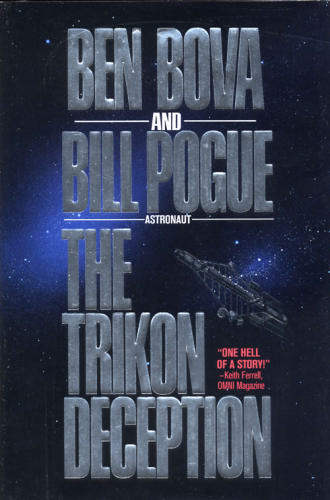
- The Trikon Deception
Ben Bova & Bill Poguestandalone novel1992
similar byspace station
The Trikon is a shared industrial space laboratory that was built in orbit, designed as the only risk-free environment for genetic experiments too controversial or dangerous to be performed on Earth.
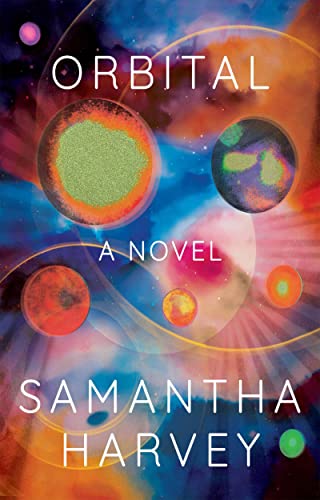
- Orbital
Samantha Harveystandalone novel2023
similar byspace station
Orbital is a 2023 novel by English novelist Samantha Harvey that incorporates elements of science fiction, literary fiction, and philosophical fiction, published by Jonathan Cape in the UK and by Grove Atlantic in the US. It follows six fictional astronauts over 24 hours on an orbiting space station.
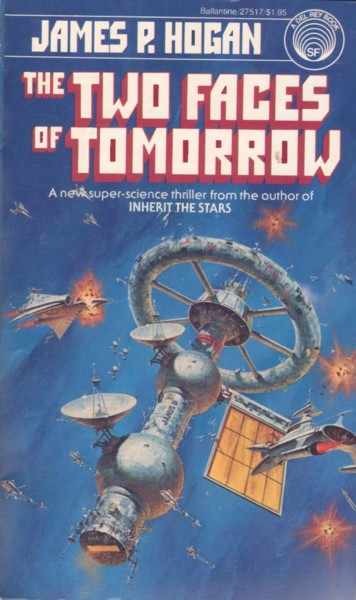
- The Two Faces of Tomorrow
James P. Hoganstandalone novel1979
similar byspace station
From the back cover: SURVIVAL TEST Civilization had grown so complex that only a world-wide computer network could control everything. But the computer was only logical -- it lacked common sense. And its all-too-logical decisions were beginning to cause too many near fatal accidents. The solution was on the drawing boards -- a universal self-aware and self-programming computer, equipped with judgment. But... could it be controlled? Or would it attempt to take over, disregarding its creators? If so, could it be turned off? Raymond Dyer and his team of computer specialists knew they had to find answers to these questions, but the project was to dangerous to test on Earth. So they installed the super computer on an orbiting satellite and programmed it to survive at all costs. Then they sent a group of men to attack the computer... to goad it into trying to kill them. They they would turn it off. Obviously if things went wrong, they might lose a few men -- but the satellite and the computer could always be destroyed. Obviously... But the computer didn't quite see it that way!
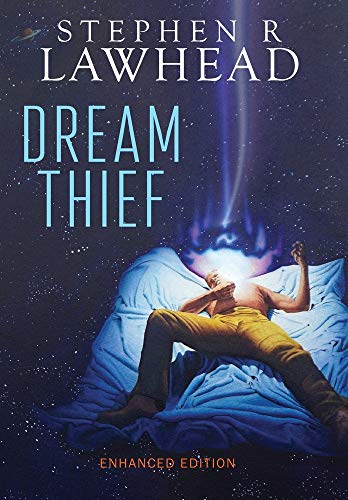
- Dream Thief
Stephen R. Lawheadstandalone novel1983
similar byspace station
Dr. Spencer Reston, a scientist doing dream research aboard the space station, Gotham, begins having unexplained blackouts and concludes that someone is deliberately tampering with his mind.
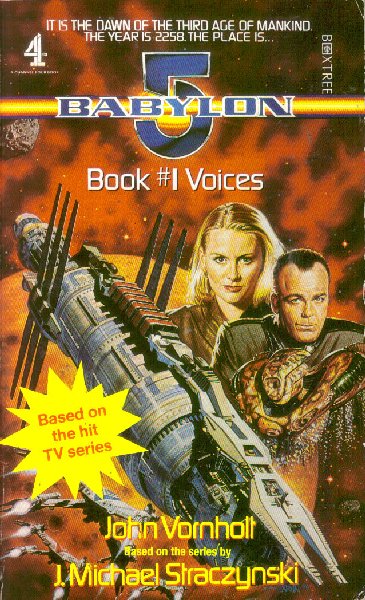
- Babylon 5
series22 books1995
part of Babylon 5 Universe
similar by+1 more
Babylon 5 is an American space opera television series created by writer and producer J. Michael Straczynski, under the Babylonian Productions label, in association with Straczynski's Synthetic Worlds Ltd. and Warner Bros. Domestic Television. After the successful airing of a test pilot movie on February 22, 1993, Babylon 5: The Gathering, Warner Bros. commissioned the series for production in May 1993 as part of its Prime Time Entertainment Network (PTEN). The show premiered in the United States on January 26, 1994, and ran for five 22-episode seasons.
- In the Company of Others
Julie E. Czernedastandalone novel2001
similar byspace station
When humans set out to explore the universe, they found a number of planets suitable for colonizing. The one thing they didn't find was intelligent life. And so the terraforming of worlds began, with eager immigrant families temporarily housed in space stations till their new home planets were ready. But the technicians made one all important mistake by introducing the alien Quill to worlds where they did not belong. The Quill were supposed to be destroyed when the crews finished their work, but some survived, multiplied, and mutated till they were no longer harmless. They were deadly. Suddenly mankind was in retreat, leaving colonists stranded in space. In the ensuing chaos many stations failed. For the survivors, the only hope lay in finding a way to wipe out the Quill. Earth scientist, Dr. Gail Smith, thought one special human, Aaron Pardell, might hold the answer. Found as a baby and raised by a stationer in the "Outsider" settlement that clung to Thromberg Station, Aaron may have survived Quill contact. Still, finding Aaron and winning his help might be the least of Dr. Smith"s problems.... (from the back cover of the DAW Books first edition)