More like Solid Objects
but
- The Lord of the Rings
series13 books1954
part of Tolkien's legendarium
similar by+1 more
The Lord of the Rings is an epic high fantasy novel written by the English author and scholar J. R. R. Tolkien. Set in Middle-earth, the story began as a sequel to Tolkien's 1937 children's book The Hobbit but eventually developed into a much larger work. Written in stages between 1937 and 1949, The Lord of the Rings is one of the best-selling books ever written, with over 150 million copies sold.
- Tarzan
series50 books1912
part of Tarzan Universe
similar by+1 more
Tarzan is a series of 24 adventure novels written by Edgar Rice Burroughs (1875–1950) and published between 1912 and 1966, followed by several novels either co-written by Burroughs, or officially authorized by his estate. There are also two works written by Burroughs especially for children that are not related to the main series.
- The Hobbit
series2 books1937
completed
part of Tolkien's legendarium
similar byfantasy
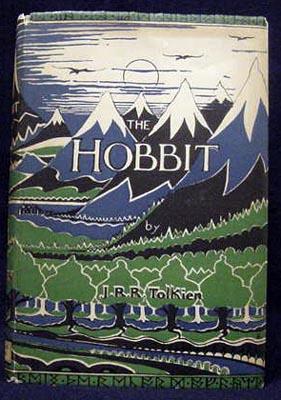
The Hobbit (1937) is J. R. R. Tolkien's children's fantasy novel following the reluctant burglar Bilbo Baggins, who joins a company of dwarves and the wizard Gandalf on a journey to reclaim treasure guarded by the dragon Smaug. It stands as a complete adventure on its own, but shares its setting with the rest of Tolkien's legendarium and leads into the events of The Lord of the Rings.
- Peter Pan Universe
universe112 books1902
Start herePeter Pan · Start here
similar byfantasy
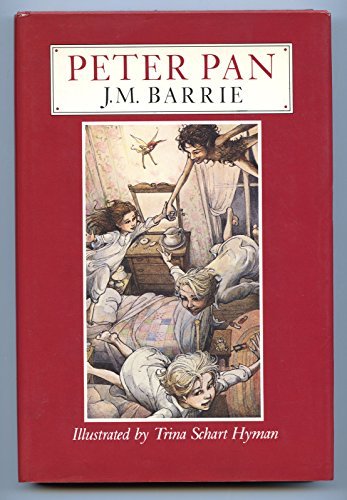
Second star to the right, and straight on till morning — and there it is, the island that every child dreams once and then, growing up, contrives to forget. Neverland: mermaids in the lagoon, a ticking crocodile with a clock in its belly, a pirate nursing his severed hand, and above it all the boy who will not grow up, forever flying, forever heartless in the lovely careless way that only children are. It begins with J. M. Barrie — the 1904 stage play, the chapters of Kensington Gardens, and the novel Peter and Wendy that fixed Peter, Wendy, Tinker Bell, Hook and the Lost Boys in place. From that small window a wide world has flown. Dave Barry and Ridley Pearson supply the how-it-all-began in their Starcatchers books, chasing falling starstuff aboard a doomed ship to explain why one orphan came to fly and never age. A whole bright shelf tends Tinker Bell's Pixie Hollow — the Disney Fairies and Fairy Haven tales, Kiki Thorpe's Never Girls — while Heidi Schulz hands the wheel to Hook's own daughter, and stranger, dimmer corners carry the island into far darker weather. Many hands, one archipelago; no single map governs them all. What sets it apart is the sweetness with a blade in it — wonder shadowed always by the ache of leaving, of mothers who keep the window open and children who fly home too late. Newcomers should begin where it began, with Barrie's Peter and Wendy, then, for the origin, take the Starcatchers books in their own order. The rest of Neverland waits, as it always does, for whoever still remembers how to reach it.
- Narnia
series26 books1950
part of Narnia Universe
similar byfantasy
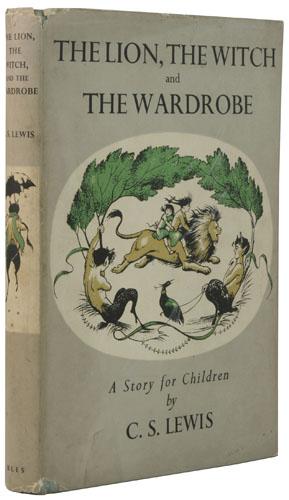
The Chronicles of Narnia is a series of seven portal fantasy novels by British author C. S. Lewis. Illustrated by Pauline Baynes and originally published between 1950 and 1956, the series is set in the fictional realm of Narnia, a fantasy world of magic, mythical beasts, and talking animals. It narrates the adventures of various children who play central roles in the unfolding history of the Narnian world. Except in The Horse and His Boy, the protagonists are all children from the real world who are magically transported to Narnia, where they are sometimes called upon by the lion Aslan to protect Narnia from evil. The books span the entire history of Narnia, from its creation in The Magician's Nephew to its eventual destruction in The Last Battle.
- Earthsea Cycle
series18 books1964
completed
part of Earthsea
similar byfantasy
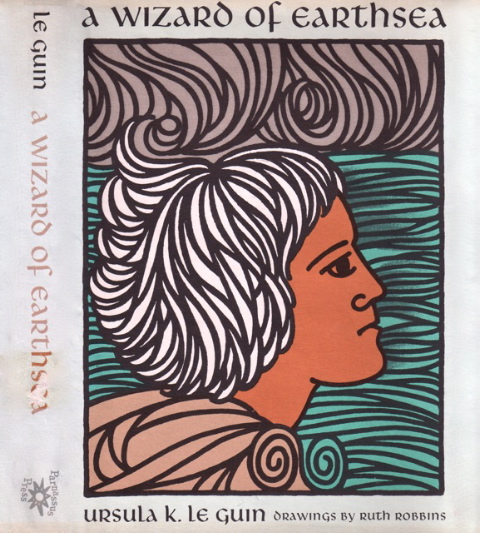
The Earthsea Cycle, also known as Earthsea, is a series of high fantasy books written by American author Ursula K. Le Guin. Beginning with A Wizard of Earthsea (1968), The Tombs of Atuan (1970), and The Farthest Shore (1972), the series was continued in Tehanu (1990), and Tales from Earthsea and The Other Wind. In 2018, all the novels and short stories were published in a single volume, The Books of Earthsea: The Complete Illustrated Edition, with artwork by Charles Vess.
- Kairos
series11 books1962
completed
similar by+1 more
The Time Quintet is a science fantasy series of five young adult novels written by American author Madeleine L'Engle and made up of A Wrinkle in Time (1962), A Wind in the Door (1973), A Swiftly Tilting Planet (1978), Many Waters (1986), and An Acceptable Time (1989).
- Five Children Universe
series27 books1902
completed
similar byfantasy
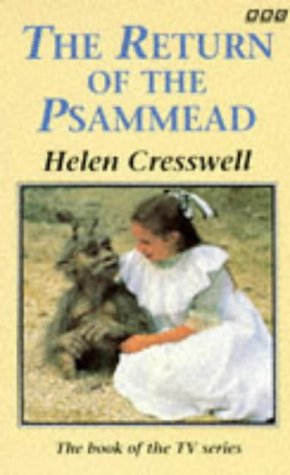
Two separate modern continuations of E. Nesbit's Psammead stories were written decades apart by different authors: Helen Cresswell's The Return of the Psammead (1992) brings the wish-granting sand fairy back for a new set of children, while Kate Saunders's Five Children on the Western Front (2014) follows the now-grown Lamb and his siblings as the First World War arrives, in a more somber sequel to Nesbit's original trilogy. Neither book is by Nesbit herself, and the two have no direct connection to each other beyond both drawing on her creation. Later writers have kept returning to Nesbit's premise long after her own trilogy ended.
- The House on the Borderland
William Hope Hodgsonstandalone novel1908
similar by+1 more
The House on the Borderland (1908) is a supernatural horror novel by British fantasist William Hope Hodgson. The novel is a hallucinatory account of a recluse's stay at a remote house, and his experiences of supernatural creatures and otherworldly dimensions.
- A Song of Ice and Fire
series14 books1996
part of World of Ice and Fire
similar byfantasy
A Song of Ice and Fire is a series of high fantasy novels by the American author George R. R. Martin. Martin began writing the first volume, A Game of Thrones, in 1991, and published it in 1996. Martin, who originally envisioned the series as a trilogy, has released five out of seven planned volumes. The most recent entry in the series, A Dance with Dragons, was published in 2011. Since then, Martin has been working on the sixth novel, titled The Winds of Winter. A seventh novel, A Dream of Spring, is planned to follow.
- Jungle Book Universe
universe44 books1893
Start hereThe Jungle Book · Start here
similar by+1 more
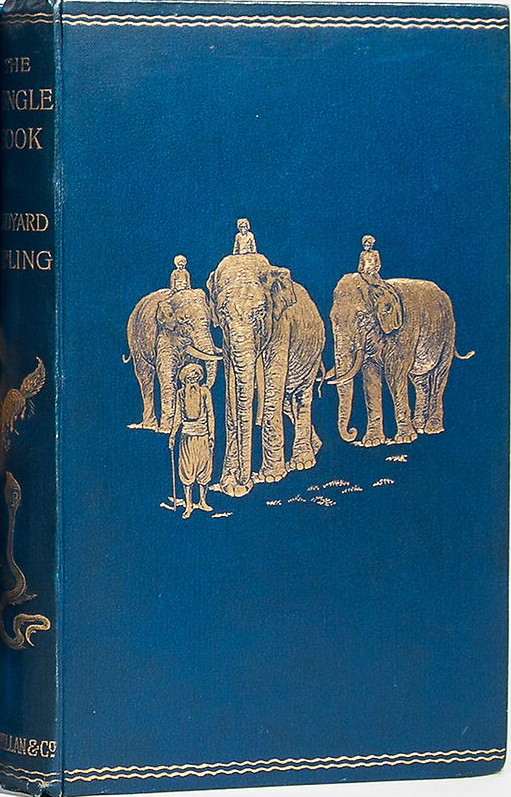
The Law of the Jungle is older than any animal reciting it, and a naked man-cub who wandered into a wolf den at dusk will have to learn every clause of it. Mowgli grows up between two peoples and belongs entirely to neither — the pack that took him in, Baloo who teaches him the words, Bagheera who bought his life with a bull, Kaa who is the most dangerous friend a boy ever had, and Shere Khan, who has been waiting since the first page. Rudyard Kipling wrote these as two books of stories, and the stories run well past Mowgli. Rikki-Tikki-Tavi fights cobras in a bungalow garden; a white seal searches the ocean for an island where men do not come; Toomai watches the elephants dance where nobody is meant to see them; and the beasts of the army explain, in Her Majesty's Servants, exactly why they obey. Verse runs between the tales, and the Jungle Books have been reissued, excerpted and adapted ever since. The voice is the whole point — biblical cadence, animal dignity, and a hard moral world in which the Law protects you precisely as far as you keep it. Read The Jungle Book first and take the Mowgli stories in their order within it; the rest stand alone and can be picked up in any mood. It is a children's book that never once talks down.
- The Dark Is Rising
series5 books1965
similar byfantasy
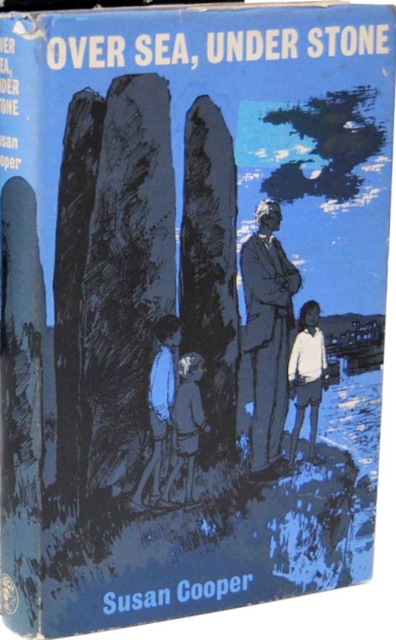
The Dark Is Rising Sequence is a series of five contemporary fantasy novels for older children and young adults that were written by the British author Susan Cooper and published from 1965 to 1977. The first book in the series, Over Sea, Under Stone, was originally conceived as a stand-alone novel, and the sequence gets its name from the second novel in the series, The Dark Is Rising. The Dark Is Rising Sequence is used as an overarching title in several omnibus, boxed-set, and coordinated editions; but the title of The Dark Is Rising is also used for the whole series.
- Lord of Light
series5 books1967
similar by+1 more
Lord of Light is Roger Zelazny's 1967 science fantasy novel about the surviving crew of a colonizing starship who use salvaged technology and mind-transfer to make themselves effectively immortal, then rule their colony for a thousand years under the guises of Hindu gods. One of their own, called Sam, breaks with the pantheon to return forbidden knowledge to the ordinary people they rule, touching off a war among the self-styled gods. A standalone novel, it won the 1968 Hugo Award for Best Novel.
- The Lair of the White Worm
Bram Stokerstandalone novel1911
similar by+1 more
A huge snake or dragon from prehistoric times survives in England, with intelligence and the ability to transform into a lady.
- His Dark Materials Universe
universe13 books1995
Start hereHis Dark Materials · Start here
similar byfantasy
In a world like ours and unlike it, every human soul walks outside the body in the shape of an animal — a daemon, who speaks, who cannot be lied to, and who settles into one fixed form only when childhood ends. This is the country of His Dark Materials: a company of parallel worlds across which an invisible dust of consciousness drifts down upon the waking mind; where a Church that calls itself the Magisterium would sooner sever a child's soul than let that Dust be understood; and where a golden instrument, the alethiometer, answers true questions for anyone with the patience to read it. Philip Pullman's design stands in two trilogies and a scatter of shorter tales. His Dark Materials — Northern Lights (published in America as The Golden Compass), The Subtle Knife, and The Amber Spyglass — carries Lyra Belacqua from the rooftops of a shadow Oxford across the borders between worlds. The Book of Dust returns to that same territory: La Belle Sauvage looks back to Lyra as an infant carried through a great flood, while The Secret Commonwealth follows her grown and less certain into adulthood, with a concluding volume closing the arc. Around them sit slim companion books — Lyra's Oxford, Once Upon a Time in the North, Serpentine — and Nicholas Wright's stage adaptation, made with Pullman's blessing. The register is grave and luminous at once, its title lifted from Milton and its quarrel drawn from Blake: a story that takes the side of curiosity, love, and the physical world against any authority that would forbid them. It reads as adventure — armoured bears, aeronauts, knife-cut windows between skies — yet reasons like philosophy. Begin with Northern Lights / The Golden Compass and read the first trilogy through before turning to The Book of Dust, which deepens everything the first has already made you feel.
- Good Omens
series2 books1990
similar byfantasy
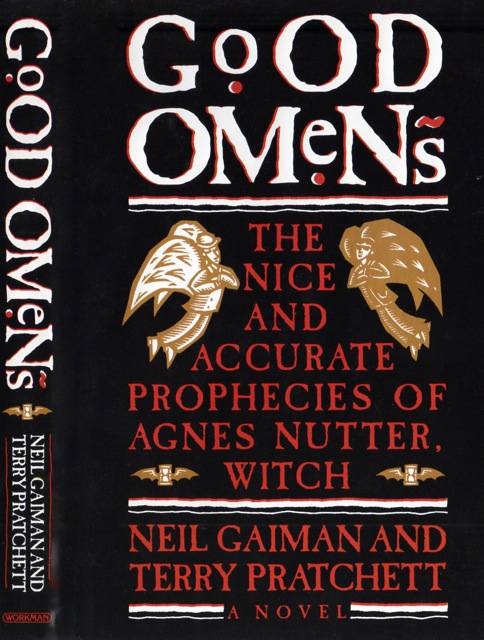
Good Omens is Terry Pratchett and Neil Gaiman's 1990 comic fantasy novel in which an angel and a demon, both grown fond of life on Earth, try to head off an apocalypse foretold in a seventeenth-century witch's uncannily accurate prophecies, complicated by the fact that no one can find the misplaced Antichrist. Paired with it here is The Quite Nice and Fairly Accurate Good Omens: Script Book, a companion volume collecting the screenplay for the television adaptation rather than a second novel.
- Stephen King multiverse
universe46 books1967
Start hereThe Gunslinger · Start here
similar by+1 more
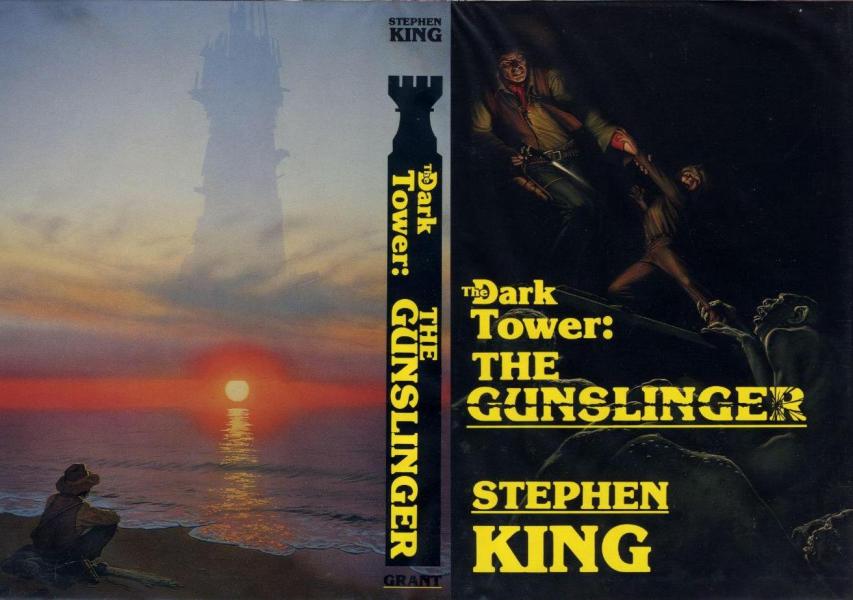
The man in black fled across the desert, and the gunslinger followed. So begins the long walk of Roland Deschain, last of an order of knight-errant pistoleers, across a land that has "moved on" — where the compass points drift, dead machines rot toward sentience, and the weave of what's real wears thin. His quest is the Dark Tower itself: a spire standing at the hub of every world that exists, the linchpin that holds all of them back from ruin. Roland's road runs eight volumes, from The Gunslinger through the closing Dark Tower, with the later, interleaved tale The Wind Through the Keyhole folding a story-within-a-story back into his youth. Along the way he draws a ka-tet — a fellowship bound by fate, not choosing — through doorways between worlds: a heroin-shackled New Yorker, a woman of two minds, a boy who dies twice. The Tower is also the secret axle around which the wider shelf of King's work turns; threads from The Stand, 'Salem's Lot and beyond wind quietly toward it. Expect a mongrel of Western, high fantasy, horror and decayed science fiction, told in a dusty, incantatory dialect all its own — ka, thankee-sai, the world that has moved on. This is King at his most mythic and most personal, a decades-spanning circle that rewards a patient reader. Begin at the beginning: The Gunslinger, then walk forward in publication order. There are other worlds than these — but this door opens first.
- Watership Down
series21 books1972
completed
similar byfantasy
Watership Down is Richard Adams's 1972 novel following a group of rabbits who flee the destruction of their warren and cross the English countryside of Hampshire in search of a new home, developing over the journey a full rabbit culture of language, proverbs, and mythology. Adams returned to the same world in 1996 with Tales from Watership Down, a collection of nineteen short stories mixing rabbit folklore with further adventures of characters from the novel.
- Ayesha
series8 books1886
similar byfantasy
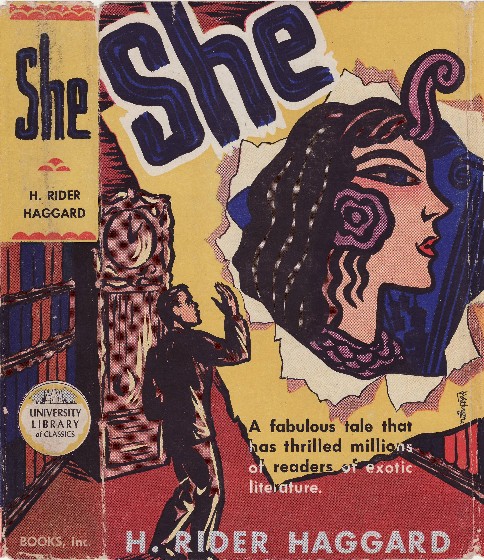
The Ayesha books follow H. Rider Haggard's immortal sorceress-queen Ayesha, introduced in his 1887 novel She as the ruler of a hidden civilization who has waited millennia for her lost love to be reborn. Haggard continued her story in later novels, including the 1905 sequel Ayesha: The Return of She, which reunites her with characters from the first book, and further installments tracing her earlier history. Later reissues and retellings continue to build on the same character.