More like Spark
anchored on:science fictionspaceshipfar futureyoung adultspace operaspace colonization+5 more
but
- Sky Chasers
series3 books2011
similar byfar futurescience fictiontensespace operaspace colonizationspaceshipyoung adultsurvival+4 more
- Company Wars
series7 books1981
part of Alliance-Union Universe
similar byfar futurescience fictiontensespace operaspace+3 more
Company Wars gathers the novels C. J. Cherryh set during the breakaway conflict between Earth's colonial Company and the newly independent Union, within her wider Alliance-Union future history. Anchored by the Hugo Award-winning Downbelow Station, the books follow different ships, stations, and crews caught on either side, from merchanter traders to military spacers, rather than a single continuing cast. Read in any order, they build up a picture of the political and economic pressure that reshapes Cherryh's larger Alliance-Union universe.
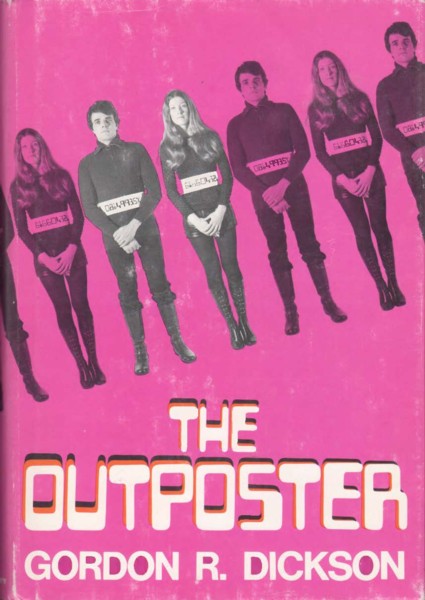
- The Outposter
Gordon R. Dicksonstandalone novel1972
similar byfar futurescience fictiontensespace colonizationspace operasurvivalspace
From the flap of the Lippincott first edition: "Rich man, poor man, beggarman, thief - the lottery played no favorites. If your number came up, you joined the rest of the losers marked for exile from overcrowded Earth. Shipped to a raw new outpost in space, you were officially called a colonist. But your whispered name was "garbage," your destination was oblivion, and you had few illusions about your chances of survival. The Outposters - a token band of specially trained personnel - were given the impossible task of guiding and protecting these outcasts in their harsh new environment. Will indifferent support from Earth, supply lines ran thin and raids by hostile aliens were increasing unchecked. Only one young Outposter, Mark Ten Roos, dared to challenge the system and change the odds. To help him, Mark hand-picked a strange assortment of allies from the new shipment of colonists: a brash opportunist, every instinct honed for personal survival; a midget woman with a professorship in philosophy; a widowed mathematician, expert in position astrophysics; an ex-marine with a dishonorable discharge. And help came to Mark from a source he had not expected - the daughter of the Outer Navy's ranking officer. When Mark Ten Roo put his plan into action, he knew he was also putting his life on the line."
- Space Beagle
series5 books1939
completed
similar byfar futurescience fictiontensespace operaspaceshipspace+1 more
The Voyage of the Space Beagle is a 1950 fix-up novel by A. E. van Vogt, stitched together from four previously published pulp stories into a single continuous account of the exploration ship Space Beagle's encounters with a series of dangerous alien life forms. Its episodic, crew-versus-monster structure reads as a loose sequence of adventures rather than one continuous plot.
- The Illuminae Files
series4 books2015
similar byfar futurescience fictiontensespace operayoung adultsurvivalspace+1 more
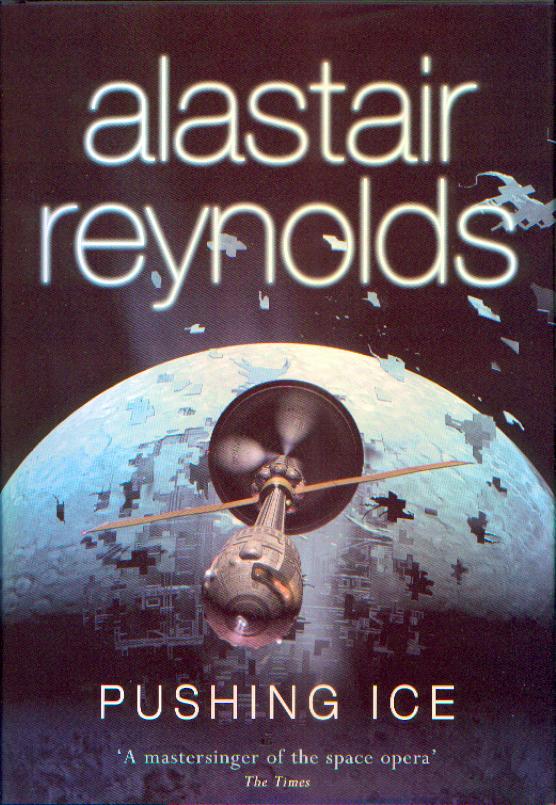
- Pushing Ice
Alastair Reynoldsstandalone novel2005
similar byfar futurescience fictiontensesurvivalspacespaceship+1 more
When Saturn's moon Janus suddenly takes off into interstellar space, an ice mining spaceship sent to investigate finds itself swept along into distant space until it ends up trapped in a gigantic alien structure, wherein the crew must prepare to reside for the foreseeable future.
- Chanur
series7 books1982
part of Alliance-Union Universe
similar byfar futurescience fictiontensespace operaspacespaceship
The Chanur novels are a series of five science fiction novels, forming three separate stories, written by American author C. J. Cherryh and published by DAW Books between 1982 and 1992. The first novel in the series is The Pride of Chanur (1982), which was nominated for both the Hugo and Locus Awards in 1983. The Pride of Chanur, originally a stand-alone story, was followed by the Chanur's Venture trilogy, Chanur's Venture (1984), which was shortlisted for a Locus Award in 1985; The Kif Strike Back (1985) and Chanur's Homecoming (1986). These were followed by a later sequel, Chanur's Legacy (1992). The five novels were also published in two omnibus editions: the first three in The Chanur Saga in 2000 and the next two in Chanur's Endgame in 2007.
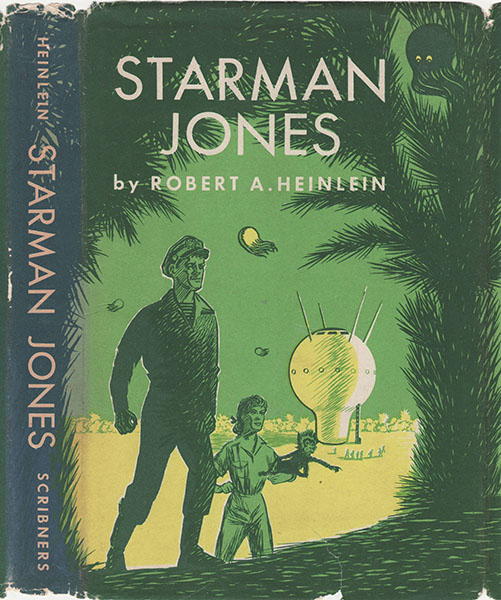
- Starman Jones
Robert A. Heinleinstandalone novel1953
similar byfar futurescience fictionspace operayoung adultspacespaceship
Starman Jones, a 1953 science fiction novel by Robert A. Heinlein, features a farm boy who wants to go to the stars. Charles Scribner's Sons published the book as part of the Heinlein juveniles series.
- Dune Universe
universe78 books1963
Start hereDune · Start here
similar byfar futurescience fictionspace opera+1 more
Arrakis. Dune. The desert planet, where empire runs on a single substance: the spice melange, which folds space, prolongs life, and unlocks prescience, and which exists nowhere else in the known universe. Frank Herbert's saga is a meditation dressed as an adventure — feudal houses and a secret sisterhood, engineered messiahs and the patient ecology of a world without water, all turning on the terrible gravity of who commands the spice. It reads like scripture and schemes like a war room, ten thousand years hence, among people who have outlawed the thinking machine and made instruments of themselves instead. At its heart stand Herbert's original six — Dune, Dune Messiah, Children of Dune, God Emperor of Dune, Heretics of Dune, Chapterhouse: Dune — a single deepening arc across millennia, arguing the whole way between prophecy and free will. Around that spine his son Brian Herbert and Kevin J. Anderson have raised a vast prequel architecture: Prelude to Dune, tracing the great houses a generation before Paul; Legends of Dune, reaching back to the crusade that broke the machines; the Schools of Dune cycle on the founding of Bene Gesserit, Mentat, and Navigator; the Caladan Trilogy and Heroes of Dune filling years the originals left in shadow. Many hands, dozens of volumes, one desert. What sets Dune apart is its refusal of the simple: religion is manufactured, heroes are hazards, and the sand itself — worm, water, ecology — acts as a political power. Begin where the universe did, with Frank Herbert's Dune (1965), and read the original six in order; you need nothing else to feel the full weight. The prequels are a country to explore afterward, taken by era. Beginnings are delicate times.
- Dune
series20 books1963
part of Dune Universe
similar byfar futurescience fictionspace opera+1 more
Frank Herbert's Dune Chronicles opens with 1965's Dune, set on the desert planet Arrakis where House Atreides takes control of the only source of the vital spice melange and young Paul Atreides is pulled into a struggle over its politics and religion. Herbert carried the story forward across five further novels — Dune Messiah, Children of Dune, God Emperor of Dune, Heretics of Dune, and Chapterhouse: Dune — following Paul's line over the following millennia, before Brian Herbert and Kevin J. Anderson later extended the saga. Many other editions of these six novels are omnibus and box-set repackagings rather than separate stories.
- Lost Missions / Paradisi Chronicles
series3 books2019
similar byfar futurescience fictionspace colonizationspace operaspaceshipsurvival+2 more
- Fallen Dragon
Peter F. Hamiltonstandalone novel2001
similar byfar futurescience fictionspace colonizationspace operaspace+1 more
Fallen Dragon is a science fiction novel by British writer Peter F. Hamilton. It was first published in 2001 by Macmillan. It follows the adventures of the mercenary Lawrence Newton as he attempts to capture what he believes is a fabulous treasure, only to find something of much greater importance.
- The Stars Are Legion
Kameron Hurleystandalone novel2017
similar byfar futurescience fictiontensespace operasurvivalspacespaceship
396 pages ; 20 cm
- Slow Train to Arcturus
Eric Flint & Dave Freerstandalone novel2008
similar byfar futurescience fictiontensespace operaspaceshipsurvivalspace
Sending a spaceship to rendezvous with an enormous vessel made up of a series of globular habitats approaching its star system, the aliens find a savage race calling themselves "humans" who promptly slaughter the exploration team, except for a single survivor who escapes to another habitat, where he finds more friendly humans whose help he requires to get back to his own ship.
- Cities in Flight
series10 books1950
completed
similar byscience fictionfar futurespace operaspace colonizationspace+1 more
Cities in Flight is a four-volume series of science fiction novels and short stories by American writer James Blish, originally published between 1950 and 1962, which were first known collectively as the "Okie" novels. The series features entire cities that are able to fly through space using an anti-gravity device, the spindizzy. The stories cover roughly two thousand years, from the very near future to the end of the universe. One story, "Earthman, Come Home", won a Retro Hugo Award in 2004 for Best Novelette. Since 1970, the primary edition has been the omnibus volume first published in paperback by Avon Books. Over the years James Blish made many changes to these stories in response to points raised in letters from readers.
- Learning the World
Ken MacLeodstandalone novel2005
similar byfar futurescience fictionspace colonizationspace operamultiple povspacespaceship
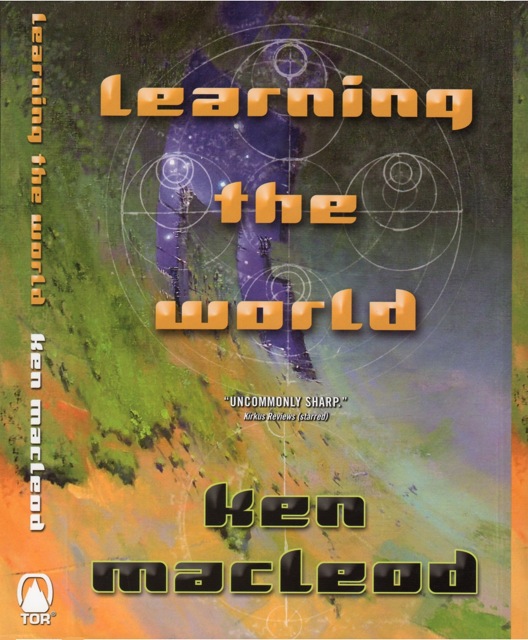
From the front flap of the Tor first printing: "Humanity has spread to every star within 500 light-years of its half-forgotten origin, coloring the sky with a haze of habitats. Societies rise and fall. Incautious experiments burn fast and fade. On the fringes, less modified humans get on with the job of settling a universe that has, so far, been empty of intelligent life. The ancient starship But the Sky, My Lady! The Sky! is entering orbit around a promising new system after a four hundred year journey. For its long-lived inhabitants, the centuries have been busy. Now a younger generation is eager to settle the system. The ship is a seed-pod ready to burst. Then they detect curious electromagnetic emissions from the system's Earth-like world. As the nature of the signals becomes clear, the choices facing the humans become stark. On Ground, second world from the sun, a young astronomer searches for his system's outermost planet. A moving point of light thrills, then disappoints him. It's only a comet. His physicist colleague Orro takes time off from trying to invent a flying-machine to calculate the comet's trajectory. Something is very odd about that comet's path. They are not the only ones for whom the world has changed. "We are not living in the universe we thought we lived in yesterday. We have to start learning the world all over again.""
- David Ryerson
series2 books1958
completed
similar byfar futurescience fictiontensespace operasurvivalspacespaceship
The Enemy Stars follows the crew of a faster-than-light survey ship stranded far from home after their matter-transmission drive is damaged, forced to keep the vessel and each other going across a voyage that will outlast some of them. Poul Anderson's 1959 novel was originally serialized as We Have Fed Our Sea-, a title drawn from Kipling. It stands alone rather than part of a series; David Ryerson is one of the ship's crew.
- Berserker (Fred Saberhagen)
series59 books1963
similar byfar futurescience fictiontensespace operaspace+1 more
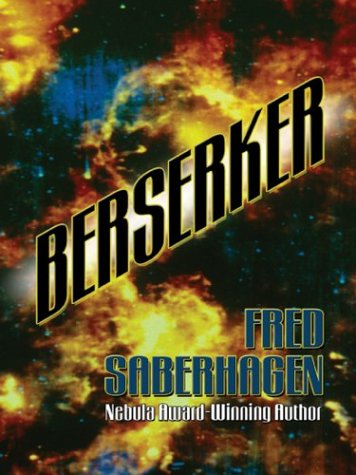
The Berserker series is a series of space opera science fiction short stories and novels by Fred Saberhagen, in which robotic self-replicating machines strive to destroy all life.
- Across the Universe
series5 books2011
similar byfar futurescience fictiontenseyoung adultspaceship+3 more
- The Final Architecture
series6 books2021
similar byfar futurescience fictiontensespace operaspace+2 more
The Final Architecture is a series of science fiction novels by British writer Adrian Tchaikovsky. It contains the books Shards of Earth, Eyes of the Void, and Lords of Uncreation. The series focuses on a group of humans fighting against the mysterious Architects, who destroy inhabited planets. The series has been well-received critically, with Shards of Earth winning the 2021 BSFA Award for Best Novel. The entire series was a finalist for the 2024 Hugo Award for Best Series.
- Vatta's War
series6 books2003
part of Vatta
similar byfar futurescience fictiontensespace operaspace
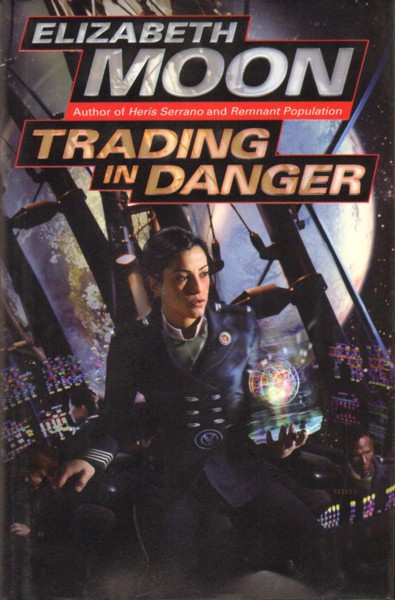
Vatta's War is a science fiction series by American writer Elizabeth Moon, comprising five books: Trading in Danger (2003), Marque and Reprisal, Engaging the Enemy (2006), Command Decision (2007), and Victory Conditions (2008). They have been characterized as military science fiction similar in style to the works of Lois McMaster Bujold, David Weber and Walter Jon Williams.
- Moties
series4 books1974
part of CoDominium
similar byfar futurescience fictionspace operaspace+1 more
Larry Niven and Jerry Pournelle's The Mote in God's Eye (1974) depicts humanity's first contact with an alien species, the Moties, set within the far-future interstellar setting of Pournelle's codominium future history. The Gripping Hand continues that first-contact crisis years later, and Outies, written by J. R. Pournelle, carries the story forward into a new generation. Together the three books trace an escalating encounter between human and Motie civilizations within the codominium universe.
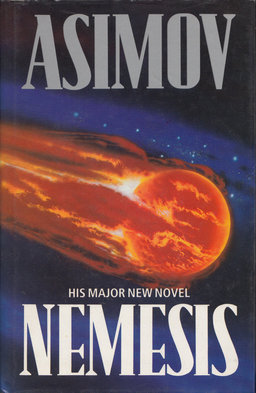
- Nemesis
Isaac Asimovstandalone novel1989
similar byfar futurescience fictionspace colonizationspace operaspace+1 more
The expanding population and ensuing ecological degradation of Earth leads to the establishment of orbital habitats which continue to compete with each other as well as with Earth, leading one of them to abandon the Solar System entirely, to establish itself around a neighboring star.
- Honor Harrington
series14 books1993
part of Honorverse
similar byfar futurescience fictiontensespace operaspace
David Weber's Honor Harrington novels follow the title character's rise through the Manticoran navy in the 'Honorverse,' a space-opera setting built around Age-of-Sail-style naval combat, interstellar politics and a decades-long war between rival star nations. Beginning with On Basilisk Station, the core series runs to fourteen books, alongside spin-off subseries, prequels and shared-world anthologies also set in the Honorverse. It's one of the longest-running modern military science fiction series, published by Baen.