More like Spiral
anchored on:science fiction
but
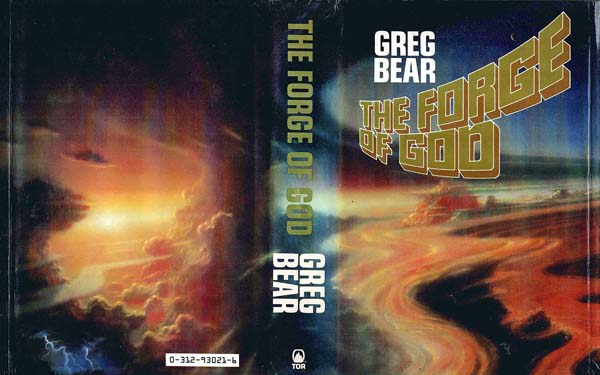
- Forge of God
series2 books1987
completed
similar byscience fictiondarkalienssurvivaltense+4 more
The Forge of God (1987) is Greg Bear's science fiction novel about Earth's discovery that it is the target of an incomprehensible, overwhelming alien attack, following scientists and ordinary people as they try to understand what is destroying the planet. Its 1992 sequel, Anvil of Stars, follows a group of young survivors sent on a mission of interstellar retaliation, continuing directly from the first book's ending.
- Ocean / Galactic Center
series12 books1972
similar byscience fictionfar futurealiens+7 more
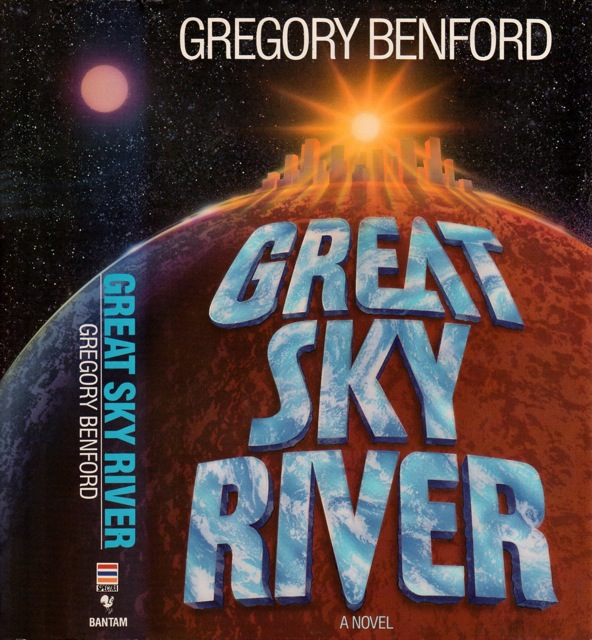
The Galactic Center Saga is a series of books by author Gregory Benford detailing a galactic war between mechanical and biological life.In the Ocean of Night (1977) — 1977 Nebula Award nominee, 1978 Locus Award nominee Across the Sea of Suns (1984) Great Sky River (1987) — 1988 Nebula Nominee Tides of Light (1989) — 1990 Locus Award nominee Furious Gulf (1994) Sailing Bright Eternity (1996) "A Hunger for the Infinite" a novella published in the anthology Far Horizons
- Forever War
series10 books1972
similar byscience fictionfar futurespacemilitary science fiction+5 more
Joe Haldeman's The Forever War (1974) follows a soldier conscripted into a centuries-long interstellar war against the alien Taurans, using relativistic space travel so that months spent in transit correspond to years or decades passing back on Earth. Haldeman later returned to the same conflict in Forever Peace (1997), a thematically connected but separate story, and Forever Free (1999), a direct sequel set years after the original war's end. The first novel won the Hugo, Nebula, and Locus awards and is considered a foundational work of military science fiction.
- Dune
series20 books1963
part of Dune Universe
similar byscience fictionfar futureother star systemsspace opera+2 more
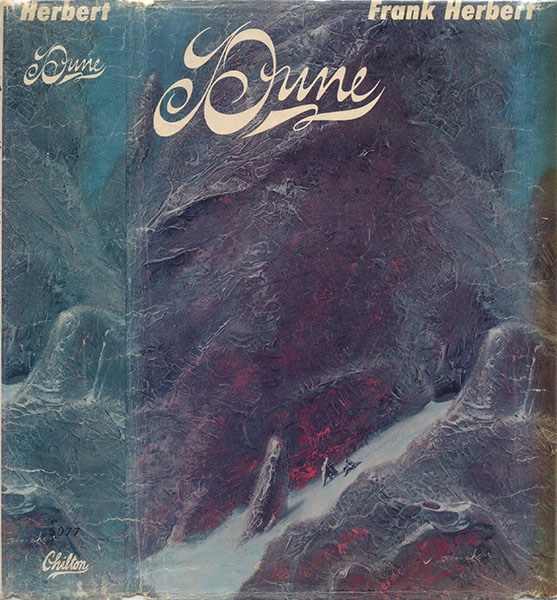
Frank Herbert's Dune Chronicles opens with 1965's Dune, set on the desert planet Arrakis where House Atreides takes control of the only source of the vital spice melange and young Paul Atreides is pulled into a struggle over its politics and religion. Herbert carried the story forward across five further novels — Dune Messiah, Children of Dune, God Emperor of Dune, Heretics of Dune, and Chapterhouse: Dune — following Paul's line over the following millennia, before Brian Herbert and Kevin J. Anderson later extended the saga. Many other editions of these six novels are omnibus and box-set repackagings rather than separate stories.
- Ender Wiggin
series14 books1977
part of Ender's Game Universe
similar byscience fictionfar futurealiensother star systems+3 more
Orson Scott Card's Ender's Game (1985, expanded from his 1977 novella) follows child prodigy Andrew "Ender" Wiggin as he is recruited into a military training program built to prepare Earth's defenses for an anticipated third war against an insectoid alien species known as the Formics. The saga continues years later through Speaker for the Dead and Xenocide, following an older Ender as he confronts the moral weight of his role in that earlier conflict, and concludes the core arc in Children of the Mind, with Ender in Exile filling in the years between the first two books. Set within the wider Ender's Game universe, the series shifts from military coming-of-age story to slower, more philosophical science fiction as it progresses.
- The Dosadi Experiment
Frank Herbertstandalone novel1977
similar byscience fictionfar futurealienssurvivalother star systemstensespace opera+1 more
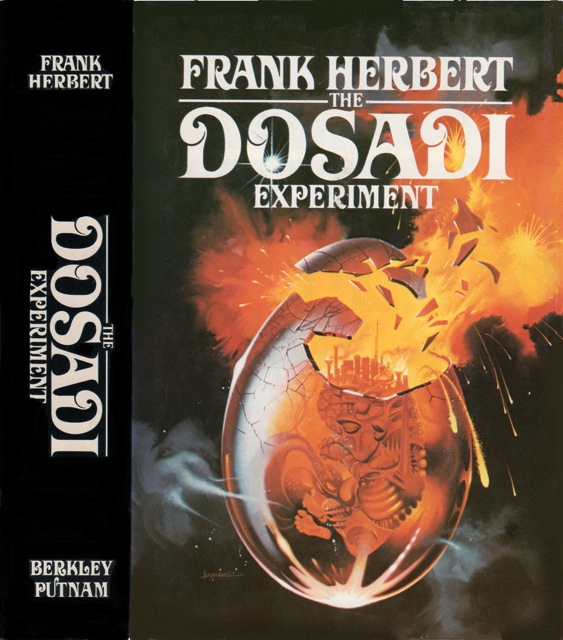
From the flaps of the Berkley Putnam first edition: "In his first new work of science fiction since the best-selling Children of Dune, Frank Herbert returns to his world of Whipping Star, and involves Jorj X. McKie, Saboteur Extraordinary, in a new intrigue. In Whipping Star, McKie discovered that some of the stars in the universe are actually intelligent, super-powerful beings, and was able to befriend one of them, the star Alcyone - affectionately known as Fannie Mae. As The Dosadi Experiment opens, McKie is assigned to investigate the planet Dosadi, which is isolated from the rest of the galaxy by a "god-wall," a barrier set up by one of the intelligent stars. Dosadi is rumored to be an experimental planet, and the experimenters are the froglike Gowachin, whose culture is founded upon a strange legal system in which McKie is the only human ever trained. He learns that humans and Gowachin have been placed on Dosadi, without their consent, for an experiment that could last centuries: an experiment in extreme overcrowding. But this monstrous plot is apparently out of control, and it seems the Gowachin may be prepared to destroy Dosadi rather than expose its secret, thus breaking the peace among the races, and starting the first interstellar war. But this is just the beginning. When McKie finally reaches Dosadi he discovers that the Dosadis have taken control of their own evolution and produced a competitive, highly evolved elite, of both humans and Gowachin, who have been able to extrapolate the existence of a universe beyond the god-wall and hate whoever has imprisoned them like this. They plan to break out and avenge themselves on the galaxy."
- Berserker (Fred Saberhagen)
series59 books1963
similar byscience fictionfar futurespaceother star systemstensewarspace opera+3 more
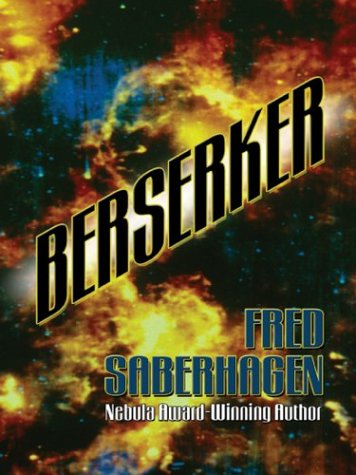
The Berserker series is a series of space opera science fiction short stories and novels by Fred Saberhagen, in which robotic self-replicating machines strive to destroy all life.
- Dune Universe
universe78 books1963
Start hereDune · Start here
similar byscience fictionfar futureother star systemsspace opera+2 more
Arrakis. Dune. The desert planet, where empire runs on a single substance: the spice melange, which folds space, prolongs life, and unlocks prescience, and which exists nowhere else in the known universe. Frank Herbert's saga is a meditation dressed as an adventure — feudal houses and a secret sisterhood, engineered messiahs and the patient ecology of a world without water, all turning on the terrible gravity of who commands the spice. It reads like scripture and schemes like a war room, ten thousand years hence, among people who have outlawed the thinking machine and made instruments of themselves instead. At its heart stand Herbert's original six — Dune, Dune Messiah, Children of Dune, God Emperor of Dune, Heretics of Dune, Chapterhouse: Dune — a single deepening arc across millennia, arguing the whole way between prophecy and free will. Around that spine his son Brian Herbert and Kevin J. Anderson have raised a vast prequel architecture: Prelude to Dune, tracing the great houses a generation before Paul; Legends of Dune, reaching back to the crusade that broke the machines; the Schools of Dune cycle on the founding of Bene Gesserit, Mentat, and Navigator; the Caladan Trilogy and Heroes of Dune filling years the originals left in shadow. Many hands, dozens of volumes, one desert. What sets Dune apart is its refusal of the simple: religion is manufactured, heroes are hazards, and the sand itself — worm, water, ecology — acts as a political power. Begin where the universe did, with Frank Herbert's Dune (1965), and read the original six in order; you need nothing else to feel the full weight. The prequels are a country to explore afterward, taken by era. Beginnings are delicate times.
- War Dogs
series3 books2014
completed
similar byscience fictionspacemilitary science fiction+6 more
Greg Bear's trilogy opens with humanity fighting an entrenched, technologically superior alien presence across the Solar System, following a soldier drafted into a war whose true stakes he only gradually understands. War Dogs (later reissued as War Dogs: Ares Rising) was followed by Killing Titan and Take Back the Sky as the scope of the alien threat, and the deceptions surrounding it, widens.
- Spatterjay
series3 books2002
part of Polity
similar byscience fictiondarkfar futureother star systemsspace opera+4 more
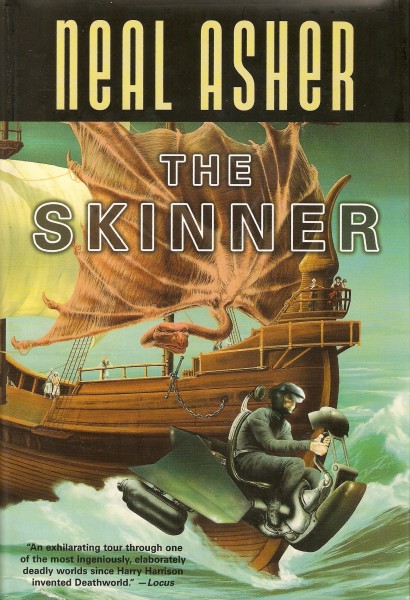
Spatterjay is set on the ocean world of the same name within Neal Asher's Polity future history: a planet whose ecology is uniquely dangerous, drawing soldiers, monsters, and old enemies of the Polity into its waters across the trilogy's three books (The Skinner, The Voyage of the Sable Keech, Orbus). It continues Asher's interest in body horror and extreme biology set against a backdrop of AI-run human space.
- Xan-Sskarn War
series1 book2010
similar byscience fictiondarkfar futurealiensspaceother star systemstensewar+3 more
- Blindsight / Firefall
series3 books2006
similar byscience fictiondarkfar futurealiensspacetense+1 more
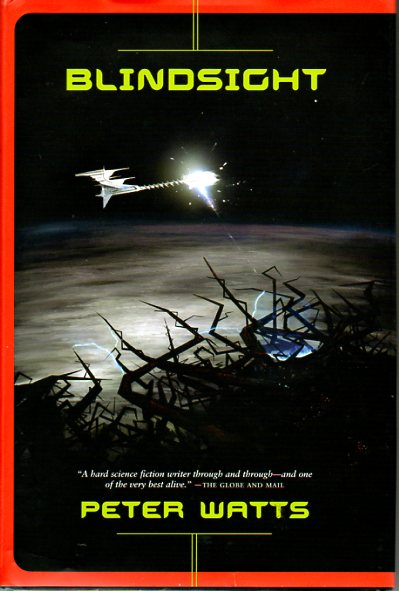
Blindsight sends a crew of radically modified posthumans (including a resurrected, genetically restored vampire) out to the Oort cloud after humanity detects an alien signal, only to make contact with something intelligent, wildly capable, and possibly not conscious at all — a first-contact story built around the question of whether self-awareness is actually useful. Peter Watts's Echopraxia is a same-timeframe "sidequel" rather than a direct sequel, following different characters through the fallout of the same first-contact event.
- The Stars My Destination
Alfred Besterstandalone novel1956
similar byscience fictiondarkfar futuresurvivalspaceother star systemsspace opera
When a passing spaceship refuses to rescue the lone survivor from the drifting wreck of another ship, he dedicates his life to discovering who made that decision and exacting his revenge, in the process altering human history and his own character.
- Thousand Worlds
series24 books1971
similar byscience fictionfar futureother star systems+2 more
George R.R. Martin's Thousand Worlds is a loose future-history setting he used for several of his 1970s-80s stories and novels, encompassing human interstellar colonization and encounters with older, stranger civilizations. Dying of the Light, A Song for Lya and the novella Nightflyers are among its best-known entries, sharing background rather than continuing characters or plot.
- The Madness Season
C. S. Friedmanstandalone novel1990
similar byscience fictionfar futurealiensspaceother star systemstensespace opera+2 more
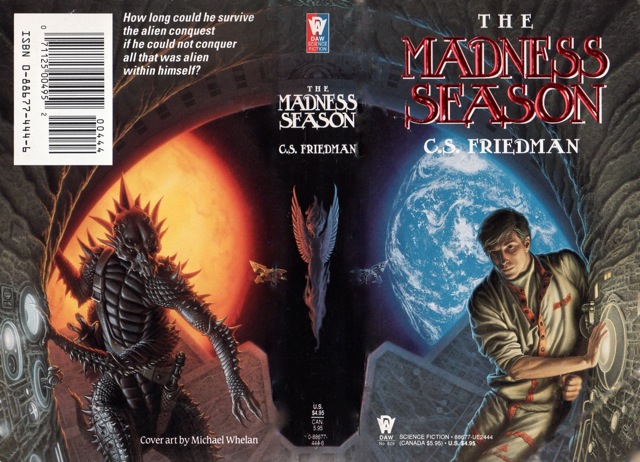
The alien within - He'd had so many names over the centuries, so many new identities that he could scarcely remember who he had originally been. Now his name was Daetrin, a name given by the alien conquerors of humankind, the Tyr. Three hundred years had passed since the Tyr conquered the people of Earth as they had previously overcome numerous races throughout the galaxy. In their victory they had taken the very heart out of the human race, isolating the true individualists, the geniuses, all the people who represented the hopes, dreams, and discoveries of the future, and imprisoning them in dome colonies on planets hostile to human life. There the Tyr, a race which itself shared a unified gestalt mind, had left these gifted individuals to work on projects which would, the conquerors hoped, reveal all of human kind's secrets to them. Yet Daetrin's secret was one no scientist had ever uncovered, for down through the years he had succeeded in burying it so well that he had even hidden his real nature from himself. But, taken into custody by the Tyr, there was no longer any place left for Daetrin to run, no new name and life for him to assume. Now he would at last be forced to confront the truth about himself - and if he failed, not just Daetrin but all humans would pay the price... (from the first page of the DAW Books first edition)
- Nicholas Seafort
series7 books1994
completed
similar byscience fictionfar futurespacetensewarspace operamilitary science fiction+3 more
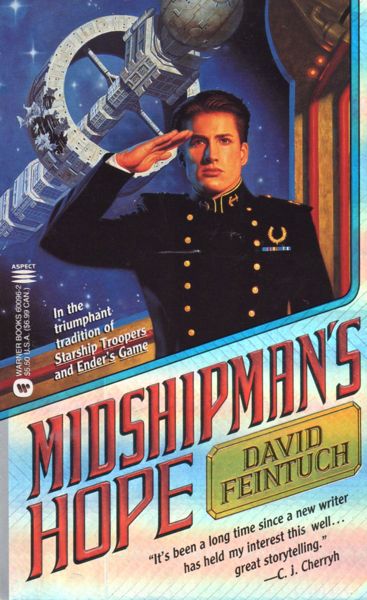
The Seafort Saga is a series of science fiction novels written by American author David Feintuch. The novels are set from the late 22nd century to the mid-23rd century and relate the adventures of Nicholas Seafort, an officer in the (fictional) UNNS| United Nations Naval Service. The series is a collection of personal accounts, usually from the perspective of Nicholas Seafort, describing Seafort's adventures, beginning as a lowly midshipman, to the elected leader of earth, and finally to the captain of the UNNS flagship Olympiad. Although most books in the series are told from a single perspective, usually Seafort's, Voices of Hope is a collection of accounts from several sources: Seafort's son, PT, the son of a friend of Seafort's, and a transient boy named Pook. Additionally, Children of Hope is narrated by Randy Carr, the son of a close friend of Seafort.
- Sun Eater
series36 books2018
similar byscience fictiondarkfar futurewarspace opera+5 more
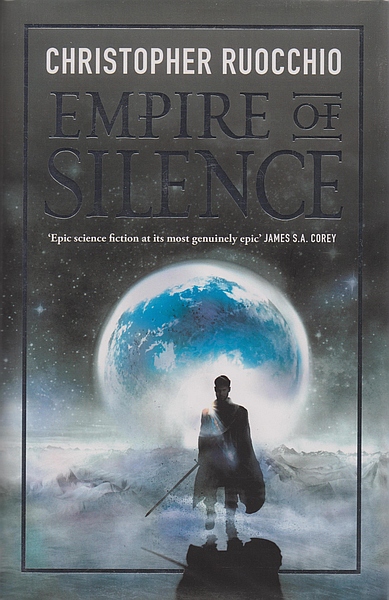
The Sun Eater is a science fiction novel series written by American author Christopher Ruocchio. Not including short stories and novellas, the series consists of the following novels: Empire of Silence (2018), Howling Dark (2019), Demon in White (2020), Kingdoms of Death (2022), Ashes of Man (2022), Disquiet Gods (2024), and Shadows Upon Time (2025).
- Alliance-Union Universe
universe173 books1976
Start hereCompany Wars · The central sequence
similar byscience fictionfar future+5 more
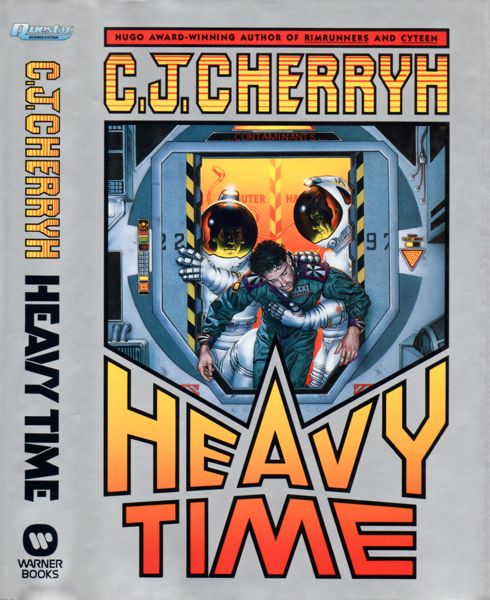
The dark between the stars belongs to no one, and everyone who lives out here knows it: the merchanter Families hauling cargo between stations that cannot feed themselves, the Earth Company clutching at colonies it can no longer supply, the Union breeding its cloned azi to settle worlds faster than birth allows. C. J. Cherryh's Alliance-Union is a future history of humankind's spread across the third and fourth millennia, told from inside the pressure — no clean empires, only stations, ships, treaties, and the people caught in the machinery of who holds the jump-points. The sequence runs from the first laborious pre-FTL stations through the Company Wars, the independence struggle that breaks over Pell in Downbelow Station (Hugo, 1981), to the genetics and cold politics of Union's homeworld in Cyteen (Hugo, 1988) and its sequel Regenesis. Around that spine cluster the merchanter novels of trader Families, the Faded Sun trilogy of human envoys among the martial alien Mri, and the Chanur books, narrated from the hierarchical, whiskered viewpoint of the hani. On the isolated world of Merovin, the Merovingen Nights anthologies open the setting to other hands — Mercedes Lackey, Janet and Chris Morris, Nancy Asire — a shared world braided into the whole. What sets it apart is intimacy at scale. Cherryh drops you without a map into a single skull and lets you assemble the politics from what that person fears and bargains for; the aliens are genuinely alien, loyalty is always provisional, and the real antagonist is usually logistics. Most books stand alone, in her words, "like real history." The surest way in is Downbelow Station — the war seen from one besieged station — then Cyteen, for the mind that shaped the other side.
- Catteni Sequence
series5 books1970
completed
similar byscience fictionfar futurealiensother star systemsspace opera+3 more
The Catteni series is a tetralogy of science fiction novels by American writer Anne McCaffrey. In this universe, humans are slaves of aliens, the humanoid Catteni. Woven through all four of the books are details of the relationship between Kristin Bjornsen, a former slave, and Zainal, a renegade Catteni.
- Patternist
series6 books1976
completed
similar byscience fictiondark+4 more
The Patternist series is a group of science fiction novels by Octavia E. Butler that detail a secret history continuing from the Ancient Egyptian period to the far future that involves telepathic mind control and an extraterrestrial plague. A profile of Butler in Black Women in America notes that the themes of the series include "racial and gender-based animosity, the ethical implications of biological engineering, the question of what it means to be human, ethical and unethical uses of power, and how the assumption of power changes people."
- Providence
Max Barrystandalone novel2020
similar byscience fictionfar futurealienssurvivalspacetensewarspace opera+2 more
Providence is the sixth novel by Australian science fiction author Max Barry. It was published in March 2020 by Putnam.