More like Split Second
anchored on:science fictiontime travelour world
but
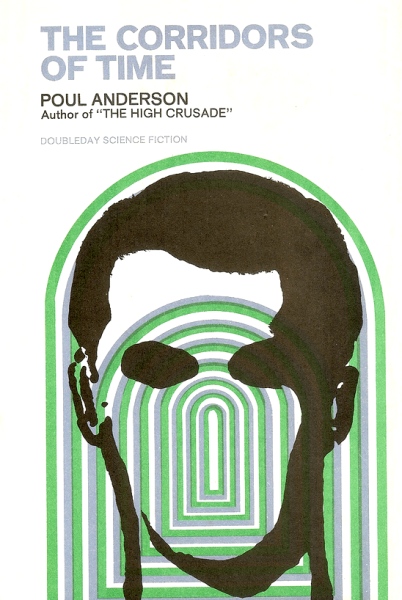
- The Corridors of Time
Poul Andersonstandalone novel1965
similar byour worldscience fictiontime travel+2 more
The Corridors of Time is a science fiction novel by the American writer Poul Anderson that was first published in 1965 as a serial in Amazing Stories, and as a book by Doubleday.
- The Lincoln Hunters
Wilson Tuckerstandalone novel1958
similar byour worldscience fictiontime travel+2 more
The Lincoln Hunters is a 1958 science fiction novel by American writer Wilson Tucker.
- Time Story
Stuart Gordonstandalone novel1972
similar bytime loopour worldlate 20th centuryscience fictiontime travel+1 more
Her name was Hawisa. She died in 1992 in an effort to kill Kitson. Her name was Hawinda. She rished her life in 1996 to save Kitson His name was Kitson. He got away with the theft of the Moongem reactor stones His name was Denzil Amiss. As Twilight Journeyman 356, he couldn't get his hands on the Moongems But... Hawisa and Hawinda were the same person! Kitson and Amiss were the same person! (from the back cover of the DAW Books first American edition)
- Replay
Ken Grimwoodstandalone novel1987
similar bytime loopour worldlate 20th centurytime travelscience fiction
Replay is a fantasy novel by American writer Ken Grimwood, first published by Arbor House in 1987. It won the 1988 World Fantasy Award for Best Novel.
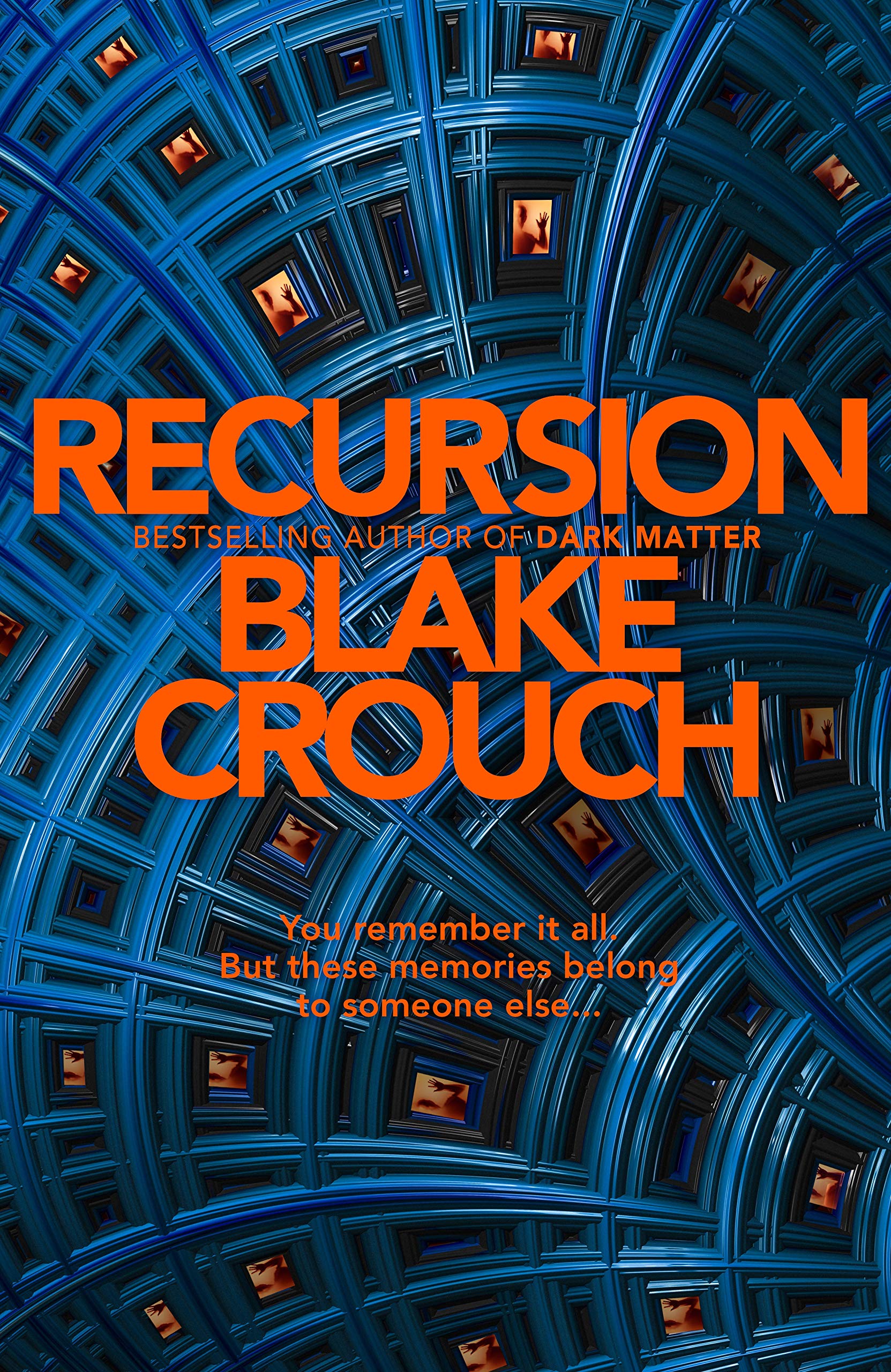
- Recursion
Blake Crouchstandalone novel2019
similar bytime looptenseour worldscience fictiontime travel
Recursion is a thriller science fiction novel by American writer Blake Crouch, first published in the United States in June 2019 by the Crown Publishing Group, a subsidiary of Penguin Random House. The novel explores themes of memory, identity, and time.
- The Green Futures of Tycho
William Sleatorstandalone novel1981
similar bytime looptenseour worldscience fictiontime travel
Publisher's description: "When he finds an ancient, egg-shaped object with which he travels back and forth in time, eleven-year-old Tycho grapples with several terrible futures he sees for himself and his family."
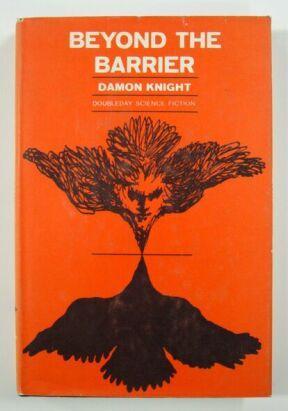
- Beyond the Barrier
Damon Knightstandalone novel1964
similar bytensescience fictiontime travel+2 more
From the front flap of the Doubleday first edition: "Gordon Naismith was a physics professor at a large California university. The year was 1980, and by means of the university's duplicator he could personally teach in nine different classrooms simultaneously. Naismith was an average man in all but two respects: the reflexes were extraordinarily quick, and four years before in a plane crash he had lost all memory of his earlier life. Neither difference seemed important until one day a very unusual student in one of his classes asked a disturbing, extracurricular question: "Professor, what is a zug?" The question triggered a series of violent incidents, and soon Naismith himself, as well as the police, were beginning to wonder if the duplicator had reproduced him a tenth time. The answer lay ten thousand years in the future."
- The Masks of Time
Robert Silverbergstandalone novel1968
similar bytenseour worldlate 20th centuryscience fictiontime travel
From the back cover of the Ballantine first edition: "The year is 1999. The century is about to turn. The civilized world is prosperous but tense with fear about the still existing possibility of a major war. While in the large area that used called "underdeveloped" there is a hysterical conviction that the world will cone to an end with the arrival of the new century Into this explosive situation floats a creature calling himself Vornam-19 - and claiming to be a visitor from 1000 years in the future... The world is ready, indeed ripe, for a sign, an omen, a new cult. But no one realizes exactly what Vornaa-19 is in his own right."
- Millennium
John Varleystandalone novel1983
similar bytenseour worldlate 20th centuryscience fictiontime travel
Millennium is a 1983 time travel science fiction novel by John Varley. Varley later turned this novel into the script for the 1989 film Millennium, both of which are based on Varley's short story "Air Raid", which was published in 1977.
- The Shining Girls
Lauren Beukesstandalone novel2013
similar bytenseour worldlate 20th centuryscience fictiontime travel
The Shining Girls is a science fiction thriller novel by South African author Lauren Beukes. The book centers on a mysterious drifter who murders the titular "shining girls" and one victim's attempts to expose him.
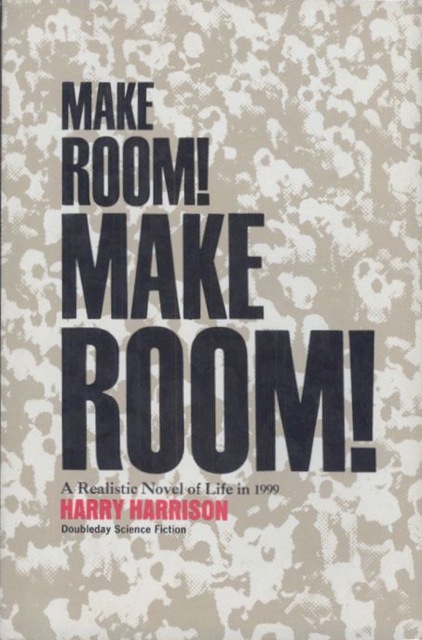
- Make Room! Make Room!
Harry Harrisonstandalone novel1966
similar bytenseour worldscience fiction+1 more
Make Room! Make Room! is a 1966 science fiction novel written by Harry Harrison exploring the consequences of both unchecked population growth on society and the hoarding of resources by a wealthy minority. It was originally serialized in Impulse magazine.
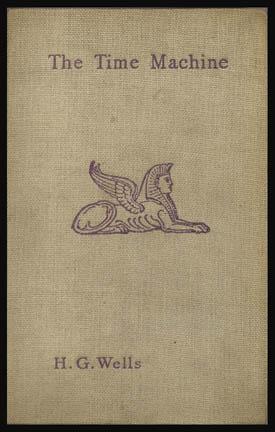
- H. G. Wells' Time Machine
universe51 books1888
Start hereThe Time Machine · Start here
similar byscience fictiontime travel+1 more
The Time Traveller throws his lever, and the laboratory dissolves into grey — day and night beating like a pulse, the sun streaking into a band of fire, the years falling away by the thousand. When the machine stops he stands in the year 802,701, among the gentle, idle Eloi who dance in the ruins of paradise, and the pale Morlocks who tend the machines below and climb, in the dark, to feed. This is the seed from which every tale of time travel grew: one Victorian evening's fireside account of a fourth dimension a man might walk down. At its centre stands H. G. Wells's slim 1895 romance, complete in itself. Around it has grown a long canopy of retellings — abridged and illustrated editions that carry the Eloi and Morlocks to younger readers, shaped by hands such as Betty Ren Wright and Chris Sasaki — and a strand of homage that treats Wells's invention as fact: Karl Alexander's Time After Time, in which Wells himself pursues Jack the Ripper through his own machine into a startled modern age, and David J. Lake's return to the Morlock world. It is honestly one work and its echoes, not a saga of equals. What lingers is the cool, reasoning voice of a gentleman-scientist watching wonder curdle into dread — for the machine does not stop at 802,701, but runs on to a still shore beneath a swollen, dying sun. Begin where all of it begins: with Wells's original. It is short, it is whole, and nothing after it is required.
- Galactic Milieu
series10 books1981
completed
similar bytensescience fiction+2 more
Galactic Milieu is a series of science fiction novels by Julian May. It is linked to her previously published series, the Saga of Pliocene Exile; and through the fantastical device of time-travel, acts as both a prequel and a sequel to this earlier series. The "Galactic Milieu" of the title is an interplanetary federation, and Earth's membership of it is a central plot concern.
- Radio Free Albemuth
Philip K. Dickstandalone novel1986
similar bytenseour worldlate 20th centuryscience fiction
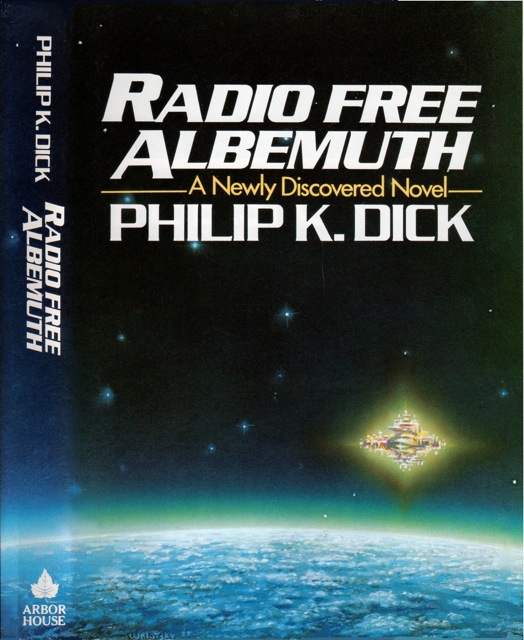
Radio Free Albemuth is a dystopian novel by Philip K. Dick, written in 1976 and published posthumously in 1985. Originally titled VALISystem A, it was his first attempt to deal in fiction with his experiences of early 1974. When his publishers at Bantam requested extensive rewrites he canned the project and reworked it into the VALIS trilogy. Arbor House acquired the rights to Radio Free Albemuth in 1985. They then published an edition under the current title, prepared from the corrected typescript given by Dick to his friend Tim Powers.
- Timescape
Gregory Benfordstandalone novel1980
similar bytenseour worldscience fictiontime travel
WorldCat: In the year 1998, a group of scientists works desperately to communicate with the scientists of 1962, warning of an ecological disaster that will destroy the oceans in the future--if it is not averted in the past.