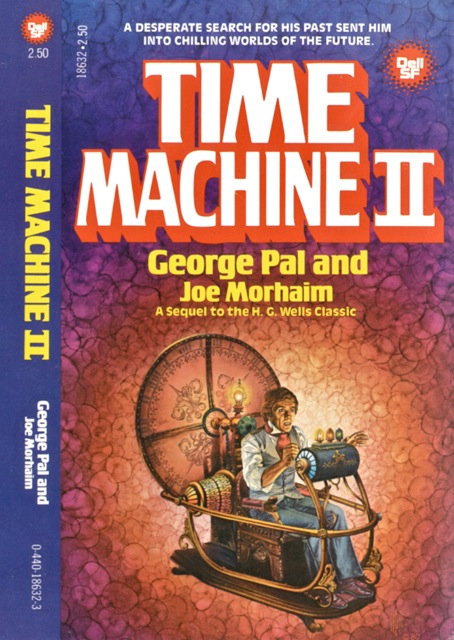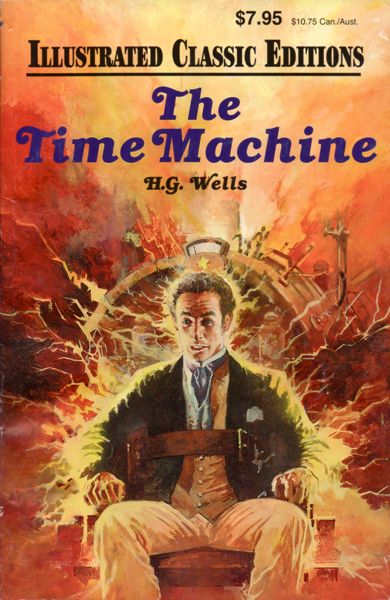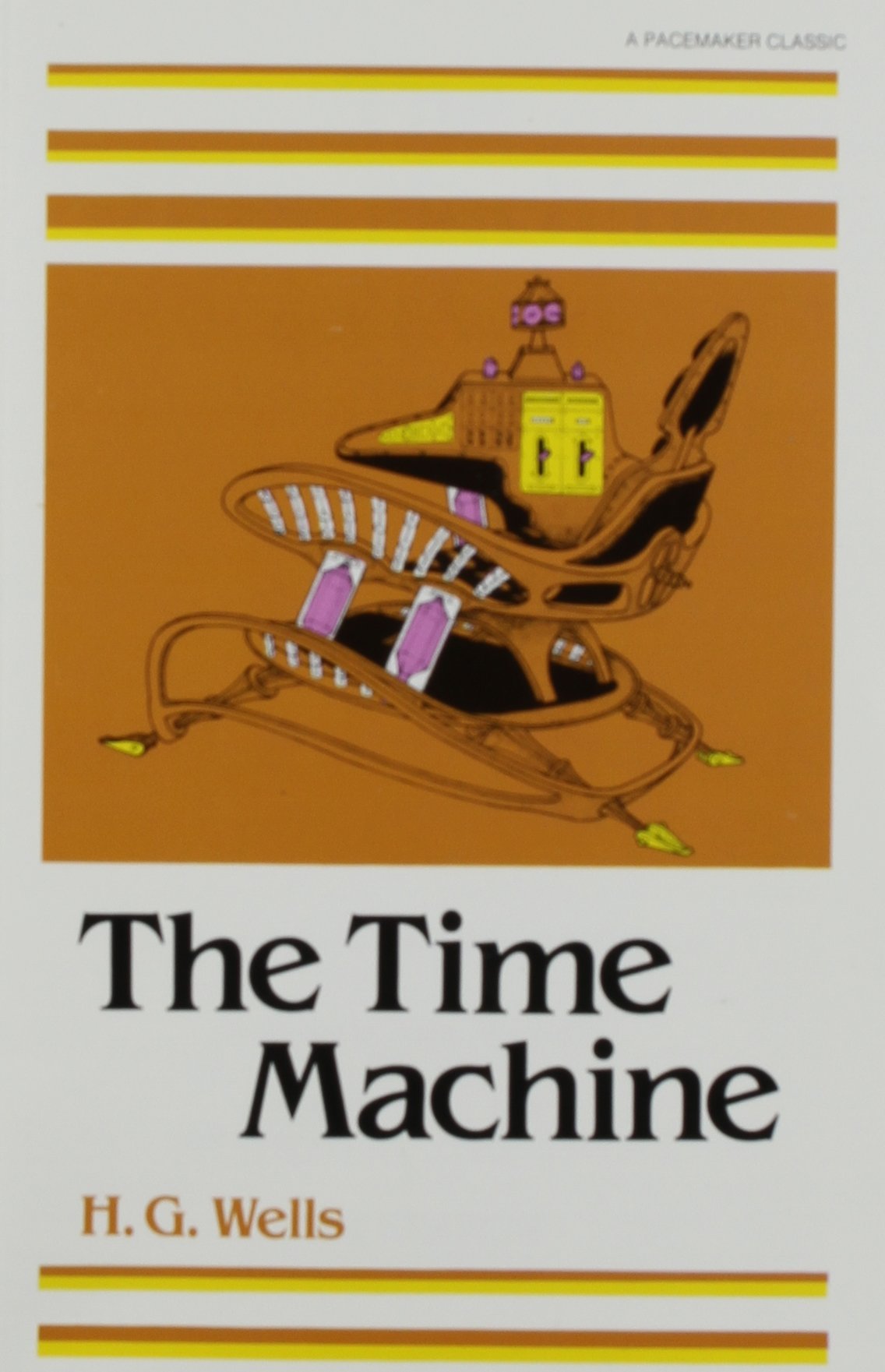

The Time Machine 1895
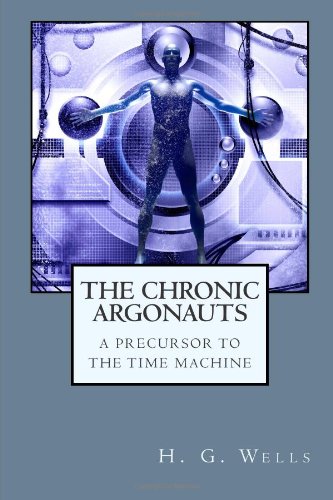
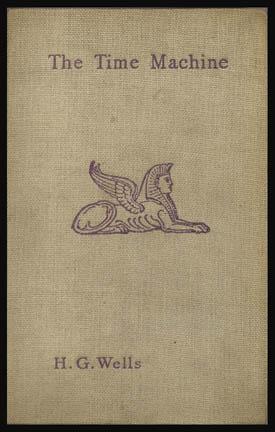
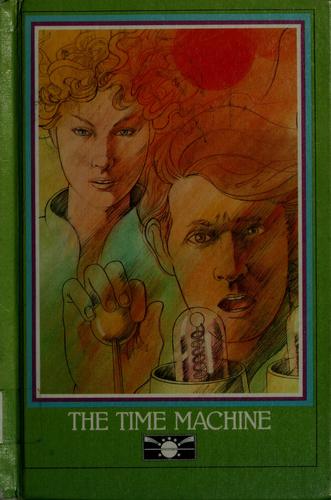
Wells's 1895 novella is the Time Traveller's own fireside account of the year 802,701; short, complete, and the seed of everything else on this shelf.
Open book →
Universe
H. G. Wells, David J. Lake, Karl Alexander, Betty Ren Wright, Chris Sasaki, David Haden, Egon Friedell, George Pal, Joe Morhaim, K. W. Jeter, Lawrence Tamblyn, Richard A. Lupoff, Richard Cowper, Robert J. Sawyer, Ronald Wright, Scott Ingram, Shirley Bogart, Stephen Baxter & T. Ernesto Bethancourt · 2 series · 8 novels · 3 novellas · 5 novelettes · 34 short stories · 1 collection · 1888–2024
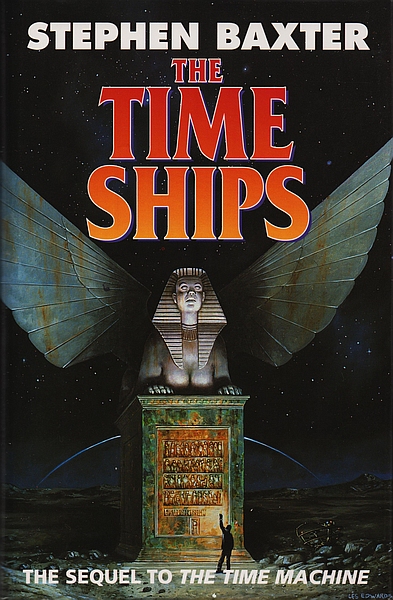
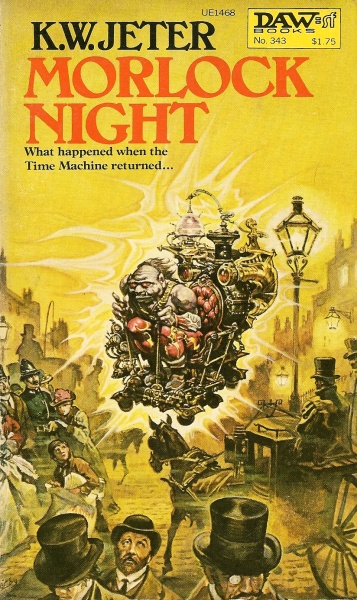
The Time Traveller throws his lever, and the laboratory dissolves into grey — day and night beating like a pulse, the sun streaking into a band of fire, the years falling away by the thousand. When the machine stops he stands in the year 802,701, among the gentle, idle Eloi who dance in the ruins of paradise, and the pale Morlocks who tend the machines below and climb, in the dark, to feed. This is the seed from which every tale of time travel grew: one Victorian evening's fireside account of a fourth dimension a man might walk down. At its centre stands H. G. Wells's slim 1895 romance, complete in itself. Around it has grown a long canopy of retellings — abridged and illustrated editions that carry the Eloi and Morlocks to younger readers, shaped by hands such as Betty Ren Wright and Chris Sasaki — and a strand of homage that treats Wells's invention as fact: Karl Alexander's Time After Time, in which Wells himself pursues Jack the Ripper through his own machine into a startled modern age, and David J. Lake's return to the Morlock world. It is honestly one work and its echoes, not a saga of equals. What lingers is the cool, reasoning voice of a gentleman-scientist watching wonder curdle into dread — for the machine does not stop at 802,701, but runs on to a still shore beneath a swollen, dying sun. Begin where all of it begins: with Wells's original. It is short, it is whole, and nothing after it is required.
Summary by Loreful, from public sources
Four ways in. Pick the one that sounds like you.
1 series · 2 works
1 series · 14 works
Open the branch →2 more works inside
H. G. Wells' Time Machine at the centre, 2 branches around it.
What this universe published, when, and what it is made of.
50 works · 1888–2024 · busiest 2009 (5 works) · longest gap 35 years (1896–1930)
Empty columns are silent years — nothing published. The longest silence here is 35 years, 1896–1930.
See every work ↓8 novels · 3 novellas · 5 novelettes · 34 short stories · 1 collection
19 authors
reads like:science fictionclass conflictour worldfar futurereflectiveadult
Grim and intense: 38% of this universe's placed works, the catalog's 46%.
this universe · the catalog · one dot = one book13 of 51 works carry a tone
Every work, three ways to look at it.
Series and publication data from ISFDB, CC BY 4.0. Branch grouping is derived, not curated.