More like Starchild
anchored on:science fictiondystopiarebellion and revolutiontotalitarianismfar futuretense+2 more
but
- Starchild
series3 books1964
completed
similar bytensefar futurespacescience fictiontotalitarianismdystopiasurveillance+1 more
The Starchild Trilogy is a series of three science fiction novels written by Frederik Pohl and Jack Williamson. In the future depicted in this series, mankind is ruled by a brutal totalitarian government known as the Plan of Man, enforced by a computerized surveillance state.
- The Hunger Games
series3 books2008
part of The Hunger Games Universe
similar bytensefar futurescience fictiondystopiarebellion and revolutiontotalitarianism
The Hunger Games is a series of young adult dystopian novels written by American author Suzanne Collins. The series consists of a trilogy that follows teenage protagonist Katniss Everdeen, as well as two prequels. The Hunger Games universe is a dystopia set in Panem, a post-apocalyptic North American country consisting of the wealthy Capitol and 12 districts in varying states of poverty. As punishment for rebellion, the Capitol hosts an annual battle royale competition called The Hunger Games. Each of the 12 districts must send two children between the ages of 12 and 18 to participate, and the last surviving child is dubbed the victor.
- The Hunger Games Universe
universe5 books2008
Start hereThe Hunger Games · Start here
similar bytensefar futuredystopiascience fictionrebellion and revolutiontotalitarianism
Panem, they call it now — a nation raised on the drowned bones of North America, a glittering Capitol ringed by twelve districts it once starved into obedience. Every year the Capitol collects its debt in children: two tributes from each district, drawn by lottery, dropped into an engineered arena, and made to kill one another on live television while the whole country is required to watch. This is the Hunger Games — entertainment, punishment, and government at once. Suzanne Collins tells it in a compact, unified body of work. The founding trilogy — The Hunger Games, Catching Fire, and Mockingjay — follows Katniss Everdeen, a girl from the coal-mining District 12 who volunteers in her sister's place and becomes something the Capitol never scripted. Two prequels reach back into the same machinery: The Ballad of Songbirds and Snakes traces a young Coriolanus Snow long before he is President, and Sunrise on the Reaping returns to District 12 a generation ahead of Katniss. Begin with the trilogy, in order — it is Katniss's voice, close and present-tense, that makes Panem breathe, and the prequels land hardest once you know how her story ends. Beneath the spectacle sits one steady, uncomfortable question: who profits when we agree to look away.
- This Perfect Day
Ira Levinstandalone novel1970
similar bytensefar futurescience fictiondystopiatotalitarianismrebellion and revolution+1 more
This Perfect Day is a science fiction novel by American writer Ira Levin, about a technocratic dystopia. Levin won a Prometheus Award in 1992 for this novel. This Perfect Day is one of two Levin novels yet to be adapted to film.
- When the Sleeper Wakes
H. G. Wellsstandalone novel1899
similar bytensefar futurescience fictiondystopiarebellion and revolutiontotalitarianism
Graham, an insomniac Englishman in 1890s London, takes a course of sleep-inducing drugs and falls into a coma that lasts two centuries. He wakes in the year 2100 to find his investments have compounded, through a ruling body called the White Council, into effective ownership of most of the world's wealth and power, making him, on paper, humanity's master, and in practice, its prisoner, held under guard while the Council governs in his name. A rebel faction led by a man named Ostrog frees him, hoping to use his symbolic authority to spark an uprising against the Council. An early H. G. Wells dystopia about inherited power and manufactured consent.
- The Handmaid's Tale
series3 books1985
similar bytensedystopiatotalitarianismscience fictionrebellion and revolution+1 more
The Handmaid's Tale is Margaret Atwood's 1985 novel set in Gilead, a totalitarian theocracy that has overthrown the United States and forces fertile women into reproductive servitude as Handmaids; it is narrated by one such woman, Offred. Atwood returned to the world in her 2019 sequel The Testaments, set fifteen years later and narrated by three women, including the regime's Aunt Lydia. Together the two novels move from Gilead's grip on power toward the first cracks in it.
- Dayworld
series5 books1971
similar bytensefar futurescience fictiondystopiatotalitarianism+2 more
Dayworld is a trilogy of science fiction novels by Philip José Farmer, inspired by his own short story "The Sliced-Crosswise Only-On-Tuesday World". They are set in a dystopian future in which people are allowed to live only one day of the week. For the rest of the six days, they are "stoned", kept in a kind of suspended animation. The novels focus on a man, Jeff Caird, who is a daybreaker: someone who lives more than one day a week. As the series progresses, the main character seems to be suffering from dissociative identity disorder. The novels comprising the trilogy are:Dayworld (1985) Dayworld Rebel (1987) Dayworld Breakup (1990)
- The Ferryman
Justin Croninstandalone novel2023
similar bytensefar futurescience fictiondystopiasurveillancetotalitarianism
The Ferryman is a 2023 dystopian fiction novel by Justin Cronin. The protagonist, Proctor Bennett, is a titular "ferryman", responsible for transporting elderly citizens to be reborn. Proctor gradually realizes that his utopian life is not what it seems. The Ferryman is Cronin's first novel since 2016's The City of Mirrors.
- Red Rising
series13 books2014
similar bytensefar futurescience fictionrebellion and revolutiondystopia+1 more
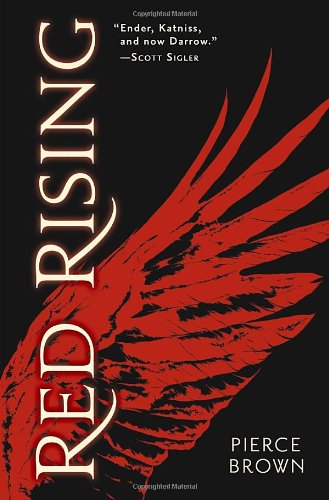
Pierce Brown's Red Rising follows Darrow, a lowborn 'Red' miner on a colonized Mars who discovers his caste's suffering is a lie sustained by the ruling Gold elite, and infiltrates their ranks to destroy the system from within. The series expands from a single-protagonist revenge story into a sprawling multi-book war across the solar system, eventually following an ensemble cast beyond Darrow alone, and combines Roman-inspired factional politics with brutal, competition-driven action set pieces.
- The Eyes of Heisenberg
Frank Herbertstandalone novel1966
similar bytensefar futurescience fictionrebellion and revolution+1 more
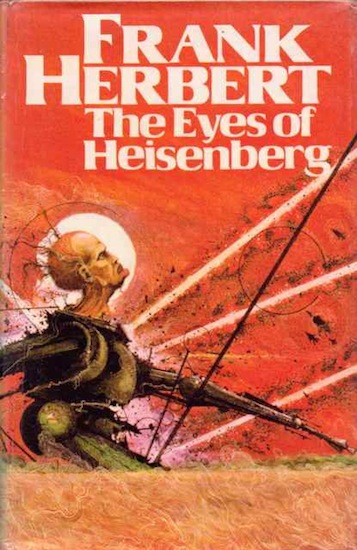
Tens of thousands of years in the future, Earth is ruled by the Optimen, a genetically engineered aristocracy that has made itself functionally immortal, while ordinary people, the Folk, live under strict reproductive control. When Harvey and Lizbeth Durant arrive to have their embryo genetically screened, the examining doctor finds something in the child no one has seen in a very long time: real potential for both fertility and life span, traits the Optimen have arrogated to themselves. Rather than destroy the embryo as policy demands, the doctor hesitates, setting off a chain of surveillance, suspicion and resistance. A tightly wound Frank Herbert thriller about genetic caste and rebellion.
- Company Wars
series7 books1981
part of Alliance-Union Universe
similar bytensefar futurespacescience fiction
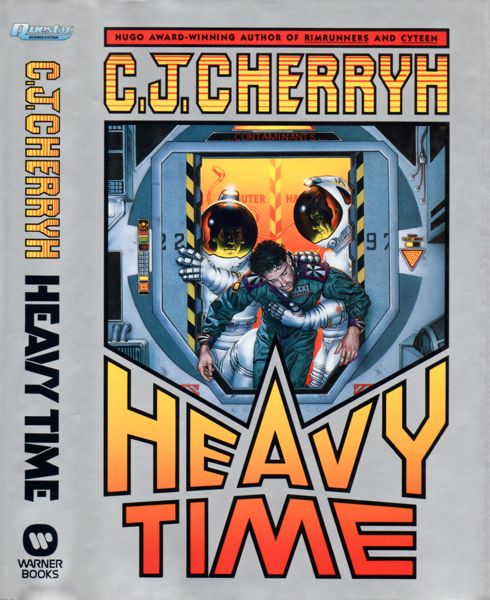
Company Wars gathers the novels C. J. Cherryh set during the breakaway conflict between Earth's colonial Company and the newly independent Union, within her wider Alliance-Union future history. Anchored by the Hugo Award-winning Downbelow Station, the books follow different ships, stations, and crews caught on either side, from merchanter traders to military spacers, rather than a single continuing cast. Read in any order, they build up a picture of the political and economic pressure that reshapes Cherryh's larger Alliance-Union universe.
- To the Stars (Harrison)
series3 books1980
completed
similar bytensescience fictionfar futuredystopiarebellion and revolution+1 more
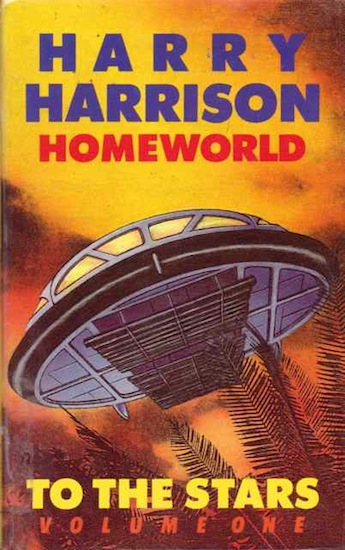
The To the Stars trilogy is a series of science fiction novels by Harry Harrison, first published in 1980 (Homeworld) and 1981. The three books were re-published in an omnibus edition in 1981.
- The Shockwave Rider
John Brunnerstandalone novel1975
similar bytensescience fictiondystopiasurveillancetotalitarianism+1 more
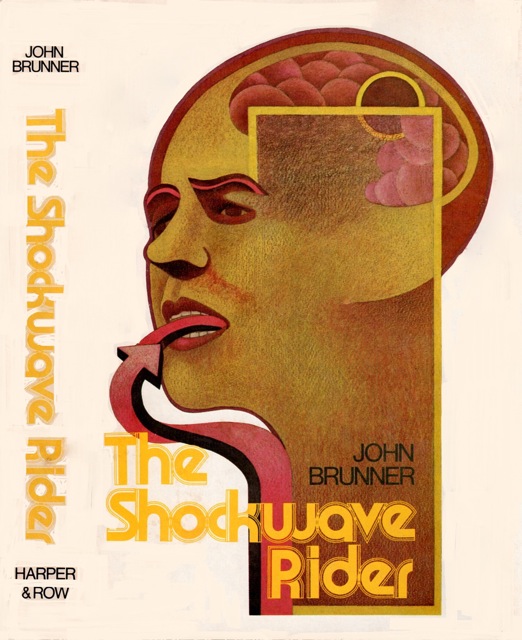
The Shockwave Rider is a science fiction novel by John Brunner, originally published in 1975. It is notable for its hero's use of computer hacking skills to escape pursuit in a dystopian future, and for the coining of the word "worm" to describe a program that propagates itself through a computer network. It also introduces the concept of a Delphi pool, perhaps derived from the RAND Corporation's Delphi method – a prediction market on world events which bears close resemblance to DARPA's controversial and cancelled Policy Analysis Market.
- Moties
series4 books1974
part of CoDominium
similar byfar futurespacescience fiction+1 more
Larry Niven and Jerry Pournelle's The Mote in God's Eye (1974) depicts humanity's first contact with an alien species, the Moties, set within the far-future interstellar setting of Pournelle's codominium future history. The Gripping Hand continues that first-contact crisis years later, and Outies, written by J. R. Pournelle, carries the story forward into a new generation. Together the three books trace an escalating encounter between human and Motie civilizations within the codominium universe.
- Honor Harrington
series14 books1993
part of Honorverse
similar bytensefar futurespacescience fiction
David Weber's Honor Harrington novels follow the title character's rise through the Manticoran navy in the 'Honorverse,' a space-opera setting built around Age-of-Sail-style naval combat, interstellar politics and a decades-long war between rival star nations. Beginning with On Basilisk Station, the core series runs to fourteen books, alongside spin-off subseries, prequels and shared-world anthologies also set in the Honorverse. It's one of the longest-running modern military science fiction series, published by Baen.
- Chaos Walking
series5 books2008
similar bytensefar futurescience fictiondystopia+2 more
Chaos Walking is a young adult science fiction series written by American-British novelist Patrick Ness. It is set in a dystopian world where all living creatures can hear each other's thoughts in a stream of images, words, and sounds called Noise. The series is named after a line in the first book: "The Noise is a man unfiltered, and without a filter, a man is just chaos walking." The series consists of a trilogy of novels and three short stories.
- The Penultimate Truth
Philip K. Dickstandalone novel1964
similar byfar futurescience fictiondystopiatotalitarianismsurveillance
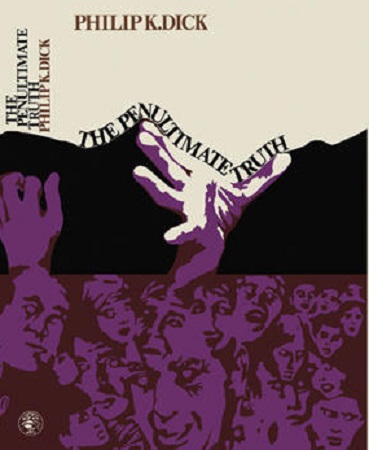
The Penultimate Truth is a 1964 science fiction novel by American writer Philip K. Dick. The story is set in a future where the bulk of humanity is kept in large underground shelters. The people are told that World War III is being fought above them, when in reality the war ended years ago. The novel is based on Dick's 1953 short story "The Defenders". Dick also drew upon two of his other short stories for the plot of the novel: "The Mold of Yancy" and "The Unreconstructed M".
- Vatta's War
series6 books2003
part of Vatta
similar bytensefar futurespacescience fiction
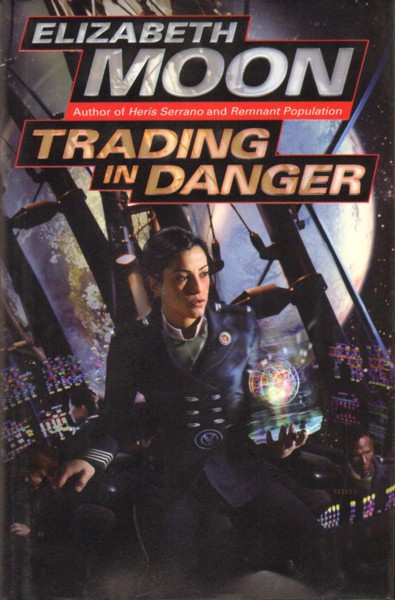
Vatta's War is a science fiction series by American writer Elizabeth Moon, comprising five books: Trading in Danger (2003), Marque and Reprisal, Engaging the Enemy (2006), Command Decision (2007), and Victory Conditions (2008). They have been characterized as military science fiction similar in style to the works of Lois McMaster Bujold, David Weber and Walter Jon Williams.
- Against a Dark Background
Iain M. Banksstandalone novel1993
similar bytensefar futurespacescience fiction
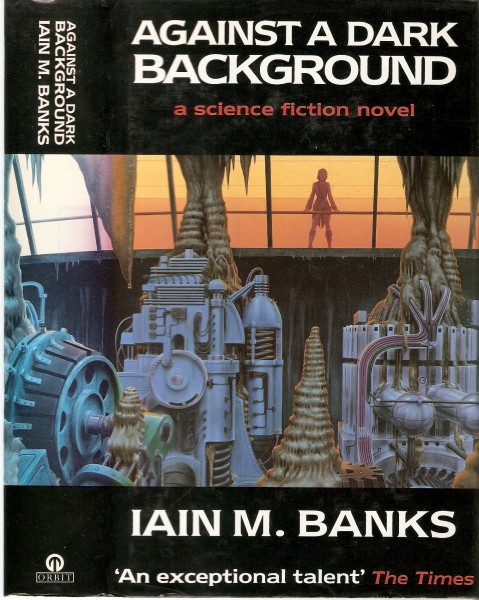
The daughter of an impoverished noble house and her squad of soldiers become thieves of antiquities; long after their retirement and separation she must assemble them again in order to find and steal the most powerful weapon ever created, or pay with her life.
- Pushing Ice
Alastair Reynoldsstandalone novel2005
similar bytensefar futurespacescience fiction
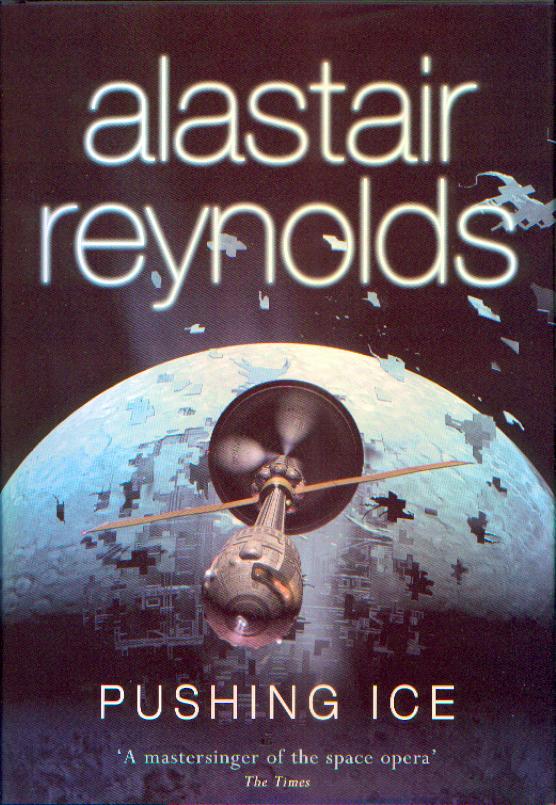
When Saturn's moon Janus suddenly takes off into interstellar space, an ice mining spaceship sent to investigate finds itself swept along into distant space until it ends up trapped in a gigantic alien structure, wherein the crew must prepare to reside for the foreseeable future.
- Our Friends from Frolix 8
Philip K. Dickstandalone novel1970
similar bytensefar futurescience fictiondystopiarebellion and revolution
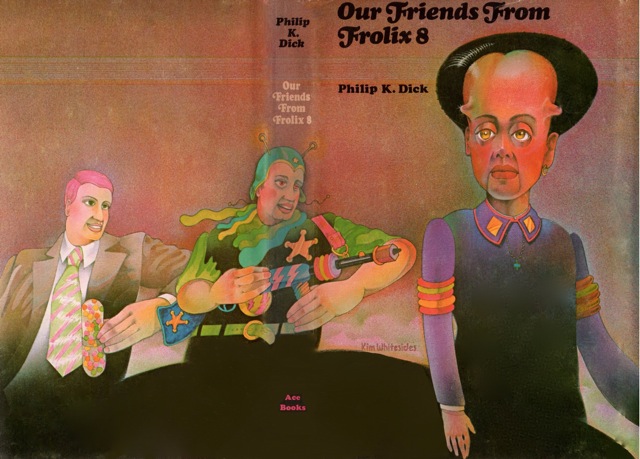
Our Friends from Frolix 8 is a science fiction novel by American writer Philip K. Dick. It was written from 1968 to 1969 and was published in 1970 by Ace Books. The novel is set in the 22nd century, when humanity is ruled by mutated humans, "New Men" and "Unusuals", while normal "Old Men" are discriminated against. The story follows Nick Appleton, a low-class Old Man worker who becomes a subversive to the system, and Willis Gram, the Unusual ruler of the Earth. Separately, resistance leader Thors Provoni has left the planet to find an ally to the Old Men, finally returning with an alien from far away in space. The novel is best known for a single scene where the characters discuss the dead body of God having been found in space.
- Space Beagle
series5 books1939
completed
similar bytensefar futurespacescience fiction
The Voyage of the Space Beagle is a 1950 fix-up novel by A. E. van Vogt, stitched together from four previously published pulp stories into a single continuous account of the exploration ship Space Beagle's encounters with a series of dangerous alien life forms. Its episodic, crew-versus-monster structure reads as a loose sequence of adventures rather than one continuous plot.
- The Sardonyx Net
Elizabeth A. Lynnstandalone novel1981
similar bytensefar futurespacescience fictionrebellion and revolution
From the flaps of the Putnam first edition: "The Sardonyx Net, also known as the Yago Net: a vast starship owned and operated by the Family Yago, captained by Zed Yago. It visits all planets in the Sardonyx Sector of space, picking up special cargo - convicted felons who will serve our their terms as dorazine-drugged slaves to the wealthy land and factory owners on the planet Chabad. But often their ordeal begins even before the are sold, for Zed Yago is a man with a taste for sadism. The slave trade is the most lucrative business on Chabad. It is controlled totally by the Family Yago, headed by Zed's older sister Rhani, who is the only woman Zed has truly loved. Rhani is a shrewd businesswoman with only one weakness: a heart as compassionate as her brother's is perverse. While the authorities of the Sector's other planets look away, the Families of Chabad purchase dorazine from representatives of a secret, unlocatable source known as The Pharmacy, and use it to keep their slave-based economy healthy. Not one protests, for Chabad's illegal and inhumane activities keep prisons empty, criminals under control, and Chabad's valuable exports flowing. Despite constant underground revolutionary activity, the situation has maintained. But he long-lived stability of this sanctioned trade in illegal drugs and human beings is now threatened by two unexpected events: a worsening shortage of dorazine which is sparking more rebellion, and the arrival of Starcaptain Dana Ikoro. Dana, as drug smuggler, is captured by the Net and delivered from Zed's hands to Rhani. He is to be her bodyguard, but becomes much more. Against this incredible background, Lynn tells an irresistible story of adventure, intrigue, revolution and romance. It is a story of people snared in a net of warring passions, a net which will prove to be even stronger than the power of the Sardonyx Net."
- Berserker (Fred Saberhagen)
series59 books1963
similar bytensefar futurespacescience fiction
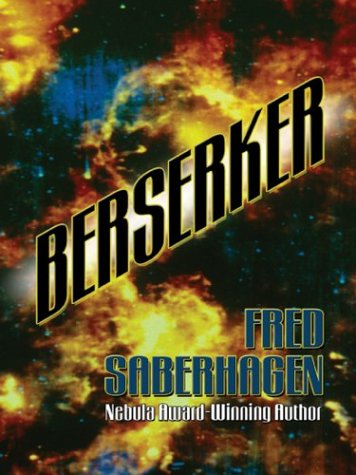
The Berserker series is a series of space opera science fiction short stories and novels by Fred Saberhagen, in which robotic self-replicating machines strive to destroy all life.