More like Stranger
anchored on:science fictionsteampunk
but
- Kairos
series11 books1962
completed
similar byscience fiction+1 more
The Time Quintet is a science fantasy series of five young adult novels written by American author Madeleine L'Engle and made up of A Wrinkle in Time (1962), A Wind in the Door (1973), A Swiftly Tilting Planet (1978), Many Waters (1986), and An Acceptable Time (1989).
- Riverworld
series37 books1965
similar byscience fiction+2 more
The Riverworld series consists of five science fiction novels (1971–1983) by American author Philip José Farmer (1918–2009). The Riverworld is an artificial, or heavily terraformed, planet where all humans who ever lived throughout history have been resurrected. The novels explore interactions of resurrected individuals from many different cultures and time periods. The underlying theme is quasi-religious. The motivations and ethics of the unknown intelligences that created the Riverworld and its inhabitants are explored.
- Inverted World
Christopher Prieststandalone novel1974
similar bymysterioussecondary worldscience fiction+1 more
A city travels slowly along tracks laid by the residents ahead of the city and pulled up from behind the city, through territory where other people live.
- Foundation Universe
universe123 books1940
Start hereFoundation · Start here
similar byrobotsscience fiction+1 more
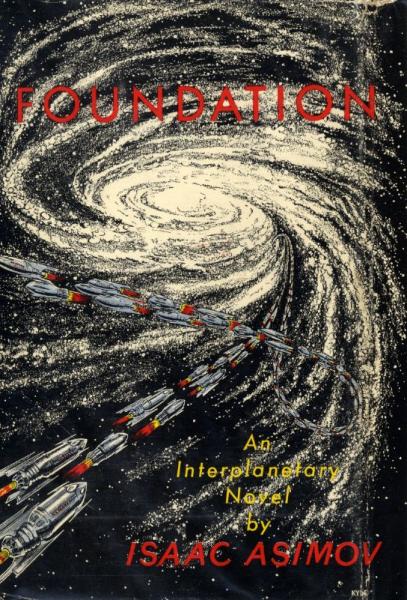
There is a science that reads the future of quadrillions the way an astronomer reads the orbits of stars. It is called psychohistory, and its equations foresee something the ruling Galactic Empire cannot admit: the throne is rotting, and thirty thousand years of barbarism are coming. One man, Hari Seldon, cannot stop the fall. He can only shorten it — by seeding a Foundation of scholars at the rim of the galaxy, a fragile institution built to carry knowledge across the dark and cut the interregnum to a single millennium. This is a universe told in the register of history itself: the long view, the calm of deep time, empires measured in centuries and men measured against them. The spine is Asimov's original trilogy — Foundation, Foundation and Empire, Second Foundation — followed decades later by the sequels Foundation's Edge and Foundation and Earth and the prequels Prelude to Foundation and Forward the Foundation. Late in life Asimov braided this in with his other future histories: the Robot novels of detective Elijah Baley and his humaniform partner R. Daneel Olivaw (The Caves of Steel, The Naked Sun, The Robots of Dawn, Robots and Empire) and the early Galactic Empire novels (Pebble in the Sky and its kin), until one continuous chronicle ran from the first thinking robots to the Second Empire. Other hands extend it — the Second Foundation Trilogy by Gregory Benford, Greg Bear, and David Brin, and shared-world spinoffs such as Robot City — so the corpus sprawls beyond a single author's tidy shelf. What distinguishes it is that the drama is intellectual: crises resolved by insight, nerve, and dialogue rather than fleets and blades, each turn hinging on the hidden logic of the Seldon Plan. Begin where readers have always begun — with Foundation, and the original trilogy in publication order. The rest opens outward from there.
- Pathfinder Trilogy
series3 books2010
similar bysecondary worldscience fictionadventurous+2 more
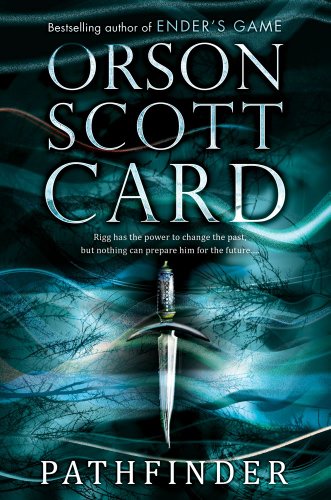
The Pathfinder series is a completed series of novels by Orson Scott Card that is notable for its unusual fusion of the themes of science fiction and fantasy, with some elements of historical fiction. One significant aspect of the Pathfinder series is its uniquely complex but well documented set of time travel rules.
- Dream Archipelago
series16 books1976
completed
similar byscience fictionidentity+1 more
Christopher Priest's Dream Archipelago stories return again and again to a vast chain of islands stretched across a world locked in permanent, distant war between two continental powers, without ever quite settling whether the archipelago is a real place or something closer to collective dream or fiction within the fiction. Novels like The Affirmation and The Islanders, along with numerous short stories, revisit the setting from different, often contradictory angles rather than building one continuous narrative. The ambiguity between what's real and what's invented is treated as the point, not a gap to be resolved.
- Apprentice Adept
series7 books1980
similar byadventurous+4 more
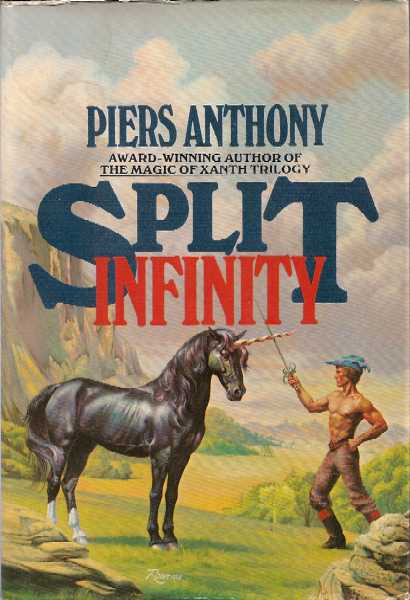
Apprentice Adept is a heptalogy of fantasy and science fiction novels written by English American author Piers Anthony. The series takes place on Phaze and Proton, two worlds occupying the same space in two different dimensional planes. Phaze is a lush planet of magic, where Proton is a barren mining planet of science. As the series opens, each person born on Phaze and Proton has an alternate self living on the other world. But if a person on either world lacks a duplicate, he can cross to the other through an energy "curtain" that circumscribes each frame.
- A Red Sun Also Rises
Mark Hodderstandalone novel2012
similar bymysterioussecondary worldscience fictionadventurous+1 more
"Reclusive Anglican priest Aiden Fleisher and brilliant hunchback Clarissa Stark travel as missionaries to the distant South Pacific island of Koluwai, where they encounter hostile natives--and a gateway to another world lit by two suns. Fleisher and Stark meet the native Yatsill, consummate mimics who construct an elaborate society based on Victorian London, using details mined from the thoughts of their new visitors. As Aiden and Clarissa strive to make sense of this strange new world, they become aware of an approaching menace: the arrival of a third sun that will bring the Blood Gods to ravage the world."--Library Journal.
- Alliance-Union Universe
universe173 books1976
Start hereCompany Wars · The central sequence
similar byscience fiction+1 more
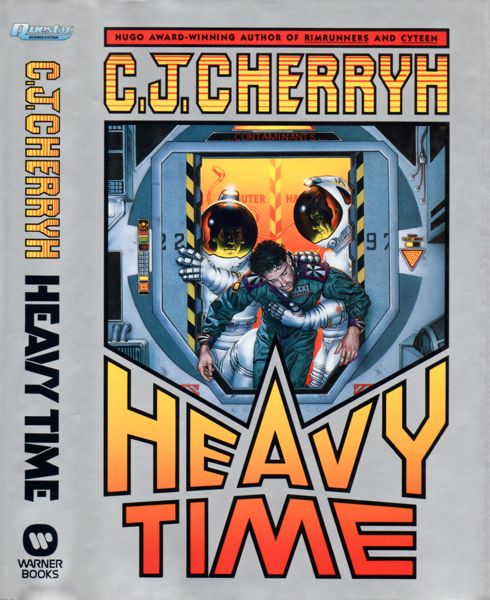
The dark between the stars belongs to no one, and everyone who lives out here knows it: the merchanter Families hauling cargo between stations that cannot feed themselves, the Earth Company clutching at colonies it can no longer supply, the Union breeding its cloned azi to settle worlds faster than birth allows. C. J. Cherryh's Alliance-Union is a future history of humankind's spread across the third and fourth millennia, told from inside the pressure — no clean empires, only stations, ships, treaties, and the people caught in the machinery of who holds the jump-points. The sequence runs from the first laborious pre-FTL stations through the Company Wars, the independence struggle that breaks over Pell in Downbelow Station (Hugo, 1981), to the genetics and cold politics of Union's homeworld in Cyteen (Hugo, 1988) and its sequel Regenesis. Around that spine cluster the merchanter novels of trader Families, the Faded Sun trilogy of human envoys among the martial alien Mri, and the Chanur books, narrated from the hierarchical, whiskered viewpoint of the hani. On the isolated world of Merovin, the Merovingen Nights anthologies open the setting to other hands — Mercedes Lackey, Janet and Chris Morris, Nancy Asire — a shared world braided into the whole. What sets it apart is intimacy at scale. Cherryh drops you without a map into a single skull and lets you assemble the politics from what that person fears and bargains for; the aliens are genuinely alien, loyalty is always provisional, and the real antagonist is usually logistics. Most books stand alone, in her words, "like real history." The surest way in is Downbelow Station — the war seen from one besieged station — then Cyteen, for the mind that shaped the other side.
- Queen's Thief
series41 books1996
similar bysecondary world+3 more
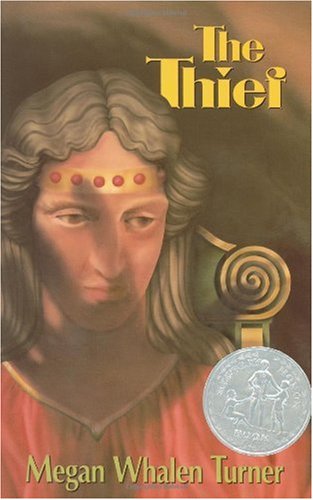
Queen's Thief begins with The Thief, in which a boastful, underestimated young thief is pulled from prison to steal a legendary stone for the king's scholar, only for the story to reveal by its end that its narrator has been playing a much longer game than the reader realized. Megan Whalen Turner's series expands from that single heist into court intrigue and small-scale warfare among a set of Mediterranean-flavored kingdoms, with later books often shifting whose perspective the reader trusts. It's known for close, deliberately withheld narration as much as its plotting.
- The World of Tiers
series9 books1965
similar bysecondary worldscience fictionimmortalityadventurous
The World of Tiers is a series of science fiction novels by American writer Philip José Farmer. They are set within a series of artificially constructed universes, created and ruled by decadent beings who are genetically identical to humans, but regard themselves as superior, and are the inheritors of an advanced technology they no longer understand. This technology enables the "Lords" to create novel lifeforms, and also to prevent aging or disease, making them effectively immortal. Their technology also allows them to create small artificial universes, and the planets and stars within them, and modify the physical laws to create unusual or interesting phenomena within these universes. Instantaneous travel within and between these universes is achieved by the use of "gates" which seem to function as teleportation devices, or as a means of creating wormholes between different regions of spacetime.
- His Dark Materials Universe
universe13 books1995
Start hereHis Dark Materials · Start here
similar byadventurous+1 more
In a world like ours and unlike it, every human soul walks outside the body in the shape of an animal — a daemon, who speaks, who cannot be lied to, and who settles into one fixed form only when childhood ends. This is the country of His Dark Materials: a company of parallel worlds across which an invisible dust of consciousness drifts down upon the waking mind; where a Church that calls itself the Magisterium would sooner sever a child's soul than let that Dust be understood; and where a golden instrument, the alethiometer, answers true questions for anyone with the patience to read it. Philip Pullman's design stands in two trilogies and a scatter of shorter tales. His Dark Materials — Northern Lights (published in America as The Golden Compass), The Subtle Knife, and The Amber Spyglass — carries Lyra Belacqua from the rooftops of a shadow Oxford across the borders between worlds. The Book of Dust returns to that same territory: La Belle Sauvage looks back to Lyra as an infant carried through a great flood, while The Secret Commonwealth follows her grown and less certain into adulthood, with a concluding volume closing the arc. Around them sit slim companion books — Lyra's Oxford, Once Upon a Time in the North, Serpentine — and Nicholas Wright's stage adaptation, made with Pullman's blessing. The register is grave and luminous at once, its title lifted from Milton and its quarrel drawn from Blake: a story that takes the side of curiosity, love, and the physical world against any authority that would forbid them. It reads as adventure — armoured bears, aeronauts, knife-cut windows between skies — yet reasons like philosophy. Begin with Northern Lights / The Golden Compass and read the first trilogy through before turning to The Book of Dust, which deepens everything the first has already made you feel.
- Cradle
Arthur C. Clarke & Gentry Leestandalone novel1988
similar byrobotsmysteriousscience fiction+1 more
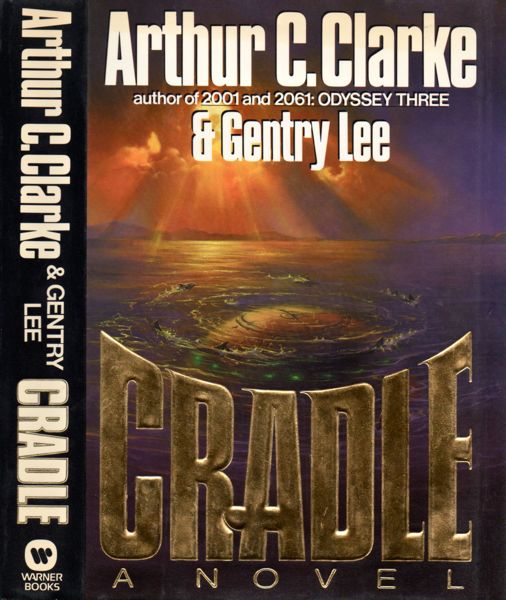
Cradle is a 1988 science fiction novel by Arthur C. Clarke and Gentry Lee. The premise of the novel is the contact between a few humans from the Miami area in 1994 and the super robots of a damaged space ship submerged off the Florida coast. Telecommunication advances such as videotelephones and highly efficient underwater scanning equipment used in the story bridge from the everyday, real-life aspects of the setting toward the near future, bespeaking technological progress.
- Seeker
series3 books2015
similar byscience fictionidentity+3 more
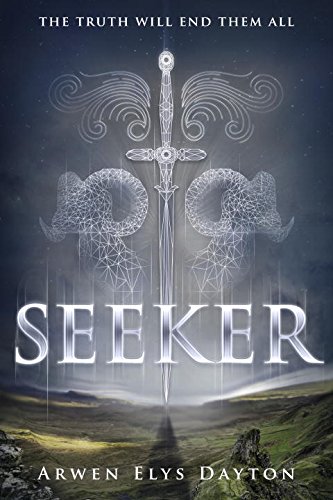
Quin Kincaid has spent her life training to take her Oath and join the Seekers, an ancient order sworn to protect the weak — but the night of her initiation reveals that her family, her order, and the boy she loves are not what she believed. Arwen Elys Dayton's trilogy (Seeker, Traveler, Disruptor) follows Quin and her companions as the order's true, morally compromised history comes into focus.
- Earthsea Cycle
series18 books1964
completed
part of Earthsea
similar bysecondary world+1 more
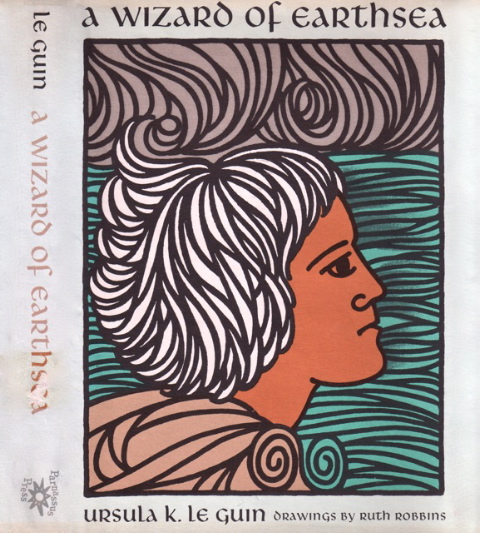
The Earthsea Cycle, also known as Earthsea, is a series of high fantasy books written by American author Ursula K. Le Guin. Beginning with A Wizard of Earthsea (1968), The Tombs of Atuan (1970), and The Farthest Shore (1972), the series was continued in Tehanu (1990), and Tales from Earthsea and The Other Wind. In 2018, all the novels and short stories were published in a single volume, The Books of Earthsea: The Complete Illustrated Edition, with artwork by Charles Vess.
- Myst
series3 books1995
similar bymysterioussecondary worldscience fiction+1 more
The Myst Reader is a collection of three novels based on the Myst series of adventure games. The collection was published in September 2004 and combines three works previously published separately: The Book of Atrus (1995), The Book of Ti'ana (1996), and The Book of D'ni (1997). The novels were each written by British science-fiction writer David Wingrove with assistance from Myst's creators, Rand and Robyn Miller.
- Mortal Engines Prequels
series3 books2009
part of Mortal Engines Universe
similar byscience fictionsteampunkadventurous+1 more
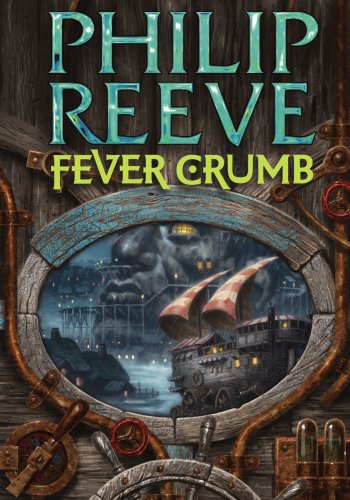
The Fever Crumb series is the title of a series of novels written by British author, Philip Reeve, and is the prequel series to his Mortal Engines Quartet. The series consists of three books: Fever Crumb (2009), A Web of Air (2010), and Scrivener's Moon (2011). The books follow a young woman known as Fever Crumb, and her adventures set around the time of the creation of the first traction cities that become prevalent in the Mortal Engines series. While Reeve stated in 2011 that he had always envisaged a quartet for the series, assuring readers of a fourth installment, by 2020 he said that "too much time has passed", making it difficult to revisit the series, and that he did not intend to finish and publish a fourth book.
- Ice Crown
Andre Nortonstandalone novel1970
similar by+3 more
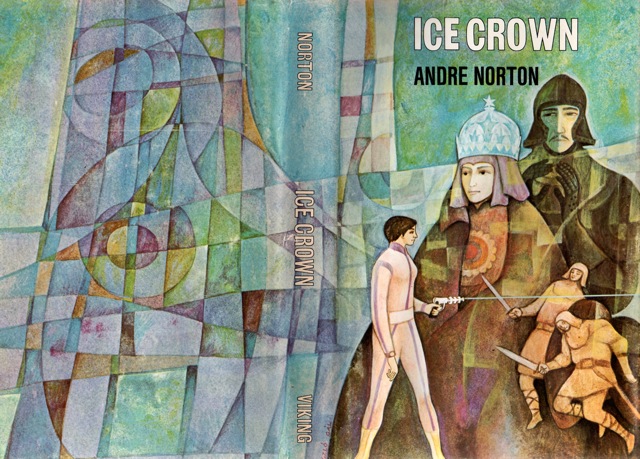
A closed planet is visited by a Survey team, which consists of a young lady, her handsome and totally loathsome cousin and their uncle. The reason the planet was closed was before they were overthrown, the empire rulers were experimenters on a large scale with humans. They would brain-wipe them and implant false memories of their own choosing, then place them on planets to follow the lifestyles selected for them. Such was the world the young lady and the other team members found and she was drawn to breaking regulations to save a princess, thus making her a target for he uncle and cousin's revenge. She is lucky the evil ones were overturned...but their mind controlling machines still functioned.
- The Last Descendants
series3 books2008
similar bysecondary world+3 more
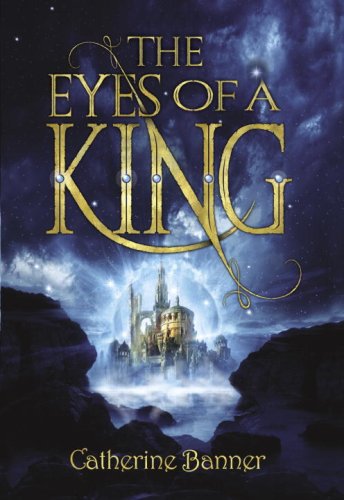
The Last Descendants is a series of fantasy novels for young adults written by British author Catherine Banner and published by Random House. The series started with a single book Catherine started writing when she was 14 years old and still a student. The first book, The Eyes of a King, became the first part of the series The Last Descendants. The second book, Voices in the Dark, was published in 2009. The third and last book, The Heart at War, was published in May 2015.
- Caraval
series4 books2017
similar bysecondary world+1 more
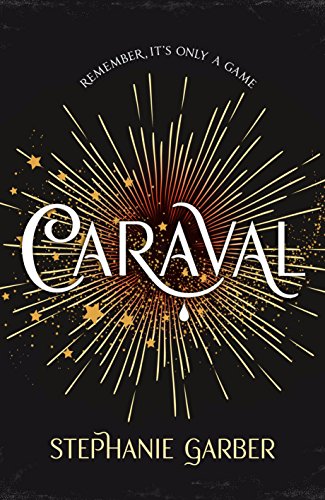
Caraval is Stephanie Garber's YA fantasy trilogy, Caraval (2017), Legendary and Finale, with Spectacular later extending the story. It follows Scarlett Dragna into a legendary, once-a-year magical performance where the line between spectacle and real danger blurs, as she searches for her missing sister inside it. The books form one continuing story rather than standalone volumes.
- The Quest of the Riddle-Master
series3 books1976
completed
similar bysecondary worldadventurous+2 more
Patricia A. McKillip's Riddle-Master trilogy follows Morgon, prince of the small island of Hed, whose discovery of three star-shaped birthmarks on his forehead draws him into a search for his own hidden identity and a confrontation with ancient, shape-shifting powers. Drawing on Celtic myth, the three books are prized for their lyrical prose and riddle-based magic, and are often cited among the best high fantasy of the 1970s.