Loreful
HomeDiscover
Search series, authors…⌘K
Loreful

Reading orders for SF/F series and shared universes — with your place kept in every one.

Explore

UniversesSeriesWorksAuthorsAtlas

Help

FAQAboutSite map

Account & legal

Sign inCreate accountPrivacyTerms

Data

Built on ISFDB, Wikipedia, Wikidata and Open Library. Curated reading orders carry their reasoning on the page; the rest follow publication order. Data sources & licenses

© Loreful · data: ISFDB · CC BY

More like Stud

anchored on:romanceparanormal romancealiensother star systemsfar futurescience fiction+3 more

but

Mood

The mood the book leaves you in.

  • The reading experience is propelled by journeys, exploration, and physical risk; excitement and forward momentum dominate over dread or introspection.
  • Joy and loss are deliberately mixed; the resolution grants characters something real while taking something else away, leaving warmth and sorrow together.
  • The book demands work from the reader — dense prose, difficult structure, unfamiliar ideas, or morally uncomfortable material — as part of its intended effect.
  • Grim events, cruelty, or despair dominate the atmosphere, and the book does not soften them with comfort or comic relief.
  • The atmosphere is quietly unsettling — wrongness, unease, and the uncanny pervade the book without necessarily escalating into overt horror.
  • The book is built to move the reader; character feeling is foregrounded and major scenes aim at a strong emotional response.
  • Humor is a primary aim and the prose plays for laughs — comic situations, wit, or dialogue produce sustained comedy, not occasional levity.
  • The book insists that things can improve; effort and decency are shown to matter, and the arc bends toward better outcomes even through hardship.
  • The book teaches as it goes — real facts, history, science, or craft are conveyed in enough depth that learning is part of the reading experience.
  • The book is designed to uplift and motivate, presenting perseverance or achievement in a way that invites the reader to aspire or act.
  • The overall register is cheerful and easygoing; stakes are kept gentle and the book avoids dwelling on pain or dread.
  • Withheld information drives the experience; the book sustains enigmas and secrets the reader wants resolved, whatever its genre.
  • The book is contemplative and inward-looking, giving more weight to thought, memory, and meaning than to external events.
  • The book works as comfort reading — low tension, a soothing pace, and an atmosphere the reader can unwind in.
  • Grief, loss, or melancholy set the dominant register, and the book lets sorrow stand rather than resolving it into comfort.
  • Sustained suspense is the point; the book keeps the reader braced for what happens next through danger, pressure, or impending revelation.
  • Playful invention and charm define the register — fanciful conceits, light absurdity, and a narration that delights in its own oddity.

About

What the story runs on.

  • Stories in which extraterrestrial beings are central — as characters, cultures, or the object of the plot.
  • Stories about venturing into space to explore — survey missions, astronauts, and the frontier of the unknown beyond Earth.
  • Stories structured as a quest — a journey undertaken to find, deliver, or destroy something of great import.
  • Stories in which staying alive against nature, catastrophe, or scarcity is the central problem.
  • Stories of lovers kept apart by law, family, faith, or station, where the obstacle to love is the plot.
  • Stories of growing up — a young protagonist crossing from childhood into adult knowledge and responsibility.
  • Stories about who a character truly is — self-discovery, doubled lives, and the search for a self.
  • Stories about mourning — living through the death of a loved one and what loss does to the survivors.
  • Stories in which a buried family truth — hidden parentage, crimes, or shames — surfaces and reorders the present.
  • Stories driven by maneuvering for power — factions, conspiracies, and statecraft conducted in shadow.
  • Stories in which war itself is the subject — combat, occupation, and what warfare does to soldiers and civilians.
  • Stories organized around investigating a killing — the case, the clues, and the pursuit of the killer, in any genre's clothing.

Shelf

Where it sits in the library.

    • Fiction built on magic or other supernatural elements that have no scientific explanation.
    • Secondary-world fantasy at large scale, where the fate of nations or the world turns on the protagonists' struggle.
    • Fantasy set in a recognizably modern city or contemporary world where the supernatural intrudes on everyday life.
    • Fantasy that blends in horror's atmosphere and imagery, keeping a fantastical frame around grim or frightening material.
    • Action-driven fantasy following warriors or rogues with personal stakes against sorcerous threats, rather than world-spanning conflicts.
    • Fantasy set in a real historical period or a close analogue of one, with magic woven into the era.
    • Fantasy in which protagonists cross from the ordinary world into another world through a portal or similar passage.
    • Fiction that retells or reworks a traditional fairy tale in a new form or setting.
    • Fantasy drawing directly on myths, legends, and folklore, retelling them or building on their figures and logic.
    • Fantasy of ghosts, vampires, shapeshifters, psychics, and similar phenomena, usually set in an otherwise ordinary world.
    • Fiction mixing science-fictional trappings with overtly magical or impossible elements in one setting.
    • Low-stakes fantasy emphasizing comfort, community, and everyday pleasures over conflict and peril.
    • Speculative fiction of pervasive moral ambiguity, violence, and cynicism that rejects heroic conventions — fantasy and SF alike.
      • Fiction that extrapolates from science and technology — future societies, space travel, or speculative inventions — within at least nominally natural laws.
      • Science fiction of interstellar scope — starships, galactic polities, and adventure across star systems.
      • Science fiction committed to scientific rigor, where technical plausibility constrains the story.
      • Science fiction centered on armed forces and warfare, told largely from a military point of view.
      • Science fiction of networked, corporate-dominated near futures, pairing high technology with social decay.
      • Science fiction styled on nineteenth-century steam-powered technology, often in a Victorian or pseudo-Victorian setting.
      • Fiction depicting an oppressive or catastrophic society, presented as a warning.
      • Fiction set after civilization's collapse, following survivors in the ruins of the old world.
      • Fiction in which characters move between past and future, and the mechanics or consequences of that travel drive the plot.
      • Fiction exploring a world where a historical event went differently and history diverged from ours.
      • Science fiction about humanity's first encounter and communication with an alien intelligence.
      • Science fiction in which extraterrestrial forces attack or occupy Earth and humanity resists.
      • Fiction whose primary aim is to frighten or unsettle the reader through dread, menace, or the monstrous.
      • Horror of vast, indifferent, incomprehensible entities before which humanity is insignificant, in the Lovecraft tradition.
      • Horror of decaying houses, buried family secrets, and oppressive atmosphere in the Gothic literary tradition.
      • Horror centered on hauntings and the returning dead.
      • Horror located in the mind — paranoia, obsession, and unreliable perception rather than external monsters.
      • Horror built around the reanimated dead and survival amid their outbreaks.
      • Horror defined by explicit, transgressive gore that refuses to cut away from violence.
      • Speculative fiction of the strange and uncanny that resists both natural explanation and standard genre categories.
      • Fiction organized around solving a crime or puzzle, typically following an investigator toward the identification of a culprit.
      • A puzzle-first mystery that lays out clues so the culprit's identity can be deduced before the reveal.
      • Crime fiction of moral ambiguity, fatalism, and hard-edged style, set among the corrupt and the doomed.
      • A mystery following the realistic routines of police work — forensics, interviews, and case-building.
      • A gentle mystery with an amateur sleuth, a small community, and violence kept off the page.
      • A mystery set in a past era, where the investigation works within that period's methods and society.
      • Fast-paced fiction driven by imminent danger, pursuit, or high-stakes conspiracy, built to sustain tension.
      • A thriller of espionage — agents, tradecraft, and intelligence services in conflict.
      • A thriller centered on lawyers and the courtroom, where litigation carries the suspense.
      • A thriller driven by detailed contemporary or near-future technology, often military or scientific.
      • A thriller whose tension comes from mental states and manipulation between characters rather than external action.
      • Fiction whose central plot is a romantic relationship and its development toward an emotionally satisfying resolution.
      • Romance in which one or both partners are supernatural beings, blending fantasy elements into the love story.
      • A fantasy-romance hybrid in which the romantic arc and the fantasy plot carry equal weight.
      • Romance set in a past era, with courtship shaped by the period's society and manners.
      • Romance set in the present day, without supernatural or historical elements.
      • Fiction set in a real past period, where the historical setting materially shapes characters and events.
        • General and literary fiction emphasizing prose style, character interiority, or formal ambition over genre plot conventions.
        • Fiction in a realistic world where magical events occur and are treated as ordinary, in the tradition of Latin American literature.
        • Fiction that ridicules people, institutions, or society in order to criticize them.
        • Fiction of dreamlike, irrational imagery and logic that breaks from realistic representation.
        • Fiction that plays with narrative convention through metafiction, fragmentation, and self-reference.
        • Fiction propelled by journeys, exploration, and physical peril, where action and survival carry the plot.
        • Adventure fiction of ships and seafaring — naval engagements, voyages, and life at sea.
        • Fiction of the American frontier West — gunmen, ranchers, and lawmen, typically in the late nineteenth century.
        • Fiction centered on soldiers, campaigns, and the experience of warfare, historical or imagined.
          • Fiction written primarily to amuse, using comedic situations, wit, or parody as its organizing principle.
            • Multi-generational fiction following a family or dynasty across decades, with inheritance and kinship as the through-line.
              • Fiction whose world runs on explicit game mechanics — levels, stats, and skills that characters can see and exploit.
                • Fiction about costumed or superpowered heroes and their conflicts with comparable villains.

                Practical

                How long a commitment, whether it stands alone, and whether it has finished.

                Tap a chip to ask for it · tap again to rule it out · once more to clear. Numbers show what would be left.

                • Cover of The Host
                  The Host

                  Stephenie Meyer · standalone novel · 2008

                  similar byemotionalaliensforbidden lovescience fictionromanceidentity

                  The earth has been invaded by a species that take over the minds of their human hosts while leaving their bodies intact, and most of humanity has succumbed. But Melanie Stryder refuses to fade away. Wanderer, the invading "soul" who has been given Melanie's body, knew about the challenges of living inside a human: the overwhelming emotions, the too vivid memories. But there was one difficulty Wanderer didn't expect: the former tenant of her body refusing to relinquish possession of her mind. Melanie fills Wanderer's thoughts with visions of the man Melanie loves--Jared, a human who still lives in hiding. Unable to separate herself from her body's desires, Wanderer yearns for a man she's never met. As outside forces make Wanderer and Melanie unwilling allies, they set off to search for the man they both love.--From publisher description.

                • Cover of Ender Wiggin
                  Ender Wiggin

                  series · 14 books · 1977

                  part of Ender's Game Universe

                  similar byfar futurealiensother star systemsscience fiction+2 more

                  Orson Scott Card's Ender's Game (1985, expanded from his 1977 novella) follows child prodigy Andrew "Ender" Wiggin as he is recruited into a military training program built to prepare Earth's defenses for an anticipated third war against an insectoid alien species known as the Formics. The saga continues years later through Speaker for the Dead and Xenocide, following an older Ender as he confronts the moral weight of his role in that earlier conflict, and concludes the core arc in Children of the Mind, with Ender in Exile filling in the years between the first two books. Set within the wider Ender's Game universe, the series shifts from military coming-of-age story to slower, more philosophical science fiction as it progresses.

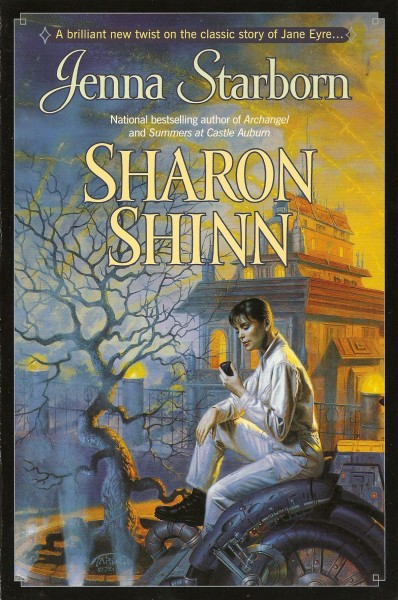
                • Cover of Jenna Starborn
                  Jenna Starborn

                  Sharon Shinn · standalone novel · 2002

                  similar byemotionalfar futureforbidden loveother star systemsscience fictionromanceidentity

                  From the Author's Website: "Jane Eyre retold as a science fiction tale. Jenna is created in the gen tanks, repudiated by the woman who commissioned her, educated in a scientific school, and employed as a nuclear technician on a remote, lonely planet. There she falls in love with the brusque and changeable owner of a mining estate—but he has hidden away a wife who is not so much mad as broken."

                • Cover of The Xenith Trilogy
                  The Xenith Trilogy

                  series · 3 books · 2017

                  similar byaliensfar futureother star systemsromancescience fictionspace+3 more

                • Cover of Lost Colony
                  Lost Colony

                  series · 3 books · 1986

                  similar byemotionalfar futureromanceother star systemsscience fiction+2 more

                • Cover of Xeno Relations
                  Xeno Relations

                  series · 5 books · 2014

                  similar byfar futurealiensscience fictionspaceother star systems+3 more

                • Cover of Lost Colony (Susan Grant)
                  Lost Colony (Susan Grant)

                  series · 1 book · 2011

                  similar byemotionalfar futureforbidden loveother star systemsscience fictionromance

                • Cover of Ringworld
                  Ringworld

                  series · 5 books · 1970

                  part of Known Space

                  similar byfar futurealiensother star systemsscience fictionspace

                  The Ringworld series is a series of science fiction novels written by American author Larry Niven. It is part of his Known Space series of stories. Its backdrop is the Ringworld, a giant artifact 3 million times the surface area of Earth circling a star. The series is composed of four standalone science fiction novels, the original award-winning book and its three sequels:1970: Ringworld 1979: The Ringworld Engineers 1996: The Ringworld Throne 2004: Ringworld's Children

                • Cover of Defy the Stars (Claudia Gray)
                  Defy the Stars (Claudia Gray)

                  series · 3 books · 2017

                  similar byfar futureother star systemsscience fictionspace+3 more

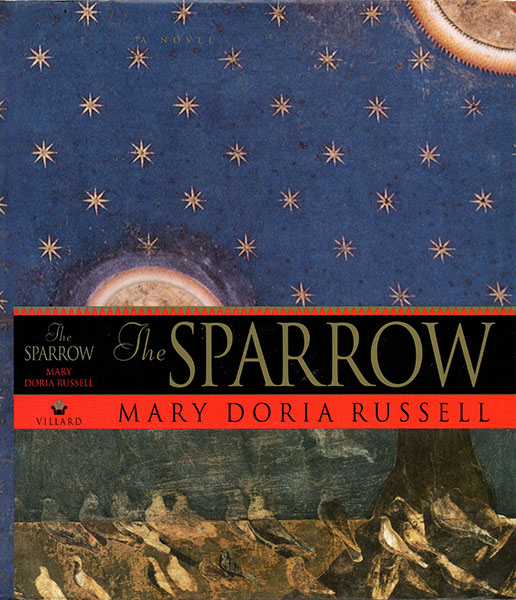
                • Cover of Sparrow
                  Sparrow

                  series · 2 books · 1996

                  similar byemotionalaliensother star systemsscience fiction

                  Mary Doria Russell's The Sparrow (1996) follows a Jesuit-led mission to the planet Rakhat after radio signals from Alpha Centauri reveal it hosts intelligent life, alternating between the expedition and the traumatized return of its sole survivor, Father Emilio Sandoz, as he tries to explain what happened. The sequel Children of God (1998) follows Sandoz back to Rakhat and continues working out the theological and political fallout of first contact between humans and the planet's two native species.

                • Cover of Heechee
                  Heechee

                  series · 19 books · 1972

                  completed

                  similar byfar futurealiensother star systemsscience fictionspace

                  The Heechee Saga, also known as the Gateway series, is a series of science fiction novels and short stories by Frederik Pohl. The Heechee are an advanced alien race that visited the Solar System hundreds of millennia ago and then mysteriously disappeared. They left behind bases containing artifacts, including working starships, which are discovered and exploited by humanity.

                • Cover of The Time Traveler's Wife
                  The Time Traveler's Wife

                  Audrey Niffenegger · standalone novel · 2003

                  similar byemotionalforbidden loveromancescience fiction

                  The Time Traveler's Wife is the debut novel by American author Audrey Niffenegger, published in 2003. It is a love story about Henry, a man with a genetic disorder that causes him to time travel unpredictably, and about Clare, his wife, an artist who has to cope with his frequent absences. Niffenegger, who was frustrated with love when she began the novel, wrote the story as a metaphor for her failed relationships. The tale's central relationship came to Niffenegger suddenly and subsequently supplied the novel's title. The novel has been classified as both science fiction and romance.

                • Cover of Moties
                  Moties

                  series · 4 books · 1974

                  part of CoDominium

                  similar byfar futurealiensother star systemsscience fictionspace

                  Larry Niven and Jerry Pournelle's The Mote in God's Eye (1974) depicts humanity's first contact with an alien species, the Moties, set within the far-future interstellar setting of Pournelle's codominium future history. The Gripping Hand continues that first-contact crisis years later, and Outies, written by J. R. Pournelle, carries the story forward into a new generation. Together the three books trace an escalating encounter between human and Motie civilizations within the codominium universe.

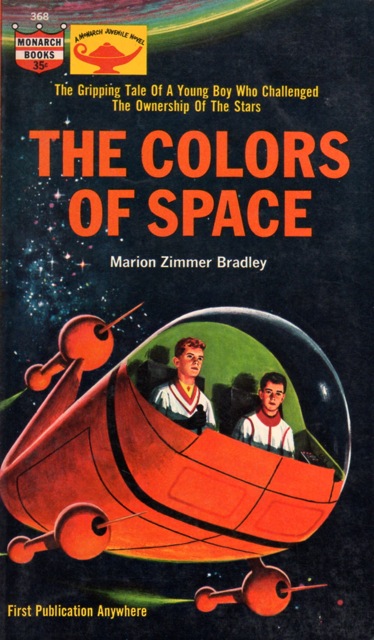
                • Cover of The Colors of Space
                  The Colors of Space

                  Marion Zimmer Bradley · standalone novel · 1963

                  similar byfar futurealiensother star systemsscience fictionspace

                  The Lhari seem peaceful and friendly, but they go to some lengths to protect their monopoly on faster-than-light travel. One young man is sent to discover their secrets.

                • Cover of Anna Nestor-Sigrid / The Aighors
                  Anna Nestor-Sigrid / The Aighors

                  series · 4 books · 1975

                  completed

                  similar byfar futurealiensother star systemsscience fictionspace+2 more

                  Beyond Heaven's River follows Yoshio Kawashita, a soldier abducted mid-battle during World War II and stranded by unknown aliens on a distant world he can never leave, whose only tie back to meaning is Anna Nestor, a ruthless interstellar power broker who first treats him as a curiosity before the two are forced to confront who took him and why. Greg Bear wrote it as a standalone 1980 novel rather than the start of a series.

                • Cover of Embassytown
                  Embassytown

                  China Miéville · standalone novel · 2011

                  similar byfar futurealiensother star systemsscience fictionspaceidentity

                  In the far future, humans have colonized a distant planet, home to the enigmatic Ariekei, sentient beings famed for a language unique in the universe, one that only a few altered human ambassadors can speak. Avice Benner Cho, a human colonist, has returned to Embassytown after years of deep-space adventure. She cannot speak the Ariekei tongue, but she is an indelible part of it, having long ago been made a figure of speech, a living simile in their language. When distant political machinations deliver a new ambassador to Arieka, the fragile equilibrium between humans and aliens is violently upset. Catastrophe looms, and Avice is torn between competing loyalties—to a husband she no longer loves, to a system she no longer trusts, and to her place in a language she cannot speak yet speaks through her.

                • Cover of Starmother
                  Starmother

                  Sydney J. Van Scyoc · standalone novel · 1976

                  similar byemotionalfar futurealiensother star systemsscience fiction

                  Ahna Swiss is a dogooder type. She arrives on an alien planet to help out some the local children, who are under threat because of their mutant status, and some religious conservatives that are not too happy about their existence. The whole society there could fall apart at any time, but Jahna finds out that the locals have plans for her, and new role, that of Starmother to these new children.

                • Cover of Enemy Mine
                  Enemy Mine

                  David Gerrold & Barry B. Longyear · standalone novel · 1985

                  similar byemotionalfar futurealiensother star systemsscience fiction

                  On a far distant planet, at the height of the war between the Dracon Empire and Earth, two military pilots crash in the heat of battle. One is human, one is Drac. Each is a repulsive alien to the other. Each is a professional warrior, filled with hatred for his blood enemy... Marooned on a hostile planet, they have a choice. They can complete their missions in a mutual pact of violence and death. Or they can do the most painful thing any Human or Drac has ever done—reach out and begin the new age of understanding that is struggling to be born...

                • Cover of The Gods Themselves
                  The Gods Themselves

                  Isaac Asimov · standalone novel · 1972

                  similar byfar futurealiensscience fictionother star systems+1 more

                  The Gods Themselves is a 1972 science fiction novel written by Isaac Asimov, and his first original novel in fifteen years. It won the Nebula Award for Best Novel in 1972, and the Hugo Award for Best Novel in 1973.

                • Cover of Chanur
                  Chanur

                  series · 7 books · 1982

                  part of Alliance-Union Universe

                  similar byfar futurealiensother star systemsscience fictionspace

                  The Chanur novels are a series of five science fiction novels, forming three separate stories, written by American author C. J. Cherryh and published by DAW Books between 1982 and 1992. The first novel in the series is The Pride of Chanur (1982), which was nominated for both the Hugo and Locus Awards in 1983. The Pride of Chanur, originally a stand-alone story, was followed by the Chanur's Venture trilogy, Chanur's Venture (1984), which was shortlisted for a Locus Award in 1985; The Kif Strike Back (1985) and Chanur's Homecoming (1986). These were followed by a later sequel, Chanur's Legacy (1992). The five novels were also published in two omnibus editions: the first three in The Chanur Saga in 2000 and the next two in Chanur's Endgame in 2007.

                • Cover of Up the Walls of the World
                  Up the Walls of the World

                  James Tiptree & Jr. · standalone novel · 1978

                  similar byfar futurealiensother star systemsscience fictionspace+1 more

                  Up the Walls of the World is a 1978 science fiction novel by American author Alice Sheldon, who wrote under the pen name of James Tiptree, Jr. It was the first novel she published, having until then worked and built a reputation only in the field of short stories.

                • Cover of Triptych
                  Triptych

                  J. M. Frey · standalone novel · 2011

                  similar byemotionalaliensforbidden lovescience fiction+1 more

                  Triptych is a 2011 debut novel by Canadian author J.M. Frey. The novel follows three narrators as they recount the events surrounding major turning points in the life of Gwen Pierson, a languages specialist: Evvie Pierson, Gwen's mother a housewife in rural southern Ontario; Kalp, an alien refugee from a dead planet living in England and Gwen's lover; and Basil Grey, a Welsh computer engineer.

                • Cover of Yargo
                  Yargo

                  Jacqueline Susann · standalone novel · 1979

                  similar byfar futurealiensother star systemsscience fictionromance+1 more

                  Yargo is a romantic science fiction novel by Jacqueline Susann. It was written during the 1950s, but not published until 1979, four years after Susann's death.

                • Cover of The Ophelia Prophecy
                  The Ophelia Prophecy

                  Sharon Lynn Fisher · standalone novel · 2014

                  similar byfar futurealiensother star systemsscience fictionromance+1 more

                  Asha and Pax -- strangers and enemies -- find themselves stranded together on the border of the last human city, neither with a memory of how they got there. Asha is an archivist working to preserve humanity's most valuable resource -- information -- viewed as the only means of resurrecting their society. Pax is Manti, his Scarab ship a menacing presence in the skies over Sanctuary, keeping the last dregs of humanity in check. Neither of them is really what they seem, and what humanity believes about the Manti is a lie. With their hearts and fates on a collision course, they must unlock each other's secrets and forge a bond of trust before a rekindled conflict pushes their two races into repeating the mistakes of the past.