More like Superpowered
but
- His Dark Materials Universe
universe13 books1995
Start hereHis Dark Materials · Start here
similar byadventurous+1 more
In a world like ours and unlike it, every human soul walks outside the body in the shape of an animal — a daemon, who speaks, who cannot be lied to, and who settles into one fixed form only when childhood ends. This is the country of His Dark Materials: a company of parallel worlds across which an invisible dust of consciousness drifts down upon the waking mind; where a Church that calls itself the Magisterium would sooner sever a child's soul than let that Dust be understood; and where a golden instrument, the alethiometer, answers true questions for anyone with the patience to read it. Philip Pullman's design stands in two trilogies and a scatter of shorter tales. His Dark Materials — Northern Lights (published in America as The Golden Compass), The Subtle Knife, and The Amber Spyglass — carries Lyra Belacqua from the rooftops of a shadow Oxford across the borders between worlds. The Book of Dust returns to that same territory: La Belle Sauvage looks back to Lyra as an infant carried through a great flood, while The Secret Commonwealth follows her grown and less certain into adulthood, with a concluding volume closing the arc. Around them sit slim companion books — Lyra's Oxford, Once Upon a Time in the North, Serpentine — and Nicholas Wright's stage adaptation, made with Pullman's blessing. The register is grave and luminous at once, its title lifted from Milton and its quarrel drawn from Blake: a story that takes the side of curiosity, love, and the physical world against any authority that would forbid them. It reads as adventure — armoured bears, aeronauts, knife-cut windows between skies — yet reasons like philosophy. Begin with Northern Lights / The Golden Compass and read the first trilogy through before turning to The Book of Dust, which deepens everything the first has already made you feel.
- Kairos
series11 books1962
completed
similar byscience fiction+3 more
The Time Quintet is a science fantasy series of five young adult novels written by American author Madeleine L'Engle and made up of A Wrinkle in Time (1962), A Wind in the Door (1973), A Swiftly Tilting Planet (1978), Many Waters (1986), and An Acceptable Time (1989).
- Renegades (Marissa Meyer)
series3 books2017
similar byidentityour worldscience fictionsuperherotense+2 more
Renegades is set in Gatlon City after a civil war between the superheroic Renegades and the villainous Anarchists, and follows Nova, a young woman with the power to put people to sleep by touch, as she infiltrates the Renegades as a spy for her uncle's Anarchists and falls for Adrian, the adopted son of the Renegades' leaders. Marissa Meyer's trilogy, continuing through Archenemies and Supernova, plays the two factions' history against the leads' divided loyalties; Meyer has said she doesn't plan to extend the series further.
- Marvel Universe
universe492 books1967
Start hereThe Venom Factor · Start here
similar bycontemporarysuperhero+1 more
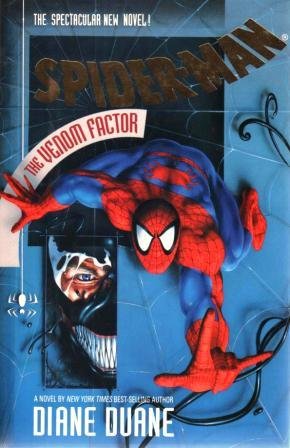
Look up. Somewhere over the rooftops a kid in red-and-blue is swinging late to a job he can't afford to lose, an old soldier is arguing with a billionaire in a flying suit, and a team of the hunted are teaching frightened children how not to hate. This is the world outside your window with the volume turned up — the Marvel Universe, the four-color continuity of the comics rendered in prose, where the fantastic wears a human face and the rent still comes due at the end of the month. The shelf runs wide and it runs deep. These are tie-in novels, decades of them across several publishing eras, sorted by the hero on the spine: Spider-Man and the X-Men carry the heaviest shelves, with Iron Man, Captain America, the Avengers, the Hulk, Doctor Strange, Black Panther, and the Guardians of the Galaxy holding their own ground. Prose hands who know the material — Peter David, Greg Cox, Keith R. A. DeCandido, Christopher Golden, Alex Irvine, among many others — trade off across single-character adventures, shared crossovers, and thick original anthologies that hand a dozen writers a single hero for an afternoon. Continuity is generous rather than strict: threads connect, the city is always the same city, but each book largely stands on its own two feet. What sets this world apart is the person under the mask — the power is the easy part; the marriage, the grief, the guilt, the bad day at work are the story. Newcomers shouldn't hunt for a first volume, because there isn't one. Start with the hero you already love: a Spider-Man or X-Men novel is the natural front door, and the multi-author anthologies are a fast way to sample many voices at once. Pull a thread that speaks to you and follow it in; the rest of the world is always right next door.
- Richard Forthrast
series2 books2011
similar byour worldscience fiction+3 more
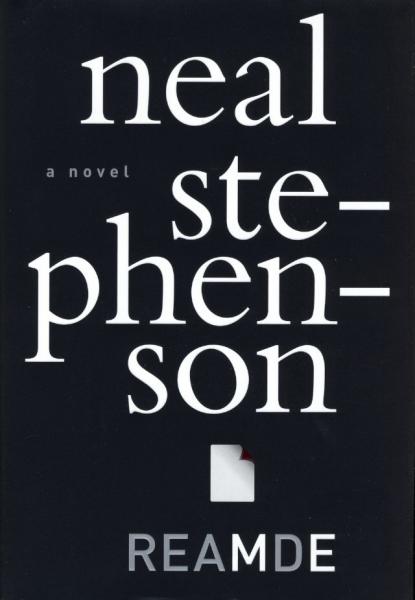
Neal Stephenson's Richard 'Dodge' Forthrast novels open with Reamde, a globe-spanning thriller that starts when ransomware inside an MMORPG economy pulls Richard's extended family into a real-world hostage crisis involving hackers, jihadists and Russian mobsters. The sequel Fall; or, Dodge in Hell shifts registers entirely, following Richard's digitally preserved mind after death into an afterlife simulation built from his scanned brain. The two books share a protagonist and family but differ sharply in genre and scale.
- Foundation Universe
universe123 books1940
Start hereFoundation · Start here
similar byscience fiction+1 more
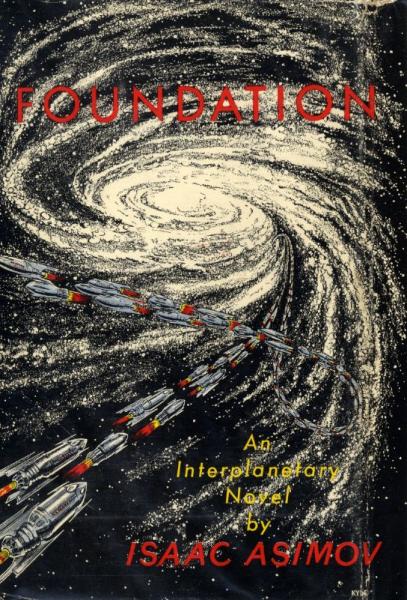
There is a science that reads the future of quadrillions the way an astronomer reads the orbits of stars. It is called psychohistory, and its equations foresee something the ruling Galactic Empire cannot admit: the throne is rotting, and thirty thousand years of barbarism are coming. One man, Hari Seldon, cannot stop the fall. He can only shorten it — by seeding a Foundation of scholars at the rim of the galaxy, a fragile institution built to carry knowledge across the dark and cut the interregnum to a single millennium. This is a universe told in the register of history itself: the long view, the calm of deep time, empires measured in centuries and men measured against them. The spine is Asimov's original trilogy — Foundation, Foundation and Empire, Second Foundation — followed decades later by the sequels Foundation's Edge and Foundation and Earth and the prequels Prelude to Foundation and Forward the Foundation. Late in life Asimov braided this in with his other future histories: the Robot novels of detective Elijah Baley and his humaniform partner R. Daneel Olivaw (The Caves of Steel, The Naked Sun, The Robots of Dawn, Robots and Empire) and the early Galactic Empire novels (Pebble in the Sky and its kin), until one continuous chronicle ran from the first thinking robots to the Second Empire. Other hands extend it — the Second Foundation Trilogy by Gregory Benford, Greg Bear, and David Brin, and shared-world spinoffs such as Robot City — so the corpus sprawls beyond a single author's tidy shelf. What distinguishes it is that the drama is intellectual: crises resolved by insight, nerve, and dialogue rather than fleets and blades, each turn hinging on the hidden logic of the Seldon Plan. Begin where readers have always begun — with Foundation, and the original trilogy in publication order. The rest opens outward from there.
- DC Universe
universe542 books1942
Start hereIt's Superman! · Start here
similar bycontemporarysuperhero
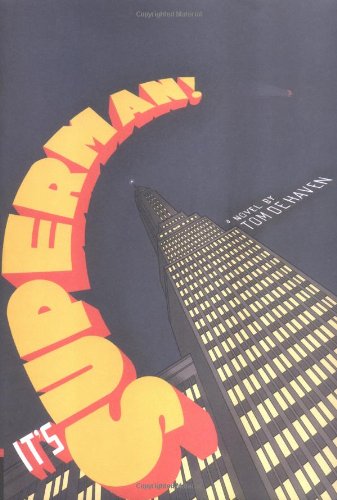
Above Metropolis a figure holds the sun at his back; across the bay, Gotham keeps its secrets in the dark. The DC Universe is the modern world's pantheon — a shared mythology where gods wear capes and cities have consciences, raised up across generations by hundreds of hands. It began as four-color comics, but it long ago outgrew the panel: here it lives in prose, where the same familiar heroes are given room to think, to grieve, and to be afraid. What this catalog holds is the book side of that mythology. There are original novels and novelizations orbiting the great figures — Batman and the noir of Gotham, Superman and the bright promise of Metropolis, Wonder Woman and her older, sterner gods — and the team-ups where they stand together as the Justice League. Younger readers get Smallville, the story of a farm boy before the cape, in both middle-grade and older editions, while a run of movie adaptations translates the screen back to the page. Set a little apart, at the universe's shadowed edge, is Neil Gaiman's Sandman — a literary dream-cycle about the lord of stories himself, as much folklore and myth as superheroics. Expect sprawl, and expect reinvention: this is a world its many authors have torn down and rebuilt more than once. The pleasure is the collision of registers — aspirational, sunlit heroism against street-level crime and real tragedy, archetypes as old as legend wearing very new clothes. There is no single thread to pull first; you enter by the door of whichever hero calls to you. Come for grim detective work through Batman and Gotham, for hope and wonder through Superman, or for something stranger and quieter through Sandman, which nearly stands on its own. Publication order is a fine default, but the honest truth is that any of these figures is a beginning.
- Pym
series5 books1838
similar by+5 more
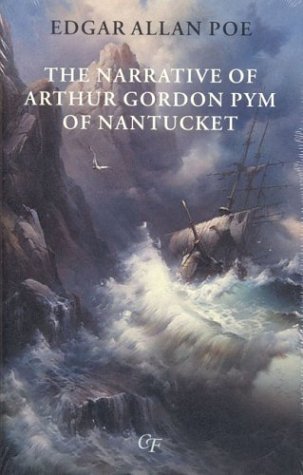
Edgar Allan Poe's The Narrative of Arthur Gordon Pym of Nantucket (1838), his only complete novel, sends a young stowaway through shipwreck, mutiny, and cannibalism toward an increasingly strange voyage to the South Pole that breaks off on a mysterious, unexplained image. Jules Verne wrote an unauthorized 1897 sequel, An Antarctic Mystery, resolving Poe's cliffhanger in more rationalist terms, while Mat Johnson's 2011 novel Pym uses Poe's original as the springboard for a satirical modern story about race.
- Jumper
series6 books1992
similar bycontemporaryscience fictionadventuroustense+2 more
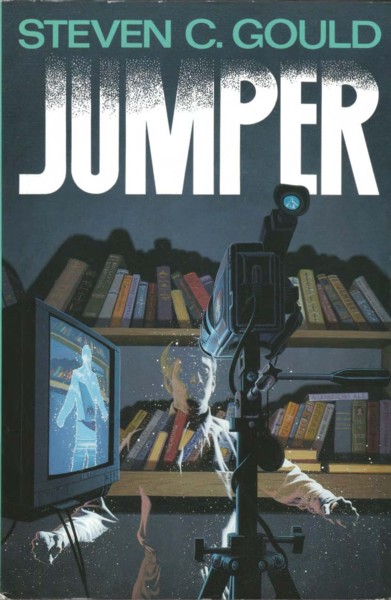
Jumper follows David Rice, a teenager who discovers he can teleport anywhere he's been and uses the power to escape an abusive home, only to find that ability alone doesn't solve the harder problems of finding his absent mother, building an honest relationship, or staying off the radar of people who'd exploit him. Steven Gould's series continues across Reflex, Impulse, and Exo, later following his and his wife's daughter as a second-generation jumper. A 2008 film loosely adapted the first novel.
- The Merchant Princes
series14 books2004
similar byour worldcontemporaryscience fictiontense
The Merchant Princes is a science fantasy and alternate history series of nine novels by British writer Charles Stross. In the series, there exist a number of parallel worlds, all of which are on the same geographical Earth but with different societies at different points of development. Members of a certain bloodline can travel between these worlds along with their immediate possessions. The series largely follows Miriam Beckstein, a technology journalist raised in a familiar "normal" Earth, who discovers she was born in a parallel world and is a member of this bloodline. She quickly becomes entangled in political maneuvering and assassination plots with her estranged family. Miriam uses modern technology and investigative journalism to attempt to stay a step ahead.
- Seeker
series3 books2015
similar byidentityscience fictiontense+3 more
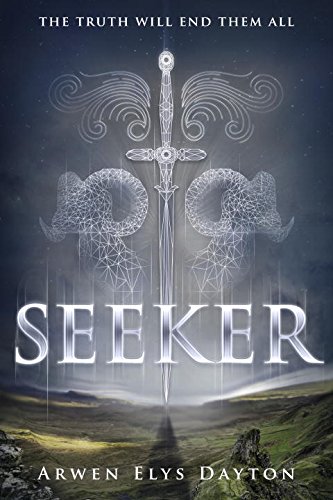
Quin Kincaid has spent her life training to take her Oath and join the Seekers, an ancient order sworn to protect the weak — but the night of her initiation reveals that her family, her order, and the boy she loves are not what she believed. Arwen Elys Dayton's trilogy (Seeker, Traveler, Disruptor) follows Quin and her companions as the order's true, morally compromised history comes into focus.
- The Heroic Adventures of Kate
series3 books1990
similar byour worldcontemporaryadventurous+2 more
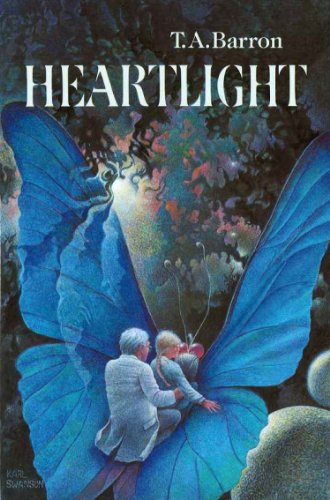
T. A. Barron links three standalone novels around a resourceful girl named Kate confronting environmental threats through fantastical means. In Heartlight, Kate and her inventor grandfather race across space to save a dying sun; in The Ancient One, she travels five centuries into the past to defend an old-growth forest from the destructive creature Gashra. The Merlin Effect completes the loosely connected set, published together as the omnibus The Heartlight Saga.
- Patternist
series6 books1976
completed
similar byscience fiction+3 more
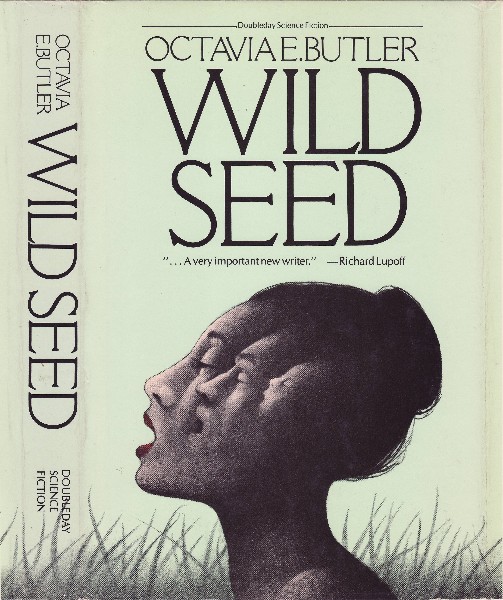
The Patternist series is a group of science fiction novels by Octavia E. Butler that detail a secret history continuing from the Ancient Egyptian period to the far future that involves telepathic mind control and an extraterrestrial plague. A profile of Butler in Black Women in America notes that the themes of the series include "racial and gender-based animosity, the ethical implications of biological engineering, the question of what it means to be human, ethical and unethical uses of power, and how the assumption of power changes people."
- The Missing
series10 books2008
similar byidentitycontemporaryscience fiction+3 more
The Missing is a series of fictional young-adult novels written by Margaret Peterson Haddix. It tells the story of famous children from history stolen by futuristic time travelers from their place in time and accidentally sent to the 21st century as babies. They are then adopted by families in the 21st century. Because Jonah is one of the stolen children, he, along with his non-adopted sister Katherine, must help return the missing kids to their rightful places in history and fix time before it is destroyed. The first book in the series, Found, was published on April 22, 2008. The series continued with book titles Sent, Sabotaged, Torn, Caught, Risked, and Revealed. The eighth and final book, Redeemed, was released on September 8, 2015. There are also two ebook short stories, Sought and Rescued . Haddix originally intended the series to consist of only seven books. However, she stated that she had trouble closing out the series in seven books; leading to her decision to write Redeemed.
- The Invisible Man
series6 books1897
similar byscience fiction+2 more
The Invisible Man is H. G. Wells's 1897 science fiction novel about Griffin, a scientist who works out how to make living tissue invisible and tests the process on himself, only to discover he has no way to reverse it. Unseen and increasingly cut off from other people, he turns to theft and violence while trying to survive and find a cure, making the book as much about his moral collapse as about the invisibility premise itself. It's a single self-contained novel; the two listed titles here are duplicate editions rather than separate books.
- Reckoners
series6 books2013
similar byscience fictionsuperheroadventuroustense+1 more
The Reckoners is a series of young adult superhero novels written by American author Brandon Sanderson. The series consists of Steelheart (2013), Firefight (2015), Calamity (2016) and Lux (2021). The series depicts a post-apocalyptic world in which the appearance of an orbiting cosmic phenomenon known as Calamity has given random people superhuman powers in apparent defiance of known physical laws, turning them into "Epics". These Epics prey upon or enslave the rest of humanity, causing the collapse of traditional governments. One young man orphaned by a High Epic joins a group that is killing Epics.
- Divergent
series10 books2011
similar byidentityscience fictiontense
Divergent, also known as The Divergent Series, is a series of young adult dystopian novels by American novelist Veronica Roth set in a post-apocalyptic dystopian Chicago. The trilogy consists of Divergent (2011), Insurgent (2012), and Allegiant (2013). A related book, Four (2014), presents a series of short stories told from the perspective of one of the trilogy's characters, the male love interest Tobias. A later short story, We Can Be Mended (2018), serves as an epilogue five years after the events of the trilogy, again from Tobias/Four's perspective.