More like Swarm
anchored on:science fictionaliensother star systemsfar future
but
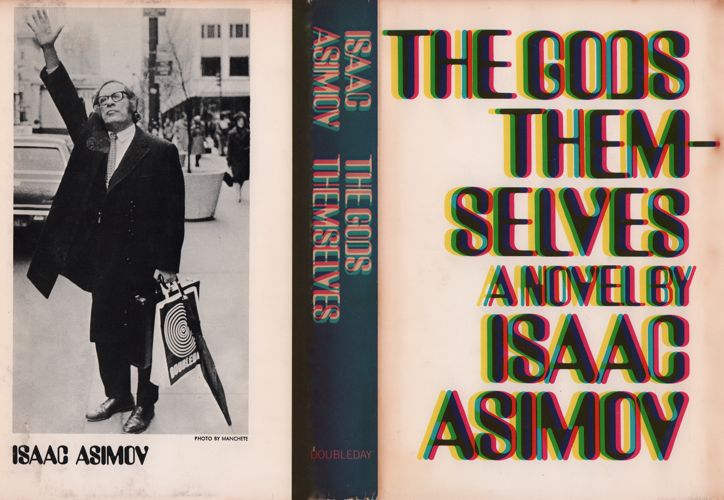
- The Gods Themselves
Isaac Asimovstandalone novel1972
similar byaliensscience fictionfar futurechallengingother star systems+1 more
The Gods Themselves is a 1972 science fiction novel written by Isaac Asimov, and his first original novel in fifteen years. It won the Nebula Award for Best Novel in 1972, and the Hugo Award for Best Novel in 1973.
- Moties
series4 books1974
part of CoDominium
similar byscience fictionaliensfar futureother star systemsfirst contact+1 more
Larry Niven and Jerry Pournelle's The Mote in God's Eye (1974) depicts humanity's first contact with an alien species, the Moties, set within the far-future interstellar setting of Pournelle's codominium future history. The Gripping Hand continues that first-contact crisis years later, and Outies, written by J. R. Pournelle, carries the story forward into a new generation. Together the three books trace an escalating encounter between human and Motie civilizations within the codominium universe.
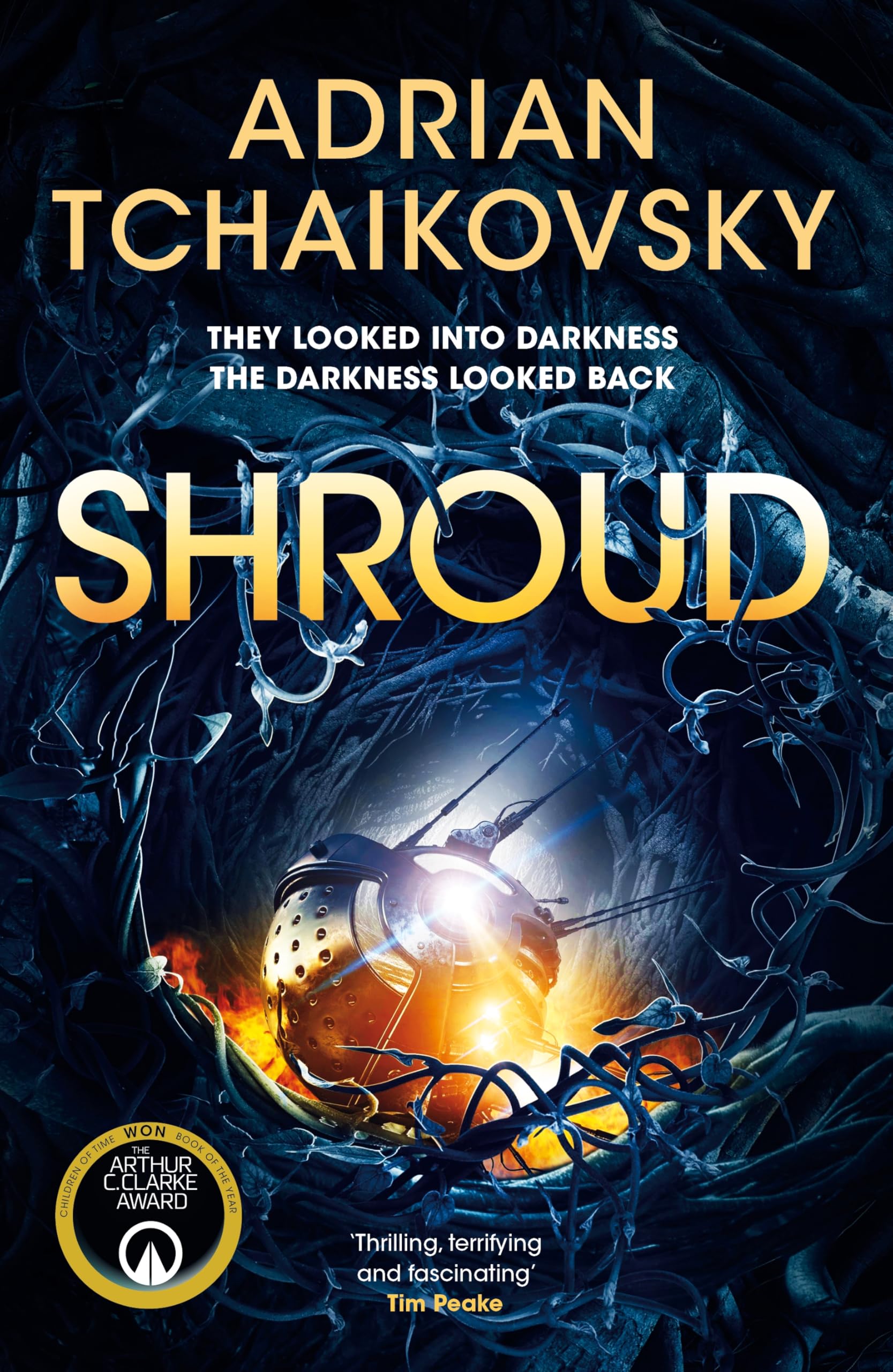
- Shroud (Adrian Tchaikovsky)
series2 books2024
similar byaliensscience fictionfar futureother star systemsspace exploration+2 more
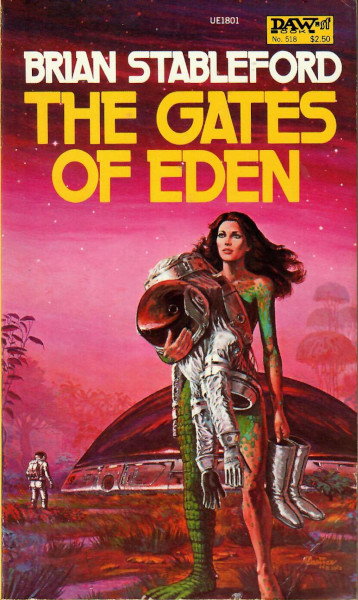
- The Gates of Eden
Brian Stablefordstandalone novel1983
similar byaliensscience fictionfar futureother star systemsfirst contactspace exploration+1 more
From the back cover of the DAW first edition: "Before the hyper-space vessels could go from planet to planet, stations had to be set up. And that meant manned spaceships cut off from Earth for decades. The explorer vessel Ariadne had gone toward galactic center and was considered lost - until its call was heard appealing for a xeno-biologist. Their new world was all swamp. As far as could be seen there was no intelligent species. Yet this was alarming because all inhabitable planets so far discovered had thinking inhabitants. But the nature of the planet's "people" turned out to be an enigma that had to be solved. For the alien biology there could spell doom to all the civilization of the stars... doom or a terrible unity!"
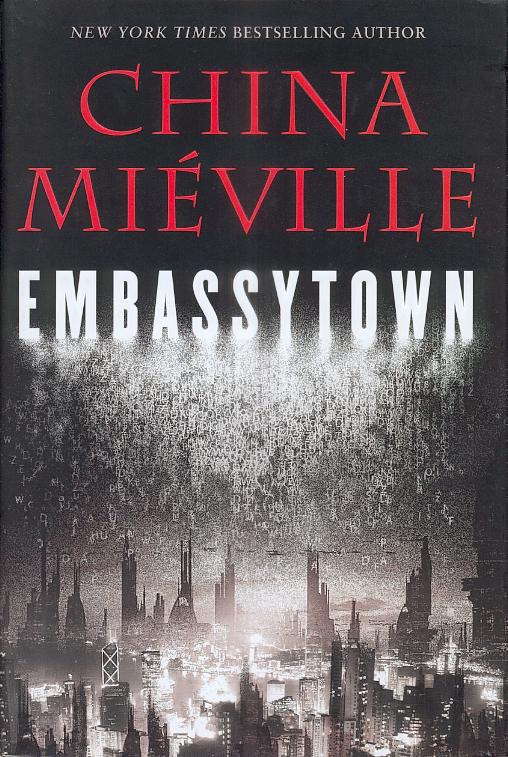
- Embassytown
China Miévillestandalone novel2011
similar byaliensscience fictionfar futurechallengingother star systemsfirst contact
In the far future, humans have colonized a distant planet, home to the enigmatic Ariekei, sentient beings famed for a language unique in the universe, one that only a few altered human ambassadors can speak. Avice Benner Cho, a human colonist, has returned to Embassytown after years of deep-space adventure. She cannot speak the Ariekei tongue, but she is an indelible part of it, having long ago been made a figure of speech, a living simile in their language. When distant political machinations deliver a new ambassador to Arieka, the fragile equilibrium between humans and aliens is violently upset. Catastrophe looms, and Avice is torn between competing loyalties—to a husband she no longer loves, to a system she no longer trusts, and to her place in a language she cannot speak yet speaks through her.
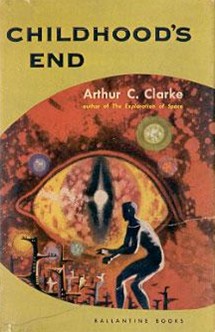
- Childhood's End
Arthur C. Clarkestandalone novel1953
similar byaliensscience fictionfirst contact+2 more
Childhood's End is a 1953 science fiction novel by the British author Arthur C. Clarke. The story follows a peaceful alien invasion of Earth by mysterious Overlords, whose arrival begins decades of apparent utopia under indirect alien rule, at the cost of human identity and culture.
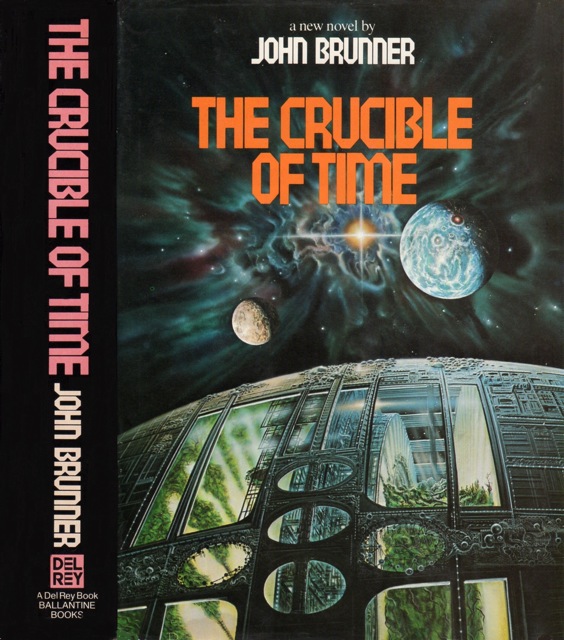
- The Crucible of Time
John Brunnerstandalone novel1983
similar byaliensscience fictionfar futurechallengingother star systems+1 more
The Crucible of Time is a fix-up science fiction novel by John Brunner. It was first published in 1983.
- Heechee
series19 books1972
completed
similar byaliensscience fictionfar futureother star systemsspace exploration
The Heechee Saga, also known as the Gateway series, is a series of science fiction novels and short stories by Frederik Pohl. The Heechee are an advanced alien race that visited the Solar System hundreds of millennia ago and then mysteriously disappeared. They left behind bases containing artifacts, including working starships, which are discovered and exploited by humanity.
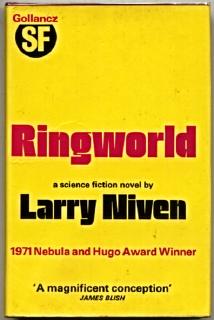
- Ringworld
series5 books1970
part of Known Space
similar byscience fictionaliensfar futureother star systemsspace exploration
The Ringworld series is a series of science fiction novels written by American author Larry Niven. It is part of his Known Space series of stories. Its backdrop is the Ringworld, a giant artifact 3 million times the surface area of Earth circling a star. The series is composed of four standalone science fiction novels, the original award-winning book and its three sequels:1970: Ringworld 1979: The Ringworld Engineers 1996: The Ringworld Throne 2004: Ringworld's Children
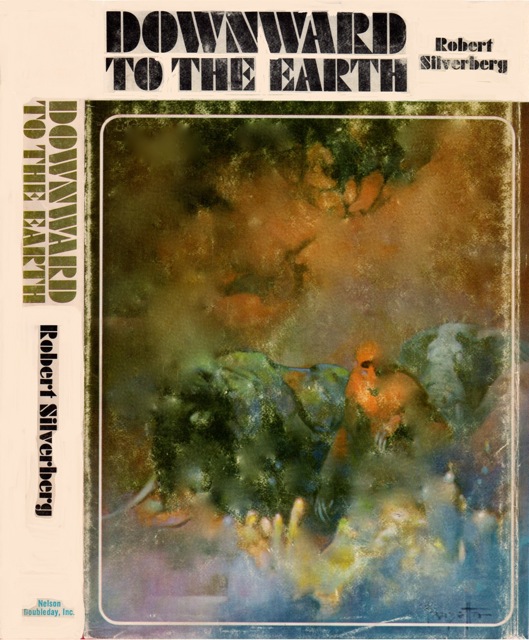
- Downward to the Earth
Robert Silverbergstandalone novel1969
similar byaliensscience fictionfar futureother star systems+1 more
Edmund Gunderson was the Terran administrator of the colony world of Belzagor, and he returns to it after it has gained independence, feeling a sense of guilt for the way he has treated its dominant species, the elephant-like nildoror, whose animalistic appearance had kept Gunderson from taking them seriously as sentient beings. On his return, he feels a new sense of kinship with the natives, perhaps more than for the Terran tourists. The nildoror undergo a process of rebirth, and Gunderson's greatest guilt comes from having denied rebirth to seven nildoror to make them help him repair flood damage.(From Wikipedia)
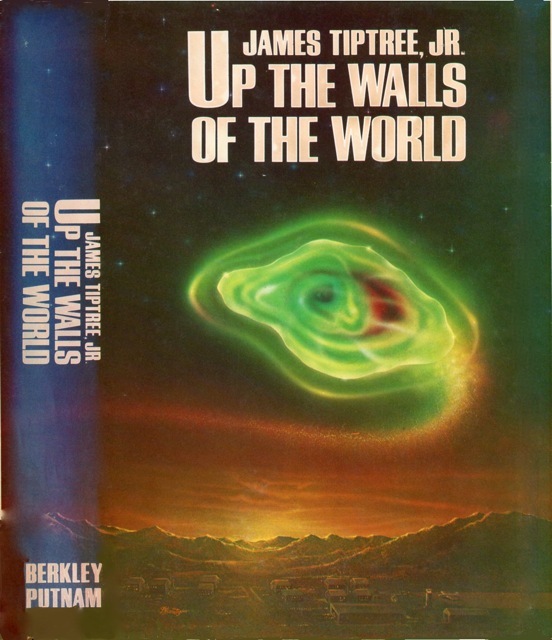
- Up the Walls of the World
James Tiptree & Jr.standalone novel1978
similar byaliensscience fictionfar futureother star systemsfirst contact+1 more
Up the Walls of the World is a 1978 science fiction novel by American author Alice Sheldon, who wrote under the pen name of James Tiptree, Jr. It was the first novel she published, having until then worked and built a reputation only in the field of short stories.
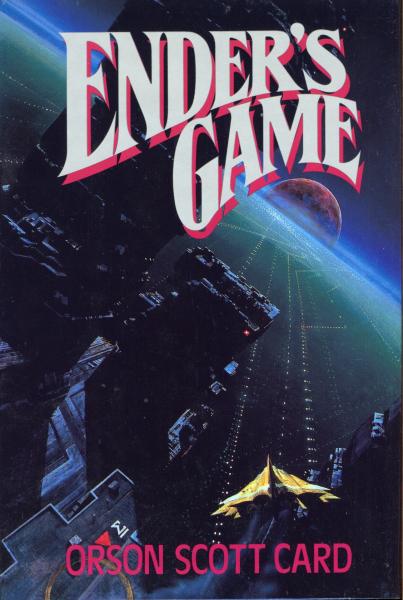
- Ender Wiggin
series14 books1977
part of Ender's Game Universe
similar byscience fictionaliensfar futureother star systems
Orson Scott Card's Ender's Game (1985, expanded from his 1977 novella) follows child prodigy Andrew "Ender" Wiggin as he is recruited into a military training program built to prepare Earth's defenses for an anticipated third war against an insectoid alien species known as the Formics. The saga continues years later through Speaker for the Dead and Xenocide, following an older Ender as he confronts the moral weight of his role in that earlier conflict, and concludes the core arc in Children of the Mind, with Ender in Exile filling in the years between the first two books. Set within the wider Ender's Game universe, the series shifts from military coming-of-age story to slower, more philosophical science fiction as it progresses.
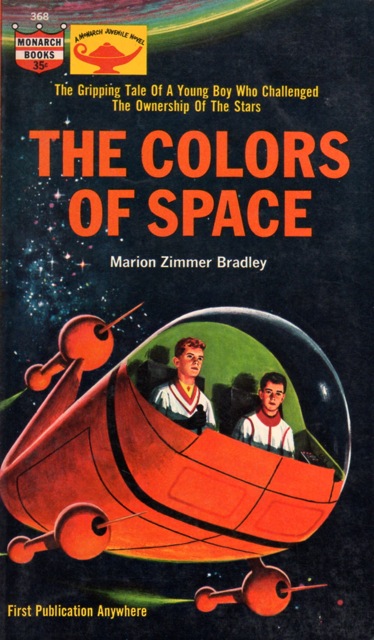
- The Colors of Space
Marion Zimmer Bradleystandalone novel1963
similar byaliensscience fictionfar futureother star systemsspace exploration
The Lhari seem peaceful and friendly, but they go to some lengths to protect their monopoly on faster-than-light travel. One young man is sent to discover their secrets.
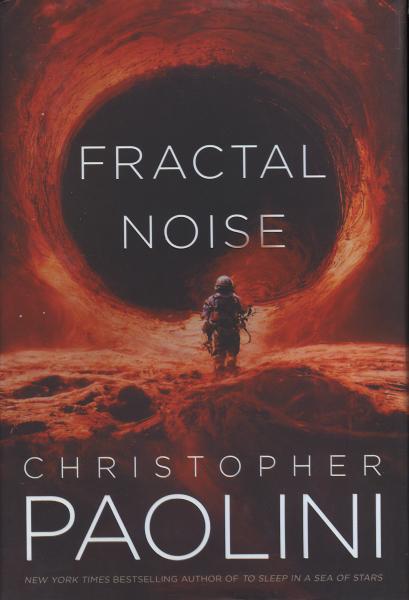
- Fractalverse
series2 books2020
similar byaliensscience fictionfar futureother star systemsfirst contactspace exploration
To Sleep in a Sea of Stars opens Christopher Paolini's Fractalverse with Kira Navárez, a xenobiologist whose survey of an unexplored planet triggers first contact with an ancient alien intelligence, dragging her and the wider human Alliance into a wider interstellar conflict for survival. Fractal Noise, a parallel entry, follows a separate crew investigating a mysterious signal-emitting structure on another world within the same universe. Both books were published between 2020 and 2023.
- Chanur
series7 books1982
part of Alliance-Union Universe
similar byaliensscience fictionfar futureother star systems+1 more
The Chanur novels are a series of five science fiction novels, forming three separate stories, written by American author C. J. Cherryh and published by DAW Books between 1982 and 1992. The first novel in the series is The Pride of Chanur (1982), which was nominated for both the Hugo and Locus Awards in 1983. The Pride of Chanur, originally a stand-alone story, was followed by the Chanur's Venture trilogy, Chanur's Venture (1984), which was shortlisted for a Locus Award in 1985; The Kif Strike Back (1985) and Chanur's Homecoming (1986). These were followed by a later sequel, Chanur's Legacy (1992). The five novels were also published in two omnibus editions: the first three in The Chanur Saga in 2000 and the next two in Chanur's Endgame in 2007.
- Wess'har Wars
series7 books2004
similar byaliensscience fictionfar futureother star systemsfirst contact+1 more
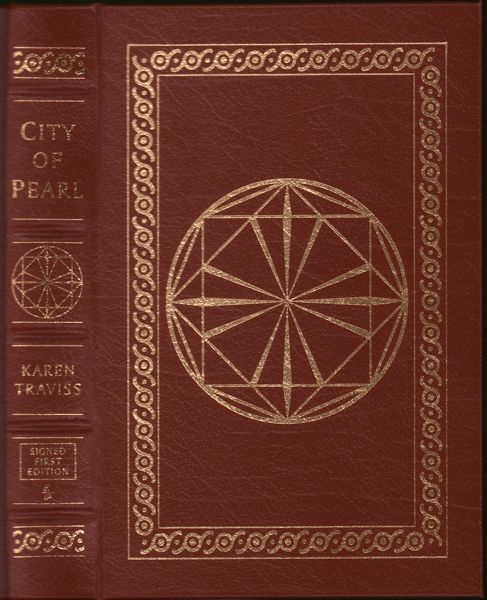
The Wess'har Wars series is a six-book science fiction novel series written by author Karen Traviss and is set several hundred years in the future. It involves humanity's contact with a number of alien species with conflicting interests and beliefs, while her central character, Shan Frankland, is caught in the middle of a coming conflict. The series has a focus on environmental impact. All six novels were published by Eos, an imprint of HarperCollins: City of Pearl, Crossing the Line, The World Before, Matriarch and Ally. The last book of the series, Judge was released on March 25, 2008.
- Kefahuchi Tract Trilogy
series3 books2002
similar byscience fictionfar futurechallengingother star systems+2 more
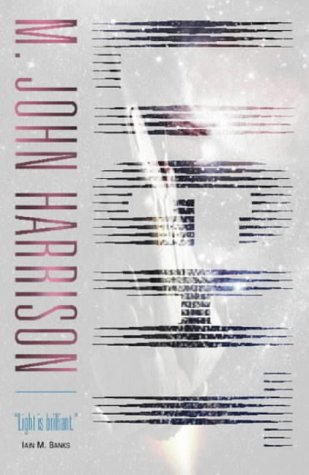
M. John Harrison's Kefahuchi Tract trilogy circles a strange, physics-breaking anomaly in deep space that draws scientists, smugglers, and drifters into its pull across different eras. Light moves between a near-future timeline and a far-future one drawn to the Tract itself; its sequel Nova Swing stays within one future period, where a fragment of the anomaly's altered space bleeds into the run-down port city of Saudade, giving the book a noir, Roadside-Picnic-like atmosphere; Empty Space concludes the sequence. The three novels share a setting and mood more than a continuous plot or cast.
- Stranger in a Strange Land
Robert A. Heinleinstandalone novel1961
similar byaliensscience fictionchallengingfirst contact
Stranger in a Strange Land is a 1961 science fiction novel by the American author Robert A. Heinlein. It tells the story of Valentine Michael Smith, a human who comes to Earth in early adulthood after being born on the planet Mars and raised by Martians, and explores his interaction with and eventual transformation of Terran culture.
- A Darkling Sea
James L. Cambiasstandalone novel2014
similar byaliensscience fictionfar futureother star systemsfirst contactspace exploration+1 more
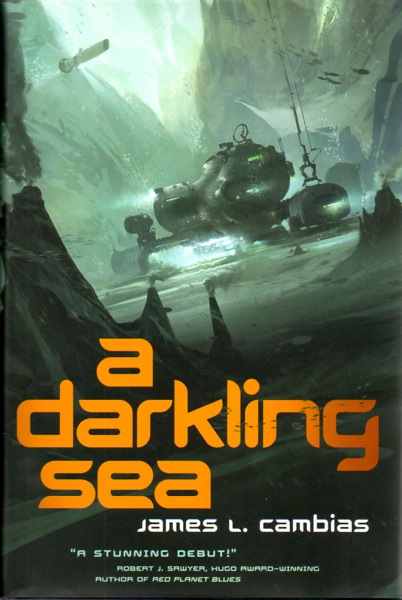
On the planet Ilmatar, under a roof of ice a kilometer thick, a team of deep-sea diving scientists investigates the blind alien race that lives below. The Terran explorers have made an uneasy truce with the Sholen, their first extraterrestrial contact: so long as they don't disturb the Ilmataran habitat, they're free to conduct their missions in peace. But when Henri Kerlerec, media personality and reckless adventurer, ends up sliced open by curious Ilmatarans, tensions between Terran and Sholen erupt, leading to a diplomatic disaster that threatens to escalate to war. Against the backdrop of deep-sea guerrilla conflict, a new age of human exploration begins as alien cultures collide. Both sides seek the aid of the newly enlightened Ilmatarans. But what this struggle means for the natives, and the future of human exploration is anything but certain.
- The Einstein Intersection
Samuel R. Delanystandalone novel1967
similar byscience fictionfar futurechallengingeerie+2 more
The Einstein Intersection is a 1967 science fiction novel by Samuel R. Delany. The title is a reference to Einstein's Theory of Relativity connecting to Kurt Gödel's Constructible universe, which is an analogy to science meeting philosophy. The original publisher, Ace Books, changed Delany's originally intended title from A Fabulous, Formless Darkness for commercial reasons.
- Starship Troopers
Robert A. Heinleinstandalone novel1959
similar byaliensscience fictionfar futureother star systems+1 more
Starship Troopers is a military science fiction novel by American writer Robert A. Heinlein. Written in a few weeks in reaction to the US suspending nuclear tests, the story was first published as a two-part serial in The Magazine of Fantasy & Science Fiction as Starship Soldier, and published as a book by G. P. Putnam's Sons on November 5, 1959.
- Hainish
series33 books1964
completed
similar byscience fictionfar futureother star systems+2 more
The Hainish Cycle consists of a number of science fiction novels and stories by Ursula K. Le Guin. The cycle is set in a future history that features civilizations of human beings on planets orbiting a number of nearby stars, including Terra ("Earth"); these humans are contacting each other for the first time and establishing diplomatic relations, as well as setting up a confederacy under the guidance of the oldest of the human worlds, the peaceful planet Hain. In this history, human beings did not evolve on Earth, but they were instead the result of interstellar colonies planted by Hain in the distant past, after which interstellar travel ceased for an extended period. Some of the human races have new genetic traits, a result of ancient Hainish experiments in genetic engineering; this includes people who can dream while awake, and a world of hermaphroditic people who only enter active sexuality once per month, not knowing which sex will manifest in them. In keeping with Le Guin's narrative approach, she uses varied social and environmental settings to explore the anthropological and sociological outcomes of human evolution in those environments. The author often discounted the characterization of a so-called "Hainish Cycle".
- Dragon's Egg
series3 books1980
completed
similar byaliensscience fictionother star systemsfar futurefirst contactspace exploration
Robert L. Forward's Dragon's Egg (1980) follows first contact with the cheela, intelligent beings the size of sesame seeds living on the surface of a neutron star, where crushing gravity and fast-moving physics let them evolve from primitive agriculture to advanced technology in about a month of Earth time while human observers watch from orbit. The sequel Starquake (1985) follows the cheela's own development of space travel and a catastrophic starquake that devastates their neutron-star home, alongside the continuing story of the human crew observing them.