Loreful
HomeDiscover
Search series, authors…⌘K
Loreful

Reading orders for SF/F series and shared universes — with your place kept in every one.

Explore

UniversesSeriesWorksAuthorsAtlas

Help

FAQAboutSite map

Account & legal

Sign inCreate accountPrivacyTerms

Data

Built on ISFDB, Wikipedia, Wikidata and Open Library. Curated reading orders carry their reasoning on the page; the rest follow publication order. Data sources & licenses

© Loreful · data: ISFDB · CC BY

More like Talking Man

anchored on:fantasywizardsour worldcontemporarynorth americawhimsical

but

Mood

The mood the book leaves you in.

  • The reading experience is propelled by journeys, exploration, and physical risk; excitement and forward momentum dominate over dread or introspection.
  • Joy and loss are deliberately mixed; the resolution grants characters something real while taking something else away, leaving warmth and sorrow together.
  • The book demands work from the reader — dense prose, difficult structure, unfamiliar ideas, or morally uncomfortable material — as part of its intended effect.
  • Grim events, cruelty, or despair dominate the atmosphere, and the book does not soften them with comfort or comic relief.
  • The atmosphere is quietly unsettling — wrongness, unease, and the uncanny pervade the book without necessarily escalating into overt horror.
  • The book is built to move the reader; character feeling is foregrounded and major scenes aim at a strong emotional response.
  • Humor is a primary aim and the prose plays for laughs — comic situations, wit, or dialogue produce sustained comedy, not occasional levity.
  • The book insists that things can improve; effort and decency are shown to matter, and the arc bends toward better outcomes even through hardship.
  • The book teaches as it goes — real facts, history, science, or craft are conveyed in enough depth that learning is part of the reading experience.
  • The book is designed to uplift and motivate, presenting perseverance or achievement in a way that invites the reader to aspire or act.
  • The overall register is cheerful and easygoing; stakes are kept gentle and the book avoids dwelling on pain or dread.
  • Withheld information drives the experience; the book sustains enigmas and secrets the reader wants resolved, whatever its genre.
  • The book is contemplative and inward-looking, giving more weight to thought, memory, and meaning than to external events.
  • The book works as comfort reading — low tension, a soothing pace, and an atmosphere the reader can unwind in.
  • Grief, loss, or melancholy set the dominant register, and the book lets sorrow stand rather than resolving it into comfort.
  • Sustained suspense is the point; the book keeps the reader braced for what happens next through danger, pressure, or impending revelation.
  • Playful invention and charm define the register — fanciful conceits, light absurdity, and a narration that delights in its own oddity.

About

What the story runs on.

  • Stories structured as a quest — a journey undertaken to find, deliver, or destroy something of great import.
  • Stories in which staying alive against nature, catastrophe, or scarcity is the central problem.
  • Stories of lovers kept apart by law, family, faith, or station, where the obstacle to love is the plot.
  • Stories in which a friendship — its making, testing, or loss — is the emotional center.
  • Stories of growing up — a young protagonist crossing from childhood into adult knowledge and responsibility.
  • Stories about who a character truly is — self-discovery, doubled lives, and the search for a self.
  • Stories about mental unraveling — descent into madness, delusion, and minds at war with themselves.
  • Stories about mourning — living through the death of a loved one and what loss does to the survivors.
  • Stories in which a buried family truth — hidden parentage, crimes, or shames — surfaces and reorders the present.
  • Stories driven by maneuvering for power — factions, conspiracies, and statecraft conducted in shadow.
  • Stories in which war itself is the subject — combat, occupation, and what warfare does to soldiers and civilians.
  • Stories organized around investigating a killing — the case, the clues, and the pursuit of the killer, in any genre's clothing.

Shelf

Where it sits in the library.

    • Fiction built on magic or other supernatural elements that have no scientific explanation.
    • Secondary-world fantasy at large scale, where the fate of nations or the world turns on the protagonists' struggle.
    • Fantasy set in a recognizably modern city or contemporary world where the supernatural intrudes on everyday life.
    • Fantasy that blends in horror's atmosphere and imagery, keeping a fantastical frame around grim or frightening material.
    • Action-driven fantasy following warriors or rogues with personal stakes against sorcerous threats, rather than world-spanning conflicts.
    • Fantasy set in a real historical period or a close analogue of one, with magic woven into the era.
    • Fantasy in which protagonists cross from the ordinary world into another world through a portal or similar passage.
    • Fiction that retells or reworks a traditional fairy tale in a new form or setting.
    • Fantasy drawing directly on myths, legends, and folklore, retelling them or building on their figures and logic.
    • Fantasy of ghosts, vampires, shapeshifters, psychics, and similar phenomena, usually set in an otherwise ordinary world.
    • Fiction mixing science-fictional trappings with overtly magical or impossible elements in one setting.
    • Low-stakes fantasy emphasizing comfort, community, and everyday pleasures over conflict and peril.
    • Speculative fiction of pervasive moral ambiguity, violence, and cynicism that rejects heroic conventions — fantasy and SF alike.
      • Fiction that extrapolates from science and technology — future societies, space travel, or speculative inventions — within at least nominally natural laws.
      • Science fiction of interstellar scope — starships, galactic polities, and adventure across star systems.
      • Science fiction committed to scientific rigor, where technical plausibility constrains the story.
      • Science fiction centered on armed forces and warfare, told largely from a military point of view.
      • Science fiction of networked, corporate-dominated near futures, pairing high technology with social decay.
      • Science fiction styled on nineteenth-century steam-powered technology, often in a Victorian or pseudo-Victorian setting.
      • Fiction depicting an oppressive or catastrophic society, presented as a warning.
      • Fiction set after civilization's collapse, following survivors in the ruins of the old world.
      • Fiction in which characters move between past and future, and the mechanics or consequences of that travel drive the plot.
      • Fiction exploring a world where a historical event went differently and history diverged from ours.
      • Science fiction about humanity's first encounter and communication with an alien intelligence.
      • Science fiction in which extraterrestrial forces attack or occupy Earth and humanity resists.
      • Fiction whose primary aim is to frighten or unsettle the reader through dread, menace, or the monstrous.
      • Horror of vast, indifferent, incomprehensible entities before which humanity is insignificant, in the Lovecraft tradition.
      • Horror of decaying houses, buried family secrets, and oppressive atmosphere in the Gothic literary tradition.
      • Horror centered on hauntings and the returning dead.
      • Horror located in the mind — paranoia, obsession, and unreliable perception rather than external monsters.
      • Horror built around the reanimated dead and survival amid their outbreaks.
      • Horror defined by explicit, transgressive gore that refuses to cut away from violence.
      • Speculative fiction of the strange and uncanny that resists both natural explanation and standard genre categories.
      • Fiction organized around solving a crime or puzzle, typically following an investigator toward the identification of a culprit.
      • A puzzle-first mystery that lays out clues so the culprit's identity can be deduced before the reveal.
      • Crime fiction of moral ambiguity, fatalism, and hard-edged style, set among the corrupt and the doomed.
      • A mystery following the realistic routines of police work — forensics, interviews, and case-building.
      • A gentle mystery with an amateur sleuth, a small community, and violence kept off the page.
      • A mystery set in a past era, where the investigation works within that period's methods and society.
      • Fast-paced fiction driven by imminent danger, pursuit, or high-stakes conspiracy, built to sustain tension.
      • A thriller of espionage — agents, tradecraft, and intelligence services in conflict.
      • A thriller centered on lawyers and the courtroom, where litigation carries the suspense.
      • A thriller driven by detailed contemporary or near-future technology, often military or scientific.
      • A thriller whose tension comes from mental states and manipulation between characters rather than external action.
      • Fiction whose central plot is a romantic relationship and its development toward an emotionally satisfying resolution.
      • Romance in which one or both partners are supernatural beings, blending fantasy elements into the love story.
      • A fantasy-romance hybrid in which the romantic arc and the fantasy plot carry equal weight.
      • Romance set in a past era, with courtship shaped by the period's society and manners.
      • Romance set in the present day, without supernatural or historical elements.
      • Fiction set in a real past period, where the historical setting materially shapes characters and events.
        • General and literary fiction emphasizing prose style, character interiority, or formal ambition over genre plot conventions.
        • Fiction in a realistic world where magical events occur and are treated as ordinary, in the tradition of Latin American literature.
        • Fiction that ridicules people, institutions, or society in order to criticize them.
        • Fiction of dreamlike, irrational imagery and logic that breaks from realistic representation.
        • Fiction that plays with narrative convention through metafiction, fragmentation, and self-reference.
        • Fiction propelled by journeys, exploration, and physical peril, where action and survival carry the plot.
        • Adventure fiction of ships and seafaring — naval engagements, voyages, and life at sea.
        • Fiction of the American frontier West — gunmen, ranchers, and lawmen, typically in the late nineteenth century.
        • Fiction centered on soldiers, campaigns, and the experience of warfare, historical or imagined.
          • Fiction written primarily to amuse, using comedic situations, wit, or parody as its organizing principle.
            • Multi-generational fiction following a family or dynasty across decades, with inheritance and kinship as the through-line.
              • Fiction whose world runs on explicit game mechanics — levels, stats, and skills that characters can see and exploit.
                • Fiction about costumed or superpowered heroes and their conflicts with comparable villains.

                Practical

                How long a commitment, whether it stands alone, and whether it has finished.

                Tap a chip to ask for it · tap again to rule it out · once more to clear. Numbers show what would be left.

                • Cover of Magids
                  Magids

                  series · 2 books · 1997

                  completed

                  similar byfantasywhimsicalwizardscontemporary+1 more

                  Deep Secret follows Rupert Venables, a junior Magid — one of a hidden order of magical agents who quietly steer worlds toward or away from magic — tasked with finding Earth's replacement senior Magid at, of all places, a science-fiction convention, while also trying to restore an assassinated emperor's rightful heir in another world entirely. Diana Wynne Jones's Magids series continues with The Merlin Conspiracy, following a different young magic-user into the same multiverse of worlds under the Magids' watch.

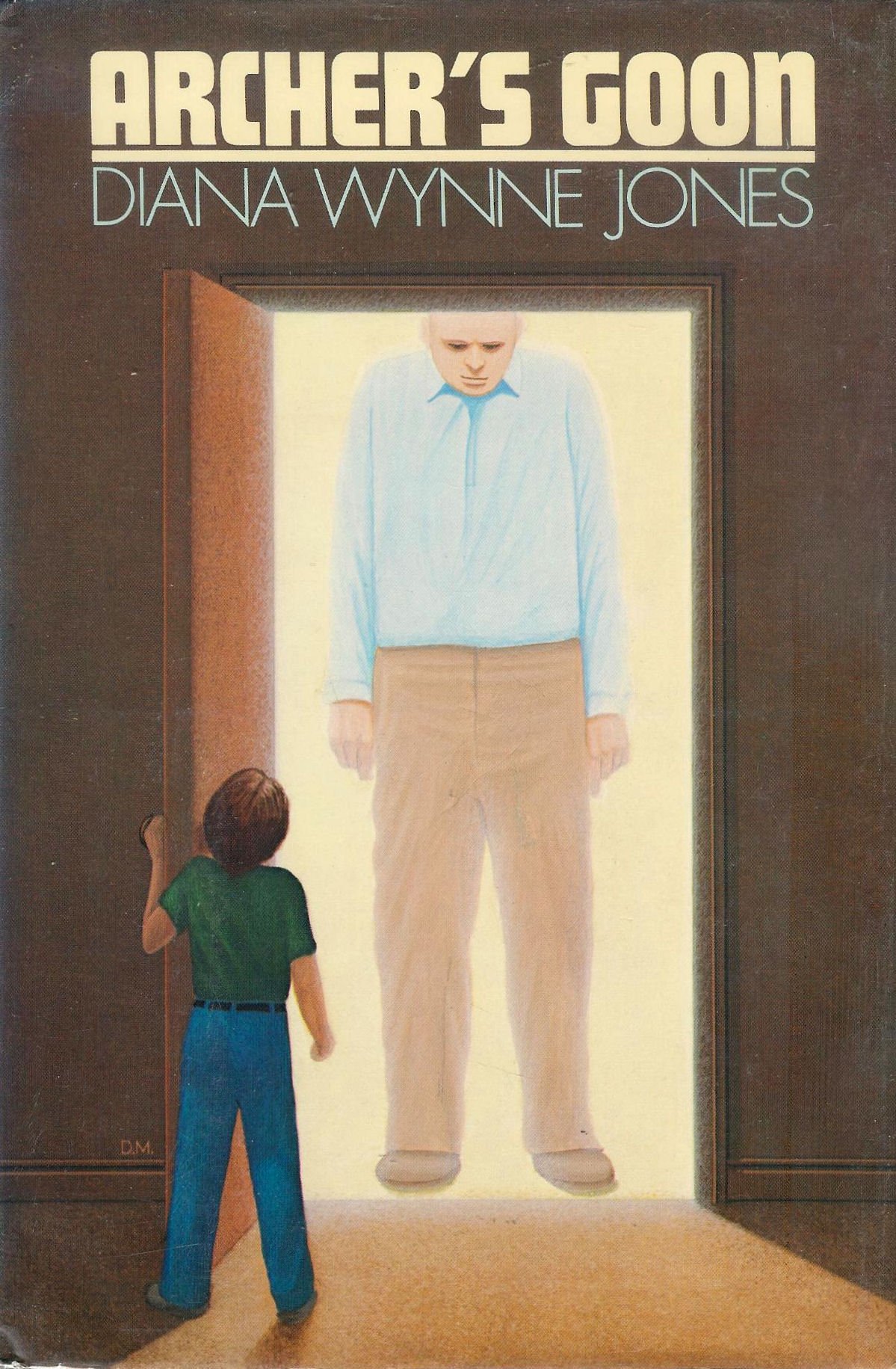
                • Cover of Archer's Goon
                  Archer's Goon

                  Diana Wynne Jones · standalone novel · 1984

                  similar bywizardswhimsicalfantasycontemporary

                  After the Goon moves into Sykes' house and refuses to budge, thirteen-year-old Howard learns some startling information about his family, including the fact that he is adopted and that his father is connected with seven wizards who run their town.

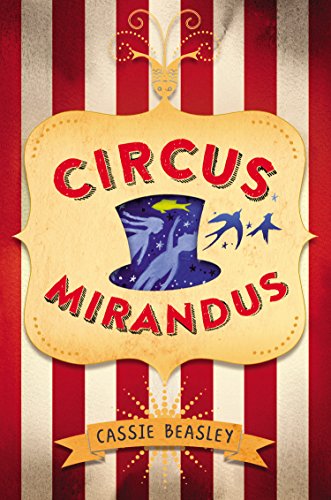
                • Cover of Circus Mirandus
                  Circus Mirandus

                  series · 2 books · 2015

                  similar byfantasywhimsicalwizardscontemporaryour world

                • Cover of Catweazle
                  Catweazle

                  Richard Carpenter · standalone novel · 1970

                  similar bywizardsfantasywhimsicalcontemporary

                  Catweazle is a rather unsuccessful magician who lives in the eleventh century. One day he flies through time and ends up at Hexwood Farm, where Carrot the farmer's son befriends him.

                • Cover of Chrestomanci
                  Chrestomanci

                  series · 12 books · 1977

                  completed

                  similar byfantasywhimsicalcontemporary+1 more

                  Chrestomanci, sometimes branded The Worlds of Chrestomanci, is a heptalogy of children's fantasy books written by British author Diana Wynne Jones, published from 1977 to 2006. In the context of the parallel universe setting of the books, Chrestomanci refers to both the British government office that is responsible for supervising the use of magic and Chrestomanci Castle in southern England, which is both residence and headquarters.

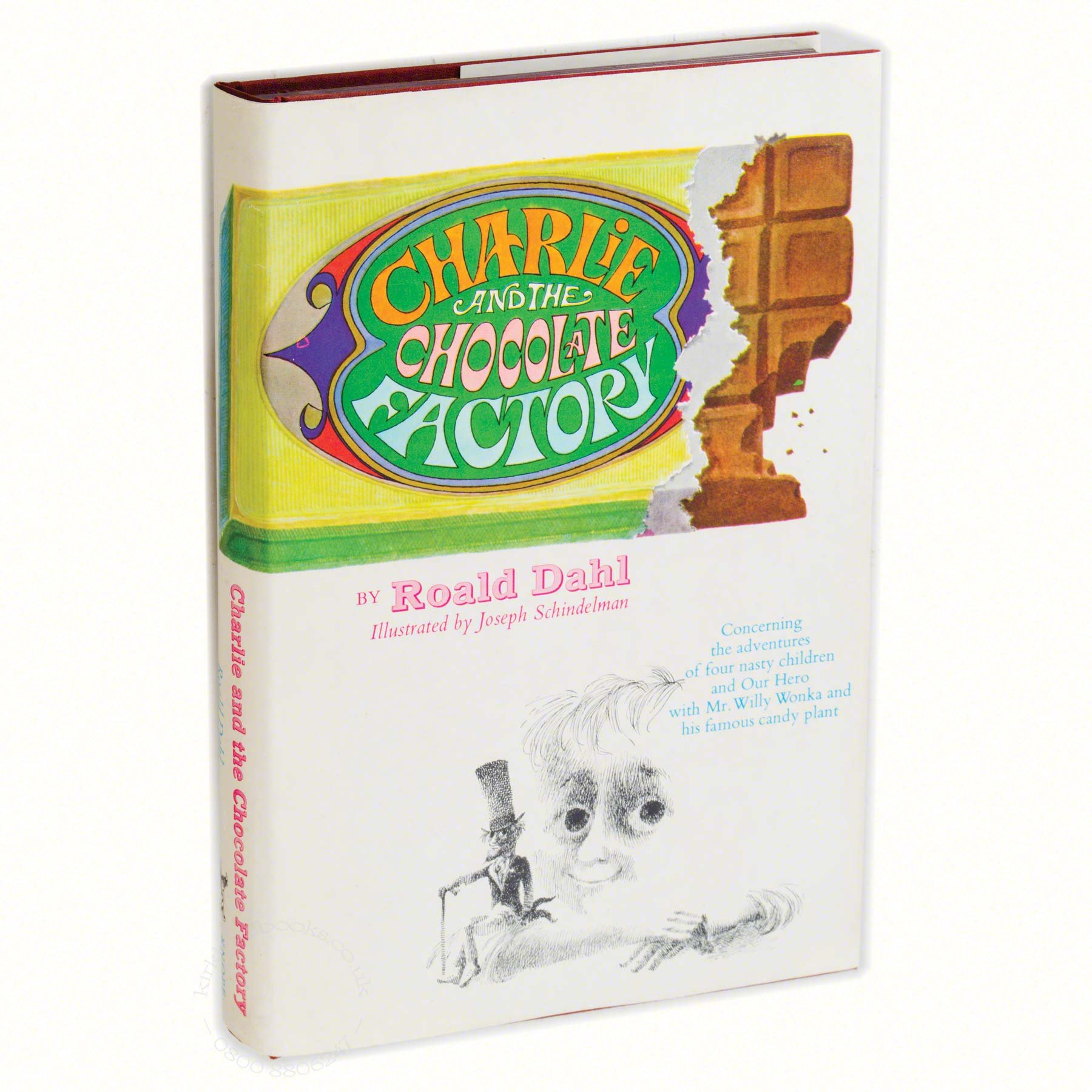
                • Cover of Charlie (Roald Dahl)
                  Charlie (Roald Dahl)

                  series · 6 books · 1964

                  completed

                  similar byfantasywhimsicalcontemporaryour world

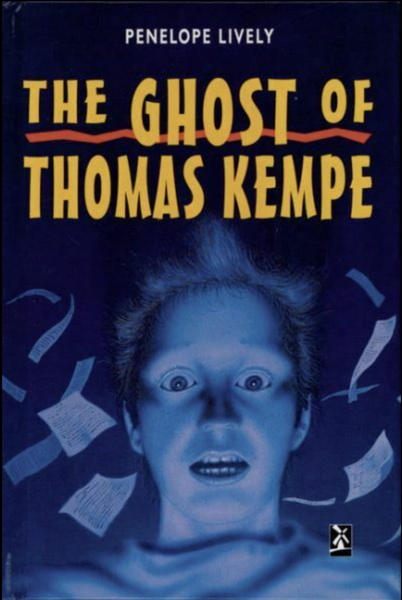
                • Cover of The Ghost of Thomas Kempe
                  The Ghost of Thomas Kempe

                  Penelope Lively · standalone novel · 1973

                  similar byfantasywhimsicalwizardscontemporary

                  "Young James Harrison finds himself drafted as the unwilling apprentice of one Thomas Kempe, Sorcerer, who died in 1629 but still haunts the attic bedroom of the Harrisons' old cottage. ..." --Kirkus Reviews (above)

                • Cover of James and the Giant Peach
                  James and the Giant Peach

                  Roald Dahl · standalone novel · 1961

                  similar byfantasywhimsicalcontemporaryour world

                  James and the Giant Peach is a children's novel written in 1961 by British author Roald Dahl. The first edition, published by Alfred Knopf, featured illustrations by Nancy Ekholm Burkert. There have been re-illustrated versions of it over the years, drawn by Michael Simeon, Emma Chichester Clark, Lane Smith and Quentin Blake. It was adapted into a film of the same name in 1996 which was directed by Henry Selick, and a musical in 2010.

                • Cover of The Halloween Tree
                  The Halloween Tree

                  Ray Bradbury · standalone novel · 1972

                  similar byfantasywhimsicalcontemporaryour world

                  Eight boys gather on Halloween night to trick-or-treat with their ninth friend, Pipkin, only Pipkin never shows, having vanished on some errand that may cost him his life. A strange, black-robed guide named Moundshroud appears to lead the boys after him, and the chase turns into a journey through the history of the holiday itself: ancient Egypt, druidic Britain, Rome, medieval Paris, and the Mexican Day of the Dead, each stop peeling back another layer of how humanity has faced death and the dark. Ray Bradbury's Halloween novel doubles as a compressed history of the holiday's origins.

                • Cover of Young Wizards
                  Young Wizards

                  series · 24 books · 1983

                  similar bywizardsfantasycontemporaryour world

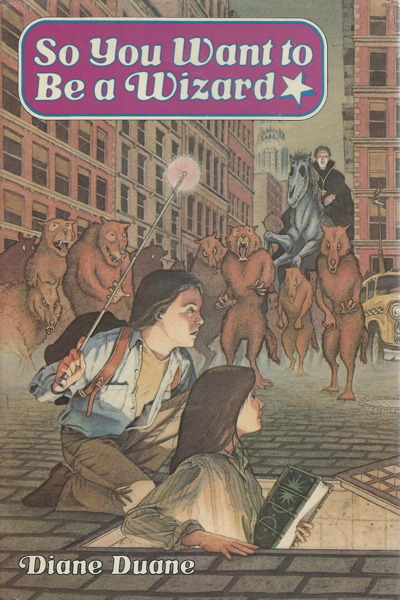
                  Diane Duane's Young Wizards series begins with thirteen-year-old Nita, bullied and friendless, who borrows a library book on wizardry and discovers it's the real thing: an apprenticeship into a covert order that fights entropy, alongside a classmate named Kit. Across fifteen books published between 1983 and 2019, the two age forward in something close to real time as their missions escalate from New York streets to alien worlds and beyond. The series centers on the wizard's Oath and the idea that magic is a responsibility taken on to slow the universe's decay, not a power to be enjoyed for its own sake.

                • Cover of The Hobbit
                  The Hobbit

                  series · 2 books · 1937

                  completed

                  part of Tolkien's legendarium

                  similar byfantasywhimsical+1 more

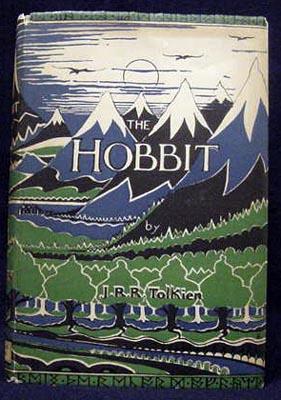
                  The Hobbit (1937) is J. R. R. Tolkien's children's fantasy novel following the reluctant burglar Bilbo Baggins, who joins a company of dwarves and the wizard Gandalf on a journey to reclaim treasure guarded by the dragon Smaug. It stands as a complete adventure on its own, but shares its setting with the rest of Tolkien's legendarium and leads into the events of The Lord of the Rings.

                • Cover of The Night Circus
                  The Night Circus

                  Erin Morgenstern · standalone novel · 2011

                  similar byfantasywhimsicalour world+1 more

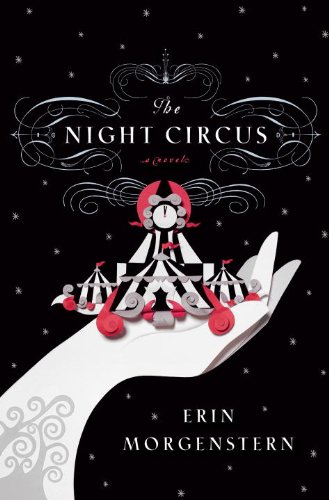
                  The Night Circus is a 2011 speculative fiction novel by Erin Morgenstern. It was originally written for the annual writing competition National Novel Writing Month (NaNoWriMo) over the span of three competitions. The novel has a nonlinear narrative written from multiple viewpoints.

                • Cover of Wild Robert
                  Wild Robert

                  Diana Wynne Jones · standalone novel · 1989

                  similar byfantasywhimsicalwizardscontemporary

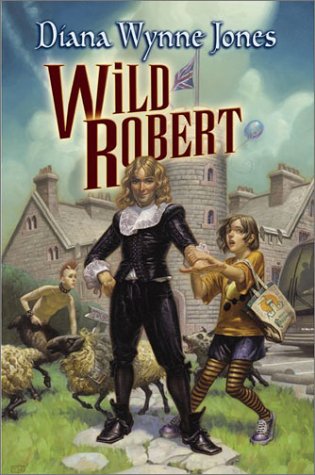
                  Heather's parents are the caretakers of the stately home Castlemaine, and Heather would love living there -- if it weren't for the tourists. Every summer they invade Castlemaine, and one day they even trample into all of her secret quiet spots. The only one left is a peculiar little mound that the villagers say is the grave of Wild Robert, a legendary magician who lived 350 years ago. When Heather cries out for Wild Robert to use his magical powers on the tourists, she never expects a handsome young man to appear right in front of her. She never expects all the mischief he causes, either! Will Castlemaine ever be the same once Wild Robert has returned?

                • Cover of The Evil Wizard Smallbone
                  The Evil Wizard Smallbone

                  Delia Sherman · standalone novel · 2016

                  similar byfantasywhimsicalwizardscontemporary+1 more

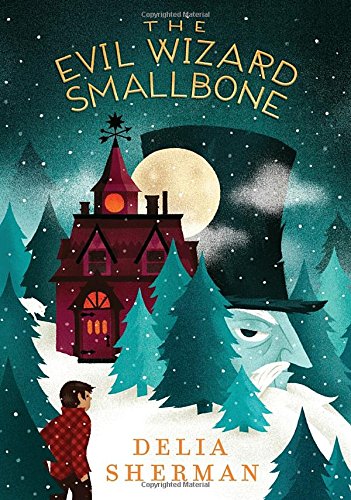
                  When twelve-year-old Nick runs away from his uncle s in the middle of a blizzard, he stumbles onto a very opinionated bookstore. He also meets its guardian, the self-proclaimed Evil Wizard Smallbone, who calls Nick his apprentice and won t let him leave, but won t teach him magic, either.

                • Cover of David and the Phoenix
                  David and the Phoenix

                  Edward Ormondroyd · standalone novel · 1957

                  similar byfantasywhimsicalcontemporaryour world

                  David and the Phoenix is a 1957 children's novel about a young boy's adventures with a phoenix. It was the first published book by American children's writer Edward Ormondroyd.

                • Cover of Eccentric Circles
                  Eccentric Circles

                  Rebecca Lickiss · standalone novel · 2001

                  similar byfantasywhimsicalwizardscontemporaryour worldnorth america

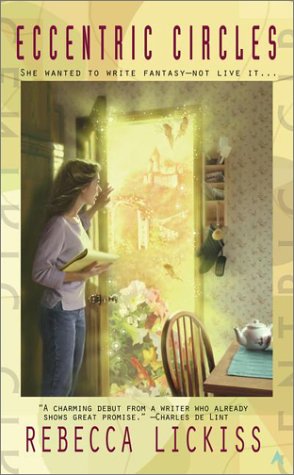
                  She inherited a home. And she inherited a world. Piper Dickerson's grandmother has passed away, leaving her Victorian cottage and acre of land as an inheritance. Piper and her grandmother shared a passion for words, and the house full of books and manuscripts is the perfect place to pursue her writing aspirations. But what the will doesn't specify is that the back door leads to an endless forest with a brook, populated by an extremely handsome elf, a mischievous dwarf, and a crotchety old wizard, among other fantastical creatures. Piper's home is the gateway to a magical adventure beyond her wildest dreams. And it is also a gateway to something darker - as Piper discovers the truth about her grandmother's death and the evil she must face to save two worlds. (from the back cover)

                • Cover of Billy
                  Billy

                  series · 15 books · 2005

                  completed

                  similar byfantasywhimsicalcontemporaryour world+1 more

                • Cover of The Circus of Dr. Lao
                  The Circus of Dr. Lao

                  Charles G. Finney · standalone novel · 1935

                  similar byfantasywhimsicalcontemporarynorth america

                  The Circus of Dr. Lao (1935) is a novel written by the American newspaperman and writer Charles G. Finney. It won one of the inaugural National Book Awards: The Most Original Book of 1935. Although the first edition was illustrated by Boris Artzybasheff, many later editions omit the illustrations.

                • Cover of The Magic Grandfather
                  The Magic Grandfather

                  Jay Williams · standalone novel · 1979

                  similar byfantasywhimsicalwizardscontemporaryour world

                  An 11-year-old discovers that not only is his seemingly ne'er-do-well grandfather a bona fide sorcerer but he too may have an untapped talent for magic.

                • Cover of What-the-Dickens
                  What-the-Dickens

                  Gregory Maguire · standalone novel · 2007

                  similar byfantasywhimsicalcontemporaryour world

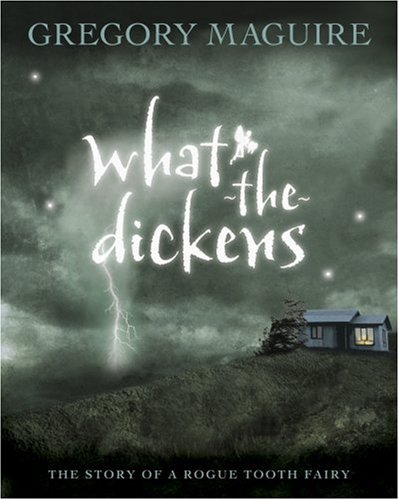
                  A terrible storm is raging, and ten-year-old Dinah is huddled by candlelight with her brother, sister, and cousin Gage, who is telling a very unusual tale. It's the story of What-the-Dickens, a newly hatched orphan creature who finds he has an attraction to teeth, a crush on a cat named McCavity, and a penchant for getting into trouble. One day he happens upon a feisty girl skibberee who is working as an Agent of Change - trading coins for teeth - and learns that there is a dutiful tribe of skibbereen (call them tooth fairies) to which he hopes to belong. As his tale of discovery unfolds, however, both What-the- Dickens and Dinah come to see that the world is both richer and less sure than they ever imagined.

                • Cover of The Starless Sea
                  The Starless Sea

                  Erin Morgenstern · standalone novel · 2019

                  similar byfantasywhimsicalcontemporaryour world

                  The Starless Sea is a 2019 speculative fiction novel by Erin Morgenstern. It is her second book, following the best-selling The Night Circus, which was published in 2011. The novel reached number three on The New York Times Best Seller list, and was also a Los Angeles Times and Sunday Times bestseller.

                • Cover of The Charwoman's Shadow
                  The Charwoman's Shadow

                  Lord Dunsany · standalone novel · 1926

                  similar byfantasywhimsicalwizards

                  The Charwoman's Shadow is a 1926 fantasy novel by Anglo-Irish writer Lord Dunsany. It is among the pioneering works in the field, published before the genre was named "fantasy".

                • Cover of Flying Dutch
                  Flying Dutch

                  Tom Holt · standalone novel · 1991

                  similar byfantasywhimsicalcontemporaryour world

                  Flying Dutch (ISBN 0-356-20111-2) is the third humorous-fantasy novel by popular British author Tom Holt. First published in the UK in 1991 by Orbit Books.

                • Cover of The Ogre Downstairs
                  The Ogre Downstairs

                  Diana Wynne Jones · standalone novel · 1974

                  similar byfantasywhimsicalcontemporaryour world

                  When a disagreeable man with two boys marries a widow with three children, family adjustments are complicated by two magic chemistry sets which cause strange things to happen around the house.