Loreful
HomeDiscover
Search series, authors…⌘K
Loreful

Reading orders for SF/F series and shared universes — with your place kept in every one.

Explore

UniversesSeriesWorksAuthorsAtlas

Help

FAQAboutSite map

Account & legal

Sign inCreate accountPrivacyTerms

Data

Built on ISFDB, Wikipedia, Wikidata and Open Library. Curated reading orders carry their reasoning on the page; the rest follow publication order. Data sources & licenses

© Loreful · data: ISFDB · CC BY

More like Tech Duinn

but

Mood

The mood the book leaves you in.

  • The reading experience is propelled by journeys, exploration, and physical risk; excitement and forward momentum dominate over dread or introspection.
  • Joy and loss are deliberately mixed; the resolution grants characters something real while taking something else away, leaving warmth and sorrow together.
  • The book demands work from the reader — dense prose, difficult structure, unfamiliar ideas, or morally uncomfortable material — as part of its intended effect.
  • Grim events, cruelty, or despair dominate the atmosphere, and the book does not soften them with comfort or comic relief.
  • The atmosphere is quietly unsettling — wrongness, unease, and the uncanny pervade the book without necessarily escalating into overt horror.
  • The book is built to move the reader; character feeling is foregrounded and major scenes aim at a strong emotional response.
  • Humor is a primary aim and the prose plays for laughs — comic situations, wit, or dialogue produce sustained comedy, not occasional levity.
  • The book insists that things can improve; effort and decency are shown to matter, and the arc bends toward better outcomes even through hardship.
  • The book teaches as it goes — real facts, history, science, or craft are conveyed in enough depth that learning is part of the reading experience.
  • The book is designed to uplift and motivate, presenting perseverance or achievement in a way that invites the reader to aspire or act.
  • The overall register is cheerful and easygoing; stakes are kept gentle and the book avoids dwelling on pain or dread.
  • Withheld information drives the experience; the book sustains enigmas and secrets the reader wants resolved, whatever its genre.
  • The book is contemplative and inward-looking, giving more weight to thought, memory, and meaning than to external events.
  • The book works as comfort reading — low tension, a soothing pace, and an atmosphere the reader can unwind in.
  • Grief, loss, or melancholy set the dominant register, and the book lets sorrow stand rather than resolving it into comfort.
  • Sustained suspense is the point; the book keeps the reader braced for what happens next through danger, pressure, or impending revelation.
  • Playful invention and charm define the register — fanciful conceits, light absurdity, and a narration that delights in its own oddity.

About

What the story runs on.

  • Stories in which a machine intelligence — an AI, computer mind, or sentient program — is a central character or the story's driving problem.
  • Stories in which extraterrestrial beings are central — as characters, cultures, or the object of the plot.
  • Stories driven by deliberate modification of genomes — designer organisms, engineered humans, and the consequences of remaking life.
  • Stories about venturing into space to explore — survey missions, astronauts, and the frontier of the unknown beyond Earth.
  • Stories in which gods and deities act as characters — walking the world, meddling in mortal lives, or dying.
  • Stories structured as a quest — a journey undertaken to find, deliver, or destroy something of great import.
  • Stories in which staying alive against nature, catastrophe, or scarcity is the central problem.
  • Stories of growing up — a young protagonist crossing from childhood into adult knowledge and responsibility.
  • Stories about who a character truly is — self-discovery, doubled lives, and the search for a self.
  • Stories driven by maneuvering for power — factions, conspiracies, and statecraft conducted in shadow.
  • Stories about rising against rulers — uprisings, resistance movements, and revolutions and their aftermaths.
  • Stories in which war itself is the subject — combat, occupation, and what warfare does to soldiers and civilians.

Shelf

Where it sits in the library.

    • Fiction built on magic or other supernatural elements that have no scientific explanation.
    • Secondary-world fantasy at large scale, where the fate of nations or the world turns on the protagonists' struggle.
    • Fantasy set in a recognizably modern city or contemporary world where the supernatural intrudes on everyday life.
    • Fantasy that blends in horror's atmosphere and imagery, keeping a fantastical frame around grim or frightening material.
    • Action-driven fantasy following warriors or rogues with personal stakes against sorcerous threats, rather than world-spanning conflicts.
    • Fantasy set in a real historical period or a close analogue of one, with magic woven into the era.
    • Fantasy in which protagonists cross from the ordinary world into another world through a portal or similar passage.
    • Fiction that retells or reworks a traditional fairy tale in a new form or setting.
    • Fantasy drawing directly on myths, legends, and folklore, retelling them or building on their figures and logic.
    • Fantasy of ghosts, vampires, shapeshifters, psychics, and similar phenomena, usually set in an otherwise ordinary world.
    • Fiction mixing science-fictional trappings with overtly magical or impossible elements in one setting.
    • Low-stakes fantasy emphasizing comfort, community, and everyday pleasures over conflict and peril.
    • Speculative fiction of pervasive moral ambiguity, violence, and cynicism that rejects heroic conventions — fantasy and SF alike.
      • Fiction that extrapolates from science and technology — future societies, space travel, or speculative inventions — within at least nominally natural laws.
      • Science fiction of interstellar scope — starships, galactic polities, and adventure across star systems.
      • Science fiction committed to scientific rigor, where technical plausibility constrains the story.
      • Science fiction centered on armed forces and warfare, told largely from a military point of view.
      • Science fiction of networked, corporate-dominated near futures, pairing high technology with social decay.
      • Science fiction styled on nineteenth-century steam-powered technology, often in a Victorian or pseudo-Victorian setting.
      • Fiction depicting an oppressive or catastrophic society, presented as a warning.
      • Fiction set after civilization's collapse, following survivors in the ruins of the old world.
      • Fiction in which characters move between past and future, and the mechanics or consequences of that travel drive the plot.
      • Fiction exploring a world where a historical event went differently and history diverged from ours.
      • Science fiction about humanity's first encounter and communication with an alien intelligence.
      • Science fiction in which extraterrestrial forces attack or occupy Earth and humanity resists.
      • Fiction whose primary aim is to frighten or unsettle the reader through dread, menace, or the monstrous.
      • Horror of vast, indifferent, incomprehensible entities before which humanity is insignificant, in the Lovecraft tradition.
      • Horror of decaying houses, buried family secrets, and oppressive atmosphere in the Gothic literary tradition.
      • Horror centered on hauntings and the returning dead.
      • Horror located in the mind — paranoia, obsession, and unreliable perception rather than external monsters.
      • Horror built around the reanimated dead and survival amid their outbreaks.
      • Horror defined by explicit, transgressive gore that refuses to cut away from violence.
      • Speculative fiction of the strange and uncanny that resists both natural explanation and standard genre categories.
      • Fiction organized around solving a crime or puzzle, typically following an investigator toward the identification of a culprit.
      • A puzzle-first mystery that lays out clues so the culprit's identity can be deduced before the reveal.
      • Crime fiction of moral ambiguity, fatalism, and hard-edged style, set among the corrupt and the doomed.
      • A mystery following the realistic routines of police work — forensics, interviews, and case-building.
      • A gentle mystery with an amateur sleuth, a small community, and violence kept off the page.
      • A mystery set in a past era, where the investigation works within that period's methods and society.
      • Fast-paced fiction driven by imminent danger, pursuit, or high-stakes conspiracy, built to sustain tension.
      • A thriller of espionage — agents, tradecraft, and intelligence services in conflict.
      • A thriller centered on lawyers and the courtroom, where litigation carries the suspense.
      • A thriller driven by detailed contemporary or near-future technology, often military or scientific.
      • A thriller whose tension comes from mental states and manipulation between characters rather than external action.
      • Fiction whose central plot is a romantic relationship and its development toward an emotionally satisfying resolution.
      • Romance in which one or both partners are supernatural beings, blending fantasy elements into the love story.
      • A fantasy-romance hybrid in which the romantic arc and the fantasy plot carry equal weight.
      • Romance set in a past era, with courtship shaped by the period's society and manners.
      • Romance set in the present day, without supernatural or historical elements.
      • Fiction set in a real past period, where the historical setting materially shapes characters and events.
        • General and literary fiction emphasizing prose style, character interiority, or formal ambition over genre plot conventions.
        • Fiction in a realistic world where magical events occur and are treated as ordinary, in the tradition of Latin American literature.
        • Fiction that ridicules people, institutions, or society in order to criticize them.
        • Fiction of dreamlike, irrational imagery and logic that breaks from realistic representation.
        • Fiction that plays with narrative convention through metafiction, fragmentation, and self-reference.
        • Fiction propelled by journeys, exploration, and physical peril, where action and survival carry the plot.
        • Adventure fiction of ships and seafaring — naval engagements, voyages, and life at sea.
        • Fiction of the American frontier West — gunmen, ranchers, and lawmen, typically in the late nineteenth century.
        • Fiction centered on soldiers, campaigns, and the experience of warfare, historical or imagined.
          • Fiction written primarily to amuse, using comedic situations, wit, or parody as its organizing principle.
            • Multi-generational fiction following a family or dynasty across decades, with inheritance and kinship as the through-line.
              • Fiction whose world runs on explicit game mechanics — levels, stats, and skills that characters can see and exploit.
                • Fiction about costumed or superpowered heroes and their conflicts with comparable villains.

                Practical

                How long a commitment, whether it stands alone, and whether it has finished.

                Tap a chip to ask for it · tap again to rule it out · once more to clear. Numbers show what would be left.

                • Cover of American Gods
                  American Gods

                  series · 10 books · 1999

                  similar bygodsmythic fantasy

                  Neil Gaiman's American Gods (2001) follows Shadow Moon, an ex-convict who takes a job as bodyguard to a mysterious drifter who is secretly the Norse god Odin, and is drawn into a brewing conflict between the old immigrant gods of myth and the new gods of media, technology, and modern American life. Gaiman's 2005 novel Anansi Boys is set in the same mythological world and shares the trickster god Mr. Nancy, but follows a different protagonist and story, making it a loose companion rather than a direct sequel.

                • Cover of Mythago Wood
                  Mythago Wood

                  series · 7 books · 1984

                  completed

                  similar bymythic fantasy

                  Robert Holdstock's Mythago Wood is set around Ryhope Wood, a small patch of ancient British woodland that is somehow far larger on the inside, generating 'mythagos' -- physical embodiments of myth and legend drawn from visitors' own collective unconscious. The first novel follows Stephen Huxley investigating his family's obsession with the wood after his father's death; Holdstock continued the cycle across further novels and stories exploring different characters and eras. It blends fantasy with psychology and British folklore rather than a conventional quest structure.

                • Cover of The Broken Sword
                  The Broken Sword

                  Poul Anderson · standalone novel · 1954

                  similar bygodsmythic fantasy

                  The Broken Sword is a fantasy novel by American writer Poul Anderson, originally published on 5 November 1954. A revised edition was issued by Ballantine Books in January 1971 as the twenty-fourth volume of their Ballantine Adult Fantasy series. The original text was reissued by Gollancz in 2002. Set during the Viking Age, the novel features numerous references to Norse mythology.

                • Cover of Alderley
                  Alderley

                  series · 4 books · 1960

                  similar bymythic fantasy

                  Alan Garner's Alderley books begin with The Weirdstone of Brisingamen (1960) and The Moon of Gomrath (1963), children's fantasies set around the real Cheshire hill of Alderley Edge and drawn from its local legends. Garner returned to the same setting and characters decades later in Boneland (2012), a far darker novel for adults in which the now-grown Colin, afflicted with amnesia covering his entire childhood, tries to piece together what really happened to him and his sister. The three books span most of Garner's writing life rather than forming one continuous trilogy.

                • Cover of The Crock of Gold
                  The Crock of Gold

                  James Stephens · standalone novel · 1912

                  similar bygodsmythic fantasy

                  The Crock of Gold is a comic novel written by Irish author James Stephens, first published in 1912.

                • Cover of Gilgamesh
                  Gilgamesh

                  series · 12 books · 1984

                  similar bymythic fantasy+1 more

                • Cover of Santa Claus
                  Santa Claus

                  series · 3 books · 1902

                  completed

                  similar by+2 more

                • Cover of Pegāna
                  Pegāna

                  series · 55 books · 1905

                  completed

                  similar bygods+1 more

                • Cover of The Ship of Ishtar
                  The Ship of Ishtar

                  A. Merritt · standalone novel · 1926

                  similar bygodsmythic fantasy

                  From the back cover of the 1991 Collier paperback: The ship in the stone - When John Kenton first gets the shipment from an ancient Babylonian site, he finds a block of stone nothing more. But when he strikes the stone, it answers with a strange sound that challenges him - summons him - to release whatever secret lies buried within. When he finally manages to crack open the rock, a mist escapes. When the air clears the stone is gone except for its hidden contents: a perfectly sculpted Babylonian ship riding atop the turquoise waves of a turbulent sea. Before he knows what happened, Kenton is swept away from the room in which he stands, to the deck of the ancient ship, alive, with the priestesses of Ishtar and the priests of Nergal agape before him. This is but the start of an adventure that will consume John Kenton and seize his life forever. One look at the radiant beauty of the Goddess's favored servant, Sharane, and he knows that he must possess this woman, no matter what terrible trials lie in his way.

                • Cover of Rose Madder
                  Rose Madder

                  Stephen King · standalone novel · 1995

                  similar bygods+1 more

                  Rose Madder is a horror/fantasy novel by American writer Stephen King, published in 1995. It deals with the effects of domestic violence and, unusually for a King novel, relies for its fantastic element on Greek mythology. In his memoir, On Writing, King states that Rose Madder and Insomnia are "stiff, trying-too-hard novels."

                • Cover of The Firebrand
                  The Firebrand

                  Marion Zimmer Bradley · standalone novel · 1987

                  similar bygodsmythic fantasy

                  The Firebrand is a 1987 historical fantasy novel by American author Marion Zimmer Bradley. Set in the ancient city of Troy, the novel is a retelling of Homer's epic poem the Iliad. The Firebrand is written from the point of view of Kassandra, the prophet daughter of King Priam of Troy, and also features other prominent characters from Greek mythology. As in the Iliad, Kassandra foresees catastrophe for her city, but few pay heed to her warnings. In Bradley's story, Kassandra is presented as a strong and insightful woman rather than as a sufferer of insanity.

                • Cover of Dogsbody
                  Dogsbody

                  Diana Wynne Jones · standalone novel · 1975

                  similar bygodsmythic fantasy

                  Sirius the dog star, is reborn on earth as a puppy with a mission to search for the lost Zoi, the murder weapon of the stars.

                • Cover of The Secrets of the Immortal Nicholas Flamel
                  The Secrets of the Immortal Nicholas Flamel

                  series · 15 books · 2007

                  similar by+1 more

                  The Secrets of the Immortal Nicholas Flamel is a series of six fantasy novels written by Irish author Michael Scott, completed in 2012. The first book in the series, The Alchemyst, was released in 2007, and the sequels were released at the rate of one per year, concluding with The Enchantress in 2012. The cover artist for the series is Michael Wagner.

                • Cover of Norse Mythology
                  Norse Mythology

                  series · 17 books · 2017

                  similar bygodsmythic fantasy

                  Neil Gaiman's Norse Mythology retells the central myths of the Norse gods in his own prose, moving from the creation of the nine worlds through the exploits of Odin, Thor, and Loki to the final battle of Ragnarok. It is a single volume rather than a continuing series, drawing on the old Eddic sources and shaped by Gaiman's lifelong fondness for them.

                • Cover of The History of Middle Earth
                  The History of Middle Earth

                  series · 14 books · 1983

                  completed

                  part of Tolkien's legendarium

                  similar bymythic fantasy+1 more

                  The History of Middle-earth is a 12-volume series of books published between 1983 and 1996 by George Allen & Unwin in the UK and by Houghton Mifflin in the US. They collect and analyse much of J. R. R. Tolkien's legendarium, compiled and edited by his son Christopher Tolkien. The series shows the development over time of Tolkien's conception of Middle-earth as a fictional place with its own peoples, languages, and history, from his earliest notions of "a mythology for England" through to the development of the stories that make up The Silmarillion and The Lord of the Rings. It is not a "history of Middle-earth" in the sense of being a chronicle of events in Middle-earth written from an in-universe perspective; it is instead an out-of-universe history of Tolkien's creative process. In 2000, the twelve volumes were republished in three limited edition omnibus volumes.

                • Cover of The Song of Achilles
                  The Song of Achilles

                  Madeline Miller · standalone novel · 2011

                  similar bymythic fantasy+1 more

                  The Song of Achilles is a 2011 novel by American writer Madeline Miller. Set during the Greek Heroic Age, it is a retelling of the Trojan War as told from the perspective of Patroclus. The novel follows Patroclus' relationship with Achilles, from their initial meeting to their exploits during the Trojan War, with focus on their romantic relationship. In 2012, The Song of Achilles was awarded the Orange Prize for Fiction.

                • Cover of The Magician Trilogy
                  The Magician Trilogy

                  series · 3 books · 1986

                  similar bymythic fantasy+1 more

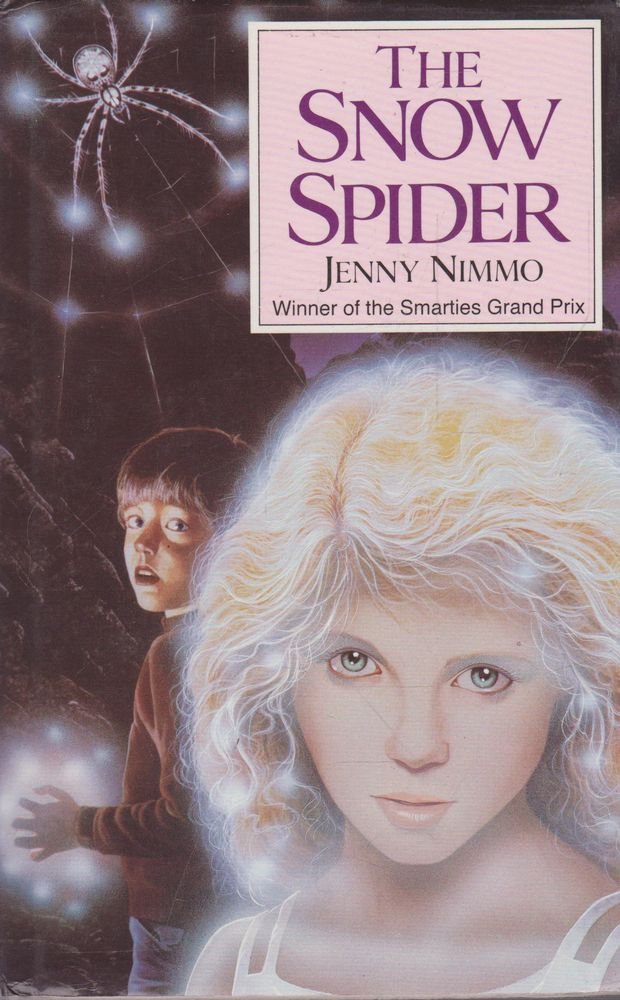
                  The Magician Trilogy is a series of three children's fantasy novels by the British author Jenny Nimmo, first published by Methuen 1986 to 1989. It is sometimes called the Snow Spider trilogy or series after the first book and The Snow Spider Trilogy is the title of its omnibus editions. The stories are inspired by Welsh mythology, with elements borrowed from Mabinogion. Set in contemporary Wales, they feature Gwyn Griffiths, a boy descended from Gwydion who discovers and develops some of the magical power in his lineage.

                • Cover of The Sea of Trolls
                  The Sea of Trolls

                  series · 3 books · 2004

                  similar bymythic fantasy+1 more

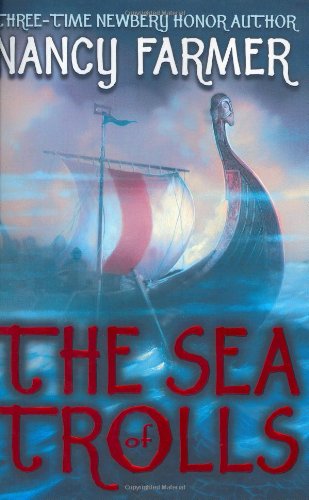
                  The Sea of Trolls follows Jack, a farm boy taken on as a Bard's apprentice in Anglo-Saxon England, after Viking raiders kidnap him and his young sister and carry them toward Scandinavia, forcing Jack to use his half-learned magic to try to save her. Nancy Farmer's trilogy, continuing through The Land of the Silver Apples and The Islands of the Blessed, sends Jack further into Norse myth, eventually as far as the realm of the giants, Jötunheimr.

                • Cover of Night's Daughter
                  Night's Daughter

                  Marion Zimmer Bradley · standalone novel · 1985

                  similar bymythic fantasy+2 more

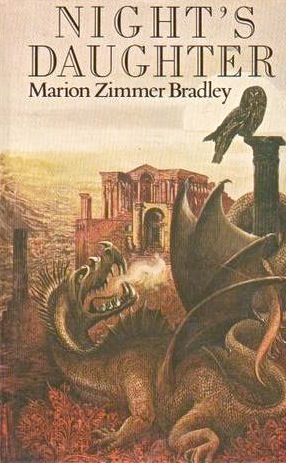
                  Since time immemorial, when the Serpent-lord coupled in the Great Rite with the Priestess of the Night, the Kingdoms of Light and Dark, of Sun and of Moon have been at war. Now Pamina, daughter of the Starqueen, supreme symbol of the Night, and of Sarastro, King of the Royal House of the Sun, has to choose which of her parents she will follow, in custom and in principle. And together with her lover, the princely Tamino, she must face her Ordeal at the Court of Wisdom, Ordeals of Earth and Air, of Fire and Water, from which none can flinch and none can escape.

                • Cover of The Minotaur Trilogy
                  The Minotaur Trilogy

                  series · 3 books · 1966

                  completed

                  similar bymythic fantasy

                • Cover of Arthor
                  Arthor

                  series · 4 books · 1994

                  similar bymythic fantasy+1 more

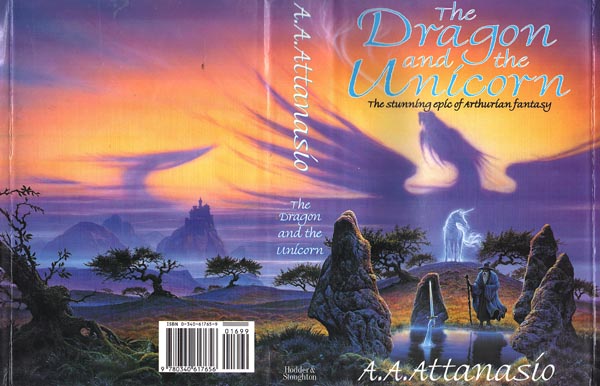
                  A. A. Attanasio's Arthor tetralogy retells the Arthurian legend against a post-Roman Britain torn between warring Celts, Saxons, and supernatural forces, continuing the cosmic fantasy world he began in The Dragon and the Unicorn. The sequence runs from The Dragon and the Unicorn (1994) through Arthor, The Wolf and the Crown, and The Serpent and the Grail (1999).

                • Cover of Celestial Kingdom
                  Celestial Kingdom

                  series · 4 books · 2022

                  similar bygodsmythic fantasy

                  Sue Lynn Tan's Celestial Kingdom duology reimagines the Chinese legend of the moon goddess Chang'e, following her daughter Xingyin as she seeks to free her mother from an enchantment binding her to the moon. It opens with Daughter of the Moon Goddess (2022) and concludes with Heart of the Sun Warrior, with the companion collection Tales of the Celestial Kingdom and the further novel Immortal extending the same mythic world.

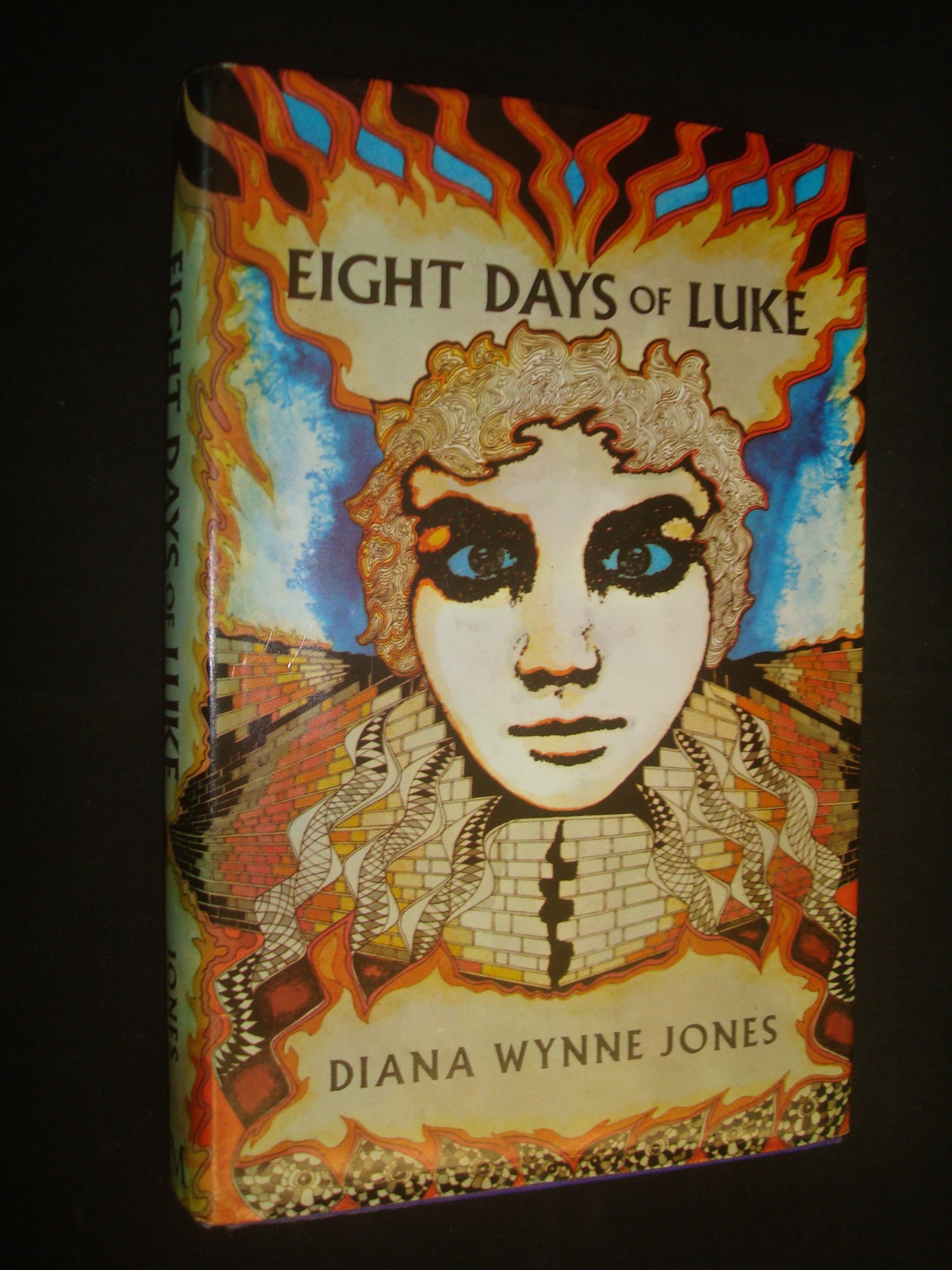
                • Cover of Eight Days of Luke
                  Eight Days of Luke

                  Diana Wynne Jones · standalone novel · 1975

                  similar bygodsmythic fantasy

                  Eight Days of Luke is a children's fantasy novel written by Diana Wynne Jones published in 1975. It tells the tale of a neglected English boy who encounters what prove to be figures from Norse mythology.

                • Cover of The Fall of Gondolin
                  The Fall of Gondolin

                  series · 2 books · 1984

                  completed

                  part of Tolkien's legendarium

                  similar by+2 more

                  The Fall of Gondolin (2018), edited by Christopher Tolkien from his father's manuscripts, tells one of the three "Great Tales" of the First Age of Middle-earth: the hidden elven city of Gondolin, its long concealment, and its eventual betrayal and destruction by the forces of the dark lord Morgoth. It sits alongside The Children of Hurin and Beren and Luthien as an expanded, standalone telling of a story that The Silmarillion had compressed into a single chapter. This is legendarium history assembled from multiple drafts rather than a novel with one continuous throughline.