More like Technical Appendix (Dragon's Egg)
anchored on:science fictionhard science fictionother star systemsfar futureinformativealiens+1 more
but
- Mesklin
series6 books1954
completed
similar byaliensother star systemsfar futurescience fictionhard science fiction+1 more
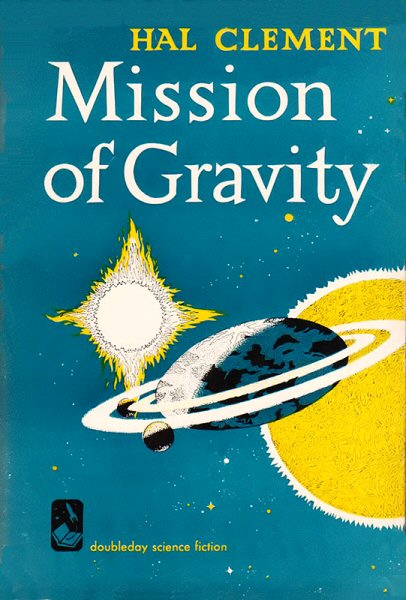
Mesklin is a fictional planet created by Hal Clement and used in a number of his hard science fiction stories, starting with Mission of Gravity (1954). Alongside the novel's original 1953 serialization in Astounding Science Fiction, Clement published an essay titled "Whirligig World" on how he designed the planet to have the properties he wanted. The idea came from an object that was at the time believed to exist in the 61 Cygni system, and which might represent an extrasolar planet.
- Dragon's Egg
series3 books1980
completed
similar byaliensother star systemsinformativescience fictionhard science fictionfar future
Robert L. Forward's Dragon's Egg (1980) follows first contact with the cheela, intelligent beings the size of sesame seeds living on the surface of a neutron star, where crushing gravity and fast-moving physics let them evolve from primitive agriculture to advanced technology in about a month of Earth time while human observers watch from orbit. The sequel Starquake (1985) follows the cheela's own development of space travel and a catastrophic starquake that devastates their neutron-star home, alongside the continuing story of the human crew observing them.
- Wheelers
Ian Stewart & Jack Cohenstandalone novel2000
similar byaliensinformativeother star systemsfar futurescience fictionhard science fiction
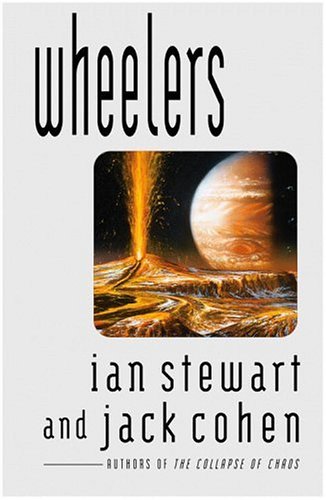
Wheelers is a hard science fiction novel written by English mathematician Ian Stewart and reproductive biologist Jack Cohen. The book was originally released in hardcover form in the year 2000, and a more common paperback printing was begun in 2001. It has enjoyed modest commercial success and is perhaps best known for its conceptions of alien zoology and intelligence—hallmarks of Cohen's work as a consultant on exobiology for books, movies, and television.
- The Gods Themselves
Isaac Asimovstandalone novel1972
similar byaliensfar futurescience fictionother star systemshard science fiction
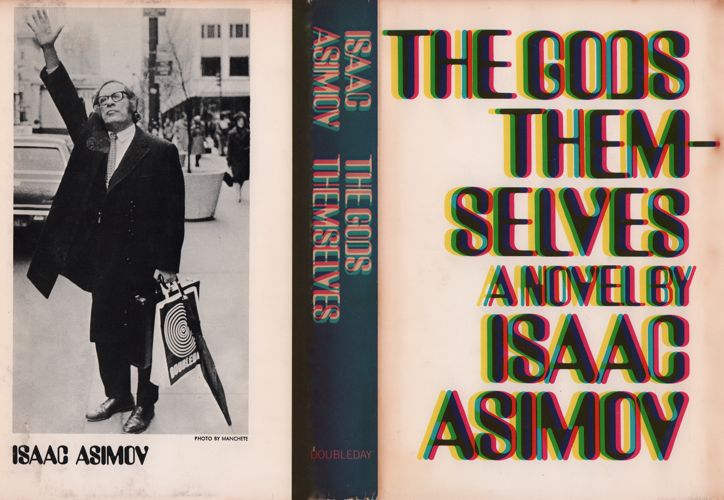
The Gods Themselves is a 1972 science fiction novel written by Isaac Asimov, and his first original novel in fifteen years. It won the Nebula Award for Best Novel in 1972, and the Hugo Award for Best Novel in 1973.
- Ringworld
series5 books1970
part of Known Space
similar byaliensother star systemsfar futurescience fiction
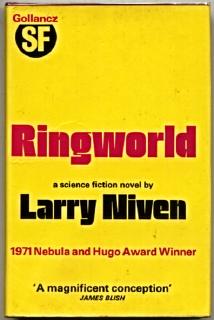
The Ringworld series is a series of science fiction novels written by American author Larry Niven. It is part of his Known Space series of stories. Its backdrop is the Ringworld, a giant artifact 3 million times the surface area of Earth circling a star. The series is composed of four standalone science fiction novels, the original award-winning book and its three sequels:1970: Ringworld 1979: The Ringworld Engineers 1996: The Ringworld Throne 2004: Ringworld's Children
- Ender Wiggin
series14 books1977
part of Ender's Game Universe
similar byaliensfar futurescience fictionother star systems
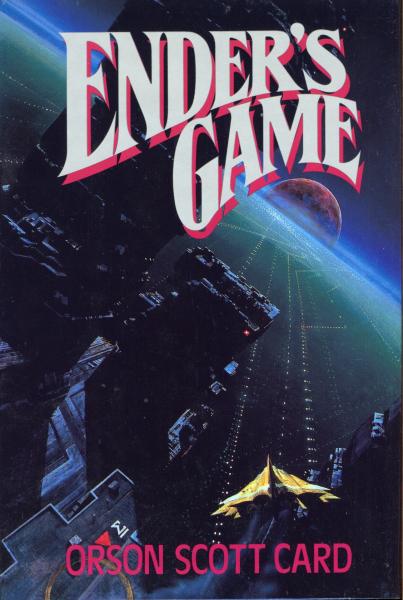
Orson Scott Card's Ender's Game (1985, expanded from his 1977 novella) follows child prodigy Andrew "Ender" Wiggin as he is recruited into a military training program built to prepare Earth's defenses for an anticipated third war against an insectoid alien species known as the Formics. The saga continues years later through Speaker for the Dead and Xenocide, following an older Ender as he confronts the moral weight of his role in that earlier conflict, and concludes the core arc in Children of the Mind, with Ender in Exile filling in the years between the first two books. Set within the wider Ender's Game universe, the series shifts from military coming-of-age story to slower, more philosophical science fiction as it progresses.
- Cycle of Fire
Hal Clementstandalone novel1957
similar byaliensother star systemsfar futurescience fictionhard science fiction
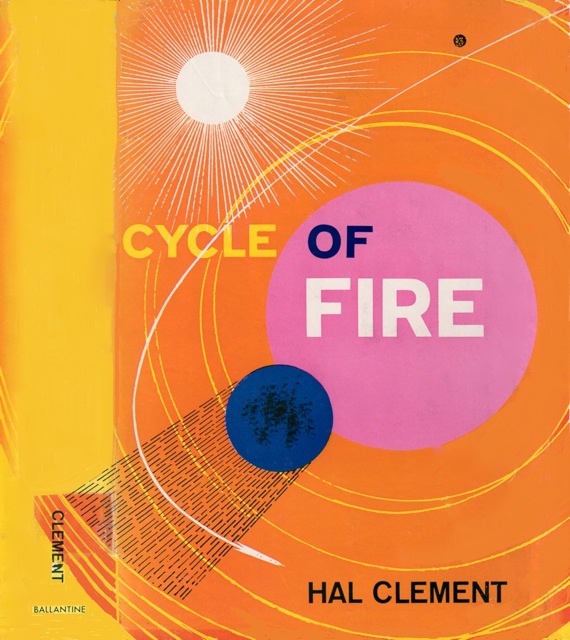
After his ship crashed on the inhospitable planet Abyorman, Nils Kruger had spent weeks wandering across the face of the planet.suffering from blistering heat, the searing cold of an alien climate. Now he had found a fellow wanderer, Dar, an alien castaway. They may both die. The human opts to do something about it. Dar, who knows the time of his death in advance, opts to do nothing. Which of them is right? Perhaps both
- Camelot 30K
Robert L. Forwardstandalone novel1993
similar byaliensinformativeother star systemsfar futurescience fictionhard science fiction
Camelot 30K is a hard science fiction novel written by the United States physicist Robert L. Forward. It was published in 1993 by Tor Books. The story mainly deals with the concept of human contact and interaction with a kingdom of intelligent alien life that dwells on a frozen world where the ambient temperature is only 30 K or −240 °C. In Camelot 30K, Forward uses exotic low-temperature chemistry to explain the aliens' unique biology and anatomy.
- Moties
series4 books1974
part of CoDominium
similar byaliensfar futureother star systemsscience fiction
Larry Niven and Jerry Pournelle's The Mote in God's Eye (1974) depicts humanity's first contact with an alien species, the Moties, set within the far-future interstellar setting of Pournelle's codominium future history. The Gripping Hand continues that first-contact crisis years later, and Outies, written by J. R. Pournelle, carries the story forward into a new generation. Together the three books trace an escalating encounter between human and Motie civilizations within the codominium universe.
- Pushing Ice
Alastair Reynoldsstandalone novel2005
similar byaliensfar futurescience fictionother star systemshard science fiction
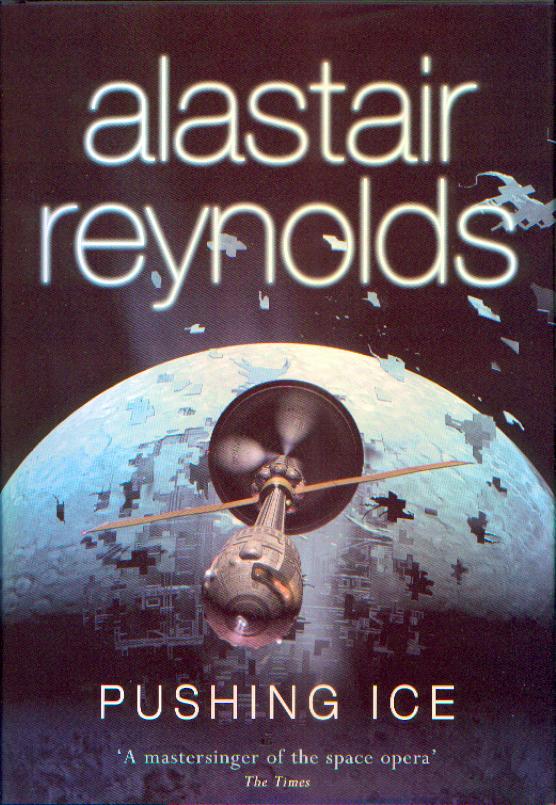
When Saturn's moon Janus suddenly takes off into interstellar space, an ice mining spaceship sent to investigate finds itself swept along into distant space until it ends up trapped in a gigantic alien structure, wherein the crew must prepare to reside for the foreseeable future.
- Minervan Experiment / Giants
series5 books1977
completed
similar byaliensscience fictionfar futurehard science fiction+2 more
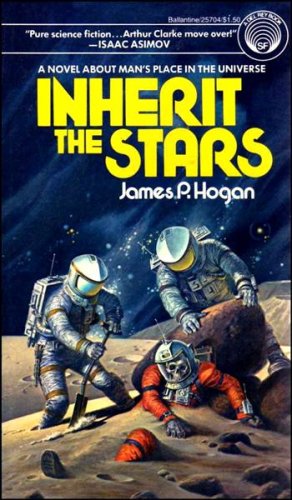
The Giants series is a quintet of science fiction novels by James P. Hogan, published between 1977 and 2005. The series began with Inherit the Stars, published by Del Rey Books in May 1977.
- Uplift Universe
universe13 books1980
Start hereUplift · Start here
similar byaliensfar futureother star systemsscience fiction+1 more
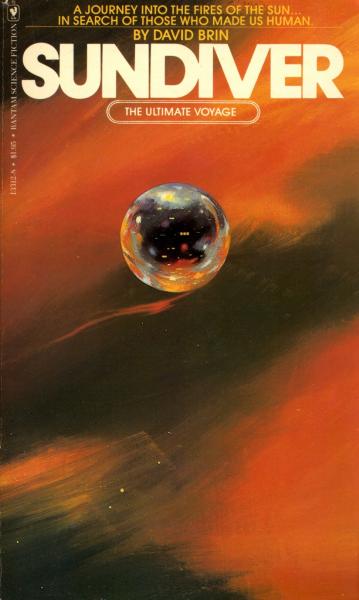
No species, the Galactics insist, ever climbs to sapience alone. For a billion years the elder races have "uplifted" their chosen clients — reshaping some promising animal, gene by patient gene, into a thinking being, then binding it through long ages of indenture. Patron lifts client; client one day becomes patron; and every lineage traces back through the vast Galactic Library to the vanished Progenitors who began it all. Then a ragged band of primates arrives at the stars with no patron to claim them — wolflings, self-made, an affront to a hundred thousand years of law — and worse, these humans have already started uplifting neighbors of their own: the neo-dolphins and neo-chimpanzees of Earthclan. David Brin builds this galaxy across two trilogies. The first — Sundiver, the Hugo- and Nebula-winning Startide Rising, and the Hugo-winning The Uplift War — sends an expedition into the Sun, then follows the dolphin-crewed survey ship Streaker as it flees a discovery that sets fanatical star-clans at war, and a chimp-led resistance on an invaded colony world. The second sequence, Uplift Storm — Brightness Reef, Infinity's Shore, Heaven's Reach — descends to Jijo, a forbidden world where six fallen races hide as illegal settlers, and draws every loose thread toward a reckoning. Short fiction fills the margins. This is space opera with an ecologist's conscience: teeming with invented biologies, wry cross-species banter, and real unease about what we owe the minds we make. Begin with Startide Rising — the saga's beating heart, and readable on its own — or take Sundiver first and read straight through in publication order.
- The Dosadi Experiment
Frank Herbertstandalone novel1977
similar byaliensother star systemsfar futurescience fiction
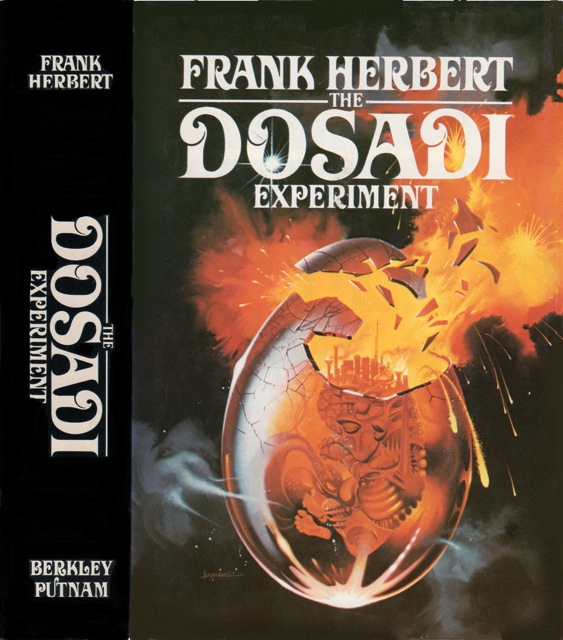
From the flaps of the Berkley Putnam first edition: "In his first new work of science fiction since the best-selling Children of Dune, Frank Herbert returns to his world of Whipping Star, and involves Jorj X. McKie, Saboteur Extraordinary, in a new intrigue. In Whipping Star, McKie discovered that some of the stars in the universe are actually intelligent, super-powerful beings, and was able to befriend one of them, the star Alcyone - affectionately known as Fannie Mae. As The Dosadi Experiment opens, McKie is assigned to investigate the planet Dosadi, which is isolated from the rest of the galaxy by a "god-wall," a barrier set up by one of the intelligent stars. Dosadi is rumored to be an experimental planet, and the experimenters are the froglike Gowachin, whose culture is founded upon a strange legal system in which McKie is the only human ever trained. He learns that humans and Gowachin have been placed on Dosadi, without their consent, for an experiment that could last centuries: an experiment in extreme overcrowding. But this monstrous plot is apparently out of control, and it seems the Gowachin may be prepared to destroy Dosadi rather than expose its secret, thus breaking the peace among the races, and starting the first interstellar war. But this is just the beginning. When McKie finally reaches Dosadi he discovers that the Dosadis have taken control of their own evolution and produced a competitive, highly evolved elite, of both humans and Gowachin, who have been able to extrapolate the existence of a universe beyond the god-wall and hate whoever has imprisoned them like this. They plan to break out and avenge themselves on the galaxy."
- Downward to the Earth
Robert Silverbergstandalone novel1969
similar byaliensother star systemsfar futurescience fiction
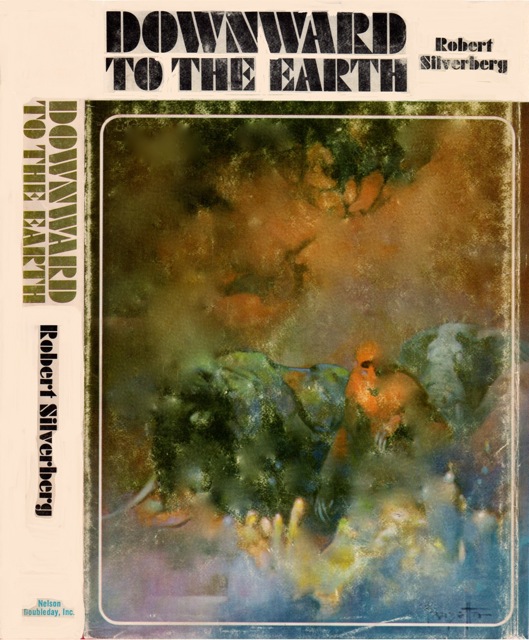
Edmund Gunderson was the Terran administrator of the colony world of Belzagor, and he returns to it after it has gained independence, feeling a sense of guilt for the way he has treated its dominant species, the elephant-like nildoror, whose animalistic appearance had kept Gunderson from taking them seriously as sentient beings. On his return, he feels a new sense of kinship with the natives, perhaps more than for the Terran tourists. The nildoror undergo a process of rebirth, and Gunderson's greatest guilt comes from having denied rebirth to seven nildoror to make them help him repair flood damage.(From Wikipedia)
- Heechee
series19 books1972
completed
similar byaliensfar futurescience fictionother star systems
The Heechee Saga, also known as the Gateway series, is a series of science fiction novels and short stories by Frederik Pohl. The Heechee are an advanced alien race that visited the Solar System hundreds of millennia ago and then mysteriously disappeared. They left behind bases containing artifacts, including working starships, which are discovered and exploited by humanity.
- Incandescence
Greg Eganstandalone novel2008
similar byaliensother star systemsfar futurescience fictionhard science fiction
Incandescence is a 2008 science fiction novel by Australian author Greg Egan. The book is based on the idea that the theory of general relativity could be discovered by a pre-industrial civilisation.
- The Colors of Space
Marion Zimmer Bradleystandalone novel1963
similar byaliensother star systemsfar futurescience fiction
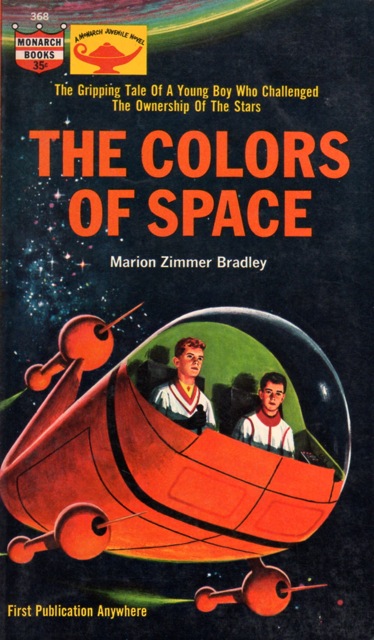
The Lhari seem peaceful and friendly, but they go to some lengths to protect their monopoly on faster-than-light travel. One young man is sent to discover their secrets.
- Catteni Sequence
series5 books1970
completed
similar byaliensother star systemsfar futurescience fiction
The Catteni series is a tetralogy of science fiction novels by American writer Anne McCaffrey. In this universe, humans are slaves of aliens, the humanoid Catteni. Woven through all four of the books are details of the relationship between Kristin Bjornsen, a former slave, and Zainal, a renegade Catteni.
- Armor
John Steakleystandalone novel1984
similar byaliensother star systemsfar futurescience fiction
Armor is a military science fiction novel by John Steakley. It features the military use of exoskeletons and insect-like alien enemies but concentrates on the psychological effects of violence on human beings.
- Dichronauts
Greg Eganstandalone novel2017
similar byaliensother star systemsfar futurescience fictionhard science fiction
Dichronauts is a hard science-fiction novel by Australian author Greg Egan. The novel was published by Night Shade Books on 11 July 2017. It describes a universe with two time dimensions, one of which corresponds to the time perception of the characters while the other influences their spatial perception, which precludes rotations in the latter chronological direction. Hence a symbiosis of two life forms is necessary, so that they can even see in all directions. Furthermore, many fundamental laws of physics are altered crucially: Objects can roll uphill or not fall over any more when oriented suitably. There is negative kinetic energy and a fourth state of matter. Planets are no longer spherical, but hyperbolic and therefore have three separate surfaces. Egan describes these details on his website.
- Learning the World
Ken MacLeodstandalone novel2005
similar byaliensother star systemsfar futurescience fictionhard science fiction
From the front flap of the Tor first printing: "Humanity has spread to every star within 500 light-years of its half-forgotten origin, coloring the sky with a haze of habitats. Societies rise and fall. Incautious experiments burn fast and fade. On the fringes, less modified humans get on with the job of settling a universe that has, so far, been empty of intelligent life. The ancient starship But the Sky, My Lady! The Sky! is entering orbit around a promising new system after a four hundred year journey. For its long-lived inhabitants, the centuries have been busy. Now a younger generation is eager to settle the system. The ship is a seed-pod ready to burst. Then they detect curious electromagnetic emissions from the system's Earth-like world. As the nature of the signals becomes clear, the choices facing the humans become stark. On Ground, second world from the sun, a young astronomer searches for his system's outermost planet. A moving point of light thrills, then disappoints him. It's only a comet. His physicist colleague Orro takes time off from trying to invent a flying-machine to calculate the comet's trajectory. Something is very odd about that comet's path. They are not the only ones for whom the world has changed. "We are not living in the universe we thought we lived in yesterday. We have to start learning the world all over again.""
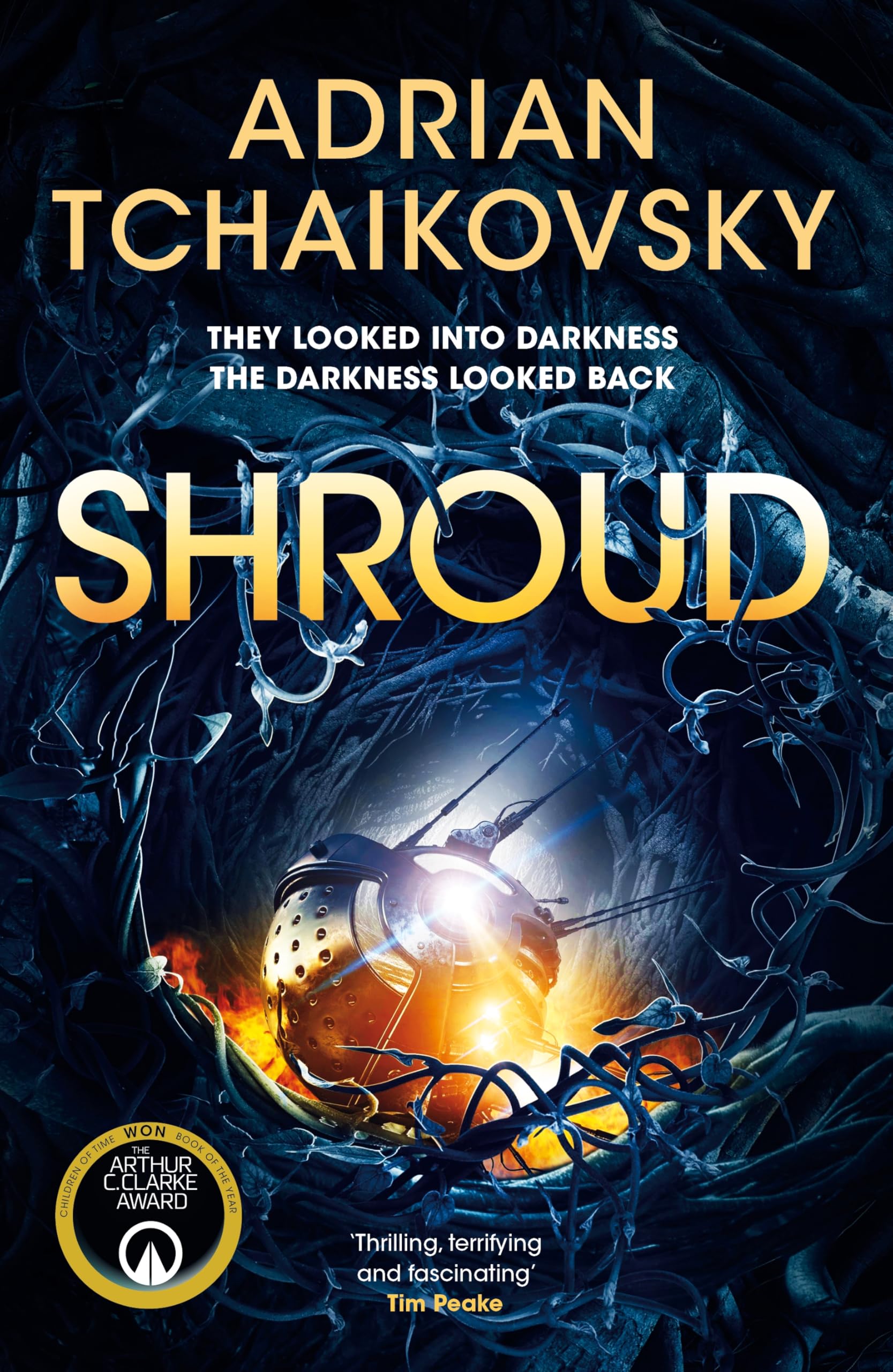
- Shroud (Adrian Tchaikovsky)
series2 books2024
similar byaliensother star systemsfar futurescience fictionhard science fiction
- Uplift
series5 books1980
part of Uplift Universe
similar byaliensfar futurescience fictionother star systems+1 more
David Brin's Uplift trilogy opens with Sundiver, sending human explorers into the Sun itself, then follows a dolphin-crewed starship on the run from hostile aliens in Startide Rising and a fight over the colony world Garth in The Uplift War. The books sit inside Brin's wider Uplift Universe, built on the idea that spacefaring "patron" species genetically engineer younger "client" species into full sapience, with humanity an anomaly that reached the stars without a patron of its own.
- Heorot
series4 books1987
similar byother star systemsfar futurescience fiction+2 more
Larry Niven, Jerry Pournelle and Steven Barnes's The Legacy of Heorot strands human colonists on an idyllic-seeming alien world where they discover apex predators -- grendels -- hidden beneath the surface, forcing them to fight for survival. Beowulf's Children continues the colony a generation later as the children born on the planet clash with their parents over how to live alongside the grendels, and a fourth book, Starborn and Godsons, returns to the settlement decades further on. It's hard-SF creature-horror crossed with generational colony drama.