Loreful
HomeDiscover
Search series, authors…⌘K
Loreful

Reading orders for SF/F series and shared universes — with your place kept in every one.

Explore

UniversesSeriesWorksAuthorsAtlas

Help

FAQAboutSite map

Account & legal

Sign inCreate accountPrivacyTerms

Data

Built on ISFDB, Wikipedia, Wikidata and Open Library. Curated reading orders carry their reasoning on the page; the rest follow publication order. Data sources & licenses

© Loreful · data: ISFDB · CC BY

More like The Bazaar

anchored on:fantasy

but

Mood

The mood the book leaves you in.

  • The reading experience is propelled by journeys, exploration, and physical risk; excitement and forward momentum dominate over dread or introspection.
  • Joy and loss are deliberately mixed; the resolution grants characters something real while taking something else away, leaving warmth and sorrow together.
  • The book demands work from the reader — dense prose, difficult structure, unfamiliar ideas, or morally uncomfortable material — as part of its intended effect.
  • Grim events, cruelty, or despair dominate the atmosphere, and the book does not soften them with comfort or comic relief.
  • The atmosphere is quietly unsettling — wrongness, unease, and the uncanny pervade the book without necessarily escalating into overt horror.
  • The book is built to move the reader; character feeling is foregrounded and major scenes aim at a strong emotional response.
  • Humor is a primary aim and the prose plays for laughs — comic situations, wit, or dialogue produce sustained comedy, not occasional levity.
  • The book insists that things can improve; effort and decency are shown to matter, and the arc bends toward better outcomes even through hardship.
  • The book teaches as it goes — real facts, history, science, or craft are conveyed in enough depth that learning is part of the reading experience.
  • The book is designed to uplift and motivate, presenting perseverance or achievement in a way that invites the reader to aspire or act.
  • The overall register is cheerful and easygoing; stakes are kept gentle and the book avoids dwelling on pain or dread.
  • Withheld information drives the experience; the book sustains enigmas and secrets the reader wants resolved, whatever its genre.
  • The book is contemplative and inward-looking, giving more weight to thought, memory, and meaning than to external events.
  • The book works as comfort reading — low tension, a soothing pace, and an atmosphere the reader can unwind in.
  • Grief, loss, or melancholy set the dominant register, and the book lets sorrow stand rather than resolving it into comfort.
  • Sustained suspense is the point; the book keeps the reader braced for what happens next through danger, pressure, or impending revelation.
  • Playful invention and charm define the register — fanciful conceits, light absurdity, and a narration that delights in its own oddity.

About

What the story runs on.

  • Stories in which extraterrestrial beings are central — as characters, cultures, or the object of the plot.
  • Stories about venturing into space to explore — survey missions, astronauts, and the frontier of the unknown beyond Earth.
  • Stories structured as a quest — a journey undertaken to find, deliver, or destroy something of great import.
  • Stories in which staying alive against nature, catastrophe, or scarcity is the central problem.
  • Stories of lovers kept apart by law, family, faith, or station, where the obstacle to love is the plot.
  • Stories in which a friendship — its making, testing, or loss — is the emotional center.
  • Stories of growing up — a young protagonist crossing from childhood into adult knowledge and responsibility.
  • Stories about who a character truly is — self-discovery, doubled lives, and the search for a self.
  • Stories in which a buried family truth — hidden parentage, crimes, or shames — surfaces and reorders the present.
  • Stories driven by maneuvering for power — factions, conspiracies, and statecraft conducted in shadow.
  • Stories in which war itself is the subject — combat, occupation, and what warfare does to soldiers and civilians.
  • Stories organized around investigating a killing — the case, the clues, and the pursuit of the killer, in any genre's clothing.

Shelf

Where it sits in the library.

    • Fiction built on magic or other supernatural elements that have no scientific explanation.
    • Secondary-world fantasy at large scale, where the fate of nations or the world turns on the protagonists' struggle.
    • Fantasy set in a recognizably modern city or contemporary world where the supernatural intrudes on everyday life.
    • Fantasy that blends in horror's atmosphere and imagery, keeping a fantastical frame around grim or frightening material.
    • Action-driven fantasy following warriors or rogues with personal stakes against sorcerous threats, rather than world-spanning conflicts.
    • Fantasy set in a real historical period or a close analogue of one, with magic woven into the era.
    • Fantasy in which protagonists cross from the ordinary world into another world through a portal or similar passage.
    • Fiction that retells or reworks a traditional fairy tale in a new form or setting.
    • Fantasy drawing directly on myths, legends, and folklore, retelling them or building on their figures and logic.
    • Fantasy of ghosts, vampires, shapeshifters, psychics, and similar phenomena, usually set in an otherwise ordinary world.
    • Fiction mixing science-fictional trappings with overtly magical or impossible elements in one setting.
    • Low-stakes fantasy emphasizing comfort, community, and everyday pleasures over conflict and peril.
    • Speculative fiction of pervasive moral ambiguity, violence, and cynicism that rejects heroic conventions — fantasy and SF alike.
      • Fiction that extrapolates from science and technology — future societies, space travel, or speculative inventions — within at least nominally natural laws.
      • Science fiction of interstellar scope — starships, galactic polities, and adventure across star systems.
      • Science fiction committed to scientific rigor, where technical plausibility constrains the story.
      • Science fiction centered on armed forces and warfare, told largely from a military point of view.
      • Science fiction of networked, corporate-dominated near futures, pairing high technology with social decay.
      • Science fiction styled on nineteenth-century steam-powered technology, often in a Victorian or pseudo-Victorian setting.
      • Fiction depicting an oppressive or catastrophic society, presented as a warning.
      • Fiction set after civilization's collapse, following survivors in the ruins of the old world.
      • Fiction in which characters move between past and future, and the mechanics or consequences of that travel drive the plot.
      • Fiction exploring a world where a historical event went differently and history diverged from ours.
      • Science fiction about humanity's first encounter and communication with an alien intelligence.
      • Science fiction in which extraterrestrial forces attack or occupy Earth and humanity resists.
      • Fiction whose primary aim is to frighten or unsettle the reader through dread, menace, or the monstrous.
      • Horror of vast, indifferent, incomprehensible entities before which humanity is insignificant, in the Lovecraft tradition.
      • Horror of decaying houses, buried family secrets, and oppressive atmosphere in the Gothic literary tradition.
      • Horror centered on hauntings and the returning dead.
      • Horror located in the mind — paranoia, obsession, and unreliable perception rather than external monsters.
      • Horror built around the reanimated dead and survival amid their outbreaks.
      • Horror defined by explicit, transgressive gore that refuses to cut away from violence.
      • Speculative fiction of the strange and uncanny that resists both natural explanation and standard genre categories.
      • Fiction organized around solving a crime or puzzle, typically following an investigator toward the identification of a culprit.
      • A puzzle-first mystery that lays out clues so the culprit's identity can be deduced before the reveal.
      • Crime fiction of moral ambiguity, fatalism, and hard-edged style, set among the corrupt and the doomed.
      • A mystery following the realistic routines of police work — forensics, interviews, and case-building.
      • A gentle mystery with an amateur sleuth, a small community, and violence kept off the page.
      • A mystery set in a past era, where the investigation works within that period's methods and society.
      • Fast-paced fiction driven by imminent danger, pursuit, or high-stakes conspiracy, built to sustain tension.
      • A thriller of espionage — agents, tradecraft, and intelligence services in conflict.
      • A thriller centered on lawyers and the courtroom, where litigation carries the suspense.
      • A thriller driven by detailed contemporary or near-future technology, often military or scientific.
      • A thriller whose tension comes from mental states and manipulation between characters rather than external action.
      • Fiction whose central plot is a romantic relationship and its development toward an emotionally satisfying resolution.
      • Romance in which one or both partners are supernatural beings, blending fantasy elements into the love story.
      • A fantasy-romance hybrid in which the romantic arc and the fantasy plot carry equal weight.
      • Romance set in a past era, with courtship shaped by the period's society and manners.
      • Romance set in the present day, without supernatural or historical elements.
      • Fiction set in a real past period, where the historical setting materially shapes characters and events.
        • General and literary fiction emphasizing prose style, character interiority, or formal ambition over genre plot conventions.
        • Fiction in a realistic world where magical events occur and are treated as ordinary, in the tradition of Latin American literature.
        • Fiction that ridicules people, institutions, or society in order to criticize them.
        • Fiction of dreamlike, irrational imagery and logic that breaks from realistic representation.
        • Fiction that plays with narrative convention through metafiction, fragmentation, and self-reference.
        • Fiction propelled by journeys, exploration, and physical peril, where action and survival carry the plot.
        • Adventure fiction of ships and seafaring — naval engagements, voyages, and life at sea.
        • Fiction of the American frontier West — gunmen, ranchers, and lawmen, typically in the late nineteenth century.
        • Fiction centered on soldiers, campaigns, and the experience of warfare, historical or imagined.
          • Fiction written primarily to amuse, using comedic situations, wit, or parody as its organizing principle.
            • Multi-generational fiction following a family or dynasty across decades, with inheritance and kinship as the through-line.
              • Fiction whose world runs on explicit game mechanics — levels, stats, and skills that characters can see and exploit.
                • Fiction about costumed or superpowered heroes and their conflicts with comparable villains.

                Practical

                How long a commitment, whether it stands alone, and whether it has finished.

                Tap a chip to ask for it · tap again to rule it out · once more to clear. Numbers show what would be left.

                • Cover of Stardust
                  Stardust

                  Neil Gaiman · standalone novel · 1998

                  similar byfantasyadventurousfaefairyland

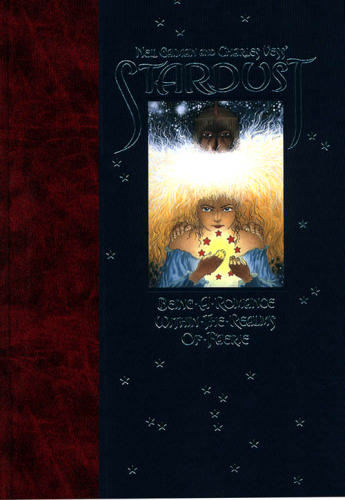
                  Stardust is a 1999 fantasy novel by British writer Neil Gaiman, usually published with illustrations by Charles Vess. Stardust has a different tone and style from most of Gaiman's prose fiction, being consciously written in the tradition of pre-Tolkien English fantasy, following in the footsteps of authors such as Lord Dunsany and Hope Mirrlees. It is concerned with the adventures of a young man from the village of Wall, which borders the magical land of Faerie.

                • E
                  Erith

                  series · 4 books · 2001

                  similar byfantasyfae+1 more

                • TI
                  The Iron Fey Universe

                  series · 15 books · 2010

                  similar byfantasyfaefairyland+2 more

                • Cover of Peter Pan Universe
                  Peter Pan Universe

                  universe · 112 books · 1902

                  Start herePeter Pan · Start here

                  similar byfantasy+1 more

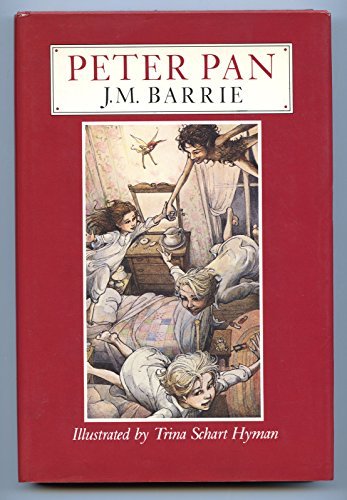
                  Second star to the right, and straight on till morning — and there it is, the island that every child dreams once and then, growing up, contrives to forget. Neverland: mermaids in the lagoon, a ticking crocodile with a clock in its belly, a pirate nursing his severed hand, and above it all the boy who will not grow up, forever flying, forever heartless in the lovely careless way that only children are. It begins with J. M. Barrie — the 1904 stage play, the chapters of Kensington Gardens, and the novel Peter and Wendy that fixed Peter, Wendy, Tinker Bell, Hook and the Lost Boys in place. From that small window a wide world has flown. Dave Barry and Ridley Pearson supply the how-it-all-began in their Starcatchers books, chasing falling starstuff aboard a doomed ship to explain why one orphan came to fly and never age. A whole bright shelf tends Tinker Bell's Pixie Hollow — the Disney Fairies and Fairy Haven tales, Kiki Thorpe's Never Girls — while Heidi Schulz hands the wheel to Hook's own daughter, and stranger, dimmer corners carry the island into far darker weather. Many hands, one archipelago; no single map governs them all. What sets it apart is the sweetness with a blade in it — wonder shadowed always by the ache of leaving, of mothers who keep the window open and children who fly home too late. Newcomers should begin where it began, with Barrie's Peter and Wendy, then, for the origin, take the Starcatchers books in their own order. The rest of Neverland waits, as it always does, for whoever still remembers how to reach it.

                • Cover of A Court of Thorns and Roses
                  A Court of Thorns and Roses

                  series · 6 books · 2015

                  similar byfantasyfaeromantasy+2 more

                  A Court of Thorns and Roses is a fantasy romance series by American author Sarah J. Maas, which follows the journey of 19-year-old Feyre Archeron after she is brought into the faerie lands of Prythian. The first book of the series, A Court of Thorns and Roses, was published in May 2015. The series centers on Feyre's adventures across Prythian and the faerie courts, following the epic love story and fierce struggle that ensues after she enters the fae lands. The series has sold over 13 million copies. There are currently five novels in the series, with the sixth scheduled to release on October 27, 2026, and the seventh on January 12, 2027. An eighth installment is set to conclude the continuous story told across books six, seven and eight.

                • Cover of Faerie Wars
                  Faerie Wars

                  series · 5 books · 2003

                  completed

                  similar byfantasyadventurousfaefairyland

                  The Faerie Wars Chronicles is a fantasy action young adult novel series written by James Herbert Brennan. The first book in the series, Faerie Wars was published in the United Kingdom in February 2003 by Bloomsbury Publishing. As of 2011, there are five books in the ongoing series.

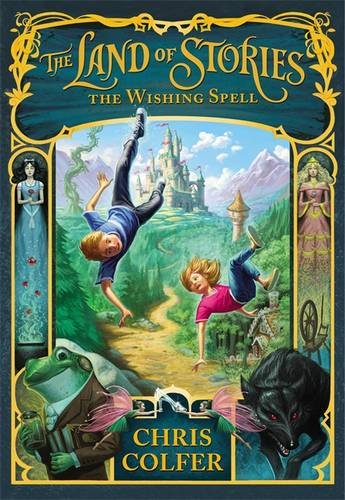
                • Cover of The Land of Stories
                  The Land of Stories

                  series · 13 books · 2012

                  similar byfantasyadventurous+1 more

                  The Land of Stories is a series of children's fiction, adventure, and fantasy books written by American author, actor, and singer Chris Colfer. The first book, The Wishing Spell, was released on July 17, 2012, with the sixth and final book published in July 2017. Colfer started plans for a prequel series in 2016, and has since published three books in this series, beginning with A Tale of Magic... in 2019.

                • Cover of Fae & Alchemy
                  Fae & Alchemy

                  series · 2 books · 2024

                  similar byfantasyfaeromantasy+2 more

                • Cover of Crimson Sails
                  Crimson Sails

                  series · 3 books · 2023

                  similar byfantasyadventurousotherworld+3 more

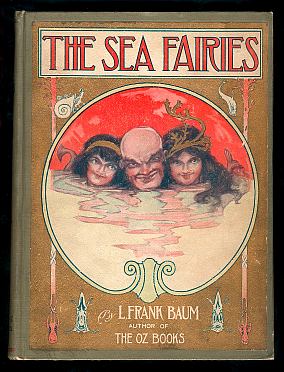
                • Cover of Trot and Cap'n Bill
                  Trot and Cap'n Bill

                  series · 4 books · 1911

                  similar byfantasy+3 more

                  L. Frank Baum's Trot and Cap'n Bill duology (The Sea Fairies, 1911; Sky Island, 1912) follows Californian girl Trot and her one-legged sailor companion Cap'n Bill through undersea fairy kingdoms and then to a fantastical island divided between light and dark peoples. Baum conceived it as a rival series to his own Oz books, but both characters were eventually folded into Oz continuity and reappear as regulars in later Oz novels.

                • Cover of The Princess Bride
                  The Princess Bride

                  William Goldman · standalone novel · 1973

                  similar byfantasyadventurousforbidden love

                  The Princess Bride: S. Morgenstern's Classic Tale of True Love and High Adventure, The "Good Parts" Version is a 1973 fantasy romance novel by American writer William Goldman. The book combines elements of comedy, adventure, fantasy, drama, romance, and fairy tale. It is metafictionally presented as an abridgment of a longer work by the fictional S. Morgenstern, and Goldman's commentary asides are constant throughout. It was originally published in the United States by Harcourt Brace, then later by Random House, while in the United Kingdom it was later published by Bloomsbury.

                • TU
                  Trylle Universe

                  series · 9 books · 2010

                  similar byfantasy+3 more

                • WU
                  Woodcutter Universe

                  series · 18 books · 2006

                  similar byfantasy+1 more

                • Cover of Once Upon / Faery
                  Once Upon / Faery

                  series · 5 books · 2001

                  similar byfantasyadventurousfaefairyland+1 more

                • RR
                  Rachel Roberts' Avalon

                  series · 12 books · 2001

                  similar byfantasyadventurous+1 more

                • Cover of Gentleman Bastard Sequence
                  Gentleman Bastard Sequence

                  series · 7 books · 2006

                  similar byfantasy+1 more

                  Scott Lynch's Gentleman Bastard sequence follows Locke Lamora, an orphan-raised master thief and con artist, and his gang of 'Gentleman Bastards' as they run elaborate grifts on the nobility of Camorr, a canal city modeled on Renaissance Venice. The Lies of Locke Lamora and its two sequels braid heist capers with flashbacks tracing how the gang was trained, escalating into a wider conflict involving crime lords and sorcerers. Lynch has planned seven books in total; three have been published so far, with long gaps between installments.

                • Cover of Atlantis (Gena Showalter)
                  Atlantis (Gena Showalter)

                  series · 5 books · 2005

                  similar byfantasyadventurous+2 more

                • Cover of Circle of Magic / The Wizard Apprentice
                  Circle of Magic / The Wizard Apprentice

                  series · 8 books · 1990

                  similar byfantasyadventurous

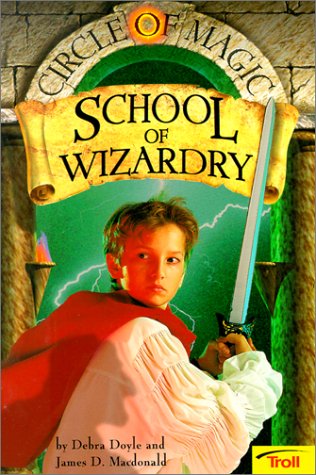
                  This eight-book series by Debra Doyle and James D. Macdonald follows a young apprentice training in the practice of wizardry alongside knights and nobles in an invented medieval world, moving from a fixed school setting into wider adventures as the books progress. It is a lighter, adventure-driven take on magical apprenticeship aimed at younger readers, distinct from other series sharing the same "Circle of Magic" name. The later volumes carry the apprentice further from the classroom into court intrigue and open conflict.

                • Cover of Realm Immortal
                  Realm Immortal

                  series · 3 books · 2006

                  similar byfantasy+2 more

                • Cover of The Plated Prisoner
                  The Plated Prisoner

                  series · 6 books · 2020

                  similar byfantasy+3 more

                • Cover of Celestial Kingdom
                  Celestial Kingdom

                  series · 4 books · 2022

                  similar byfantasy+2 more

                  Sue Lynn Tan's Celestial Kingdom duology reimagines the Chinese legend of the moon goddess Chang'e, following her daughter Xingyin as she seeks to free her mother from an enchantment binding her to the moon. It opens with Daughter of the Moon Goddess (2022) and concludes with Heart of the Sun Warrior, with the companion collection Tales of the Celestial Kingdom and the further novel Immortal extending the same mythic world.

                • Cover of The King of Elfland's Daughter
                  The King of Elfland's Daughter

                  Lord Dunsany · standalone novel · 1924

                  similar byfantasyfaeforbidden lovefairyland

                  The King of Elfland's Daughter is a 1924 fantasy novel by Anglo-Irish writer Lord Dunsany. It is widely recognized as one of the most influential and acclaimed works in all of fantasy literature. Although the novel faded into relative obscurity following its initial release, it found new longevity and wider critical acclaim when a paperback edition was released in 1969 as the second volume of the Ballantine Adult Fantasy series.

                • Cover of Saga of the Unfated
                  Saga of the Unfated

                  series · 2 books · 2024

                  similar byfantasyromantasy+2 more

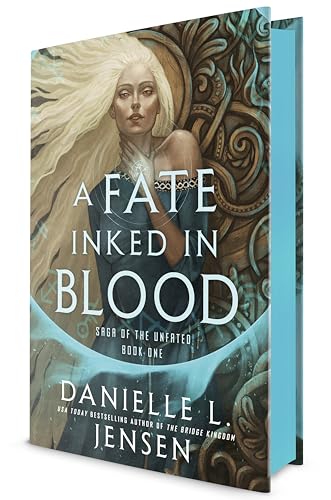
                  Danielle L. Jensen's Saga of the Unfated opens with A Fate Inked in Blood, in which a woman from a Nordic-flavored fishing village discovers she carries the blood and magic of a legendary shieldmaiden and is drawn into a war between rival warlords who both want her power. The story continues in A Curse Carved in Bone.
                • Cover of The Fey Realm
                  The Fey Realm

                  series · 2 books · 2008

                  similar byfantasyfairylandromantasy+1 more