More like The Clockwork Wolf
but
- George Dower / Infernal Devices
series3 books1987
similar by19th centurysteampunk+3 more
K. W. Jeter's trilogy, whose 1987 original helped coin the term 'steampunk,' follows clockmaker George Dower as he's dragged into escalating Victorian conspiracies involving mechanical devices, secret societies, and inventions that shouldn't work but do. Infernal Devices, Fiendish Schemes, and Grim Expectations mix dark comedy with the gears-and-brass aesthetic the series helped establish before it had a name.
- Newbury & Hobbes Investigations
series23 books2008
similar by19th centurysteampunk+1 more
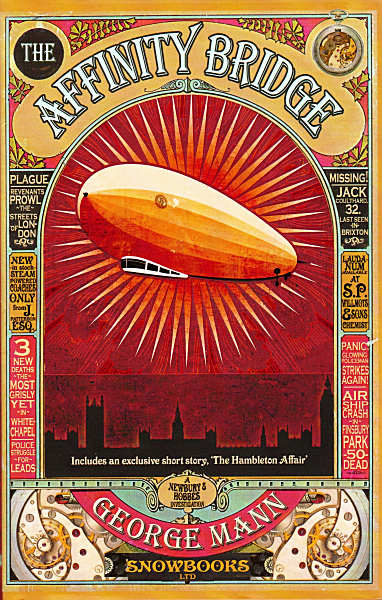
George Mann's steampunk series follows Sir Maurice Newbury, an occult investigator working for the crown in an alternate, more mechanized Victorian Britain, and his assistant Veronica Hobbes, as they take on cases blending supernatural threats with the era's mechanical marvels. The Affinity Bridge, the opening novel, entangles them with a crashed automaton airship and a spreading plague of the reanimated; later books deepen Newbury's struggle with addiction and Veronica's search for her institutionalized sister. It combines detective procedural with alternate-history steampunk London.
- Wolves Chronicles
series12 books1962
completed
similar byadventurous19th century+2 more
The Wolves Chronicles is Joan Aiken's long-running alternate-history series for young readers, set in a nineteenth-century England ruled by the Stuart dynasty and beset by wolves that have migrated across a Channel land-bridge. It opens with The Wolves of Willoughby Chase, in which two girls outwit a scheming governess sent to ruin them, and expands over twelve books into a sprawling saga of orphans, conspiracies, and journeys through a Britain quite unlike the real one. Aiken kept adding to the same timeline across more than four decades, including later prequels set before the first book.
- Foundation Universe
universe123 books1940
Start hereFoundation · Start here
similar byrobots+1 more
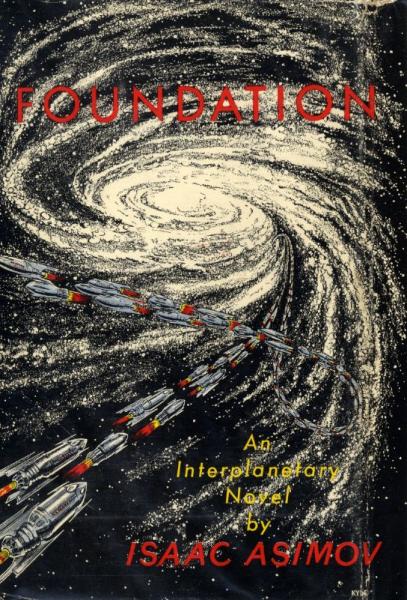
There is a science that reads the future of quadrillions the way an astronomer reads the orbits of stars. It is called psychohistory, and its equations foresee something the ruling Galactic Empire cannot admit: the throne is rotting, and thirty thousand years of barbarism are coming. One man, Hari Seldon, cannot stop the fall. He can only shorten it — by seeding a Foundation of scholars at the rim of the galaxy, a fragile institution built to carry knowledge across the dark and cut the interregnum to a single millennium. This is a universe told in the register of history itself: the long view, the calm of deep time, empires measured in centuries and men measured against them. The spine is Asimov's original trilogy — Foundation, Foundation and Empire, Second Foundation — followed decades later by the sequels Foundation's Edge and Foundation and Earth and the prequels Prelude to Foundation and Forward the Foundation. Late in life Asimov braided this in with his other future histories: the Robot novels of detective Elijah Baley and his humaniform partner R. Daneel Olivaw (The Caves of Steel, The Naked Sun, The Robots of Dawn, Robots and Empire) and the early Galactic Empire novels (Pebble in the Sky and its kin), until one continuous chronicle ran from the first thinking robots to the Second Empire. Other hands extend it — the Second Foundation Trilogy by Gregory Benford, Greg Bear, and David Brin, and shared-world spinoffs such as Robot City — so the corpus sprawls beyond a single author's tidy shelf. What distinguishes it is that the drama is intellectual: crises resolved by insight, nerve, and dialogue rather than fleets and blades, each turn hinging on the hidden logic of the Seldon Plan. Begin where readers have always begun — with Foundation, and the original trilogy in publication order. The rest opens outward from there.
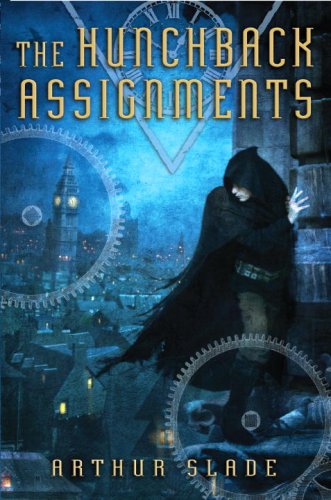
- Hunchback Assignments / Modo: Mission Clockwork
series5 books2009
similar byadventurous19th centurysteampunk
- H. G. Wells' War of the Worlds
universe65 books1898
Start hereThe War of the Worlds · Start here
similar by+3 more
No one would have believed, in the closing years of the nineteenth century, that human affairs were being watched keenly and closely from the timeless worlds of space. And then the cylinders fell. H. G. Wells' War of the Worlds opens in the quiet of the Surrey commons, where a falling star proves to be the first Martian craft — and from the pit rise the towering tripods, the Heat-Ray, the choking Black Smoke and the creeping red weed, wielded by minds that regard mankind much as we regard the creatures we boil for supper. This is invasion rendered as natural disaster: cold, methodical, and vast beyond argument. Wells' 1898 novel is the seed; everything else grows from that Martian soil. The catalogue gathers direct sequels and continuations alongside a wide field of other hands. In War of the Worlds: Global Dispatches the invasion is retold across the whole planet through the eyes of Twain, Verne, Tolstoy, Lowell and Kipling; in the Manly Wade and Wade Wellman crossover, Sherlock Holmes, Watson and Professor Challenger take the field against the machines; and Scott Washburn's Great Martian War stretches the fighting into a decades-long alternate history of steam, artillery and grinding attrition. It is a loose shared world — no single decreed sequence, many voices answering one calamity. What sets this world apart is its refusal of heroics: the invaders fall not to generals but to the smallest things of Earth, humbling and indifferent. Begin, always, with Wells' original novel — it is short, and it is the ground every later book stands upon. From there follow your appetite: Global Dispatches for the panorama, the Holmes campaign for adventure, Washburn for the long war.
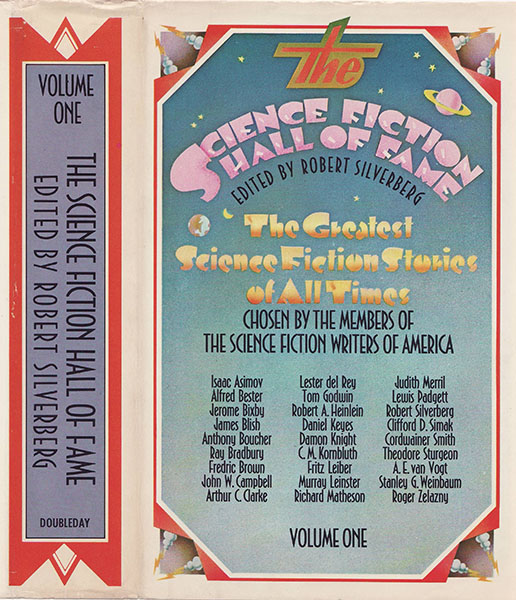
- The Science Fiction Hall of Fame
series11 books1895
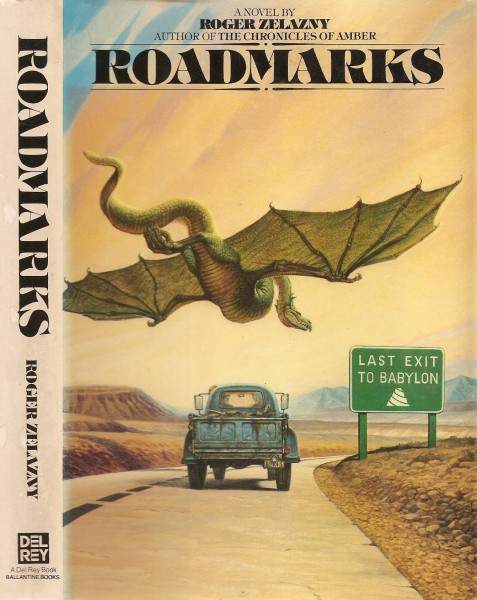
- Roadmarks
Roger Zelaznystandalone novel1979
similar byadventurousour world+2 more
Roadmarks is a science fantasy novel by American author Roger Zelazny, written during the late 1970s and published in 1979.
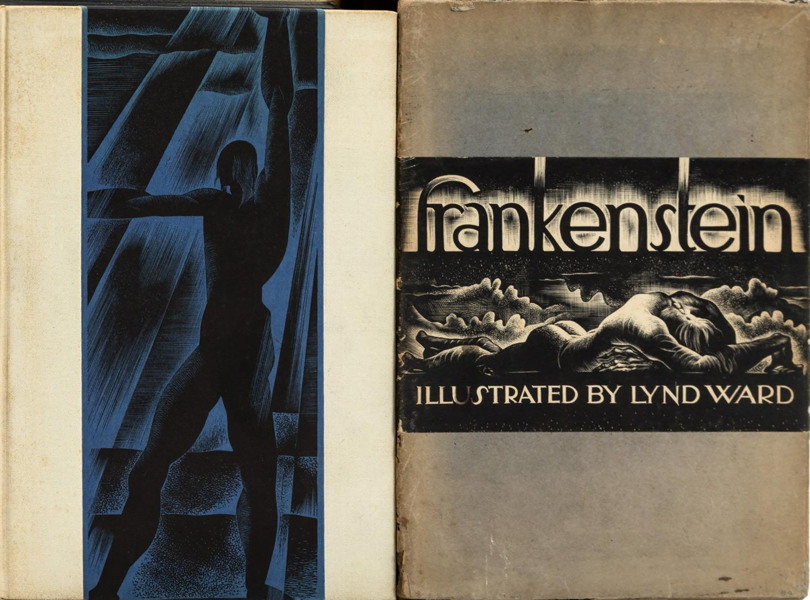
- Frankenstein
universe128 books1818
Start hereFrankenstein, or, The Modern Prometheus · Start here
similar by+1 more
Light a candle against the November dark and consider what a single spark, rightly applied to dead matter, might wake. In a laboratory at Ingolstadt a student named Victor Frankenstein learns the secret of animating lifeless flesh, assembles a being from the harvest of charnel houses and graves, and, at the moment it draws breath, flees the thing he has made. What he abandons does not stay abandoned. This is the world Mary Shelley opened in 1818 with Frankenstein; or, The Modern Prometheus: the story of a maker and his unmothered creation, and the long ruin each works upon the other. Shelley's novel arrives as a nest of confessions, an explorer's letters from the frozen north enclosing Victor's account, which in turn encloses the Creature's own, an articulate and wounded voice that has read Milton and wants only not to be alone. From that single volume two centuries of other hands have built outward, not as one continuity but as a gathering of independent returns to the same fire. Dean Koontz transplants the myth to modern New Orleans across a five-book cycle, Prodigal Son through The Dead Town, where the original Creature, now called Deucalion, hunts a Victor who never died. Donald F. Glut's New Adventures and Frank Schildiner's Quest of Frankenstein run the monster through pulp adventure; the mid-century French novels published as Benoit Becker chase him across a ruined Europe; Scott Sonneborn's Frankenstein Journals and the comic Frankenstein's Aunt turn the legend toward younger and lighter readers. What binds them is the question the book asks and never settles: which is the monster, the forsaken creature who kills, or the man whose ambition and cowardice made and abandoned him? Expect little comfort and few clean villains; the abiding note is grief, sublime and articulate, set against Alpine ice and candlelit hubris. Begin where it began, with Shelley's own novel; the later cycles reward you only once you have heard the Creature speak for himself.
- Temeraire
series48 books2006
similar byadventurous19th centuryhistorical fantasyalternate historyfantasy+1 more
Temeraire is a series of nine alternate history fantasy novels written by American author Naomi Novik. The novels follow the adventures of Captain William Laurence and his dragon, the eponymous Temeraire, and reimagine events of the Napoleonic Wars with "an air force of dragons, manned by crews of aviators". His Majesty's Dragon, the first entry in the series, won the Compton Crook Award in 2007 and was nominated for the Hugo Award for Best Novel the same year. Temeraire: In the Service of the King, an omnibus volume collecting the first three novels, won the Locus Award for Best First Novel in 2007. Temeraire was nominated for the Hugo Award for Best Series in 2017.
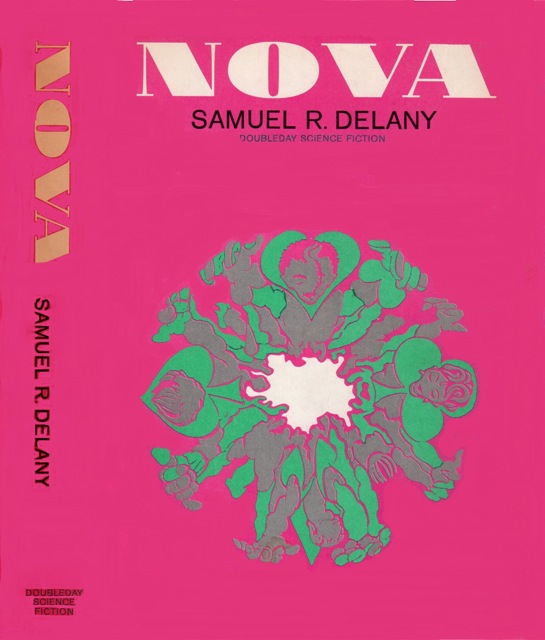
- Nova
Samuel R. Delanystandalone novel1968
similar byadventurous+2 more
Nоva is a science fiction novel by American writer Samuel R. Delany published in 1968. The plot concerns the spaceship captain Lorq Von Ray's search for a nova, which will produce the essential power source Illyrion, and his vendetta with the Red family, who seek to kill him. Nominally space opera, it explores the politics and culture of a future where cyborg technology is universal, yet making major decisions can involve using tarot cards. It has strong mythological overtones, relating to both the Grail Quest and Jason's quest for the Golden Fleece.
- Hitchhiker's Guide to the Galaxy
series16 books1979
part of The Hitchhiker's Guide to the Galaxy Universe
similar by+1 more
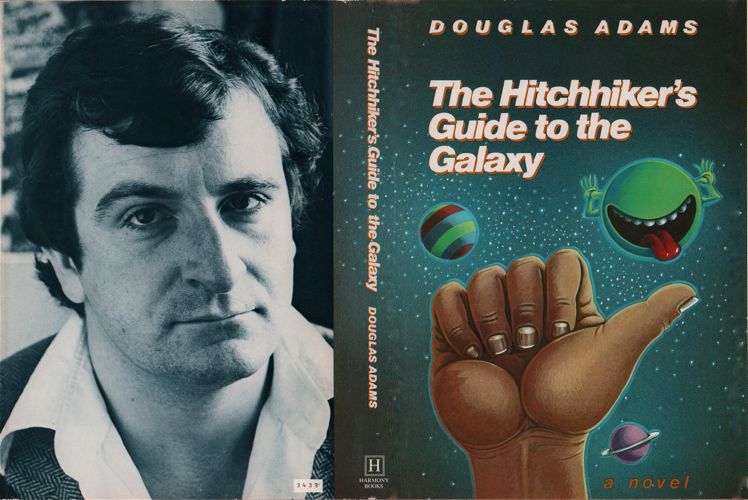
The Hitchhiker's Guide to the Galaxy is a comedy science fiction franchise created by Douglas Adams. Originally a radio sitcom broadcast over two series on BBC Radio 4 between 1978 and 1980, it was soon adapted to other formats, including both novels and comic books, a 1981 BBC television series, a 1984 text adventure game, stage shows and a 2005 feature film.
- The Goblin Reservation
Clifford D. Simakstandalone novel1968
similar byadventurousour worldfantasy+1 more
The Goblin Reservation is a 1968 science fiction novel by American writer Clifford D. Simak, featuring an educated Neanderthal, a biomechanical sabertooth tiger, aliens that move about on wheels, a man who time-travels using an unreliable device implanted in his brain, meeting a ghost, trolls, banshees, goblins, a dragon and even Shakespeare himself. The Goblin Reservation was a Hugo Award nominee in 1969 and was originally serialized in Galaxy Science Fiction magazine.