Loreful
HomeDiscover
Search series, authors…⌘K
Loreful

Reading orders for SF/F series and shared universes — with your place kept in every one.

Explore

UniversesSeriesWorksAuthorsAtlas

Help

FAQAboutSite map

Account & legal

Sign inCreate accountPrivacyTerms

Data

Built on ISFDB, Wikipedia, Wikidata and Open Library. Curated reading orders carry their reasoning on the page; the rest follow publication order. Data sources & licenses

© Loreful · data: ISFDB · CC BY

More like The Effluent Engine

but

Mood

The mood the book leaves you in.

  • The reading experience is propelled by journeys, exploration, and physical risk; excitement and forward momentum dominate over dread or introspection.
  • Joy and loss are deliberately mixed; the resolution grants characters something real while taking something else away, leaving warmth and sorrow together.
  • The book demands work from the reader — dense prose, difficult structure, unfamiliar ideas, or morally uncomfortable material — as part of its intended effect.
  • Grim events, cruelty, or despair dominate the atmosphere, and the book does not soften them with comfort or comic relief.
  • The atmosphere is quietly unsettling — wrongness, unease, and the uncanny pervade the book without necessarily escalating into overt horror.
  • The book is built to move the reader; character feeling is foregrounded and major scenes aim at a strong emotional response.
  • Humor is a primary aim and the prose plays for laughs — comic situations, wit, or dialogue produce sustained comedy, not occasional levity.
  • The book insists that things can improve; effort and decency are shown to matter, and the arc bends toward better outcomes even through hardship.
  • The book teaches as it goes — real facts, history, science, or craft are conveyed in enough depth that learning is part of the reading experience.
  • The book is designed to uplift and motivate, presenting perseverance or achievement in a way that invites the reader to aspire or act.
  • The overall register is cheerful and easygoing; stakes are kept gentle and the book avoids dwelling on pain or dread.
  • Withheld information drives the experience; the book sustains enigmas and secrets the reader wants resolved, whatever its genre.
  • The book is contemplative and inward-looking, giving more weight to thought, memory, and meaning than to external events.
  • The book works as comfort reading — low tension, a soothing pace, and an atmosphere the reader can unwind in.
  • Grief, loss, or melancholy set the dominant register, and the book lets sorrow stand rather than resolving it into comfort.
  • Sustained suspense is the point; the book keeps the reader braced for what happens next through danger, pressure, or impending revelation.
  • Playful invention and charm define the register — fanciful conceits, light absurdity, and a narration that delights in its own oddity.

About

What the story runs on.

  • Stories in which a machine intelligence — an AI, computer mind, or sentient program — is a central character or the story's driving problem.
  • Stories in which extraterrestrial beings are central — as characters, cultures, or the object of the plot.
  • Stories driven by deliberate modification of genomes — designer organisms, engineered humans, and the consequences of remaking life.
  • Stories about venturing into space to explore — survey missions, astronauts, and the frontier of the unknown beyond Earth.
  • Stories about minds with paranormal abilities — telepathy, telekinesis, precognition, empathy — and how societies handle those who have them.
  • Stories in which staying alive against nature, catastrophe, or scarcity is the central problem.
  • Stories of growing up — a young protagonist crossing from childhood into adult knowledge and responsibility.
  • Stories about who a character truly is — self-discovery, doubled lives, and the search for a self.
  • Stories driven by maneuvering for power — factions, conspiracies, and statecraft conducted in shadow.
  • Stories about rising against rulers — uprisings, resistance movements, and revolutions and their aftermaths.
  • Stories in which war itself is the subject — combat, occupation, and what warfare does to soldiers and civilians.
  • Stories organized around investigating a killing — the case, the clues, and the pursuit of the killer, in any genre's clothing.

Shelf

Where it sits in the library.

    • Fiction built on magic or other supernatural elements that have no scientific explanation.
    • Secondary-world fantasy at large scale, where the fate of nations or the world turns on the protagonists' struggle.
    • Fantasy set in a recognizably modern city or contemporary world where the supernatural intrudes on everyday life.
    • Fantasy that blends in horror's atmosphere and imagery, keeping a fantastical frame around grim or frightening material.
    • Action-driven fantasy following warriors or rogues with personal stakes against sorcerous threats, rather than world-spanning conflicts.
    • Fantasy set in a real historical period or a close analogue of one, with magic woven into the era.
    • Fantasy in which protagonists cross from the ordinary world into another world through a portal or similar passage.
    • Fiction that retells or reworks a traditional fairy tale in a new form or setting.
    • Fantasy drawing directly on myths, legends, and folklore, retelling them or building on their figures and logic.
    • Fantasy of ghosts, vampires, shapeshifters, psychics, and similar phenomena, usually set in an otherwise ordinary world.
    • Fiction mixing science-fictional trappings with overtly magical or impossible elements in one setting.
    • Low-stakes fantasy emphasizing comfort, community, and everyday pleasures over conflict and peril.
    • Speculative fiction of pervasive moral ambiguity, violence, and cynicism that rejects heroic conventions — fantasy and SF alike.
      • Fiction that extrapolates from science and technology — future societies, space travel, or speculative inventions — within at least nominally natural laws.
      • Science fiction of interstellar scope — starships, galactic polities, and adventure across star systems.
      • Science fiction committed to scientific rigor, where technical plausibility constrains the story.
      • Science fiction centered on armed forces and warfare, told largely from a military point of view.
      • Science fiction of networked, corporate-dominated near futures, pairing high technology with social decay.
      • Science fiction styled on nineteenth-century steam-powered technology, often in a Victorian or pseudo-Victorian setting.
      • Fiction depicting an oppressive or catastrophic society, presented as a warning.
      • Fiction set after civilization's collapse, following survivors in the ruins of the old world.
      • Fiction in which characters move between past and future, and the mechanics or consequences of that travel drive the plot.
      • Fiction exploring a world where a historical event went differently and history diverged from ours.
      • Science fiction about humanity's first encounter and communication with an alien intelligence.
      • Science fiction in which extraterrestrial forces attack or occupy Earth and humanity resists.
      • Fiction whose primary aim is to frighten or unsettle the reader through dread, menace, or the monstrous.
      • Horror of vast, indifferent, incomprehensible entities before which humanity is insignificant, in the Lovecraft tradition.
      • Horror of decaying houses, buried family secrets, and oppressive atmosphere in the Gothic literary tradition.
      • Horror centered on hauntings and the returning dead.
      • Horror located in the mind — paranoia, obsession, and unreliable perception rather than external monsters.
      • Horror built around the reanimated dead and survival amid their outbreaks.
      • Horror defined by explicit, transgressive gore that refuses to cut away from violence.
      • Speculative fiction of the strange and uncanny that resists both natural explanation and standard genre categories.
      • Fiction organized around solving a crime or puzzle, typically following an investigator toward the identification of a culprit.
      • A puzzle-first mystery that lays out clues so the culprit's identity can be deduced before the reveal.
      • Crime fiction of moral ambiguity, fatalism, and hard-edged style, set among the corrupt and the doomed.
      • A mystery following the realistic routines of police work — forensics, interviews, and case-building.
      • A gentle mystery with an amateur sleuth, a small community, and violence kept off the page.
      • A mystery set in a past era, where the investigation works within that period's methods and society.
      • Fast-paced fiction driven by imminent danger, pursuit, or high-stakes conspiracy, built to sustain tension.
      • A thriller of espionage — agents, tradecraft, and intelligence services in conflict.
      • A thriller centered on lawyers and the courtroom, where litigation carries the suspense.
      • A thriller driven by detailed contemporary or near-future technology, often military or scientific.
      • A thriller whose tension comes from mental states and manipulation between characters rather than external action.
      • Fiction whose central plot is a romantic relationship and its development toward an emotionally satisfying resolution.
      • Romance in which one or both partners are supernatural beings, blending fantasy elements into the love story.
      • A fantasy-romance hybrid in which the romantic arc and the fantasy plot carry equal weight.
      • Romance set in a past era, with courtship shaped by the period's society and manners.
      • Romance set in the present day, without supernatural or historical elements.
      • Fiction set in a real past period, where the historical setting materially shapes characters and events.
        • General and literary fiction emphasizing prose style, character interiority, or formal ambition over genre plot conventions.
        • Fiction in a realistic world where magical events occur and are treated as ordinary, in the tradition of Latin American literature.
        • Fiction that ridicules people, institutions, or society in order to criticize them.
        • Fiction of dreamlike, irrational imagery and logic that breaks from realistic representation.
        • Fiction that plays with narrative convention through metafiction, fragmentation, and self-reference.
        • Fiction propelled by journeys, exploration, and physical peril, where action and survival carry the plot.
        • Adventure fiction of ships and seafaring — naval engagements, voyages, and life at sea.
        • Fiction of the American frontier West — gunmen, ranchers, and lawmen, typically in the late nineteenth century.
        • Fiction centered on soldiers, campaigns, and the experience of warfare, historical or imagined.
          • Fiction written primarily to amuse, using comedic situations, wit, or parody as its organizing principle.
            • Multi-generational fiction following a family or dynasty across decades, with inheritance and kinship as the through-line.
              • Fiction whose world runs on explicit game mechanics — levels, stats, and skills that characters can see and exploit.
                • Fiction about costumed or superpowered heroes and their conflicts with comparable villains.

                Practical

                How long a commitment, whether it stands alone, and whether it has finished.

                Tap a chip to ask for it · tap again to rule it out · once more to clear. Numbers show what would be left.

                • Cover of The Lathe of Heaven
                  The Lathe of Heaven

                  Ursula K. Le Guin · standalone novel · 1971

                  similar byscience fiction+2 more

                  The Lathe of Heaven is a 1971 science fiction novel by American writer Ursula K. Le Guin, first serialized in the American science fiction magazine Amazing Stories. It won the 1972 Locus Award for Best Novel and was a finalist for the 1971 Nebula Award for Best Novel and 1972 Hugo Award for Best Novel. Two television film adaptations were released: the PBS production, The Lathe of Heaven (1980), and Lathe of Heaven (2002), a remake produced by the A&E Network.

                • Cover of The Iron Dream
                  The Iron Dream

                  Norman Spinrad · standalone novel · 1972

                  similar byscience fictionalternate history+1 more

                  Contains "The Lord of the Swastika", a Science Fiction Novel by Adolf Hitler, plus an afterword by Homer Whipple. In this universe, Adolf Hitler (1889-1953) emigrated to the US in 1919 and became a popular science fiction author, fan and illustrator. "The Lord of the Swastika" won a posthumous Hugo in 1955.

                • Cover of The Plot Against America
                  The Plot Against America

                  Philip Roth · standalone novel · 2004

                  similar byrace and racismscience fictionalternate history

                  Roosevelt is defeated in 1940 by Charles Lindbergh, who guides the US towards fascism and anti-Semitism.

                • Cover of Farnham's Freehold
                  Farnham's Freehold

                  Robert A. Heinlein · standalone novel · 1964

                  similar byrace and racismscience fiction

                  Farnham's Freehold is a science fiction novel by American writer Robert A. Heinlein. A serialized version, edited by Frederik Pohl, appeared in Worlds of If magazine. The complete version was published in novel form by G. P. Putnam later in 1964.

                • Cover of The Guns of the South
                  The Guns of the South

                  Harry Turtledove · standalone novel · 1992

                  similar byscience fictionalternate history+1 more

                  The Guns of the South is an alternate history science fiction novel set during the American Civil War by Harry Turtledove. It was released in the United States on September 22, 1992.

                • Cover of Earthseed
                  Earthseed

                  series · 7 books · 1993

                  similar byscience fiction+1 more

                  Octavia E. Butler's Earthseed novels, Parable of the Sower and Parable of the Talents, follow Lauren Olamina as she survives the collapse of a climate-ravaged, near-future United States and founds a belief system built on the idea that "God is Change." The two-book series was left unfinished at Butler's death; a planned third novel, Parable of the Trickster, was never completed. Later graphic-novel adaptations retell the same two stories rather than continuing the narrative.

                • Cover of Friday
                  Friday

                  Robert A. Heinlein · standalone novel · 1982

                  similar byrace and racismscience fiction

                  Friday is a 1982 science fiction novel by American writer Robert A. Heinlein. It is the story of a female "artificial person", the eponymous Friday, genetically engineered to be stronger, faster, smarter, and generally better than normal humans. Artificial humans are widely resented, and much of the story deals with Friday's struggle both against prejudice and to conceal her enhanced attributes from other humans. The story is set in a Balkanized 21st century, in which the nations of the North American continent have been split up into a number of smaller states.

                • Cover of Kindred
                  Kindred

                  Octavia E. Butler · standalone novel · 1979

                  similar byrace and racismscience fiction

                  Kindred (1979) is a novel by American writer Octavia E. Butler that incorporates time travel and is modeled on slave narratives. Widely popular, it has frequently been chosen as a text by community-wide reading programs and book organizations, and for high school and college courses.

                • Cover of Noughts & Crosses
                  Noughts & Crosses

                  series · 10 books · 2001

                  similar byrace and racismscience fictionalternate history

                  Noughts & Crosses is a series of young adult novels by British author Malorie Blackman, with six novels and three novellas. The series is speculative fiction describing an alternative history. The series takes place in an alternative 21st-century Britain.

                • Cover of Underground Airlines
                  Underground Airlines

                  Ben H. Winters · standalone novel · 2016

                  similar byrace and racismscience fictionalternate history

                  Underground Airlines is a 2016 science fiction novel by American writer Ben Winters, set in a contemporary alternate-history United States where the American Civil War never occurred because Abraham Lincoln was assassinated prior to his 1861 inauguration and a version of the Crittenden Compromise was adopted instead. As a result, slavery has remained legal in a group of Southern states known as the "Hard Four": Alabama, Louisiana, Mississippi and a unified Carolina. Its name evokes the Underground Railroad in relations to its setting. The novel attracted praise for exploring racism through the alternate-history mechanism.

                • Cover of Fire on the Mountain
                  Fire on the Mountain

                  Terry Bisson · standalone novel · 1988

                  similar byrace and racismscience fictionalternate history

                  Alternate history, where John Brown's raid on Harper's Ferry succeeds and sparks a slave rebellion in 1859.

                • Cover of Breakfast of Champions
                  Breakfast of Champions

                  Kurt Vonnegut & Jr. · standalone novel · 1973

                  similar by+2 more

                  The author decides to liberate the characters he created, including an author who decides to try to help a mentally ill reader who was driven over the edge by the book's assertion that he was the only creature with free will in a universe of preprogrammed automatons.

                • Cover of White Lotus
                  White Lotus

                  John Hersey · standalone novel · 1965

                  similar byrace and racismscience fictionalternate history

                  In a world where white people have been enslaved by Orientals, a young girl named White Lotus is captured in Arizona and transported to China. After being sold into slavery, she survives a vast Chinese civil war and is emancipated at its conclusion. She subsequently abandons her life as a tenant farmer and moves to the white district of a large city in northern China in search of a better life.

                • Cover of Counter-Clock World
                  Counter-Clock World

                  Philip K. Dick · standalone novel · 1967

                  similar byscience fiction+1 more

                  In a near future, after time has reversed itself in some ways and the dead are being resurrected and grow younger until they vanish in a reverse conception, the imminent resurrection of the founder of a new religion which has spread through African-Americans causes a power struggle between factions who vie to possess him.

                • Cover of Heart of the Comet
                  Heart of the Comet

                  David Brin & Gregory Benford · standalone novel · 1986

                  similar byscience fiction+1 more

                  Heart of the Comet is a novel by David Brin and Gregory Benford about human space travel to Halley's Comet published in 1986. Its publication coincided with the comet's 1986 approach to the Earth.

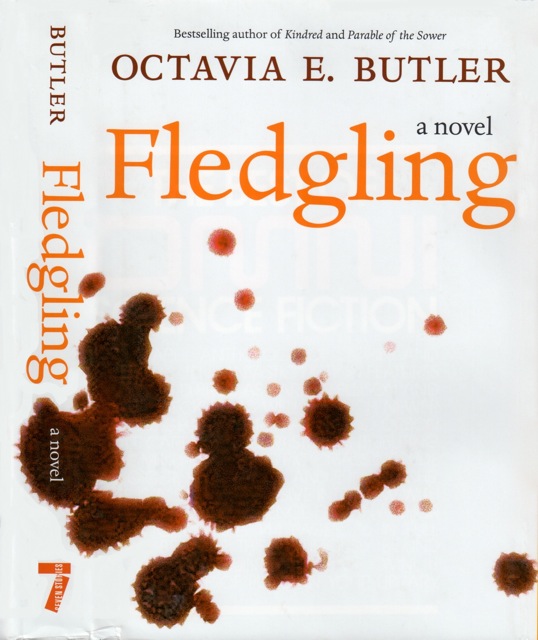
                • Cover of Fledgling
                  Fledgling

                  Octavia E. Butler · standalone novel · 2005

                  similar byrace and racismscience fiction

                  Fledgling is a science fiction vampire novel by American writer Octavia E. Butler, published in 2005. It was the author's final book published before her death in 2006.

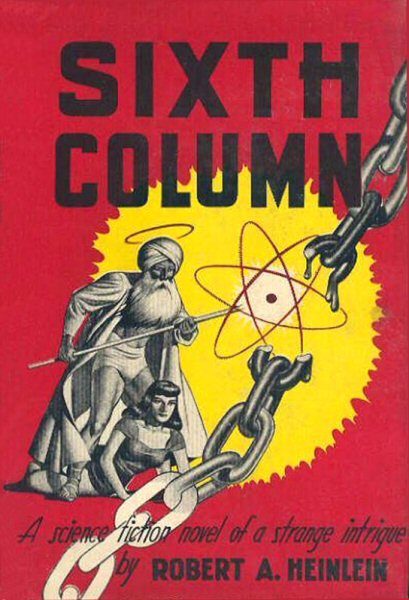
                • Cover of Sixth Column
                  Sixth Column

                  Robert A. Heinlein · standalone novel · 1949

                  similar byrace and racismscience fiction

                  The United States falls to Asian invasion and occupation. The US military is demolished, but a lone outpost is developing fantastic new technology that will empower the Resistance.

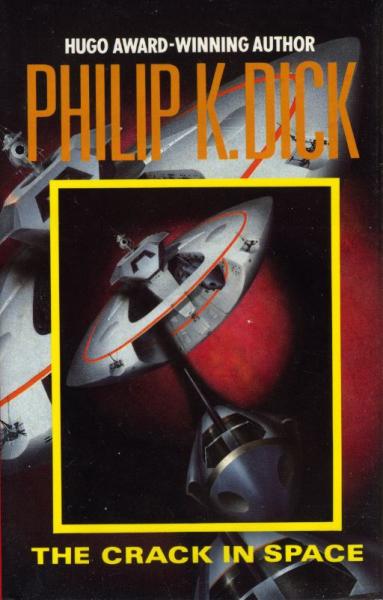
                • Cover of The Crack in Space
                  The Crack in Space

                  Philip K. Dick · standalone novel · 1966

                  similar byrace and racismscience fiction

                  The Crack in Space is a 1966 science fiction novel by American writer Philip K. Dick. In the United Kingdom, it has been published under the title of the original novella, Cantata 140, published in the July 1964 issue of The Magazine of Fantasy & Science Fiction. This original title refers to the short title in English, Sleepers Awake, of J.S. Bach's Cantata BWV 140 and the novel's 'bibs', the millions sleeping in suspended animation. Both are based on the short story Prominent Author. The common elements are the Jiffi-scuttler transport device, the company, Terran Development, that manufactures it, and a summary of Prominent Author as an event of the past in chapter 2. The "crack in space" is a defect in Jiffi-scuttler operation that allows access to the Earth and to parallel Earths at various times and locations, beyond its intended use of providing near-instant transport between specific locations on the Earth in the present.

                • Cover of Black No More
                  Black No More

                  George S. Schuyler · standalone novel · 1931

                  similar byrace and racismscience fiction

                  Black No More: Being an Account of the Strange and Wonderful Workings of Science in the Land of the Free, A.D. 1933-1940 is a 1931 Harlem Renaissance satire on American race relations by George S. Schuyler. In the novel, Schuyler targets both the Ku Klux Klan and NAACP in condemning the ways in which race functions as both an obsession and a commodity in early twentieth-century America. The central premise of the novel is that an African American scientist invents a process that can transform Black people into white people. Those who have internalized white racism, those who are tired of inferior opportunities socially and economically, and those who simply want to expand their sexual horizons, undergo the procedure. As the country "whitens", the economic importance of racial segregation in the South as a means of maintaining elite white economic and social status becomes increasingly apparent, as the South relies on Black labor through sharecropping.

                • Cover of Bilalistan
                  Bilalistan

                  series · 2 books · 2002

                  similar byscience fictionalternate history+1 more

                • Cover of The Jagged Orbit
                  The Jagged Orbit

                  John Brunner · standalone novel · 1969

                  similar byrace and racismscience fiction

                  The Jagged Orbit is a science fiction novel by British writer John Brunner. It is similar to his earlier novel Stand on Zanzibar in its narrative style and dystopic outlook. It has exactly 100 titled chapters, which vary from several pages to part of one word. It was first published in 1969 with cover art by Leo and Diane Dillon, in the Ace Science Fiction Specials line issued by Ace Books.

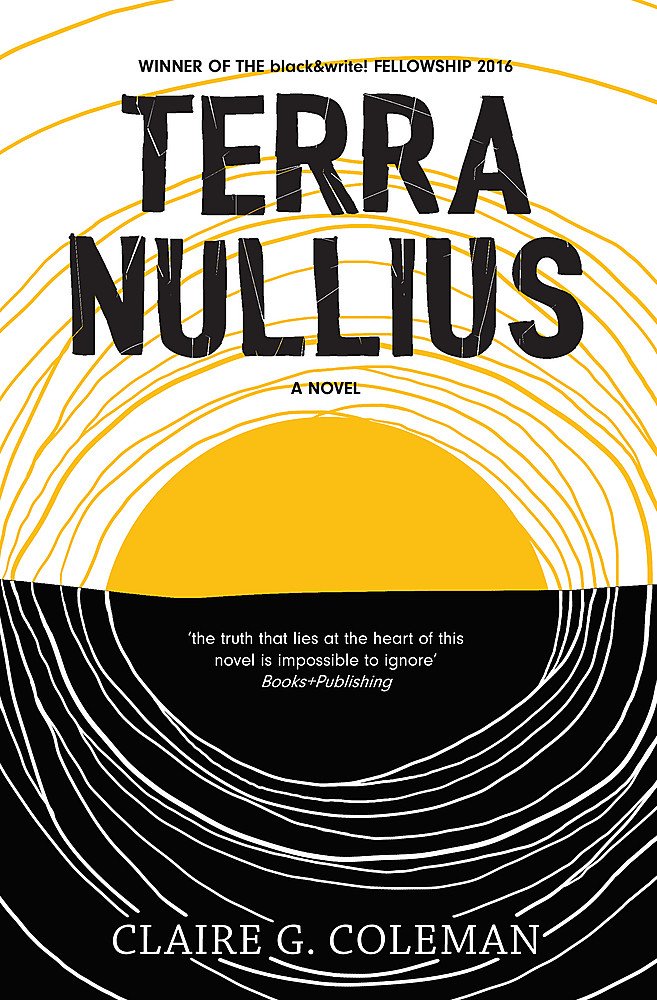
                • Cover of Terra Nullius
                  Terra Nullius

                  Claire G. Coleman · standalone novel · 2017

                  similar byrace and racismscience fictionalternate history

                  Terra Nullius is a 2017 speculative fiction novel by Claire G. Coleman. It draws from Australia's colonial history, describing a society split into "Natives" and "Settlers."

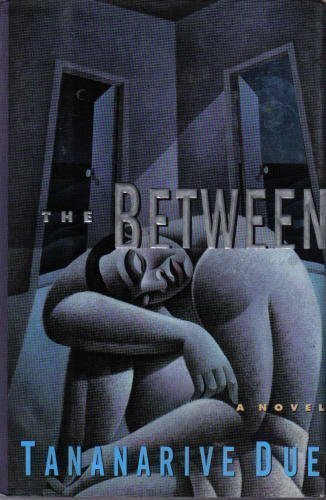
                • Cover of The Between
                  The Between

                  Tananarive Due · standalone novel · 1995

                  similar byrace and racism+1 more

                  The Between is a 1995 horror novel by Tananarive Due and her debut novel. It follows a middle-class African-American husband and father who has lived with the belief that he cheated death as a child. When his family becomes the target of racist threats, he suffers a psychological breakdown intertwined with supernatural elements that blur the boundary between reality and death. It was nominated for the 1996 Bram Stoker Award.

                • Cover of Babel, or, The Necessity of Violence: An Arcane History of the Oxford Translators' Revolution
                  Babel, or, The Necessity of Violence: An Arcane History of the Oxford Translators' Revolution

                  R. F. Kuang · standalone novel · 2022

                  similar byrace and racismhistorical fantasy

                  Babel, or The Necessity of Violence: An Arcane History of the Oxford Translators' Revolution is a 2022 novel of speculative fiction by R. F. Kuang set in a fantastical version of Oxford in 1830s England. Thematically similar to The Poppy War (2018–20), Kuang's first book series, the book criticizes British imperialism, racism and capitalism, and the complicity of academia, knowledge, and language in perpetuating and enabling them.