Loreful
HomeDiscover
Search series, authors…⌘K
Loreful

Reading orders for SF/F series and shared universes — with your place kept in every one.

Explore

UniversesSeriesWorksAuthorsAtlas

Help

FAQAboutSite map

Account & legal

Sign inCreate accountPrivacyTerms

Data

Built on ISFDB, Wikipedia, Wikidata and Open Library. Curated reading orders carry their reasoning on the page; the rest follow publication order. Data sources & licenses

© Loreful · data: ISFDB · CC BY

More like The Final Problem

anchored on:mystery & detectiveeuropebritish isles19th centurymurder investigationtense

but

Mood

The mood the book leaves you in.

  • The reading experience is propelled by journeys, exploration, and physical risk; excitement and forward momentum dominate over dread or introspection.
  • Joy and loss are deliberately mixed; the resolution grants characters something real while taking something else away, leaving warmth and sorrow together.
  • The book demands work from the reader — dense prose, difficult structure, unfamiliar ideas, or morally uncomfortable material — as part of its intended effect.
  • Grim events, cruelty, or despair dominate the atmosphere, and the book does not soften them with comfort or comic relief.
  • The atmosphere is quietly unsettling — wrongness, unease, and the uncanny pervade the book without necessarily escalating into overt horror.
  • The book is built to move the reader; character feeling is foregrounded and major scenes aim at a strong emotional response.
  • Humor is a primary aim and the prose plays for laughs — comic situations, wit, or dialogue produce sustained comedy, not occasional levity.
  • The book insists that things can improve; effort and decency are shown to matter, and the arc bends toward better outcomes even through hardship.
  • The book teaches as it goes — real facts, history, science, or craft are conveyed in enough depth that learning is part of the reading experience.
  • The book is designed to uplift and motivate, presenting perseverance or achievement in a way that invites the reader to aspire or act.
  • The overall register is cheerful and easygoing; stakes are kept gentle and the book avoids dwelling on pain or dread.
  • Withheld information drives the experience; the book sustains enigmas and secrets the reader wants resolved, whatever its genre.
  • The book is contemplative and inward-looking, giving more weight to thought, memory, and meaning than to external events.
  • The book works as comfort reading — low tension, a soothing pace, and an atmosphere the reader can unwind in.
  • Grief, loss, or melancholy set the dominant register, and the book lets sorrow stand rather than resolving it into comfort.
  • Sustained suspense is the point; the book keeps the reader braced for what happens next through danger, pressure, or impending revelation.
  • Playful invention and charm define the register — fanciful conceits, light absurdity, and a narration that delights in its own oddity.

About

What the story runs on.

  • Stories in which extraterrestrial beings are central — as characters, cultures, or the object of the plot.
  • Stories about minds with paranormal abilities — telepathy, telekinesis, precognition, empathy — and how societies handle those who have them.
  • Stories structured as a quest — a journey undertaken to find, deliver, or destroy something of great import.
  • Stories in which staying alive against nature, catastrophe, or scarcity is the central problem.
  • Stories of lovers kept apart by law, family, faith, or station, where the obstacle to love is the plot.
  • Stories of growing up — a young protagonist crossing from childhood into adult knowledge and responsibility.
  • Stories about who a character truly is — self-discovery, doubled lives, and the search for a self.
  • Stories in which a buried family truth — hidden parentage, crimes, or shames — surfaces and reorders the present.
  • Stories driven by maneuvering for power — factions, conspiracies, and statecraft conducted in shadow.
  • Stories about rising against rulers — uprisings, resistance movements, and revolutions and their aftermaths.
  • Stories in which war itself is the subject — combat, occupation, and what warfare does to soldiers and civilians.
  • Stories organized around investigating a killing — the case, the clues, and the pursuit of the killer, in any genre's clothing.

Shelf

Where it sits in the library.

    • Fiction built on magic or other supernatural elements that have no scientific explanation.
    • Secondary-world fantasy at large scale, where the fate of nations or the world turns on the protagonists' struggle.
    • Fantasy set in a recognizably modern city or contemporary world where the supernatural intrudes on everyday life.
    • Fantasy that blends in horror's atmosphere and imagery, keeping a fantastical frame around grim or frightening material.
    • Action-driven fantasy following warriors or rogues with personal stakes against sorcerous threats, rather than world-spanning conflicts.
    • Fantasy set in a real historical period or a close analogue of one, with magic woven into the era.
    • Fantasy in which protagonists cross from the ordinary world into another world through a portal or similar passage.
    • Fiction that retells or reworks a traditional fairy tale in a new form or setting.
    • Fantasy drawing directly on myths, legends, and folklore, retelling them or building on their figures and logic.
    • Fantasy of ghosts, vampires, shapeshifters, psychics, and similar phenomena, usually set in an otherwise ordinary world.
    • Fiction mixing science-fictional trappings with overtly magical or impossible elements in one setting.
    • Low-stakes fantasy emphasizing comfort, community, and everyday pleasures over conflict and peril.
    • Speculative fiction of pervasive moral ambiguity, violence, and cynicism that rejects heroic conventions — fantasy and SF alike.
      • Fiction that extrapolates from science and technology — future societies, space travel, or speculative inventions — within at least nominally natural laws.
      • Science fiction of interstellar scope — starships, galactic polities, and adventure across star systems.
      • Science fiction committed to scientific rigor, where technical plausibility constrains the story.
      • Science fiction centered on armed forces and warfare, told largely from a military point of view.
      • Science fiction of networked, corporate-dominated near futures, pairing high technology with social decay.
      • Science fiction styled on nineteenth-century steam-powered technology, often in a Victorian or pseudo-Victorian setting.
      • Fiction depicting an oppressive or catastrophic society, presented as a warning.
      • Fiction set after civilization's collapse, following survivors in the ruins of the old world.
      • Fiction in which characters move between past and future, and the mechanics or consequences of that travel drive the plot.
      • Fiction exploring a world where a historical event went differently and history diverged from ours.
      • Science fiction about humanity's first encounter and communication with an alien intelligence.
      • Science fiction in which extraterrestrial forces attack or occupy Earth and humanity resists.
      • Fiction whose primary aim is to frighten or unsettle the reader through dread, menace, or the monstrous.
      • Horror of vast, indifferent, incomprehensible entities before which humanity is insignificant, in the Lovecraft tradition.
      • Horror of decaying houses, buried family secrets, and oppressive atmosphere in the Gothic literary tradition.
      • Horror centered on hauntings and the returning dead.
      • Horror located in the mind — paranoia, obsession, and unreliable perception rather than external monsters.
      • Horror built around the reanimated dead and survival amid their outbreaks.
      • Horror defined by explicit, transgressive gore that refuses to cut away from violence.
      • Speculative fiction of the strange and uncanny that resists both natural explanation and standard genre categories.
      • Fiction organized around solving a crime or puzzle, typically following an investigator toward the identification of a culprit.
      • A puzzle-first mystery that lays out clues so the culprit's identity can be deduced before the reveal.
      • Crime fiction of moral ambiguity, fatalism, and hard-edged style, set among the corrupt and the doomed.
      • A mystery following the realistic routines of police work — forensics, interviews, and case-building.
      • A gentle mystery with an amateur sleuth, a small community, and violence kept off the page.
      • A mystery set in a past era, where the investigation works within that period's methods and society.
      • Fast-paced fiction driven by imminent danger, pursuit, or high-stakes conspiracy, built to sustain tension.
      • A thriller of espionage — agents, tradecraft, and intelligence services in conflict.
      • A thriller centered on lawyers and the courtroom, where litigation carries the suspense.
      • A thriller driven by detailed contemporary or near-future technology, often military or scientific.
      • A thriller whose tension comes from mental states and manipulation between characters rather than external action.
      • Fiction whose central plot is a romantic relationship and its development toward an emotionally satisfying resolution.
      • Romance in which one or both partners are supernatural beings, blending fantasy elements into the love story.
      • A fantasy-romance hybrid in which the romantic arc and the fantasy plot carry equal weight.
      • Romance set in a past era, with courtship shaped by the period's society and manners.
      • Romance set in the present day, without supernatural or historical elements.
      • Fiction set in a real past period, where the historical setting materially shapes characters and events.
        • General and literary fiction emphasizing prose style, character interiority, or formal ambition over genre plot conventions.
        • Fiction in a realistic world where magical events occur and are treated as ordinary, in the tradition of Latin American literature.
        • Fiction that ridicules people, institutions, or society in order to criticize them.
        • Fiction of dreamlike, irrational imagery and logic that breaks from realistic representation.
        • Fiction that plays with narrative convention through metafiction, fragmentation, and self-reference.
        • Fiction propelled by journeys, exploration, and physical peril, where action and survival carry the plot.
        • Adventure fiction of ships and seafaring — naval engagements, voyages, and life at sea.
        • Fiction of the American frontier West — gunmen, ranchers, and lawmen, typically in the late nineteenth century.
        • Fiction centered on soldiers, campaigns, and the experience of warfare, historical or imagined.
          • Fiction written primarily to amuse, using comedic situations, wit, or parody as its organizing principle.
            • Multi-generational fiction following a family or dynasty across decades, with inheritance and kinship as the through-line.
              • Fiction whose world runs on explicit game mechanics — levels, stats, and skills that characters can see and exploit.
                • Fiction about costumed or superpowered heroes and their conflicts with comparable villains.

                Practical

                How long a commitment, whether it stands alone, and whether it has finished.

                Tap a chip to ask for it · tap again to rule it out · once more to clear. Numbers show what would be left.

                • Cover of Fire, Burn!
                  Fire, Burn!

                  John Dickson Carr · standalone novel · 1957

                  similar bymurder investigationmystery & detectivetense19th centurybritish isles

                  Fire, Burn! is a 1957 historical mystery novel by John Dickson Carr. Carr considered this one of his best impossible crime novels.

                • Cover of The Night of the Ripper
                  The Night of the Ripper

                  Robert Bloch · standalone novel · 1984

                  similar bymurder investigationtensemystery & detective19th centuryeuropebritish isles

                  Night of the Ripper is a 1984 novel written by American writer Robert Bloch.

                • Cover of Alienist
                  Alienist

                  series · 2 books · 1994

                  completed

                  similar bymurder investigationmystery & detectivetense19th century

                • Cover of Fatherland
                  Fatherland

                  Robert Harris · standalone novel · 1992

                  similar bymurder investigationmystery & detectivetenseeurope

                  Twenty years after Nazi Germany won the Second World War, Berlin is preparing to celebrate Adolf Hitler's seventy-fifth birthday when detective Xavier March is called to investigate a body pulled from a lake, ostensibly an accident, but one that leads him to a string of suspiciously staged deaths among senior Nazi officials. Ordered off the case by the Gestapo but quietly told to keep going by his own superior, March teams up with an American journalist, Charlie Maguire, and starts following a trail toward Swiss bank accounts and a secret the regime has spent two decades burying. Robert Harris's alternate-history debut novel.

                • Cover of The Demolished Man
                  The Demolished Man

                  Alfred Bester · standalone novel · 1953

                  similar bymurder investigationtensemystery & detective

                  In the year 2301, guns are only museum pieces and benign telepaths sweep the minds of the populace to detect crimes before they happen. In 2301 murder is virtually impossible, but one man is about to change that..

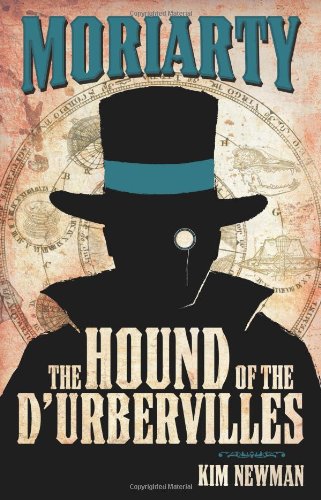
                • Cover of Professor Moriarty: The Hound of the D'Urbervilles
                  Professor Moriarty: The Hound of the D'Urbervilles

                  Kim Newman · standalone novel · 2011

                  similar bymurder investigationmystery & detectivetense19th centurybritish isles

                  Moriarty: The Hound of the D'Urbervilles is a Sherlock Holmes pastiche novel by Kim Newman.

                • Cover of Sally Lockhart
                  Sally Lockhart

                  series · 4 books · 1985

                  similar bymurder investigationmystery & detective19th centurybritish isles+2 more

                  Philip Pullman's Sally Lockhart quartet follows a resourceful, unconventional heroine navigating Victorian London - a sharpshooting, mathematically gifted young orphan who builds an improbable career as a financial consultant against the era's expectations for women. The Ruby in the Smoke opens with Sally investigating her father's death and a mysterious jewel; the following novels widen out into fraud, opium-trade crime, and international intrigue, tracking Sally's evolving relationships, including with the journalist Daniel Goldberg, across four Victorian-set mysteries.

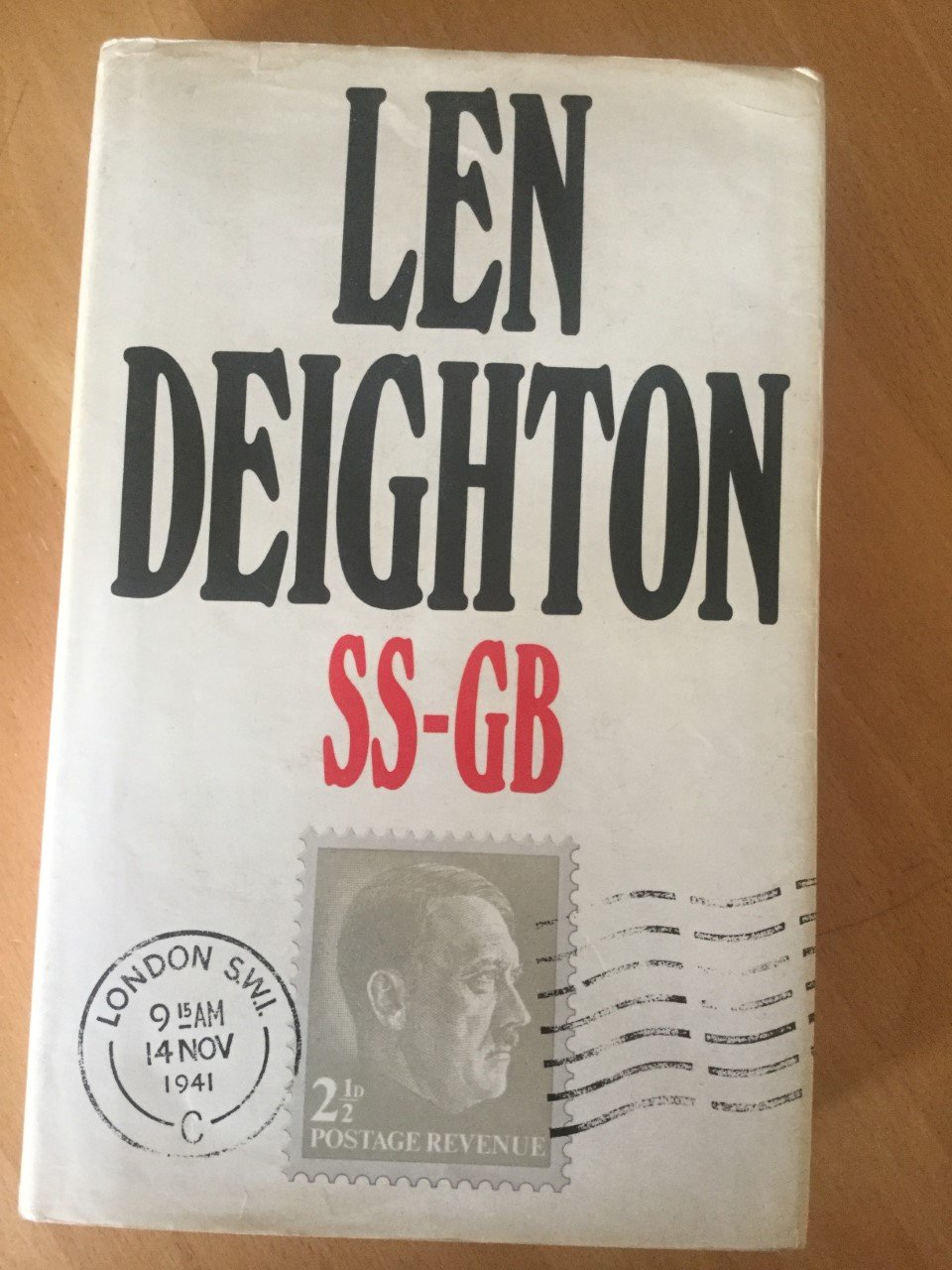
                • Cover of SS-GB
                  SS-GB

                  Len Deighton · standalone novel · 1978

                  similar bymurder investigationtensemystery & detectivebritish isles

                  It's November 1941 in a Britain that lost the war: Operation Sea Lion succeeded, Churchill was executed, and the King is a prisoner in his own Tower of London. Detective Superintendent Douglas Archer, still working homicide for the Metropolitan Police under German occupation, catches what looks like a routine case, a well-dressed man murdered above an antiques shop, until the body's oddities point toward something far more dangerous than burglary gone wrong. Archer's investigation collides with occupation politics, the British resistance, and rival factions of the SS and the German Army, each wanting the case to go a different way. Len Deighton's alternate-history spy thriller.

                • Cover of The Haunted Hotel
                  The Haunted Hotel

                  Wilkie Collins · standalone novel · 1878

                  similar bymurder investigationtense19th centuryeurope

                  Lord Montbarry breaks off his engagement to Agnes Lockwood and marries the Countess Narona, with whom he lives in a Venetian palace. When he dies, Agnes Lockwood becomes suspicious of the circumstances, and goes to Venice with other family members to investigate. Staying in Montbarry's former residence, they experience a haunting.

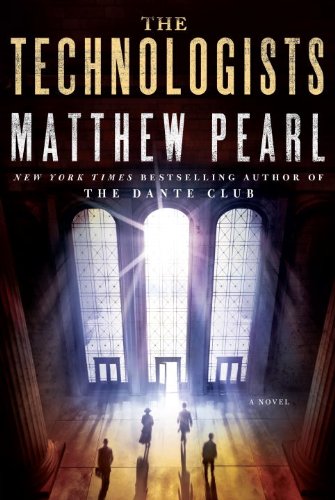
                • Cover of The Technologists
                  The Technologists

                  Matthew Pearl · standalone novel · 2012

                  similar bymurder investigationtensemystery & detective19th century

                  In 1868, as the embattled Massachusetts Institute of Technology prepares to graduate its first class, a series of scientifically sophisticated man-made disasters strike Boston, inflaming public opposition to the school; in the face of widespread suspicion, the Tech students attempt to identify and apprehend the perpetrator, to save the future of the school and the reputation of technological progress.

                • Cover of London Fields
                  London Fields

                  Martin Amis · standalone novel · 1989

                  similar bymurder investigationmystery & detectivetensebritish isles

                  London Fields is a black comedy murder mystery novel by the British writer Martin Amis, published in 1989. The tone gradually shifts from high comedy, interspersed with deep personal introspections, to a dark sense of foreboding and eventually panic at the approach of the deadline, or "horrorday", the climactic scene alluded to on the very first page.

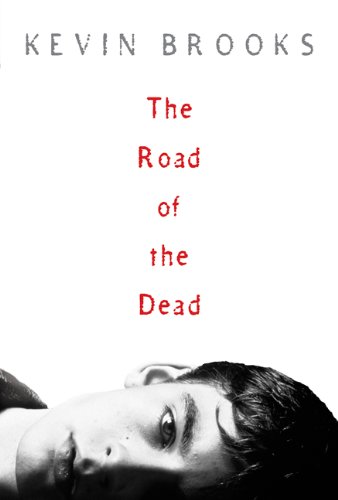
                • Cover of The Road of the Dead
                  The Road of the Dead

                  Kevin Brooks · standalone novel · 2006

                  similar bymurder investigationmystery & detectivetensebritish isles

                  Two brothers, one with second sight, investigate their sister's murder.

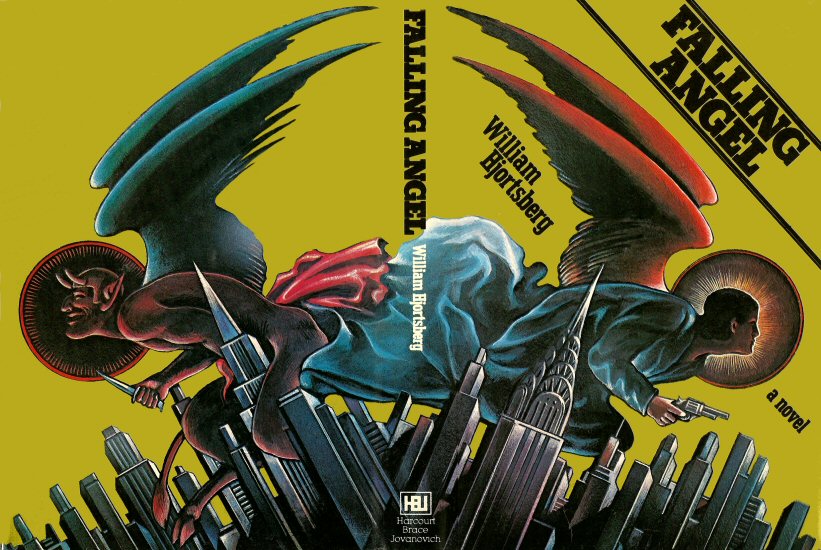
                • Cover of Falling Angel
                  Falling Angel

                  William Hjortsberg · standalone novel · 1978

                  similar bymurder investigationmystery & detectivetense

                  Falling Angel is a 1978 horror novel by American writer William Hjortsberg. Written in a hardboiled detective style with supernatural themes, it was adapted into the 1987 film Angel Heart.

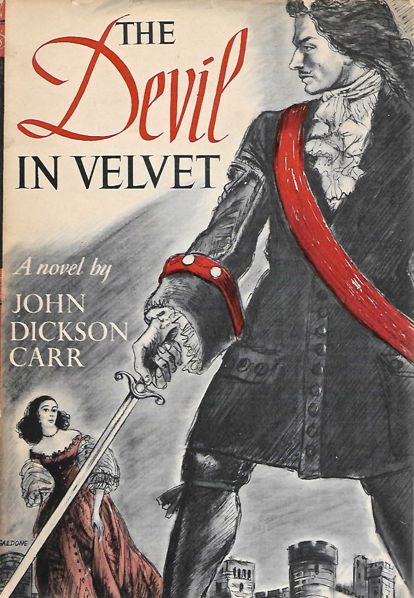
                • Cover of The Devil in Velvet
                  The Devil in Velvet

                  John Dickson Carr · standalone novel · 1951

                  similar bymurder investigationmystery & detectiveeuropebritish isles+1 more

                  The Devil in Velvet, first published in 1951, is a detective story by American writer John Dickson Carr. This novel is both a mystery and a historical novel, with elements of the supernatural.

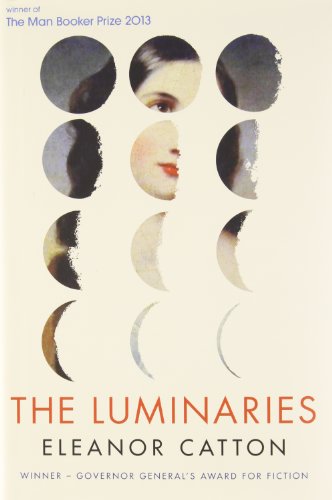
                • Cover of The Luminaries
                  The Luminaries

                  Eleanor Catton · standalone novel · 2013

                  similar bymurder investigationtensemystery & detective19th century

                  The Luminaries is a 2013 novel by Eleanor Catton. Set in New Zealand's South Island in 1866, the novel follows Walter Moody, a prospector who travels to the West Coast settlement of Hokitika to make his fortune on the goldfields. Instead, he stumbles into a tense meeting between twelve local men, and is drawn into a complex mystery involving a series of unsolved crimes. The novel's complex structure is based on the system of Western astrology, with each of the twelve local men representing one of the twelve signs of the zodiac, and with another set of characters representing planets in the Solar System.

                • Cover of Castle Barebane
                  Castle Barebane

                  Joan Aiken · standalone novel · 1976

                  similar bymurder investigationtensemystery & detective19th centurybritish isles

                  Near the top of a three-hundred-foot crag perched a roofless ruin with crumbling battlements and shattered buttresses....Apart from the ruined castle there seemed to be no other sign of human life, unless you counted a couple of fishing boats well out to sea.... Val Montgomery, young, warm-hearted, and confident -- but no lady, according to the grande dames of New York in the 1880's -- had abandoned a promising job on a newspaper and a claustrophobic engagement to a society lawyer and sailed to England to help her spendthrift half-brother, Nils, whose Scottish heiress wife, Kirstie, had fallen ill. Arrived in a London terrorized by a series of lurid murders, Val can find no trace of Nils or Kirstie. Horrified, she discovers that her small nephew and niece seem to have been callously abandoned in a London slum. Seeking a safe domicile for the children, Val travels to Edinburgh, intending to leave them with their mother's old nurse at Ardnacarrig, the family home on the Scottish coast -- but she soon begins to doubt that old Elspie is the loving guardian she had hoped for. In the quest for her brother, Val encounters four men destined to change her life forever: Lord Clanreydon, slated as England's next prime minister -- a man of mysterious origins and enigmatic habits; Sir Marcus Cusack, an editor who befriends her; Davie, a brilliant young Scottish doctor; and Mungo, an old sailor. Soon the apparent peach of Ardnacarrig (known as Castle Barebane by the locals) is threatened by dark emanations from London's underworld, and Val begins to apprehend that it might be better for all if Nils were never seen again. But her realization comes too late. Guilty and innocent alike are whirled in a wild eruption of violence as events more quickly to a terrifying climax in a savage confrontation between the forces of good and evil on the cliffs of Ardnacarrig. In this, her most compelling and suspenseful novel to date, Joan Aiken has created a variety of memorable characters: from the deserted children and their hostile great-aunt, the Marchioness of Stroma, to cab drivers and sailors, London clubmen and music-hall singers.

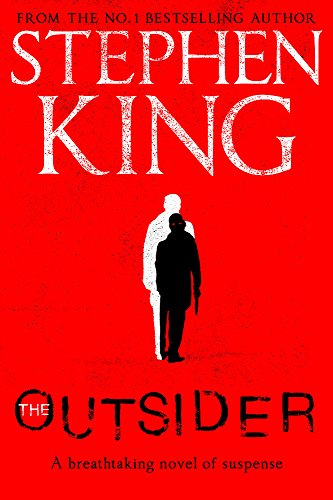
                • Cover of Finders Keepers (Stephen King)
                  Finders Keepers (Stephen King)

                  series · 7 books · 2014

                  similar bymurder investigationtensemystery & detective

                  The books gathered here follow Holly Gibney, who first appeared as a supporting character in Stephen King's Bill Hodges trilogy (Mr. Mercedes, Finders Keepers, End of Watch) before graduating into her own strand of stories: a major role in The Outsider, then top billing in the novella If It Bleeds and the novels Holly and Never Flinch, where she works as a private investigator taking on cases with a supernatural edge. The mix of true-crime procedural instincts and creeping horror is a hallmark of King's later work with the character.

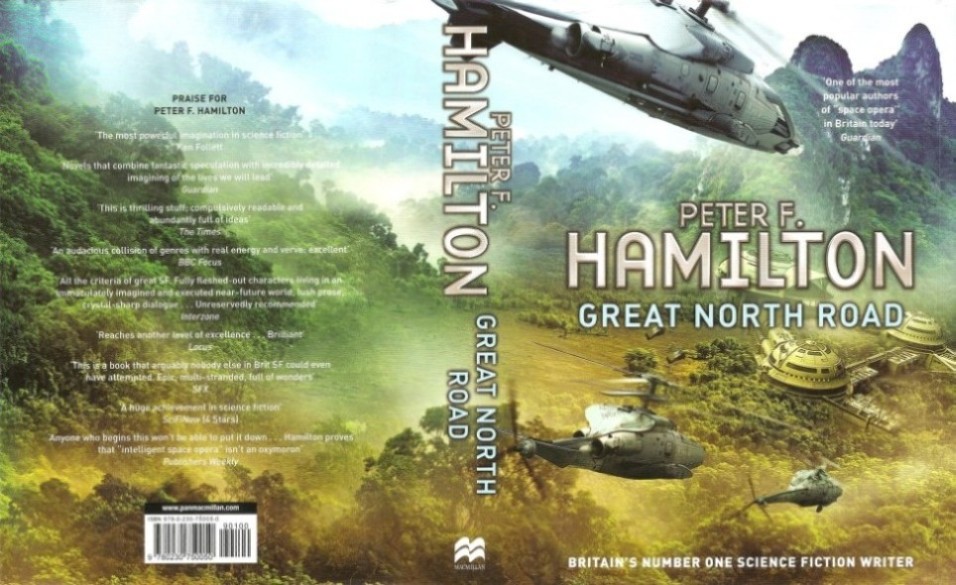
                • Cover of Great North Road
                  Great North Road

                  Peter F. Hamilton · standalone novel · 2012

                  similar bymurder investigationtensemystery & detectivebritish isles

                  Great North Road is a science fiction novel by Peter F. Hamilton. It was first published in 2012 by Macmillan. Jonathan Wright of SFX magazine said, "Peter F Hamilton’s latest novel may be a standalone tale, but it’s a thuddingly imposing 1,100 pages in length. Not that it seems that way when you’re reading it. Balancing a multi-stranded plot, different exotic locales and a huge cast of characters, Hamilton plunges us straight into a murder mystery set in a near-future Newcastle, a city now adjacent to a portal to another world, the tropical St Libra."

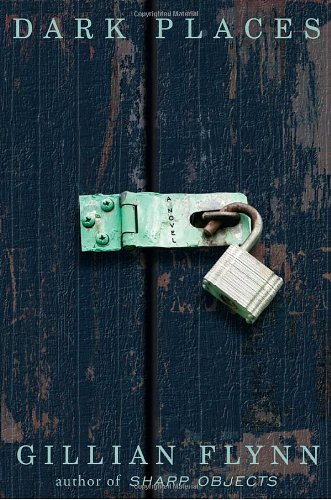
                • Cover of Dark Places
                  Dark Places

                  Gillian Flynn · standalone novel · 2009

                  similar bymurder investigationmystery & detectivetense

                  Dark Places is a mystery novel by Gillian Flynn published in 2009. The novel deals with class issues in rural America, intense poverty and the Satanic cult hysteria that swept the United States in the 1980s. Dark Places was shortlisted for the Crime Writers' Association Ian Fleming Steel Dagger Award and won Dark Scribe Magazine's Black Quill Award for Dark Genre Novel of the Year. It was also listed on The New York Times Best Seller list for hardcover fiction for two consecutive weeks. A film adaptation of the novel starring Charlize Theron was released on August 7, 2015.

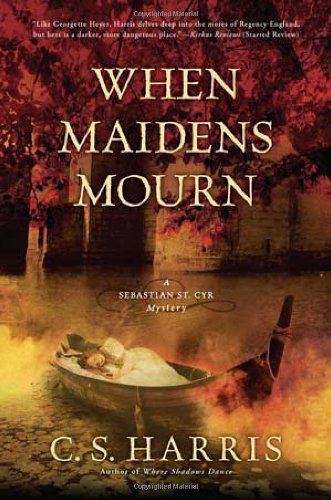
                • Cover of Sebastian St. Cyr
                  Sebastian St. Cyr

                  series · 1 book · 2012

                  similar bymurder investigationtensemystery & detective19th centurybritish isles

                • Cover of The Burning Court
                  The Burning Court

                  John Dickson Carr · standalone novel · 1937

                  similar bymurder investigationmystery & detectivetense

                  The Burning Court (1937) is a famous locked room mystery by John Dickson Carr. However, it contains neither Gideon Fell nor Henry Merrivale, Carr's two major detectives. It was published in the United States, and was highly controversial upon its first printing, due to its unorthodox ending. Today, it is hailed as Carr's best non-series novel.

                • Cover of Dr David Hunter
                  Dr David Hunter

                  series · 1 book · 2007

                  similar bymurder investigationmystery & detectivetensebritish isles

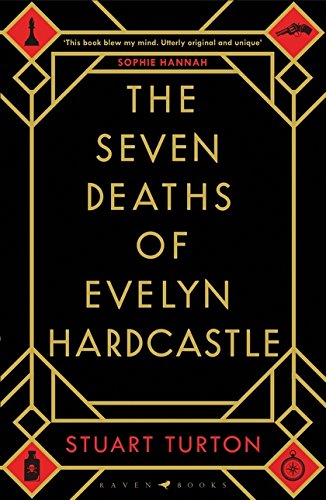
                • Cover of The Seven Deaths of Evelyn Hardcastle
                  The Seven Deaths of Evelyn Hardcastle

                  Stuart Turton · standalone novel · 2018

                  similar bymurder investigationmystery & detectivetensebritish isles

                  The Seven Deaths of Evelyn Hardcastle is a novel by Stuart Turton which won the Best First Novel prize in the 2018 Costa Book Awards and reached number one on The Saturday Times Bestseller list.

                • Cover of Darkness at Pemberley
                  Darkness at Pemberley

                  T. H. White · standalone novel · 1932

                  similar bymurder investigationmystery & detectivetensebritish isles

                  Intellectual stimulation (an ingenious locked-room puzzle) and a plot with plenty of action give Inspector Buller of Scotland Yard plenty of exercise both in Cambridge and at a mysterious country house, Pemberley.