More like The Guild
anchored on:fantasyepic fantasysecondary worldwizardsfaith and religionpolitical intrigue+2 more
but
- A Song of Ice and Fire
series14 books1996
part of World of Ice and Fire
similar bysecondary worldepic fantasyfantasypolitical intrigue+1 more
A Song of Ice and Fire is a series of high fantasy novels by the American author George R. R. Martin. Martin began writing the first volume, A Game of Thrones, in 1991, and published it in 1996. Martin, who originally envisioned the series as a trilogy, has released five out of seven planned volumes. The most recent entry in the series, A Dance with Dragons, was published in 2011. Since then, Martin has been working on the sixth novel, titled The Winds of Winter. A seventh novel, A Dream of Spring, is planned to follow.
- The Nikolai Duology
series2 books2019
part of Grishaverse
similar bytensesecondary worldfantasyepic fantasypolitical intrigue
Leigh Bardugo's Nikolai Duology picks up Nikolai Lantsov and Zoya Nazyalensky from her earlier Grishaverse trilogy set in Ravka, now dealing with the kingdom's fallout as king and general, and adds Nina Zenik from the Six of Crows spin-off working a mission out of Ketterdam. King of Scars and its sequel Rule of Wolves tie together threads from across the wider Grishaverse rather than starting fresh, raising the stakes to a hidden threat inside Nikolai himself. It functions as the convergence point for Bardugo's separate Grishaverse story lines.
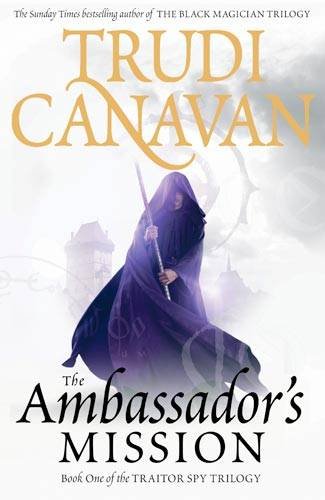
- The Traitor Spy Trilogy
series3 books2010
part of Kyralia series
similar bysecondary worldfantasyepic fantasywizardspolitical intrigue+1 more
Trudi Canavan is an Australian writer of fantasy novels, best known for her best-selling fantasy trilogies The Black Magician and Age of the Five. While establishing her writing career she worked as a graphic designer. She completed her third trilogy, The Traitor Spy trilogy, in August 2012 with The Traitor Queen. Subsequently, Canavan has written a series called Millennium's Rule, with a completely new setting consisting of multiple worlds which characters can cross between. Though originally planned as a trilogy, a fourth and final book in the Millennium's Rule series was published.
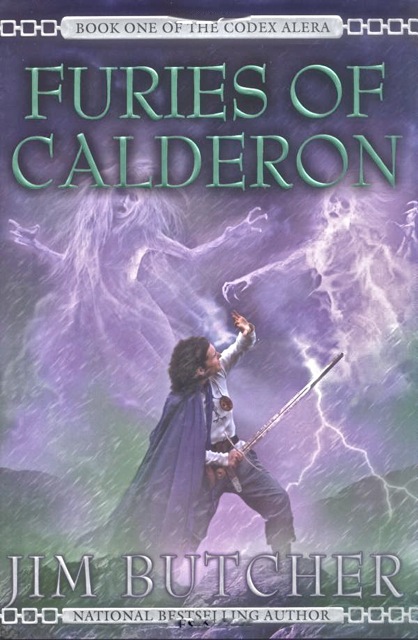
- The Codex Alera
series6 books2004
similar bytensesecondary worldepic fantasyfantasypolitical intrigue
Furies of Calderon opens The Codex Alera in a Rome-flavored fantasy world where nearly everyone commands elemental spirits called furies, except Tavi, a teenager with none, whose resourcefulness becomes the series' recurring answer to raw magical power. Jim Butcher's six-book series, continuing through Academ's Fury, Cursor's Fury, Captain's Fury, Princeps' Fury, and First Lord's Fury, builds from small-scale political maneuvering into full-scale war.
- Dragon Trilogies
series6 books1988
similar bytensesecondary worldepic fantasyfantasypolitical intrigue
The Dragon Prince and Dragon Star trilogies comprise six connected fantasy novels written by Melanie Rawn. The Dragon Prince trilogy focuses on Prince Rohan of the Desert and his Sunrunner wife, Sioned, while the Dragon Star trilogy focuses on their son, Pol. The Dragon Prince trilogy consists of novels Dragon Prince, The Star Scroll, and Sunrunner's Fire. The books in the Dragon Star trilogy are Stronghold, The Dragon Token, and Skybowl.
- Godspeaker
series3 books2007
similar bytensesecondary worldepic fantasyfantasyfaith and religionpolitical intrigue
Godspeaker is an adult trilogy of fantasy novels written by Australian author Karen Miller. The story is set in a theocratic world, fueled by politics and rivalry between two lands, Mijak and Ethrea.
- Chronicles of the Deryni
series4 books1970
part of Deryni
similar bytensesecondary worldfantasyepic fantasywizardspolitical intrigue+1 more
Katherine Kurtz's Chronicles of the Deryni trilogy (Deryni Rising, Deryni Checkmate, High Deryni, 1970-1973) follows the young King Kelson Haldane defending his throne in Gwynedd, a kingdom modeled on 10th-to-12th-century Britain, against ecclesiastical opposition and foreign invasion. Central to the conflict is the Deryni, a persecuted human-like people with inherited psychic and magical powers, whose presence in and around the crown makes Kelson's reign a lightning rod for religious and political tension.
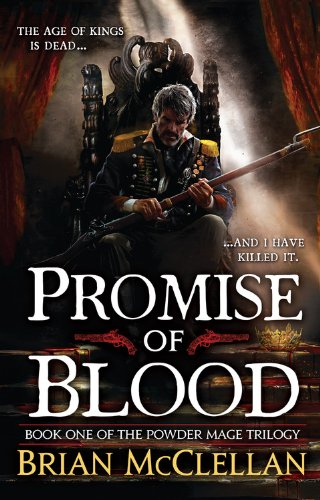
- The Powder Mage
universe19 books2013
Start hereThe Powder Mage Trilogy · Start here
similar bytensesecondary worldepic fantasyfantasypolitical intrigue
Load your powder, and pray your sorcery outruns their cannon. Here the age of kings is ending at musket-point: a world where black powder is not merely fired but eaten, and the men and women called powder mages snort a pinch of it to burn a trance across the battlefield — igniting an enemy's cartridges from a mile off, bending a bullet mid-flight, reading a room by the taste of the air. Against them stand the Privileged, glove-fingered sorcerers of the old order who summon fire and frost, and above both, gods who have not finished walking the earth. Brian McClellan builds this flintlock world across two linked trilogies. The Powder Mage Trilogy — Promise of Blood, The Crimson Campaign, The Autumn Republic — opens with a field marshal's coup against a rotten monarchy and the invasion, revolution, and divine reckoning that follow. Gods of Blood and Powder — Sins of Empire, Wrath of Empire, Blood of Empire — crosses the ocean a decade on to the colonial frontier of Fatrasta, where old soldiers, spies, and a heretic goddess collide. A run of novellas and short stories fills the corners between. Expect grapeshot and gunsmoke, siege lines and back-alley intrigue, generals and con men given equal weight. Begin at Promise of Blood and read in publication order — the trilogies run in sequence, and the short work is seasoning, not prerequisite.
- The White Mists of Power
Kristine Kathryn Ruschstandalone novel1991
similar bytensesecondary worldfantasyepic fantasypolitical intrigue
Synopsis -An innocent excited boy, a prince and heir, takes his first journey to the city. It is like nothing he imagined. Hands pound against his carriage: voices call for a coin, Sir just one, spare me some money, sir, I haven’t eaten in days. The streets teem with merchants in velvet robes, magicians, half mad preachers, with life and colour and noise. He doesn’t want to miss any of it. But it is the last journey of his life as a prince. Soon he will be abandoned and declared dead. Soon with survival and what will be the driving force of his life: the quest to recover his stolen inheritance, his usurped throne. His home. A story of cities and palaces, of power hungry lords and ladies scheming inside a magically threatened land...Intricate, compelling.
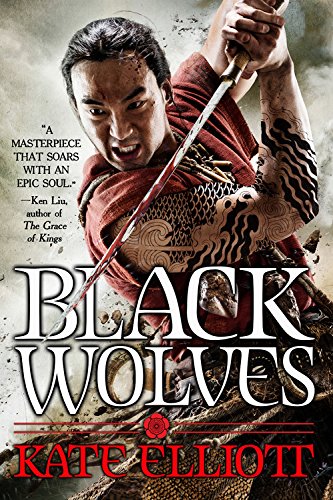
- Black Wolves Trilogy
series1 book2015
similar bytensesecondary worldfantasyepic fantasypolitical intrigue
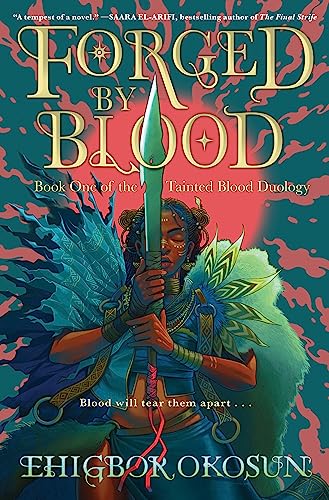
- The Tainted Blood Duology
series2 books2023
similar bytensesecondary worldfantasyepic fantasypolitical intrigue
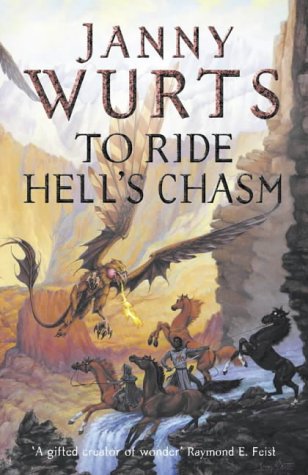
- To Ride Hell's Chasm
Janny Wurtsstandalone novel2002
similar bytensesecondary worldepic fantasyfantasypolitical intriguedemons
An epic fantasy standalone novel from the author of the stunning Wars of Light and Shadow series. When Princess Anja fails to appear at her betrothal banquet, the tiny, peaceful kingdom of Sessalie is plunged into intrigue.When Princess Anja fails to appear at her betrothal banquet, the tiny, peaceful kingdom of Sessalie is plunged into intrigue. Two warriors are charged with recovering the distraught king's beloved daughter. Taskin, Commander of the Royal Guard, whose icy competence and impressive life-term as the Crown's right-hand man command the kingdom's deep-seated respect; and Mykkael, the rough-hewn newcomer who has won the post of Captain of the Garrison – a scarred veteran with a deadly record of field warfare, whose 'interesting' background and foreign breeding are held in contempt by court society.As the princess's trail vanishes outside the citadel's gates, anxiety and tension escalate. Mykkael's investigations lead him to a radical explanation for the mystery, but he finds himself under suspicion from the court factions. Will Commander Taskin's famous fair-mindedness be enough to unravel the truth behind the garrison captain's dramatic theory: that the resourceful, high-spirited princess was not taken by force, but fled the palace to escape a demonic evil?
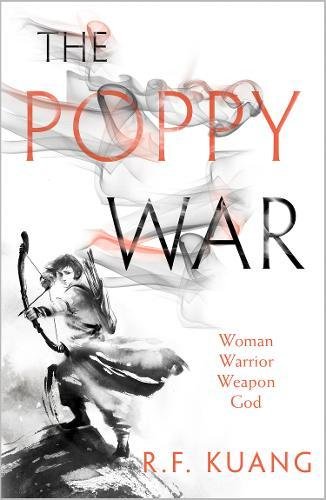
- The Poppy War
series4 books2018
similar bytensesecondary worldepic fantasyfantasy+1 more
The Poppy War follows Rin, a war orphan who tests into an elite military academy and discovers a talent for shamanic power tied to a pantheon of vengeful gods. R. F. Kuang's trilogy reworks the Second Sino-Japanese War and its atrocities into an epic fantasy that grows darker and more morally compromised as it goes. It's told across The Poppy War, The Dragon Republic, and The Burning God.
- An Ember in the Ashes
series4 books2015
similar bytensesecondary worldfantasyepic fantasy+1 more
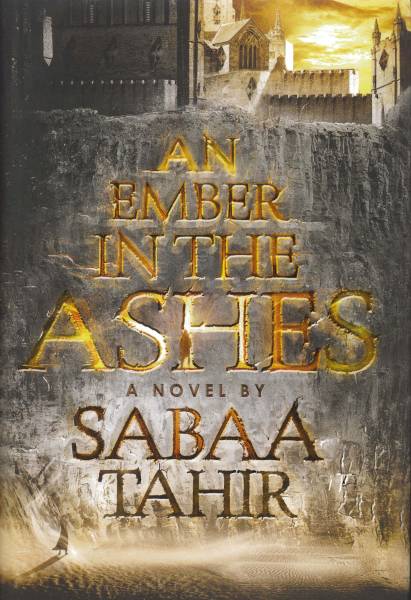
An Ember in the Ashes, set in a fantasy world modeled on ancient Rome, alternates between Laia, who spies on a brutal military academy for rebels in exchange for help freeing her imprisoned brother, and Elias, one of that academy's most skilled soldiers trying to break free of the empire he's been raised to serve. Sabaa Tahir's quartet, continuing through A Torch Against the Night, A Reaper at the Gates, and A Sky Beyond the Storm, follows the two toward a reckoning with the empire that trained one of them to enforce it.
- Earthsea Cycle
series18 books1964
completed
part of Earthsea
similar bysecondary worldfantasyepic fantasywizards+1 more
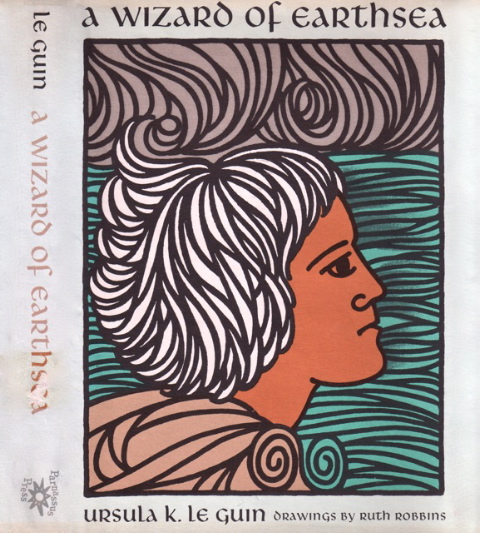
The Earthsea Cycle, also known as Earthsea, is a series of high fantasy books written by American author Ursula K. Le Guin. Beginning with A Wizard of Earthsea (1968), The Tombs of Atuan (1970), and The Farthest Shore (1972), the series was continued in Tehanu (1990), and Tales from Earthsea and The Other Wind. In 2018, all the novels and short stories were published in a single volume, The Books of Earthsea: The Complete Illustrated Edition, with artwork by Charles Vess.
- The Riftwar Universe
universe44 books1982
Start hereRiftwar Saga · Start here
similar bysecondary worldepic fantasyfantasy+2 more
On the world of Midkemia a tear opens in the air itself, a rift hung between stars, and through it march the armies of an empire from another world entirely. So begins the chronicle Raymond E. Feist has kept for three decades: the tale of Pug, a castle kitchen boy apprenticed to a magician on the very day the invasion lands, and of Tomas, his friend, who inherits the armor and the ancient fury of a dead dragon-lord. Around these two the Riftwar Cycle turns, widening book by book from one besieged frontier keep into the whole history of a world of kingdoms, guilds, thieves' dens and mage-towers. The cycle runs to roughly thirty novels, gathered into arcs a newcomer can enter and finish on their own. The founding Riftwar Saga (Magician, Silverthorn, A Darkness at Sethanon) sets the board; the Serpentwar Saga, Krondor's Sons and the Conclave of Shadows carry the story down the generations; the Darkwar, Demonwar and Chaoswar sagas bring it toward its close. Crossing the rift to the rival world of Kelewan, Feist and Janny Wurts wrote the Empire trilogy, opening with Daughter of the Empire, a court intrigue told wholly from the invaders' side and for many the finest thing here. Shorter Legends of the Riftwar and the game-born Riftwar Legacy fill the corners; later still, Feist opens an altogether new world in the Firemane books. Feist writes fantasy in its most companionable key: apprentices who grow into archmages, tavern boys who become spies and dukes, a world you return to the way you return to an old inn. The mood is adventure before dread, friendship and rank and hard-won craft, wars that cost something, all of it rendered plainly and at a gallop. Begin where it began, with Magician, then follow the arcs in the order they were written, and the rift will carry you the rest of the way.
- The Dagger and the Coin
series6 books2011
similar bytensesecondary worldepic fantasyfantasypolitical intrigue
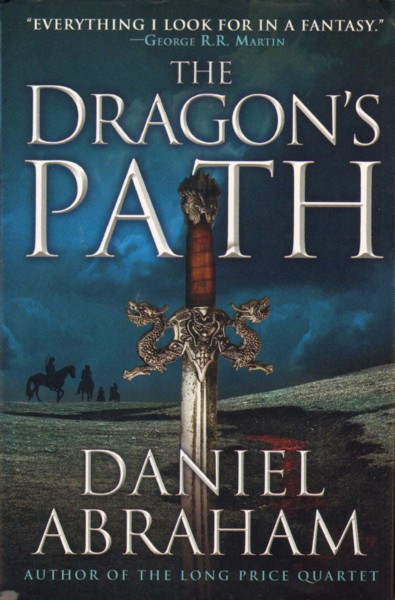
The Dagger and the Coin is an epic fantasy series by Daniel Abraham, published between 2011 and 2016. The series explores the acquisition and exercise of power by individuals ill-prepared for it, persistence of institutions beyond their usefulness, and the intersection of ideology, economics, and fear. These themes are reflected in the series title, contrasting violence with economic power.
- The Darkness
series6 books1999
similar bytensesecondary worldepic fantasyfantasypolitical intrigue
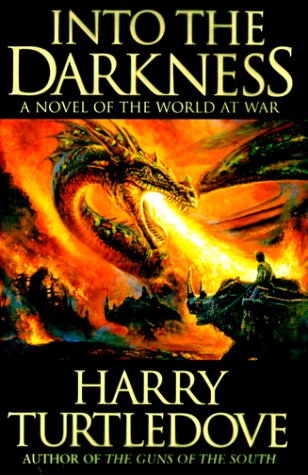
Darkness, also known as World at War, is a series of six fantasy novels by Harry Turtledove.
- The Powder Mage Trilogy
series15 books2013
part of The Powder Mage
similar bytensesecondary worldepic fantasypolitical intrigue+1 more
The Powder Mage trilogy is a series of epic fantasy novels written by American author Brian McClellan. It consists of the novels Promise of Blood (2013), The Crimson Campaign (2014) and The Autumn Republic (2015). In 2014, Promise of Blood received the Morningstar Award for Best Fantasy Newcomer. Several short stories and novellas set in the world of The Powder Mage trilogy have been published, as well as an additional trilogy called Gods of Blood and Powder.
- Millennium's Rule
series4 books2014
similar bysecondary worldepic fantasy+5 more
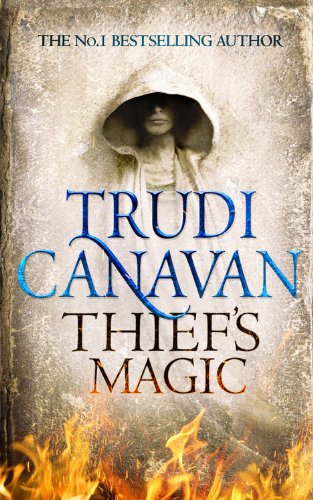
Millennium's Rule is set across multiple worlds that only certain travelers can cross between, opening with Tyen, an archaeology student who unearths a sentient, centuries-old book named Vella, and Rielle, a dyer's daughter hiding forbidden magical talent in a society ruled by priests who forbid it. Trudi Canavan follows both of them as their discoveries chip away at what their worlds have taught them about magic, history, and who holds power. The series runs Thief's Magic, Angel of Storms, and Successor's Promise.
- The Lord of the Rings
series13 books1954
part of Tolkien's legendarium
similar bysecondary worldepic fantasy+2 more
The Lord of the Rings is an epic high fantasy novel written by the English author and scholar J. R. R. Tolkien. Set in Middle-earth, the story began as a sequel to Tolkien's 1937 children's book The Hobbit but eventually developed into a much larger work. Written in stages between 1937 and 1949, The Lord of the Rings is one of the best-selling books ever written, with over 150 million copies sold.
- Fortress (C. J. Cherryh)
series5 books1995
similar bysecondary worldepic fantasyfantasywizardspolitical intrigue+1 more
Fortress is a series of fantasy novels by American writer C. J. Cherryh, published by HarperCollins. They are set in a medieval fantasy world with a 15th-century feel and feature magic, sorcery, medieval warfare, politics and other elements common to the high fantasy subgenre. The first book in the series, Fortress in the Eye of Time, was published in 1995 and followed by Fortress of Eagles in 1998, Fortress of Owls in 1999, Fortress of Dragons in 2000 and Fortress of Ice in 2006. The books are all sub-titled "A Galasien novel".
- The Prison Healer
series3 books2021
similar bytensesecondary worldfantasyepic fantasy+1 more
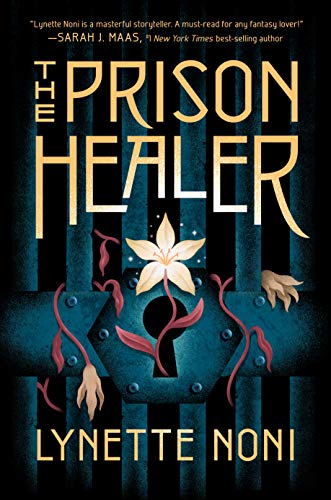
Lynette Noni's YA trilogy follows Kiva Meridan, a teenage healer imprisoned in the brutal death camp of Zalindov, who is forced to stand trial by combat in another prisoner's place when a mysterious rebel movement upends the prison's order. The Prison Healer, The Gilded Cage, and The Blood Traitor follow Kiva out of the prison and into a wider conflict over the kingdom's throne, testing where her loyalties actually lie. It sits in the current wave of grim, trial-driven YA fantasy.