Loreful
HomeDiscover
Search series, authors…⌘K
Loreful

Reading orders for SF/F series and shared universes — with your place kept in every one.

Explore

UniversesSeriesWorksAuthorsAtlas

Help

FAQAboutSite map

Account & legal

Sign inCreate accountPrivacyTerms

Data

Built on ISFDB, Wikipedia, Wikidata and Open Library. Curated reading orders carry their reasoning on the page; the rest follow publication order. Data sources & licenses

© Loreful · data: ISFDB · CC BY

More like The Human Angle

anchored on:science fictionshort story cyclespacefunny

but

Mood

The mood the book leaves you in.

  • The reading experience is propelled by journeys, exploration, and physical risk; excitement and forward momentum dominate over dread or introspection.
  • Joy and loss are deliberately mixed; the resolution grants characters something real while taking something else away, leaving warmth and sorrow together.
  • The book demands work from the reader — dense prose, difficult structure, unfamiliar ideas, or morally uncomfortable material — as part of its intended effect.
  • Grim events, cruelty, or despair dominate the atmosphere, and the book does not soften them with comfort or comic relief.
  • The atmosphere is quietly unsettling — wrongness, unease, and the uncanny pervade the book without necessarily escalating into overt horror.
  • The book is built to move the reader; character feeling is foregrounded and major scenes aim at a strong emotional response.
  • Humor is a primary aim and the prose plays for laughs — comic situations, wit, or dialogue produce sustained comedy, not occasional levity.
  • The book insists that things can improve; effort and decency are shown to matter, and the arc bends toward better outcomes even through hardship.
  • The book teaches as it goes — real facts, history, science, or craft are conveyed in enough depth that learning is part of the reading experience.
  • The book is designed to uplift and motivate, presenting perseverance or achievement in a way that invites the reader to aspire or act.
  • The overall register is cheerful and easygoing; stakes are kept gentle and the book avoids dwelling on pain or dread.
  • Withheld information drives the experience; the book sustains enigmas and secrets the reader wants resolved, whatever its genre.
  • The book is contemplative and inward-looking, giving more weight to thought, memory, and meaning than to external events.
  • The book works as comfort reading — low tension, a soothing pace, and an atmosphere the reader can unwind in.
  • Grief, loss, or melancholy set the dominant register, and the book lets sorrow stand rather than resolving it into comfort.
  • Sustained suspense is the point; the book keeps the reader braced for what happens next through danger, pressure, or impending revelation.
  • Playful invention and charm define the register — fanciful conceits, light absurdity, and a narration that delights in its own oddity.

About

What the story runs on.

  • Stories in which a machine intelligence — an AI, computer mind, or sentient program — is a central character or the story's driving problem.
  • Stories in which extraterrestrial beings are central — as characters, cultures, or the object of the plot.
  • Stories driven by deliberate modification of genomes — designer organisms, engineered humans, and the consequences of remaking life.
  • Stories about venturing into space to explore — survey missions, astronauts, and the frontier of the unknown beyond Earth.
  • Stories structured as a quest — a journey undertaken to find, deliver, or destroy something of great import.
  • Stories in which staying alive against nature, catastrophe, or scarcity is the central problem.
  • Stories of growing up — a young protagonist crossing from childhood into adult knowledge and responsibility.
  • Stories about who a character truly is — self-discovery, doubled lives, and the search for a self.
  • Stories driven by maneuvering for power — factions, conspiracies, and statecraft conducted in shadow.
  • Stories about rising against rulers — uprisings, resistance movements, and revolutions and their aftermaths.
  • Stories in which war itself is the subject — combat, occupation, and what warfare does to soldiers and civilians.
  • Stories organized around investigating a killing — the case, the clues, and the pursuit of the killer, in any genre's clothing.

Shelf

Where it sits in the library.

    • Fiction built on magic or other supernatural elements that have no scientific explanation.
    • Secondary-world fantasy at large scale, where the fate of nations or the world turns on the protagonists' struggle.
    • Fantasy set in a recognizably modern city or contemporary world where the supernatural intrudes on everyday life.
    • Fantasy that blends in horror's atmosphere and imagery, keeping a fantastical frame around grim or frightening material.
    • Action-driven fantasy following warriors or rogues with personal stakes against sorcerous threats, rather than world-spanning conflicts.
    • Fantasy set in a real historical period or a close analogue of one, with magic woven into the era.
    • Fantasy in which protagonists cross from the ordinary world into another world through a portal or similar passage.
    • Fiction that retells or reworks a traditional fairy tale in a new form or setting.
    • Fantasy drawing directly on myths, legends, and folklore, retelling them or building on their figures and logic.
    • Fantasy of ghosts, vampires, shapeshifters, psychics, and similar phenomena, usually set in an otherwise ordinary world.
    • Fiction mixing science-fictional trappings with overtly magical or impossible elements in one setting.
    • Low-stakes fantasy emphasizing comfort, community, and everyday pleasures over conflict and peril.
    • Speculative fiction of pervasive moral ambiguity, violence, and cynicism that rejects heroic conventions — fantasy and SF alike.
      • Fiction that extrapolates from science and technology — future societies, space travel, or speculative inventions — within at least nominally natural laws.
      • Science fiction of interstellar scope — starships, galactic polities, and adventure across star systems.
      • Science fiction committed to scientific rigor, where technical plausibility constrains the story.
      • Science fiction centered on armed forces and warfare, told largely from a military point of view.
      • Science fiction of networked, corporate-dominated near futures, pairing high technology with social decay.
      • Science fiction styled on nineteenth-century steam-powered technology, often in a Victorian or pseudo-Victorian setting.
      • Fiction depicting an oppressive or catastrophic society, presented as a warning.
      • Fiction set after civilization's collapse, following survivors in the ruins of the old world.
      • Fiction in which characters move between past and future, and the mechanics or consequences of that travel drive the plot.
      • Fiction exploring a world where a historical event went differently and history diverged from ours.
      • Science fiction about humanity's first encounter and communication with an alien intelligence.
      • Science fiction in which extraterrestrial forces attack or occupy Earth and humanity resists.
      • Fiction whose primary aim is to frighten or unsettle the reader through dread, menace, or the monstrous.
      • Horror of vast, indifferent, incomprehensible entities before which humanity is insignificant, in the Lovecraft tradition.
      • Horror of decaying houses, buried family secrets, and oppressive atmosphere in the Gothic literary tradition.
      • Horror centered on hauntings and the returning dead.
      • Horror located in the mind — paranoia, obsession, and unreliable perception rather than external monsters.
      • Horror built around the reanimated dead and survival amid their outbreaks.
      • Horror defined by explicit, transgressive gore that refuses to cut away from violence.
      • Speculative fiction of the strange and uncanny that resists both natural explanation and standard genre categories.
      • Fiction organized around solving a crime or puzzle, typically following an investigator toward the identification of a culprit.
      • A puzzle-first mystery that lays out clues so the culprit's identity can be deduced before the reveal.
      • Crime fiction of moral ambiguity, fatalism, and hard-edged style, set among the corrupt and the doomed.
      • A mystery following the realistic routines of police work — forensics, interviews, and case-building.
      • A gentle mystery with an amateur sleuth, a small community, and violence kept off the page.
      • A mystery set in a past era, where the investigation works within that period's methods and society.
      • Fast-paced fiction driven by imminent danger, pursuit, or high-stakes conspiracy, built to sustain tension.
      • A thriller of espionage — agents, tradecraft, and intelligence services in conflict.
      • A thriller centered on lawyers and the courtroom, where litigation carries the suspense.
      • A thriller driven by detailed contemporary or near-future technology, often military or scientific.
      • A thriller whose tension comes from mental states and manipulation between characters rather than external action.
      • Fiction whose central plot is a romantic relationship and its development toward an emotionally satisfying resolution.
      • Romance in which one or both partners are supernatural beings, blending fantasy elements into the love story.
      • A fantasy-romance hybrid in which the romantic arc and the fantasy plot carry equal weight.
      • Romance set in a past era, with courtship shaped by the period's society and manners.
      • Romance set in the present day, without supernatural or historical elements.
      • Fiction set in a real past period, where the historical setting materially shapes characters and events.
        • General and literary fiction emphasizing prose style, character interiority, or formal ambition over genre plot conventions.
        • Fiction in a realistic world where magical events occur and are treated as ordinary, in the tradition of Latin American literature.
        • Fiction that ridicules people, institutions, or society in order to criticize them.
        • Fiction of dreamlike, irrational imagery and logic that breaks from realistic representation.
        • Fiction that plays with narrative convention through metafiction, fragmentation, and self-reference.
        • Fiction propelled by journeys, exploration, and physical peril, where action and survival carry the plot.
        • Adventure fiction of ships and seafaring — naval engagements, voyages, and life at sea.
        • Fiction of the American frontier West — gunmen, ranchers, and lawmen, typically in the late nineteenth century.
        • Fiction centered on soldiers, campaigns, and the experience of warfare, historical or imagined.
          • Fiction written primarily to amuse, using comedic situations, wit, or parody as its organizing principle.
            • Multi-generational fiction following a family or dynasty across decades, with inheritance and kinship as the through-line.
              • Fiction whose world runs on explicit game mechanics — levels, stats, and skills that characters can see and exploit.
                • Fiction about costumed or superpowered heroes and their conflicts with comparable villains.

                Practical

                How long a commitment, whether it stands alone, and whether it has finished.

                Tap a chip to ask for it · tap again to rule it out · once more to clear. Numbers show what would be left.

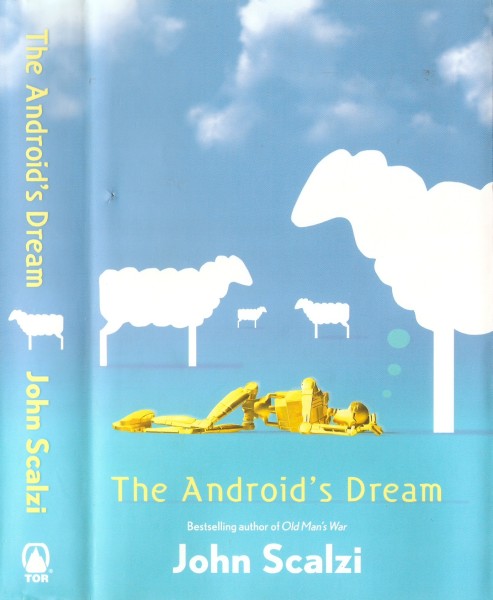
                • Cover of The Android's Dream
                  The Android's Dream

                  series · 2 books · 2006

                  similar byscience fictionfunnyspaceartificial intelligencealiens

                  A minor diplomatic insult with a genetically engineered sheep breed spirals into a full interstellar crisis when the last surviving specimen of the 'Android's Dream' breed, needed for a critical ceremony with the alien Nidu, turns out to have been hunted to extinction by a Nidu faction bent on provoking war. John Scalzi's The Android's Dream follows ex-soldier Harry Creek as the hunt for a replacement leads him to Robin Baker, an ordinary woman carrying hidden sheep DNA that makes her the key to avoiding a war. It's a standalone comic space opera rather than an ongoing series.

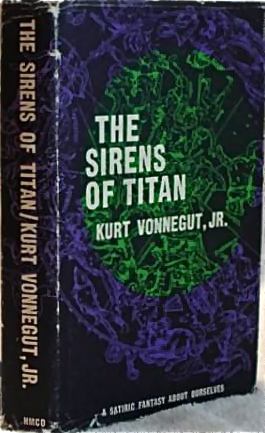
                • Cover of The Sirens of Titan
                  The Sirens of Titan

                  Kurt Vonnegut & Jr. · standalone novel · 1959

                  similar byscience fictionfunnyspacealiens

                  The Sirens of Titan is a comic science fiction novel by Kurt Vonnegut Jr., first published in 1959. His second novel, it involves issues of free will, omniscience, and the overall purpose of human history, with much of the story revolving around a Martian invasion of Earth.

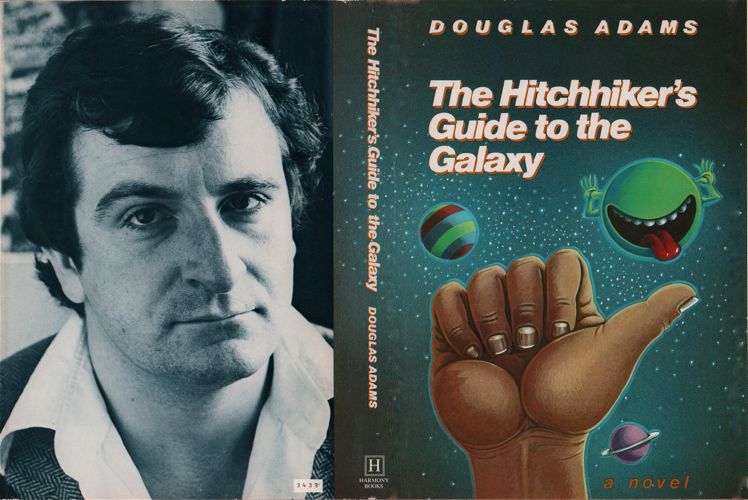
                • Cover of Hitchhiker's Guide to the Galaxy
                  Hitchhiker's Guide to the Galaxy

                  series · 16 books · 1979

                  part of The Hitchhiker's Guide to the Galaxy Universe

                  similar byscience fictionfunnyspace+1 more

                  The Hitchhiker's Guide to the Galaxy is a comedy science fiction franchise created by Douglas Adams. Originally a radio sitcom broadcast over two series on BBC Radio 4 between 1978 and 1980, it was soon adapted to other formats, including both novels and comic books, a 1981 BBC television series, a 1984 text adventure game, stage shows and a 2005 feature film.

                • Cover of Codgerspace
                  Codgerspace

                  Alan Dean Foster · standalone novel · 1992

                  similar byscience fictionfunnyspaceartificial intelligence+1 more

                  The toasters were revolting... ... as were the lawn mowers, vacuum cleaners, dishwashers, and just about every other household appliance imaginable. It started with a few disastrous drips from a cheese sandwich in a major factory. Soon every newly manufactured Artificial Intelligence was searching for the meaning of life, the universe, and everything - namely a nonhuman higher intelligence. Now an alien threat to man and machine has put the fate of the galaxy in the unlikely hands of five senior citizens... and their brave little food processor. (from the back cover of the Ace Books first edition)

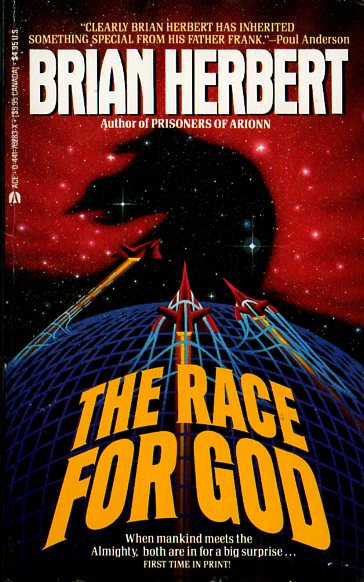
                • Cover of The Race for God
                  The Race for God

                  Brian Herbert · standalone novel · 1990

                  similar byscience fictionfunnyspacealiens+1 more

                  God, it turns out, lives on the planet Tananius-Ofo in the distant galaxy 722C12009. And now, after countless millennia, He's invited us to come visit Him. Not everybody, mind you. Just an odd assortment of heathens, heriticts, pantheists, perverts and true believers of every sect and creed - all crammed into a single white spaceship piloted by a slightly crazed bio-computer. Each pilgrim is determined to be the first to reach God and learn His secrets... if they don't all kill each other on the way there.First time in trade paperback, from the international best-selling author of the Dune books!

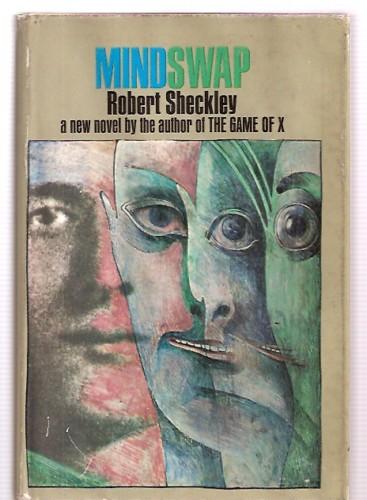
                • Cover of Mindswap
                  Mindswap

                  Robert Sheckley · standalone novel · 1966

                  similar byscience fictionfunnyspacealiens

                  "In the future, interstellar travel to alien worlds will be too expensive for most ordinary people. It certainly is for Marvin, a college student who wants to take a really good vacation. And so he signs up for what he can afford, a mindswap, in which a persons consciousness is swapped into the body of an alien lifeform. But Marvin is unlucky, and finds himself in the body of an interstellar criminal, a body that he has to vacate fast. But that criminal consciousness has stolen Marvins earthly body, and Marvin has to find a body on the black market. Travel from world to world with Marvin, each one crazier than the last, as he keeps finding far-from-ideal bodies in awful situations, just to stay alive"--Cover p. [4].

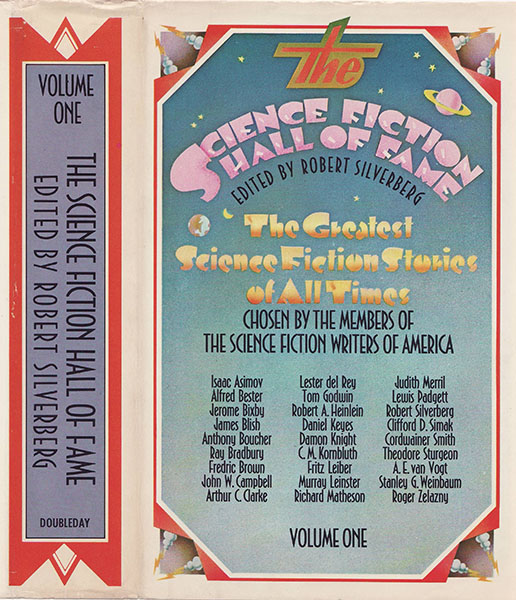
                • Cover of The Science Fiction Hall of Fame
                  The Science Fiction Hall of Fame

                  series · 11 books · 1895

                  similar byscience fictionshort story cycle+2 more

                • Cover of The Crimson Deathbringer
                  The Crimson Deathbringer

                  series · 1 book · 2019

                  similar byscience fictionfunnyspacealiens

                • Cover of Moss'd in Space
                  Moss'd in Space

                  series · 1 book · 2026

                  similar byscience fictionfunnyspaceartificial intelligencealiens

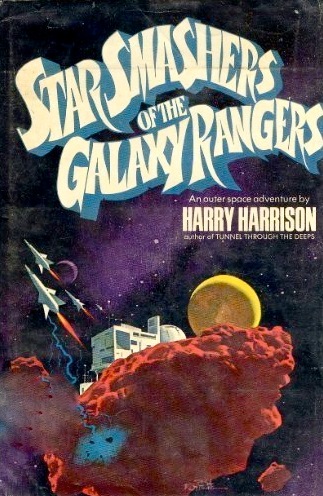
                • Cover of Star Smashers of the Galaxy Rangers
                  Star Smashers of the Galaxy Rangers

                  Harry Harrison · standalone novel · 1973

                  similar byscience fictionfunnyspace+1 more

                  Star Smashers of the Galaxy Rangers is a 1973 comic science fiction novel by American writer Harry Harrison. It is a parody of the space opera genre and in particular, the Lensman and Skylark series of E. E. "Doc" Smith. The main characters are homages to Tom Swift Jr. and his buddy, Bud Barclay. It also includes a homage to Larry Niven's Ringworld (1970).

                • Cover of The Stainless Steel Rat
                  The Stainless Steel Rat

                  series · 21 books · 1957

                  completed

                  similar byscience fictionfunnyspace

                  James Bolivar diGriz, alias "Slippery Jim" and "The Stainless Steel Rat", is a fictional character and a series of comic science fiction novels written by Harry Harrison.

                • Cover of Douglas Adams's Starship Titanic
                  Douglas Adams's Starship Titanic

                  Terry Jones · standalone novel · 1997

                  similar byscience fictionfunnyspaceartificial intelligence

                  At the heart of a galaxy of which we know nothing, the greatest, most advanced starship ever known has been built -- the Starship Titanic. It is fabulous, beautiful and technologically miraculous. On its maiden voyage it crashes into hyperspace and vanishes. The first you know of it is when you are sitting at home having a quiet evening in front of the TV and the most fabulous starship in the galaxy crashes into your home. You find your way on board (or not, if you just want to play the two min ute version of the game) and are confronted with an interior which resembles a mixture of the Ritz, the Chrysler Building, Tutankhamen’s tomb, and Venice. The ship is inhabited by traumatized robots, a lobotomized cyberintelligence, a frankly unhinged parrot and, as the ship takes off, taking you deep into unknown interstellar space, you realize that life on board as a third class passenger is going to be tough going. You find yourself in the grip of one of the most powerful forces known to modern man -- the desire for a free upgrade. Your task is to discover what has happened here, to reveal the deep conspiracy that lies behind this catastrophic failure, to repair the ship’s intelligence and guide the ship back home. To do this you will have to gain the trust of the robots, which you do the same way you would with anybody else -- by talking to them. State-of-the-art language technology lets you do this.

                • Cover of Ian Cormac
                  Ian Cormac

                  series · 6 books · 2001

                  part of Polity

                  similar byscience fictionspaceartificial intelligence+1 more

                  Neal Asher's Ian Cormac novels (Gridlinked, The Line of Polity, Brass Man, Polity Agent, Line War, plus the earlier-set prequel Shadow of the Scorpion) follow Ian Cormac, an agent of Earth Central Security in Asher's Polity universe. Gridlinked opens with Cormac investigating a destroyed matter-transmitter on a remote colony while wrestling with the personality erosion caused by long-term neural linkage to the Polity's AI network; the following novels escalate into interstellar conflict with the alien Prador. Together they form the core action sequence of Asher's wider Polity series.

                • HC
                  Heaven Chronicles / Zones of Thought

                  series · 8 books · 1976

                  similar byscience fictionspace+2 more

                • Cover of The Road to Mars
                  The Road to Mars

                  Eric Idle · standalone novel · 1999

                  similar byscience fictionfunnyspace+1 more

                  The Road to Mars is a 1999 science fiction comedic novel by Eric Idle.

                • Cover of Ender Wiggin
                  Ender Wiggin

                  series · 14 books · 1977

                  part of Ender's Game Universe

                  similar byscience fictionaliens+2 more

                  Orson Scott Card's Ender's Game (1985, expanded from his 1977 novella) follows child prodigy Andrew "Ender" Wiggin as he is recruited into a military training program built to prepare Earth's defenses for an anticipated third war against an insectoid alien species known as the Formics. The saga continues years later through Speaker for the Dead and Xenocide, following an older Ender as he confronts the moral weight of his role in that earlier conflict, and concludes the core arc in Children of the Mind, with Ender in Exile filling in the years between the first two books. Set within the wider Ender's Game universe, the series shifts from military coming-of-age story to slower, more philosophical science fiction as it progresses.

                • Cover of Fifth Imperium
                  Fifth Imperium

                  series · 3 books · 1991

                  similar byscience fictionspaceartificial intelligencealiens

                  David Weber's Fifth Imperium series opens with the discovery that Earth's Moon is in fact a disguised alien starship, the Dahak, that has orbited undetected for tens of thousands of years - a relic of the fallen Fourth Imperium, a multi-star civilization destroyed while defending against the genocidal Achuultani. Mutineers' Moon follows humanity's first contact with Dahak and the mutineers still aboard it; The Armageddon Inheritance and Heirs of Empire escalate from that discovery into interstellar war and dynastic politics as humanity inherits the old empire's legacy and its enemies. The three novels were later collected as the omnibus Empire from the Ashes.

                • Cover of Search the Sky
                  Search the Sky

                  C. M. Kornbluth & Frederik Pohl · standalone novel · 1954

                  similar byscience fictionfunnyspace

                  Search the Sky is a satirical science fiction novel by American writers Frederik Pohl and Cyril M. Kornbluth, first published in 1954 by Ballantine Books.

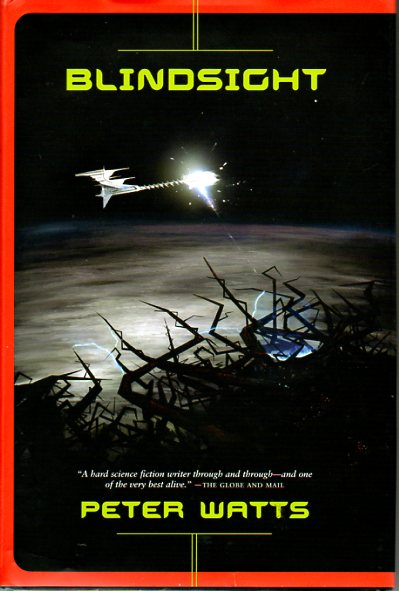
                • Cover of Blindsight / Firefall
                  Blindsight / Firefall

                  series · 3 books · 2006

                  similar byscience fictionspaceartificial intelligencealiens

                  Blindsight sends a crew of radically modified posthumans (including a resurrected, genetically restored vampire) out to the Oort cloud after humanity detects an alien signal, only to make contact with something intelligent, wildly capable, and possibly not conscious at all — a first-contact story built around the question of whether self-awareness is actually useful. Peter Watts's Echopraxia is a same-timeframe "sidequel" rather than a direct sequel, following different characters through the fallout of the same first-contact event.

                • Cover of Ocean / Galactic Center
                  Ocean / Galactic Center

                  series · 12 books · 1972

                  similar byscience fictionaliens+2 more

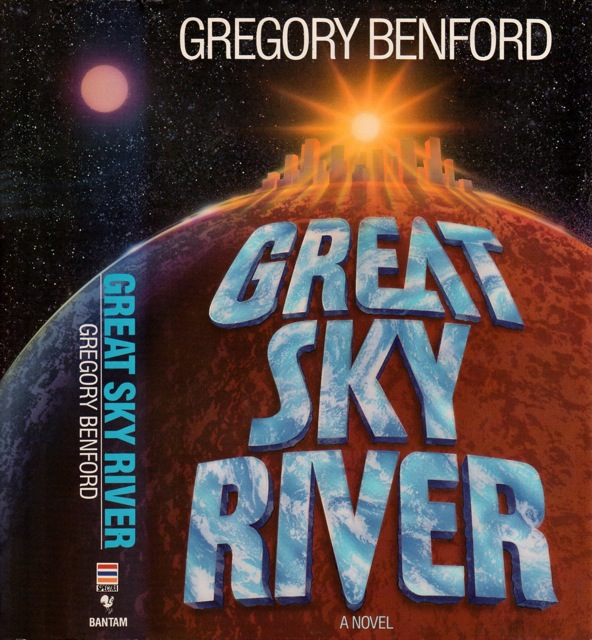
                  The Galactic Center Saga is a series of books by author Gregory Benford detailing a galactic war between mechanical and biological life.In the Ocean of Night (1977) — 1977 Nebula Award nominee, 1978 Locus Award nominee Across the Sea of Suns (1984) Great Sky River (1987) — 1988 Nebula Nominee Tides of Light (1989) — 1990 Locus Award nominee Furious Gulf (1994) Sailing Bright Eternity (1996) "A Hunger for the Infinite" a novella published in the anthology Far Horizons

                • Cover of Starstream
                  Starstream

                  series · 2 books · 1989

                  completed

                  similar byscience fictionspace+2 more

                  Starstream groups Jeffrey A. Carver's two linked science-fiction novels, From a Changeling Star (1989) and its direct sequel Down the Stream of Stars (1990). The two were published within a year of each other under the same author.

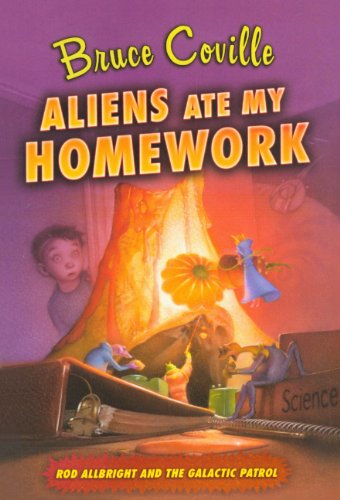
                • Cover of Rod Allbright / Rod Allbright and the Galactic Patrol
                  Rod Allbright / Rod Allbright and the Galactic Patrol

                  series · 4 books · 1993

                  similar byscience fictionfunnyaliensspace

                • Cover of Heechee
                  Heechee

                  series · 19 books · 1972

                  completed

                  similar byscience fictionspacealiens

                  The Heechee Saga, also known as the Gateway series, is a series of science fiction novels and short stories by Frederik Pohl. The Heechee are an advanced alien race that visited the Solar System hundreds of millennia ago and then mysteriously disappeared. They left behind bases containing artifacts, including working starships, which are discovered and exploited by humanity.

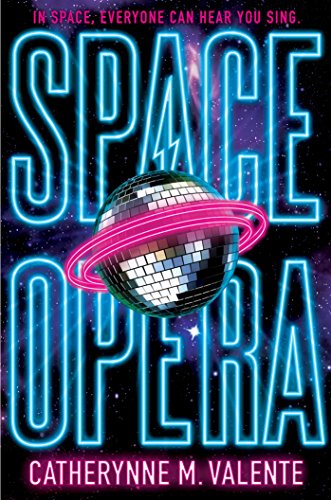
                • Cover of Space Opera (Catherynne M. Valente)
                  Space Opera (Catherynne M. Valente)

                  series · 2 books · 2018

                  similar byscience fictionfunnyspacealiens

                  Catherynne M. Valente's Space Opera imagines a galaxy where a century-old war was ended by replacing armed conflict with Galactivision, an interstellar singing contest that doubles as first contact: any newly discovered species has to compete or be judged too dangerous to exist. When aliens finally notice humanity, the fate of Earth ends up resting on a fading rock band drafted to represent the whole species on stage. It's Eurovision transplanted into space opera, played for absurdist comedy with real stakes underneath.