More like The Impossible Cube
anchored on:steampunkscience fiction
but
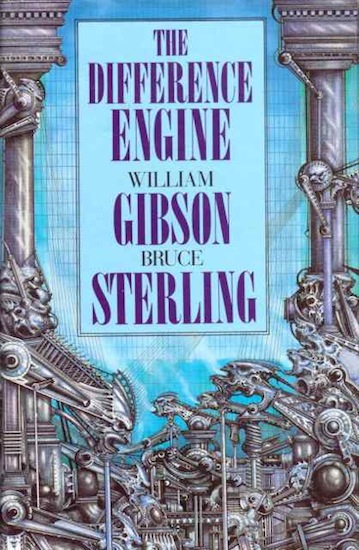
- The Difference Engine
William Gibson & Bruce Sterlingstandalone novel1990
similar bypolitical intrigue19th centurysteampunkscience fictionalternate earth+1 more
The computer age arrives a century early with Babbage's perfection of his 'analytical engine'. The industrial revolution is accelerated by the development of steam-driven cybernetic 'Engines'. An advanced Great Britain prepares to better the world's lot. An example of the 'steampunk' sub-genre of the cyberpunk movement.
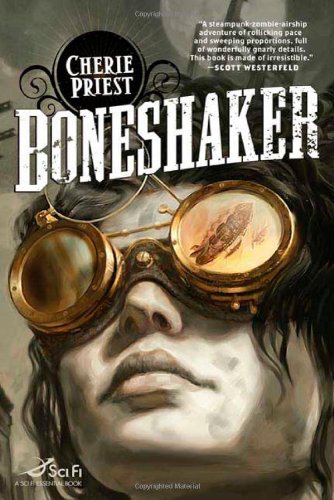
- Clockwork Century Universe
series8 books2008
similar by19th centurysteampunkadventurous+3 more
Boneshaker opens Cherie Priest's Clockwork Century, a steampunk alternate history that reimagines Seattle after a mining disaster releases a toxic gas that turns people into the walking dead, forcing survivors behind a massive wall around the poisoned city. The series expands out from that starting point across the American Civil War era, following different characters and cities in each book (Clementine, Dreadnought, Ganymede, The Inexplicables, Fiddlehead, Jacaranda) rather than one continuous plot. Boneshaker was nominated for the Nebula Award and won the 2010 Locus Award for Best Science Fiction Novel.
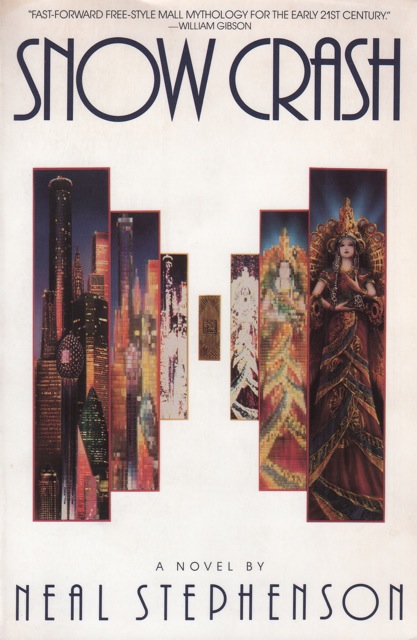
- Snow Crash
Neal Stephensonstandalone novel1992
similar bypolitical intriguetensebig cityscience fictionadventurous
Snow Crash is a 1992 science fiction novel by Neal Stephenson. Like many of Stephenson's novels, its themes include history, linguistics, anthropology, archaeology, religion, computer science, politics, cryptography, memetics, and philosophy.
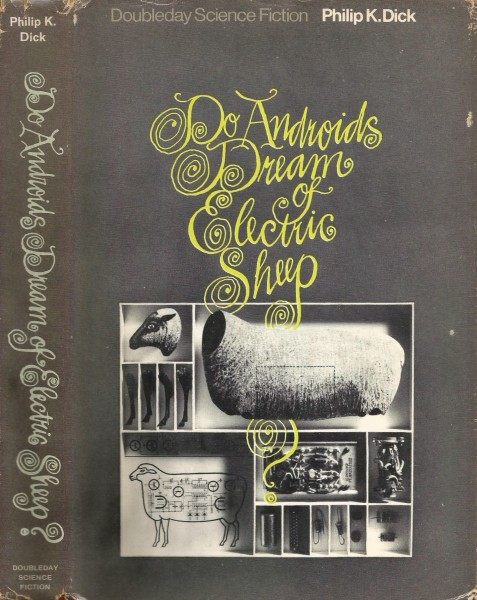
- Blade Runner Universe
series6 books1968
similar bybig cityscience fiction+2 more
Philip K. Dick's 1968 novel Do Androids Dream of Electric Sheep? follows bounty hunter Rick Deckard as he tracks escaped androids through an irradiated, near-abandoned San Francisco, using the hunt to probe questions of empathy and what separates human from machine. The novel became the basis for Ridley Scott's 1982 film Blade Runner, and Marvel Comics later published an illustrated adaptation of that film. Together the two trace the story's path from prose original to screen and comic-page adaptation.
- Time and Again
series2 books1970
completed
similar bybig cityscience fiction+1 more
Time and Again (1970) follows Si Morley, a commercial artist recruited into a secret government project that sends him back to Manhattan in 1882, where he falls for a woman named Julia while weighing whether he can, or should, alter the past; Jack Finney illustrates the story with period photographs and engravings. The sequel, From Time to Time (1995), continues Si's story with a further trip into the past.
- Dune
series20 books1963
part of Dune Universe
similar bypolitical intriguescience fiction+1 more
Frank Herbert's Dune Chronicles opens with 1965's Dune, set on the desert planet Arrakis where House Atreides takes control of the only source of the vital spice melange and young Paul Atreides is pulled into a struggle over its politics and religion. Herbert carried the story forward across five further novels — Dune Messiah, Children of Dune, God Emperor of Dune, Heretics of Dune, and Chapterhouse: Dune — following Paul's line over the following millennia, before Brian Herbert and Kevin J. Anderson later extended the saga. Many other editions of these six novels are omnibus and box-set repackagings rather than separate stories.
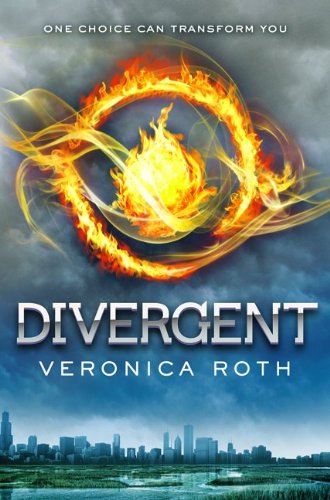
- Divergent
series10 books2011
similar bytensebig cityscience fiction
Divergent, also known as The Divergent Series, is a series of young adult dystopian novels by American novelist Veronica Roth set in a post-apocalyptic dystopian Chicago. The trilogy consists of Divergent (2011), Insurgent (2012), and Allegiant (2013). A related book, Four (2014), presents a series of short stories told from the perspective of one of the trilogy's characters, the male love interest Tobias. A later short story, We Can Be Mended (2018), serves as an epilogue five years after the events of the trilogy, again from Tobias/Four's perspective.
- Dune Universe
universe78 books1963
Start hereDune · Start here
similar bypolitical intriguescience fiction+1 more
Arrakis. Dune. The desert planet, where empire runs on a single substance: the spice melange, which folds space, prolongs life, and unlocks prescience, and which exists nowhere else in the known universe. Frank Herbert's saga is a meditation dressed as an adventure — feudal houses and a secret sisterhood, engineered messiahs and the patient ecology of a world without water, all turning on the terrible gravity of who commands the spice. It reads like scripture and schemes like a war room, ten thousand years hence, among people who have outlawed the thinking machine and made instruments of themselves instead. At its heart stand Herbert's original six — Dune, Dune Messiah, Children of Dune, God Emperor of Dune, Heretics of Dune, Chapterhouse: Dune — a single deepening arc across millennia, arguing the whole way between prophecy and free will. Around that spine his son Brian Herbert and Kevin J. Anderson have raised a vast prequel architecture: Prelude to Dune, tracing the great houses a generation before Paul; Legends of Dune, reaching back to the crusade that broke the machines; the Schools of Dune cycle on the founding of Bene Gesserit, Mentat, and Navigator; the Caladan Trilogy and Heroes of Dune filling years the originals left in shadow. Many hands, dozens of volumes, one desert. What sets Dune apart is its refusal of the simple: religion is manufactured, heroes are hazards, and the sand itself — worm, water, ecology — acts as a political power. Begin where the universe did, with Frank Herbert's Dune (1965), and read the original six in order; you need nothing else to feel the full weight. The prequels are a country to explore afterward, taken by era. Beginnings are delicate times.
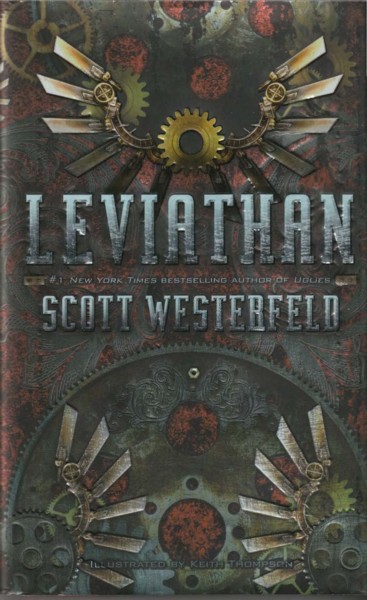
- The Leviathan Trilogy
series3 books2009
similar bysteampunkscience fictionadventurous+3 more
Set in an alternate First World War, Leviathan splits the belligerents into Clankers, who fight with mechanical walkers, and Darwinists, who fight with fabricated living creatures built from spliced DNA. Scott Westerfeld follows a British girl disguised as a boy to serve on a living airship and the exiled heir to the Austro-Hungarian throne as their paths collide, continuing across Behemoth and Goliath. Keith Thompson's illustrations are integral to all three books, alternating text chapters with illustrated sequences.
- Sally Lockhart
series4 books1985
similar by19th century+2 more
Philip Pullman's Sally Lockhart quartet follows a resourceful, unconventional heroine navigating Victorian London - a sharpshooting, mathematically gifted young orphan who builds an improbable career as a financial consultant against the era's expectations for women. The Ruby in the Smoke opens with Sally investigating her father's death and a mysterious jewel; the following novels widen out into fraud, opium-trade crime, and international intrigue, tracking Sally's evolving relationships, including with the journalist Daniel Goldberg, across four Victorian-set mysteries.
- George Dower / Infernal Devices
series3 books1987
similar by19th centurysteampunk+4 more
K. W. Jeter's trilogy, whose 1987 original helped coin the term 'steampunk,' follows clockmaker George Dower as he's dragged into escalating Victorian conspiracies involving mechanical devices, secret societies, and inventions that shouldn't work but do. Infernal Devices, Fiendish Schemes, and Grim Expectations mix dark comedy with the gears-and-brass aesthetic the series helped establish before it had a name.
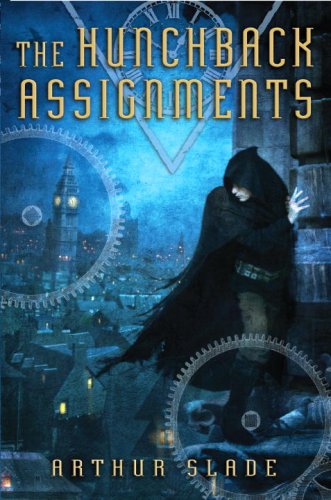
- Hunchback Assignments / Modo: Mission Clockwork
series5 books2009
similar by19th centurysteampunkadventurous+1 more
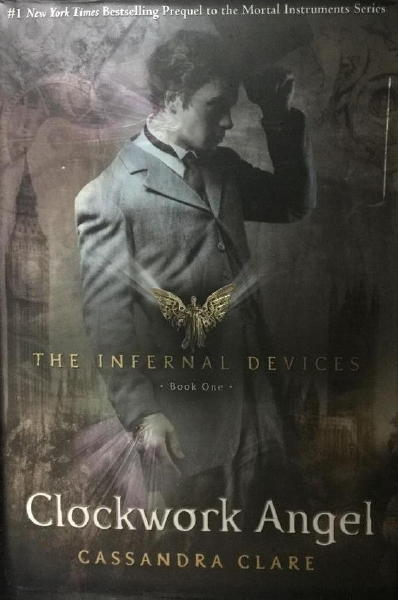
- The Infernal Devices
series5 books2010
part of The Mortal Instruments
similar by19th century+3 more
The Infernal Devices is a trilogy by author Cassandra Clare, centring on a race called the Shadowhunters introduced in her The Mortal Instruments series. The trilogy is a prequel series to The Mortal Instruments series. Cassandra Clare has stated that the two series are able to be read in any order, but it is best to read them in publication order.
- Crosstime Traffic
series6 books2003
similar byscience fictionalternate earth+2 more
Harry Turtledove's Crosstime Traffic novels are set on an Earth that has discovered travel to alternate timelines where history unfolded differently, exploited commercially by the monopoly company that gives the series its name. Aimed at young-adult readers, the loosely connected books -- including Gunpowder Empire, Curious Notions, and The Disunited States of America -- each send a young protagonist into a different divergent world.
- H. G. Wells' War of the Worlds
universe65 books1898
Start hereThe War of the Worlds · Start here
similar byscience fiction+2 more
No one would have believed, in the closing years of the nineteenth century, that human affairs were being watched keenly and closely from the timeless worlds of space. And then the cylinders fell. H. G. Wells' War of the Worlds opens in the quiet of the Surrey commons, where a falling star proves to be the first Martian craft — and from the pit rise the towering tripods, the Heat-Ray, the choking Black Smoke and the creeping red weed, wielded by minds that regard mankind much as we regard the creatures we boil for supper. This is invasion rendered as natural disaster: cold, methodical, and vast beyond argument. Wells' 1898 novel is the seed; everything else grows from that Martian soil. The catalogue gathers direct sequels and continuations alongside a wide field of other hands. In War of the Worlds: Global Dispatches the invasion is retold across the whole planet through the eyes of Twain, Verne, Tolstoy, Lowell and Kipling; in the Manly Wade and Wade Wellman crossover, Sherlock Holmes, Watson and Professor Challenger take the field against the machines; and Scott Washburn's Great Martian War stretches the fighting into a decades-long alternate history of steam, artillery and grinding attrition. It is a loose shared world — no single decreed sequence, many voices answering one calamity. What sets this world apart is its refusal of heroics: the invaders fall not to generals but to the smallest things of Earth, humbling and indifferent. Begin, always, with Wells' original novel — it is short, and it is the ground every later book stands upon. From there follow your appetite: Global Dispatches for the panorama, the Holmes campaign for adventure, Washburn for the long war.
- Newbury & Hobbes Investigations
series23 books2008
similar by19th centurysteampunk+1 more
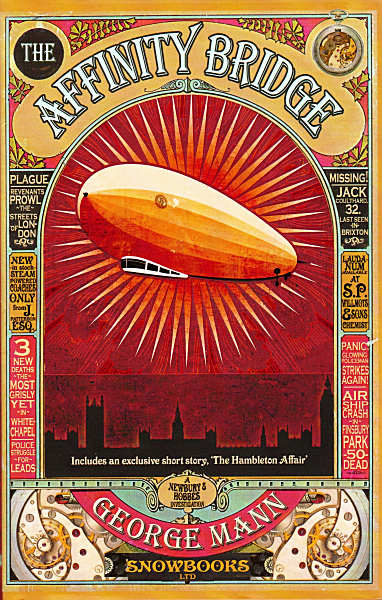
George Mann's steampunk series follows Sir Maurice Newbury, an occult investigator working for the crown in an alternate, more mechanized Victorian Britain, and his assistant Veronica Hobbes, as they take on cases blending supernatural threats with the era's mechanical marvels. The Affinity Bridge, the opening novel, entangles them with a crashed automaton airship and a spreading plague of the reanimated; later books deepen Newbury's struggle with addiction and Veronica's search for her institutionalized sister. It combines detective procedural with alternate-history steampunk London.
- The Moon Is a Harsh Mistress
Robert A. Heinleinstandalone novel1966
similar bypolitical intriguescience fictionadventurous+1 more
A technician discovers that the massive computer that operates everything on Luna (a prison colony) has become self-aware. He befriends it, but when he accompanied a beautiful girl to a dissident meeting, he encounters people who want to throw off the yoke of their Earth rulers.
- Moties
series4 books1974
part of CoDominium
similar bypolitical intriguescience fiction+2 more
Larry Niven and Jerry Pournelle's The Mote in God's Eye (1974) depicts humanity's first contact with an alien species, the Moties, set within the far-future interstellar setting of Pournelle's codominium future history. The Gripping Hand continues that first-contact crisis years later, and Outies, written by J. R. Pournelle, carries the story forward into a new generation. Together the three books trace an escalating encounter between human and Motie civilizations within the codominium universe.
- The Last Hours
series4 books2019
part of The Mortal Instruments
similar by+3 more
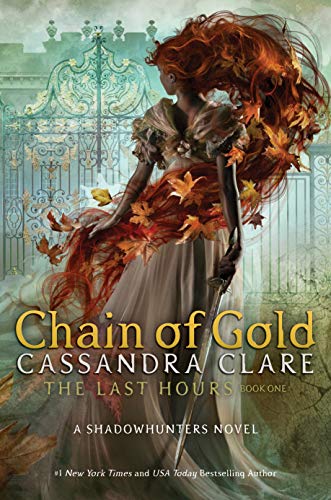
Cassandra Clare's The Last Hours opens with Chain of Gold, set in 1903 London among the Shadowhunters of the London Institute, part of the wider Shadowhunter Chronicles that includes The Mortal Instruments. Continuing the saga's tradition of chapter epigraphs drawn from Victorian and Edwardian poetry, the trilogy concludes across Chain of Iron and Chain of Thorns.
- Alliance-Union Universe
universe173 books1976
Start hereCompany Wars · The central sequence
similar byscience fiction+3 more
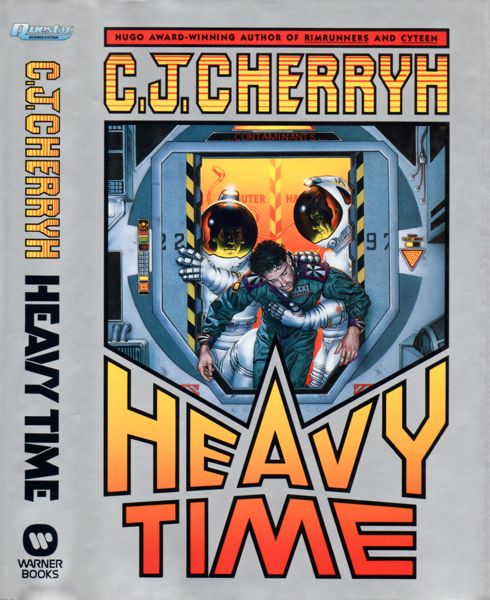
The dark between the stars belongs to no one, and everyone who lives out here knows it: the merchanter Families hauling cargo between stations that cannot feed themselves, the Earth Company clutching at colonies it can no longer supply, the Union breeding its cloned azi to settle worlds faster than birth allows. C. J. Cherryh's Alliance-Union is a future history of humankind's spread across the third and fourth millennia, told from inside the pressure — no clean empires, only stations, ships, treaties, and the people caught in the machinery of who holds the jump-points. The sequence runs from the first laborious pre-FTL stations through the Company Wars, the independence struggle that breaks over Pell in Downbelow Station (Hugo, 1981), to the genetics and cold politics of Union's homeworld in Cyteen (Hugo, 1988) and its sequel Regenesis. Around that spine cluster the merchanter novels of trader Families, the Faded Sun trilogy of human envoys among the martial alien Mri, and the Chanur books, narrated from the hierarchical, whiskered viewpoint of the hani. On the isolated world of Merovin, the Merovingen Nights anthologies open the setting to other hands — Mercedes Lackey, Janet and Chris Morris, Nancy Asire — a shared world braided into the whole. What sets it apart is intimacy at scale. Cherryh drops you without a map into a single skull and lets you assemble the politics from what that person fears and bargains for; the aliens are genuinely alien, loyalty is always provisional, and the real antagonist is usually logistics. Most books stand alone, in her words, "like real history." The surest way in is Downbelow Station — the war seen from one besieged station — then Cyteen, for the mind that shaped the other side.
- The Invisible Library
series12 books2014
similar by+5 more
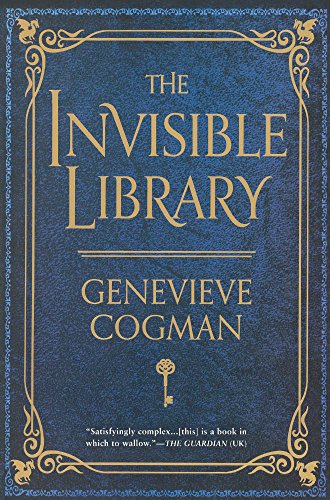
Genevieve Cogman's Invisible Library series follows Irene, an agent of an interdimensional Library that collects rare and dangerous books from across a multiverse of alternate worlds touched by varying degrees of magic and technology. Beginning with The Invisible Library (2014), the eight-book series continues through The Masked City and The Lost Plot on to The Untold Story (2021).
- Renegades (Marissa Meyer)
series3 books2017
similar bytensebig cityscience fiction+2 more
Renegades is set in Gatlon City after a civil war between the superheroic Renegades and the villainous Anarchists, and follows Nova, a young woman with the power to put people to sleep by touch, as she infiltrates the Renegades as a spy for her uncle's Anarchists and falls for Adrian, the adopted son of the Renegades' leaders. Marissa Meyer's trilogy, continuing through Archenemies and Supernova, plays the two factions' history against the leads' divided loyalties; Meyer has said she doesn't plan to extend the series further.