More like The Indifference Engine
anchored on:science fiction
but
- Brave New World
series8 books1932
similar byscience fictionfar futureotherworld+2 more
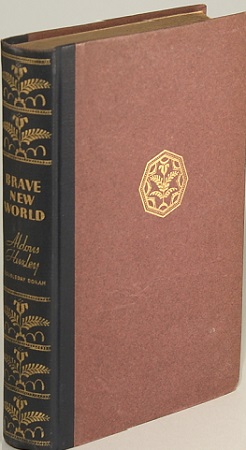
Aldous Huxley's 1932 novel imagines a future World State where reproduction, social caste, and desire are all engineered before birth, and the population is kept content through conditioning, sleep-hypnosis, and a mood-altering drug called soma. The story follows the disruption this seemingly stable order suffers when an outsider raised beyond its reach is brought into it, exposing what the society traded away for comfort and order. Some editions pair the novel with Huxley's own 1958 nonfiction essay collection, Brave New World Revisited, which reassesses the book's ideas rather than continuing its story.
- Whileaway
series4 books1972
completed
similar byscience fictionchallengingreflective+2 more
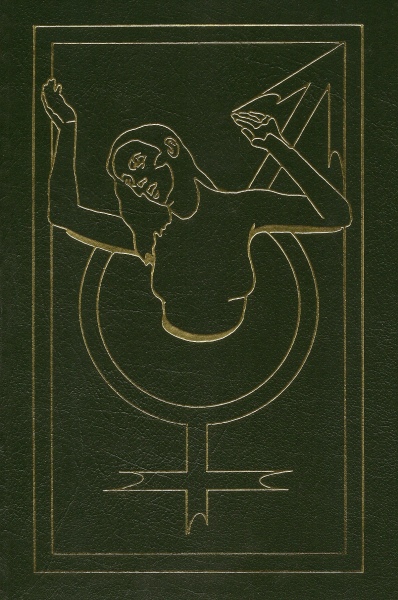
Joanna Russ's The Female Man (1975) is a single feminist science fiction novel, not a multi-book series, built around four women from parallel timelines with very different gender arrangements. One of them, Janet, comes from Whileaway, an all-female utopian Earth ten centuries in the future where men died out in a plague; the other three come from realities closer to Russ's own, and their collisions are used to interrogate what womanhood and equality could mean under different social rules.
- A Time of Changes
Robert Silverbergstandalone novel1971
similar byscience fictionidentityfar futurereflective+1 more
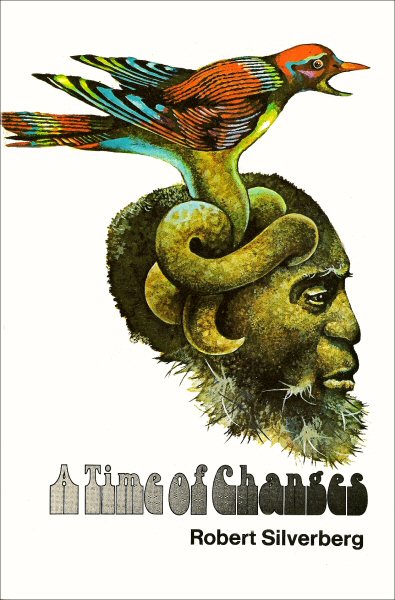
A Time of Changes is a 1971 science fiction novel by American writer Robert Silverberg. It won the Nebula Award for that year, and was also nominated for the 1972 Hugo and Locus Awards.
- Stranger in a Strange Land
Robert A. Heinleinstandalone novel1961
similar byscience fictionidentitychallengingreflective
Stranger in a Strange Land is a 1961 science fiction novel by the American author Robert A. Heinlein. It tells the story of Valentine Michael Smith, a human who comes to Earth in early adulthood after being born on the planet Mars and raised by Martians, and explores his interaction with and eventual transformation of Terran culture.
- VALIS
series4 books1981
completed
similar byidentityscience fictionchallengingreflective+1 more
The VALIS trilogy is a set of science fiction/philosophical novels by author Philip K. Dick which include VALIS (1981), The Divine Invasion (1981), and The Transmigration of Timothy Archer (1982). Dick's first novel about the VALIS concept originally titled "VALISystem A", was published as Radio Free Albemuth after Dick's death in 1985.
- Triton
Samuel R. Delanystandalone novel1976
similar byscience fictionidentitychallengingfar futurereflective
Trouble on Triton: An Ambiguous Heterotopia (1976) is a science fiction novel by American writer Samuel R. Delany. It was nominated for the 1976 Nebula Award for Best Novel, and was shortlisted for a retrospective James Tiptree, Jr. Award in 1995. It was originally published under the shorter title Triton.
- Cloud Atlas
David Mitchellstandalone novel2004
similar byidentitychallengingscience fiction+2 more
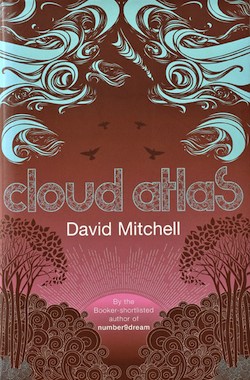
Cloud Atlas, published in 2004, is the third novel by British author David Mitchell. The book combines metafiction, historical fiction, contemporary fiction and science fiction, with interconnected nested stories in different writing styles that take the reader from the remote South Pacific in the 19th century to the island of Hawaii in a distant post-apocalyptic future. Its title references a piece of music by Toshi Ichiyanagi.
- Babel-17
Samuel R. Delanystandalone novel1966
similar byscience fictionidentityfar future+1 more
Babel-17 is a 1966 science fiction novel by American writer Samuel R. Delany. Published by Ace Books in May 1966, it follows Rydra Wong, a poet and linguist recruited during an interstellar war to decipher a language connected to enemy sabotage. Her investigation reveals a language that shapes thought and can make its speakers unwitting saboteurs. Through Rydra's effort to understand and revise it, the novel explores communication, perception, identity, and translation.
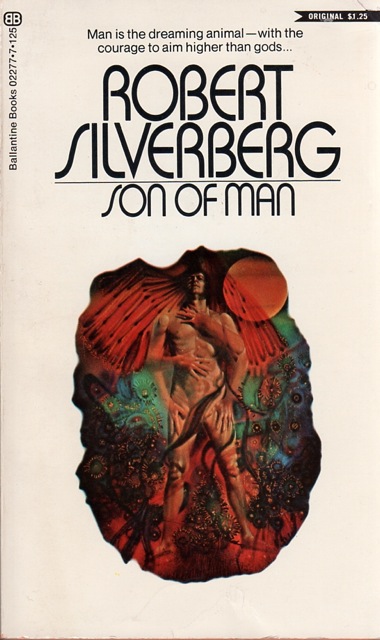
- Son of Man
Robert Silverbergstandalone novel1971
similar byscience fictionidentitychallengingfar future+1 more
Son of Man is a science fiction novel by American writer Robert Silverberg, published in 1971. The book is about Clay, a 20th-century man, who travels billions of years into the future and meets humanity in its future forms. Some of the issues discussed in the book are sexuality, telepathic communication between people, physical prowess or frailty, division of humans by caste or ability, and the preservation of ancient wisdom, among other things.
- The Einstein Intersection
Samuel R. Delanystandalone novel1967
similar byscience fictionidentitychallengingfar future
The Einstein Intersection is a 1967 science fiction novel by Samuel R. Delany. The title is a reference to Einstein's Theory of Relativity connecting to Kurt Gödel's Constructible universe, which is an analogy to science meeting philosophy. The original publisher, Ace Books, changed Delany's originally intended title from A Fabulous, Formless Darkness for commercial reasons.
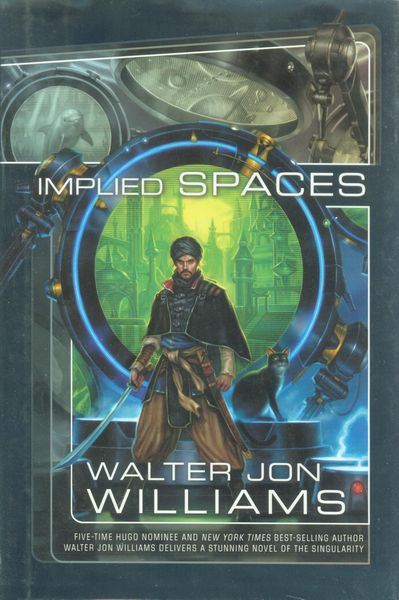
- Implied Spaces
Walter Jon Williamsstandalone novel2008
similar byscience fictionchallengingfar futureartificial intelligencereflective+1 more
Implied Spaces is a 2008 space opera novel by American author Walter Jon Williams. It explores themes of transhumanism, artificial intelligence and ontology.
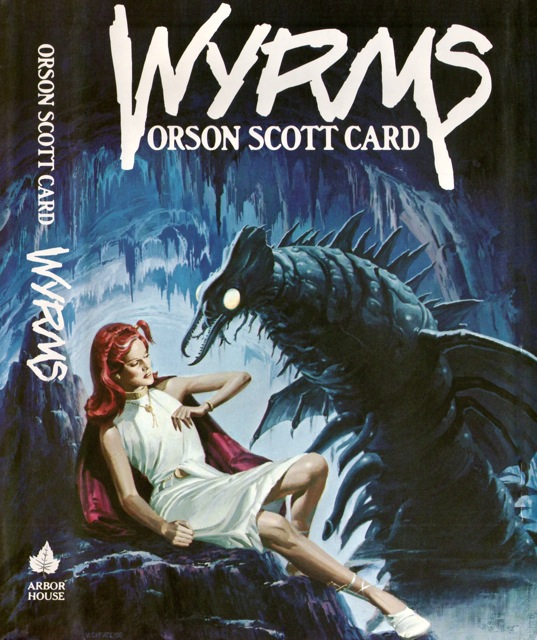
- Wyrms
Orson Scott Cardstandalone novel1987
similar byscience fictionidentityfar futurereflective+1 more
Wyrms (1987) is a science fiction novel by American writer Orson Scott Card. The story examines desire, wisdom, and human will. Card describes a version of the tri-partite soul, similar to that articulated by Plato in the Republic.
- Stars in My Pocket Like Grains of Sand
Samuel R. Delanystandalone novel1984
similar byscience fictionidentitychallengingfar futurereflective
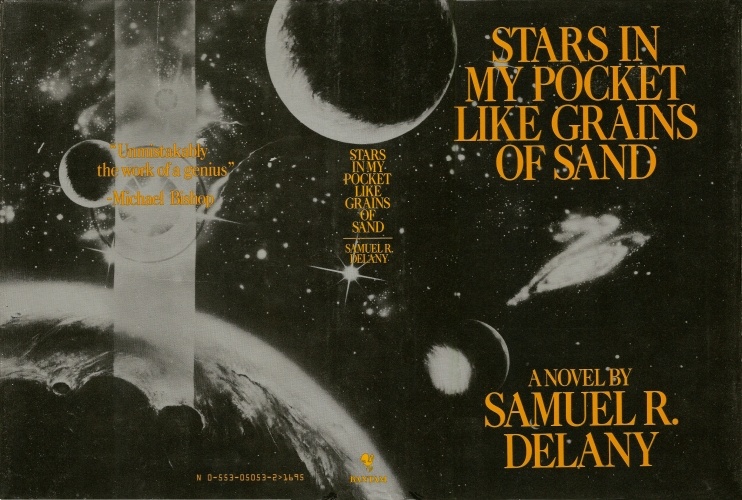
Stars in My Pocket Like Grains of Sand (1984) is a science fiction novel by Samuel R. Delany. It is part of what would have been a "diptych", in Delany's description, of which the second half, The Splendor and Misery of Bodies, of Cities, remains unfinished.
- Radix Tetrad
series4 books1981
similar byscience fictionchallengingfar future+1 more
The Radix Tetrad is a group of four science fiction books by A. A. Attanasio. The first novel, the Nebula Award-nominated Radix, was published in 1981, and the last novel, The Last Legends of Earth, was published in 1989.
- Blindsight / Firefall
series3 books2006
similar byscience fictionchallengingfar futureartificial intelligence+1 more
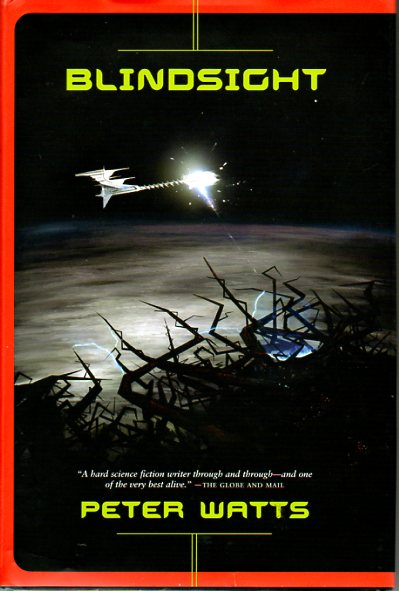
Blindsight sends a crew of radically modified posthumans (including a resurrected, genetically restored vampire) out to the Oort cloud after humanity detects an alien signal, only to make contact with something intelligent, wildly capable, and possibly not conscious at all — a first-contact story built around the question of whether self-awareness is actually useful. Peter Watts's Echopraxia is a same-timeframe "sidequel" rather than a direct sequel, following different characters through the fallout of the same first-contact event.
- Imperial Radch
series7 books2012
part of Radchaai Universe
similar byscience fictionidentityfar futureartificial intelligence+1 more
Ann Leckie's Imperial Radch trilogy (Ancillary Justice, Ancillary Sword, Ancillary Mercy, 2013-2015) follows Breq, the sole surviving fragment of an AI that once inhabited both a troop-transport starship and dozens of soldier bodies, now alone and hunting for revenge inside the vast, expansionist Radch empire. Breq's quest widens across the trilogy into a conflict with the empire's own fractured ruler, and the books use her alien difficulty perceiving gender to unsettle the space-opera conventions around her.
- Saturn's Children
series3 books2008
similar byscience fictionidentityfar future+1 more
Charles Stross's Saturn's Children (2008) is a space-opera tribute to late-period Robert A. Heinlein, set millennia after humanity has quietly gone extinct, in a solar system still run by the sentient robots humans left behind - including Freya, an android originally built for companionship who is pulled into interstellar intrigue. Neptune's Brood (2013) returns to the same posthuman-robot universe thousands of years later with an entirely new cast, shifting focus to the mechanics of slower-than-light interstellar finance and banking fraud. The two books share continuity rather than characters.
- Dune
series20 books1963
part of Dune Universe
similar byscience fictionfar future+2 more
Frank Herbert's Dune Chronicles opens with 1965's Dune, set on the desert planet Arrakis where House Atreides takes control of the only source of the vital spice melange and young Paul Atreides is pulled into a struggle over its politics and religion. Herbert carried the story forward across five further novels — Dune Messiah, Children of Dune, God Emperor of Dune, Heretics of Dune, and Chapterhouse: Dune — following Paul's line over the following millennia, before Brian Herbert and Kevin J. Anderson later extended the saga. Many other editions of these six novels are omnibus and box-set repackagings rather than separate stories.
- Venus Plus X
Theodore Sturgeonstandalone novel1960
similar byscience fictionidentitychallengingreflectiveotherworld
Charlie Johns wakes in a featureless silver room with no memory of how he got there and a watch that's inexplicably running backward. He's been brought, how and by whom is never explained to him, to Ledom, an isolated, technologically advanced society whose members are all both male and female and have done away with fixed sex roles entirely. Guides walk him through Ledom's customs and machinery while making clear he's there to judge them before he can go home. Interwoven with Charlie's tour are chapters following an ordinary mid-century American family, setting the utopia against the world it's implicitly critiquing. Theodore Sturgeon's provocative novel about gender and social design.
- Culture
series15 books1987
completed
part of The Culture
similar byscience fictionfar futureartificial intelligence+2 more
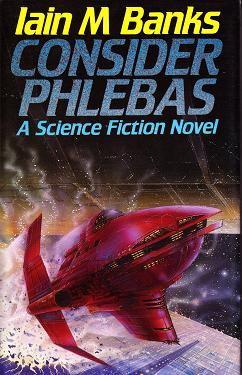
The Culture series is a science fiction series written by Scottish author Iain M. Banks and released from 1987 until 2012. The stories centre on The Culture, a utopian, post-scarcity space society of humanoid aliens and advanced superintelligent artificial intelligences living in artificial habitats spread across the Milky Way galaxy. The main themes of the series are the dilemmas that an idealistic, more-advanced civilization faces in dealing with smaller, less-advanced civilizations that do not share its ideals, and whose behaviour it sometimes finds barbaric. In some of the stories, action takes place mainly in non-Culture environments, and the leading characters are often on the fringes of the Culture, sometimes acting as agents of the Culture in its plans to civilize the galaxy. Each novel is a self-contained story with new characters, although reference is occasionally made to the events of previous novels.
- Vacuum Flowers
Michael Swanwickstandalone novel1987
similar byscience fictionidentitychallengingfar future+1 more
Vacuum Flowers is a science fiction novel by American writer Michael Swanwick, published in 1987. It is an early example of the cyberpunk genre, and features one of the earliest uses of the concept of wetware.