More like The Kingdoms
anchored on:science fictiontime travelbritish isles
but
- Time and Again
series2 books1970
completed
similar bymysteriousscience fictiontime travel+2 more
Time and Again (1970) follows Si Morley, a commercial artist recruited into a secret government project that sends him back to Manhattan in 1882, where he falls for a woman named Julia while weighing whether he can, or should, alter the past; Jack Finney illustrates the story with period photographs and engravings. The sequel, From Time to Time (1995), continues Si's story with a further trip into the past.
- The Raven King
series13 books1996
similar by19th centurybritish isles
Susanna Clarke's Jonathan Strange & Mr Norrell reintroduces magic to an alternate nineteenth-century England, centering on the prickly rivalry between the two title magicians as they revive a lost English tradition. The linked collection The Ladies of Grace Adieu, which includes the earlier story "Mr Simonelli, or the Fairy Widower," explores the same magical history from other corners of England and refers back to the legendary Raven King, said to have created English magic centuries before. The two books share a setting and mythology rather than a single sequential plot.
- Fire and Hemlock
Diana Wynne Jonesstandalone novel1984
similar byamnesiabritish islesmysterious+1 more
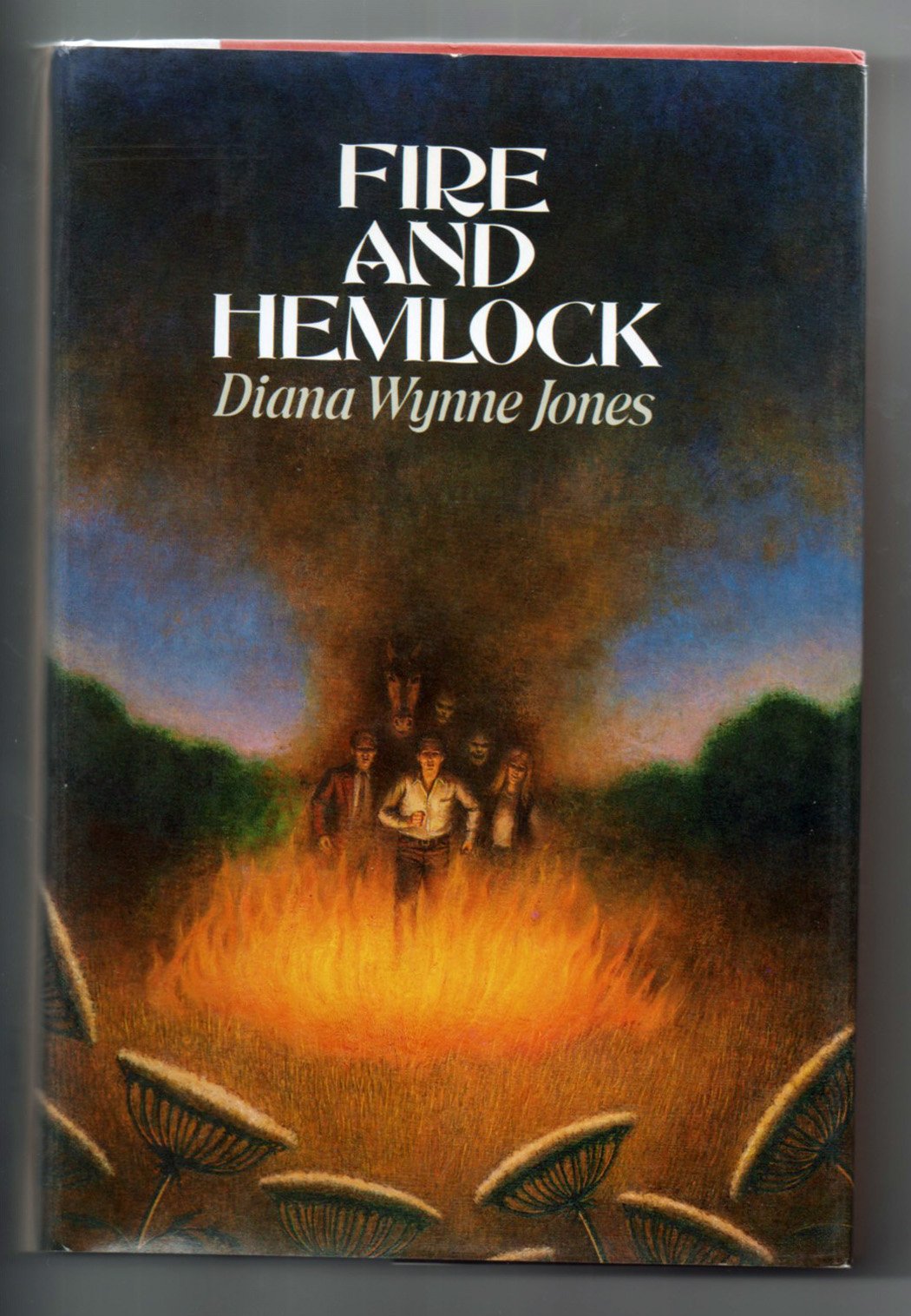
At nineteen, Polly has two sets of sometimes overlapping, sometimes conflicting memories, the real-life ones of school days and her parents' divorce, and the heroic adventure ones that began the day she accidentally gate-crashed a funeral and met the cellist Thomas Lynn.
- More Than Human
Theodore Sturgeonstandalone novel1953
similar byreflectivescience fiction+1 more
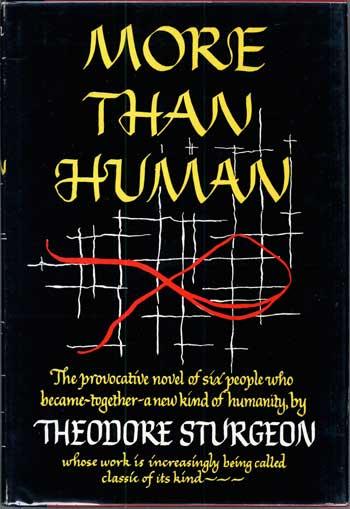
More Than Human is a 1953 science fiction fix-up novel by American writer Theodore Sturgeon. It is a revision and expansion of his 1952 novella Baby Is Three, which is bracketed by two additional parts written for the novel, "The Fabulous Idiot" and "Morality". It won the 1954 International Fantasy Award, which was also given to works in science fiction. It was additionally nominated in 2004 for a "Retro Hugo" award for the year 1954. Science fiction critic and editor David Pringle included it in his book Science Fiction: The 100 Best Novels.
- The Anubis Gates
series3 books1983
similar by19th centurybritish islesmysterioustime travel+1 more
The Anubis Gates is a single time-travel fantasy novel by Tim Powers, following a present-day academic who takes part in a time-travel experiment and ends up stranded in early nineteenth-century London. It won the Philip K. Dick Award in 1983 and the Science Fiction Chronicle Award the following year.
- H. G. Wells' Time Machine
universe51 books1888
Start hereThe Time Machine · Start here
similar byscience fictiontime travel+1 more
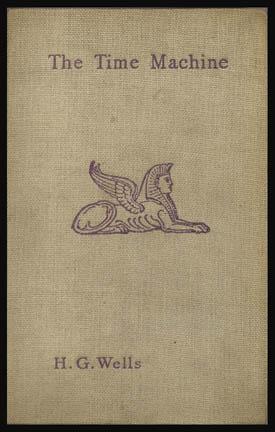
The Time Traveller throws his lever, and the laboratory dissolves into grey — day and night beating like a pulse, the sun streaking into a band of fire, the years falling away by the thousand. When the machine stops he stands in the year 802,701, among the gentle, idle Eloi who dance in the ruins of paradise, and the pale Morlocks who tend the machines below and climb, in the dark, to feed. This is the seed from which every tale of time travel grew: one Victorian evening's fireside account of a fourth dimension a man might walk down. At its centre stands H. G. Wells's slim 1895 romance, complete in itself. Around it has grown a long canopy of retellings — abridged and illustrated editions that carry the Eloi and Morlocks to younger readers, shaped by hands such as Betty Ren Wright and Chris Sasaki — and a strand of homage that treats Wells's invention as fact: Karl Alexander's Time After Time, in which Wells himself pursues Jack the Ripper through his own machine into a startled modern age, and David J. Lake's return to the Morlock world. It is honestly one work and its echoes, not a saga of equals. What lingers is the cool, reasoning voice of a gentleman-scientist watching wonder curdle into dread — for the machine does not stop at 802,701, but runs on to a still shore beneath a swollen, dying sun. Begin where all of it begins: with Wells's original. It is short, it is whole, and nothing after it is required.
- Beyond the Barrier
Damon Knightstandalone novel1964
similar byamnesiamysteriousscience fictiontime travel
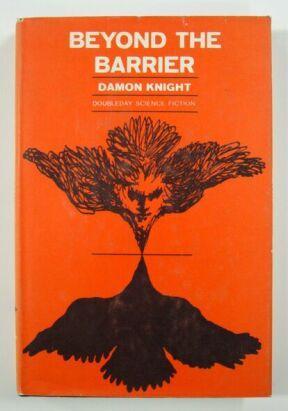
From the front flap of the Doubleday first edition: "Gordon Naismith was a physics professor at a large California university. The year was 1980, and by means of the university's duplicator he could personally teach in nine different classrooms simultaneously. Naismith was an average man in all but two respects: the reflexes were extraordinarily quick, and four years before in a plane crash he had lost all memory of his earlier life. Neither difference seemed important until one day a very unusual student in one of his classes asked a disturbing, extracurricular question: "Professor, what is a zug?" The question triggered a series of violent incidents, and soon Naismith himself, as well as the police, were beginning to wonder if the duplicator had reproduced him a tenth time. The answer lay ten thousand years in the future."
- Six Gates from Limbo
J. T. McIntoshstandalone novel1968
similar byamnesiamysteriousscience fiction+1 more
Awakening in a grassy clearing, a man with no tools or weapons, no name, no memory, begins to explore his world. He finds this no-place is furnished with six gateways. What lies beyond cannot be seen. And then he finds his name - Rex - and a companion - Regina - and Limbo begins to seem like Eden. But it is a paradise with its own destruction built in. (adapted from the back cover of the Avon edition)
- The Haunting of Alaizabel Cray
Chris Woodingstandalone novel2001
similar byamnesia19th centurybritish islesalternate earthalternate history
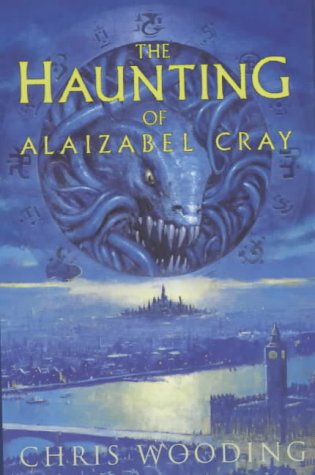
The Haunting Of Alaizabel Cray (2004) is a Gothic steampunk horror/alternate history novel by Chris Wooding about a young man and an amnesiac girl fighting a cult in an alternate Victorian era London.
- Venus Plus X
Theodore Sturgeonstandalone novel1960
similar byreflectivescience fiction+1 more
Charlie Johns wakes in a featureless silver room with no memory of how he got there and a watch that's inexplicably running backward. He's been brought, how and by whom is never explained to him, to Ledom, an isolated, technologically advanced society whose members are all both male and female and have done away with fixed sex roles entirely. Guides walk him through Ledom's customs and machinery while making clear he's there to judge them before he can go home. Interwoven with Charlie's tour are chapters following an ordinary mid-century American family, setting the utopia against the world it's implicitly critiquing. Theodore Sturgeon's provocative novel about gender and social design.
- Bring the Jubilee
Ward Moorestandalone novel1953
similar by19th centuryreflectivescience fictiontime travelalternate history
From the flaps of the Farrar, Straus and Young first edition: ""Although I am writing this in the year 1877, I was not born until 1921." So Hodge Backmaker begins his story of the harsh and curious world he lived in, a world in which the South won the Civil War and the all-powerful Confederacy dominated the poor and backward North; a North that had neither a transcontinental railroad, and where television was undreamed of. Like most Northerners, Hodge was poor - but he had ambition. A printer's handyman in 1938, he had since become an eminent historian. Hodge's special interest was the American past, when the States had been united and had seemed to be on the brink of prosperity and technical progress. And then he was offered an opportunity no historian could resist - he could go back in time. Hodge chsoe to return to a certain field near Gettysburg on a day in July, 1863... Bring the Jubilee is a novel of curious events, of adventures and reflection, of passions and comment. It at time Hodge's world, its horse-carriages and gas-lights, minibles and tinugraphs and the Great Emperors' War of 1914 faintly resembles our own, it is perhaps, because that world might well become a reality: on the battlefield of Gettysburg there is a small hill called Little Round Top. One July morning in 1863 the Confederate Army made the tactical error of not occupying this hill. It was a mistake that cost them victory in a battle which - in the view of many historians - was the turning point of the Civil War."
- Oxford Time Travel
series6 books1982
similar bybritish islesscience fictiontime travel
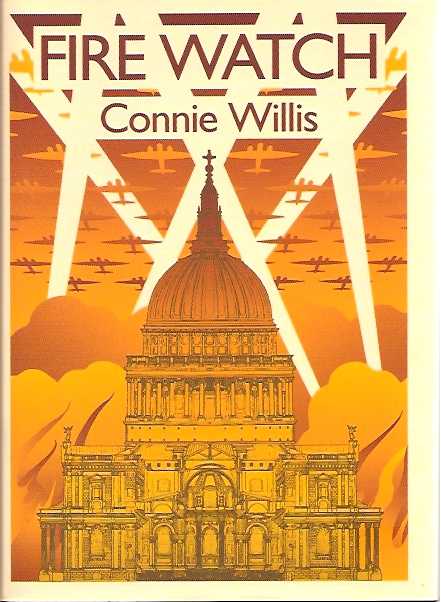
Connie Willis's Oxford Time Travel novels are set at a near-future Oxford University where historians travel into the past as observers, constrained by a version of history that resists any change large enough to alter real events. Doomsday Book sends a medieval historian to what should be 1320 but turns out to be the Black Death year of 1348, intercut with a present-day epidemic at Oxford; To Say Nothing of the Dog returns to the same time-travel program for a lighter, Victorian-set story with different characters. The two novels share their setting and rules rather than a directly continuing plot.
- Piranesi
Susanna Clarkestandalone novel2020
similar byamnesiamysteriousreflective
A man lives in a huge isolated labyrinthine building partially submerged in an ocean, together with another man and 13 skeletons, which is the only world he recalls.
- Alderley
series4 books1960
similar bybritish isles+2 more
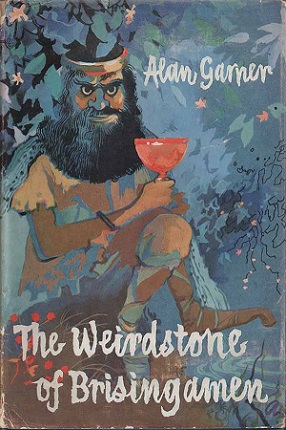
Alan Garner's Alderley books begin with The Weirdstone of Brisingamen (1960) and The Moon of Gomrath (1963), children's fantasies set around the real Cheshire hill of Alderley Edge and drawn from its local legends. Garner returned to the same setting and characters decades later in Boneland (2012), a far darker novel for adults in which the now-grown Colin, afflicted with amnesia covering his entire childhood, tries to piece together what really happened to him and his sister. The three books span most of Garner's writing life rather than forming one continuous trilogy.
- Before I Go to Sleep
S. J. Watsonstandalone novel2011
similar byamnesiabritish islesmysterious
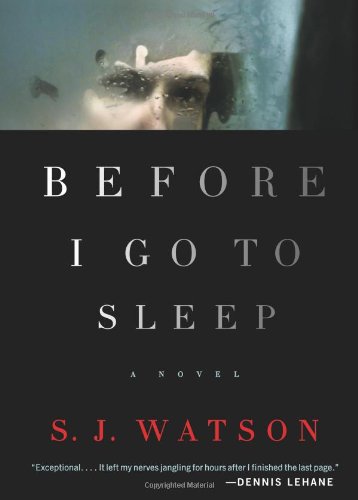
Before I Go to Sleep is the first novel by S. J. Watson, published in the spring of 2011. It became both a Sunday Times and The New York Times bestseller and has been translated into over 40 languages. It has become a bestseller in France, Canada, Bulgaria and the Netherlands. It reached number 7 on the U.S. bestseller list, the highest position for a debut novel by a British author since J. K. Rowling. The New York Times described the author as an "out-of-nowhere literary sensation". He wrote the novel between shifts whilst working as a National Health Service (NHS) audiologist.
- The Werewolf Principle
Clifford D. Simakstandalone novel1967
similar byamnesiamysteriousscience fiction
From the back cover of the first DAW printing: "Andrew Blake, found in a space capsule on a distant planet, was brought back to an unfamiliar Earth, where antigravity devices had replaced the wheel and houses talk and even fly! Yet nothing was as strange as Blake's own feelings. Tormented by eerie sensations and a loss of memory, he didn't know who he really was nor exactly where he came from. His destiny only began to grow frighteningly clear when he met a weird, tassel-eared creature who darkly hinted at the truth about Blake's origins. Slowly Blake became aware of the long hushed-up "Werewolf Principle," a scientific theory buried in the past, which held the key to Blake's own fate - and the future of the human race..."
- Highways in Hiding
George O. Smithstandalone novel1956
similar bymysteriousscience fiction+1 more
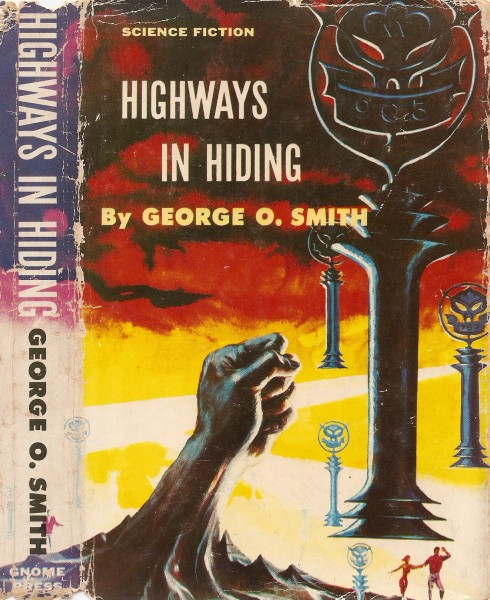
From the back cover of the first Lancer printing: "Quest impossible - Someone had stolen an important part of Steve Cornell's life. It was bad enough when his fiancee vanished. It was infinitely worse when everyone in the world insisted it couldn't have happened the way he knew it had. In a world where ESP and telepathy were normal, it was difficult to keep secrets. But Steve's search for his missing sweetheart brought him to the threshold of one of the greatest secrets of all time. And it was obvious that somebody would stop at nothing to keep him from uncovering it. What were the oddly sinister symbols along the otherwise ordinary roads? What was behind the spreading plague called Mekstrom's Disease? Why were there "blank" spots where telepathy didn't work? Who was the elusive enemy with powers even beyond those ESP had bestowed on mankind? And, most important of all... could Steve find that enemy before they made him vanish too?"
- Gideon Smith
series7 books2013
similar by19th centurybritish islesalternate earthalternate history+2 more
- Hull Zero Three
Greg Bearstandalone novel2010
similar byamnesiamysteriousscience fiction
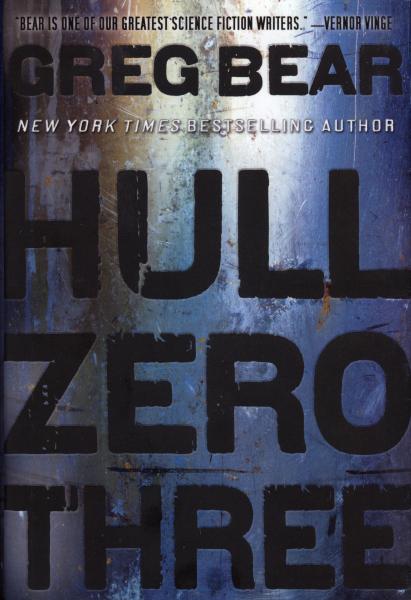
Hull Zero Three is a science fiction novel by American author Greg Bear. It was published on November 22, 2010. It is set on a generation ship that has lost its way under mysterious circumstances.
- The Time of the Ghost
Diana Wynne Jonesstandalone novel1981
similar byamnesiabritish islesmysterious
The Time of the Ghost is a supernatural English-language children's novel by Diana Wynne Jones, published by Macmillan in 1981. Set in the English countryside, it features a teenage ghost who is one of four sisters, and observes the family, unable to remember which one she is. She is from seven years in the future, in the aftermath of her "accident", so it is a kind of a time slip story, but she has no memories of those seven years.
- Company (Kage Baker)
series41 books1997
completed
part of Company
similar byscience fictiontime travel+1 more
Kage Baker's Company novels imagine a secretive 24th-century corporation, Dr. Zeus Incorporated, that recruits children throughout history and remakes them into immortal cyborg operatives who quietly harvest art, biological specimens, and lost treasures for the future. The saga follows operatives such as the botanist Mendoza across centuries of missions, building toward the unexplained blackout in the corporation's own records after the year 2355. Later volumes, some completed with Kathleen Bartholomew after Baker's death, close out the operatives' long, involuntary service.
- The Game-Players of Titan
Philip K. Dickstandalone novel1963
similar byamnesiamysteriousscience fiction
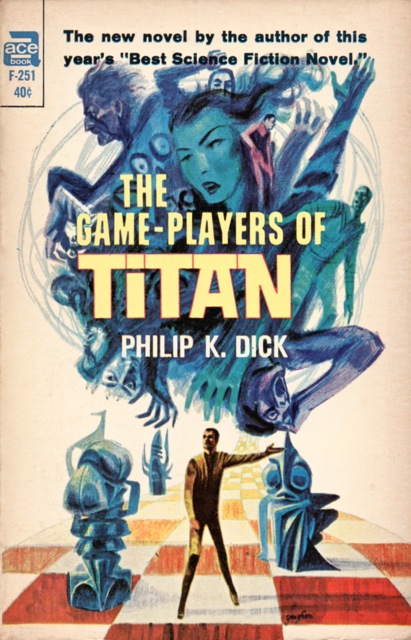
In a depopulated, mostly sterile America, land, marriages and social standing are all wagered on Bluff, a high-stakes game administered by the vugs, gelatinous, gambling-obsessed aliens from Titan who rule Earth without ever quite occupying it. Pete Garden's bipolar disorder threatens his standing among the game's players even as his new wife becomes pregnant, a near-miraculous event in this exhausted world, and his attraction to a telepath complicates things further. When a fellow player turns up dead, Pete finds himself a suspect in a mystery tangled up with induced amnesia and vug politics he barely understands. Philip K. Dick's 1963 novel.
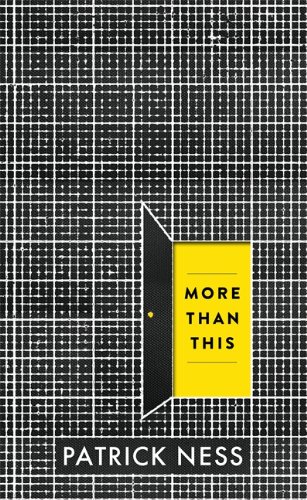
- More Than This
Patrick Nessstandalone novel2013
similar bybritish islesmysteriousscience fiction+1 more
More Than This is a young adult novel by Patrick Ness, published by Candlewick Press in 2013. It follows a teenage boy named Seth who, after drowning in the ocean, wakes up alone on a desolate suburban English street in what he believes to be hell.