More like The Lost Memory
anchored on:science fictionnear futurecyberpunk
but
- Blade Runner Universe
series6 books1968
similar bynear futurescience fictionidentitycyberpunkbig cityrobots+4 more
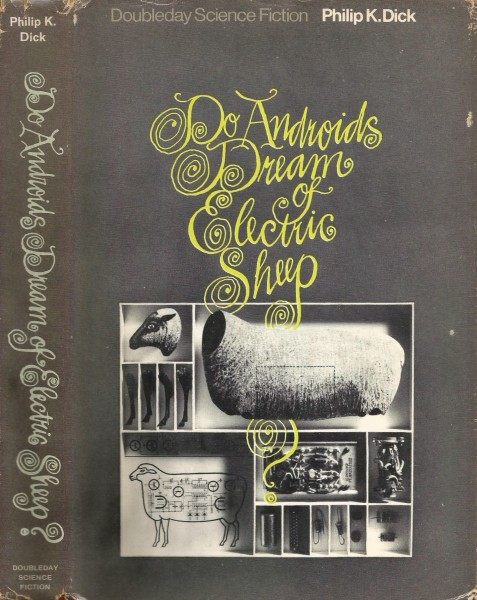
Philip K. Dick's 1968 novel Do Androids Dream of Electric Sheep? follows bounty hunter Rick Deckard as he tracks escaped androids through an irradiated, near-abandoned San Francisco, using the hunt to probe questions of empathy and what separates human from machine. The novel became the basis for Ridley Scott's 1982 film Blade Runner, and Marvel Comics later published an illustrated adaptation of that film. Together the two trace the story's path from prose original to screen and comic-page adaptation.
- Sprawl Trilogy
series10 books1981
similar bytensenear futurescience fictioncyberpunkbig cityartificial intelligence
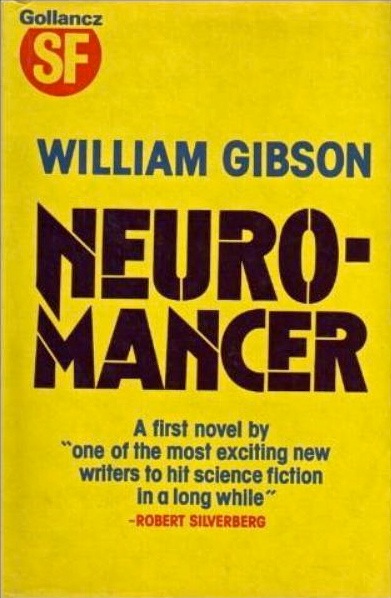
The Sprawl Trilogy is William Gibson's foundational cyberpunk sequence: Neuromancer (1984), in which hacker Case is drawn into a high-stakes heist alongside an artificial intelligence and a damaged ex-soldier, followed by Count Zero (1986) and Mona Lisa Overdrive (1988), which widen the same near-future world of corporate power and networked cyberspace to new characters. Johnny Mnemonic, an early short story set in the same fictional milieu, predates the novels and introduces the courier Molly Millions before her role in the trilogy. Together these works established much of cyberpunk's visual and thematic vocabulary.
- Budayeen
series13 books1973
completed
similar bynear futurescience fictioncyberpunkbig city+3 more
George Alec Effinger's Budayeen sequence reimagines the French Quarter of New Orleans as a 22nd-century red-light district in a future Middle Eastern city, where body modification has gone electronic: cybernetic 'moddies' and 'daddies' let people plug in new personalities and skills at will. Its hero, hustler-turned-investigator Marid Audran, works the Budayeen's back alleys across the novels When Gravity Fails, A Fire in the Sun, and The Exile Kiss. Budayeen Nights, published after Effinger's death, gathers his shorter fiction set in the same neon-lit quarter.
- Snow Crash
Neal Stephensonstandalone novel1992
similar bytensenear futurescience fictionpolitical intriguecyberpunkbig city
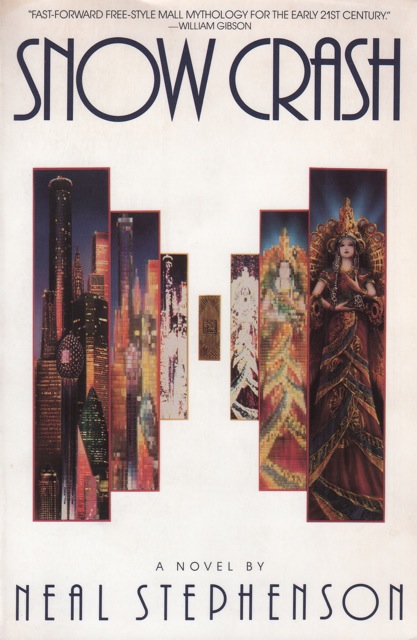
Snow Crash is a 1992 science fiction novel by Neal Stephenson. Like many of Stephenson's novels, its themes include history, linguistics, anthropology, archaeology, religion, computer science, politics, cryptography, memetics, and philosophy.
- Bridge Trilogy
series4 books1990
similar bynear futurescience fictioncyberpunkbig city+3 more
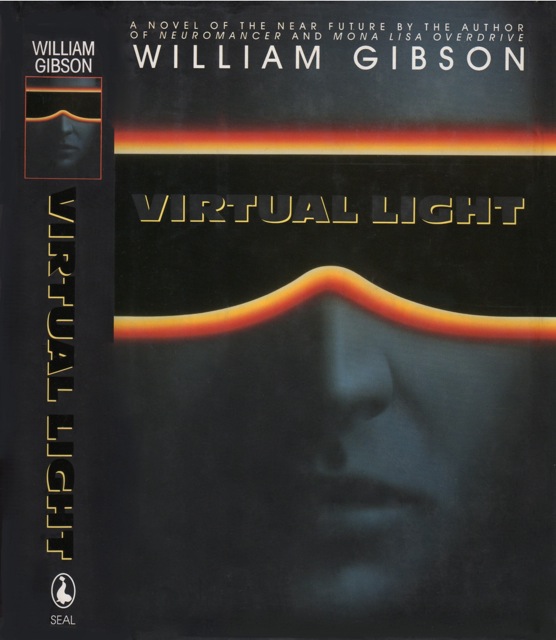
The Bridge trilogy is a series of novels by William Gibson, his second after the successful Sprawl trilogy. The trilogy comprises the novels Virtual Light (1993), Idoru (1996) and All Tomorrow's Parties (1999). A short story, "Skinner's Room", was originally composed for Visionary San Francisco, a 1990 museum exhibition exploring the future of San Francisco.
- Dogs of War (Adrian Tchaikovsky)
series3 books2017
similar byscience fictionnear futurecyberpunkour world+6 more
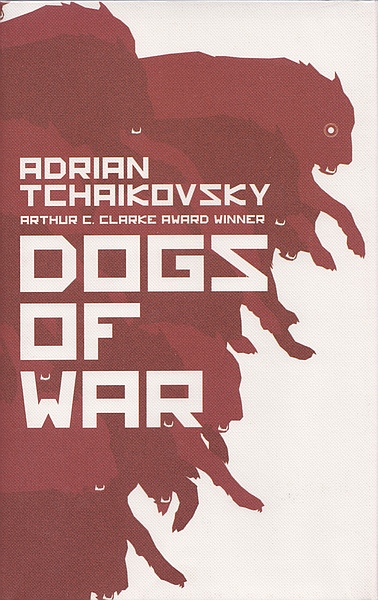
Adrian Tchaikovsky's Dogs of War follows Rex, a genetically engineered "Good Boy" - a hulking bioform supersoldier built for a private military contractor - as he begins to question the nature of his own obedience and personhood after his handler disappears. Dogs of War, Bear Head, and Bee Speaker widen from that first book's battlefield into questions of AI rights, corporate power, and non-human consciousness across a near-future Earth. The trilogy uses its engineered-animal soldiers to interrogate free will and loyalty rather than play them as straightforward action heroes.
- Library of America P. K. Dick Collection
series9 books1962
completed
similar byscience fictionnear future+2 more
- Hardwired
series3 books1986
similar bytensenear futurescience fictioncyberpunkour world+3 more
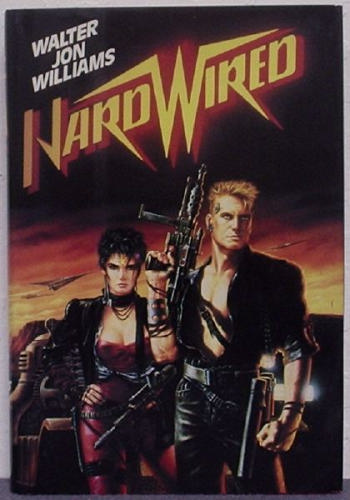
Walter Jon Williams' Hardwired (1986) is an early and influential cyberpunk novel. Voice of the Whirlwind, published three years later, is a loosely connected follow-up set in the same future, sharing its technological and political backdrop with a different cast of characters.
- Shadrach in the Furnace
Robert Silverbergstandalone novel1976
similar bynear futurescience fictionidentityour world+2 more
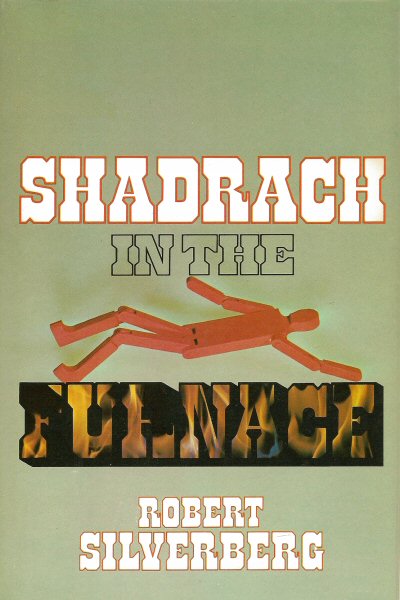
Shadrach in the Furnace is a science fiction novel by American writer Robert Silverberg, first published as a serial in Analog Science Fiction and Fact magazine in the August, September, and October 1976 issues. It was subsequently published by Bobbs Merrill in 1976. The novel was nominated in 1976 for the Nebula Award, and in 1977 for the Hugo Award.
- The Zap Gun
Philip K. Dickstandalone novel1967
similar bynear futurescience fictionour world+3 more
The Zap Gun is a 1967 science fiction novel by American writer Philip K. Dick. It was first published as the two-part serial Project Plowshare in Worlds of Tomorrow in 1965 and 1966, before Pyramid Books issued it in paperback under its present title. The novel originated in a title-first commission devised by Pyramid editor Don Bensen and was written in 1964 during a period of rapid production in Dick's career.
- Friday
Robert A. Heinleinstandalone novel1982
similar bytensenear futurescience fictionidentity+1 more
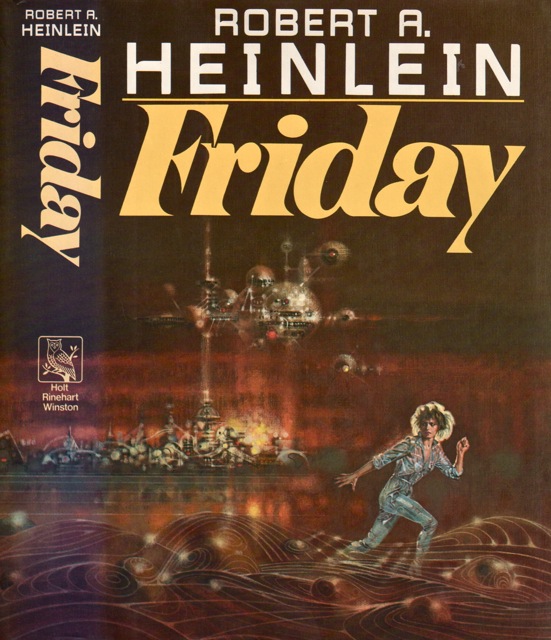
Friday is a 1982 science fiction novel by American writer Robert A. Heinlein. It is the story of a female "artificial person", the eponymous Friday, genetically engineered to be stronger, faster, smarter, and generally better than normal humans. Artificial humans are widely resented, and much of the story deals with Friday's struggle both against prejudice and to conceal her enhanced attributes from other humans. The story is set in a Balkanized 21st century, in which the nations of the North American continent have been split up into a number of smaller states.
- Divergent
series10 books2011
similar bytensenear futureidentityscience fictionbig city
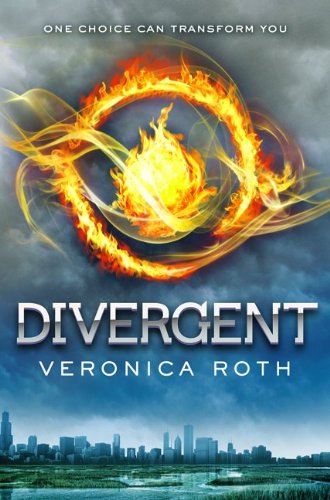
Divergent, also known as The Divergent Series, is a series of young adult dystopian novels by American novelist Veronica Roth set in a post-apocalyptic dystopian Chicago. The trilogy consists of Divergent (2011), Insurgent (2012), and Allegiant (2013). A related book, Four (2014), presents a series of short stories told from the perspective of one of the trilogy's characters, the male love interest Tobias. A later short story, We Can Be Mended (2018), serves as an epilogue five years after the events of the trilogy, again from Tobias/Four's perspective.
- Islands in the Net
Bruce Sterlingstandalone novel1988
similar bytensenear futurescience fictionpolitical intriguecyberpunkour world
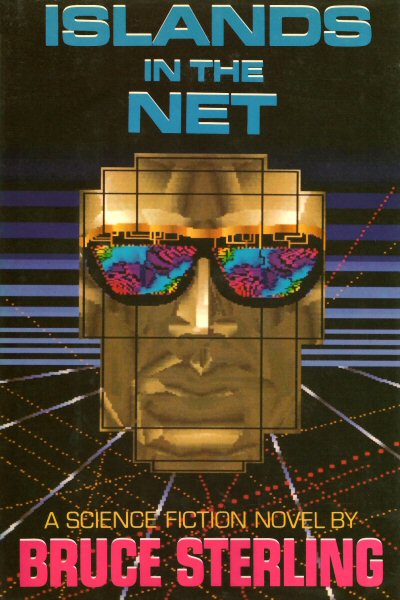
Islands in the Net is a 1988 science fiction novel by American writer Bruce Sterling. It won the John W. Campbell Memorial Award for Best Science Fiction Novel in 1989, and was nominated for both the Hugo and Locus Awards that same year. It offers a view of an early 21st century world, apparently peaceful, with delocalised, networking corporations. The protagonist, swept up in events beyond her control, finds herself in places that are off the net, from a datahaven in Grenada, to a Singapore under terrorist attack, to the poorest and most disaster-struck parts of Africa.
- The Dervish House
Ian McDonaldstandalone novel2010
similar bytensenear futurescience fictionpolitical intriguecyberpunkbig cityartificial intelligence
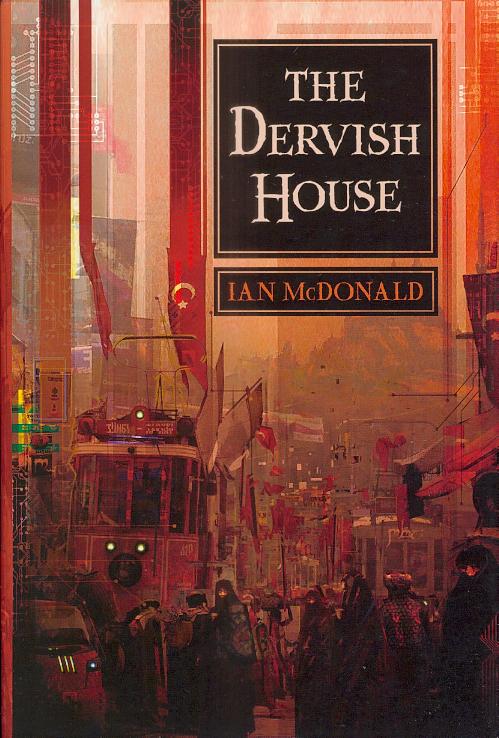
The Dervish House is a 2010 science fiction novel by British author Ian McDonald. The novel was shortlisted for the Arthur C. Clarke Award in 2011, and won the BSFA Award and the John W. Campbell Memorial Award in the same year. It was a nominee for the 2011 Hugo Award for Best Novel. The French translation La maison des derviches won the Planete-SF Blogger's Award in 2012.
- Quantum Night
Robert J. Sawyerstandalone novel2016
similar bytensenear futurescience fictionour worldartificial intelligence+2 more
Quantum Night is a 2016 science-fiction thriller novel written by Canadian novelist Robert J. Sawyer. Set in 2020, the book touches on themes of quantum physics, psychology, current politics and ethics.
- Lock In
series3 books2014
similar bytensenear futurescience fictionbig city+3 more
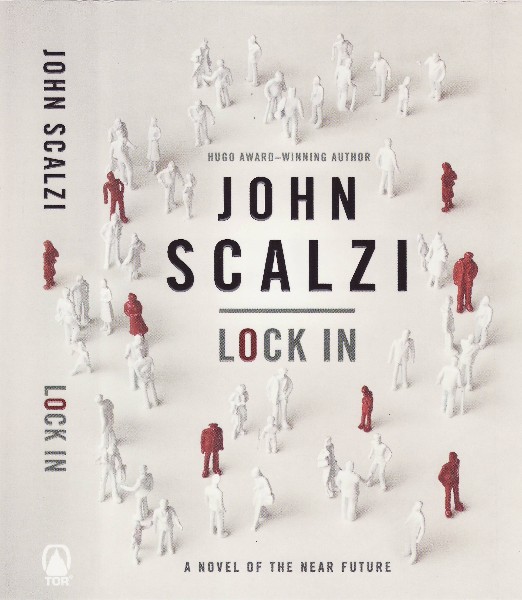
Lock In imagines a near-future pandemic that leaves a fraction of survivors fully conscious but completely paralyzed, able to interact with the world only through robotic surrogates or by borrowing the bodies of rare people whose brains can host another person's consciousness. John Scalzi's series follows a rookie FBI agent investigating crimes that exploit this new class of disability and technology, across the novels Lock In and Head On plus the interstitial oral history Unlocked. It's science-fiction police procedural more than space opera.
- Otherland
series6 books1996
similar bytensenear futurescience fictioncyberpunkour worldartificial intelligence
Otherland is a science fiction tetralogy by American writer Tad Williams, published between 1996 and 2001. The story is set on Earth near the end of the 21st century, probably between 2082 and 2089, in a world where technology has advanced somewhat beyond the present. The most notable advancement is the widespread availability of full-immersion virtual reality installations, which allow people from all walks of life to access an online world, called simply the Net. Tad Williams weaves an intricate plot spanning four thick volumes, and creates a picture of a future society where virtual worlds are fully integrated into everyday life.
- Space Merchants
series2 books1953
completed
similar bynear futurescience fiction+2 more
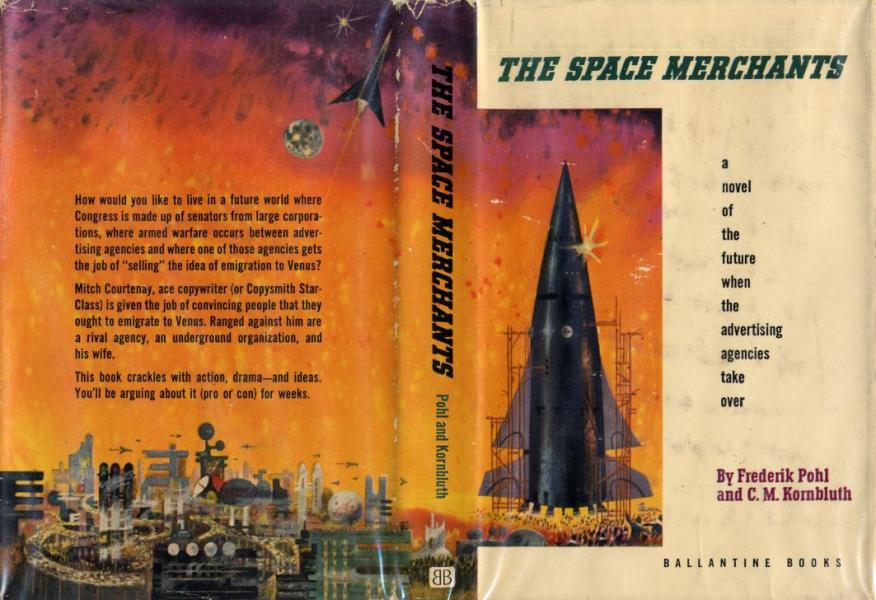
The Space Merchants (1953) is a satirical science fiction novel by Frederik Pohl and C. M. Kornbluth that follows an advertising executive navigating a future where aggressive consumer capitalism has swallowed politics and daily life. The authors reunited three decades later for a direct sequel, The Merchants' War (1984), returning to the same satirical world. Together the two books form a compact bookend pair rather than an ongoing series.
- Eastern Standard Tribe
Cory Doctorowstandalone novel2004
similar bynear futurescience fictionidentitycyberpunkour worldbig city+1 more
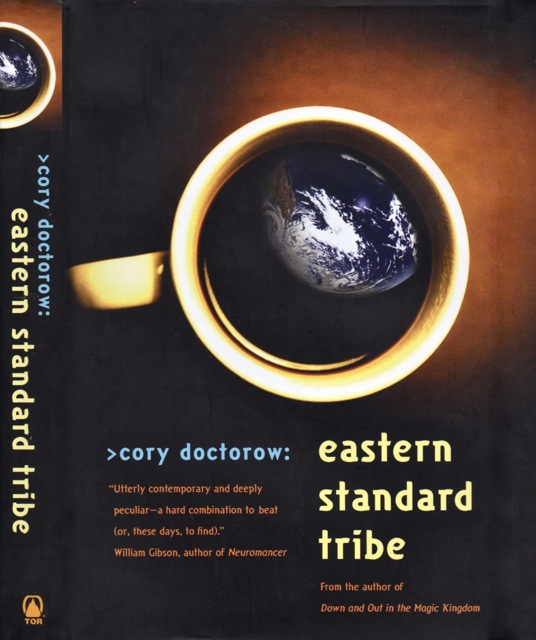
Eastern Standard Tribe is a 2004 science fiction novel by Canadian writer Cory Doctorow. Like Doctorow's first two books, the entire text was released under a Creative Commons license on Doctorow's website, allowing the whole text of the book to be read for free and distributed without the publisher's permission.
- The Company Man
Joe Clifford Fauststandalone novel1988
similar bytensenear futurescience fictionpolitical intriguecyberpunkour world+1 more
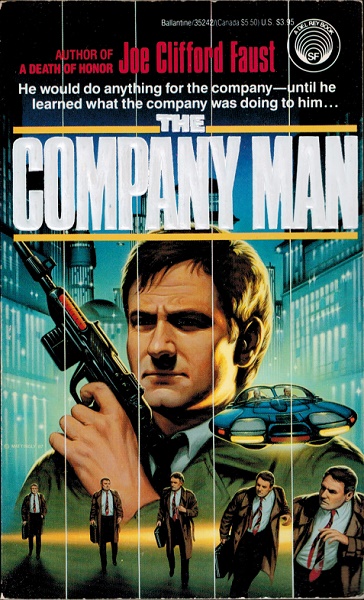
The main character in The Company Man, Andrew Birch, questions his loyalty to Astradyne--the megacorporation replacing governments on Earth--, which had been unfaltering until he realized he has been used as a company pawn in a twisted plot and decided to strike back.
- Bug Jack Barron
Norman Spinradstandalone novel1969
similar bytensenear futurescience fictionpolitical intriguecyberpunk
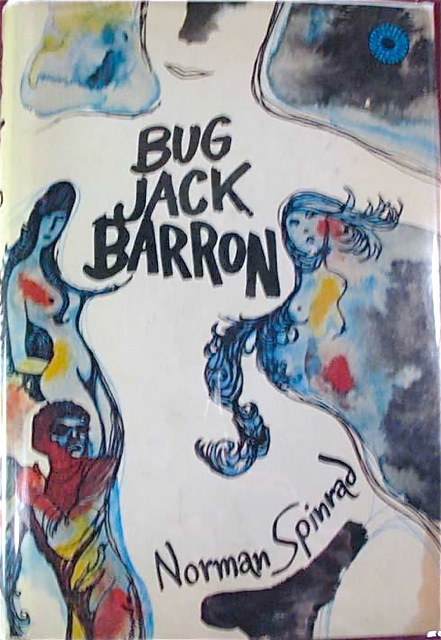
Bug Jack Barron is a 1969 science fiction novel by American writer Norman Spinrad, first serialized in the New Worlds magazine under the editorship of Michael Moorcock. It was nominated for the 1970 Hugo Award. The novel is notable for its lyrical style and unique use of cut-up phrases. In this regard, Spinrad has cited the influence of Beat writers William S. Burroughs, Allen Ginsberg, and Jack Kerouac.
- Foundation Universe
universe123 books1940
Start hereFoundation · Start here
similar byscience fictionrobots+3 more
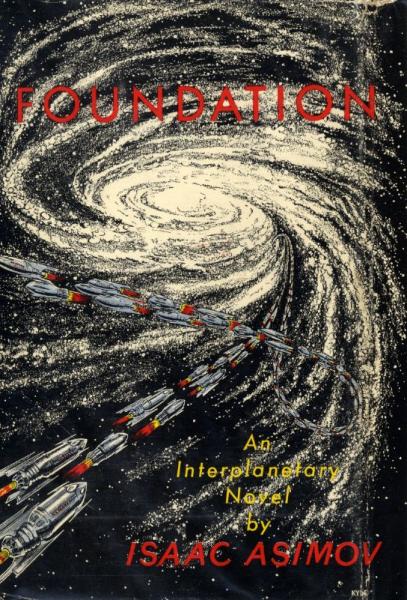
There is a science that reads the future of quadrillions the way an astronomer reads the orbits of stars. It is called psychohistory, and its equations foresee something the ruling Galactic Empire cannot admit: the throne is rotting, and thirty thousand years of barbarism are coming. One man, Hari Seldon, cannot stop the fall. He can only shorten it — by seeding a Foundation of scholars at the rim of the galaxy, a fragile institution built to carry knowledge across the dark and cut the interregnum to a single millennium. This is a universe told in the register of history itself: the long view, the calm of deep time, empires measured in centuries and men measured against them. The spine is Asimov's original trilogy — Foundation, Foundation and Empire, Second Foundation — followed decades later by the sequels Foundation's Edge and Foundation and Earth and the prequels Prelude to Foundation and Forward the Foundation. Late in life Asimov braided this in with his other future histories: the Robot novels of detective Elijah Baley and his humaniform partner R. Daneel Olivaw (The Caves of Steel, The Naked Sun, The Robots of Dawn, Robots and Empire) and the early Galactic Empire novels (Pebble in the Sky and its kin), until one continuous chronicle ran from the first thinking robots to the Second Empire. Other hands extend it — the Second Foundation Trilogy by Gregory Benford, Greg Bear, and David Brin, and shared-world spinoffs such as Robot City — so the corpus sprawls beyond a single author's tidy shelf. What distinguishes it is that the drama is intellectual: crises resolved by insight, nerve, and dialogue rather than fleets and blades, each turn hinging on the hidden logic of the Seldon Plan. Begin where readers have always begun — with Foundation, and the original trilogy in publication order. The rest opens outward from there.
- Greg Mandel
series5 books1993
similar bytensenear futurescience fictionour world+2 more
Greg Mandel is a former special-forces soldier with a psychic 'gland' implant for reading emotions, working as a private investigator in a near-future Britain recovering from an authoritarian climate-crisis government. Peter F. Hamilton's original trilogy - Mindstar Rising, A Quantum Murder, The Nano Flower - follows his cases as ordinary detective work keeps sliding into conspiracies with much bigger stakes; The Suspect Genome revisits an older Mandel decades later. It was Hamilton's first fiction, blending noir detective plotting with hard SF.