More like The Nightmare Room
anchored on:contemporaryhorror
but
- Castle Rock
series16 books1978
similar byhorrorcontemporarynorth americasmall town+2 more
Castle Rock is the fictional Maine town that links a cluster of otherwise separate Stephen King novels and novellas, including The Dead Zone, Cujo, The Dark Half, Needful Things, and Elevation. Rather than telling one continuous story, the books share a setting and occasional recurring figures, such as Sheriff Alan Pangborn, while each follows its own self-contained plot and cast. Any title can be read on its own without needing the others.
- Jerusalem's Lot
series3 books1975
similar byhorrorcontemporarytenseour worldeerienorth americasmall town+1 more
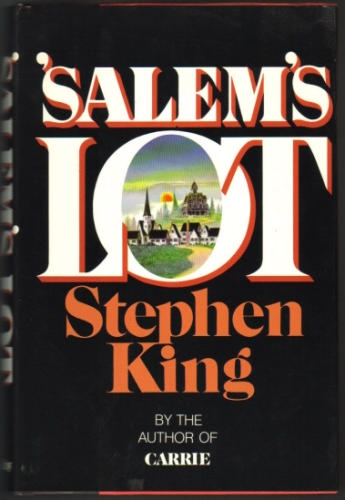
Stephen King's 1975 novel 'Salem's Lot follows writer Ben Mears as he returns to his childhood town of Jerusalem's Lot, Maine, only to discover that its residents are being turned into vampires by a newly arrived stranger. It transplants Gothic vampire horror into a small New England community, tracking that community's collapse under a supernatural siege. It is a single, self-contained novel.
- Carrie
Stephen Kingstandalone novel1974
similar byhorrorcontemporarytensepsychic powerscoming of agenorth americasmall townpsychological horror+1 more
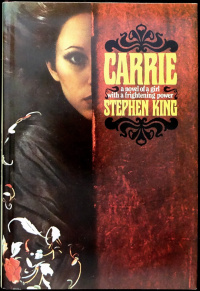
In one way or another, everybody abused Carrie. This sixteen-year-old misfit was forbidden everything that was young and fun by her fanatical mother. She was teased and taunted by her classmates, misunderstood by her teachers, and given up as hopeless by almost everyone. But Carrie had a secret: She possessed terrifying telekinetic powers that could make inanimate objects move, a lighted candle fall, or a door lock. Carrie could make all kinds of startling bizarre, and malevolent things happen. (WorldCat)
- The Shining
series5 books1977
similar byhorrorcontemporarytensepsychic powersnorth america+4 more
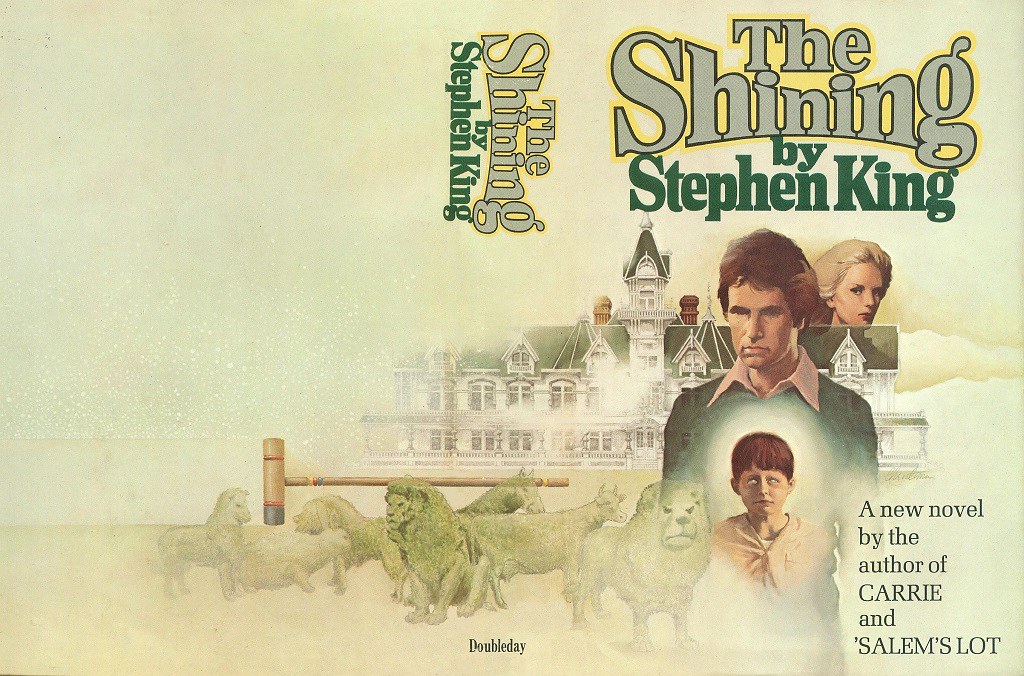
Stephen King's 1977 novel The Shining follows the Torrance family as winter caretakers of the isolated, malevolent Overlook Hotel, where father Jack is gradually consumed by the hotel's influence while his young son Danny's psychic "shining" draws its attention. Doctor Sleep (2013) picks up the story decades later, following Danny as an adult still marked by that childhood ordeal. Together the two form a horror duology spanning nearly forty years of real-world publication.
- Point Horror
series41 books1986
similar byhorrortensecontemporaryour worldyoung adult+3 more
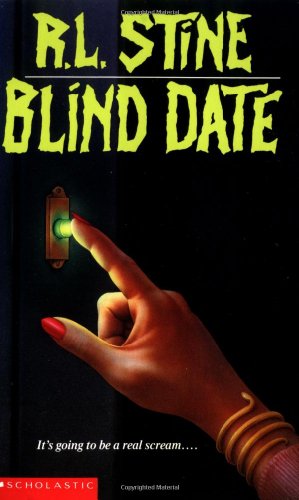
Point Horror is a series of young adult horror fiction books. The series was most popular among teenagers.
- Goosebumps
universe234 books1992
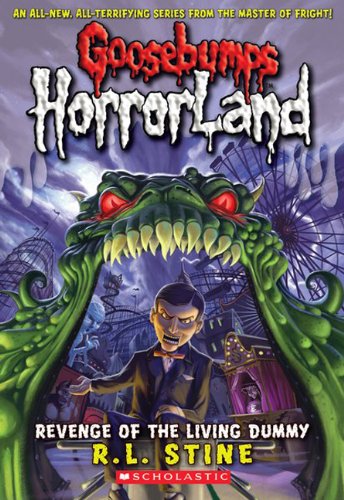
Start hereRevenge of the Living Dummy · The connected HorrorLand story
similar byhorrorcontemporaryour worldmiddle grade+3 more
Reader beware — you're in for a scare. That promise has been kept, book after book, since a boy first knocked on the door of the Dead House and found the whole neighborhood grinning too widely. Goosebumps is R. L. Stine's carnival of small-town dread, where the horror is always sized just right for a kid: a haunted ventriloquist dummy, a camera that photographs disasters before they happen, a mask that won't come off, a basement that hums. Each book is its own self-contained nightmare, narrated by an ordinary boy or girl whose ordinary street has quietly turned against them — and every one snaps shut on a twist that pulls the rug out one last time before the lights come up. The shelf is deep. The original run of paperbacks gave way to Series 2000, then the branching, choose-your-doom gamebooks of Give Yourself Goosebumps, the story-collections Tales to Give You Goosebumps, and villain showcases in Most Wanted. HorrorLand strung the standalones into a single running arc set inside a monstrous theme park, and SlappyWorld and House of Shivers keep the lights flickering for new readers, hosted by Slappy, the wooden fiend who considers himself the star of the whole show. The tone is mock-scary and knowing — spooky enough to thrill, silly enough to laugh off before bed, always short and always cliffhung. No reading order binds them; open any cover. Newcomers usually meet the dummy first, in Night of the Living Dummy, or start where it all began, in Welcome to Dead House.
- Southern Reach Trilogy
series4 books2014
similar byhorrorcontemporaryour worldeeriemadness+4 more
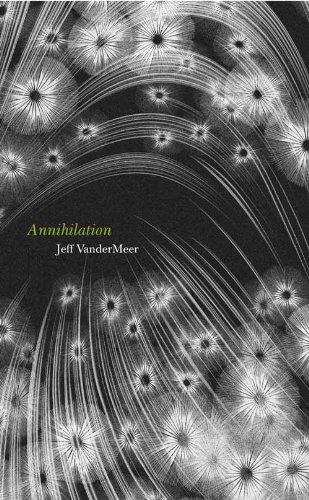
The Southern Reach Series is a series of novels by the American author Jeff VanderMeer first published in 2014—Annihilation, Authority, Acceptance, and Absolution. The series takes its name from the secret agency that is central to the plot. In 2013, Paramount Pictures bought the movie rights for the series, and a film adaptation of Annihilation was made with Alex Garland as writer-director. The film was released in 2018. The most recent book in the series, Absolution, was released on 22 October 2024.
- Rosemary Reilly
series2 books1967
completed
similar byhorrortensenorth america+3 more
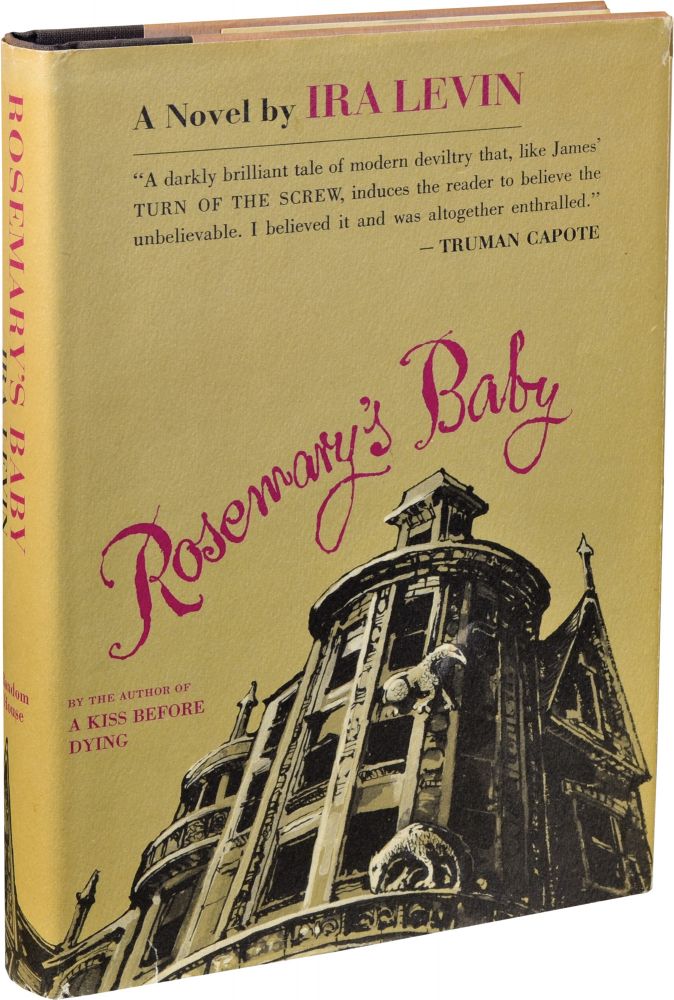
Rosemary's Baby follows a young wife in a Gothic Manhattan apartment building who grows increasingly convinced that her elderly neighbors, and even her own husband, are part of a conspiracy surrounding her pregnancy. Ira Levin returned to the character thirty years later in the 1997 sequel Son of Rosemary. Together the two novels form a short, self-contained horror series about faith, control, and motherhood.
- The Fury
series4 books1976
similar bycontemporarytensepsychic powers+3 more
John Farris's The Fury centers on a teenage girl and boy with escalating psychic and telekinetic powers who become targets of a covert government program trying to weaponize them. The 1976 novel, adapted into Brian De Palma's 1978 film, gave rise to a string of later sequels following the same family's psychic bloodline across decades. Farris writes it as paranoid conspiracy thriller as much as horror, with the powers themselves treated as a violent, destabilizing force.
- Bone Chillers
series23 books1994
similar byhorrorcontemporaryour worldmiddle grade+4 more
Bone Chillers is a children's horror series created by Betsy Haynes, similar in spirit and format to Goosebumps, though later volumes in the 23-book run (1994-1998) were written by other credited authors. It also spun off into a television adaptation on which Haynes appeared to encourage young viewers to read, write, and be creative.
- Conjure Wife
Fritz Leiberstandalone novel1943
similar byhorrortenseour worldeerienorth americapsychological horror+2 more
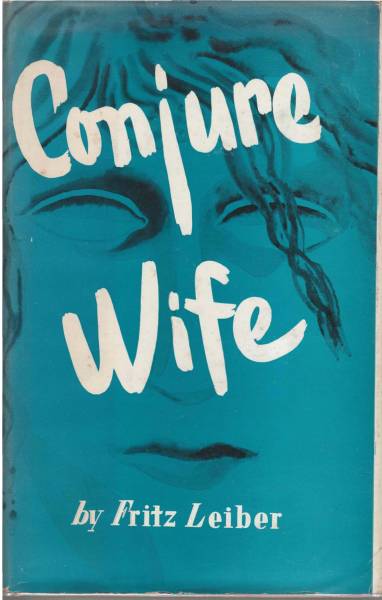
From the front cover of the Lion first paperback: "Potions in the house... evil in the air... and a witch in his bed." From the back cover of the Lion first paperback: ""Conjure Wife... is easily the most frightening (and necessarily) the most thoroughly convincing of all modern horror stories. Its premise is that witchcraft still flourishes, or at any rate survives, an open secret among women, a closed book to men. Under the rational overlay of 20th-century civilization this sickly growth, uncultivated, unsuspected, still manages to propagate itself. Leiber develops this theme with the utmost dexterity, piling up alternate layers of the mundane and outre, until at the story's real climax, the shocker at the end of chapter 14, I am not ashamed to say that I jumped an inch out of my seat. From that point onward the story anticlimax so skillfully managed that I am not really certain I touched the slipcover again until after the last page. Leiber has never written anything better... which perhaps is all that needed to be said." Damon Knight, Science Fiction Adventures"
- Strangers
Dean R. Koontzstandalone novel1986
similar byhorrorcontemporarytenseour worldeerieidentityamnesia+1 more
Strangers is a horror novel written by Dean Koontz, released in 1986.
- Dead Lines
Greg Bearstandalone novel2004
similar byhorrorcontemporaryour worldeeriemadnessnorth america+1 more
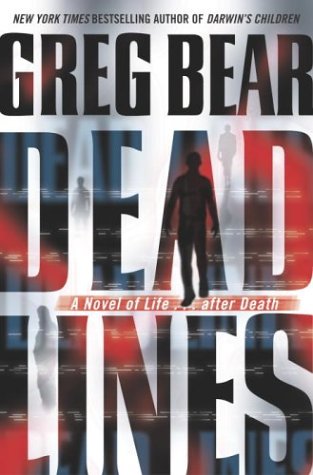
From the flaps of the Ballantine first edition: "For the last two years, Peter Russell has mourned the death of one of his twin daughters - who was just ten when she was murdered. Recent news of his best friend's fatal heart attack has now come as another devastating blow. Divorced, despondent, and going nowhere in his career, Peter fears his life is circling the drain. Then Trans comes along. The brainchild of an upstart telecom company, Trans is (as its name suggests) a transcendent marvel, a sleek, handheld interpersonal communication device capable of flawless operation anywhere in the world, at any time. "A cell phone, but not" - transmitting with crystal clarity across a newly discovered, never-utilized bandwidth... and poised to spark a new-technology revolution. When its creators offer Peter a position on their team, it should be a golden opportunity for him. If only he wasn't seemingly going mad. Everywhere Peter turns, inexplicable apparitions are walking before him or reaching out in torment. After a chilling encounter with his own lost child he begins to grasp the terrifying truth: Trans is a Pandora's box that has tapped into a frequency not of this world... but of the next. And now, via this open channel to oblivion, the dead have gained access to the living. For Peter, and for humankind, a long shadowy night of the soul has descended, bringing with it the stuff of a horrifying nightmare from which they may never awaken."
- Coraline
series2 books2002
similar byhorrorcontemporarytenseeeriemiddle gradecoming of agenorth america+1 more
- The House on Moon Creek Avenue
E. Reyesstandalone novel2020
similar byhorrorcontemporarytenseour worldeeriemadnessnorth americaparanormal+1 more
● "Cindy is a twenty-one-year-old single mother, retail worker, and college student. She inherits her grandmother's home on Moon Creek Avenue after she passes away. At first, the home is comfortable, nostalgic of Cindy's childhood at nana's, and her daughter enjoys the home, too. But soon, ghosts randomly appear day and night, doors open and close, a streak of bad luck begins, Cindy and her daughter have unsettling nightmares, and Cindy's mental state is pushed to the edge. When Cindy's video recording of paranormal activity goes viral on social media, she gets the attention of famous ghost hunters. Without anywhere else to turn, Cindy accepts their help." ― paraphrased from this book's product page on Amazon.com as of 2024-09-26.
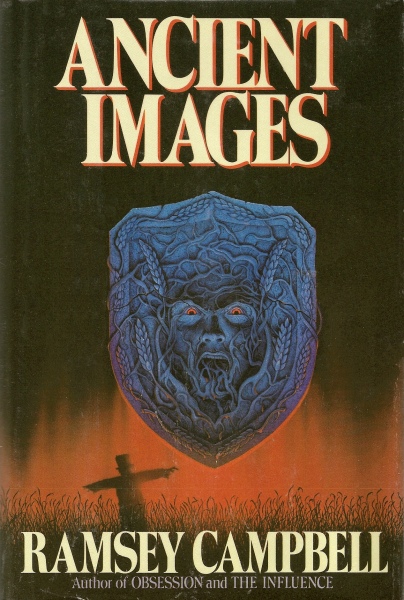
- Ancient Images
Ramsey Campbellstandalone novel1989
similar byhorrorcontemporarytenseour worldeerienorth america+1 more
A lost horror film holds the key to terrifying secrets. The legends have persisted for decades of a lost horror film starring Boris Karloff and Bela Lugosi that was never released. Rumor has it that, for reasons long forgotten, powerful forces suppressed the film and burned all known prints. Nobody now living has seen the finished film. But that might no longer be true… Film researcher Sandy Allan is invited to a screening of a newly-discovered sole-surviving print, but then the film disappears and the real horror begins. Sandy’s search for the film leads her to Redfield, a rural community known its rich soil, fertilized by blood from an ancient massacre. But Redfield guards its secrets closely, with good reason. During every step of her search, Sandy is watched, shadowed by strange figures. Is it paranoia, or is someone—or something—determined to keep the lost film and the secrets it reveals buried forever?
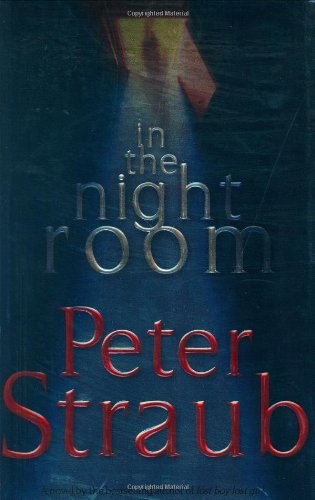
- In the Night Room
Peter Straubstandalone novel2004
similar byhorrorcontemporarytenseour worldidentitymadnessnorth americapsychological horror+1 more
In the Night Room is a 2004 horror-thriller novel by American author Peter Straub, a sequel to his 2003 book Lost Boy, Lost Girl. The work was first published in hardback on October 26, 2004, through Random House and it won the 2004 Bram Stoker Award for Novel. Straub encountered some difficulties while writing In the Night Room and had written several different passages for the work before growing bored with each version before writing it using the same technique he used for its predecessor in which he "reached down inside the book and turned it inside out."
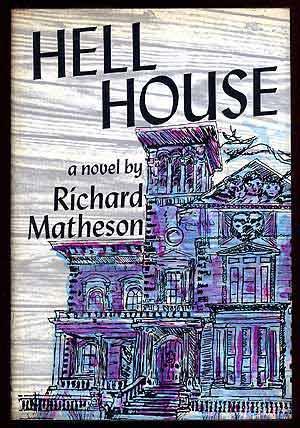
- Hell House
Richard Mathesonstandalone novel1971
similar byhorrorcontemporarytenseeeriemadnessnorth america+1 more
A dying millionaire wants proof, once and for all, of what happens after death, and hires physicist-turned-parapsychologist Dr. Lionel Barrett to spend a week investigating the Belasco House in Maine -- a mansion so thoroughly associated with atrocity that it's known simply as Hell House, where every previous investigation has ended in death or madness. Barrett brings his wife Edith along with two mediums, the spiritualist Florence Tanner and Benjamin Franklin Fischer, survivor of an earlier disastrous visit, whose scientific skepticism and spiritualist convictions clash from the first night inside. Richard Matheson's haunted-house novel, later filmed as The Legend of Hell House.
- Dead Ringers
Christopher Goldenstandalone novel2015
similar byhorrorcontemporarytenseour worldeerieidentitynorth americapsychological horror+1 more
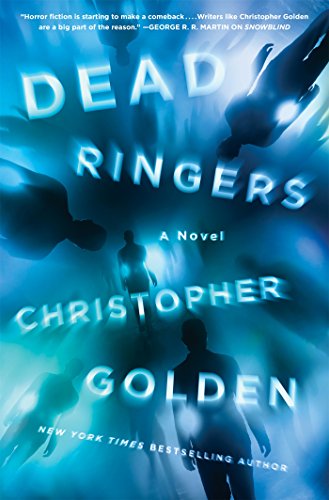
"When Tess Devlin runs into her ex-husband Nick on a Boston sidewalk, she's furious at him for pretending he doesn't know her. She calls his cell to have it out with him, only to discover that he's in New Hampshire with his current girlfriend. But if Nick's in New Hampshire...who did she encounter on the street? Frank Lindbergh's dreams have fallen apart. He wanted to get out of the grim neighborhood where he'd grown up and out of the shadow of his alcoholic father. Now both his parents are dead and he's back in his childhood home, drinking too much himself. As he sets in motion his plans for the future, he's assaulted by an intruder in his living room...an intruder who could be his twin. In an elegant hotel, Tess will find mystery and terror in her own reflection. Outside a famed mansion on Beacon Hill, people are infected with a diabolical malice...while on the streets, an eyeless man, dressed in rags, searches for a woman who wears Tess's face"--
- Fear
L. Ron Hubbardstandalone novel1951
similar byhorrorcontemporarytenseour worldeeriemadnesspsychological horror
Fear is a psychological thriller-horror novella by American writer L. Ron Hubbard, which first appeared in the magazine Unknown Fantasy Fiction in July 1940.