More like The Printer's Devil
but
- Dracula
universe144 books1897
Start hereDracula · Start here
similar by+1 more
"Come freely. Go safely. And leave something of the happiness you bring" — so the Count greets his guest at the threshold of the Carpathians, and the great door shuts behind. Bram Stoker's Dracula (1897) is the wellspring of the modern vampire: the account of a centuries-old Transylvanian nobleman who quits his crumbling castle for the crowded lodging-houses of London, and the handful of ordinary people — a young solicitor, a doctor of the mad, a professor of stranger learning — who must piece together what he is before he makes the whole city his fold. It is told wholly in fragments: journal entries, letters, telegrams, ships' logs, phonograph cylinders, each hand recording only its own sliver of the dark. Around that single novel a whole crypt of continuations has grown, raised by many writers across a century. Fred Saberhagen's Dracula Sequence hands the Count the microphone, retelling the old events from his own wry, aggrieved lips and following him into later intrigues. Robert Lory's brisk 1970s Dracula Horror Series revives him as a reluctant weapon turned against fouler things; Peter Tremayne's trilogy reaches back along his bloodline; and further sequels, a Quincey Morris spin-off, and Dracula's Children carry the shadow onward. This is a loose shared world built upon a public-domain figure, not one governed continuity — each author remakes him as villain, antihero, or sympathetic narrator. Begin, always, with Stoker's original; the letters and the mounting dread stand entirely on their own. From there follow whichever door tempts you — Saberhagen's The Dracula Tape for the monster's own confession, Lory or Tremayne for tales that never glance back at the Borgo Pass again.
- Kairos
series11 books1962
completed
similar by+2 more
The Time Quintet is a science fantasy series of five young adult novels written by American author Madeleine L'Engle and made up of A Wrinkle in Time (1962), A Wind in the Door (1973), A Swiftly Tilting Planet (1978), Many Waters (1986), and An Acceptable Time (1989).
- All Souls
series5 books2011
similar bycontemporaryeurope+3 more
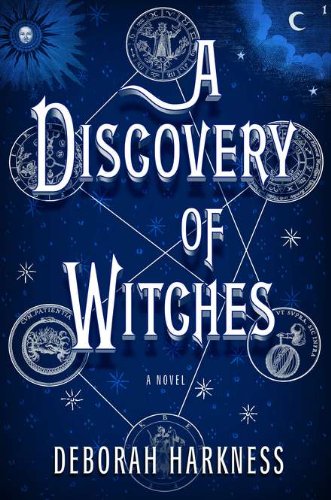
A Discovery of Witches is a 2011 historical-fantasy novel and the debut novel by American scholar Deborah Harkness. It follows Diana Bishop, a history of science professor at Yale University, as she embraces her magical blood after finding a long-thought-lost manuscript and engages in a forbidden romance with a charming vampire, Matthew Clairmont.
- Mythago Wood
series7 books1984
completed
similar bycontemporarybritish isles+1 more
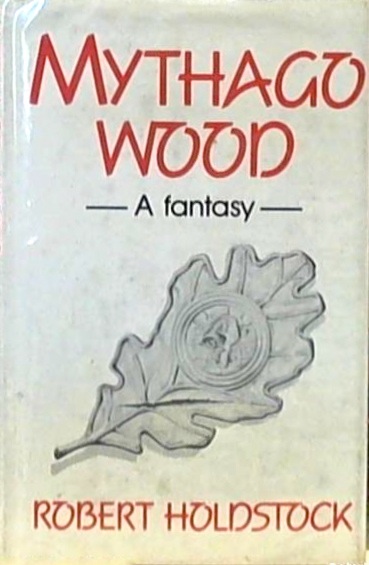
Robert Holdstock's Mythago Wood is set around Ryhope Wood, a small patch of ancient British woodland that is somehow far larger on the inside, generating 'mythagos' -- physical embodiments of myth and legend drawn from visitors' own collective unconscious. The first novel follows Stephen Huxley investigating his family's obsession with the wood after his father's death; Holdstock continued the cycle across further novels and stories exploring different characters and eras. It blends fantasy with psychology and British folklore rather than a conventional quest structure.
- The Blue Ant Trilogy
series3 books2003
similar bymysteriouscontemporary+3 more
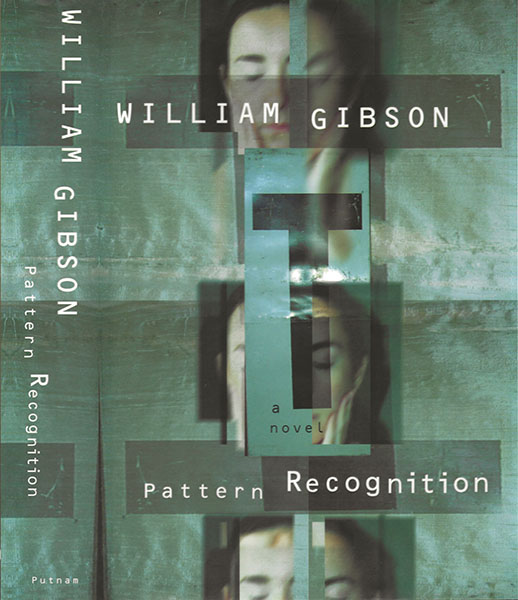
Hubertus Bigend is a fictional character appearing in the third trilogy of novels of science fiction and literary author William Gibson. Bigend is the antihero of Gibson's Pattern Recognition (2003), Spook Country (2007) and Zero History (2010). In an interview Gibson says "I've always had a sense of Bigend as someone who presents himself as though he knows what's going on, but who in fact doesn't. It's just my sense of the subtext of the character: he's bullshitting himself, at the same time as he's bullshitting all of us."
- Rivers of London
series32 books2011
similar bymysteriouscontemporarybritish isles+1 more
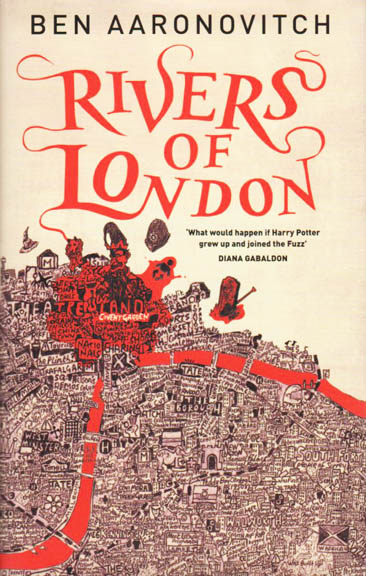
The Rivers of London series is a series of urban fantasy novels by English author Ben Aaronovitch, and comics/graphic novels by Aaronovitch and Andrew Cartmel, illustrated by Lee Sullivan.
- American Gods
series10 books1999
similar bycontemporaryour world+1 more
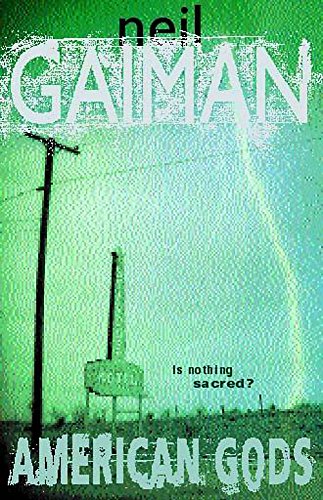
Neil Gaiman's American Gods (2001) follows Shadow Moon, an ex-convict who takes a job as bodyguard to a mysterious drifter who is secretly the Norse god Odin, and is drawn into a brewing conflict between the old immigrant gods of myth and the new gods of media, technology, and modern American life. Gaiman's 2005 novel Anansi Boys is set in the same mythological world and shares the trickster god Mr. Nancy, but follows a different protagonist and story, making it a loose companion rather than a direct sequel.
- Chocky
series2 books1968
similar bymysteriouscontemporary+2 more
Chocky (1968) is John Wyndham's science fiction novel about an eleven-year-old boy, Matthew, whose parents grow alarmed by his conversations with an unseen presence that feeds him unsettling insights into mathematics and human progress, building toward the reveal of what, or who, Chocky really is. Mark Daniel's Chocky's Challenge (1986), published after Wyndham's death, is an authorized continuation that carries the story forward.
- Miss Peregrine's Peculiar Children
series19 books2011
similar by+2 more
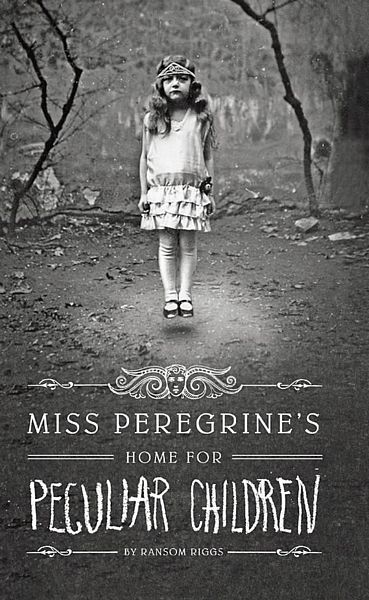
Ransom Riggs' Miss Peregrine's Peculiar Children series follows Jacob Portman, who discovers that his late grandfather's tall tales were true after he travels to a Welsh island and finds an orphanage of 'peculiar' children with extraordinary gifts, kept safe in a time loop by the shapeshifting Miss Peregrine, one of the bird-formed Ymbrynes. He and the children must evade hollowgast and their wight handlers, monsters born of a catastrophic experiment. The first trilogy follows Jacob's introduction to peculiardom and its dangers; a second trilogy shifts the action to the United States. The books are illustrated throughout with vintage found photographs.
- Foundation Universe
universe123 books1940
Start hereFoundation · Start here
similar by+2 more
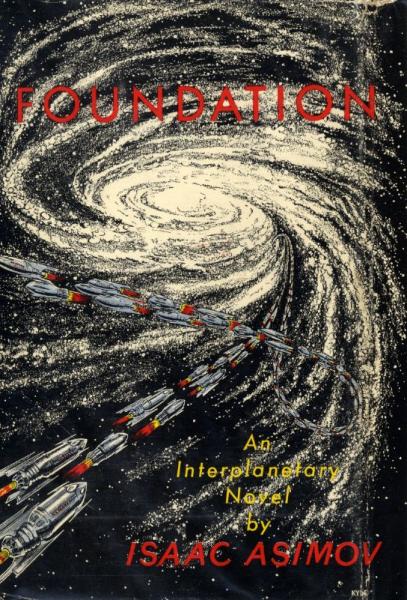
There is a science that reads the future of quadrillions the way an astronomer reads the orbits of stars. It is called psychohistory, and its equations foresee something the ruling Galactic Empire cannot admit: the throne is rotting, and thirty thousand years of barbarism are coming. One man, Hari Seldon, cannot stop the fall. He can only shorten it — by seeding a Foundation of scholars at the rim of the galaxy, a fragile institution built to carry knowledge across the dark and cut the interregnum to a single millennium. This is a universe told in the register of history itself: the long view, the calm of deep time, empires measured in centuries and men measured against them. The spine is Asimov's original trilogy — Foundation, Foundation and Empire, Second Foundation — followed decades later by the sequels Foundation's Edge and Foundation and Earth and the prequels Prelude to Foundation and Forward the Foundation. Late in life Asimov braided this in with his other future histories: the Robot novels of detective Elijah Baley and his humaniform partner R. Daneel Olivaw (The Caves of Steel, The Naked Sun, The Robots of Dawn, Robots and Empire) and the early Galactic Empire novels (Pebble in the Sky and its kin), until one continuous chronicle ran from the first thinking robots to the Second Empire. Other hands extend it — the Second Foundation Trilogy by Gregory Benford, Greg Bear, and David Brin, and shared-world spinoffs such as Robot City — so the corpus sprawls beyond a single author's tidy shelf. What distinguishes it is that the drama is intellectual: crises resolved by insight, nerve, and dialogue rather than fleets and blades, each turn hinging on the hidden logic of the Seldon Plan. Begin where readers have always begun — with Foundation, and the original trilogy in publication order. The rest opens outward from there.
- Robert Langdon
series6 books2000
similar bymysteriouscontemporaryeurope
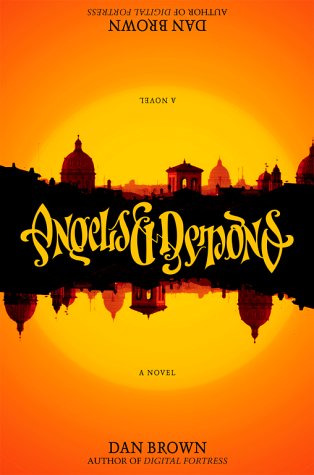
The Robert Langdon novel series is named after Robert Langdon, the protagonist of the novels by American author Dan Brown. Langdon is portrayed as a Harvard University professor of religious iconology and symbology, a fictional field related to the study of historic symbols, which is not methodologically connected to the actual discipline of semiotics. Brown's novels that feature the lead character also include historical themes and Christianity as motifs, and as a result have generated controversy. Brown states on his website that his novels are not anti-Christian, and that he is on a "constant spiritual journey" himself.
- The Dark Is Rising
series5 books1965
similar bycontemporarybritish isles+1 more
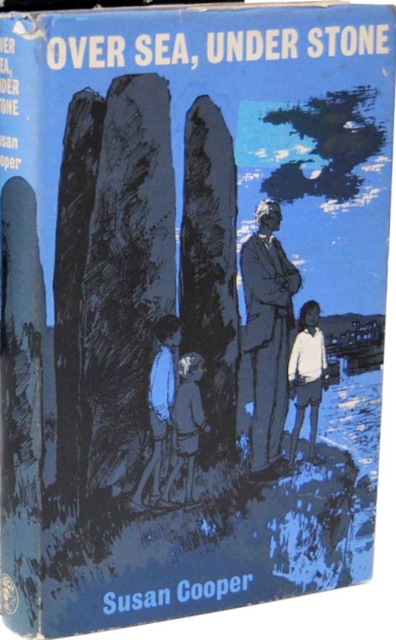
The Dark Is Rising Sequence is a series of five contemporary fantasy novels for older children and young adults that were written by the British author Susan Cooper and published from 1965 to 1977. The first book in the series, Over Sea, Under Stone, was originally conceived as a stand-alone novel, and the sequence gets its name from the second novel in the series, The Dark Is Rising. The Dark Is Rising Sequence is used as an overarching title in several omnibus, boxed-set, and coordinated editions; but the title of The Dark Is Rising is also used for the whole series.
- Fionavar Universe
series5 books1984
similar bycontemporary+1 more
Ysabel is a 2007 standalone contemporary fantasy novel by Guy Gavriel Kay, following teenager Ned Marriner as he stumbles into a centuries-old rivalry playing out around the cathedral of Aix-en-Provence. It marked Kay's turn toward urban fantasy and briefly brings back two adult characters from his earlier Fionavar Tapestry trilogy, though it is not itself part of that trilogy and can be read on its own.
- His Dark Materials Universe
universe13 books1995
Start hereHis Dark Materials · Start here
similar by+1 more
In a world like ours and unlike it, every human soul walks outside the body in the shape of an animal — a daemon, who speaks, who cannot be lied to, and who settles into one fixed form only when childhood ends. This is the country of His Dark Materials: a company of parallel worlds across which an invisible dust of consciousness drifts down upon the waking mind; where a Church that calls itself the Magisterium would sooner sever a child's soul than let that Dust be understood; and where a golden instrument, the alethiometer, answers true questions for anyone with the patience to read it. Philip Pullman's design stands in two trilogies and a scatter of shorter tales. His Dark Materials — Northern Lights (published in America as The Golden Compass), The Subtle Knife, and The Amber Spyglass — carries Lyra Belacqua from the rooftops of a shadow Oxford across the borders between worlds. The Book of Dust returns to that same territory: La Belle Sauvage looks back to Lyra as an infant carried through a great flood, while The Secret Commonwealth follows her grown and less certain into adulthood, with a concluding volume closing the arc. Around them sit slim companion books — Lyra's Oxford, Once Upon a Time in the North, Serpentine — and Nicholas Wright's stage adaptation, made with Pullman's blessing. The register is grave and luminous at once, its title lifted from Milton and its quarrel drawn from Blake: a story that takes the side of curiosity, love, and the physical world against any authority that would forbid them. It reads as adventure — armoured bears, aeronauts, knife-cut windows between skies — yet reasons like philosophy. Begin with Northern Lights / The Golden Compass and read the first trilogy through before turning to The Book of Dust, which deepens everything the first has already made you feel.
- The Copernicus Legacy
series6 books2014
similar bycontemporary+2 more
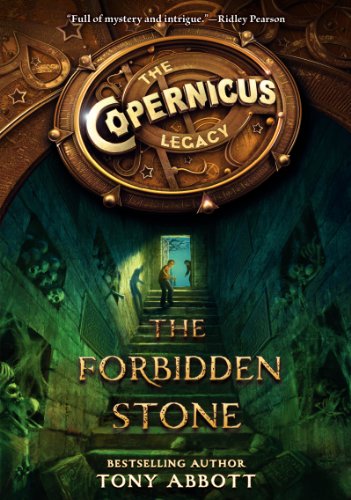
The Copernicus Legacy is a book series written by Tony Abbott. It is about the adventures of Wade Kaplan, Darrell Kaplan, Lily, Becca Moore, Roald Kaplan, and Sara Kaplan, as they try to destroy a time machine made by Ptolemy but discovered and used by Nicolaus Copernicus, from the dangerous Teutonic Order of Ancient Prussia. It currently has four books in the main series, but two are in a series diverted from The Copernicus Legacy called Copernicus Archives. While a work of fiction, it does incorporate some facts about Copernicus's history.
- Nursery Crimes
series2 books2005
similar bycontemporary+3 more
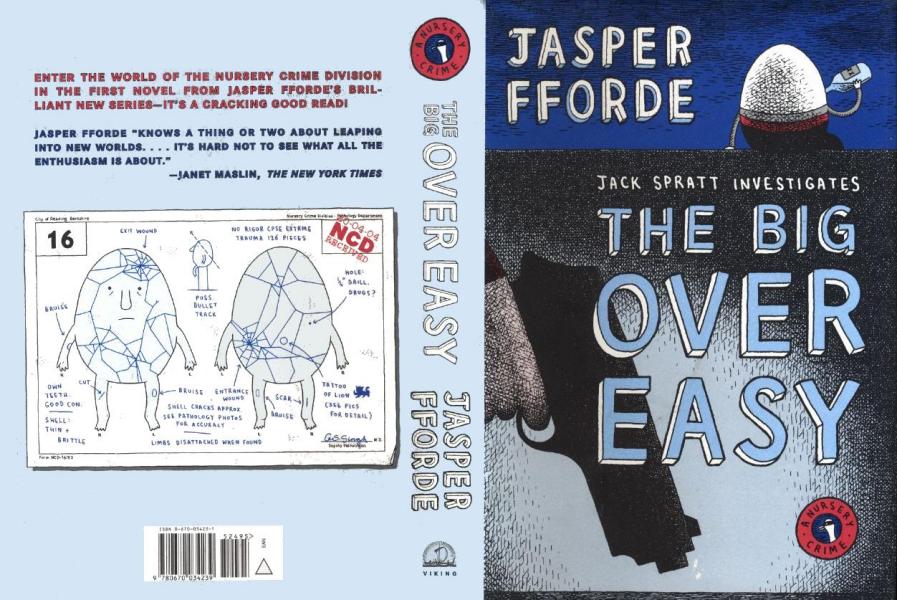
In an alternate Reading, England, where nursery-rhyme and fairy-tale characters live as ordinary if eccentric citizens, Detective Inspector Jack Spratt of the Nursery Crime Division investigates cases that keep colliding with their source material. The Big Over Easy turns Humpty Dumpty's fall into a murder investigation; The Fourth Bear follows with the Gingerbread Man as a serial killer. Jasper Fforde plays the premise for satire and wordplay as much as plot, in the same absurdist vein as his Thursday Next novels.
- Lewis Barnavelt
series12 books1973
similar bycontemporary+1 more
Lewis Barnavelt is a lonely orphan who moves in with his uncle Jonathan, an amateur wizard, in a rambling old house that turns out to hide a doomsday clock built into its walls by a previous, malevolent owner. John Bellairs introduced the character in The House with a Clock in Its Walls (1973), illustrated by Edward Gorey, and after Bellairs's death Brad Strickland continued the series from his notes and outlines for most of its later volumes. It blends gothic horror atmosphere with a gentler, more whimsical strain of children's fantasy.
- Time Travelers Never Die
series2 books1996
similar bycontemporaryour world+1 more
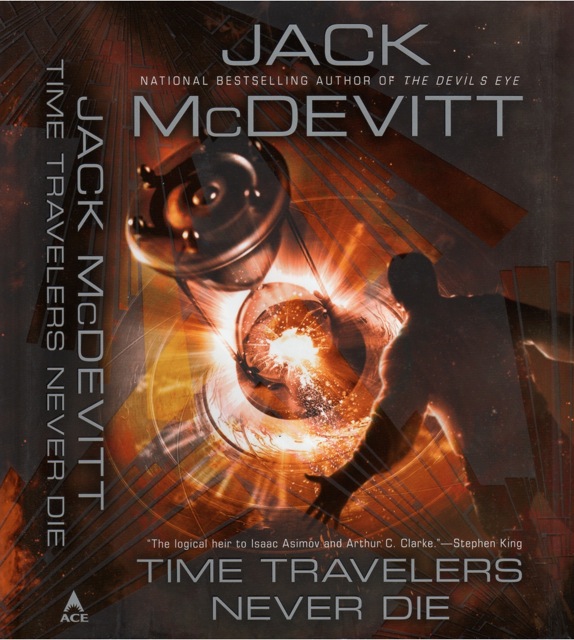
Time Travelers Never Die started life as a Jack McDevitt novella in the mid-1990s (Hugo- and Nebula-nominated) before he expanded it into a full novel over a decade later; the novella and novel are two forms of the same story rather than a sequel. It follows a small circle of people who gain access to working time travel and use it to step into the past, in McDevitt's characteristic register of curious, history-minded science fiction.
- Otherworld (Kelley Armstrong)
series100 books1996
similar bycontemporaryour world
Women of the Otherworld is Kelley Armstrong's long-running urban fantasy series about werewolves, witches, sorcerers, and other supernatural beings trying to pass as ordinary people in the contemporary world, told across thirteen novels plus assorted novellas published between 2001 and 2012. Each book tends to follow a different member of this hidden community while slowly building a shared, continuing world.
- Magids
series2 books1997
completed
similar bymysteriouscontemporary+1 more
Deep Secret follows Rupert Venables, a junior Magid — one of a hidden order of magical agents who quietly steer worlds toward or away from magic — tasked with finding Earth's replacement senior Magid at, of all places, a science-fiction convention, while also trying to restore an assassinated emperor's rightful heir in another world entirely. Diana Wynne Jones's Magids series continues with The Merlin Conspiracy, following a different young magic-user into the same multiverse of worlds under the Magids' watch.
- Twilight Zone
universe40 books1960
Start hereStories from the Twilight Zone · Start here
similar byour world+2 more
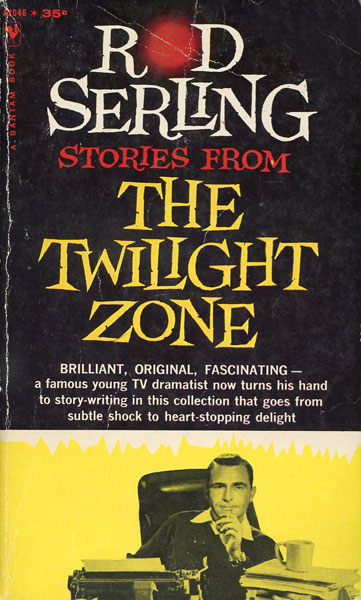
Picture, if you will, an ordinary person on an ordinary afternoon: a tired salesman, a frightened child, a man who wants only to be left alone. Somewhere between the streetlight and the front door, the rules quietly change. This is the Twilight Zone — not a place on any map but a middle ground between light and shadow, science and superstition, the pit of our fears and the summit of our knowledge. There is no continuing saga here, no cast to follow across the years. There is only the door, and the parable waiting on the far side of it. What the shelf holds is Rod Serling's anthology given the permanence of print. Serling turned his own teleplays into prose, the collections that open with Stories from the Twilight Zone, and the scripts survive alongside them — his and Richard Matheson's, the two hands that set the show's pulse. Around that core gather the story-collections of Walter B. Gibson, the volumes of new tales assembled by Carol Serling, standalone novels, and paired reissues: dozens of self-contained pieces, many writers under one banner. Read one or read forty. Each closes its own circle. The machinery is always the same and never predictable — a reasonable premise, a moral squeeze, a final turn that lands like a tap on the shoulder, sometimes cruel, sometimes merciful, always earned. Beneath the twist runs Serling's true subject: ordinary conscience under strain — prejudice, vanity, loneliness, the wish to go back. Begin where he began, with his own Stories from the Twilight Zone, then follow Matheson. There is no order to keep. You unlock this door with the key of imagination.