More like The Risen
but
- Narnia
series26 books1950
part of Narnia Universe
similar byfantasyadventuroussecondary world+1 more
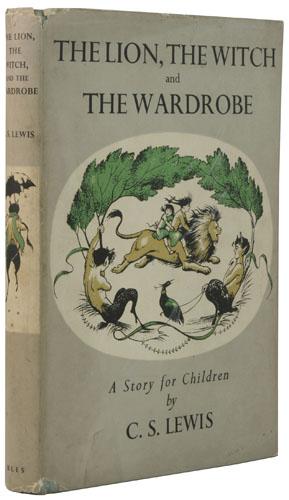
The Chronicles of Narnia is a series of seven portal fantasy novels by British author C. S. Lewis. Illustrated by Pauline Baynes and originally published between 1950 and 1956, the series is set in the fictional realm of Narnia, a fantasy world of magic, mythical beasts, and talking animals. It narrates the adventures of various children who play central roles in the unfolding history of the Narnian world. Except in The Horse and His Boy, the protagonists are all children from the real world who are magically transported to Narnia, where they are sometimes called upon by the lion Aslan to protect Narnia from evil. The books span the entire history of Narnia, from its creation in The Magician's Nephew to its eventual destruction in The Last Battle.
- His Dark Materials Universe
universe13 books1995
Start hereHis Dark Materials · Start here
similar byfantasyadventurous+2 more
In a world like ours and unlike it, every human soul walks outside the body in the shape of an animal — a daemon, who speaks, who cannot be lied to, and who settles into one fixed form only when childhood ends. This is the country of His Dark Materials: a company of parallel worlds across which an invisible dust of consciousness drifts down upon the waking mind; where a Church that calls itself the Magisterium would sooner sever a child's soul than let that Dust be understood; and where a golden instrument, the alethiometer, answers true questions for anyone with the patience to read it. Philip Pullman's design stands in two trilogies and a scatter of shorter tales. His Dark Materials — Northern Lights (published in America as The Golden Compass), The Subtle Knife, and The Amber Spyglass — carries Lyra Belacqua from the rooftops of a shadow Oxford across the borders between worlds. The Book of Dust returns to that same territory: La Belle Sauvage looks back to Lyra as an infant carried through a great flood, while The Secret Commonwealth follows her grown and less certain into adulthood, with a concluding volume closing the arc. Around them sit slim companion books — Lyra's Oxford, Once Upon a Time in the North, Serpentine — and Nicholas Wright's stage adaptation, made with Pullman's blessing. The register is grave and luminous at once, its title lifted from Milton and its quarrel drawn from Blake: a story that takes the side of curiosity, love, and the physical world against any authority that would forbid them. It reads as adventure — armoured bears, aeronauts, knife-cut windows between skies — yet reasons like philosophy. Begin with Northern Lights / The Golden Compass and read the first trilogy through before turning to The Book of Dust, which deepens everything the first has already made you feel.
- Earthsea Cycle
series18 books1964
completed
part of Earthsea
similar byfantasysecondary world+1 more
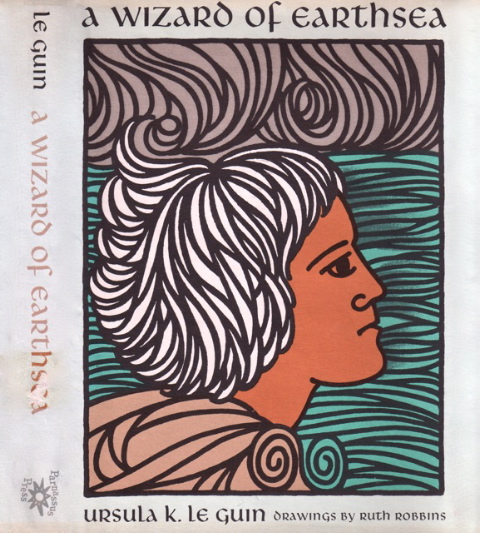
The Earthsea Cycle, also known as Earthsea, is a series of high fantasy books written by American author Ursula K. Le Guin. Beginning with A Wizard of Earthsea (1968), The Tombs of Atuan (1970), and The Farthest Shore (1972), the series was continued in Tehanu (1990), and Tales from Earthsea and The Other Wind. In 2018, all the novels and short stories were published in a single volume, The Books of Earthsea: The Complete Illustrated Edition, with artwork by Charles Vess.
- His Dark Materials
series8 books1995
part of His Dark Materials Universe
similar byfantasyadventurous+2 more
His Dark Materials is a trilogy of fantasy novels by Philip Pullman consisting of Northern Lights, The Subtle Knife (1997), and The Amber Spyglass (2000). It follows the coming of age of two children, Lyra Belacqua and Will Parry, as they wander through a series of parallel universes. The novels have won a number of awards, including the Carnegie Medal in 1995 for Northern Lights and the 2001 Whitbread Book of the Year for The Amber Spyglass. In 2003, the trilogy was ranked third on the BBC's The Big Read poll.
- The Deed of Paksenarrion
series4 books1988
part of Paksenarrion
similar byfantasysecondary world+2 more
Elizabeth Moon's The Deed of Paksenarrion follows Paksenarrion Dorthansdotter, a sheepfarmer's daughter who leaves home to become a mercenary soldier and, over the course of three novels, a paladin. Grounded in the practical, unglamorous realities of military life before turning toward divine calling, the trilogy was originally published in 1988-89 and later collected as one omnibus. It's known for its grounded approach to fantasy soldiering, informed by Moon's own military background.
- The Lord of the Rings
series13 books1954
part of Tolkien's legendarium
similar bysecondary world+2 more
The Lord of the Rings is an epic high fantasy novel written by the English author and scholar J. R. R. Tolkien. Set in Middle-earth, the story began as a sequel to Tolkien's 1937 children's book The Hobbit but eventually developed into a much larger work. Written in stages between 1937 and 1949, The Lord of the Rings is one of the best-selling books ever written, with over 150 million copies sold.
- The Hobbit
series2 books1937
completed
part of Tolkien's legendarium
similar byfantasyadventuroussecondary world
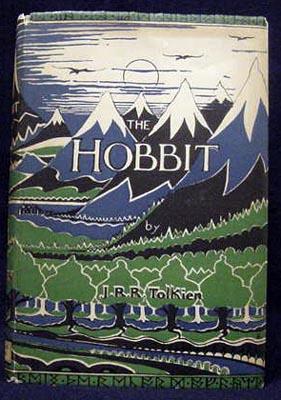
The Hobbit (1937) is J. R. R. Tolkien's children's fantasy novel following the reluctant burglar Bilbo Baggins, who joins a company of dwarves and the wizard Gandalf on a journey to reclaim treasure guarded by the dragon Smaug. It stands as a complete adventure on its own, but shares its setting with the rest of Tolkien's legendarium and leads into the events of The Lord of the Rings.
- Beklan Empire
series2 books1974
completed
similar byfantasysecondary world+2 more
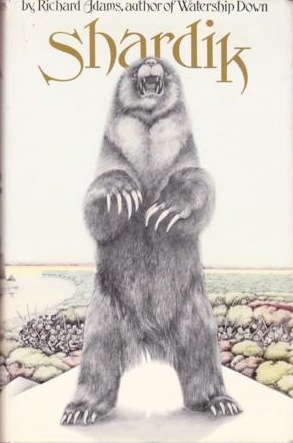
Two standalone novels by Richard Adams set in the same invented world, the Beklan Empire, an ancient, quasi-Mediterranean land of god-kings, slave markets, and warring city-states. Shardik (1974) follows a hunter swept into a religious and military frenzy over a giant bear believed to be the vessel of a god; Maia (1984) turns to an earlier generation of the empire and follows a slave girl's rise through its court and conquests. The two novels share only their setting, not characters or plot.
- A Song of Ice and Fire
series14 books1996
part of World of Ice and Fire
similar byfantasysecondary world
A Song of Ice and Fire is a series of high fantasy novels by the American author George R. R. Martin. Martin began writing the first volume, A Game of Thrones, in 1991, and published it in 1996. Martin, who originally envisioned the series as a trilogy, has released five out of seven planned volumes. The most recent entry in the series, A Dance with Dragons, was published in 2011. Since then, Martin has been working on the sixth novel, titled The Winds of Winter. A seventh novel, A Dream of Spring, is planned to follow.
- The Devils
series1 book2025
similar byadventurousfaith and religionsecondary world+1 more
Joe Abercrombie's The Devils (2025) opens a new grimdark fantasy series set in an alternate medieval Europe besieged by plague, famine, and monsters, following Brother Diaz as he's tasked by the Church with managing a squad of imprisoned monstrosities - a vampire, a werewolf, a cursed knight, a pirate, and others - for a mission nobody sane would volunteer for. Their job is to escort a former thief posing as a claimant to the throne of Troy safely to her coronation, through a landscape falling apart around them. It's Abercrombie's first work outside his First Law universe in a decade, pairing his usual morally compromised cast with a monster-squad premise.
- Age of the Five
series3 books2005
similar byfaith and religionsecondary world+2 more
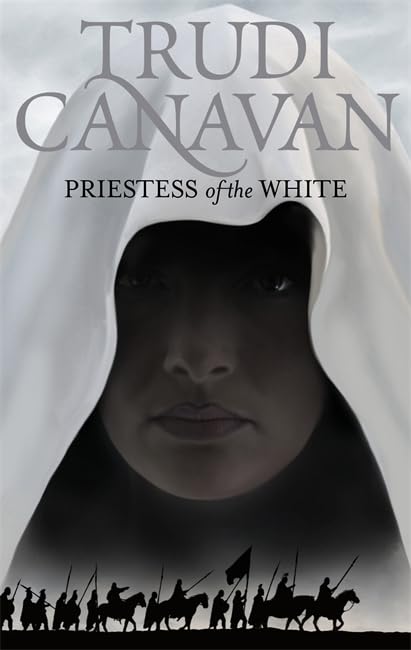
Age of the Five is a trilogy of fantasy novels by Australian author Trudi Canavan; it consists of the novels: Priestess of the White, Last of the Wilds and Voice of the Gods. The fictional series recounts the story of Auraya, a young priestess who, after rising to the highest rank in her world's religious hierarchy, subsequently discovers that the gods she worships are significantly different entities from those in whom she was originally taught to believe.
- Chronicles of the Deryni
series4 books1970
part of Deryni
similar byfantasysecondary world+1 more
Katherine Kurtz's Chronicles of the Deryni trilogy (Deryni Rising, Deryni Checkmate, High Deryni, 1970-1973) follows the young King Kelson Haldane defending his throne in Gwynedd, a kingdom modeled on 10th-to-12th-century Britain, against ecclesiastical opposition and foreign invasion. Central to the conflict is the Deryni, a persecuted human-like people with inherited psychic and magical powers, whose presence in and around the crown makes Kelson's reign a lightning rod for religious and political tension.
- Kairos
series11 books1962
completed
similar by+2 more
The Time Quintet is a science fantasy series of five young adult novels written by American author Madeleine L'Engle and made up of A Wrinkle in Time (1962), A Wind in the Door (1973), A Swiftly Tilting Planet (1978), Many Waters (1986), and An Acceptable Time (1989).
- The Faerie Queene
Edmund Spenserstandalone novel1590
similar byfantasyadventurousfaith and religionsecondary world
This extended epic poem deals with the adventures of knights, dragons, ladies in distress, etc. yet it is also an extended allegory about the moral life and what makes for a life of virtue.
- The Histories of King Kelson
series4 books1984
part of Deryni
similar byfantasysecondary world+1 more
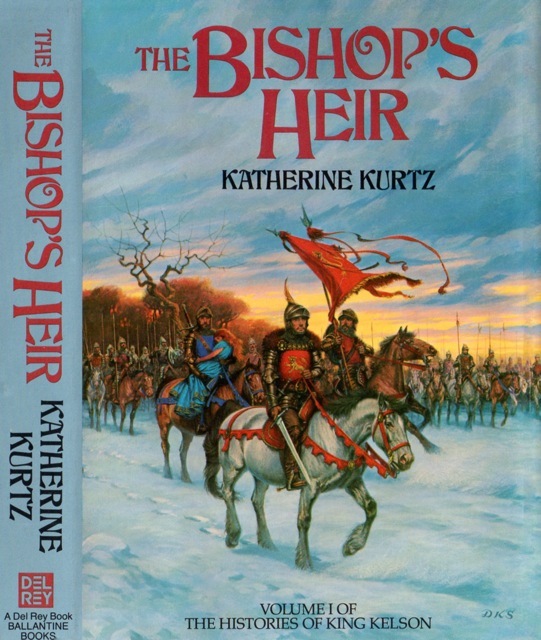
Katherine Kurtz's Histories of King Kelson, part of her Deryni universe, follows King Kelson of Gwynedd's reign as he balances a kingdom uneasily shared between ordinary humans and the magically gifted Deryni against continuing prejudice and political threats from within and beyond his borders. The four novels, opening with The Bishop's Heir, continue the Deryni chronicles a generation on from Kurtz's earlier trilogies.
- Demon Wars
series4 books1997
part of Corona
similar byfantasysecondary world+2 more
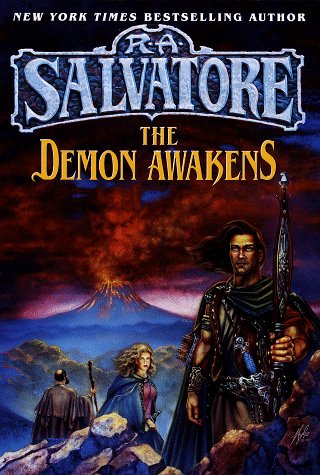
The DemonWars Saga is a series of high fantasy novels by R. A. Salvatore. It is set in the world of Corona, primarily in the kingdoms of Honce-the-Bear and Behren, and amongst the nomadic To-gai-ru. The series is separated into two trilogies connected by a single book, Mortalis. The saga has an accompanying roleplaying game entitled Demon Wars.
- Riverworld
series37 books1965
similar byfaith and religion+2 more
The Riverworld series consists of five science fiction novels (1971–1983) by American author Philip José Farmer (1918–2009). The Riverworld is an artificial, or heavily terraformed, planet where all humans who ever lived throughout history have been resurrected. The novels explore interactions of resurrected individuals from many different cultures and time periods. The underlying theme is quasi-religious. The motivations and ethics of the unknown intelligences that created the Riverworld and its inhabitants are explored.
- Millennium's Rule
series4 books2014
similar bysecondary world+3 more
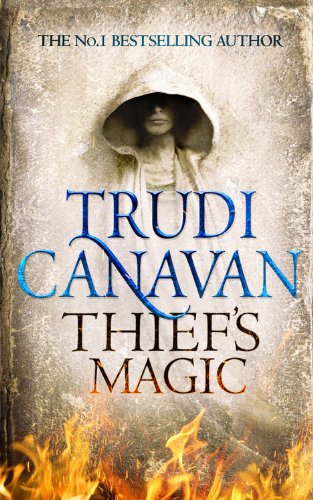
Millennium's Rule is set across multiple worlds that only certain travelers can cross between, opening with Tyen, an archaeology student who unearths a sentient, centuries-old book named Vella, and Rielle, a dyer's daughter hiding forbidden magical talent in a society ruled by priests who forbid it. Trudi Canavan follows both of them as their discoveries chip away at what their worlds have taught them about magic, history, and who holds power. The series runs Thief's Magic, Angel of Storms, and Successor's Promise.
- Discworld
universe84 books1983
Start hereGuards! Guards! · Start here
similar byfantasysecondary world
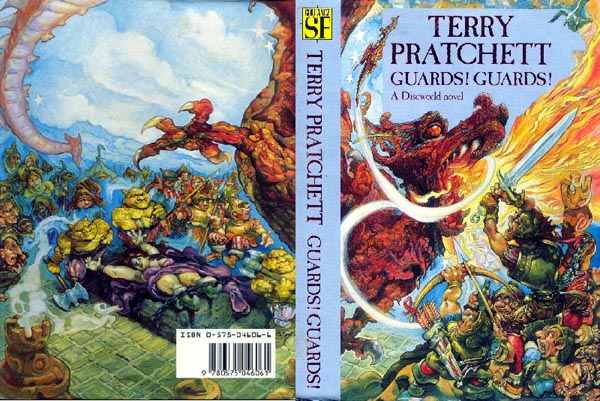
The Disc is flat. It rides on the backs of four elephants, who in turn stand on the shell of Great A'Tuin, a turtle ten thousand miles long, swimming through space toward nowhere in particular. Magic works here, usually badly. Death speaks IN SMALL CAPITALS and rides a horse called Binky. It looks like a fantasy world and behaves like ours with the safety catch off: a mirror held up to bureaucracy, belief, newspapers, money, war, and the ridiculous, stubborn business of being a person. One hand shaped all of it — Terry Pratchett — across forty-one novels and a shelf of companions, maps, and the Science of Discworld books. The world is braided from strands you can pick up on their own. Rincewind, the cowardly wizard, flees across the Disc (The Colour of Magic). The witches of Lancre, led by the formidable Granny Weatherwax, mind everyone's business (Equal Rites, Wyrd Sisters). Death takes on an apprentice (Mort). The City Watch polices grimy Ankh-Morpork under Commander Vimes (Guards! Guards!). A reformed swindler is given honest work at swordpoint (Going Postal), and young Tiffany Aching learns witching alongside the tiny, larcenous Nac Mac Feegle (The Wee Free Men). Standalones like Small Gods sit apart. The trick of it is that the farce turns, mid-joke, into something that catches in the throat, with footnotes that argue back at the page. Newcomers are gently steered away from the beginning: the early Rincewind books spoof a genre you needn't have read. Enter instead by whichever strand calls — Guards! Guards! for the Watch, Mort for Death, Wyrd Sisters for the witches, Small Gods entirely alone, or The Wee Free Men for the sharpest single thread. Open any door and the whole Disc opens with it.
- The Orcs Domain
series12 books1999
similar byfantasysecondary world+2 more
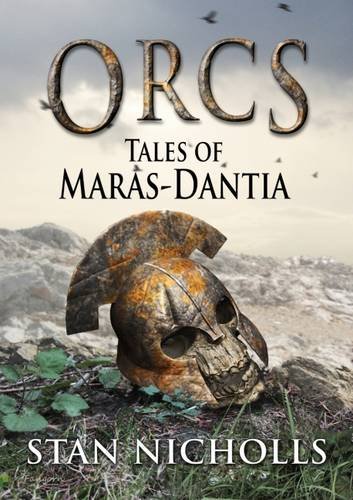
Stan Nicholls's Orcs novels invert typical fantasy roles, following a warband of orcs as sympathetic protagonists defending their homeland of Maras-Dantia against human colonizers and rival magic-users encroaching on their territory. The books were originally published as the Orcs: First Blood trilogy before being collected into omnibus volumes. Nicholls treats the orcs' culture and internal politics with the same seriousness usually reserved for human fantasy protagonists.