More like The Second Shell
but
- Barsoom
series53 books1917
similar by+1 more
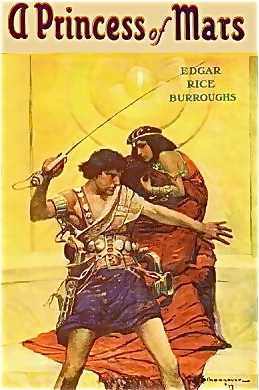
Barsoom is a fictional representation of the planet Mars created by American pulp fiction author Edgar Rice Burroughs. The first Barsoom tale was serialized as Under the Moons of Mars in pulp magazine The All-Story from February to July 1912 and published compiled as a novel as A Princess of Mars in 1917. It features John Carter, a late-19th-century American Confederate veteran who is mysteriously transported from Earth to the dying world of Mars where he meets and romances the beautiful Martian princess Dejah Thoris. Ten sequels followed over the next three decades, further extending his vision of Barsoom and adding other characters.
- Tarzan
series50 books1912
part of Tarzan Universe
similar byadventure
Tarzan is a series of 24 adventure novels written by Edgar Rice Burroughs (1875–1950) and published between 1912 and 1966, followed by several novels either co-written by Burroughs, or officially authorized by his estate. There are also two works written by Burroughs especially for children that are not related to the main series.
- The Hobbit
series2 books1937
completed
part of Tolkien's legendarium
similar byadventure
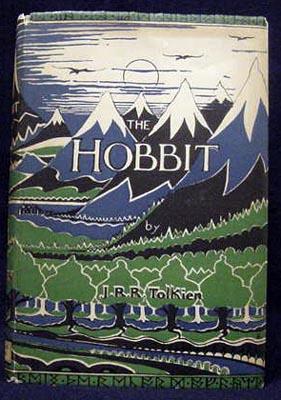
The Hobbit (1937) is J. R. R. Tolkien's children's fantasy novel following the reluctant burglar Bilbo Baggins, who joins a company of dwarves and the wizard Gandalf on a journey to reclaim treasure guarded by the dragon Smaug. It stands as a complete adventure on its own, but shares its setting with the rest of Tolkien's legendarium and leads into the events of The Lord of the Rings.
- Allan Quatermain
series25 books1885
similar byadventure
Allan Quatermain is the protagonist of H. Rider Haggard's 1885 novel King Solomon's Mines, its one sequel Allan Quatermain (1887), twelve prequel novels and four prequel short stories, totalling eighteen works. An English professional big game hunter and adventurer, in film and television he has been portrayed by Richard Chamberlain, Sean Connery, Cedric Hardwicke, Patrick Swayze and Stewart Granger among others.
- Jungle Book Universe
universe44 books1893
Start hereThe Jungle Book · Start here
similar byadventure
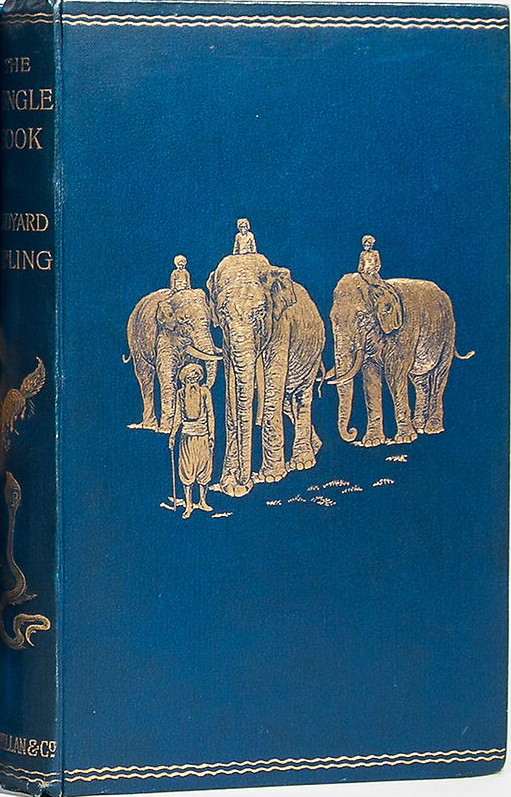
The Law of the Jungle is older than any animal reciting it, and a naked man-cub who wandered into a wolf den at dusk will have to learn every clause of it. Mowgli grows up between two peoples and belongs entirely to neither — the pack that took him in, Baloo who teaches him the words, Bagheera who bought his life with a bull, Kaa who is the most dangerous friend a boy ever had, and Shere Khan, who has been waiting since the first page. Rudyard Kipling wrote these as two books of stories, and the stories run well past Mowgli. Rikki-Tikki-Tavi fights cobras in a bungalow garden; a white seal searches the ocean for an island where men do not come; Toomai watches the elephants dance where nobody is meant to see them; and the beasts of the army explain, in Her Majesty's Servants, exactly why they obey. Verse runs between the tales, and the Jungle Books have been reissued, excerpted and adapted ever since. The voice is the whole point — biblical cadence, animal dignity, and a hard moral world in which the Law protects you precisely as far as you keep it. Read The Jungle Book first and take the Mowgli stories in their order within it; the rest stand alone and can be picked up in any mood. It is a children's book that never once talks down.
- Watership Down
series21 books1972
completed
similar by+1 more
Watership Down is Richard Adams's 1972 novel following a group of rabbits who flee the destruction of their warren and cross the English countryside of Hampshire in search of a new home, developing over the journey a full rabbit culture of language, proverbs, and mythology. Adams returned to the same world in 1996 with Tales from Watership Down, a collection of nineteen short stories mixing rabbit folklore with further adventures of characters from the novel.
- Ayesha
series8 books1886
similar by+1 more
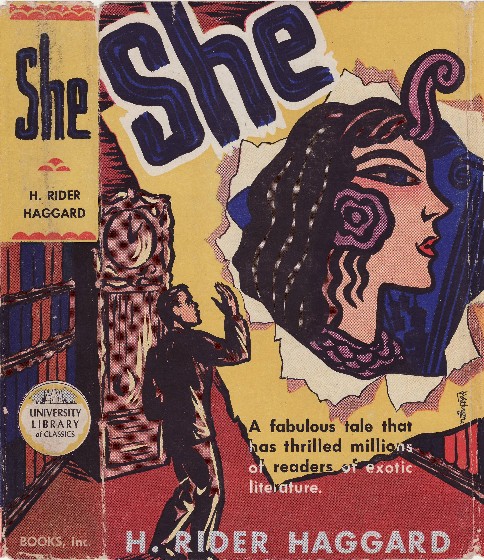
The Ayesha books follow H. Rider Haggard's immortal sorceress-queen Ayesha, introduced in his 1887 novel She as the ruler of a hidden civilization who has waited millennia for her lost love to be reborn. Haggard continued her story in later novels, including the 1905 sequel Ayesha: The Return of She, which reunites her with characters from the first book, and further installments tracing her earlier history. Later reissues and retellings continue to build on the same character.
- The Princess Bride
William Goldmanstandalone novel1973
similar byadventure
The Princess Bride: S. Morgenstern's Classic Tale of True Love and High Adventure, The "Good Parts" Version is a 1973 fantasy romance novel by American writer William Goldman. The book combines elements of comedy, adventure, fantasy, drama, romance, and fairy tale. It is metafictionally presented as an abridgment of a longer work by the fictional S. Morgenstern, and Goldman's commentary asides are constant throughout. It was originally published in the United States by Harcourt Brace, then later by Random House, while in the United Kingdom it was later published by Bloomsbury.
- The Lady of the Shroud
Bram Stokerstandalone novel1909
similar byadventure
Rupert Sent Leger inherits his eccentric uncle's fortune on one condition: he must spend a year living in the family's castle in the Blue Mountains, a small, embattled corner of the Balkan coast under threat from Turkish forces. Determined to earn the trust of his new neighbors, Rupert arms the local mountain people for their own defense, and soon finds his castle visited at night by a beautiful woman in a wet burial shroud, who claims sanctuary from the cold and offers no explanation of who, or what, she might be. Bram Stoker's follow-up to Dracula trades outright horror for Ruritanian romance and adventure, blending gothic atmosphere with political intrigue.
- Narnia
series26 books1950
part of Narnia Universe
similar by+1 more
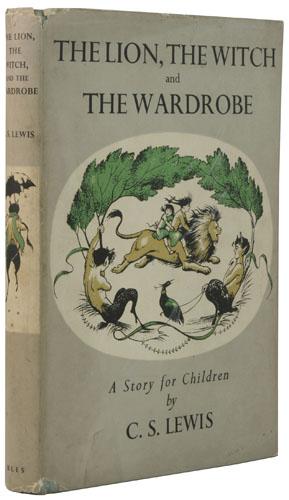
The Chronicles of Narnia is a series of seven portal fantasy novels by British author C. S. Lewis. Illustrated by Pauline Baynes and originally published between 1950 and 1956, the series is set in the fictional realm of Narnia, a fantasy world of magic, mythical beasts, and talking animals. It narrates the adventures of various children who play central roles in the unfolding history of the Narnian world. Except in The Horse and His Boy, the protagonists are all children from the real world who are magically transported to Narnia, where they are sometimes called upon by the lion Aslan to protect Narnia from evil. The books span the entire history of Narnia, from its creation in The Magician's Nephew to its eventual destruction in The Last Battle.
- Doctor Dolittle
series27 books1920
similar by+1 more
Hugh Lofting's Doctor Dolittle books follow a Victorian-era English physician who gives up treating people to practice medicine among animals, whose languages he learns to speak, traveling the world with an ever-growing menagerie of companions. Lofting wrote twelve novels between 1920 and 1936, beginning with The Story of Doctor Dolittle, with two further story collections published after his 1947 death. Kathryn Knight and Nick Price, credited alongside Lofting in modern editions, are illustrators/editors of reissues rather than co-authors of new installments.
- The Halloween Tree
Ray Bradburystandalone novel1972
similar byadventure
Eight boys gather on Halloween night to trick-or-treat with their ninth friend, Pipkin, only Pipkin never shows, having vanished on some errand that may cost him his life. A strange, black-robed guide named Moundshroud appears to lead the boys after him, and the chase turns into a journey through the history of the holiday itself: ancient Egypt, druidic Britain, Rome, medieval Paris, and the Mexican Day of the Dead, each stop peeling back another layer of how humanity has faced death and the dark. Ray Bradbury's Halloween novel doubles as a compressed history of the holiday's origins.
- Wolves Chronicles
series12 books1962
completed
similar byadventure
The Wolves Chronicles is Joan Aiken's long-running alternate-history series for young readers, set in a nineteenth-century England ruled by the Stuart dynasty and beset by wolves that have migrated across a Channel land-bridge. It opens with The Wolves of Willoughby Chase, in which two girls outwit a scheming governess sent to ruin them, and expands over twelve books into a sprawling saga of orphans, conspiracies, and journeys through a Britain quite unlike the real one. Aiken kept adding to the same timeline across more than four decades, including later prequels set before the first book.
- The Cave Girl
Edgar Rice Burroughsstandalone novel1925
similar byadventure
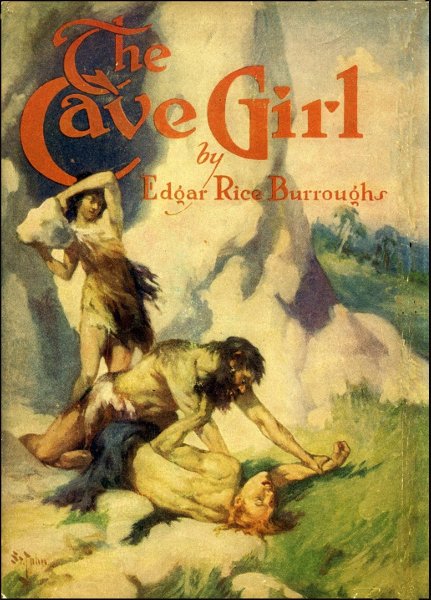
The Cave Girl is a lost world novel by American writer Edgar Rice Burroughs. Originally published in two separate stories, The Cave Girl begun in February 1913 and published by "All-Story" in July, August, and September 1913; and The Cave Man begun in 1914 and published by "All-Story Weekly" throughout March and April 1917. The book version was first published by A. C. McClurg on 1925-03-21. In August 1949, Dell Paperback published a version with a map captioned "Wild Island Home of Nadara the Cave Girl Where Violence and Bloodshed Rule."
- Caspak Universe
series4 books1918
similar byadventure
The Caspak trilogy — The Land That Time Forgot, The People That Time Forgot, and Out of Time's Abyss — is Edgar Rice Burroughs's 1918 adventure sequence set on a hidden Pacific island called Caprona, where a World War I-era U-boat crew discovers an isolated world of dinosaurs and successive stages of human evolution living side by side. The story was later adapted into comics by Mike Wolfer, credited alongside Burroughs.
- The People of the Mist
H. Rider Haggardstandalone novel1894
similar byadventure
The People of the Mist is a classic lost world fantasy novel written by H. Rider Haggard. It was first published serially in the weekly magazine Tit-Bits, between December 1893 and August 1894; the first edition in book form was published in London by Longman in October, 1894. It was reprinted in December, 1973 by Ballantine Books as the sixty-third paperback volume of the Ballantine Adult Fantasy series.
- The Outlaw of Torn
Edgar Rice Burroughsstandalone novel1927
similar byadventure
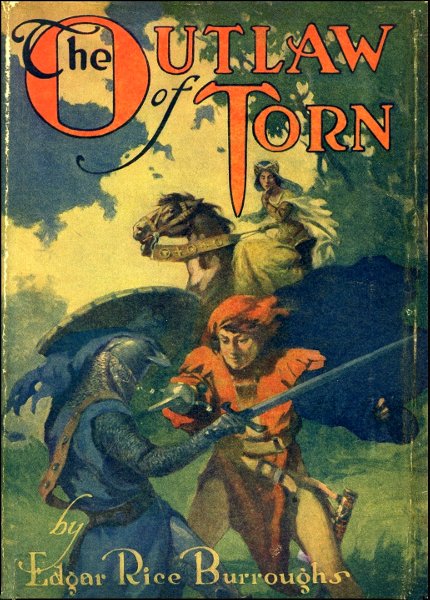
Raised from childhood by a vengeful royal fencing master who wants him turned into a weapon against the English crown, Norman of Torn grows up in 13th-century England knowing only combat and contempt for the nobility. By nineteen he leads the kingdom's largest band of outlaws and carries a king's ransom on his head, yet a priest's influence has left him with a streak of chivalry. Amid rebellion against King Henry III, Norman joins Simon de Montfort's rebels, and finds himself drawn to de Montfort's daughter despite a startling resemblance to the crown prince. An early adventure novel from Edgar Rice Burroughs.
- Congo
Michael Crichtonstandalone novel1980
similar byadventure
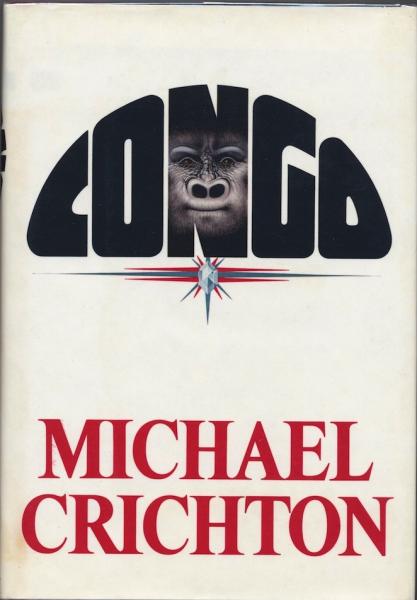
WorldCat: On an expedition to return Amy, his talking gorilla, to her home in the Congo, Professor Peter Elliot is joined by others who hope to find a legendary diamond mine guarded by mutant gorillas.
- A Columbus of Space
Garrett P. Servissstandalone novel1911
similar byadventure
The year was 1909 and Garrett Putnam Serviss was already a respected science writer for the Hearst newspaper group. Serviss’ reputation was such that his articles appeared in almost every major American magazine. Beginning in January of that year Frank Munsey’s All-Story magazine began the serialization of Serviss’ epic science fiction adventure A Columbus of Space. Just three months earlier the visionary rocket pioneer, Robert Goddard, had submitted an article to Popular Science magazine about the possibilities of nuclear propulsion for space travel. Goddard’s article was rejected, but Serviss had no such problem with his science-fiction adventure story. In August of 1926 Serviss’ story was resurrected in the pages of Hugo Gernsback’s Amazing Stories magazine. In fact Serviss was featured in eight of the first eleven issues of Amazing. A Columbus of Space is an adventure thriller written at a time when Venus was still believed to only show one hemisphere to the sun and Venusian life was still thought to be possible.
- Hungry City Chronicles / Mortal Engines
series5 books2001
part of Mortal Engines Universe
similar by+1 more
The Mortal Engines Quartet, also known as the Predator Cities Quartet, is a series of epic young adult science fiction novels by the English novelist and illustrator Philip Reeve. He began the first volume of the series, Mortal Engines, in the 1980s, and it was published in 2001. Reeve then published three further novels, Predator's Gold (2003), Infernal Devices (2005), and A Darkling Plain (2006).
- The Flying Inn
G. K. Chestertonstandalone novel1914
similar byadventure
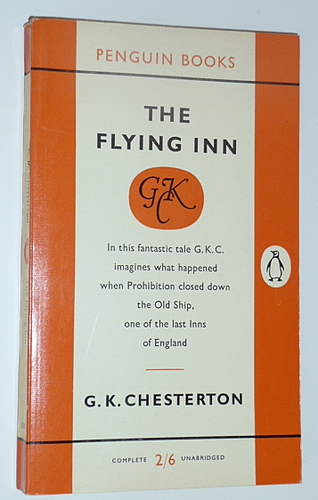
The Flying Inn is a 1914 novel by English writer G. K. Chesterton. It is set in a future England where the temperance movement has allowed a bizarre form of Progressive Islam to dominate the political and social life of the country. Because of this, alcohol sales to the poor are effectively prohibited, while the rich can get alcoholic drinks "under a medical certificate". The plot centres on the adventures of Humphrey Pump and Captain Patrick Dalroy, who roam the country in their cart with a barrel of rum in an attempt to evade prohibition, exploiting loopholes in the law to temporarily prevent the police taking action against them. Eventually the heroes and their followers foil an attempted coup by an Islamic military force.
- The Outlaws of Sherwood
Robin McKinleystandalone novel1988
similar byadventure
The Outlaws of Sherwood is a retelling of the legend of Robin Hood by Robin McKinley. In McKinley's afterword, she says, "The retellings through the centuries have echoed concurrent preoccupations." The story includes both the traditional Robin Hood characters — Little John, Much, Friar Tuck, Marian and Alan-a-dale — and characters of McKinley's own invention. Notably, three of the most important characters are women, all of whom escape marriage to prospective spouses chosen by their fathers.