More like The Things
anchored on:science fictionaliensfar futurefirst personhorroridentity+4 more
but
- The Stars My Destination
Alfred Besterstandalone novel1956
similar byfar futurescience fictiondarkidentityspaceother star systemssurvival
When a passing spaceship refuses to rescue the lone survivor from the drifting wreck of another ship, he dedicates his life to discovering who made that decision and exacting his revenge, in the process altering human history and his own character.
- The Madness Season
C. S. Friedmanstandalone novel1990
similar byfar futurealiensscience fictionidentityspaceother star systemsfirst person+2 more
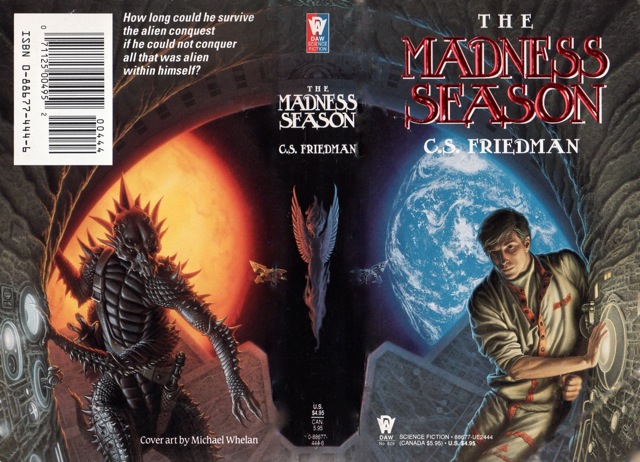
The alien within - He'd had so many names over the centuries, so many new identities that he could scarcely remember who he had originally been. Now his name was Daetrin, a name given by the alien conquerors of humankind, the Tyr. Three hundred years had passed since the Tyr conquered the people of Earth as they had previously overcome numerous races throughout the galaxy. In their victory they had taken the very heart out of the human race, isolating the true individualists, the geniuses, all the people who represented the hopes, dreams, and discoveries of the future, and imprisoning them in dome colonies on planets hostile to human life. There the Tyr, a race which itself shared a unified gestalt mind, had left these gifted individuals to work on projects which would, the conquerors hoped, reveal all of human kind's secrets to them. Yet Daetrin's secret was one no scientist had ever uncovered, for down through the years he had succeeded in burying it so well that he had even hidden his real nature from himself. But, taken into custody by the Tyr, there was no longer any place left for Daetrin to run, no new name and life for him to assume. Now he would at last be forced to confront the truth about himself - and if he failed, not just Daetrin but all humans would pay the price... (from the first page of the DAW Books first edition)
- Creatures of Light and Darkness
Roger Zelaznystandalone novel1969
similar byfar futurescience fictiondarkeeriespaceother star systems
Creatures of Light and Darkness is a 1969 science fiction novel by American writer Roger Zelazny. Long out of print, it was reissued in April 2010. The novel is set in the far future, with humans on many worlds. Some humans have god-like powers or perhaps are actually gods—the names and aspects of various Egyptian gods are used. Elements of horror and technology are mixed, and the novel shares elements with cyberpunk.
- Embassytown
China Miévillestandalone novel2011
similar byfar futurealiensscience fictionidentityspaceother star systemsfirst person
In the far future, humans have colonized a distant planet, home to the enigmatic Ariekei, sentient beings famed for a language unique in the universe, one that only a few altered human ambassadors can speak. Avice Benner Cho, a human colonist, has returned to Embassytown after years of deep-space adventure. She cannot speak the Ariekei tongue, but she is an indelible part of it, having long ago been made a figure of speech, a living simile in their language. When distant political machinations deliver a new ambassador to Arieka, the fragile equilibrium between humans and aliens is violently upset. Catastrophe looms, and Avice is torn between competing loyalties—to a husband she no longer loves, to a system she no longer trusts, and to her place in a language she cannot speak yet speaks through her.
- Heechee
series19 books1972
completed
similar byfar futurealiensscience fictionspaceother star systems
The Heechee Saga, also known as the Gateway series, is a series of science fiction novels and short stories by Frederik Pohl. The Heechee are an advanced alien race that visited the Solar System hundreds of millennia ago and then mysteriously disappeared. They left behind bases containing artifacts, including working starships, which are discovered and exploited by humanity.
- Thorns
Robert Silverbergstandalone novel1967
similar byfar futurescience fictiondarkaliensspaceother star systems
From the back cover of the Ballantine first edition: "Lona Kelvin - naive orphan. And at seventeen, mother of one hundred children. Minner Burris - starman. Whose butchered body had been put together by aliens, with artificial and alien replacements. Horror stalked just beneath the surface of these two lonely creatures. Duncan Chalk - a vulture, carrion eater of other people's emotions, feeding on pain, fear, anger, hatred, jealousy, terror; typifying in the appetites of his vast body the sick delight that millions took in the tragedies he skillfully arranged. Lona Kelvin - Minner Burris - Duncan Chalk - Surely the strangest triangle the worlds had ever seen."
- The Tommyknockers
Stephen Kingstandalone novel1987
similar byaliensscience fictiondarkeeriehorror+1 more
The Tommyknockers is a 1987 science fiction horror novel by Stephen King. The novel is an excursion into the realm of science fiction for King, as the residents of the Maine town of Haven gradually fall under the influence of a mysterious object buried in the woods. King has since soured on The Tommyknockers, describing it as "an awful book", due to his drug addiction while writing the novel, though acknowledges the story's potential: "There's really a good book in here, underneath all the sort of spurious energy that cocaine provides, and I ought to go back." A miniseries adaptation was released in 1993.
- Ender Wiggin
series14 books1977
part of Ender's Game Universe
similar byfar futurescience fictionaliensother star systems+1 more
Orson Scott Card's Ender's Game (1985, expanded from his 1977 novella) follows child prodigy Andrew "Ender" Wiggin as he is recruited into a military training program built to prepare Earth's defenses for an anticipated third war against an insectoid alien species known as the Formics. The saga continues years later through Speaker for the Dead and Xenocide, following an older Ender as he confronts the moral weight of his role in that earlier conflict, and concludes the core arc in Children of the Mind, with Ender in Exile filling in the years between the first two books. Set within the wider Ender's Game universe, the series shifts from military coming-of-age story to slower, more philosophical science fiction as it progresses.
- Forge of God
series2 books1987
completed
similar byaliensscience fictiondarksurvival+3 more
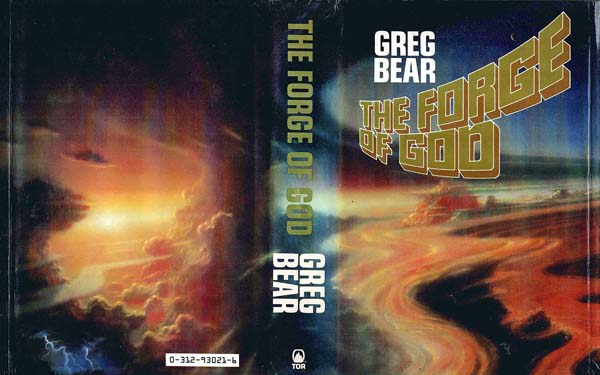
The Forge of God (1987) is Greg Bear's science fiction novel about Earth's discovery that it is the target of an incomprehensible, overwhelming alien attack, following scientists and ordinary people as they try to understand what is destroying the planet. Its 1992 sequel, Anvil of Stars, follows a group of young survivors sent on a mission of interstellar retaliation, continuing directly from the first book's ending.
- Xan-Sskarn War
series1 book2010
similar byfar futurealiensscience fictiondarkspaceother star systems+1 more
- Mindswap
Robert Sheckleystandalone novel1966
similar byfar futurescience fictionaliensspaceother star systemssurvival+1 more
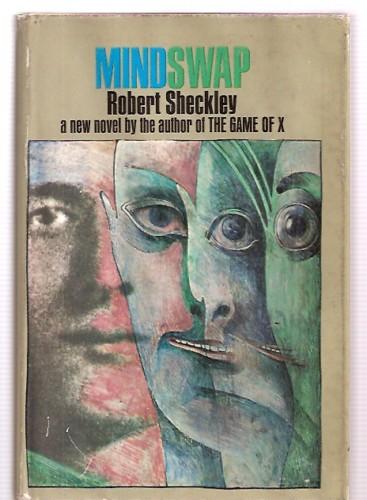
"In the future, interstellar travel to alien worlds will be too expensive for most ordinary people. It certainly is for Marvin, a college student who wants to take a really good vacation. And so he signs up for what he can afford, a mindswap, in which a persons consciousness is swapped into the body of an alien lifeform. But Marvin is unlucky, and finds himself in the body of an interstellar criminal, a body that he has to vacate fast. But that criminal consciousness has stolen Marvins earthly body, and Marvin has to find a body on the black market. Travel from world to world with Marvin, each one crazier than the last, as he keeps finding far-from-ideal bodies in awful situations, just to stay alive"--Cover p. [4].
- Kefahuchi Tract Trilogy
series3 books2002
similar byfar futurescience fictionspaceother star systems+4 more
M. John Harrison's Kefahuchi Tract trilogy circles a strange, physics-breaking anomaly in deep space that draws scientists, smugglers, and drifters into its pull across different eras. Light moves between a near-future timeline and a far-future one drawn to the Tract itself; its sequel Nova Swing stays within one future period, where a fragment of the anomaly's altered space bleeds into the run-down port city of Saudade, giving the book a noir, Roadside-Picnic-like atmosphere; Empty Space concludes the sequence. The three novels share a setting and mood more than a continuous plot or cast.
- Mickey7
series2 books2022
similar byfar futurescience fictionidentityspaceother star systemsfirst personsurvival
- The Body Snatchers
Jack Finneystandalone novel1955
similar byaliensscience fictioneerieidentityhorror+2 more
The Body Snatchers is a science fiction horror novel by American writer Jack Finney, originally serialized in Collier's magazine in November–December 1954 and published in book form the following year.
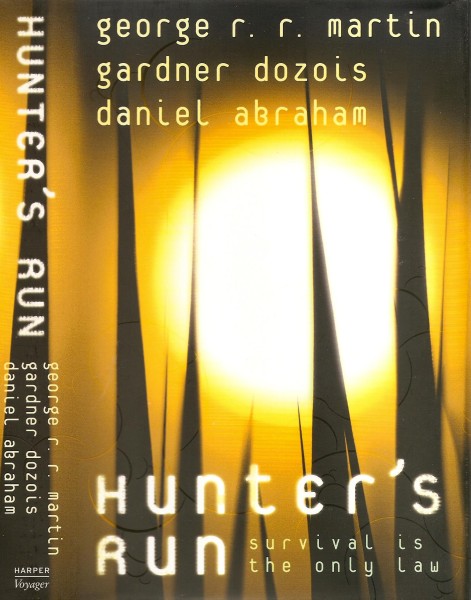
- Hunter's Run
Gardner Dozois, George R. R. Martin & Daniel Abrahamstandalone novel2007
similar byfar futurealiensscience fictionother star systemssurvival+2 more
Hunter's Run is a 2007 science fiction novel written by Daniel Abraham, Gardner Dozois and George R. R. Martin. It is a heavily rewritten and expanded version of an earlier novella called Shadow Twin.
- Babel-17
Samuel R. Delanystandalone novel1966
similar byfar futurescience fictionaliensidentityspace+1 more
Babel-17 is a 1966 science fiction novel by American writer Samuel R. Delany. Published by Ace Books in May 1966, it follows Rydra Wong, a poet and linguist recruited during an interstellar war to decipher a language connected to enemy sabotage. Her investigation reveals a language that shapes thought and can make its speakers unwitting saboteurs. Through Rydra's effort to understand and revise it, the novel explores communication, perception, identity, and translation.
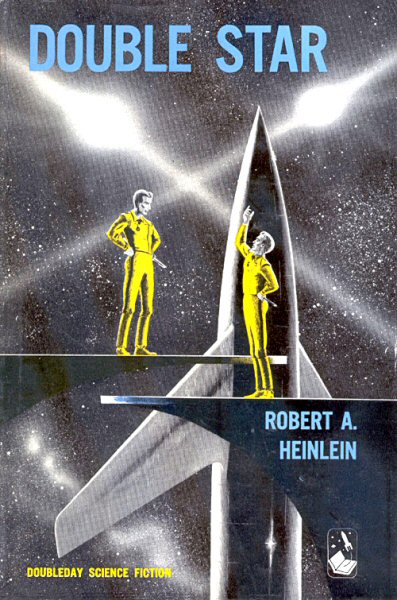
- Double Star
Robert A. Heinleinstandalone novel1956
similar byfar futurescience fictionidentityfirst person+2 more
Lorenzo Smythe, the excellent yet unemployed actor, meets Dak Broadbent in a bar. Broadbent hires Lorenzo for an unspecified role, and hustles him onto a rocket ship. Broadbent turns out to be an assistant to the famous interplanetary politician and leader of the Expansionist party: John J. Bonforte. Bonforte, however, has been kidnapped by the political opposition on Mars, and due to Lorenzo's physical similarity to Bonforte, his staff wants Lorenzo to impersonate the politician for an important Martian ceremony.
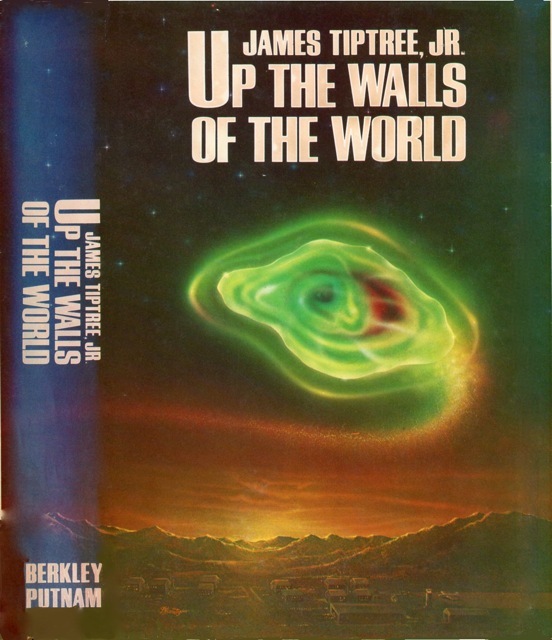
- Up the Walls of the World
James Tiptree & Jr.standalone novel1978
similar byfar futurealiensscience fictionspaceother star systems+2 more
Up the Walls of the World is a 1978 science fiction novel by American author Alice Sheldon, who wrote under the pen name of James Tiptree, Jr. It was the first novel she published, having until then worked and built a reputation only in the field of short stories.
- Starship Troopers
Robert A. Heinleinstandalone novel1959
similar byfar futurescience fictionaliensspaceother star systemsfirst person
Starship Troopers is a military science fiction novel by American writer Robert A. Heinlein. Written in a few weeks in reaction to the US suspending nuclear tests, the story was first published as a two-part serial in The Magazine of Fantasy & Science Fiction as Starship Soldier, and published as a book by G. P. Putnam's Sons on November 5, 1959.
- Ringworld
series5 books1970
part of Known Space
similar byfar futurescience fictionaliensspaceother star systems
The Ringworld series is a series of science fiction novels written by American author Larry Niven. It is part of his Known Space series of stories. Its backdrop is the Ringworld, a giant artifact 3 million times the surface area of Earth circling a star. The series is composed of four standalone science fiction novels, the original award-winning book and its three sequels:1970: Ringworld 1979: The Ringworld Engineers 1996: The Ringworld Throne 2004: Ringworld's Children
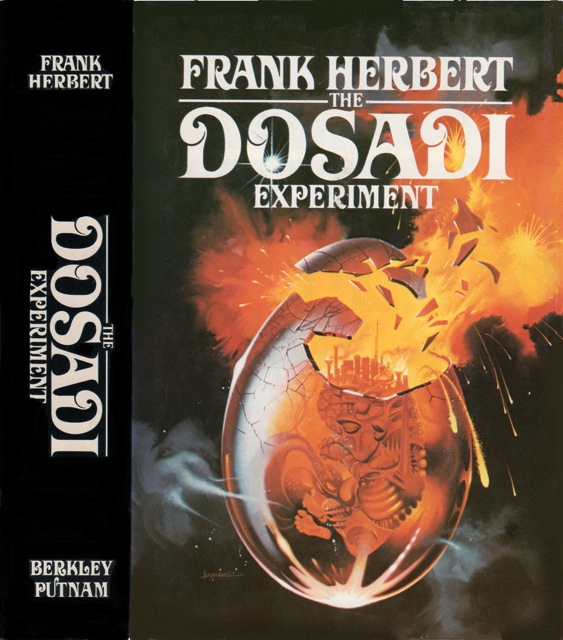
- The Dosadi Experiment
Frank Herbertstandalone novel1977
similar byfar futurescience fictionaliensother star systemssurvival+1 more
From the flaps of the Berkley Putnam first edition: "In his first new work of science fiction since the best-selling Children of Dune, Frank Herbert returns to his world of Whipping Star, and involves Jorj X. McKie, Saboteur Extraordinary, in a new intrigue. In Whipping Star, McKie discovered that some of the stars in the universe are actually intelligent, super-powerful beings, and was able to befriend one of them, the star Alcyone - affectionately known as Fannie Mae. As The Dosadi Experiment opens, McKie is assigned to investigate the planet Dosadi, which is isolated from the rest of the galaxy by a "god-wall," a barrier set up by one of the intelligent stars. Dosadi is rumored to be an experimental planet, and the experimenters are the froglike Gowachin, whose culture is founded upon a strange legal system in which McKie is the only human ever trained. He learns that humans and Gowachin have been placed on Dosadi, without their consent, for an experiment that could last centuries: an experiment in extreme overcrowding. But this monstrous plot is apparently out of control, and it seems the Gowachin may be prepared to destroy Dosadi rather than expose its secret, thus breaking the peace among the races, and starting the first interstellar war. But this is just the beginning. When McKie finally reaches Dosadi he discovers that the Dosadis have taken control of their own evolution and produced a competitive, highly evolved elite, of both humans and Gowachin, who have been able to extrapolate the existence of a universe beyond the god-wall and hate whoever has imprisoned them like this. They plan to break out and avenge themselves on the galaxy."
- Takeshi Kovacs
series3 books2002
similar byfar futurescience fictiondarkidentityother star systems+1 more
Takeshi Kovacs is a former elite soldier turned freelance troubleshooter in a future where human consciousness can be digitized and transferred between bodies, or sleeves, making death an inconvenience for those who can afford new ones. Richard Morgan's trilogy - Altered Carbon, Broken Angels, Woken Furies - moves Kovacs through noir-inflected mysteries on different worlds, using the resleeving premise to interrogate class, violence, and what, if anything, survives a person's original body. It became the basis for a Netflix series.
- Moties
series4 books1974
part of CoDominium
similar byfar futurescience fictionaliensspaceother star systems
Larry Niven and Jerry Pournelle's The Mote in God's Eye (1974) depicts humanity's first contact with an alien species, the Moties, set within the far-future interstellar setting of Pournelle's codominium future history. The Gripping Hand continues that first-contact crisis years later, and Outies, written by J. R. Pournelle, carries the story forward into a new generation. Together the three books trace an escalating encounter between human and Motie civilizations within the codominium universe.
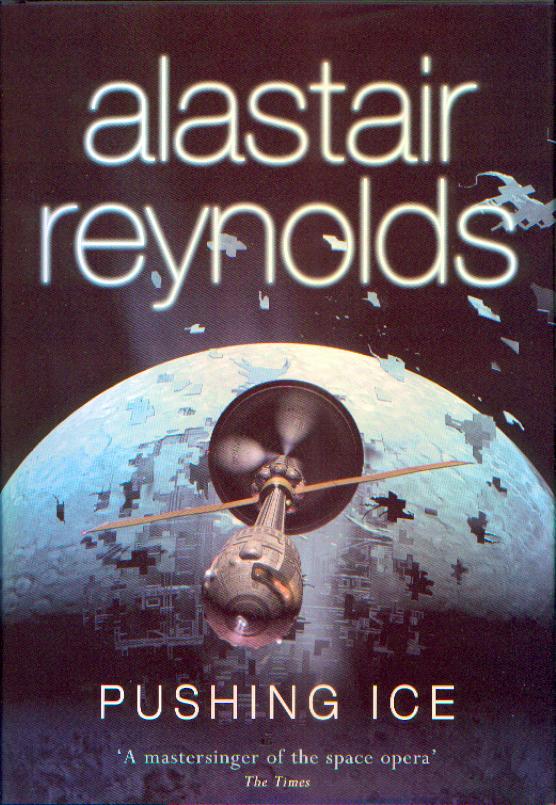
- Pushing Ice
Alastair Reynoldsstandalone novel2005
similar byfar futurescience fictionaliensspaceother star systemssurvival
When Saturn's moon Janus suddenly takes off into interstellar space, an ice mining spaceship sent to investigate finds itself swept along into distant space until it ends up trapped in a gigantic alien structure, wherein the crew must prepare to reside for the foreseeable future.